Weatherproof Outdoor LED Screen Rental Atlanta for Events

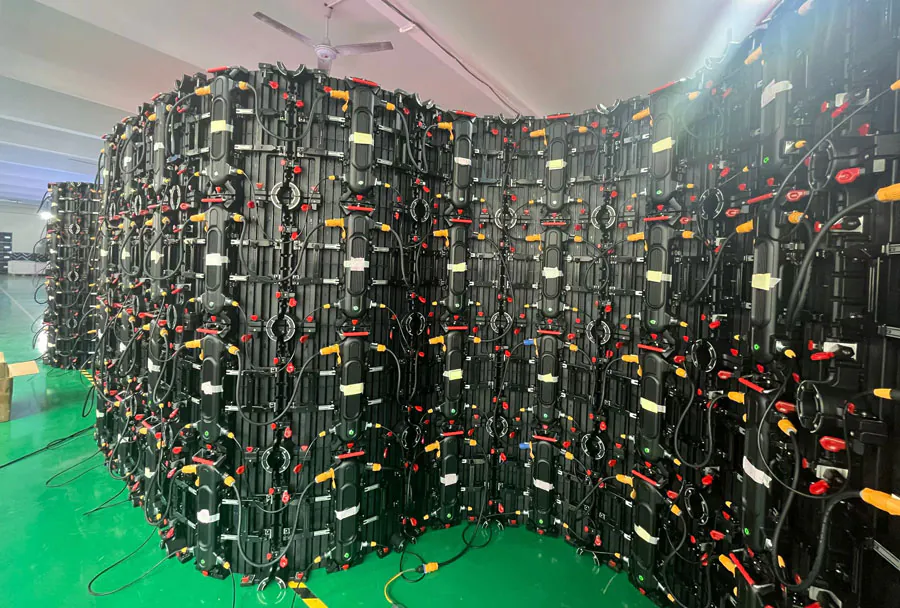
Weatherproof outdoor LED screen rental Atlanta is a narrower question than most rental quotes admit. A cabinet can be sealed against rain and still fail in a Georgia July, because the enemy is rarely the downpour — it is heat, humidity, wind load and a storm that arrives twenty minutes before doors.
This page is written for the buyers who have to specify the enclosure rather than book it: rental houses adding outdoor inventory, church and school AV teams with permanent outdoor stages, festival producers, and venues that run a screen on a patio or plaza through the summer. It covers what a protection rating actually proves, how wind and ballast are calculated, where water gets in, and what to put in writing before a storm call is someone’s judgement at 6 pm.
TW VISION manufactures IP-rated outdoor rental cabinets and keeps standard stock in our Atlanta warehouse. We do not rent screens or run crews; we supply the hardware, spares and documentation that let a local partner build and strike safely.
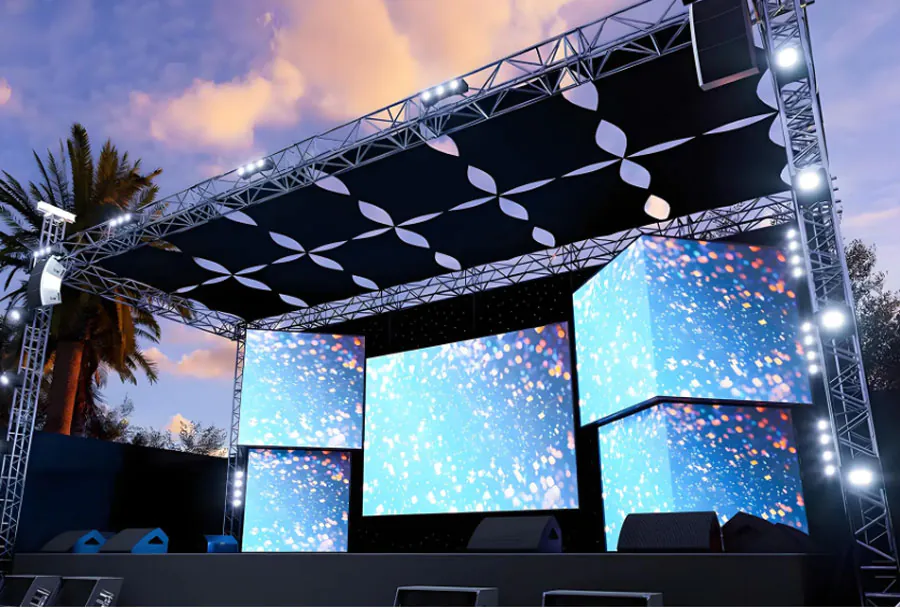
Table of Contents
- 1. What Weatherproof Actually Means
- 2. Wind Load, Ballast and Structure
- 3. Water, Drainage and Cable Paths
- 4. Heat, Humidity and Condensation
- 5. Lightning, Storm Calls and Insurance
- 6. Brightness, Content and Acceptance Testing
- FAQ
- Conclusion
1. What Weatherproof Actually Means
The IP code has two digits, and each answers a different question. The first digit covers solids — 6 means dust-tight. The second covers water — 5 means protection against water jets from a nozzle, not immersion. An IP65 cabinet is therefore dust-tight and jet-resistant, which is enough for rain on a vertical face and not a claim about standing water, pressure washing or long-term submersion.
Read the rating with the test conditions in mind. A cabinet tested on a bench is not a cabinet tested after two seasons of road cases, scratched seals and connectors unplugged in the rain.
Impact matters as much as water. An IK rating describes resistance to mechanical impact, which is what a rental cabinet actually meets: truss knocks, case lids, fork tines. Ask for it alongside IP.
Seals are consumables. Gaskets compress, hinge seals deform, and connector O-rings harden. A fleet that inspects and replaces seals on a schedule keeps its rating; one that does not owns a cabinet with a sticker.
Connectors set the real limit. A sealed cabinet with an unsealed power connector fails. Cable entries, drip loops and IP-rated plugs belong in the specification, not the accessory list.
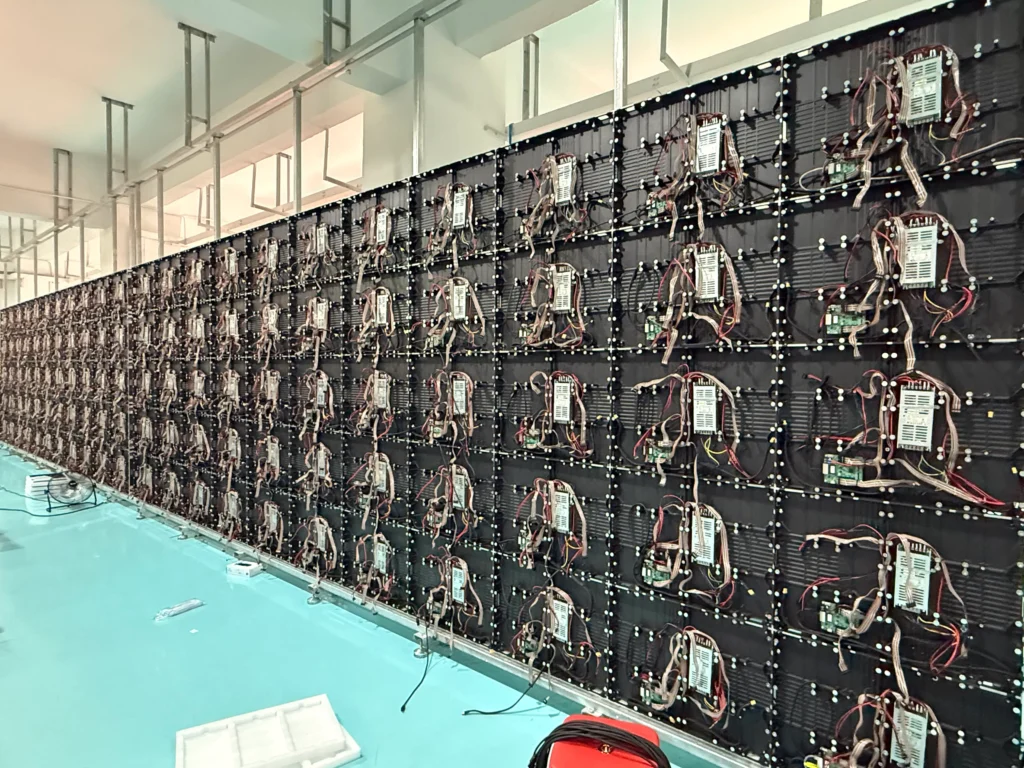
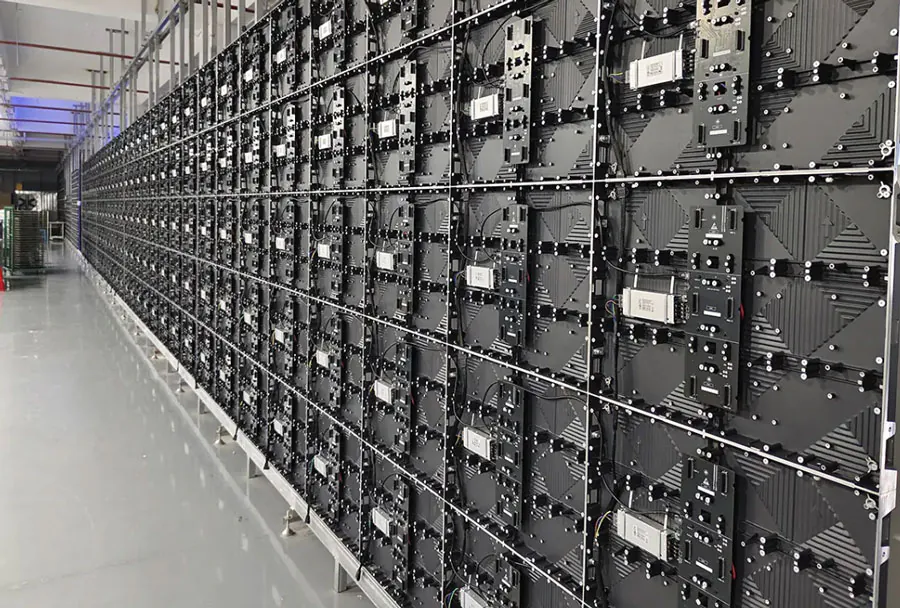
The rear is part of the screen. Rear-service cabinets have access panels and ventilation paths. Water that reaches the rear of a ground-stacked wall finds every one of them.
For a weatherproof outdoor LED screen rental Atlanta build, that distinction decides where the wall can stand. A plaza with no drainage and a park lawn with no anchoring are different projects with the same cabinet.
2. Wind Load, Ballast and Structure
A weatherproof outdoor LED screen rental Atlanta project fails in wind far more often than in rain. A wall is a sail: the larger the face, the more force it transfers into truss, ballast and ground.
Get the number, not the adjective. Ask for the maximum operating wind speed the structure is engineered for, and the wind speed at which the wall must be struck. Those two numbers should come from a structural engineer for the site, not from a generic product sheet.
Ballast is calculated, not estimated. Ground-supported walls need ballast weights derived from the sail area, the site’s exposure category and the height of the wall. On a park lawn or a parking deck, the ballast plan is the difference between a build and an incident.
Flown walls inherit the venue’s limits. Hanging from house points moves the question to the building: rigging plot capacity, point spacing, and whether the venue requires stamped drawings and a union crew.
Anchoring on hard surfaces. Concrete plazas and decks may prohibit drilling. If the answer is “no anchors”, the ballast plan has to carry the whole load, and that changes the truss layout.
Document the stop point. A written trigger — sustained wind at X mph, or gust at Y — removes the argument later. Whoever is authorised to call the strike should be named in the contract.

3. Water, Drainage and Cable Paths
Most water damage in outdoor LED work is not the rain hitting the face. It is water arriving from below, from a cable lying in a puddle, or from a pool that formed under the wall overnight.
- Keep the bottom row clear of standing water; a 50 mm riser solves more problems than a higher IP rating.
- Route cables with drip loops so water runs off the cable rather than into the connector.
- Seal unused ports with the caps supplied, and check them at every build.
- Provide a drainage path behind the wall, especially on solid surfaces where water cannot soak away.
- Use cable ramps across walkways; they also stop trip hazards and keep cables out of puddles.
- Cover processors, media servers and power distribution — the electronics fail before the panels do.
Condensation inside a case is a separate problem, covered below, and it survives a perfect IP rating.
For a multi-day outdoor event, ask where water will be at 4 am. Overnight irrigation, a street sweeper or a sprinkler system can soak a wall that faced no rain all day.
4. Heat, Humidity and Condensation
Atlanta summer conditions combine 90°F afternoons with humidity that stays high after sunset. Both reduce the brightness a cabinet can actually hold and both attack the electronics rather than the panel face.
Thermal derating. A cabinet rated at 6,000 nits will not hold 6,000 nits at 40°C internal temperature. Ask for the derating curve, leave ventilation clearance behind the wall, avoid enclosing the rear, and schedule content testing for the hour the sun hits the face.
Condensation after transport. A cabinet loaded in a cold, dry truck and opened in warm humid air forms moisture on cold modules and connectors. Acclimatise crates in the receiving space, keep them closed while they warm, and inspect before powering. Our guide to condensation, storage and acclimation covers the inspection sequence.
Corrosion at the coast. Salt air reaches Savannah and the barrier islands and accelerates corrosion on fasteners and connectors. Rinse-free cleaning and a seal inspection schedule matter more than in inland Georgia.
Storage between shows. A damp case left closed for a month is worse than a wet cabinet dried the same night. Dry storage, desiccant where fitted, and a fan-dried night build extend cabinet life more than any specification.
5. Lightning, Storm Calls and Insurance
A weatherproof outdoor LED screen rental Atlanta agreement should answer the storm question before anyone stands on site. Six items belong in writing.
- Lightning radius. A stated distance at which the crew stops work and connects nothing, plus who makes that call.
- Wind trigger. The gust or sustained speed that ends the show, and the strike procedure.
- Shelter and storage. Where cases and processors go if the wall comes down, and who moves them.
- Restart procedure. Inspection sequence before powering after a storm — water, debris, connector condition, insulation resistance.
- Insurance. Who insures the equipment outdoors overnight, and whether the policy excludes weather damage.
- Cancellation terms. What is refundable when the weather call is made, and how rescheduling works.
Electrical safety is not a page-level detail. Outdoor power distribution needs proper grounding, GFCI protection where required, and a licensed electrician where the code demands one. A generator sitting in a puddle is a hazard regardless of what the screen is rated.
Keep the venue’s own storm policy attached to the contract. Parks, stadiums and festival grounds often have a stricter threshold than the producer does.
6. Brightness, Content and Acceptance Testing
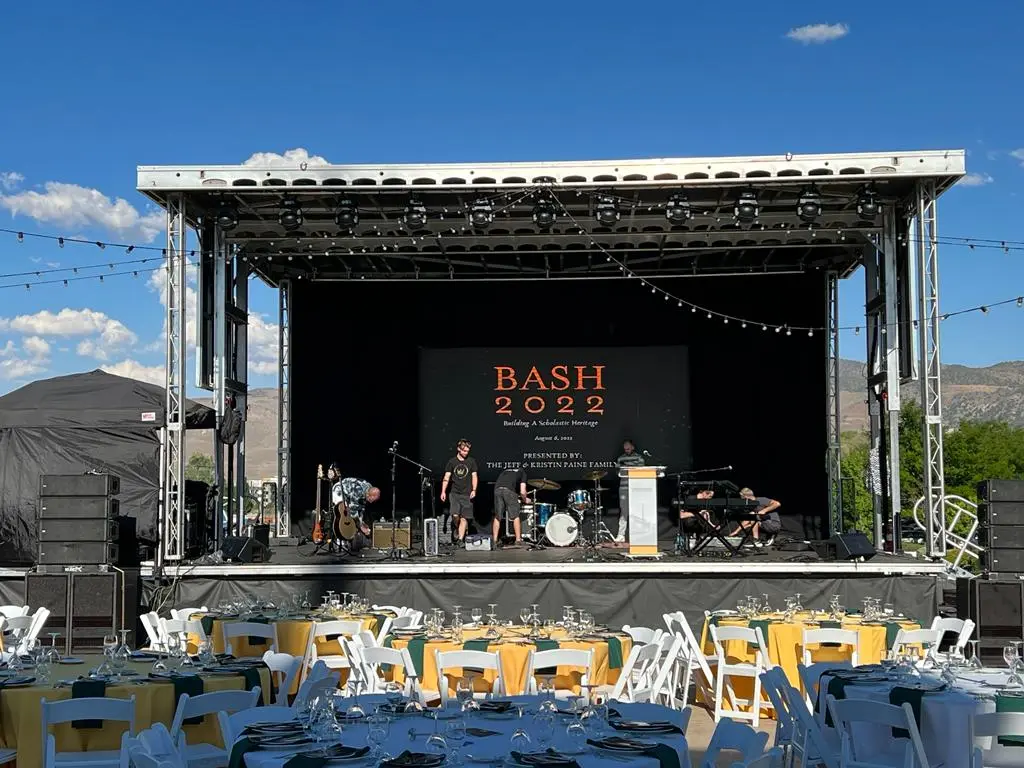
Brightness is the specification people buy and the one most often measured in the wrong condition. Daylight viewing needs 5,000 nits or more, and 6,000–8,000 where the face takes direct afternoon sun; a west-facing wall in July is the hardest case in the market.
Contrast, not just nits. A bright wall with grey blacks reads washed out in sun. Ask for the calibrated figure at show brightness and test content that has both white and deep shadow.
Refresh for cameras. Outdoor events are filmed. Specify 3,840 Hz or higher and test with the actual camera shutter, not the eye.
Acceptance sequence for an outdoor build. White and grey fields for uniformity, primary colours for dead pixels, a moving pattern for tearing, every input, a ten-minute loop at show brightness, and a check of the rear cabinets for heat and water after the first hour.
Spares outdoors. A spare module kept dry and reachable matters more than a second processor, because the first failure outdoors is usually a module or a connector, not the controller.
Documentation. Keep the derating curve, IP and IK ratings, wind numbers, inspection log and the storm procedure in one file. Buyers comparing quotes can then compare protection, not adjectives.
Weatherproof Outdoor LED Screen Rental Atlanta — FAQ
Is IP65 enough for an Atlanta summer?
IP65 covers dust-tight sealing and water jets, which handles rain on a vertical face. On a weatherproof outdoor LED screen rental Atlanta job it says nothing about heat derating, condensation after transport, wind load or electrical safety, so those have to be specified separately.
Can an outdoor wall stay up overnight?
Only with a documented plan: anchoring or ballast sized for the overnight forecast, covers or strike procedure, security, and insurance that covers unattended outdoor equipment. Many policies exclude exactly that.
How is wind speed decided for a rental build?
By a structural engineer using the wall’s sail area, the site exposure and the mounting method. A vendor quoting a single number for every site is guessing.
What causes most failures in humid weather?
Condensation on cold modules and connectors after transport, followed by water in cable entries. Both are inspection problems rather than panel problems.
Do you rent weatherproof screens in Atlanta?
No. We manufacture IP-rated outdoor cabinets and stock standard pitches in Atlanta. A local rental partner supplies the crew, structure and show-day support.
Georgia resale certificates are issued by the Department of Revenue. See dor.georgia.gov for the current rules.
City permitting and event rules are published by the City of Atlanta. See www.atlantaga.gov for the current rules.
Conclusion
A weatherproof outdoor LED screen rental Atlanta decision is really four decisions: the protection rating, the wind plan, the water path and the storm procedure. Get those in writing and the summer forecast stops being a risk to the budget.
Start with the rental LED screen range to confirm outdoor cabinet formats and pitches, check what is in stock at our Atlanta warehouse, or read the LED screen rental Atlanta guide for delivery, will-call and fleet planning.
Buyers comparing Weatherproof outdoor LED screen rental Atlanta options should ask for the cabinet count, the spare ratio and the processor model in writing.