Affordable Flex Screen Price Options for All Budgets

A flex screen price in 2026 usually falls between $800 and $5,500 per square meter for modules and basic control gear, before frames, freight, and installation. The spread is wide because a flexible LED display is built around a curve, and every added degree of bend, every step up in pixel density, and every jump in brightness changes the bill of materials. Buyers who compare only the headline number tend to misread the quote.
This guide merges three earlier 2026 pricing reports into one reference. It covers price tiers by pixel pitch, what a quote includes, the cost drivers that matter, hidden integration costs, negotiation tactics, and total cost of ownership across a five-year life. Even so, all ranges below are planning figures drawn from published supplier pricing, so treat them as a baseline for comparison rather than a fixed offer.
Table of Contents
- 1. What a Flex Screen Price Covers in 2026
- 2. What the Flex Screen Price Includes
- 3. What Drives a Flex Screen Quote
- 4. Flex Screen Price by Size and Pixel Pitch
- 5. Indoor, Outdoor, and Curved Cost Differences
- 6. Custom Packages and Engineering Fees
- 7. Budget Flex Screen Price Options Under $1,500 per m²
- 8. Hidden Costs After the Quote
- 9. How to Get the Best Flex Screen Price
- 10. Rent or Buy: Which Route Fits Your Project
- 11. Total Cost of Ownership and ROI
- 12. Cutting Cost Without Cutting Quality
- 13. Choosing a Supplier and Managing Risk
- 14. Real Project Budgets and Savings
- 15. Where the Flex Screen Price Is Heading in 2027–2028
- FAQ
- Conclusion
1. What a Flex Screen Price Covers in 2026
Suppliers publish flexible LED displays in four practical bands. Each band reflects the pixel pitch first, then brightness and protection level. The table below shows typical 2026 ranges per square meter for the panel, receiving cards, power supplies, and a basic processor.
| Tier | Typical pixel pitch | Price per m² (USD) | Best for | Normally included |
|---|---|---|---|---|
| Value indoor | P3.9 – P4.8 | $800 – $1,200 | Retail facades, curved walls, temporary signage viewed from 6 m or more | Modules, receiving cards, power supplies, basic processor |
| Standard indoor | P2.6 – P3.0 | $1,400 – $2,200 | Museums, premium retail, lobby features, studio backdrops | Modules, control gear, factory calibration, spare modules |
| Fine pitch | P1.2 – P1.8 | $3,000 – $5,500 | Broadcast sets, close-view retail, control rooms | Fine-pitch modules, HDR-capable drivers, matte finish |
| Outdoor | P2.6 – P6.0 | $1,800 – $3,800 | Weatherproof curved facades, architectural signage | IP65–IP67 sealing, 5,000–6,000 nit brightness, reinforced backing |
Read these numbers as a starting band, not a final invoice. In practice, the per-square-meter rate falls as order volume grows, and it climbs sharply below P2.0 because fine-pitch modules carry lower yields. As a result, that single threshold explains most of the gap between a $900 quote and a $4,000 quote for what looks like the same curved wall.
2. What the Flex Screen Price Includes
Most published rates are panel-level figures. They assume the buyer supplies the structure, the long signal runs, the commissioning crew, and the freight. However, when two suppliers quote the same pitch, ask both to price the same bill of materials, because a low headline rate often hides a shorter warranty or a thinner power supply.
A module-complete quote should list LED modules, receiving cards, power supplies, cabinets or magnetic mounts, a processor sized for the pixel count, and the data and power cabling inside the wall. A turnkey quote adds the steel frame, on-site labor, calibration, and a burn-in period. Anything outside those lists is an extra, and the extras are where budgets slip.
Typically excluded from a per-square-meter flex screen price:
- Steel support structure and curved sub-frames
- Signal extenders beyond the standard cable length
- Freight, crating, insurance, and import duty
- Rigging, scaffold, or lift rental
- Content production and pixel mapping
- Extended warranty and spare-parts stock
For a US buyer, the freight line matters more than the panel line on small orders. A single 8 m² wall shipped by air can carry a logistics bill equal to 10–15% of the hardware cost, while the same order consolidated into a container drops to 3–5%.
3. What Drives a Flex Screen Quote
Eight variables explain almost every price difference between two flexible LED quotes:
- Module materials: flexible PCBs, silicone masking, and polymer substrates cost more than rigid boards.
- Pixel pitch: finer pitches raise LED count and lower manufacturing yield per square meter.
- Brightness: daylight-readable panels need better bins and stronger drivers.
- Bend radius: tighter curves demand custom substrates, adhesives, and seam engineering.
- Protection level: IP65 and IP67 sealing adds materials and testing time.
- Control system: redundancy, remote monitoring, and spare ports raise the system total.
- Order volume: setup and tooling spread across more units as volume grows.
- Warranty and support: longer cover and fast RMA service carry a real cost.
Those variables do not weigh equally. The table below shows how each block contributes to a typical installed budget, and where a buyer can still negotiate.
| Cost driver | Typical share of total cost | Influence on final price | How to optimize |
|---|---|---|---|
| LED modules and driver ICs | 30% – 45% | High | Match pitch to viewing distance, verify binning, test samples |
| Control systems and software | 10% – 20% | Medium | Standardize controllers, confirm firmware upgrades |
| Fabrication and frames | 15% – 25% | High for curved or custom work | Design for modularity, reuse standard frame elements |
| Shipping and logistics | 5% – 15% | Medium | Consolidate shipments, compare port and freight terms |
| Installation and after-sales | 10% – 20% | Medium | Bundle installation, require an SLA, train local technicians |
Because modules dominate the total, pitch selection is the strongest lever a buyer holds. As a result, most successful cost reviews start with viewing distance, not with the supplier discount.
4. Flex Screen Price by Size and Pixel Pitch
Size multiplies the panel cost in a straight line, but it does not multiply the structure, freight, or commissioning cost the same way. As a result, a large wall often looks cheaper per square meter than a small one, even at the same tier. The table below applies the 2026 tier rates to three common wall sizes, using panel cost only.
| Screen area | Value (P3.9–P4.8) | Standard (P2.6–P3.0) | Fine pitch (P1.2–P1.8) |
|---|---|---|---|
| 6 m² | $4,800 – $7,200 | $8,400 – $13,200 | $18,000 – $33,000 |
| 12 m² | $9,600 – $14,400 | $16,800 – $26,400 | $36,000 – $66,000 |
| 24 m² | $19,200 – $28,800 | $33,600 – $52,800 | $72,000 – $132,000 |
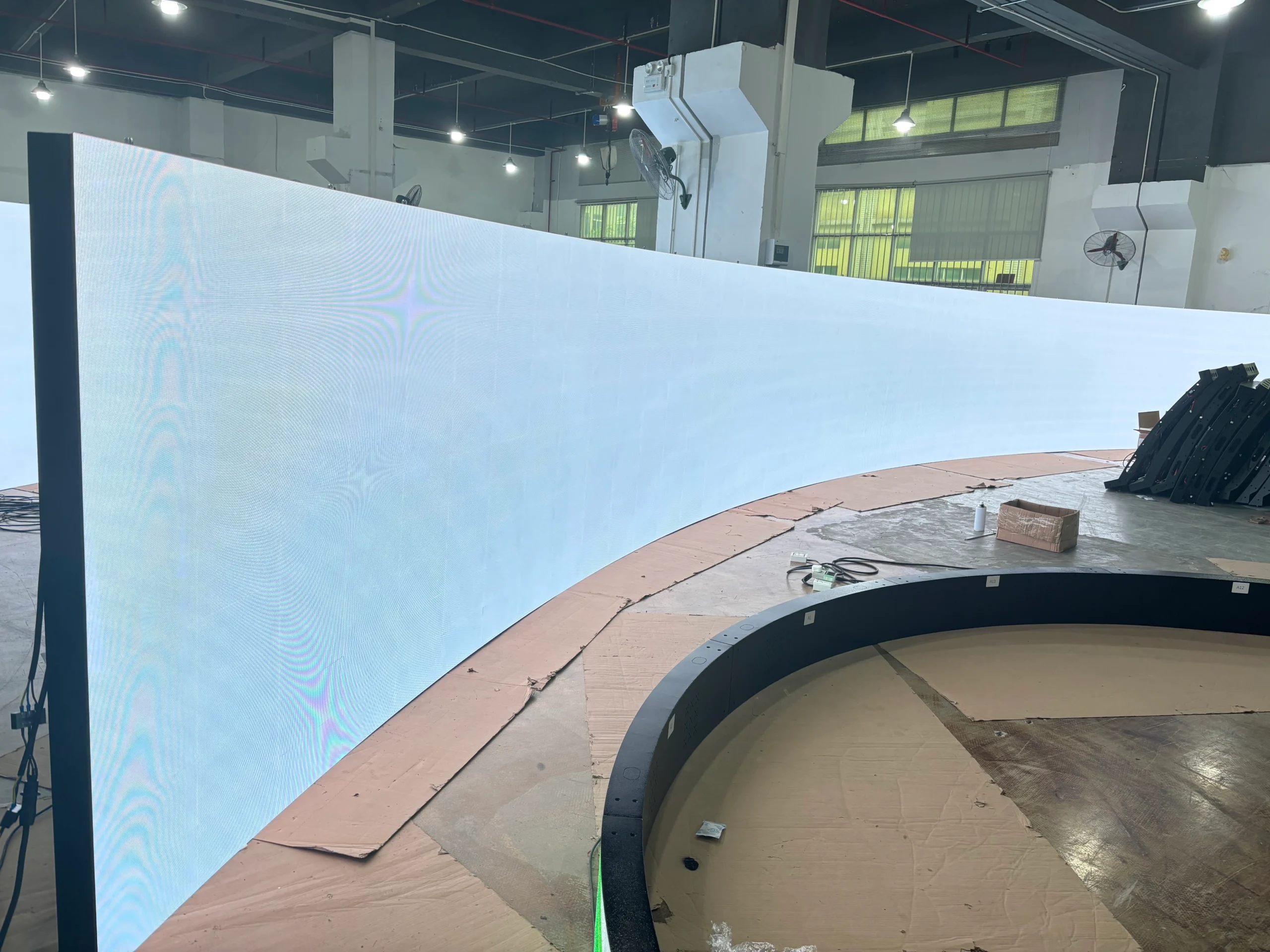
In practice, match pitch to the closest viewer, not to the room. A working rule of thumb is one millimeter of pitch for every meter of viewing distance, so a screen viewed from 4 m rarely needs finer than P4, while a 2 m viewing distance justifies P2 or P1.8. Meanwhile, hybrid builds place fine-pitch modules only in the focal zone and value modules around it, which protects image quality while cutting the total.
5. Indoor, Outdoor, and Curved Cost Differences
Outdoor flexibility carries a premium of roughly 20–60% over an indoor wall at the same pitch. The extra pays for 5,000–6,000 nit brightness, IP65 or IP67 sealing, wider temperature tolerance, and a heavier cabinet that survives wind load. In practice, a P3.9 outdoor panel often lands near the price of a P2.6 indoor panel, which catches buyers who compare pitch alone.
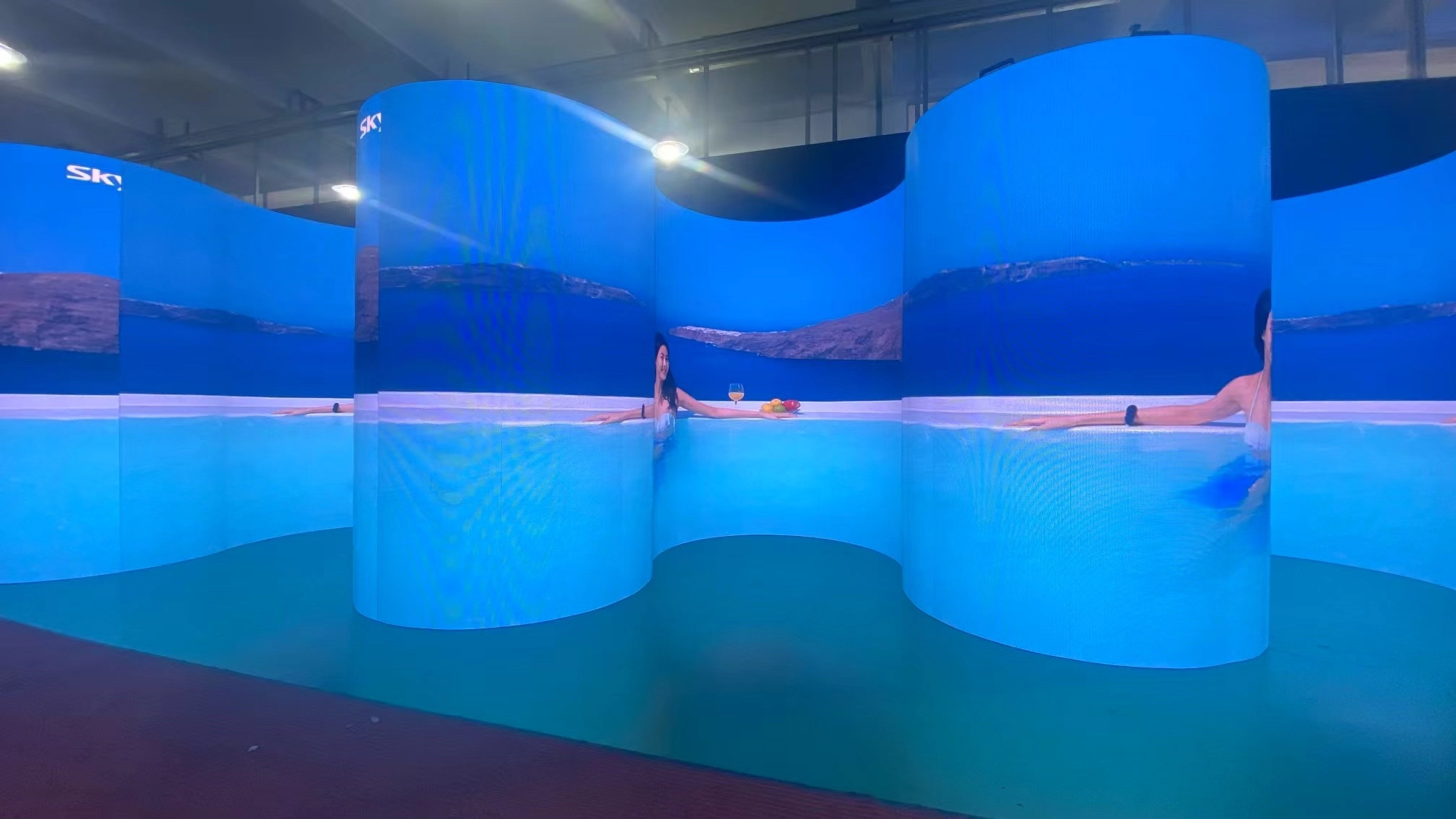
Curvature adds its own layer, but the premium depends on radius. However, a gentle curve above 1,000 mm usually needs only standard flexible modules and a shaped frame, so the premium stays near 10%. Tighter radii below 500 mm require custom module geometry, stronger magnets, and more seam work, and the premium can reach 25–30%. Even so, the curve itself rarely doubles a budget; the structure that holds it usually does.
By contrast, indoor work also carries hidden savings. Because brightness and sealing requirements are lower, indoor walls use lighter cabinets, cheaper power supplies, and simpler mounting. That combination often cuts the installed cost by a third compared with an outdoor build of the same area.
When Paying More Is Justified
Not every project should chase the lowest band. Pay for a finer pitch or a tighter radius when the wall carries the brand message and viewers stand close, when the site exposes the screen to weather or temperature swings, when the installation must run for a decade without replacement, or when certification and traceability are contractual. In those cases, the higher flex screen price buys lower lifecycle cost and fewer service calls, not extra prestige. By contrast, a decorative wall seen from 8 m rarely rewards the upgrade, so spend the difference on calibration and spare modules instead.
6. Custom Packages and Engineering Fees
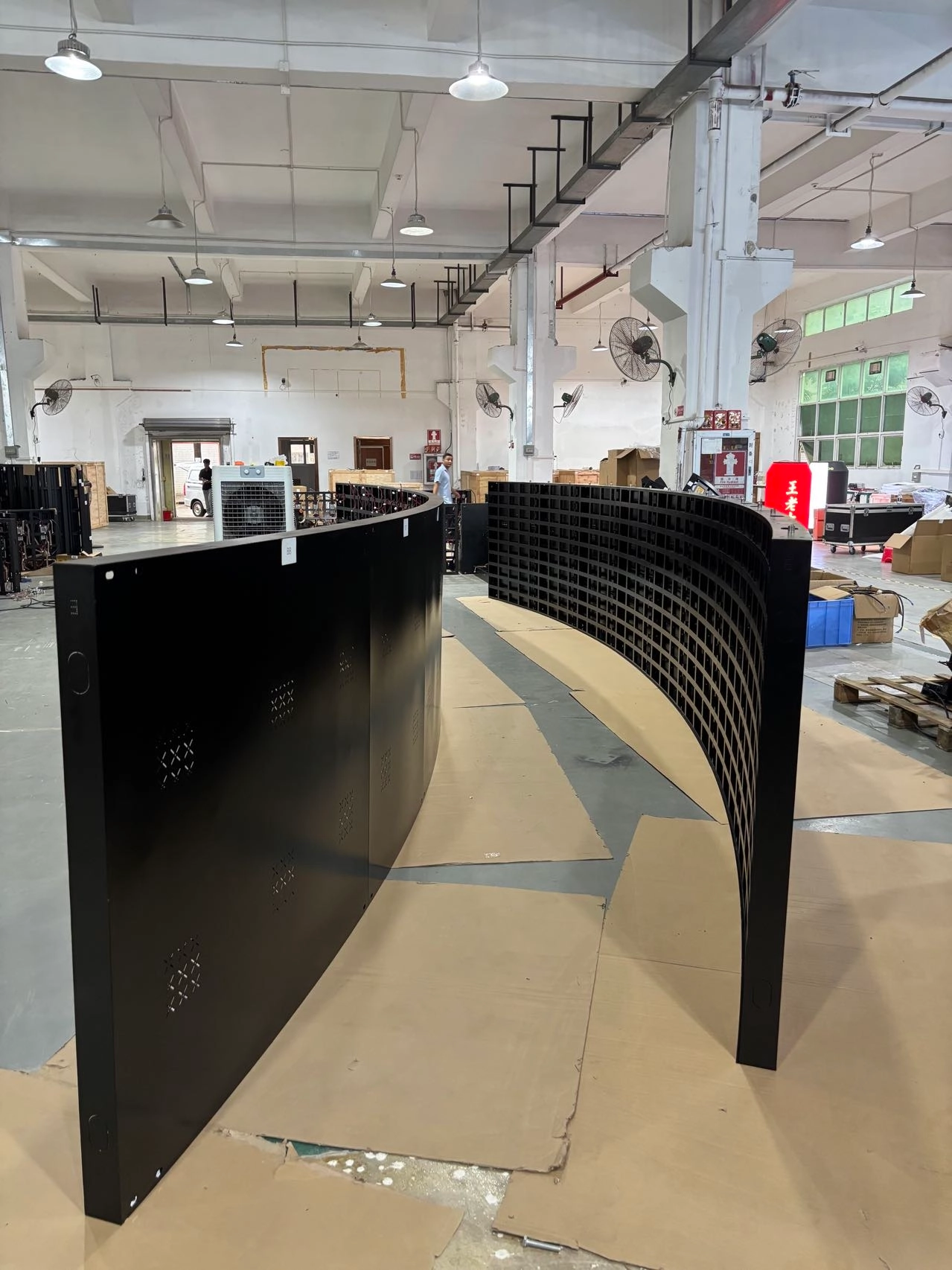
A custom package tailors the wall to the building: irregular outlines, logo cut-outs, a fixed bend radius, a specific surface finish, or an integrated controller with SDI and Art-Net inputs. Each element adds engineering time before production starts, and suppliers usually recover that time through a fixed fee rather than a higher rate per square meter.
On small orders, that fee can add 10–30% to the effective flex screen price. On orders above roughly 30 m², the same fee spreads thin and becomes almost invisible. Consequently, the smart sequence is to fix the shape and the radius first, then ask for a per-square-meter rate that includes the engineering, so the comparison stays honest.
Custom packages also change lead time. A standard wall ships from stock in days, while a shaped wall needs drawing approval, frame fabrication, and a burn-in cycle that can run four to eight weeks. Buyers who need a fixed opening date should price the schedule risk, not just the hardware.
7. Budget Flex Screen Price Options Under $1,500 per m²
A capable curved wall does not require a fine-pitch budget. Three choices keep the flex screen price under $1,500 per square meter without visible compromise at normal viewing distance. First, stay at P3.9 or above for any audience seated more than 6 m away. Second, use standard module sizes and a single curve radius so the factory avoids custom tooling. Third, specify indoor brightness only, since 1,200–1,500 nits covers most retail and lobby conditions.
Meanwhile, the fourth lever is inventory. US buyers can cut freight, duty timing, and lead time by ordering a series held in a US warehouse rather than shipping a single custom batch from Asia. Because those units already cleared customs, the landed cost is predictable and the wall can arrive in days instead of weeks.
Finally, resist the urge to over-specify. A common mistake is buying P1.8 for a wall that nobody approaches closer than 5 m. That single upgrade can double the flex screen price while adding nothing a visitor can see. A value-tier wall with good calibration usually beats a fine-pitch wall with a weak processor.
8. Hidden Costs After the Quote
The panel is rarely the whole project. Six lines appear after the deposit, and each one can surprise a first-time buyer.
- Processor and control: $300 – $3,000, depending on pixel count and input types.
- Steel frame and curved sub-structure: $120 – $350 per m², higher for tight radii.
- Installation labor: $80 – $250 per m², plus rigging or lift hire.
- Freight and crating: 3–15% of hardware cost, depending on mode and distance.
- Duty, tax, and customs brokerage: varies by country and tariff code.
- Commissioning and content mapping: often quoted per day, not per square meter.
On low-volume projects, these extras can outweigh the panel cost. For that reason, a $12,000 module quote can become a $19,000 installed project before anyone buys a spare card. Ask for an itemized landed-cost sheet early, and compare suppliers on that sheet rather than on the headline rate.
9. How to Get the Best Flex Screen Price
Price discipline starts before the first email to a supplier. Write a requirement sheet that states the wall area, the closest viewing distance, indoor or outdoor use, the curve radius, the required brightness, and the acceptance criteria. When those six items are fixed, every quote describes the same product, and negotiation becomes a comparison rather than a guess.
Next, invite three to six qualified suppliers to bid against that sheet and ask each one for itemized pricing: modules, control, frame, freight, installation, warranty, and spares. Request panel-only and module-complete prices so you can see where each supplier adds margin. After the first round, ask for a best-and-final offer that includes extended warranty or extra spare modules instead of a bare discount.
Then score the offers on cost, technical compliance, warranty, lead time, and local support. Structure payments as 30% deposit, 50% before shipping, and 20% after on-site acceptance, because that final holdback keeps quality on the supplier’s side of the table. Finally, lock the currency and freight terms early, since both can move more than a negotiated discount on a large order.
10. Rent or Buy: Which Route Fits Your Project
Rental suits a short event, a touring show, or a one-time launch where the wall comes down in a week. The rental house carries transport, crew, and spare panels, so the buyer avoids capital outlay and storage. However, the day rate adds up fast, and the same money buys a permanent wall after roughly 20–30 show days.
Still, purchase wins for permanent installations, retail fit-outs, lobbies, museums, and any project that needs a unique shape tied to the building. Ownership also protects the content workflow, because the processor, pixel map, and spare modules stay with the site. For a venue that will run the screen for years, buying a mid-tier wall usually delivers the lower lifetime cost.
11. Total Cost of Ownership and ROI
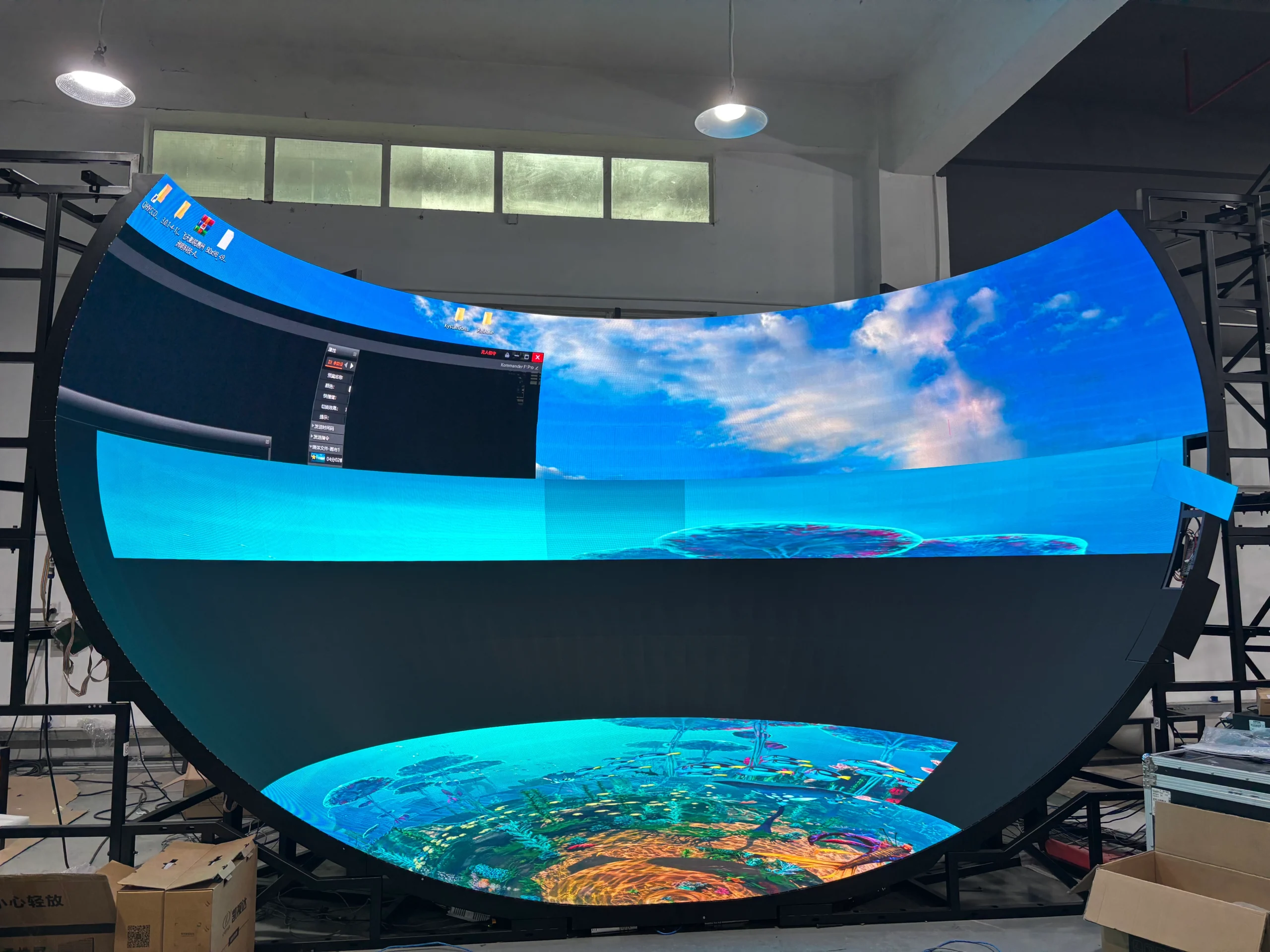
The purchase price is only the first number in a five-year model. Add power, maintenance, spare parts, and replacement cycles, then compare that total against the revenue or engagement the wall creates. A cheap wall that fails twice a year costs more than a mid-tier wall that runs clean.
For planning, assume indoor walls draw roughly 150–300 W per square meter at average content brightness, and outdoor walls draw 300–600 W. Multiply by operating hours and your electricity rate to get the annual energy line. Hold 3–5% of hardware value for spares, and budget one service visit per year for calibration checks on a commercial installation.
On the return side, measure what the wall changes: dwell time, conversion, sponsorship value, or ticket uplift. For a retail feature, a modest lift in conversion often repays the wall within two years. For a museum or lobby, the case rests on attendance and brand value, so track those metrics from opening day rather than guessing later.
12. Cutting Cost Without Cutting Quality
In practice, most savings come from design decisions, not from squeezing the supplier. Consolidate display types across a site so the order reaches a volume tier. Standardize module sizes and curve radii so the factory avoids new tooling. Right-size the pitch to the real viewing distance, and use hybrid density where the focal zone needs detail.
Also, specify only the environmental rating the site needs, because IP67 on an indoor wall buys nothing. Accept a longer lead time in exchange for scheduled production rather than expedited surcharges. Bundle modules, control, and installation into one quote so the supplier can price the package as a whole.
Finally, buy samples before a full run. A two-module sample costs little, and it exposes color drift, seam gaps, and connector quality before the factory builds 300 modules. Even so, never trade away binning or warranty to hit a target price; those two items drive the failure rate more than any other specification.
13. Choosing a Supplier and Managing Risk
A supplier’s track record matters more than its price list. Ask for references from projects of similar size and complexity, and visit an installation if you can. Check the factory’s aging process, bin sorting, and test reports, because two vendors can sell the same pitch with very different component quality.
Confirm the warranty terms, the RMA process, and the response time in writing. Verify that the product carries the certifications your market requires, such as CE, RoHS, or UL, and that the test reports match the model you are buying. For critical sites, negotiate a spare-parts commitment and escrow the design files so a supplier change does not strand the wall.
Also watch supply stability. Flexible LED panels depend on driver ICs and specialty materials that can tighten without warning, so a supplier that holds stock or publishes firm lead times is worth a small premium. In short, the cheapest quote often carries the highest risk, and risk is expensive to fix after the wall is on the building.
14. Real Project Budgets and Savings
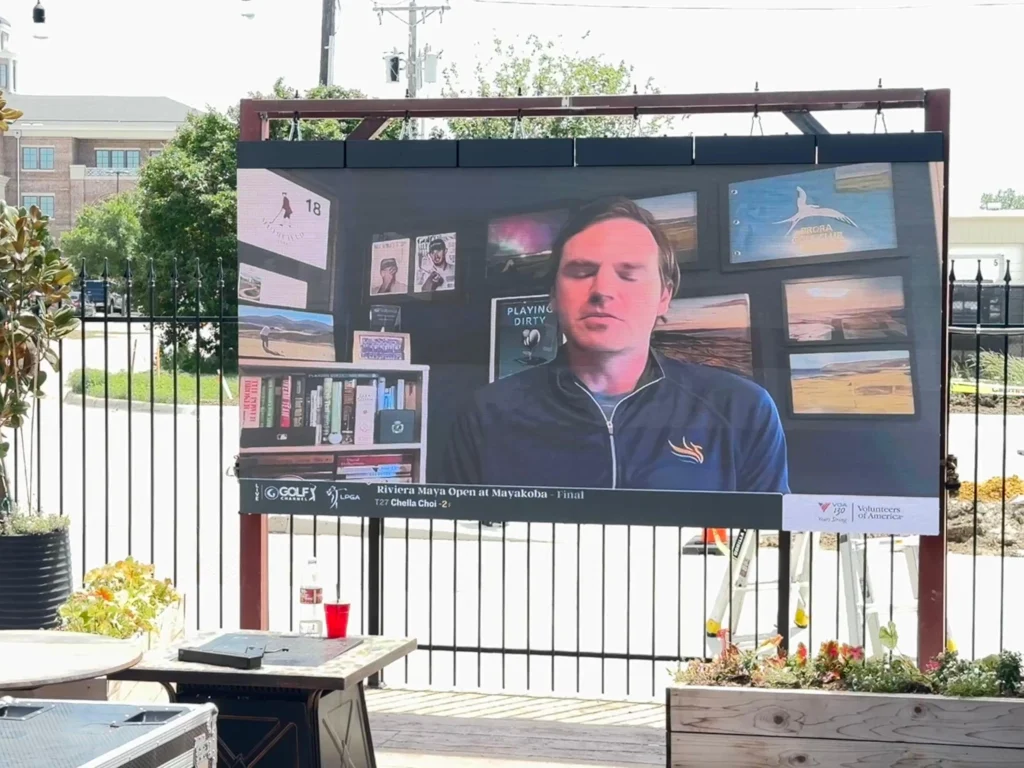
Three installed budgets show how scope changes the total. These figures include hardware, frame, and standard commissioning, but exclude content production and building work.
| Project | Configuration | Area | Installed budget |
|---|---|---|---|
| Retail curved feature wall | Standard indoor, P2.6–P3.0, 3–5 ft viewing | 15 m² | $35,000 – $55,000 |
| Museum exhibit | Fine pitch, HDR drivers, close view | 6–10 m² | $30,000 – $60,000 |
| Outdoor storefront signage | Outdoor, IP65+, moderate curve | 20–30 m² | $50,000 – $110,000 |
Meanwhile, savings follow the same logic. One stage production cut panel cost by about 35% by choosing P3.9 over P2.6 and keeping high-density modules only in the focal zone. A retail wrap saved roughly 15% by accepting a slower refresh rate that still met the brief. A three-building facade project saved about 20% by consolidating procurement and standardizing maintenance.
In each case, the flex screen price fell because the specification changed, not because the supplier dropped its rate. That distinction matters during budget reviews, since spec changes are durable savings while discounts expire at the next order.
15. Where the Flex Screen Price Is Heading in 2027–2028
Mainstream flexible LED pricing should keep eroding by roughly 3–7% a year as yields improve and production scales. Premium categories, including tight-radius modules and very fine pitch, will likely fall more slowly, in the 0–3% range, because complexity and low volume limit cost reduction. Meanwhile, driver ICs and specialty materials remain the volatile inputs, and a single shortage can pause that decline for two quarters.
However, tariffs and freight rates add a second layer of uncertainty. A change in duty treatment can move a landed flex screen price by more than a year of normal erosion, so buyers planning a 2027 installation should lock pricing and shipping terms early. Even so, the long direction is clear: standard pitches get cheaper, custom geometry stays premium, and the gap between them widens.
FAQ
How much does a flex screen price usually run?
On average, most 2026 projects land between $800 and $2,200 per square meter for standard indoor walls, and between $1,800 and $3,800 for outdoor walls. Fine pitch above P2.0 can reach $5,500. The installed total usually adds 30–60% for frame, control, freight, and labor.
Is indoor equipment cheaper than outdoor equipment?
Yes. Indoor modules need less brightness, lighter sealing, and simpler cabinets, so the same pitch typically costs 20–60% less than an outdoor version.
What is the most expensive feature in a flexible LED project?
Fine pixel pitch and tight bend radius drive cost fastest. Either one can double the module price, and combining them with a custom shape adds engineering fees and lead time.
Can I reduce cost by ordering in bulk?
Volume helps. Larger orders spread tooling, freight, and engineering across more units, and suppliers often move a buyer into a lower rate band once the order passes roughly 30 m².
Conclusion
A flex screen price reflects a chain of engineering choices, not a single market rate. Pitch, brightness, radius, protection, volume, and warranty each move the number, and the installed cost adds frame, control, freight, and labor on top. In practice, buyers who define the viewing distance and the curve first, then compare itemized quotes on the same bill of materials, consistently land better value than buyers who shop on the headline rate.
Therefore, use the tier and size tables above to set a realistic budget, reserve 30–60% for the installed scope, and negotiate on warranty, spares, and lead time rather than on list price alone. For product details and curved module options, review the flexible LED display range, and check the bend radius guide before fixing a design. Certification requirements for target markets are published by UL Solutions and EU RoHS directive.