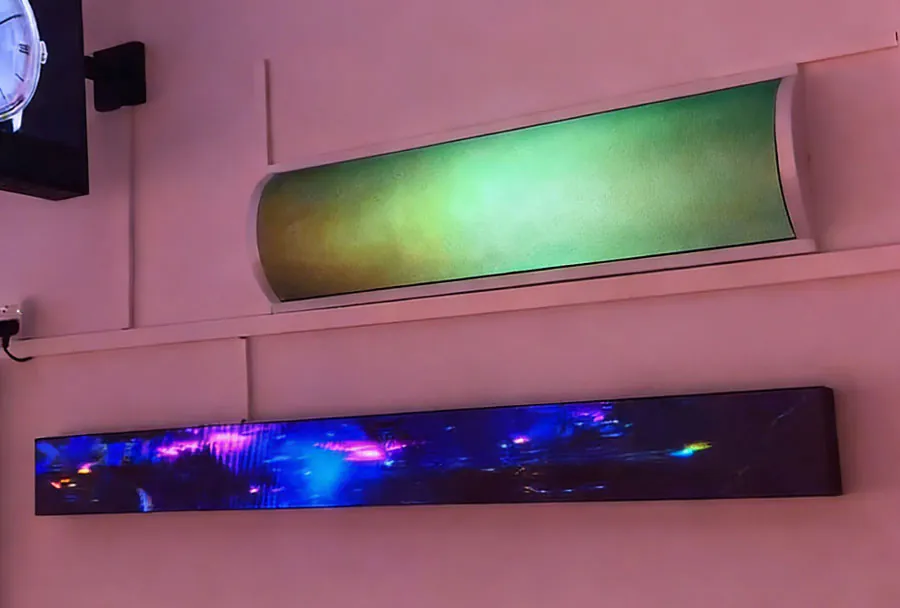
Custom Shaped LED Screens: Types & Benefits & Design

Custom Shaped LED Screens: Types & Benefits & Design Guide is a decision path that starts long before you choose a pixel pitch. Industry surveys consistently show that non-rectangular digital displays generate stronger unaided brand recall than standard 16:9 screens, though the precise lift depends on venue, content, and audience.
Table of Contents
- What Are Custom Shaped LED Screens?
- Types of Custom Shaped LED Screens
- Key Benefits of Custom Shaped LED Displays
- Custom Shaped LED Screen Design Guide
- Installation, Compliance and Maintenance Checklist
- How TW VISION Manufactures Custom LED Displays
- Common Design Mistakes to Avoid
- Can custom shaped LED screens be used outdoors?
- How much do custom shaped LED screens cost compared to standard displays?
- What pixel pitch should I choose for a shaped LED screen?
- Can I retrofit an existing video wall into a custom shape?
- How do I create content for a non-rectangular LED screen?
- Conclusion
TW VISION has stock LED panels in the USA. Click www.cstwvision.com to talk.
The problem is simple: most integrators and designers still plan content on a rectangular canvas, which wastes the shape. The five secrets ahead cover the main screen types, real benefits, a practical design workflow, and the specification mistakes that quietly reduce performance.
What Are Custom Shaped LED Screens?
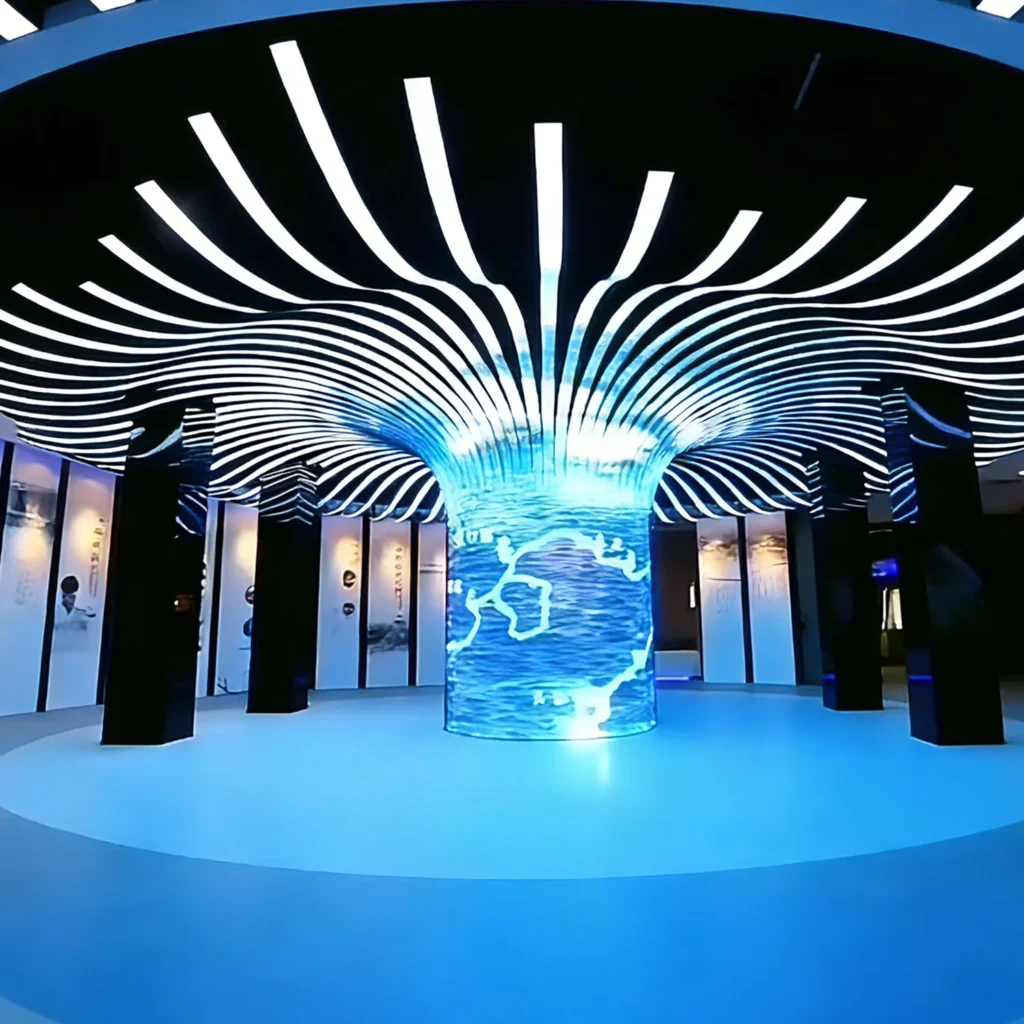
A custom shaped LED screen is a direct-view LED display built to a non-standard outline, such as a circle, sphere, curved ribbon, or die-cut logo. The full Custom Shaped LED Screens process starts from one principle: the physical shape is part of the message, not a limitation.
Unlike a standard flat panel, a shaped screen requires you to map content to the actual visible surface, so a Custom Shaped LED Screens plan should include commissioning and testing time. Manufacturers describe these products as modular LED arrays rather than fixed panels.
Each cabinet connects to a control system, and the software treats the full array as a single canvas.
The most important early distinction is flexible versus rigid modules. Flexible modules bend to fit a curve, while rigid modules are cut or masked to create an irregular outline. Industry product documentation consistently lists brightness, pixel pitch, and bend radius as the three core performance specs.
How to apply this: walk the site and list every surface where a standard rectangle would not fit; that list becomes your shaped-screen shortlist.
Types of Custom Shaped LED Screens
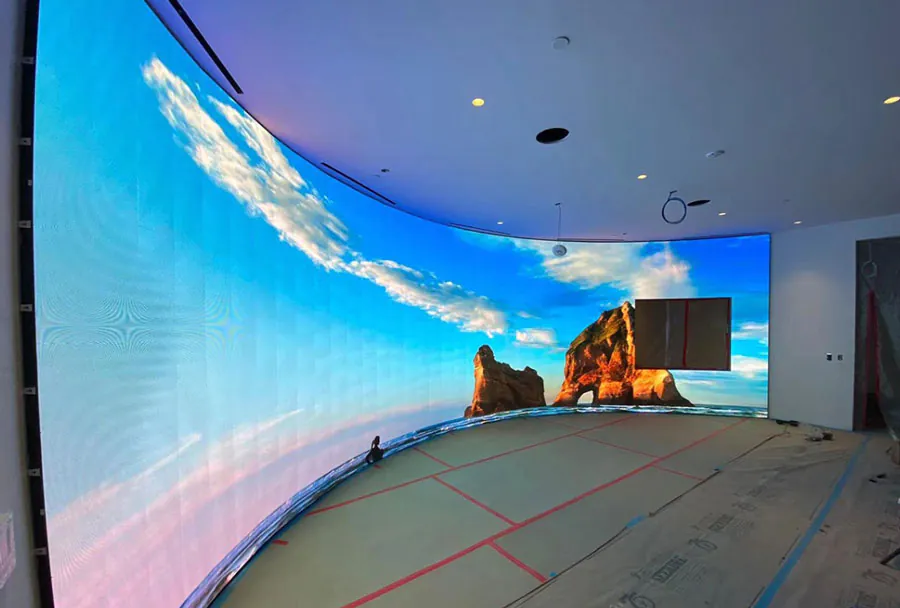
The main types fall into six families: flexible modules, circular or oval displays, spherical or dome screens, die-cut logo screens, transparent LED screens, and corner or cube displays. A practical Custom Shaped LED Screens comparison starts with module geometry, because the type you choose changes the content workflow.
– Flexible LED modules: bend to curves and columns; require a minimum bend radius
– Circular and oval screens: used for clocks, medallions, and brand badges
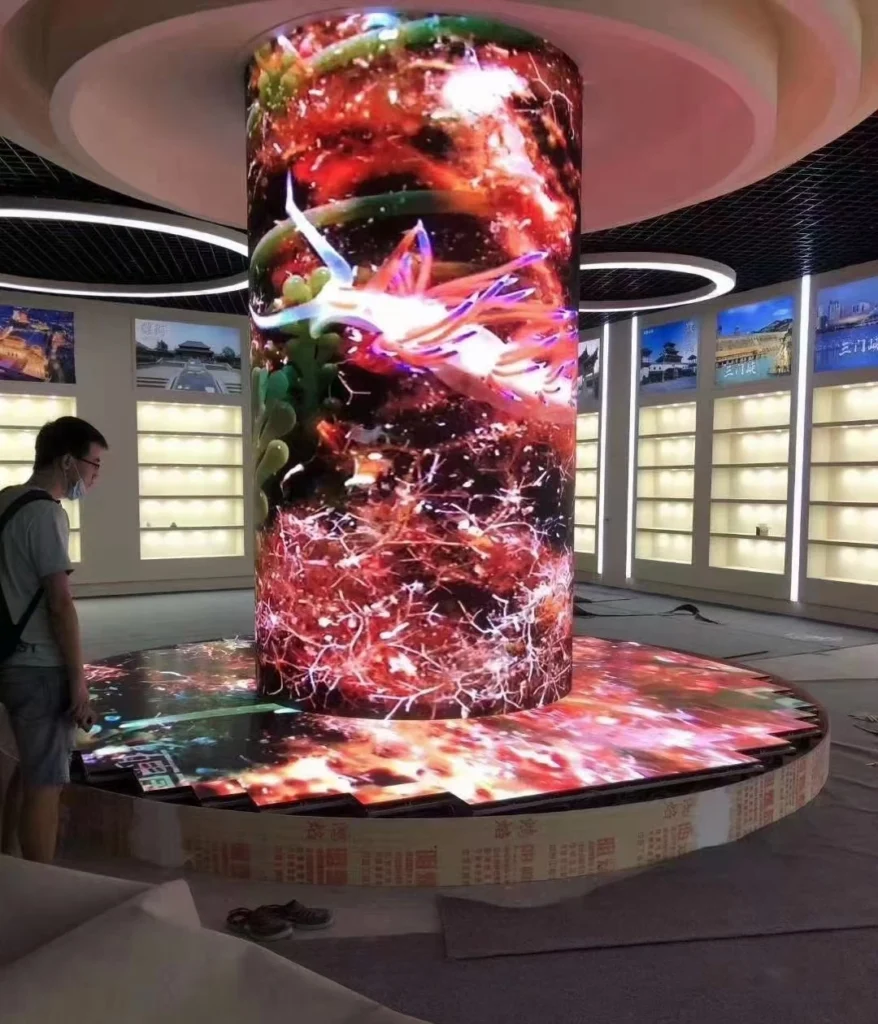
– Spherical and dome screens: high-impact centerpieces for events or lobby spaces
– Die-cut logo screens: shaped to letters, mascots, or product silhouettes
– Transparent custom LED screens: fit glass facades and retail windows
– Corner and cube screens: create 3D brand towers and architectural edges
| Screen type | Best use case | Key design consideration | Action to take |
|---|---|---|---|
| Flexible LED module | Curved walls and columns | Minimum bend radius | Test the actual module before CAD layout |
| Circular LED screen | Lobby clocks, brand medallions | Safe content area | Keep key text inside the inscribed circle |
| Spherical LED screen | Events, 3D centerpieces | Rigging and service access | Confirm weight load and access hatch |
| Die-cut logo screen | Storefront logos, mascots | Edge masking | Use a custom mask to hide inactive pixels |
| Transparent LED screen | Glass facades, retail windows | Brightness vs. transparency | Match brightness to sunlight exposure |
As you compare options, the Custom Shaped LED Screens approach is to prototype the shape with a blank mask before specifying cabinets.
How to apply this: choose one type and request a sample module to test the bend radius, edge finish, and seam alignment under real site lighting.
Key Benefits of Custom Shaped LED Displays
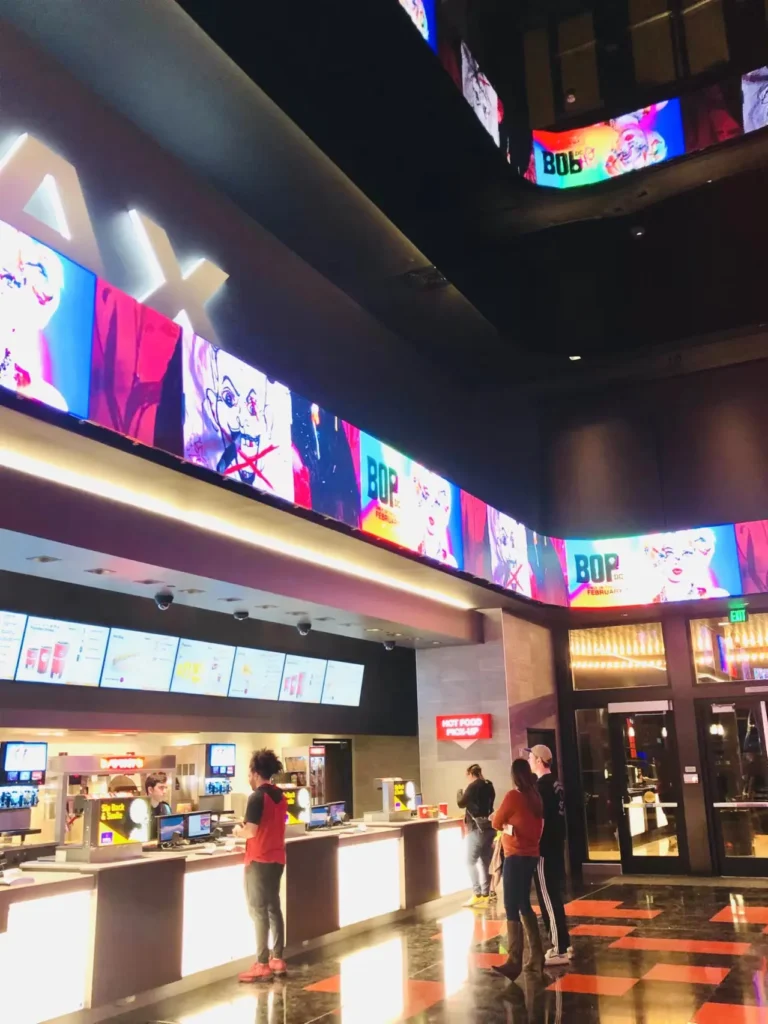
The strongest benefit is visual salience: a shaped screen works before the viewer consciously reads it because the outline breaks the expected rectangle. The Custom Shaped LED Screens value case usually rests on three measurable outcomes: attention, identity, and fit.
– Higher visual salience: non-standard formats attract more first glances
– Brand identity: the screen shape can mimic a product or logo
– Architectural fit: fills non-standard spaces that flat panels cannot occupy
– Shareability: unusual shapes appear more often in social photos and visitor videos
The Digital Signage Federation states that content should be planned for the actual visible canvas, not the module grid. That guidance is especially important for shaped displays, because the shape itself becomes part of the story. Field measurements often show longer dwell time near non-standard displays, but results vary by venue and content.
A realistic Custom Shaped LED Screens benefits review should weigh this attention value against the higher engineering cost.
How to apply this: define one business metric—such as dwell time, social shares, or foot traffic—and use it to evaluate the investment.
Custom Shaped LED Screen Design Guide
A reliable design process moves from viewing distance to pixel pitch, then to content mapping, structural planning, and calibration. The Custom Shaped LED Screens: Types & Benefits & Design Guide workflow below keeps the shape as the primary constraint, not an afterthought.
- Confirm viewing distance and choose pixel pitch
- Map the actual pixel canvas in a tool that supports non-standard output
- Build a scale mockup or physical mask
- Plan structure, weight, access, and airflow
- Calibrate seams, brightness, and color
Live-event integrators often report that content mapping and color calibration for a Custom Shaped LED Display project take longer than the physical installation for irregular LED displays. Tools like MadMapper and Resolume support slice-based LED output to non-rectangular canvases, while Novastar, Mooncell or HUIDU controllers handle custom pixel widths and heights on many LED processor platforms. These tools help you avoid stretched video or misaligned content at the seams.
In one case, a spherical LED project required content to be mapped in pixel space rather than by conventional rectangular coordinates. Using a mapping tool with custom output scaling allowed the content to wrap without visible discontinuities. The manufacturer supplied the panel map and receiving card configuration before shipping, which reduced on-site calibration time.
A durable Custom Shaped LED Screens: Types & Benefits & Design Guide plan also specifies service access before installation, because a buried cabinet becomes a long-term cost.
How to apply this: create a one-page pixel map with dimensions, cabinet count, and content canvas resolution before you request a quote.
Installation, Compliance and Maintenance Checklist
A Custom Shaped LED Display Manufacturer should hand off a clear site-readiness checklist. Building departments often want engineered drawings, wind-load calculations, and electrical permits for large outdoor displays, especially in retrofit projects or coastal areas.
Many owners report that maintenance costs over five years can rival the original hardware cost in harsh climates.
Plan for accessible service hatches, backup modules, and remote monitoring before the display is mounted. Novastar or Mooncell or HUIDU monitoring tools allow remote status checks for many LED controllers; ask your Custom Shaped LED Display Manufacturer partner to enable alerting before handoff.
For example, an outdoor shaped display mounted on a high facade needs a service plan for cleaning, power supply replacement, and module swaps that can be done safely. If you cannot reach the display with a lift, the warranty may not cover labor or access costs.
Confirm your Custom Shaped LED Display Manufacturer provider supplies as-built drawings, signal flow diagrams, spare parts lists, and a maintenance manual. Those documents keep the display serviceable after the original installation team leaves.
How to apply this: create a maintenance calendar with cleaning intervals, power supply checks, remote monitoring logins, and a backup module inventory before final acceptance with your partner.
How TW VISION Manufactures Custom LED Displays
When customer comes with an idea of custom LED display, we will ask for the bacis question like do you have 3D drawing, how is the dimensions of the screen? is it a indoor installation or outdoor environment, close to sea or not? need wall mounted or need structure to support? how is the viewing distance and what kind of contents will it playing on the video wall.
After we get these details about project, our structure engineer start to move with design and create 3D draw for the custom led display.
With the confirmation of the 3D structure draw, we start to quote with the whole system including LED screen, control system, mapping system, installation structure to make sure client can fullfil the whole project with all cost covered.
After confirmation of the quoation and 3d draw, TW VISION start with production.
Followed is a whole prodcution process from TW VISION for your reference, if you want to get more about our production ability, go to our website and check live video about our manufacture details.
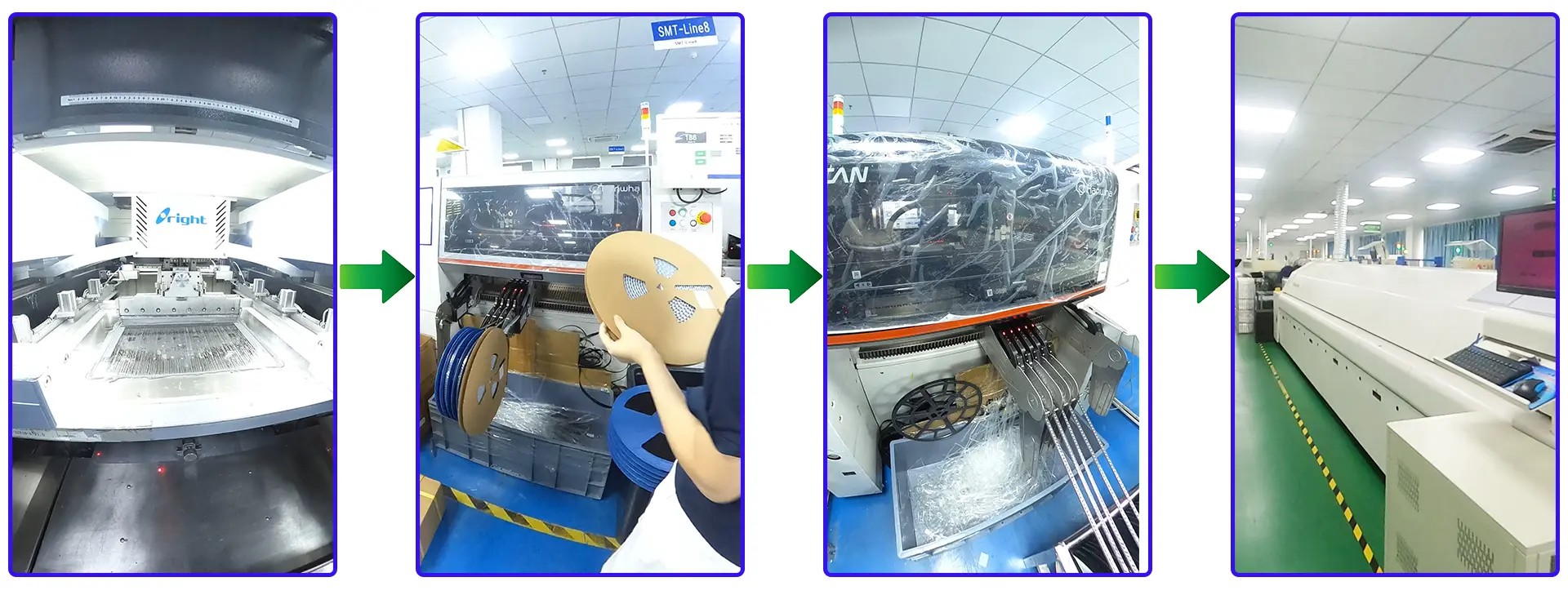
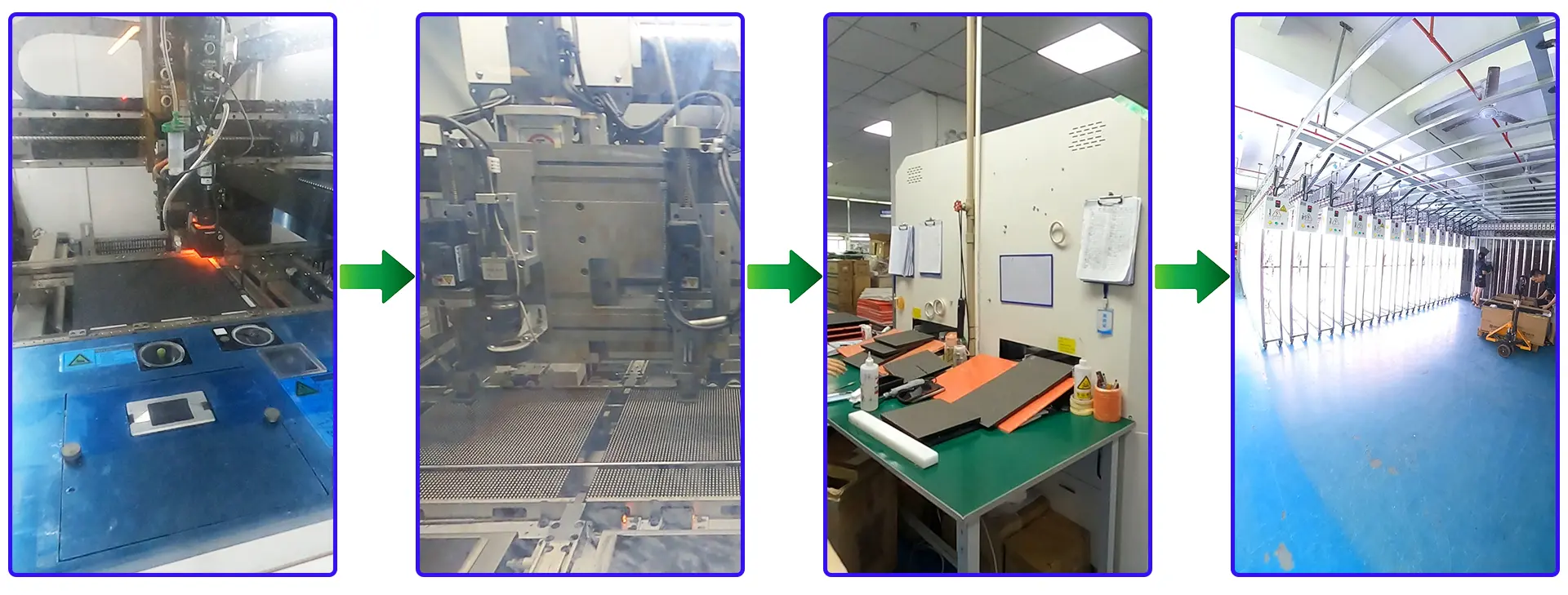
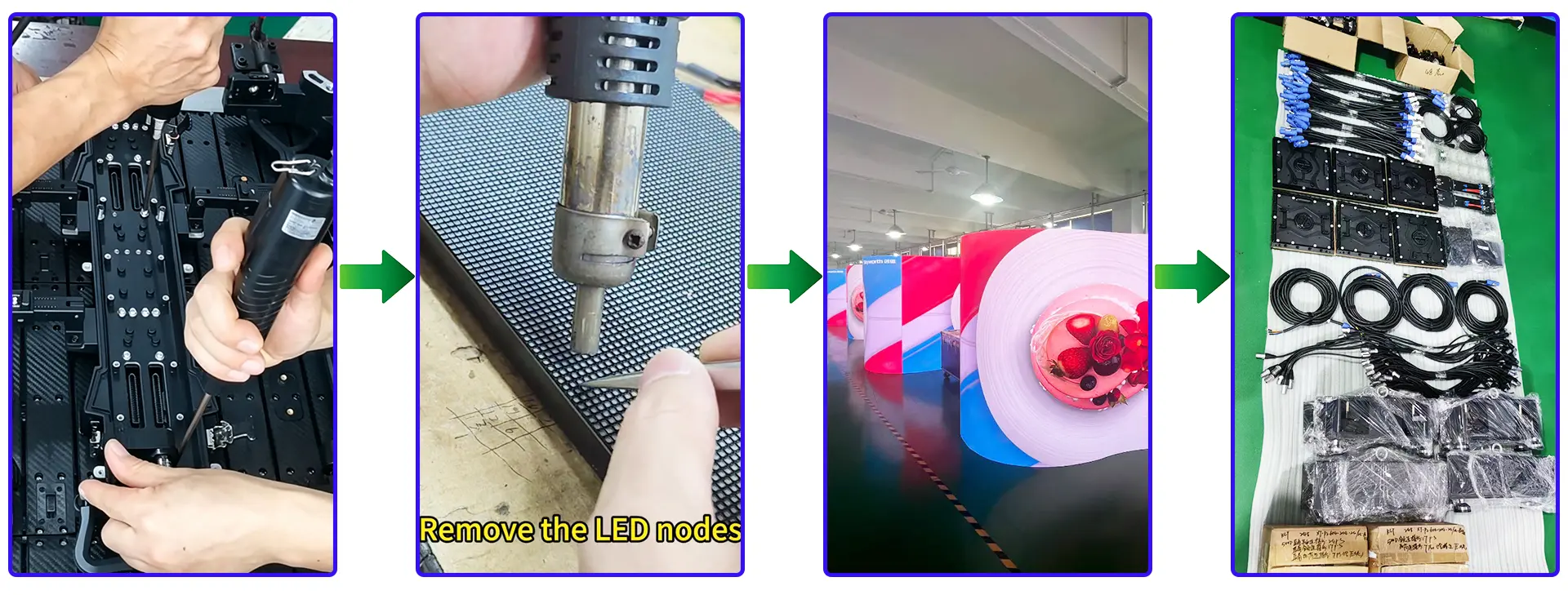 Have a custom LED screen concept, CAD drawing, or 3D design? TW VISION can help translate your concept into a manufacturable LED display solution. Share your required shape, dimensions, viewing distance, installation environment, and target pixel pitch with our engineering team for a customized recommendation. Request a Custom LED Display Solution.
Common Design Mistakes to Avoid
Most shaped-screen failures come from treating the display like a standard monitor instead of an architectural element. Avoid these Custom Shaped LED Screens: Types & Benefits & Design Guide mistakes to keep the shape working for you.
– Designing content in a 16:9 frame and cropping it later
– Ignoring minimum bend radius and cabinet gaps
– Skipping structural load calculations for hanging or curved arrays
– Hiding service access behind non-removable finishes
– Choosing pixel pitch by price alone instead of viewing distance
– Forgetting brightness and glare on curved surfaces
A common failure pattern is underestimating cabinet weight, especially when a shaped screen hangs from a decorative ceiling. A better Custom Shaped LED Screens: Types & Benefits & Design Guide checklist asks what the screen will look like from every approach angle, not just straight on.
How to apply this: run a red-team review of one specification point—service access, heat, or mapping—before sign-off.
Frequently Asked Questions About Custom Shaped LED Screens: Types & Benefits & Design Guide
Can custom shaped LED screens be used outdoors?
Yes, as long as the modules carry an outdoor IP rating. For an outdoor Custom Shaped LED Screens: Types & Benefits & Design Guide project, specify IP65 or higher front protection and plan for drainage. A shaded north-facing wall can work with moderate brightness, but a west-facing install may need higher nits to beat direct sun.
Also check that the controller and power supplies are housed in a weatherproof enclosure.
How much do custom shaped LED screens cost compared to standard displays?
Cost varies widely by shape complexity, pixel pitch, and module type. A simple circular screen may cost only slightly more than a flat wall, while a die-cut logo with heavy masking can carry a significant premium.
In any Custom Shaped LED Screens: Types & Benefits & Design Guide budget, ask vendors to quote cost per visible pixel rather than per square meter, because masked or unused pixels still affect the bill.
What pixel pitch should I choose for a shaped LED screen?
Start with viewing distance. Close indoor shapes often need a fine pitch under 2 mm, while distant outdoor shapes can use a coarser pitch. One exception is a concave curve, which may reveal module gaps more than a convex curve.
In a Custom Shaped LED Screens: Types & Benefits & Design Guide specification, write the minimum viewing distance into the bid and ask for a pixel-pitch calculation from the vendor.
Can I retrofit an existing video wall into a custom shape?
Only if the existing cabinets and mounting structure allow non-standard arrangement. Standard rigid cabinets usually cannot form tight curves. In retrofit Custom Shaped LED Screens: Types & Benefits & Design Guide planning, budget for new flexible modules and full recalibration rather than forcing old flat panels into a shape.
A partial retrofit can work when the existing controller supports mixed-shape zones.
How do I create content for a non-rectangular LED screen?
Build content on a transparent canvas that matches the final pixel map, not a 16:9 frame. Use mapping software to set the output to the screen’s actual shape. In a Custom Shaped LED Screens: Types & Benefits & Design Guide workflow, keep critical text inside the inscribed safe area.
For a circular screen, content near the edge will crop, so the centered area becomes your functional message zone.
Conclusion
The Custom Shaped LED Screens: Types & Benefits & Design Guide decision is not about choosing the most unusual shape; it is about matching the shape to the message, the viewing distance, and the service plan.
– Compare types by module geometry and bend radius before specifying
– Anchor content mapping to the actual pixel canvas, not 16:9
– Budget for structure, access, heat, and calibration, not just LEDs
– Test with a physical mockup or sample module before full installation
Next step: create a one-page pixel map, then request sample modules from two vendors using the same shape and viewing distance. The sample test will tell you more than any spec sheet.
Related Articles
- Outdoor LED Screen Atlanta: 15 : A Complete Buying Guide
- Indoor LED Screen Atlanta: 5 : Complete Buying Guide
- Commercial LED Display: 10 Best for Modern Business Growth