

Indoor LED Display Manufacturer: Technology & Buying Guide

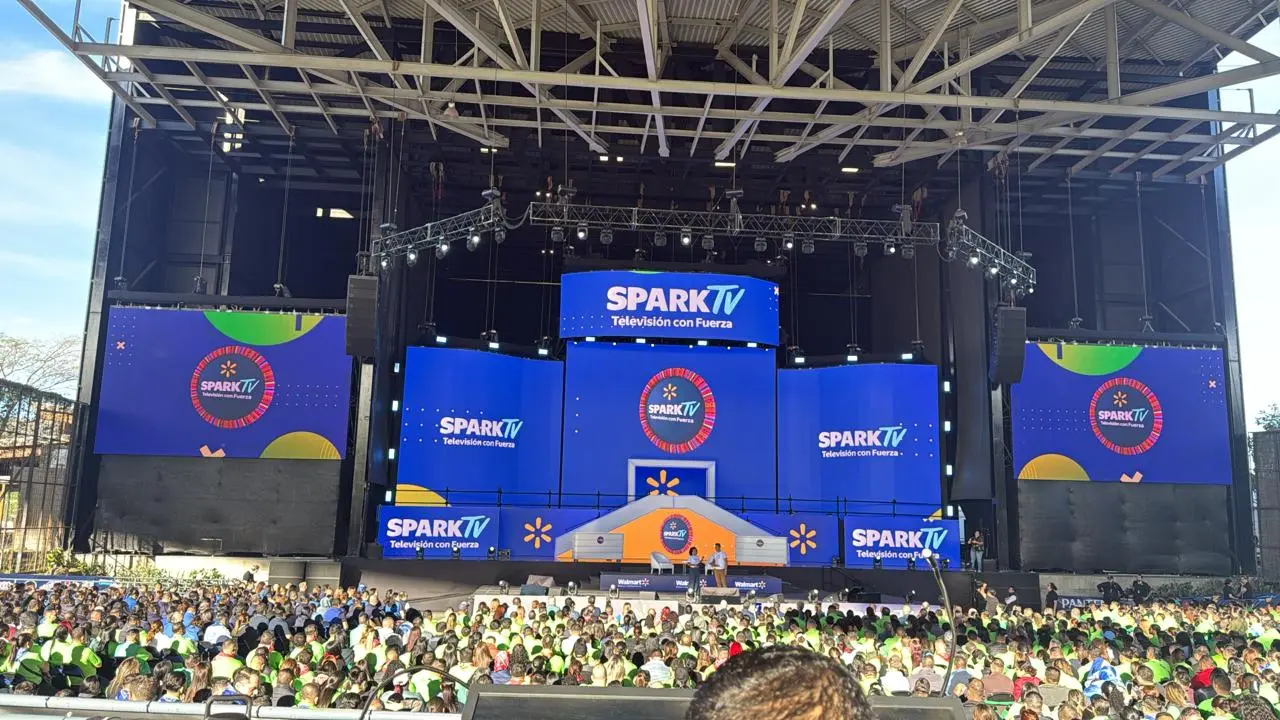
Your search for an Indoor LED Display Manufacturer: Technology & Buying Guide should begin with measurable specifications rather than brand reputation alone. Many buyers are surprised to learn that two panels with the same pixel pitch can look dramatically different once refresh rate, grayscale, and processing latency are considered.
Table of Contents
- 1. Understand Indoor LED Display Technology Before You Compare
- 2. Compare Pixel Pitch, Brightness, and Refresh Rate
- 3. Evaluate the Manufacturer’s Factory, Certifications, and Service Record
- 4. Plan Installation, Power, and LED Processing Systems
- 5. Negotiate Warranty, Spare Modules, and Total Cost of Ownership
- 1. What is the difference between indoor and outdoor LED display brightness?
- 2. How do I verify a manufacturer’s pixel pitch claim before ordering?
- 3. Can I use an indoor LED panel in a room with large windows?
- 4. What spare parts should I require in a first purchase?
- 5. Do I need a separate LED controller for a simple retail display?
- Conclusion
Spec sheets often hide the variables that cause motion artifacts, color shift, and premature pixel failure. Without a structured evaluation, teams overpay for specs they don’t need or under-buy panels that fail in high-ambient-light rooms. Five practical checks can narrow the field: display technology, key specs, manufacturer evaluation, installation and processing, and warranty and cost.
A disciplined Indoor LED Display Manufacturer: Technology & Buying Guide turns these five checks into a repeatable review.
1. Understand Indoor LED Display Technology Before You Compare
Indoor LED displays differ by module construction, and the manufacturing method affects durability, visual quality, and price. An effective Indoor LED Display Manufacturer: Technology & Buying Guide evaluation therefore starts with SMD, COB, and GOB module types rather than pixel pitch alone.
SMD modules use discrete red, green, and blue packages soldered to a board. They are cost-effective and easiest to service. COB and flip-chip modules seal diodes directly to the substrate, which improves contrast and protection against moisture or handling damage.
GOB applies a transparent glue layer on SMD for impact resistance. Manufacturers such as TW VISION list common fine-pitch options including P0.9, P1.2, and P1.5 for different viewing distances. These product names refer to pixel pitch in millimeters and help set the right viewing distance.
| Technology | Best use case | Trade-off | What to check |
|---|---|---|---|
| SMD | Retail, lobbies, conference rooms | More exposed diodes, lower protection | Ask about module serviceability |
| COB | Control rooms, broadcast, high-end retail | Higher cost, harder module repair | Request contrast and low-light demo |
| GOB | High-traffic indoor displays, rental staging | Adds weight, slight light loss | Confirm adhesive clarity and impact rating |
When shortlisting, an Indoor LED Display Manufacturer: Technology & Buying Guide should weigh the module type against the room’s ambient light and service plan.
How to apply this: ask three manufacturers for a one-page module comparison sheet showing diode brand, module type, and calibration process before you evaluate price. Keep the request tied to an Indoor LED Display Manufacturer: Technology & Buying Guide checklist.
2. Compare Pixel Pitch, Brightness, and Refresh Rate
Pixel pitch drives resolution and minimum viewing distance, but it is only one variable that determines whether an indoor LED wall looks smooth in person and on camera. A practical Indoor LED Display Manufacturer: Technology & Buying Guide treats brightness and refresh rate as core specs rather than afterthoughts.
Inside an Indoor LED Display Manufacturer: Technology & Buying Guide comparison, brightness and refresh rate matter just as much. A panel that looks bright in a dark demo room may wash out in a lobby with windows, while a low refresh rate can create visible scan lines on video.
P0.9, P1.2, and P1.5 are common fine-pitch designations used by indoor LED manufacturers. P1.2 means each pixel center is 1.2 millimeters from the next.
Use these checks when comparing models:
– View the panel in your actual room lighting, not a dark warehouse.
– Film the panel with a phone at a high shutter speed to detect scan lines.
– Ask for grayscale bit depth, usually 14-bit or higher for smooth gradients.
– Compare viewing angle performance from the farthest and widest seat in the room.
How to apply this: create a simple spec matrix with pixel pitch, brightness, refresh rate, and grayscale for every model you shortlist, then demo the top two side by side as part of an Indoor LED Display Manufacturer: Technology & Buying Guide comparison.
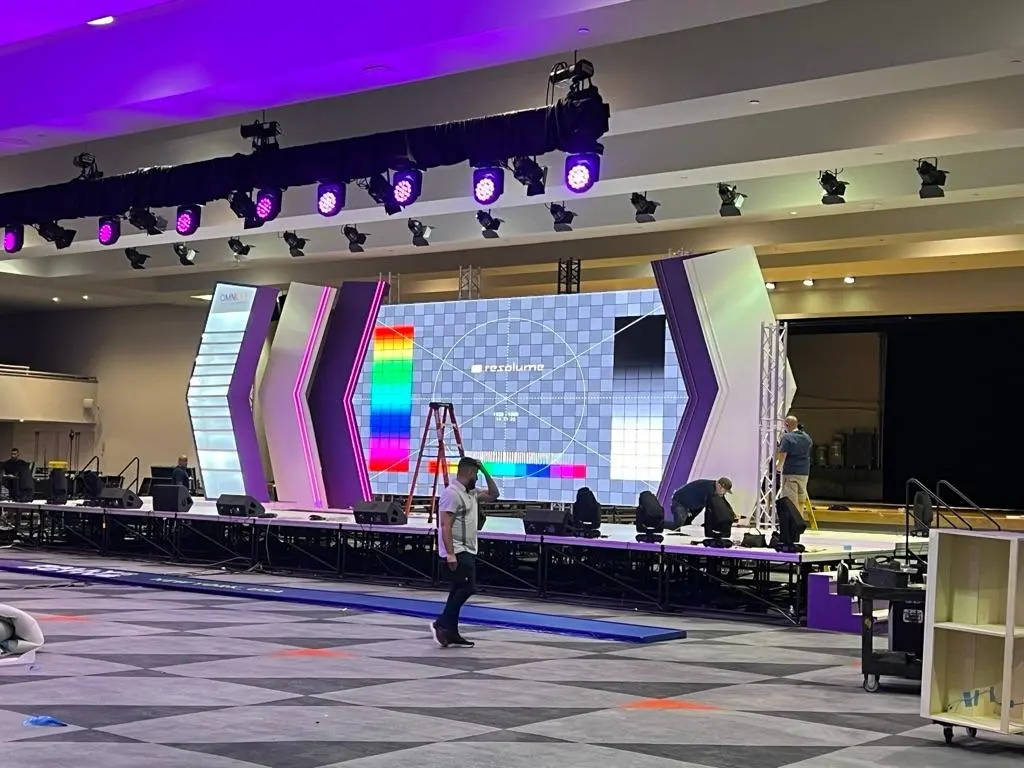
3. Evaluate the Manufacturer’s Factory, Certifications, and Service Record
A low price means little if the factory cannot document quality control, safety certification, and long-term spare parts support. Any serious Indoor LED Display Manufacturer: Technology & Buying Guide vetting process must look beyond price.
Use your Indoor LED Display Manufacturer: Technology & Buying Guide vetting process to check certifications such as ISO 9001 for quality management, CE for European compliance, FCC for U.S. electromagnetic compatibility, and RoHS for hazardous material limits.
According to the International Electrotechnical Commission, IEC 62368-1 is the safety standard covering audio/video, information and communication technology equipment and addresses fire, electrical shock, and mechanical hazards. Indoor LED cabinets sold in many regulated markets should comply with this standard or an equivalent.
Ask the factory for a recent audit report, not just an image of a certificate. Reference installations in the same industry reveal whether the manufacturer supports corporate, retail, broadcast, or control room projects.
How to apply this: request a compliance pack with current certificates, test reports, and three reference projects in the same region before scheduling a site visit. That documentation request belongs in every Indoor LED Display Manufacturer: Technology & Buying Guide before a factory visit.
4. Plan Installation, Power, and LED Processing Systems
The display panel is only one component; the processor, controller, power supply, and mounting system determine whether the wall is reliable and easy to maintain. A complete Indoor LED Display Manufacturer: Technology & Buying Guide therefore evaluates the full signal path and physical installation together.
An effective Indoor LED Display Manufacturer: Technology & Buying Guide should treat signal processing as part of the decision, not an afterthought. For high-end color accuracy, teams use CalMAN to calibrate LED walls to a reference standard before content playback.
On the processing side, Brompton Technology and NovaStar provide LED video processing and controller systems used in commercial installs. These systems affect grayscale performance, latency, and compatibility with different pixel pitches.
Front-service or rear-service access changes how the wall is mounted and maintained. If a module fails, you need enough clearance to reach it safely. Power redundancy also matters for 24/7 operation in lobbies or control rooms.
How to apply this: ask the manufacturer for a wiring diagram, service-access drawing, and processor compatibility list before you approve the installation plan. These drawings turn an Indoor LED Display Manufacturer: Technology & Buying Guide plan into a workable installation.
5. Negotiate Warranty, Spare Modules, and Total Cost of Ownership
Upfront price is rarely the largest cost over five years; power consumption, replacement modules, and service response time change the total cost. A thorough Indoor LED Display Manufacturer: Technology & Buying Guide looks at five-year cost, not the lowest quote.
Your Indoor LED Display Manufacturer: Technology & Buying Guide should include a written warranty that covers pixel failure, brightness uniformity, and controller compatibility. Ask how dead pixel clusters are defined and when the manufacturer will send replacement modules.
Power consumption and heat load affect electrical and HVAC budgets. A less efficient panel may have a lower purchase price but higher operating cost in a large lobby installation.
Spare parts should be part of the contract. Request spare modules, power supplies, and receiving cards based on the wall size and the manufacturer’s documented failure rate.
How to apply this: add a spare-parts schedule and a five-year total cost estimate to every quote so price comparisons include energy, service, and replacement costs. That estimate turns an Indoor LED Display Manufacturer: Technology & Buying Guide checklist into a real budget comparison.
6. What Makes TW VISION’s Indoor LED Displays Different?
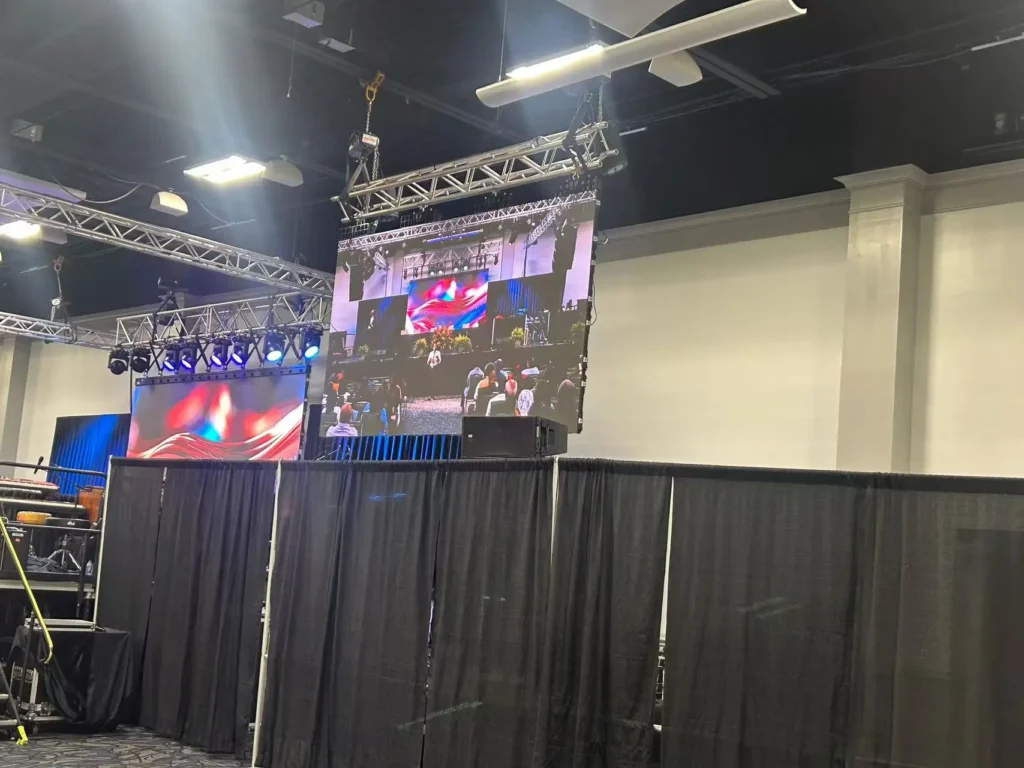
TW VISION combines strong production capabilities, flexible engineering, and practical project support to deliver dependable display solutions. Its 8,000 m² factory operates 8 independent SMT lines, supported by dedicated module and cabinet aging processes and 24-hour aging tests before shipment. Customers can choose from fine-pitch options, custom cabinet dimensions, front- or rear-maintenance designs, curved configurations, high refresh rates, and professional color calibration to meet different project requirements. TW VISION also supports ODM and customization projects, with selected products available from U.S. stock for faster delivery. Spare modules and technical support are available to help customers maintain reliable performance throughout the product lifecycle.
Here are the stock TW VISION own in USA.
P1.86 LED poster-640x1920mm
P1.86 LED podium-480x960mm
P2.5 indoor installation LED panel-640x480mm
P2.6 indoor rental LED panel-500x1000mm
| Feature | TW VISION (2026) | Traditional Competitor | New Entrant / MicroLED | Business Impact / Notes |
|---|---|---|---|---|
| Pixel & Optics | Fine-pitch COB/MiniLED down to 0.6 mm; custom optics for improved uniformity | Good pixel density with variable uniformity; off-the-shelf optics | Very high density, but prototype yield challenges | Better close-view performance and fewer visible seams, with more reliable supply than emerging MicroLED solutions |
| Thermal & Longevity | Proprietary thermal design reducing junction temperatures by 15–25% | Standard heatsinking with higher operating temperatures | Depends on wafer-level technology; limited long-term data | More stable color performance can reduce recalibration and replacement costs |
| Software & Management | Edge + cloud CMS with sensor-driven calibration and APIs | Basic control, often using third-party CMS | Hardware-focused with a limited software stack | Lower operational overhead, improved uptime, and easier remote troubleshooting |
| Sustainability | Lifecycle assessments, reuse/refurbishment programs, and energy-optimized modes | Limited recycling programs and few lifecycle metrics | Circular strategies remain unclear | Supports ESG goals and can reduce total cost of ownership for large fleets |
| Integration & Service | Modular front access, digital twin, and certified integrator network | Rear or partial front access with variable service networks | High performance but an uncertain service ecosystem | Faster installation, more predictable maintenance, and improved service experience |
Frequently Asked Questions About Indoor LED Display Manufacturer: Technology & Buying Guide
1. What is the difference between indoor and outdoor LED display brightness?
For an Indoor LED Display Manufacturer: Technology & Buying Guide, indoor versus outdoor brightness depends on ambient light control, not headline nits. Indoor LED panels are built for controlled light, so brightness is usually far lower than outdoor screens. Instead of chasing maximum nits, verify uniformity and grayscale at your target brightness.
One scenario: a boardroom with floor-to-ceiling glass may require higher brightness than a windowless studio. An Indoor LED Display Manufacturer: Technology & Buying Guide should specify operating brightness for your exact room conditions.
2. How do I verify a manufacturer’s pixel pitch claim before ordering?
A reliable Indoor LED Display Manufacturer: Technology & Buying Guide verification step includes physical measurement, not just catalog claims. Request a production sample, not just a datasheet. Measure the module’s pixel pitch with a calibrated microscope or ask for a signed inspection report from the manufacturer.
One exception is that cabinet assembly can vary from module samples, so ask how the factory tests final cabinets. This edge case is often missed in a standard Indoor LED Display Manufacturer: Technology & Buying Guide check.
3. Can I use an indoor LED panel in a room with large windows?
An Indoor LED Display Manufacturer: Technology & Buying Guide should address window glare before you select a panel. Indoor-rated panels can work near windows if you control glare and direct sunlight. Curtains, window film, or an orientation change often help more than increasing brightness.
One exception: if the wall faces direct sun all day, you may need a semi-outdoor or high-brightness product. Confirm heat management in an Indoor LED Display Manufacturer: Technology & Buying Guide review before assuming the indoor rating is enough.
4. What spare parts should I require in a first purchase?
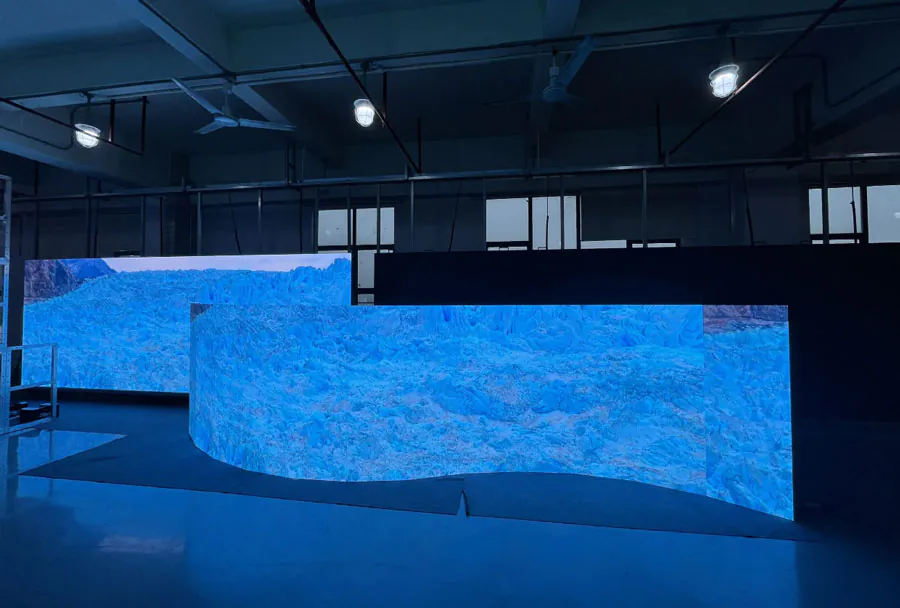
One practical Indoor LED Display Manufacturer: Technology & Buying Guide clause covers spares from day one. Require spare modules, replacement power supplies, and a spare receiving card for each independent wall. For a large multi-cabinet installation, ask the vendor to stock regional spares. One edge case: custom-size cabinets often take longer to remanufacture, so order spare modules at purchase.
This spare policy is a separate line item in an Indoor LED Display Manufacturer: Technology & Buying Guide contract.
5. Do I need a separate LED controller for a simple retail display?
A basic Indoor LED Display Manufacturer: Technology & Buying Guide should separate simple media players from full LED controllers. A basic retail display may work with a standard sending box and receiving card from the manufacturer. If you need multi-source switching, scaling, or HDR playback, budget for a dedicated LED video processor.
One exception: menu-board content with simple graphics can often run from the panel’s built-in media player. Verify controller compatibility in your Indoor LED Display Manufacturer: Technology & Buying Guide request.
Conclusion
Buying an indoor LED wall is a systems decision. Use the five checks above as a single purchase checklist before you sign a quote.
– Compare module technology, pixel pitch, and visual specs under real room lighting.
– Verify factory certifications, test reports, and reference installations.
– Treat LED processing and installation access as part of the product.
– Put warranty coverage and spare module allocations in writing.
The goal is not to chase the lowest bid. It is to lock in a repeatable Indoor LED Display Manufacturer: Technology & Buying Guide evaluation that protects performance across the display’s lifespan.
Next step: build a one-page spec sheet and send the same questions to three manufacturers, then compare the answers side by side and schedule a live demo before ordering.
Related Articles
- Indoor LED Screen Rental Solutions for Small and Large Events – LED DISPLAY MANUFACTURE TW VISION
- Indoor LED Screen Atlanta: 5 : Complete Buying Guide – LED DISPLAY MANUFACTURE TW VISION
- Custom LED Display Solutions
- LED display solution for shopping mall in California: 12: TW VISION – LED DISPLAY MANUFACTURE TW VISION
- Flexible LED Display Screens for Retail and Commercial Spaces – LED DISPLAY MANUFACTURE TW VISION
