Energy-Efficient Outdoor Digital Displays for Continuous Operation

Outdoor digital displays have become essential infrastructure for modern cities, retail corridors, transportation hubs, campuses, and industrial parks. They deliver real-time information, advertising, wayfinding, and public service messaging—often without interruption. Yet continuous 24/7 operation outdoors introduces a tough combination of requirements: high brightness under direct sunlight, stable performance in heat, cold, rain, and dust, and long-term reliability with minimal maintenance. Above all, energy consumption must be controlled, because power cost is no longer a secondary issue—it directly shapes total cost of ownership and sustainability performance.
TW VISION focuses on building an energy-efficient outdoor digital display for continuous operation that balances visibility, durability, and long-term operating economy. This article explains the key design principles and practical strategies that make always-on outdoor displays more efficient, while keeping image quality and uptime at the center of the project.
Why “Energy-Efficient” Matters More for Outdoor 24/7 Displays
Energy efficiency is not simply a “green” label. For outdoor displays, it affects three core outcomes:
1) Operational cost control: A display running at high brightness for long hours can become a significant monthly expense, particularly when deployed in networks. Reducing average power draw by even a small percentage can translate into substantial annual savings.
2) System reliability: Heat is the enemy of electronics. Higher power use means higher thermal load, accelerating component aging and increasing the risk of failure. Efficient systems generate less waste heat, supporting stable performance.
3) Sustainability and compliance: Cities and large enterprises increasingly require carbon reporting, energy standards, and responsible procurement. Efficient display solutions align with ESG goals and can help satisfy procurement requirements.
For continuous operation, efficiency is not optional—it’s a foundational engineering target.
The Efficiency Triangle: Brightness, Readability, and Power
Outdoor displays face a simple physics challenge: sunlight can wash out a screen. The common response is to push brightness upward, but this can dramatically increase power consumption. TW VISION approaches the problem by optimizing the whole “visibility chain” instead of relying on brute-force brightness alone.
Key visibility improvements that reduce the need for excessive brightness include:
– High-contrast optical design: Better contrast and anti-reflection treatments can improve perceived clarity at the same brightness level.
– Proper pixel pitch selection: Choosing the right pixel density for viewing distance avoids overdriving the screen for sharpness that viewers cannot perceive.
– Content design coordination: High-contrast layouts, readable typography, and careful color usage can reduce the required luminance for legibility in daylight.
The result is a display that remains readable while using power intelligently throughout the day.
Smart Brightness Control: The Biggest Real-World Energy Lever
The most effective way to cut energy consumption is to avoid running at peak brightness when it is not needed. Outdoor environments change constantly—morning fog, mid-day sun, evening shadows, nighttime darkness. A static brightness setting wastes energy and can also reduce comfort at night.
An energy-efficient outdoor digital display for continuous operation should include:
– Ambient light sensors to adjust brightness automatically
– Time-based schedules for known patterns (e.g., dim at late night)
– Zone-based brightness tuning for multi-panel installations (e.g., shaded vs. sun-facing areas)
– Gradual transitions to prevent sudden visual jumps and reduce stress on power and thermal systems
TW VISION typically positions intelligent brightness management as a standard efficiency strategy, because it delivers measurable savings without compromising service continuity.
Thermal Engineering: Efficiency and Uptime Share the Same Foundation
Continuous outdoor operation creates continuous heat. If thermal performance is weak, the display may throttle brightness, suffer color shifts, or experience component failures. Efficient power use helps, but thermal engineering must be designed into the cabinet and system architecture.
Important thermal considerations include:
– High-efficiency power conversion to minimize wasted energy
– Optimized airflow and heat spreading paths inside the cabinet
– Weather-resistant design that still supports heat dissipation
– Component selection rated for outdoor temperature ranges
– Monitoring and protection logic, such as temperature alarms and safe operating modes
A display that runs cooler is often a display that runs longer. TW VISION’s focus on continuous operation aligns naturally with thermal reliability design, because uptime expectations are high in public and commercial deployments.
Power Supply and Driver Efficiency: Hidden Gains That Matter
When buyers evaluate outdoor digital displays, they often focus on brightness and size, while overlooking the efficiency of the electrical architecture. But power supplies, LED drivers, and control systems determine how much energy becomes light versus heat.
Efficiency improvements can come from:
– High-efficiency power supplies with stable output under load
– Optimized LED driving methods that reduce losses and improve uniformity
– Power factor correction and stable electrical behavior for grid-friendly operation
– Segmented power design so parts of the screen can be managed without stressing the whole system
These engineering choices may not be visually obvious, but they affect monthly electricity costs and long-term stability—two priorities for always-on outdoor applications.
Weatherproofing Without Energy Penalty
Outdoor displays must withstand rain, humidity, dust, pollution, salt air, and in some regions, extreme cold or high heat. Weatherproofing is essential, but it should not create an energy penalty by trapping heat or requiring excessive cooling.
A practical approach includes:
– Sealed or protected enclosures designed for the deployment environment
– Corrosion-resistant materials and coatings
– Condensation management strategies to prevent moisture-related failures
– Service-friendly structure that reduces maintenance time and keeps the unit operating continuously
TW VISION emphasizes outdoor-ready construction that supports both protection and efficient heat management—because the best weatherproof cabinet is one that protects the display while keeping operating conditions stable.
Content Strategy as an Energy Tool
Energy efficiency is not only hardware. Content can raise or lower power draw, especially with led displays where bright, full-white scenes consume more energy than darker or mixed-color content.
For networks designed for continuous operation, TW VISION often recommends aligning content strategy with efficiency goals:
– Avoid long-duration full-white backgrounds unless necessary
– Use high-contrast compositions that stay readable at lower brightness
– Design for daylight legibility without relying solely on maximum luminance
– Schedule content based on time-of-day (e.g., softer visuals at night)
This is an often-overlooked method to reduce average power consumption while maintaining communication effectiveness.
Remote Monitoring and Predictive Maintenance for Always-On Efficiency
Continuous operation means the display is a service, not a one-time installation. Remote monitoring helps maintain performance and avoid energy waste caused by malfunctioning components, misconfigured brightness, or cooling inefficiencies.
A strong operational approach includes:
– Real-time status monitoring (temperature, power status, brightness level)
– Alerts for abnormal power draw that may indicate a developing fault
– Maintenance planning based on actual device health rather than fixed intervals
– Centralized management for networks across multiple locations
By keeping systems tuned and healthy, operators avoid both downtime and the hidden energy costs of degraded performance.
Deployment Scenarios: Where Continuous Operation Demands Efficiency
Energy-efficient outdoor displays for continuous operation are particularly valuable in the following settings:
– Transit stations and roadside information systems: Always on, safety-critical visibility, strict reliability requirements.
– Retail storefronts and commercial districts: Long operating hours, high brightness demands, sensitivity to power cost.
– Smart city and public service signage: Large networks where energy savings multiply across dozens or hundreds of screens.
– Industrial sites and campuses: Reliability and remote monitoring are crucial; maintenance access may be limited.
In each scenario, efficiency supports financial performance, reduces heat-related failures, and improves sustainability reporting—benefits that persist throughout the entire lifecycle.
How TW VISION Supports Efficient Continuous Outdoor Operation
TW VISION positions its outdoor digital display solutions around the real requirements of continuous operation: clarity under sunlight, stable operation across seasons, and intelligent power use. Instead of treating efficiency as a single feature, TW VISION treats it as a system outcome produced by coordinated design decisions:
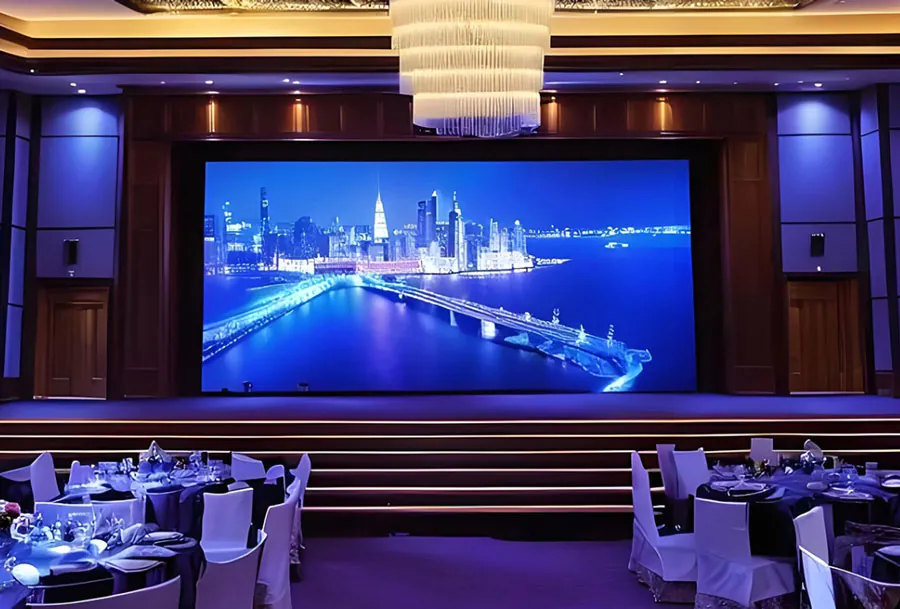
– Brightness and readability optimized with smart control rather than constant maximum output
– Electrical architecture designed to reduce conversion losses and heat generation
– Thermal management built to support long-term stability outdoors
– Weatherproof construction aligned with heat dissipation needs
– Operational tools and monitoring to keep energy use optimized over time
For buyers, this approach means the display is not only bright and durable on day one—it remains efficient and dependable year after year.
Efficiency Is the Real Enabler of 24/7 Outdoor Digital Signage
An energy-efficient outdoor digital display for continuous operation is the product of disciplined engineering and smart operational planning. The best solutions maintain sunlight readability without running at wasteful power levels, control thermal load to protect electronics, and support remote management so performance stays consistent across long service cycles.
TW VISION’s service philosophy is aligned with these goals: helping organizations deploy outdoor displays that can operate continuously with controlled energy costs, strong reliability, and high visual impact. For any project that must run around the clock—whether it’s public messaging, transportation information, or commercial advertising—efficiency is no longer just a benefit. It is the essential foundation that keeps the system visible, stable, and economically sustainable.
Frequently Asked Questions About Energy-Efficient Outdoor digital displays for 24/7 Operation
The following answers address procurement and operating situations that need separate checks.
Can an Outdoor digital displays run from solar panels and batteries?
Yes, provided the generation, storage, and backup system can support the display’s measured load through the required operating conditions. An Energy-Efficient Outdoor Digital Displays for 24/7 Operation needs an energy-system design based on local solar availability and overnight demand. At a remote site, cloudy periods may determine battery requirements more than a typical sunny day.
Ask the designer to document expected availability and backup arrangements.
Do I need a UPS to keep the display running during outages?
You need a UPS if your operating requirements include surviving short interruptions or allowing an orderly shutdown. An Energy-Efficient Outdoor Digital Displays for 24/7 Operation still depends on a reliable supply. For a site with frequent voltage disturbances, ask an electrical professional to assess load compatibility, transfer behavior, and protection.
Confirm whether backup power must support the screen, its controller, and its network equipment together.
Is a smaller pixel pitch always more energy-efficient?
No, pixel pitch alone does not establish energy efficiency. An Energy-Efficient Outdoor LED Display for 24/7 Operation should use a resolution suited to viewing distance and content. A display viewed mainly from across a road may not benefit from the same pixel density as one viewed on a pedestrian plaza.
Request readability demonstrations and complete-screen power measurements rather than treating a finer pitch as evidence of lower consumption.
Can burn-in or image retention occur with static content?
Do not assume static content is risk-free; ask the manufacturer about uneven aging and any image-retention behavior for its LED technology. An Energy-Efficient Outdoor LED Display for 24/7 Operation may show persistent logos or fixed information areas. In that situation, request written operating guidance and warranty terms for static use.
Content rotation may help manage exposure, but it should follow product-specific advice rather than a universal rule.
Does a long LED lifetime claim mean the entire display will last that long?
No, an LED lifetime claim does not establish the service life of every component in the system. An Energy-Efficient Outdoor LED Display for 24/7 Operation also depends on power supplies, connectors, controllers, and environmental protection. If a quotation highlights a lifetime figure, ask what endpoint and test conditions it describes.
Then confirm warranty coverage, replacement-part availability, and whether those conditions match the brightness and temperature your site requires.
Conclusion
The right Energy-Efficient Outdoor digital displays for 24/7 Operation combines measurable electricity use with readable content, suitable environmental protection, and maintainable hardware. Its value becomes clear when supplier claims are tested against your actual site and operating needs.
Keep these priorities in your purchasing decision:
– Compare equivalent measurements: Use matching content, brightness, and system boundaries when reviewing power figures.
– Specify brightness controls: Document daytime settings, nighttime limits, sensor behavior, and manual overrides.
– Check installation suitability: Verify cooling clearance, enclosure protection, service access, and local permission to operate.
– Budget from real consumption: Apply your tariff to logged energy and include maintenance requirements.
Your next step is to create a single supplier comparison sheet containing these requirements. Ask shortlisted vendors to demonstrate their proposed configuration, provide supporting documentation, and agree on commissioning measurements before you place an order.