LED Display Solutions for Advertising & Signage: Backlit Panels vs. LED Screens

Implementing the right LED Display Solutions for Advertising & Signage: Backlit Panels vs. LED Screens can determine whether your message gets noticed or disappears in a crowded storefront. Many LED screen manufacturers list rated lifespans between 50,000 and 100,000 hours, which can outlast a typical commercial lease and most sign cabinets.
Table of Contents
- How Backlit Panels Work and Where They Win
- How LED Screens Deliver Dynamic Advertising
- Comparing Brightness, Viewing Distance, and Ambient Light
- Total Cost of Ownership and Installation Factors
- Choosing the Right Content Management Approach
- Can LED screens handle freezing outdoor winter temperatures?
- Is a backlit panel or LED screen easier to repair after a power surge?
- Do I need an electrician to install either option?
- What if my storefront glass is heavily tinted?
- Is there a hybrid approach that combines backlit panels and LED screens?
- Conclusion
The problem is that buyers often choose based on upfront price alone, then regret the choice when contrast, content updates, or energy bills appear. This guide breaks down brightness, viewing distance, total cost, and content management so you can compare both options on the metrics that actually matter.
By the end, you will know exactly what to measure, what to compare, and when to run a pilot before committing.
How Backlit Panels Work and Where They Win
A backlit panel uses LED edge lighting or a rear LED array to illuminate a printed graphic, which makes it a reliable choice for menu boards, lightboxes, and lobby signs. Many installers report a meaningful drop in utility costs after retrofitting fluorescent fixtures with LED backlighting, because LED modules run cooler and draw less power.
Consider a restaurant chain that updated its drive-thru menu boards with backlit LED panels; managers noticed fewer burned-out bulbs and more consistent color than the old fluorescent setup. For close-range menu visibility, this often tips LED Display Solutions for Advertising & Signage: Backlit Panels vs. LED Screens toward a backlit panel.
When comparing LED Display Solutions for Advertising & Signage: Backlit Panels vs. LED Screens, backlit panels usually win on initial simplicity and close-range legibility.
Before you buy a full-motion screen, audit every existing lightbox in your location and replace only the oldest fluorescent units with LED retrofit kits. How to apply this: photograph your signage at noon and 6 p.m., then judge whether a static backlit graphic still holds up when ambient light changes.
How LED Screens Deliver Dynamic Advertising
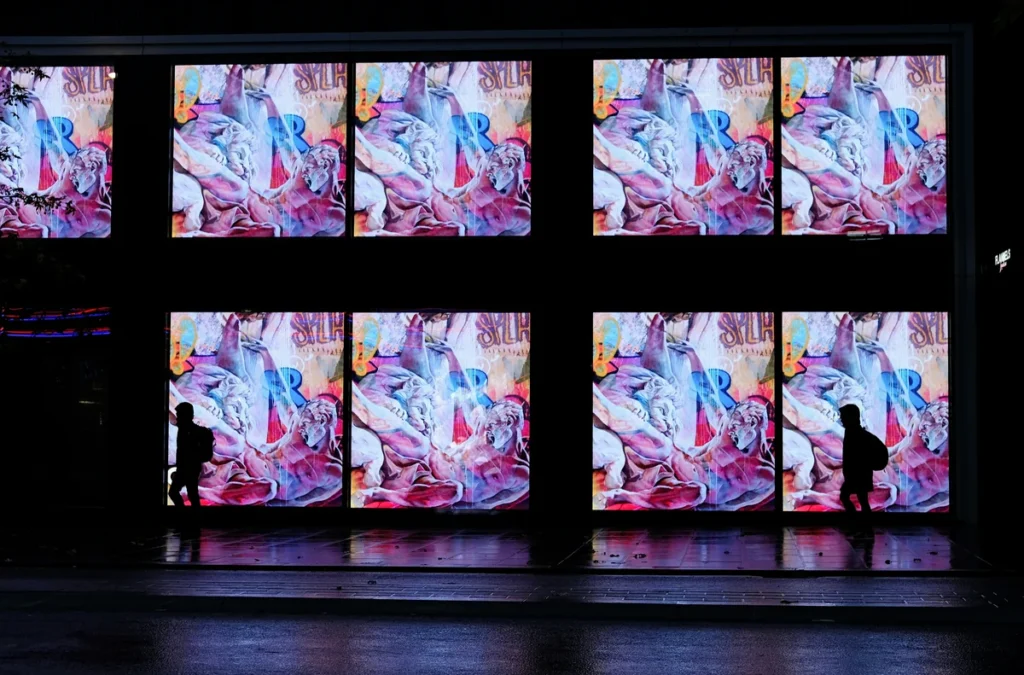
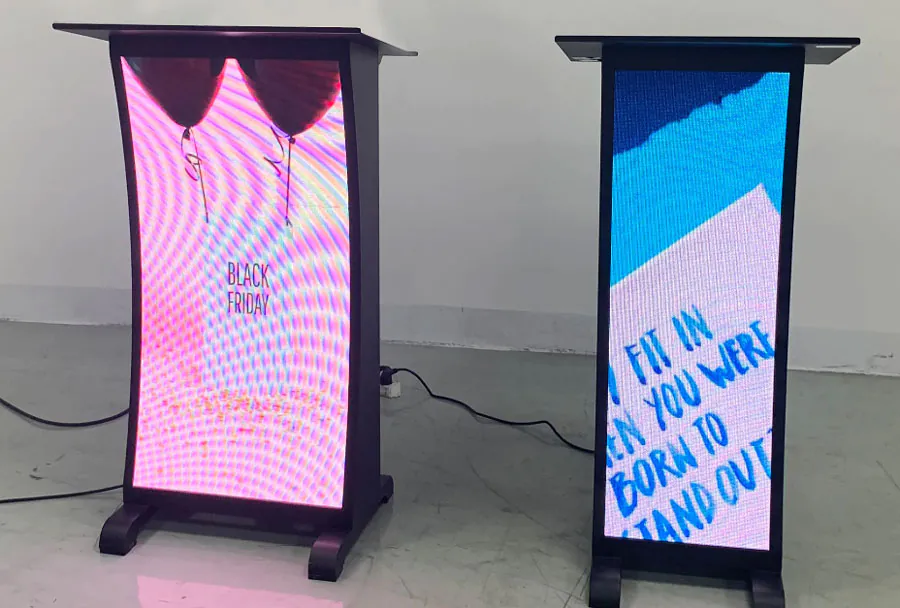
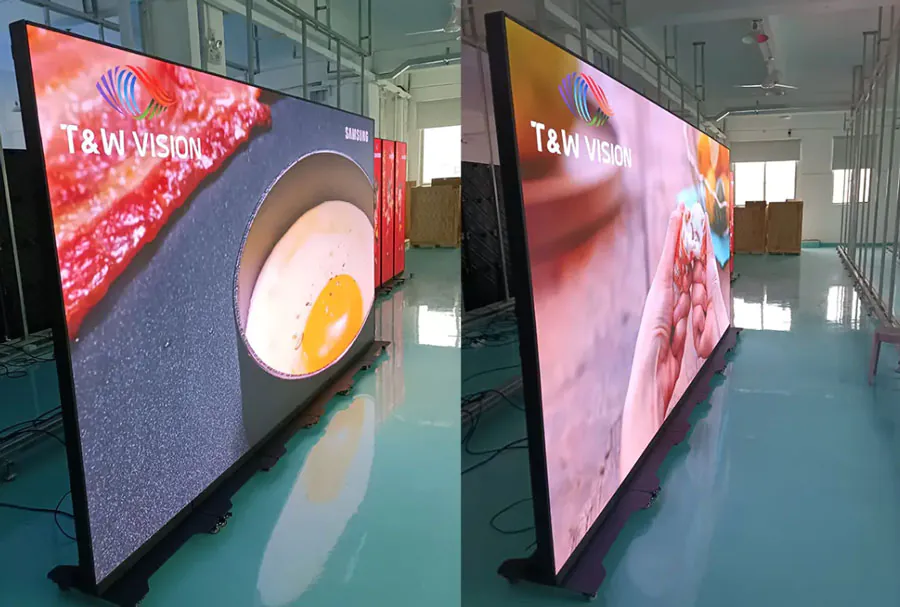
LED screens turn a storefront into a moving billboard, showing video, live feeds, and scheduled promotions that a static panel cannot. According to TW VISON, pixel pitch and brightness are the two main variables that determine how readable a screen is from the street.
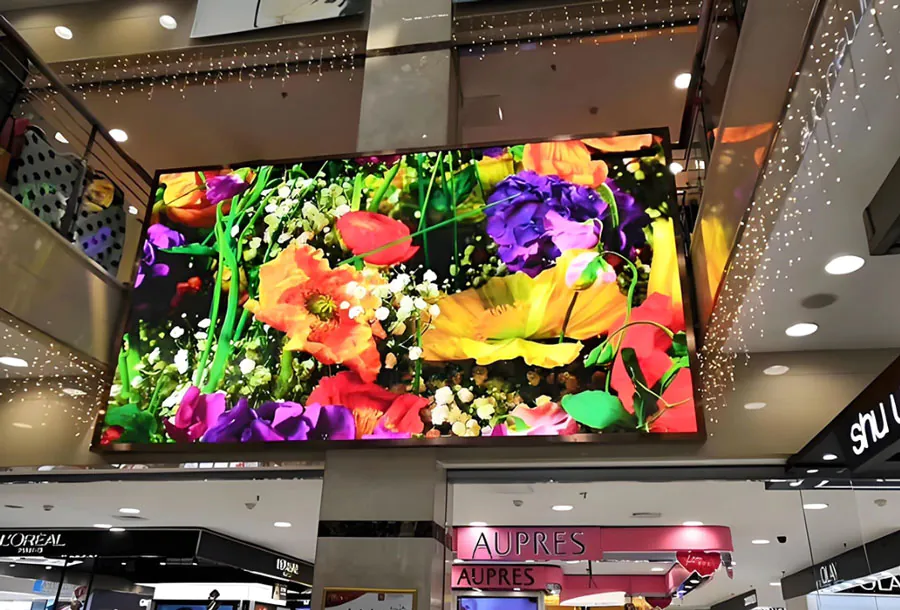
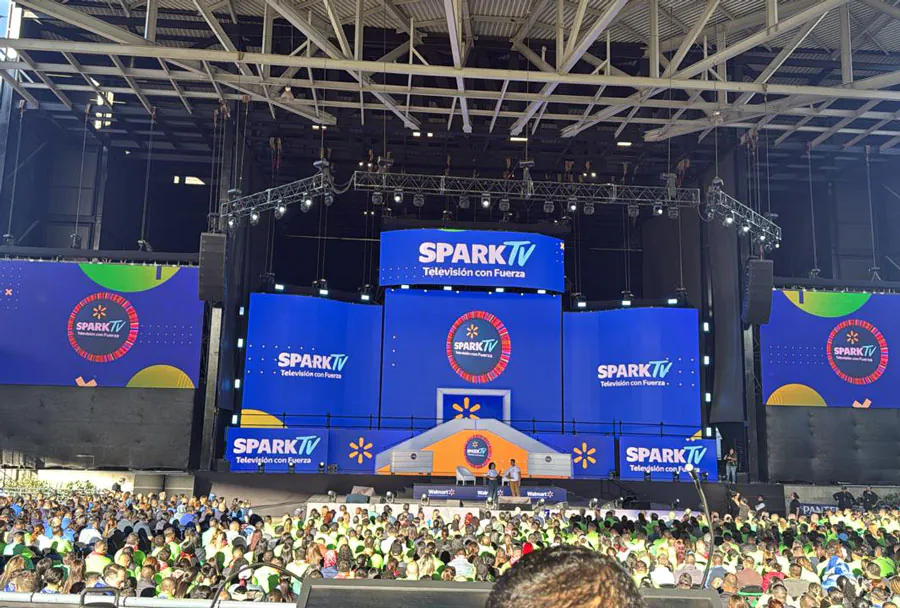
One shopping center replaced a static backlit poster with a fine-pixel-pitch LED screen and found that foot traffic into the anchor store rose noticeably during after-work hours, though results vary by location. That flexibility is why many high-traffic retailers favor screens when they compare LED Display Solutions for Advertising & Signage: Backlit Panels vs. LED Screens.
When you evaluate LED Display Solutions for Advertising & Signage: Backlit Panels vs. LED Screens, the screen option unlocks dayparting, live data, and remote content changes.
Start with a 2.5mm to 4mm pixel pitch if your closest viewer is under 10 feet away; choose 6mm or higher if your main audience is across a street or parking lot. How to apply this: create one 10-second video loop, run it for two weeks, and compare customer dwell time or transaction counts before and after.
Comparing Brightness, Viewing Distance, and Ambient Light
Brightness measured in nits and viewing distance decide whether your display stays readable in direct sunlight or washes out by mid-morning.
| Factor | Backlit Panels | LED Screens | Action to take |
|---|---|---|---|
| Brightness | Often below 1,000 nits | Can exceed 5,000 nits | Measure site lux |
| Viewing distance | Best within 10 feet | Works beyond 50 feet | Match pixel pitch |
| Content | Static graphics | Video and motion | Decide if motion matters |
Outdoor LED screens often reach 5,000 nits or higher, while backlit panels typically stay below 1,000 nits because they are intended for indoor or shaded use. Keep in mind that high-nit output costs more energy and may require a light sensor to dim at night, so more brightness is not always better.
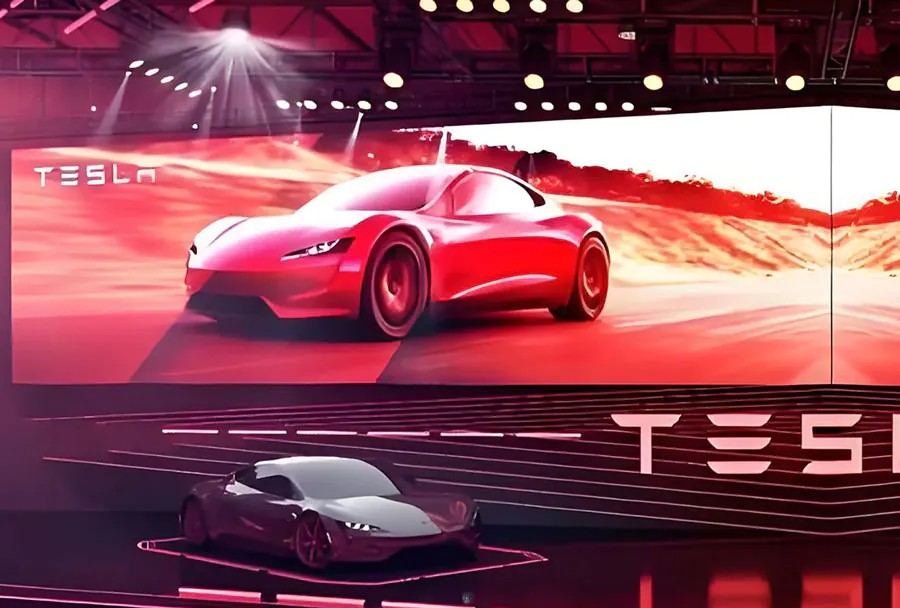
A car dealership on a sun-drenched lot found that a 6,000-nit LED screen remained readable at noon, while a backlit panel washed out by 10 a.m. That midday readability often drives the LED Display Solutions for Advertising & Signage: Backlit Panels vs. LED Screens decision for south-facing windows. When evaluating LED Display Solutions for Advertising & Signage: Backlit Panels vs.
LED Screens, ambient light is often the tiebreaker.
Use a free light meter app on your phone to record lux at morning, noon, and evening at the exact sign location. How to apply this: before requesting quotes, document the orientation, shade, and light levels so installers can size nits correctly.
Total Cost of Ownership and Installation Factors
Upfront price tells only part of the story; energy draw, content updates, and servicing shape what you actually pay over five years. Many integrators report that LED screens carry a higher initial price but lower recurring printing costs, while backlit panels cost less upfront but need periodic graphic replacements.
One franchise owner compared five years of printed menu updates against a single LED screen and found that reprinting costs exceeded the screen’s price difference after year four, though your numbers may vary. That kind of five-year math frequently changes which LED Display Solutions for Advertising & Signage: Backlit Panels vs. LED Screens option makes more sense.
Looking at LED Display Solutions for Advertising & Signage: Backlit Panels vs. LED Screens through a total-cost lens often reverses the buying decision.
Request a five-year cost worksheet from at least two installers, including replacement lamps, content fees, and energy estimates. How to apply this: build a simple spreadsheet with purchase, energy, content, and maintenance line items for both options.
Choosing the Right Content Management Approach
The best hardware can fail without a simple way to update content, schedule playlists, and monitor uptime from a distance. Tools like Yodeck and OptiSigns let you push content to LED screens from any browser, while backlit panels rely on physical graphic replacements. Scala serves larger enterprise networks with advanced scheduling triggers.
A regional gym chain used a cloud-based CMS to switch daypart promotions on its LED screens without sending staff to each location; corporate managers saw fewer version-control errors. Remote control is a major differentiator in LED Display Solutions for Advertising & Signage: Backlit Panels vs. LED Screens for multi-location businesses.
Your choice in LED Display Solutions for Advertising & Signage: Backlit Panels vs. LED Screens should account for who will update the content on a Friday afternoon.
Choose a content platform that supports remote scheduling, offline playback, and user permissions before you sign an installation contract. How to apply this: sign up for a free trial of a digital signage CMS and upload one test playlist to see how remote updates feel.
Frequently Asked Questions About LED Display Solutions for Advertising & Signage: Backlit Panels vs. LED Screens
Can LED screens handle freezing outdoor winter temperatures?
Many outdoor LED screens are rated for operating temperatures from -22°F to 122°F, but backlit panels often need enclosures or heaters below freezing. If your sign faces winter weather, confirm the IP rating and temperature range before buying. For LED Display Solutions for Advertising & Signage: Backlit Panels vs.
LED Screens, cold-weather reliability is a practical edge for LED screens in northern climates.
Is a backlit panel or LED screen easier to repair after a power surge?
Backlit panels usually isolate damage to a replaceable LED strip or power supply, which a local electrician can often fix. LED screens use modular panels, so a failing module can be swapped, but matching firmware and calibration may require the original installer. When choosing LED Display Solutions for Advertising & Signage: Backlit Panels vs.
LED Screens, ask about spare module availability and field-replaceable parts before committing.
Do I need an electrician to install either option?
Backlit panels often plug into an existing circuit and need only a bracket, making them a lighter lift. LED screens typically require a dedicated circuit, data cabling, and sometimes structural reinforcement, so a licensed electrician is usually necessary. For LED Display Solutions for Advertising & Signage: Backlit Panels vs.
LED Screens, checking local permitting rules and landlord approval early can prevent costly delays.
What if my storefront glass is heavily tinted?
Tinted glass reduces brightness for both options, but high-nit LED screens can compensate better than backlit panels. If you must mount behind tinted glass, choose an LED screen with at least twice the brightness you would normally use and run a pilot test. Comparing LED Display Solutions for Advertising & Signage: Backlit Panels vs.
LED Screens in front of actual glass is the only way to confirm visibility.
Is there a hybrid approach that combines backlit panels and LED screens?
Yes, many retailers use backlit panels for permanent brand blocks and LED screens for rotating promotions inside the same sign cabinet. This hybrid keeps static signage affordable and adds motion where it counts. If budget is tight, prioritizing LED Display Solutions for Advertising & Signage: Backlit Panels vs. LED Screens by zone often yields the best return.
Conclusion
– Match brightness and pixel pitch to the actual viewing distance and ambient light.
– Calculate five-year total cost, not just the quoted price.
– Use a cloud-based CMS for LED screens to reduce ongoing labor.
– Consider a hybrid cabinet to balance static brand presence with dynamic promotions.
Your final decision should come down to three measured inputs: ambient light, viewing distance, and update frequency. If you skip these, you are guessing. Once you choose LED Display Solutions for Advertising & Signage: Backlit Panels vs. LED Screens based on measured conditions and long-term cost, you avoid the two most common buying regrets.
Request a sample panel or a live screen demo, measure your site, and run a 30-day pilot before committing to a full rollout.
Related Articles
- Outdoor LED Screen Atlanta: 15 : A Complete Buying Guide
- LED Video Wall Atlanta: 10 : Expert Guide for Businesses
- Indoor LED Screen Atlanta: 5 : Complete Buying Guide