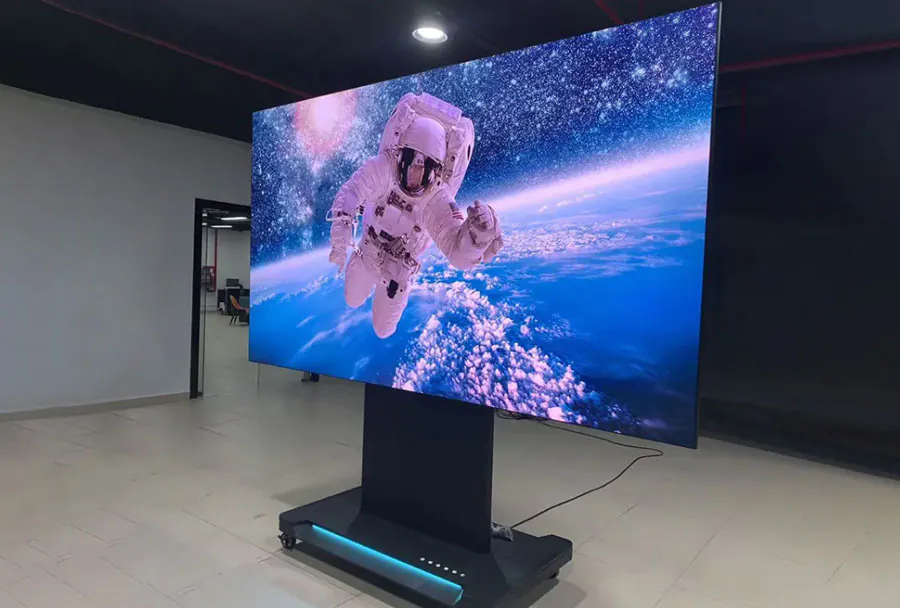
Flexible LED Display Solutions for Luxury Hotel Design: TW VISION

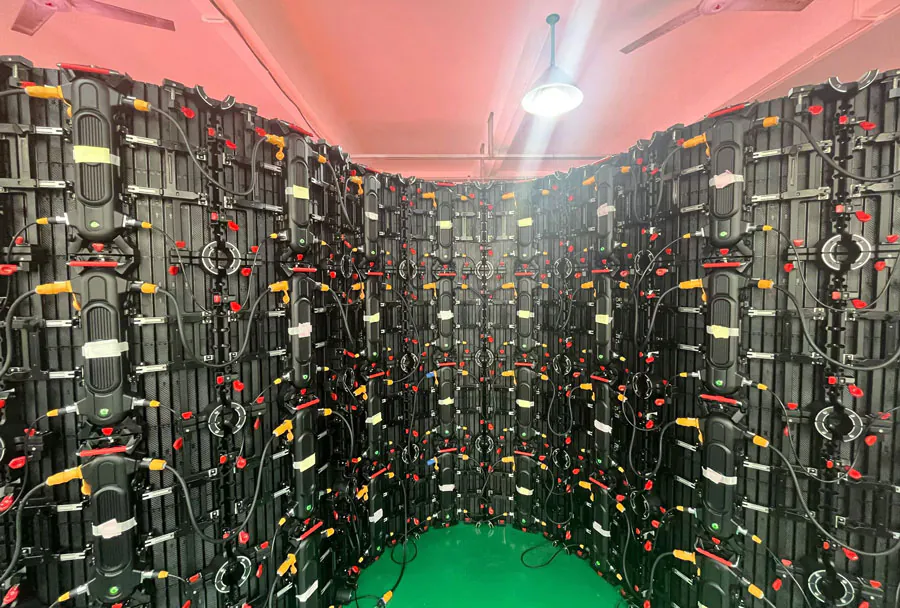
Flexible LED Display Solutions are changing how brands, venues, and installers think about digital signage. Unlike rigid screens, these displays can curve, wrap, and adapt to unusual surfaces while still delivering bright visuals, strong contrast, and reliable performance. That makes them useful in retail, broadcast sets, events, architecture, transportation hubs, and immersive installations where standard flat panels do not fit the environment. The value is not only visual. Flexible LED Display Solutions can reduce design constraints, support more creative layouts, and help teams build memorable experiences without sacrificing readability or durability. In this article, we will cover how they work, where they are used, what to evaluate before buying, and how to plan for installation and maintenance.
TW VISION has LED Screen stock in the USA. Talk to us if you are interested.
What Are Flexible Led Display Solutions?
Flexible Led Display Solutions are digital display systems built with bendable modules or soft LED panels that can conform to curved, cylindrical, irregular, or creative surfaces. A conventional LED screen typically uses rigid cabinets assembled in a flat configuration. A flexible system uses a more adaptable structure, allowing the display to follow a surface instead of forcing the surface to match the screen.
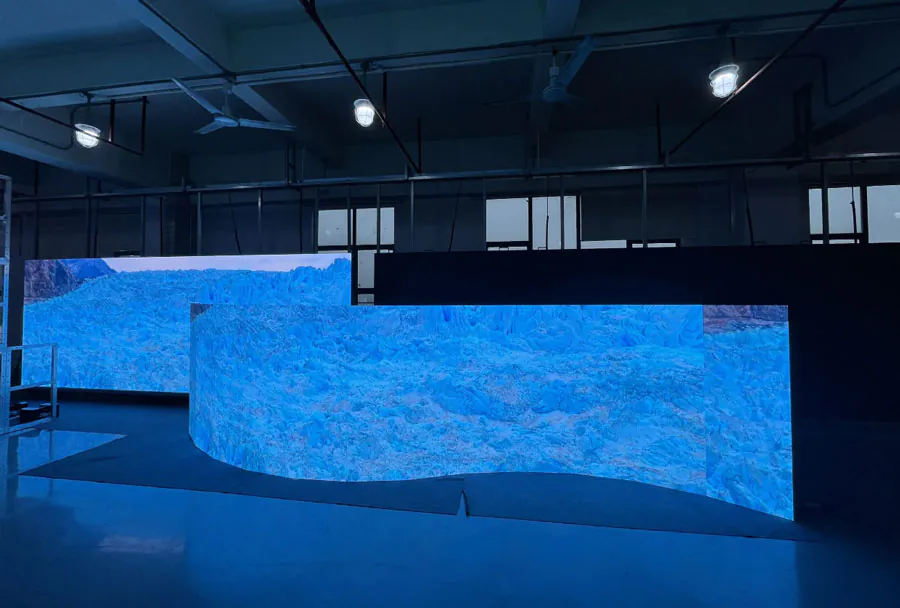
These displays are usually made from lightweight LED modules mounted on flexible rubber, polymer, or magnetic substrates. The modules contain small light-emitting diodes that produce images, video, text, and animations. Depending on the design, panels may bend inward, bend outward, or form circular and wave-like patterns. Some products are designed for limited curvature, while others are engineered for highly customized shapes.
A flexible LED display does not mean the screen can be folded without limits. Every product has a minimum bending radius, which defines how tightly it can curve without damaging the module or affecting image quality. Installation teams must follow this specification carefully. Excessive pressure, sharp folds, or improper mounting can lead to dead pixels, wiring damage, or uneven brightness.
Common applications include:
– Curved retail advertising walls
– Exhibition and trade show displays
– Museum and cultural installations
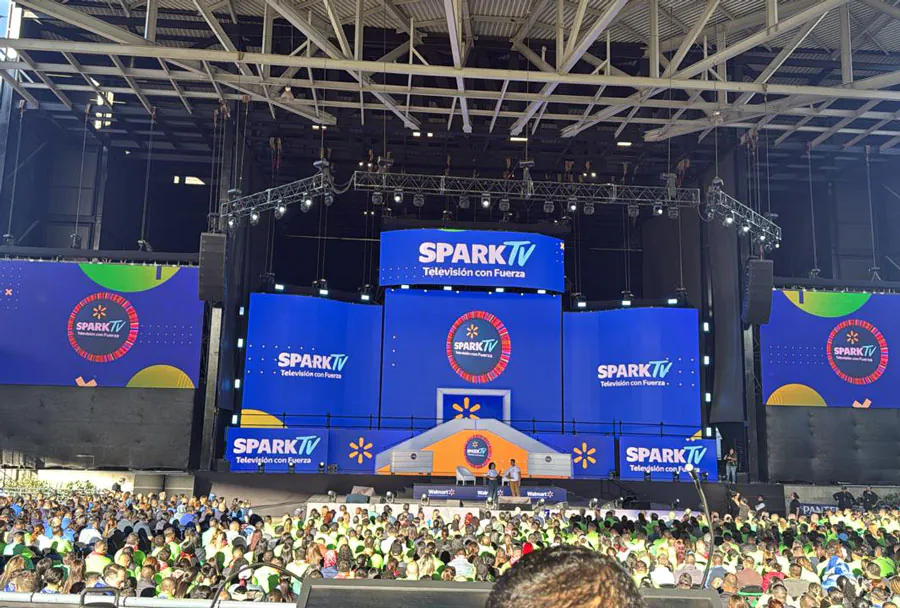
– Stage backdrops and concert visuals
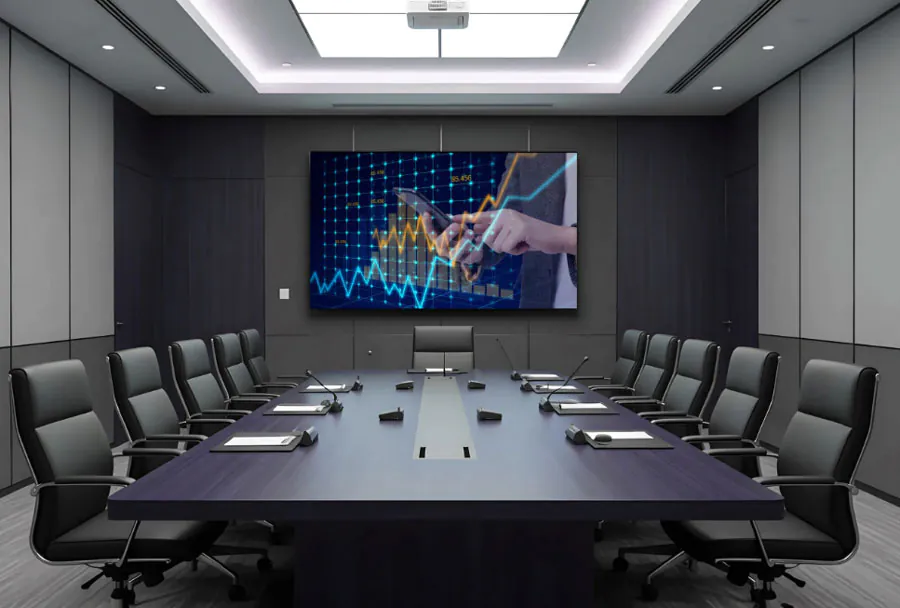
– Corporate reception areas
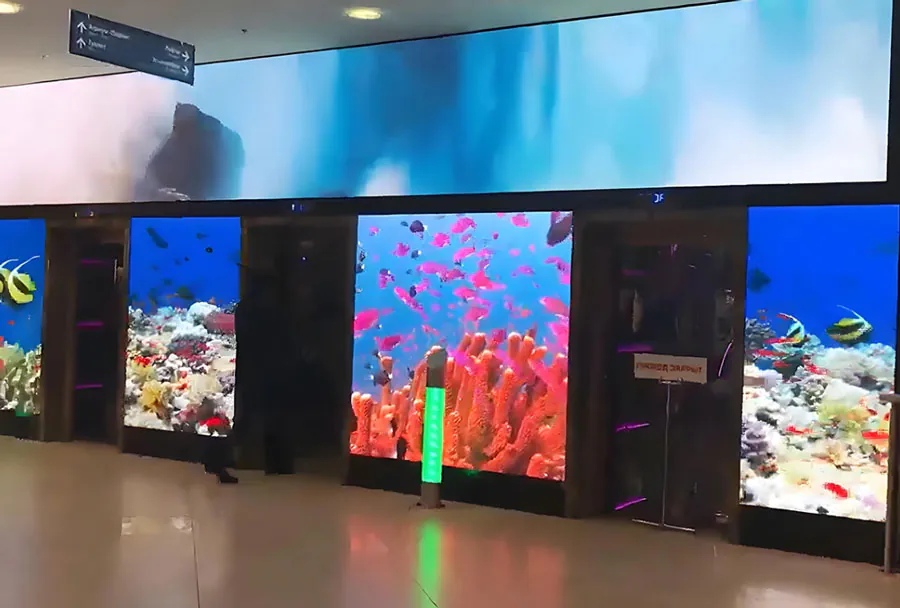
– Shopping mall columns
– Curved broadcast and studio backgrounds
– Sports venues and fan engagement zones
– Vehicle-mounted promotional displays
– Architectural media facades
– Hospitality and entertainment venues
– Interior branding installations
The main difference between flexible LED technology and flexible OLED screens is construction and use case. Flexible LED products are generally more suitable for large-format, high-brightness applications, particularly in outdoor or semi-outdoor environments. OLED technology can offer excellent contrast and thinness, but large custom OLED installations may be more expensive and less practical for certain commercial applications.
Another important distinction is between flexible modules and transparent LED products. Transparent displays allow viewers to see through the screen, making them useful for glass storefronts and architectural windows. Flexible LED displays focus primarily on shape adaptability and can provide a denser, brighter image when opacity is not a concern.
The value of flexible technology lies in its design freedom. A screen can become part of a building feature, a branded structure, or an immersive environment rather than functioning as a separate rectangular object. This creates more opportunities for visual storytelling and can help a venue use difficult or previously wasted spaces.

Key Benefits of Flexible Led Display Solutions
The strongest advantage of Flexible Led Display Solutions is their ability to combine visual performance with installation versatility. A display can be designed around the environment, which is particularly valuable in modern buildings where walls, pillars, counters, and ceilings may not follow traditional straight lines.
Creative freedom
Rigid LED cabinets restrict designers to flat planes or predetermined angles. Flexible panels support more imaginative concepts, such as:
– Cylindrical video columns
– Concave or convex advertising walls
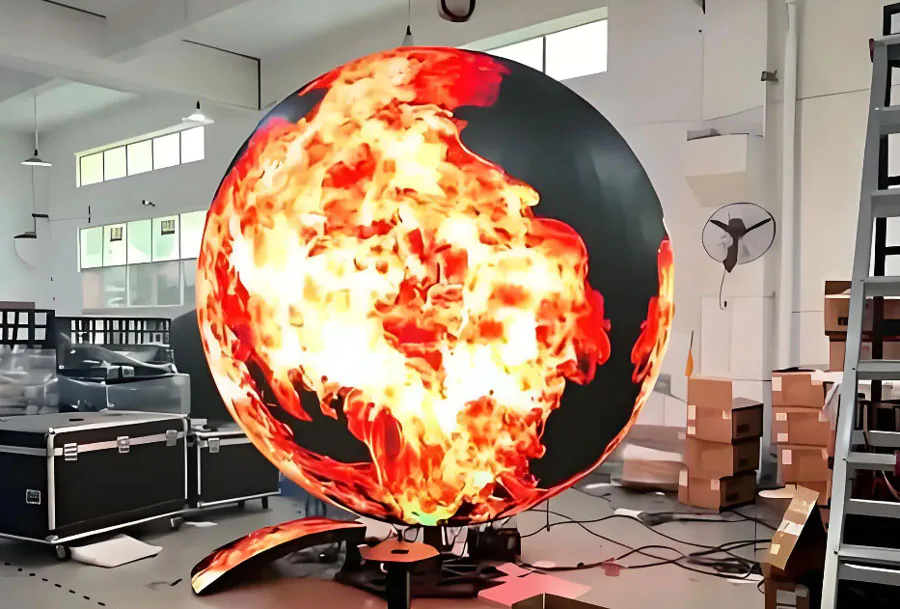
– Circular logos and brand marks
– Undulating stage backgrounds
– Curved product showcases
– Sculptural digital artwork
– Three-dimensional visual effects
– Wraparound information displays
This flexibility allows companies to create installations that are visually distinctive. A curved screen may attract more attention than a standard rectangular display because its shape feels integrated with the surrounding environment. In competitive retail and event spaces, that difference can improve visibility and memorability.
Efficient use of space
Many commercial interiors contain columns, narrow walls, rounded corners, and unusual architectural features that are difficult to use with traditional displays. Flexible LED modules can cover these areas without requiring major structural changes. A column can become a 360-degree advertising surface, while a curved wall can carry continuous content without awkward gaps.
This efficient use of space is useful in airports, shopping centers, hotels, restaurants, and museums. Organizations can add digital communication without sacrificing valuable floor area. In some situations, a flexible display can be installed directly onto an existing structure, reducing the need for a separate enclosure.
Lightweight construction
Flexible LED modules are often lighter than comparable rigid cabinets. This can simplify transportation, handling, and installation. Lower weight may also reduce the structural requirements for walls, suspended frames, and temporary event structures.
A lightweight design is particularly useful for touring productions, exhibitions, and installations that need to be moved regularly. However, low weight does not remove the need for proper engineering. The supporting frame, power distribution, attachment points, and ventilation system still need to be assessed by qualified installers.
High visual impact
Modern LED technology can deliver high brightness, strong color reproduction, and smooth video playback. The exact performance depends on pixel pitch, diode quality, refresh rate, processing hardware, and calibration. When properly specified, a flexible screen can remain visible under strong ambient lighting and produce engaging motion graphics.
For advertising, this means brands can show more than static messages. Product demonstrations, animated offers, social media content, live feeds, and branded storytelling can all be displayed on the same system. Content can also be updated remotely, giving operators greater control over timing and campaigns.
Adaptability across industries
Flexible LED displays are not limited to advertising. Retailers use them to support product launches and seasonal campaigns. Event producers use them to create immersive stages. Museums use them to present information in creative formats. Corporate offices use them for reception branding, internal communications, and visitor experiences.
Their adaptability makes the technology suitable for both permanent and temporary installations. A company may use a fixed curved wall in a flagship store while using portable flexible modules for trade shows and roadshows.
Choosing the Right Flexible Led Display Solutions
Before investing in Flexible Led Display Solutions, buyers should evaluate the intended environment, viewing distance, content type, physical shape, and operating schedule. A display that works well in an indoor showroom may not be appropriate for direct sunlight or heavy outdoor exposure.
Indoor or outdoor use
Indoor displays usually require lower brightness because ambient light is controlled. They may prioritize fine pixel pitch, low power consumption, quiet operation, and a slim profile. Outdoor displays need stronger brightness, weather resistance, robust protection, and components capable of handling temperature changes.
For outdoor use, examine the enclosure’s ingress protection rating. The rating indicates how well the product resists dust and moisture. A higher rating is generally necessary for displays exposed to rain, humidity, or airborne debris. Outdoor systems may also need corrosion-resistant frames, sealed connectors, and drainage provisions.
Environmental conditions should be assessed throughout the year. Heat, freezing temperatures, wind, salt air, and direct ultraviolet exposure can affect system performance. Buyers should request operating temperature ranges and confirm whether the manufacturer provides suitable protection for the installation site.
Pixel pitch
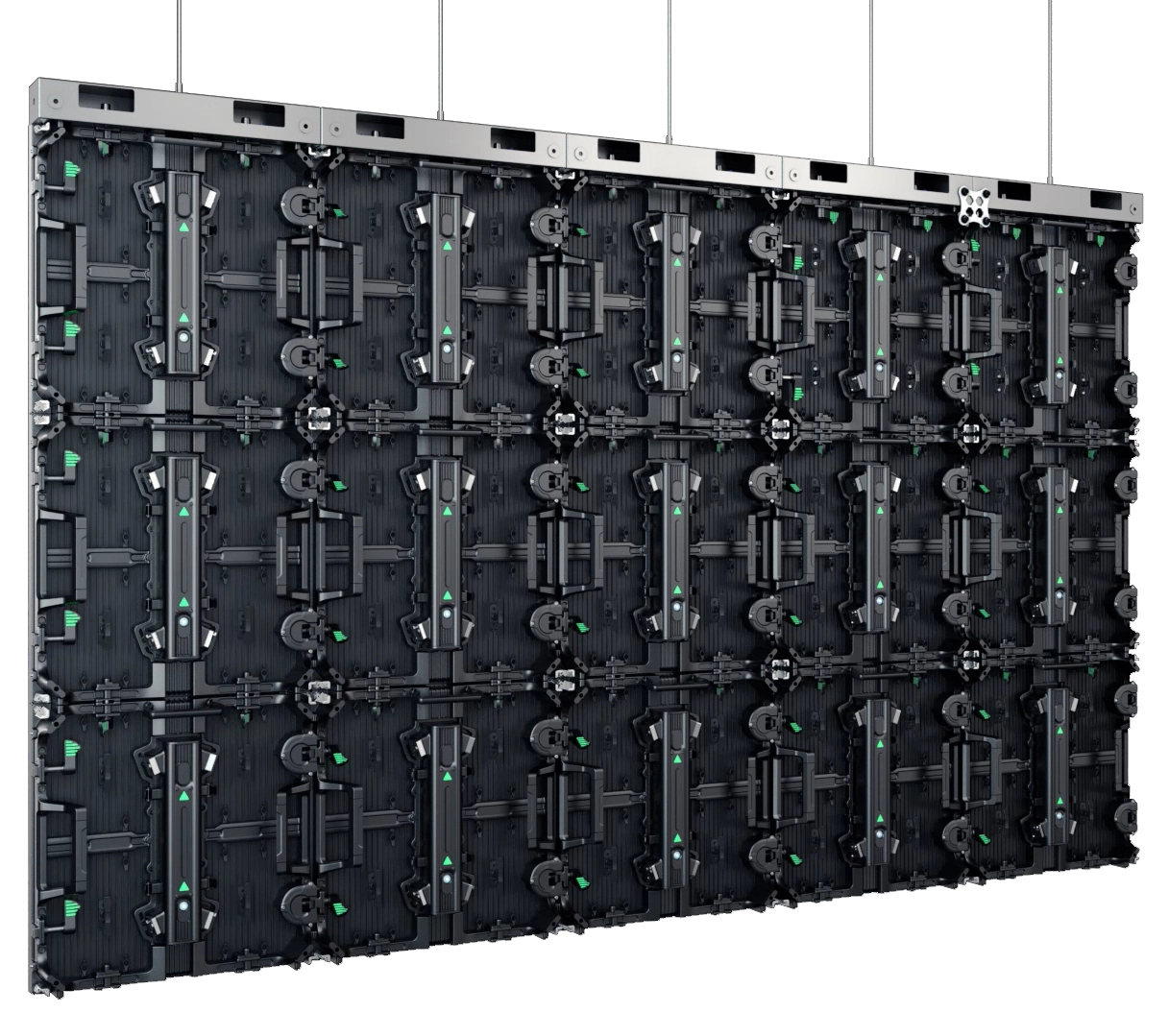
Pixel pitch is the distance between the centers of adjacent pixels, normally measured in millimeters. A smaller pixel pitch produces a higher pixel density and sharper image at close viewing distances. A larger pitch may be more cost-effective when viewers are farther away.
For a reception display viewed from a few meters, a fine pitch may be appropriate. For a large outdoor facade observed from a street or plaza, a wider pitch may deliver sufficient clarity at a lower cost. Selecting an unnecessarily fine pitch can increase the initial investment without creating a noticeable improvement for the audience.
The content also matters. Detailed text, close-up product photography, and high-resolution video benefit from a tighter pixel pitch. Simple graphics, large typography, and distant viewing can work well with a larger pitch.
Brightness and contrast
Brightness is typically measured in nits. Indoor installations often require moderate brightness, while outdoor displays may need significantly higher output to remain readable during daylight. Excessive brightness in an indoor environment can cause glare and reduce viewer comfort.
Contrast performance is also important. A display with good black-level control can make colors look more vibrant and improve the depth of video content. Front and rear maintenance designs, protective masks, surface treatment, and calibration all influence perceived image quality.
Buyers should request demonstrations using actual content whenever possible. Manufacturer specifications are useful, but real-world viewing reveals how text, skin tones, gradients, and fast-moving scenes appear on the selected product.
Refresh rate
Refresh rate affects how smoothly the display reproduces motion and how it appears when photographed or recorded on video. Event organizers, broadcasters, and venue operators can achieve better camera performance by choosing LED displays with higher refresh rates for studios, concerts, livestreams, corporate events, and other camera-intensive applications.
Low refresh rates can create flicker or scan lines in recorded footage. Even when viewers do not notice the issue directly, cameras may capture visible artifacts. Professional applications should therefore confirm compatibility with the intended camera systems and production workflow.
Curvature and module design
Every flexible panel has a defined bending range. Ask for the minimum convex and concave radius, the permitted bending direction, and the recommended mounting method. These details should be compared with architectural drawings before ordering.
Module size also affects the final shape. Smaller modules can create more precise curves and reduce visible distortion at corners. Larger modules may simplify installation but provide less control for complex forms. If the screen must form a circle, wave, or custom sculpture, the supplier should provide drawings or a sample layout before production.
Front or rear maintenance
Front-service displays allow technicians to remove modules from the viewing side. Installers benefit from this feature when they mount the display against a wall or integrate it into a structure, making rear access unavailable. Rear-service designs may provide easier access in dedicated cabinets but require additional clearance behind the screen.
Maintenance access should be planned from the beginning. A display that looks excellent on opening day can become expensive to operate if technicians must remove architectural elements every time a module needs replacement.
Installation, Content, and System Integration
Successful Flexible Led Display Solutions depend on more than the LED modules themselves. Structural design, power distribution, signal management, content creation, and ongoing monitoring all affect the final result.
Structural planning
A flexible panel must be supported evenly across its surface. Uneven tension or unsupported sections can create waves, gaps, and visible image distortion. Installers can attach the display to a steel frame, aluminum structure, magnetic backing, curved wall, or custom-fabricated support, depending on the application.
The frame should match the intended curvature precisely. Installers need to account for access panels, ventilation, cable routing, electrical enclosures, and emergency clearance. For suspended or outdoor installations, wind loading and weight distribution require professional engineering.
Architectural coordination is especially important for large projects. The display supplier, interior designer, electrical contractor, structural engineer, and content team should agree on dimensions and technical requirements before fabrication begins.
Power and signal distribution
LED systems require reliable power and data connections. Large installations may use multiple receiving cards, sending units, power supplies, and distribution cabinets. Poor power planning can result in voltage drops, intermittent failures, inconsistent brightness, or overheating.
Power supplies should be correctly rated for the display’s maximum load. Electrical circuits must comply with local regulations and include appropriate protection. Installers should organize signal cables to reduce interference and make future troubleshooting easier.
Redundancy can improve reliability in critical installations. Some systems support redundant power or data paths, allowing the screen to continue operating if a connection fails. This feature may be valuable in live events, transportation hubs, broadcast facilities, and high-profile brand environments.
Media players and control systems
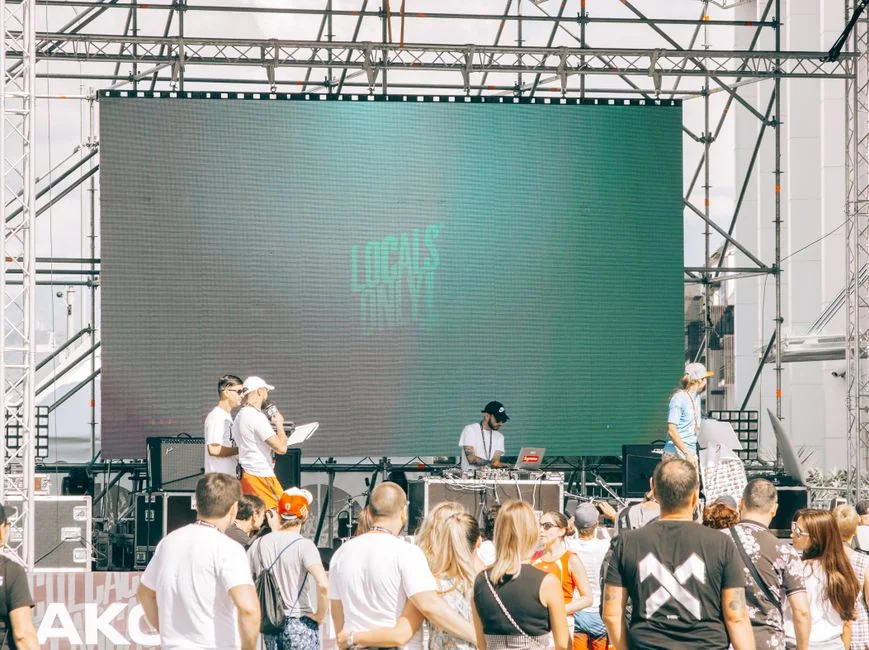
A display needs a suitable controller or media player to process and deliver content. Basic installations may use a dedicated media player with scheduled playlists. More advanced systems may integrate live video, camera feeds, interactive sensors, digital signage software, content management platforms, or building control systems.
Content managers should be able to schedule campaigns, divide the display into zones, adjust playback, and monitor device status. Remote access can reduce the need for on-site intervention, although strong cybersecurity practices are necessary for network-connected systems.
When a display has an unusual shape, content may need to be mapped carefully. A standard rectangular video may appear stretched or misaligned on a cylindrical or wave-shaped surface. Designers can use custom templates, projection mapping tools, and previsualization software to ensure the imagery matches the physical form.
Content strategy
High-quality hardware cannot compensate for weak content. Designers should create visuals based on the viewing distance, screen shape, ambient light, and expected dwell time. Large text, strong contrast, simple layouts, and clear calls to action are usually more effective than crowded compositions.
Motion should support communication rather than create distraction. Fast transitions may be suitable for entertainment venues but difficult to read in a transit environment. Content should also account for the fact that viewers may approach from different angles.
Designers should avoid placing essential text across extreme bends on curved screens unless they have tested the distortion. Logos, product images, and key messages should appear in areas where they remain legible and visually balanced.
Testing and commissioning
Before launch, the installation should be tested under normal operating conditions. This includes checking brightness, color uniformity, dead pixels, refresh performance, video scaling, audio synchronization, network access, emergency shutdown procedures, and scheduled content playback.
Testing should occur at different viewing distances and angles. A display may look consistent from the center while showing visible brightness differences near the edges. Calibration tools can help correct color and luminance variations across modules.
A commissioning report should document the final configuration, wiring, controller settings, maintenance procedures, warranty information, and replacement part references. This documentation helps the owner manage the system throughout its operational life.
Maintenance, Cost, and Return on Investment
Organizations evaluating Flexible Led Display Solutions should consider total ownership cost rather than focusing only on the purchase price. A lower-cost display may require more frequent maintenance, consume more power, or offer a shorter service life.
Maintenance requirements
Routine maintenance usually includes cleaning, inspecting connectors, checking power supplies, reviewing ventilation, updating control software, and monitoring brightness consistency. Outdoor displays may require more frequent inspection because of exposure to weather and airborne contaminants.
Operators should keep spare modules, power supplies, receiving cards, data cables, and other critical components available. Flexible displays often use specialized parts, and delays in sourcing replacements can leave visible sections offline.
A remote monitoring system can identify abnormal temperatures, communication errors, power failures, and module faults. Early alerts help technicians address issues before they become major service interruptions.
Service life
LED products do not typically fail all at once. Brightness gradually decreases over time, and individual components may require replacement. Service life depends on diode quality, operating temperature, brightness settings, usage hours, power management, and environmental conditions.
Running a display at maximum brightness continuously can accelerate degradation and increase energy consumption. Automatic brightness control, scheduled shutdown periods, and suitable ventilation can help extend useful life.
The warranty should be reviewed carefully. Buyers should understand coverage for dead pixels, brightness degradation, power supplies, structural components, labor, shipping, and on-site service. It is also important to confirm whether the warranty remains valid after custom bending or third-party installation.
Energy consumption
Energy use varies according to pixel pitch, brightness, screen size, content, and operating mode. A display with a higher maximum brightness may consume more power, although intelligent brightness control can reduce average consumption.
Request both maximum and typical power consumption figures. This distinction provides a more realistic estimate of ongoing operating cost. Energy-efficient power supplies and automatic scheduling can make a measurable difference for displays that run many hours each day.
Measuring business value
Return on investment can be measured in different ways depending on the application. Retailers may track sales lift, customer engagement, dwell time, and campaign performance. Event venues may evaluate ticket value, sponsorship revenue, audience satisfaction, and repeat bookings. Corporate facilities may measure visitor engagement and communication effectiveness.
Digital displays also provide flexibility that printed signage cannot match. A single installation can support multiple campaigns, languages, departments, or event schedules. The ability to update content quickly can reduce printing expenses and improve response to changing business conditions.
The strongest results usually come from aligning the display with a clear communication objective. A visually impressive installation should still help the organization sell products, guide visitors, reinforce identity, share information, or create an experience worth remembering.
Selecting a supplier
Supplier quality affects the entire project. Evaluate the manufacturer’s technical documentation, product testing, installation experience, spare-parts policy, software support, warranty terms, and references from comparable installations.
Ask for evidence of completed projects using similar curvature, environmental conditions, and operating schedules. A supplier experienced with flat displays may not have the structural or content expertise required for a complex flexible installation.
A strong proposal should include product specifications, drawings, power requirements, control architecture, delivery schedule, commissioning services, maintenance provisions, and training. Comparing proposals on these details provides a more accurate view of value than comparing headline prices alone.
Frequently Asked Questions
What are the main uses of Flexible Led Display Solutions?
Companies use Flexible LED Display Solutions across various applications, including curved advertising walls, retail displays, event stages, museum exhibits, architectural features, sports venues, reception areas, and immersive brand experiences. Their ability to conform to unusual surfaces makes them especially useful where a rigid rectangular screen would leave gaps or require extensive construction.
Are Flexible Led Display Solutions suitable for outdoor installations?
Yes, manufacturers can design Flexible LED Display Solutions for outdoor use by adding appropriate brightness levels, weather protection, suitable operating temperature ratings, sealed connections, and structural support. The buyer should verify the product’s ingress protection rating and make sure the installation frame meets local wind and weather requirements.
How long do Flexible Led Display Solutions last?
The service life of Flexible Led Display Solutions varies according to component quality, brightness settings, operating hours, temperature, and maintenance. Manufacturers build many commercial LED systems for long-term operation, while maintenance teams may replace individual modules and power components throughout the display’s service life. Proper ventilation and scheduled maintenance can help preserve performance.
Do Flexible Led Display Solutions consume a lot of electricity?
The energy consumption of Flexible Led Display Solutions depends on screen size, pixel pitch, brightness, content, and operating schedule. rightness can automatically adjust the power consumption, so the actual usage is often lower than the maximum rated load. Buyers should request typical consumption figures and consider scheduling, power management, and energy-efficient components.
Conclusion
Flexible Led Display Solutions give organizations more freedom to create engaging digital environments in spaces that traditional screens cannot easily serve. Their bendable construction supports curved walls, columns, stages, showcases, and architectural installations while maintaining the brightness and content flexibility associated with modern LED technology.
The best results come from careful planning. Buyers should assess viewing distance, pixel pitch, brightness, environmental exposure, curvature, maintenance access, structural support, power requirements, and content workflow before selecting a product. Supplier experience is equally important, particularly for custom shapes and large-scale installations.
When project teams manage hardware, engineering, content, and maintenance as a unified solution, they can turn flexible LED displays into long-term communication assets instead of temporary visual features. They can improve brand visibility, transform underused spaces, support changing campaigns, and create memorable experiences for customers, visitors, and audiences.