LED Screen Rental Atlanta | Factory Direct Supply

LED screen rental Atlanta searches split into two very different buyers. One needs a wall for a weekend, with a crew, a truck, and a show date. The other is a rental house, church AV team, or production company buying cabinets to own, deploy on its own schedule, and keep for years. This page is written for the second group, and explains what a fair rental quote should contain for the first.
TW VISION manufactures rental-grade LED cabinets and keeps standard stock in an Atlanta warehouse. That is unusual for this market: most suppliers ship into Georgia from Florida, Texas, or the West Coast, which adds a week and a freight invoice. We do not rent screens or run crews, so what we sell is hardware, spares, and configuration files — and because the stock is here, a will-call pickup can happen the same day.
Below: how the specification follows the venue, what Atlanta buyers actually order, how factory supply compares with a supported rental, what local rates look like, how to vet a partner, and how heat, thunderstorms, permits and downtown load-in rules change the plan.
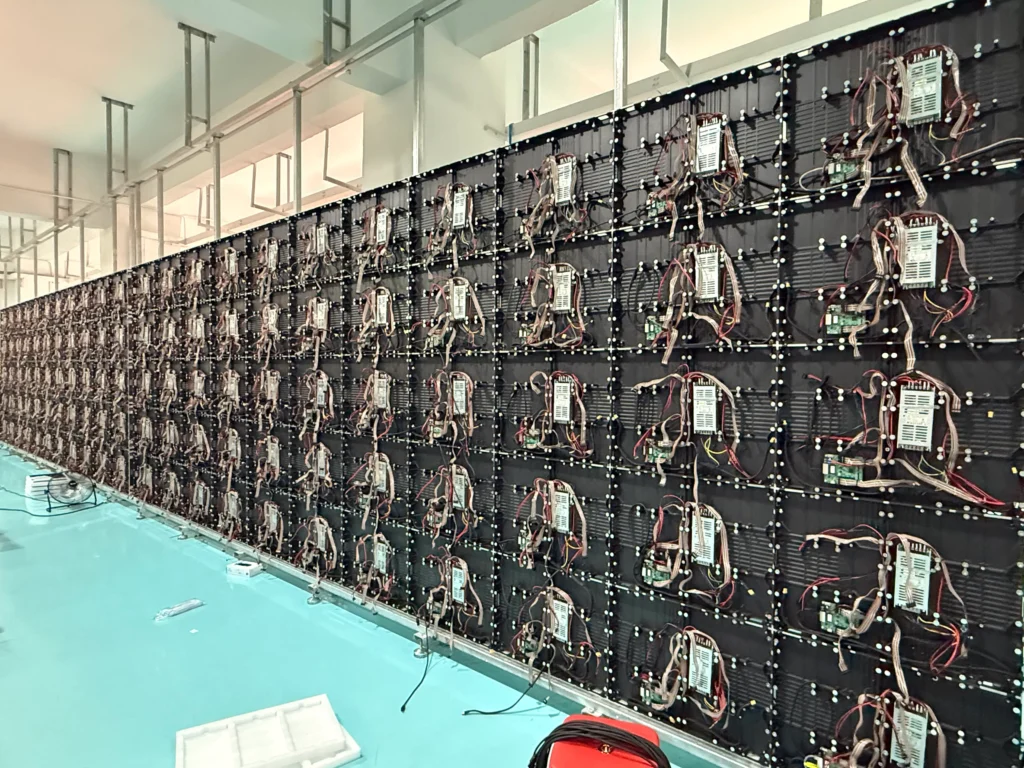
Table of Contents
- 1. Start With the Venue and the Closest Seat
- 2. What Atlanta Buyers Order From the Factory
- 3. What a Local Warehouse Changes
- 4. Why Fine-Pitch Posters and Podiums Sell Here
- 5. Compare Factory Supply With a Supported Rental
- 6. What LED Screen Rental Atlanta Events Cost
- 7. How to Choose a Rental Company in Atlanta
- 8. What Setup Support Should Cover
- 9. Heat, Humidity and Thunderstorm Season
- 10. Venue Access, Permits and Union Rules
- 11. Processing, Content and Acceptance Tests
- 12. Put Responsibility in the Contract
- 13. Will-Call and Delivery in Metro Atlanta
- 14. Ordering, Tax and Resale Paperwork
- FAQ
- Conclusion
1. Start With the Venue and the Closest Seat
Screen size and pitch come from three numbers: the closest viewer, the content people must read, and the light on the wall. Atlanta adds a fourth condition — the room. A general session inside the Georgia World Congress Center and a booth at AmericasMart can need different pitch at the same wall size, because the front row sits at different distances.
Write a one-page brief and require every bidder to answer it: event type and audience size, nearest and farthest viewer, indoor or open air, orientation and sun hours, content mix, ground-supported or flown, load-in window, and where power sits.
Pixel pitch is the centre-to-centre distance between LEDs in millimetres, and density scales with the square of pitch: (1,000 ÷ pitch)². P2.6 carries roughly 147,900 pixels per square metre, P3.9 about 65,700 and P4.8 about 43,400. One step finer is where most of the cost sits, which is why the closest seat — not the room size — decides it.
For LED screen rental Atlanta venue teams specify most often, the working split is P1.9–P2.6 where the front row sits inside four metres, P2.9–P3.9 for ballrooms and mid-size stages, and P4.8–P6.7 once the nearest viewer passes 25 metres. Ask for calibrated operating brightness, not peak: 800–1,500 nits indoors, 5,000 or more outdoors, and 6,000–8,000 where the face takes direct afternoon sun.
2. What Atlanta Buyers Order From the Factory
Five groups cover most Georgia orders: fine-pitch indoor cabinets, standard rental cabinets, IP-rated outdoor cabinets, folding posters, and all-in-one podium displays.
Fine-pitch indoor cabinets
P1.953 and P2.604 suit boardrooms, broadcast studios and stages where the front row is inside four metres. Corporate, healthcare and logistics offices around Buckhead, Midtown and the Perimeter buy fine pitch because content is read close up, on camera, or in a glass-walled room.
Standard rental cabinets
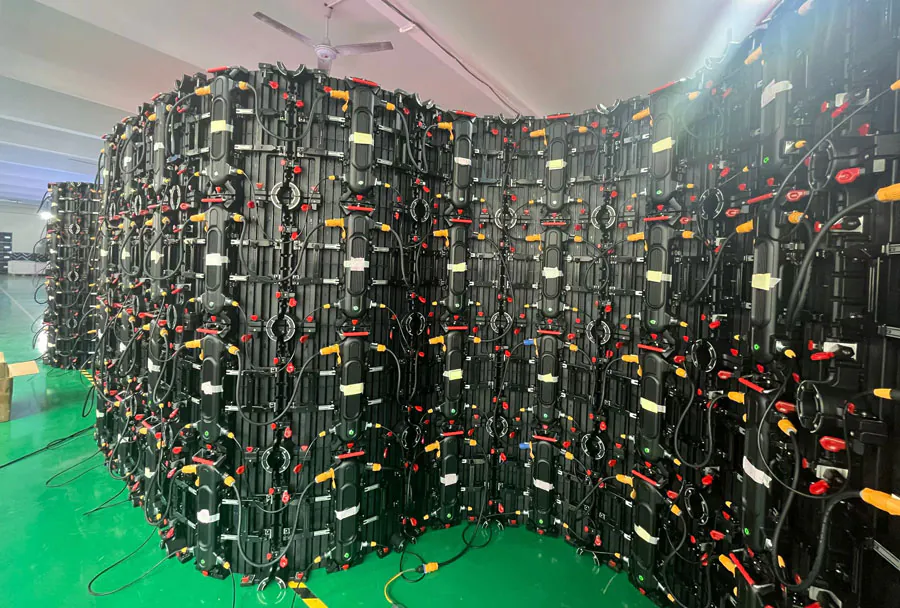
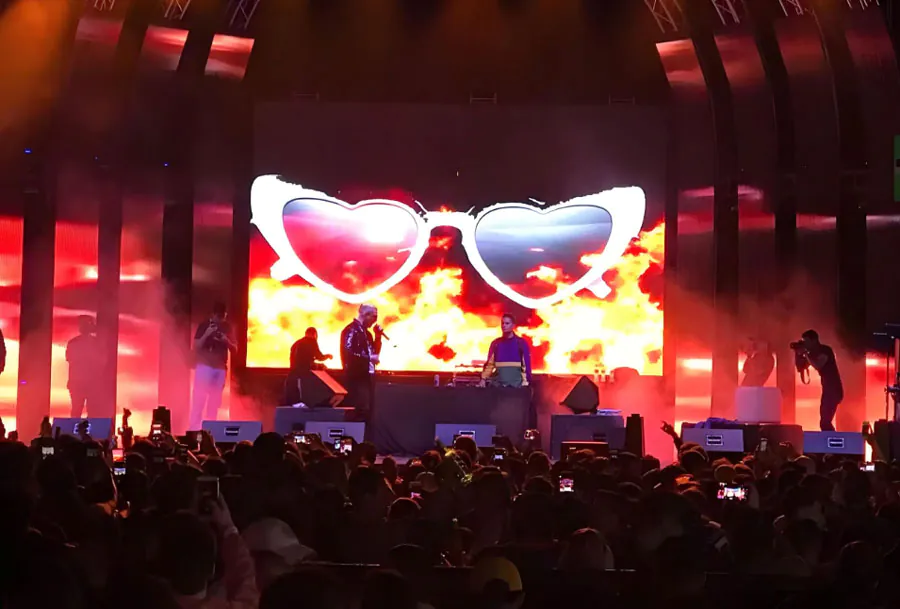
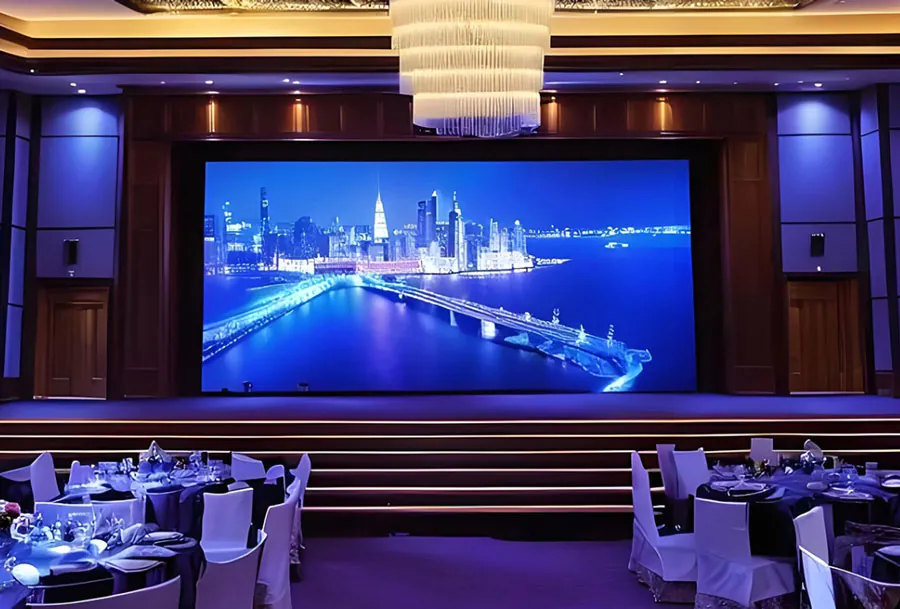
P2.976 and P3.91 in 500×500 mm and 500×1000 mm formats carry general sessions, exhibition booths, awards nights and hotel ballrooms, with front or rear service access and optional curved locks.
Outdoor cabinets
P3.91 and P4.81 with IP-rated sealing and brightness headroom. Georgia summer sun, sudden thunderstorms and high humidity are the operating conditions, so enclosure design and drainage matter as much as nits.
| Series | Stock | Pixel pitch | Cabinet | Typical Atlanta use |
|---|---|---|---|---|
| PQ P2.6 | Atlanta stock | P2.6 | 500×500 / 500×1000 mm | Rental walls, corporate stages, ballrooms |
| LP-H | Atlanta stock | P1.86 | 640×1920 mm folding poster | Retail, hotel lobbies, church foyers |
| Podium display | Atlanta stock | P1.86 | 960×480 mm all-in-one | Press conferences, hotel meetings, lecterns |
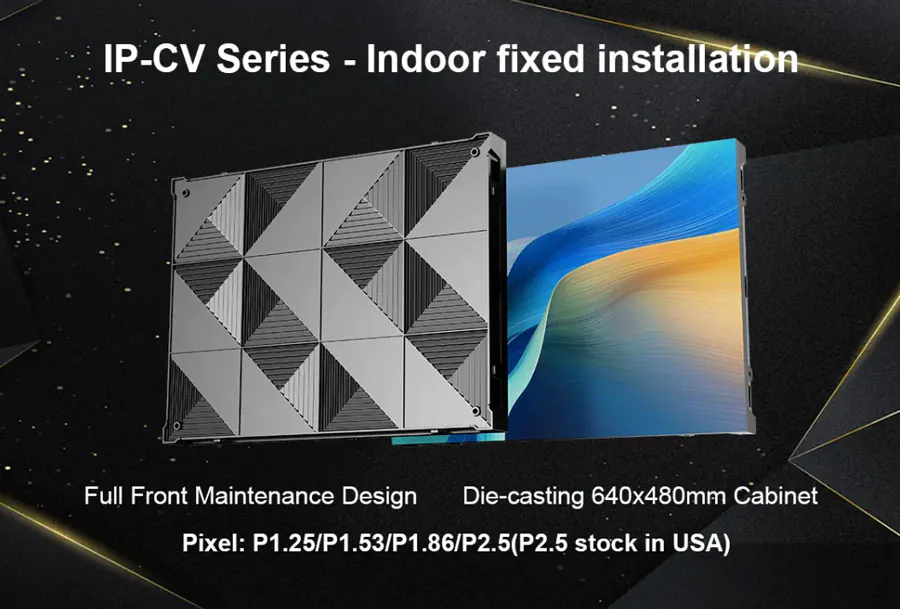
| IP-CT | Atlanta stock | P2.5 | 640×480 mm soft connection | Church walls, menu boards, fixed indoor installs |
| NovaStar control | Atlanta stock | — | VX400 / VX600 / VX1000 Pro | Processor for rental and fixed walls |
| Other pitches (PN / PH / PI) | Factory order | P1.953 – P6.67 | 500×500 / 500×1000 mm | 15–20 days production plus freight |
Orders ship from a single production batch with matched spare modules, receiving cards, power supplies, processors, flight cases and configuration files.
3. What a Local Warehouse Changes
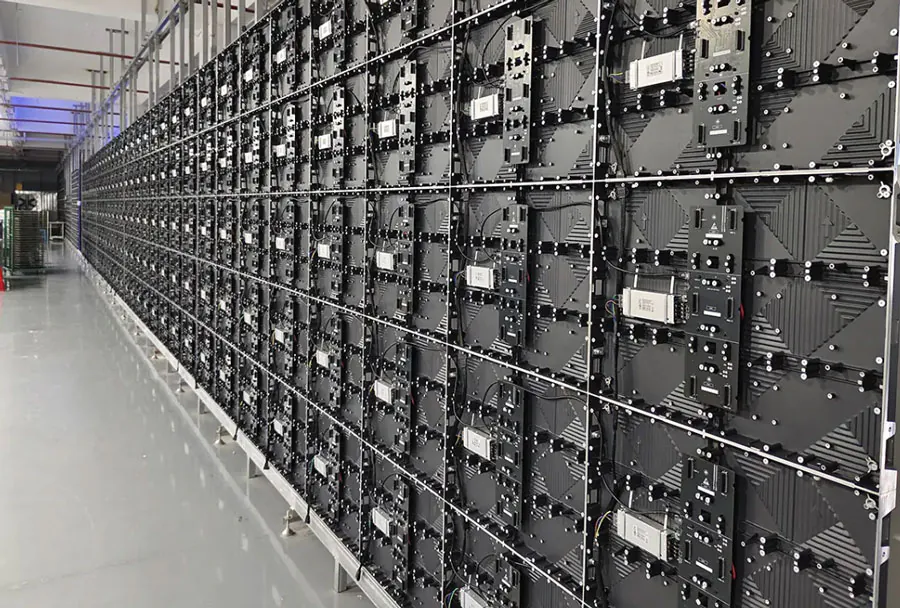
For a rental company, proximity is not a marketing line — it changes what you can promise a client. Atlanta is the only US city where our stock sits in the same metro as the buyer.
Will-call beats freight. A confirmed order can be collected the same day from the warehouse instead of waiting on an LTL appointment. That is the difference between quoting a show next week and quoting one next month.
Replacement modules in hours, not days. A dead cabinet mid-season is normally a shipping problem. Here it is a drive across town, and the spare travels with the order rather than arriving after the event.
Trial builds before commitment. Buyers can bring a processor and test a small configuration in person before a fleet order, which is not practical when stock is three states away.
Freight becomes optional. Local crews collect or arrange their own transport and avoid liftgate fees and pallet handling on small orders. For larger orders we still quote delivery and book it.
Same-week top-ups. Rental houses that take a late booking can add cabinets to an existing batch and keep pixel pitch, scan and calibration consistent, instead of mixing in a different production run.
For buyers outside the metro, the same stock ships into Savannah, Macon, Columbus, Chattanooga, Birmingham and Greenville on standard freight.
4. Why Fine-Pitch Posters and Podiums Sell Here
The LP-H series LED poster and banner is our strongest seller in this market, and the P1.86 version in particular. It fills a gap that rental cabinets cannot serve in volume.
It solves the one-screen, one-room problem. A cabinet wall needs a crew, truss and a build window. A 1.86 mm poster moves with two people, stands on a floor and runs before the doors open. For hotel lobbies, church foyers, dealership showrooms and pop-up retail in Midtown or Alpharetta, that is the difference between having a screen and not having one.
The pitch matches how close people stand. P1.86 is sharp at two to three metres, exactly where a customer reads a window display or a product plinth.
It repeats. One lobby screen becomes four locations once content can be scheduled centrally, because installation needs no rigging and no crew.
The same reasoning reaches the lectern. Our all-in-one LED podium is 960 × 480 mm at P1.86, replaces a printed banner beside a lectern, and runs from one power and one signal connection. It suits press conferences, corporate stage announcements and hotel meetings where a full wall is more screen than the room needs, and it is stocked here alongside the poster range.
5. Compare Factory Supply With a Supported Rental
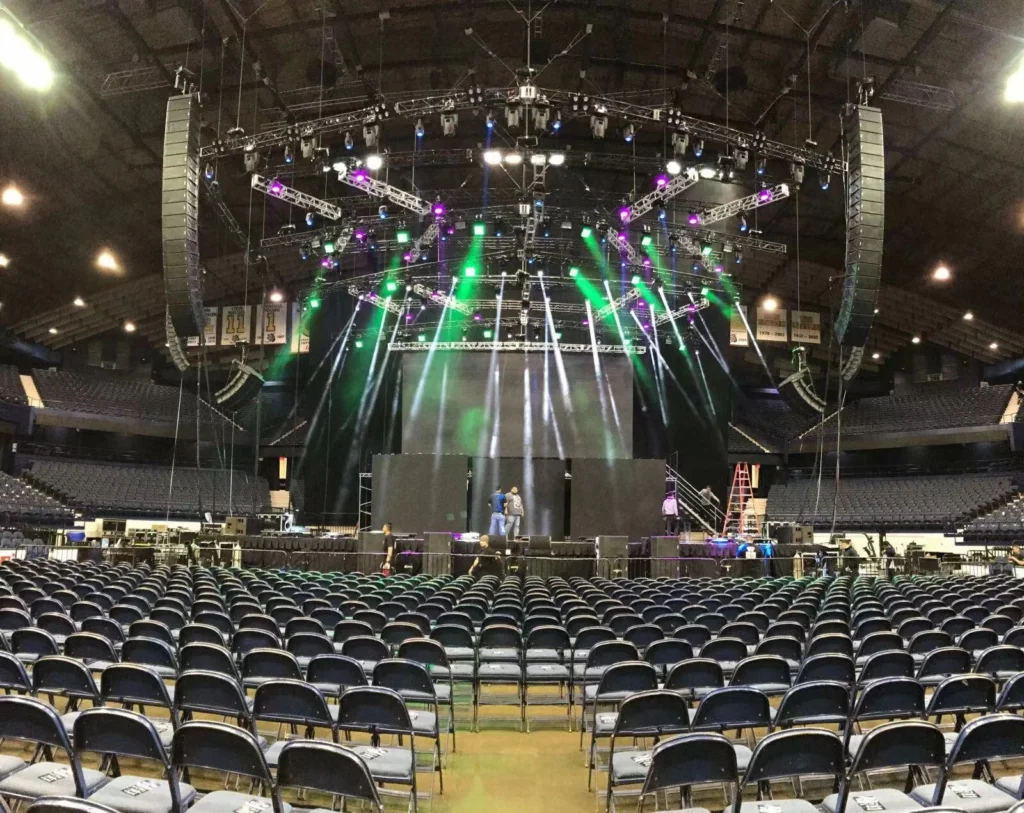
Factory pricing and an event-ready LED screen rental Atlanta quote describe different scopes. Compare total delivered responsibility, not equipment price.
| Quote element | Factory supply | Supported rental | What to check |
|---|---|---|---|
| Cabinets | Included | Included | Exact model and production batch |
| Structure | Usually separate | Often available | Engineering and wind rating |
| Processor | Optional | Usually included | Inputs, scaling, backup |
| Labor | Buyer arranged | Quoted locally | Crew hours and overtime |
| Spares | Purchased | Provider inventory | Quantity held on site |
| Support | Remote or limited | Event technician | Response terms |
A factory order suits a company with trained technicians, compatible rigging, dry storage and enough bookings to keep the fleet working. A supported rental suits a one-weekend show where the crew is the hard part.
Normalise every proposal. Convert each quote into the same scope: freight or will-call, drayage, lift equipment, power distribution, setup, rehearsal, operator hours, teardown and tax. A common Atlanta pattern is a low equipment quote that excludes the processor and ground support; add both and the gap closes.
Behind the factory claim. An 8,000㎡ facility with 8 independent SMT lines keeps placement, PCB assembly, module production and calibration in-house. A 500㎡ module aging area screens weak modules, and roughly 2,000㎡ of cabinet aging runs each batch for 24 hours at operating conditions. Modules are glued at the edges and cabinets screwed with torque control. Atlanta is where that work is testable in person: the batch that certified a wall is a short drive from the will-call door, so a trial build, a spare module and the production record come from the identical run.
6. What LED Screen Rental Atlanta Events Cost
Atlanta rates are set by screen area, pitch, indoor or outdoor rating, duration, crew hours and how much of the production the vendor carries. The ranges below are indicative market levels for a locally supplied rental, useful for benchmarking a bid.
| Use case | Typical size | Pitch | Indicative rate |
|---|---|---|---|
| Trade show booth, indoor | 1.8 × 2.4 m | P1.9 – P2.9 | $700–$1,500 per day; $2,000–$6,000 per week |
| Retail or lobby display | 1.2 × 1.8 m | P2.5 – P3.9 | $400–$900 per day; $1,200–$3,000 per week |
| Corporate conference wall | 4.5 × 2.4 m | P2.5 – P4 | $2,000–$6,000 per day; $6,000–$18,000 per week |
| Outdoor stage screen | 6 × 3.6 m | P6 – P10 | $4,000–$10,000 per day; $8,000–$26,000 per week |
| Seasonal patio or rooftop | 2.4 × 3.6 m | P4 – P6 | $1,500–$4,000 per month |
Four models are common: per-event, weekly for multi-day activations, monthly for seasonal campaigns, and full-service packages bundling transport, install, technicians and content ingestion. À la carte quotes put the screen first and add every service as a line item, which is where budgets slip.
A cross-check: a 20–30 m² P3.9 indoor wall with crew, calibration and a day of technician cover typically lands between $3,000 and $10,000 here. Materially less means labor, power distribution or spares are missing.
For LED screen rental Atlanta buyers purchase to own, the arithmetic is a per-square-metre cabinet price, optional freight and your own crew hours. Count bookings per year: out most weekends, ownership wins; out twice, it rarely does.
7. How to Choose a Rental Company in Atlanta
If crew, structure and show-day support are part of what you are buying, the company matters as much as the panel — true for any LED screen rental Atlanta project. Six checks separate a production company from a broker.
- Specifications in writing. Pitch, calibrated nits, refresh rate, IP rating, exact cabinet and processor model.
- Local inventory. How many identical cabinets are in metro Atlanta today, and whether the supplier owns them or brokers them.
- Crew credentials. Rigging certification, stamped engineering for flown builds, familiarity with house rules at the venue.
- Redundancy. Spare modules, receiving cards, power supplies and a backup processor on site.
- Insurance and compliance. General liability, workers’ compensation, equipment cover, certificates issued to the venue.
- Contract clarity. Travel, overtime thresholds, weekend premiums, damage liability, cancellation.
Ask for two references from comparable Atlanta rooms and look at the photographs, not the testimonials. A company that has loaded into the Georgia World Congress Center or worked a State Farm Arena build knows the dock booking, the freight lift limits and which halls require union labor — questions a broker cannot answer.
Check the calendar too. Spring festival season, the autumn conference window and the December holiday party run all compress inventory, and a date confirmed late is either unavailable or carrying surge pricing.
8. What Setup Support Should Cover
“Setup included” can mean a van and two technicians, or a survey, rigging plan, calibration and an operator for the whole show. For LED screen rental Atlanta events rely on, that gap is a crew standing idle at 6 pm. Write the scope before comparing prices.
- Site survey. Rigging points and load limits, power capacity and distance, access paths, ceiling height, sightlines, sun path, and space to stage spares.
- Delivery check. Padded cases, a confirmed window, and a cabinet count signed off before the truck leaves.
- Rigging. Certified riggers for truss, scaffold or ground-stacked builds, with facility load limits respected.
- Power. Distribution, correct cable runs, and a UPS or generator where house supply is marginal.
- Calibration. Colour, white balance, uniformity correction and brightness matching across the wall.
- Operators. Named hours for playback, input switching and live feeds, plus one escalation contact.
- Spares. Modules, power supplies and a backup processor on site, not at the warehouse.
- Strike and debrief. Safe load-out, damage check and a short post-show review.
A workable sequence runs needs assessment, proposal with drawings or a mock-up, permits and load-in scheduling, install and calibration, live support, then strike. For multi-day events, ask whether a technician stays overnight and whether that is included or billed.
Know the four failures that actually happen: camera flicker, uneven brightness after a power dip, dead pixels, and signal loss. Each has a one-line remedy — refresh and shutter sync, recalibration, a module swap, a redundant signal path.
9. Heat, Humidity and Thunderstorm Season
Atlanta summers combine 90°F heat with humidity that keeps cabinets warm after sunset, and July afternoons bring thunderstorms that arrive in twenty minutes. Both conditions shape an outdoor build more than the specification sheet suggests.
Heat and derating. A cabinet rated at 5,000 nits derates as internal temperature climbs. Leave ventilation clearance behind the wall, avoid enclosing the rear, build in the morning, and log cabinet temperature through the afternoon.
Humidity and condensation. A cabinet moved from an air-conditioned truck into a warm, humid room can form moisture on cold modules and connectors. Acclimatise crates before powering, keep them closed while they warm, and inspect connectors rather than assuming the IP rating covers transport.
Rain. IP65 handles rain on the face; sealed connectors, drip loops and a drainage path behind the wall matter more than the rating itself. Cabinets standing in pooled water at the base fail regardless of IP.
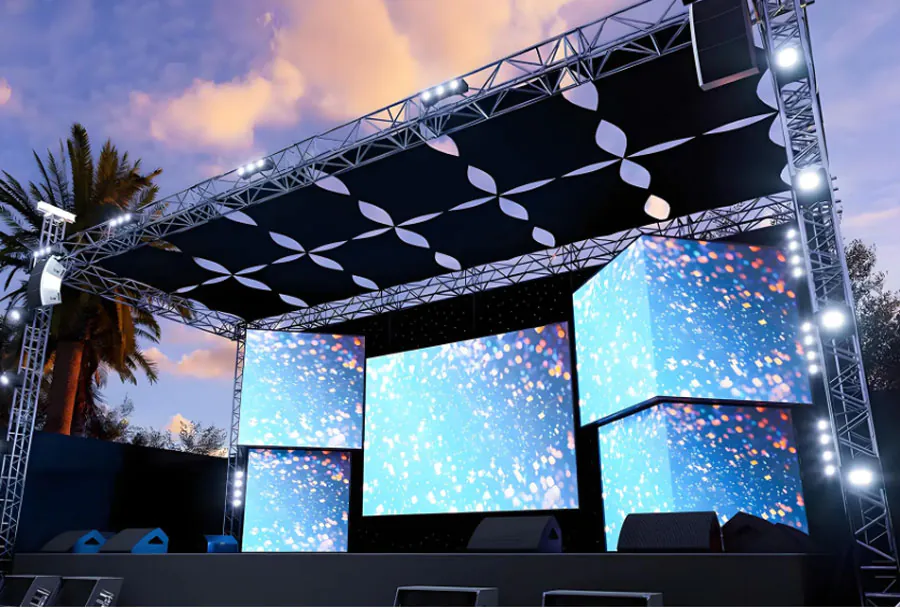
Wind and lightning. Spring and summer gust fronts arrive fast. Ask for the engineered wind rating, the ballast calculation, and a written trigger for a strike decision — who decides, and by when. Lightning within a stated radius is a stop condition, not a judgement call. For the enclosure side of this — IP and IK ratings, drainage, derating curves and storm procedures — see the weatherproof outdoor LED screen guide.
10. Venue Access, Permits and Union Rules
Atlanta venues differ more than their seating charts suggest, and the differences decide crew size and build hours.
Convention and trade show. The Georgia World Congress Center and AmericasMart run on dock schedules, freight lift bookings and union labor. A booth wall follows the show’s rigging and electrical rules, not the vendor’s preference.
Arenas and stadiums. State Farm Arena and Mercedes-Benz Stadium operate house rigging plots, load limits and engineering approval. Stadium builds also carry security and bag-check constraints that affect load-in routes.
Theatres and clubs. The Fox Theatre has protected interiors, narrow loading positions and short build windows. The Coca-Cola Roxy and similar rooms hang from house points with their own weight limits.
Parks and open sites. Piedmont Park, Atlantic Station and festival grounds are ground-supported builds with wind, ballast, generator and public-safety questions, and no place to hang anything.
Permits. Temporary structures, street use, amplified sound and signage fall under city or county review, with the fire marshal involved for assemblies and egress. Start early — approvals are the one item that cannot be compressed on the day.
Traffic. Delivery windows on I-285, I-75, I-85 and the Downtown Connector decide when a truck reaches a dock. A 7 am drop inside the perimeter is a different job from a midnight load-in.
11. Processing, Content and Acceptance Tests
The wall is only as good as the signal chain behind it, and the chain is where cheap quotes cut corners.
Refresh rate. Specify 3,840 Hz or higher for camera work and test with the actual camera shutter. Broadcast and livestream productions should also confirm genlock so wall and cameras share timing.
Native mapping. Ask for the wall’s native pixel dimensions, not “HD capable”. A 4K source is 4,096 × 2,160 pixels under the DCI specification; if the wall maps to fewer pixels, content is being scaled and small text goes first.
Playback. Confirm inputs, codecs, frame rates and whether a backup playback device is supplied. Deliver masters at native resolution, progressive scan, with a cue sheet and safe areas for lower thirds.
Acceptance test. Before doors: white and grey fields for uniformity, primary colours for dead pixels, a moving pattern for tearing, every input, audio sync on live camera, and a ten-minute loop at show brightness. Sign the result.
Content deadlines belong in the specification. Most vendors want master files 48–72 hours before load-in so they can be tested and re-encoded, and a booth build rarely allows a second attempt on site.
12. Put Responsibility in the Contract
A rental agreement should read like a scope of work, not a price list. Six clauses carry most of the risk.
- Equipment schedule. Cabinet model, pitch, quantity, processor, structure and spares, with part numbers and sizes.
- Responsibilities. Who delivers, builds, tests, operates and strikes, and the time allowed for each.
- Payment. Deposit, balance date, and what happens to the deposit on reschedule.
- Weather and cancellation. The trigger for a storm call, notice periods, and what is refundable.
- Liability. Damage caps, insurance obligations, and the indemnity terms the venue requires.
- Support. Operator hours, response time and the show-day escalation contact.
Two points are worth negotiating: a damage cap so one broken module does not trigger a cabinet replacement invoice, and a trial call on larger builds so the wall is tested in the room before the client sees it.
Keep the venue’s rules attached. Load-in windows, fire marshal checks and rigging approvals belong to the building; a contract that ignores them moves the delay to the morning of the show.
13. Will-Call and Delivery in Metro Atlanta
Because the stock is local, collection is usually the fastest option. For buyers who would rather not send a truck, we quote and book delivery to your address or venue.
Will-call. Confirm the order, book a collection slot, and bring a vehicle that matches the pallet count — a 500×1000 mm cabinet pallet is not a pickup-bed lift for two people.
Local delivery. Standard delivery into the metro, with liftgate where there is no dock or forklift, and inside delivery to a ground-floor room on request.
Venue delivery. Inside an agreed window, provided the venue confirms access times and your crew meets the truck. We handle transport, not rigging.
Events. State the required arrival date at quotation. A wall that lands the afternoon before load-in is a wall nobody can test.
Outside the metro. Stock moves to Savannah, Macon, Columbus, Chattanooga, Birmingham and Greenville on standard freight, usually within a few business days of loading.
14. Ordering, Tax and Resale Paperwork
Quotation. Send cabinet size, pitch, quantity, indoor or outdoor use, and whether curved locks, flight cases or transport are needed. The quote is per square metre with configuration and delivery scope stated, so it compares line by line.
Resale documentation. Rental companies and AV resellers buying inventory for resale can normally supply a Georgia resale certificate (Form ST-5) so qualifying purchases are not taxed at retail rates. Send it with the purchase order and the invoice is correct the first time.
Vendor setup. W-9 and onboarding documents are available for buyers who need to be registered in a purchasing system before the first order.
Payment and terms. Standard orders are prepaid or paid on shipment; repeat buyers can discuss terms once an order history exists.
Georgia resale certificates are issued by the Georgia Department of Revenue.
FAQ
Do you rent LED screens in Atlanta?
No. We manufacture and sell rental-grade cabinets from an Atlanta warehouse. For a single event, a local rental company is the right call; this page covers buying cabinets to build or extend a fleet.
Can we collect the same day?
On confirmed stock lines, yes — subject to the order being released and a collection slot. Custom pitches and factory-order series take longer.
Why does the podium and poster range sell so well here?
Both are fine-pitch, all-in-one displays that two people can move and deploy without a crew. For lobbies, church foyers and press conferences they replace a small rental wall at a fraction of the build.
Do you charge Georgia sales tax?
Qualifying purchases for resale are normally exempt when a valid Georgia resale certificate is supplied with the order. Retail purchases are taxed at the applicable rate.
Is there a minimum order?
No fixed minimum. Sample units, single walls and full fleet orders are handled, though the price per square metre improves with quantity.
Conclusion
Atlanta rewards the buyer who can move quickly: stock in the same metro, a quote on a fixed basis, specifications that stay stable between orders, and cabinets that reach the venue on the right day.
Start with the rental LED screen range to confirm cabinet format and pitch, check what is in stock at our Atlanta warehouse before planning a fleet expansion, or review the LP-H series LED poster and the all-in-one LED podium for lobby and stage display work.