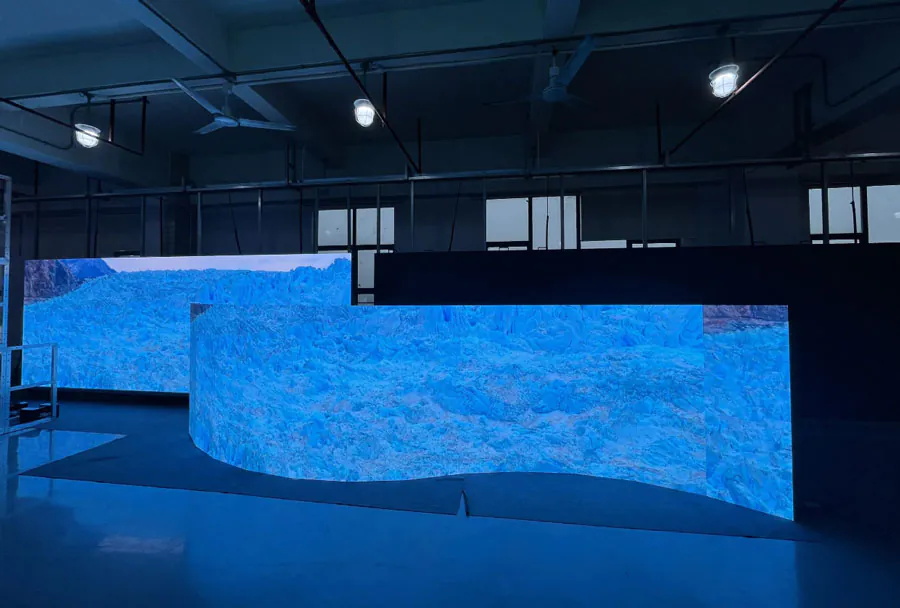
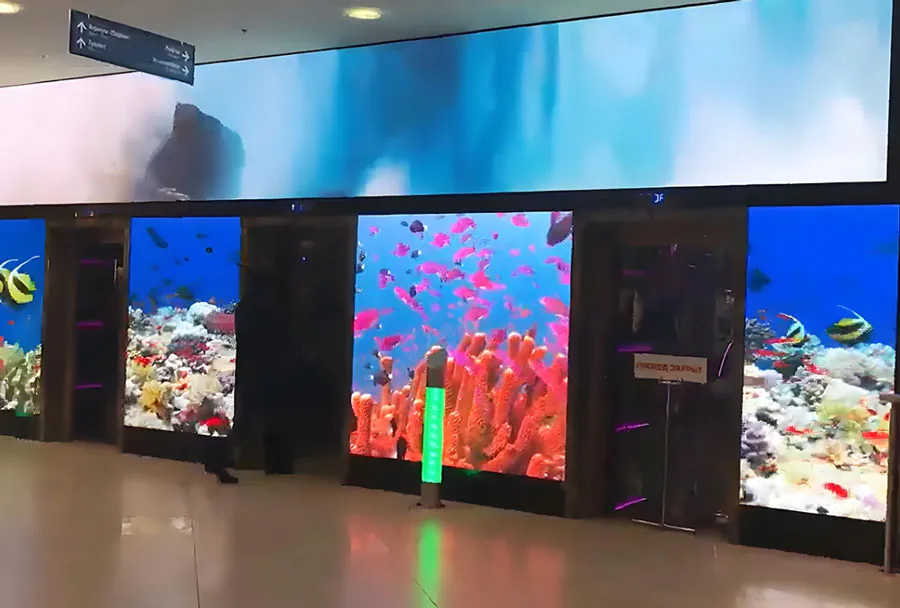
LED Screen Rental Chicago — Factory Supply for Venues, Agencies and Fleets

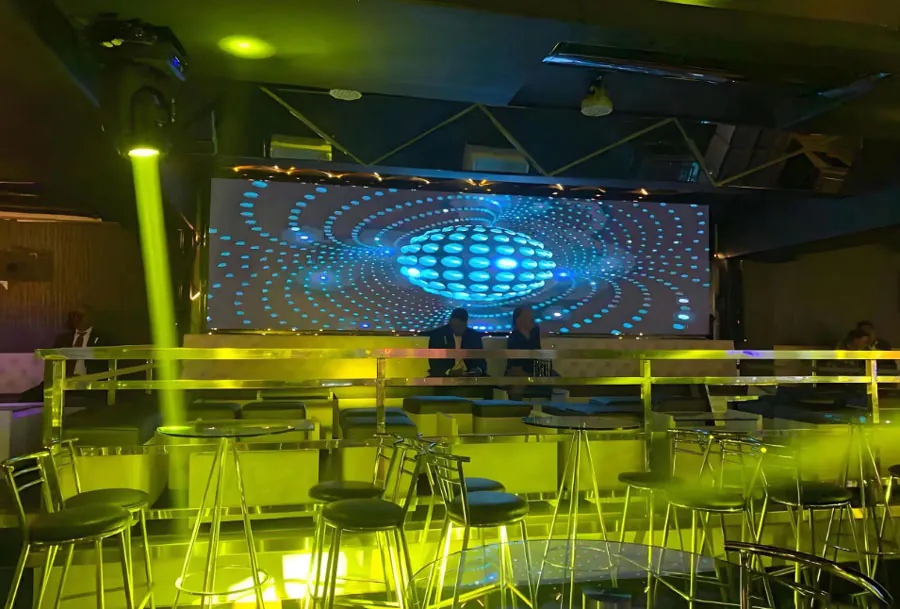
A typical LED screen rental Chicago order starts with a season rather than a show: a January conference at McCormick Place, a July lakefront activation, or a hotel ballroom run that has to survive both. We build the cabinets in our own factory and ship them from our Atlanta warehouse, so the same wall that leaves here in July is specified for the cold it will meet in January.
Table of Contents
- What Chicago Changes About the Order
- Matching Pitch to the Room and the Sightline
- Brightness, Wind and Lake-Effect Weather
- Winter Cold, Condensation and Module Warm-Up
- Venues From McCormick Place to Grant Park
- What Chicago Buyers Order From Us
- What LED Screen Rental Chicago Costs
- Custom Configurations and Non-Standard Sizes
- Why Local Businesses Choose Factory Supply
- Trusted Providers: How to Vet a Supplier
- Permits, Labor and Union Rules
- Delivery From Atlanta to Chicago
- Ordering, Tax and Resale Paperwork
- Camera, Streaming and Broadcast
- FAQ
What Chicago Changes About the Order
Most markets let you specify one wall and reuse it. Chicago asks for two. A cabinet that sits in a Grant Park tent at 90°F in July can meet -20°C wind chill on a Navy Pier loading dock in January, and both jobs arrive with the same purchase order number.
That range drives three decisions before price is discussed. First, the LED package and power supply need a cold-start rating rather than a generic indoor rating. Second, the cabinet sealing has to survive lake-effect rain that arrives sideways. Third, the flight cases need enough insulation that modules do not condensate on the drive from the dock to the floor.
We write those three requirements into the quotation, because they change the bill of materials. A client who compares only the per-square-metre figure between a Chicago order and a Dallas order is comparing two different builds.
Nothing about the city makes an LED screen behave unusually. What changes is the envelope around it, and that envelope is where the specification lives.
Matching Pitch to the Room and the Sightline
Pixel pitch is the distance between adjacent LEDs in millimetres. Divide 1,000 by that number and square the result to get pixels per square metre, which predicts whether text stays readable at distance.
The working rule most rental houses use is simple: minimum comfortable viewing distance in metres is roughly 1.5 to 3 times the pitch in millimetres. A P2.6 wall is comfortable from about 4 to 8 metres; a P6 wall from 9 to 18 metres.
| Pitch | Pixels per m² | Comfortable sightline | Typical Chicago use |
|---|---|---|---|
| P1.86 | ~289,000 | 2–5 m | Boardroom, press room, podium backdrop |
| P2.5 | 160,000 | 3–7 m | Breakout room, hotel ballroom front rows |
| P2.6 | ~147,900 | 4–8 m | General session, booth backwall |
| P3.9 | ~65,700 | 7–14 m | Arena bowl, long exhibit hall |
| P6–P10 | 2,800–27,700 | 9–30 m | Outdoor festival, street activation |
Overspecifying pitch is the most common waste in a commercial LED screen rental quote. A P3.9 wall read from 60 feet looks the same as a P1.9 wall and costs a fraction as much to buy, truck and rig.
Brightness, Wind and Lake-Effect Weather
Brightness is measured in nits, and the correct value depends on the light falling on the screen rather than on the screen’s own ambition. Indoor rooms in Chicago usually need 700 to 1,500 nits. Covered outdoor stages need 2,000 to 4,000. Full daylight on a lakefront needs 5,000 to 8,000 nits, and a few direct-sun placements need more.
Wind matters as much as light. A wall facing the lake carries a sail load that the truss and ballast have to resist, and the structure matters more than the panel. Ask for the wind-load rating of the mounting system, not just the IP rating of the cabinet.
Sealing is the third variable. IP65 protects the module face and the rear housing against dust and water jets, which covers rain and spray but not submersion. For anything within reach of a splash zone, add a rain cover over the processor and cable entries, because water finds the electronics long before it reaches an LED.
Lightning policy belongs in the plan too. A summer storm over the lake can close an outdoor site in minutes; the National Weather Service Chicago office publishes the warnings that most venues follow.
Every LED screen rental Chicago enquiry names a venue before it names a size, because the hall decides the structure.
A LED screen rental Chicago order placed two weeks before the show arrives, but without the slack a first build needs.
Winter Cold, Condensation and Module Warm-Up
Cold is the part of Chicago that surprises rental companies from warmer states. LED modules tolerate low temperatures, but they do not tolerate being powered while moisture sits on the driver board.
The sequence is mechanical, not technical. A case loaded in a heated truck and opened on a cold dock pulls condensation onto every surface. Leave the cases closed until the cabinets reach room temperature, then power in stages: processor first, then a low-brightness white field for ten minutes, then the show content.
Below roughly -10°C, flexible ribbon connections stiffen and should not be folded. Plan the build so cables are routed without sharp bends, and keep spares in an insulated case rather than on an open cart.
Two practical additions save winter shows. Heated flight cases cost less than a failed module swap at 11 p.m., and a spare ratio of five percent rather than three percent covers the cabinets most likely to be handled with cold hands.
The same logic applies to storage. A garage that drops below freezing is fine for cabinets; it is not fine for processors and media servers, which should travel indoors.
Venues From McCormick Place to Grant Park
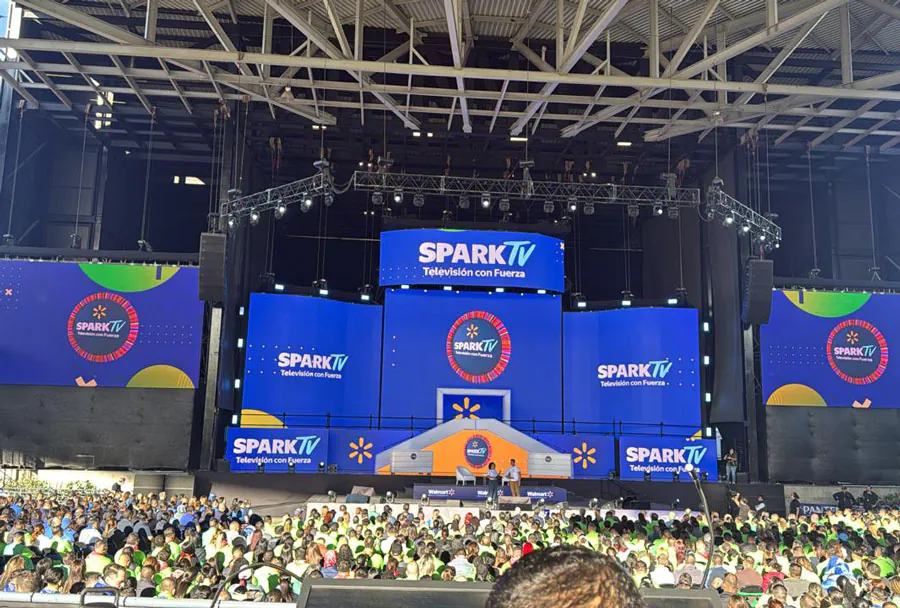
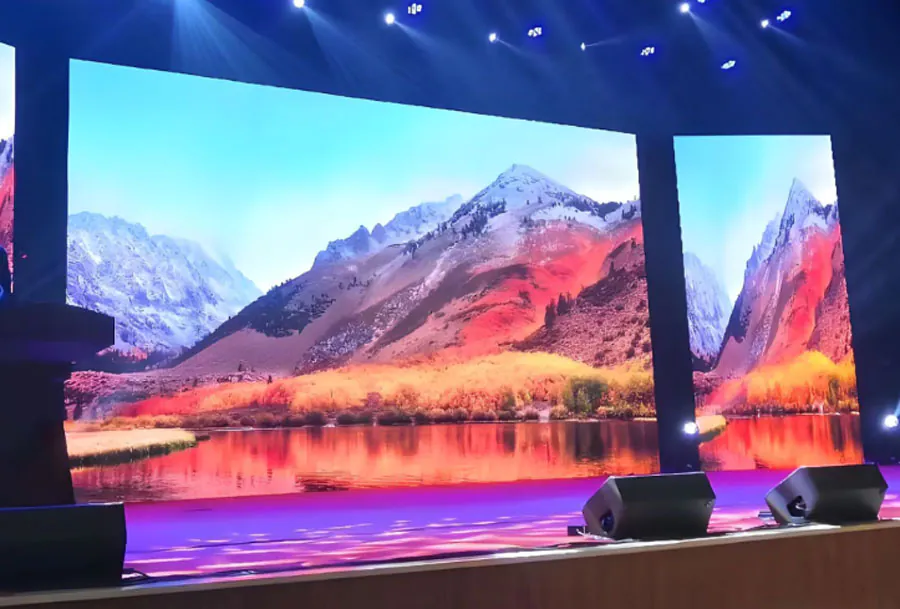
Chicago’s venue mix pushes screen specification in opposite directions. McCormick Place, the largest convention center in North America at roughly 2.6 million square feet of exhibit space, rewards walls that build fast and break down faster, because labour windows are scheduled by the hall rather than by the client.
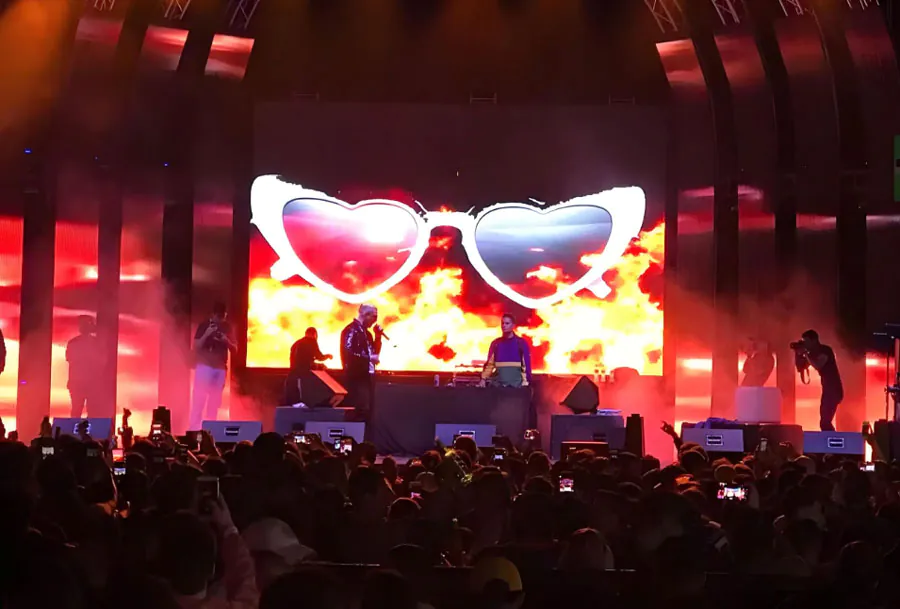
United Center and Wintrust Arena reward brightness and camera performance. A bowl audience sits far from the stage, and a broadcast feed magnifies every refresh artefact, so P3.9 or finer with 3,840 Hz and genlock is the working baseline.
Navy Pier and Grant Park reward weather resistance. Festival Hall has a ceiling and a dock; the outdoor spaces do not, and a lakefront build has to assume wind, rain and a hard strike deadline imposed by the park district.
Hotel ballrooms on Michigan Avenue reward quiet operation and ground support, since ceiling rigging points are often committed months ahead. A 9 by 5 metre P2.6 wall on base plates solves the room without touching the ceiling.
Exhibitor manuals from McCormick Place and the city’s venue guides list current rigging and power rules; read them before the order, not after the truck is booked.
What Chicago Buyers Order From Us
We hold rental-relevant product in our Atlanta warehouse and state plainly which lines are there. The PQ series covers indoor rental at P2.6 in 500 by 500 mm and 500 by 1,000 mm cabinets. The IP-CT P2.5 cabinet, 640 by 480 mm, suits fixed indoor installs. The LP-H P1.86 folding poster, 640 by 1,920 mm, ships as a self-contained unit on a flight-case base. The LED Podium P1.8, 960 by 480 mm, is a finished lectern display.
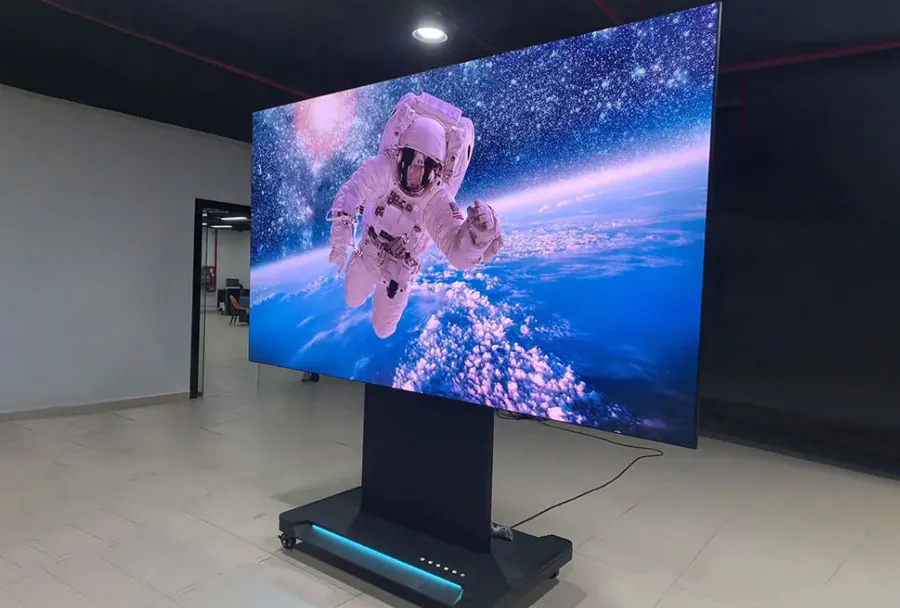
NovaStar VX400, VX600 and VX1000 Pro processors are also in stock. Anything outside these lines is a factory order with a 15 to 20 day production lead time.
We do not claim a Chicago warehouse or a local crew. Everything ships from Atlanta, and we say so before a client builds a schedule around a delivery date. That honesty is worth more than a local phone number that cannot deliver a cabinet.
What LED Screen Rental Chicago Costs
Two numbers matter to a Chicago buyer: what the equipment costs to buy, and what the local rental market charges per day. The second is useful context even when the first is the transaction.
| Configuration | Typical size | Pitch | Chicago daily rate reference |
|---|---|---|---|
| Small indoor panel | 6 × 4 ft | P3.9 | $300–700 |
| Medium indoor wall | 12 × 8 ft | P2.9–P4.8 | $900–2,000 |
| Large indoor wall | 20 × 12 ft | P2.9–P6 | $2,500–6,000 |
| Outdoor high-brightness wall | 30 × 15 ft | P6–P10 | $6,000–15,000 |
| Mobile trailer screen | varies | P6–P10 | $1,500–10,000 |
Those rates belong to rental companies that own fleets, trucks and crews. Our commercial LED screen rental supply sits upstream of that market: a fleet buying ten walls replaces years of daily rates with one capital purchase, and the per-show cost falls sharply after the first dozen events.
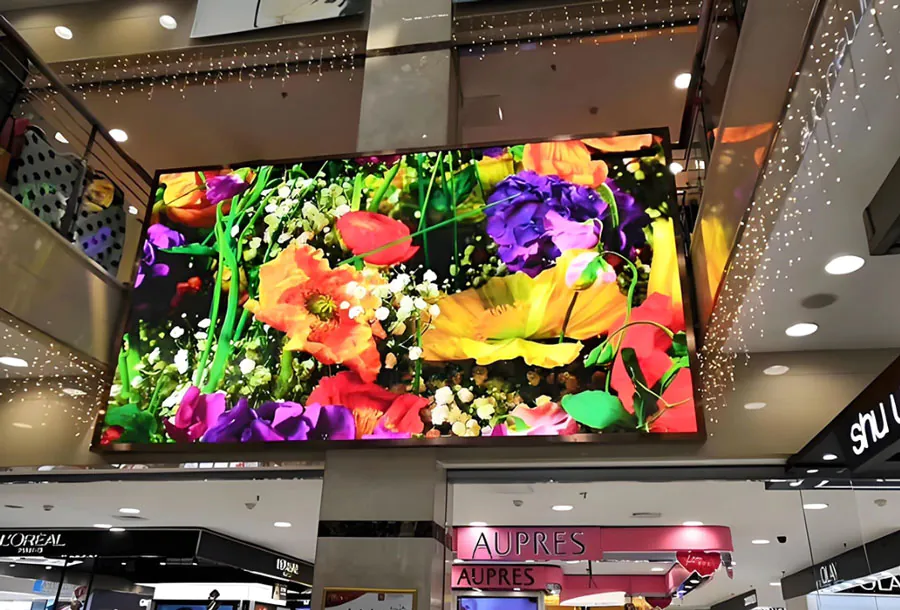
For a single event, renting locally is usually correct. For a recurring calendar, buying cabinets and keeping them in cases changes the arithmetic. We quote per square metre plus cabinet count so both paths can be compared without decoding a package price.
Buyers who search for cost-effective LED screen rental in Chicago usually compare daily rates without separating equipment from structure. An affordable quote is the one that removes resolution the audience cannot see, not the one that removes the ballast. Our quotes itemise cabinets, processor and spares so the comparison stays honest.
Custom Configurations and Non-Standard Sizes
Chicago agencies rarely order a plain 16:9 rectangle. A brand activation may want a 4:1 ribbon above a bar, a theatre may need a curved return wall, and a showroom may ask for a floor panel that carries weight.
Custom work starts with the cabinet grid, not the picture. Cabinets come in fixed module sizes, so a 7.4 metre wall built from 500 mm cabinets lands at 7.5 metres unless a half-cabinet is specified. Getting that arithmetic right at order stage avoids a redesign on site.
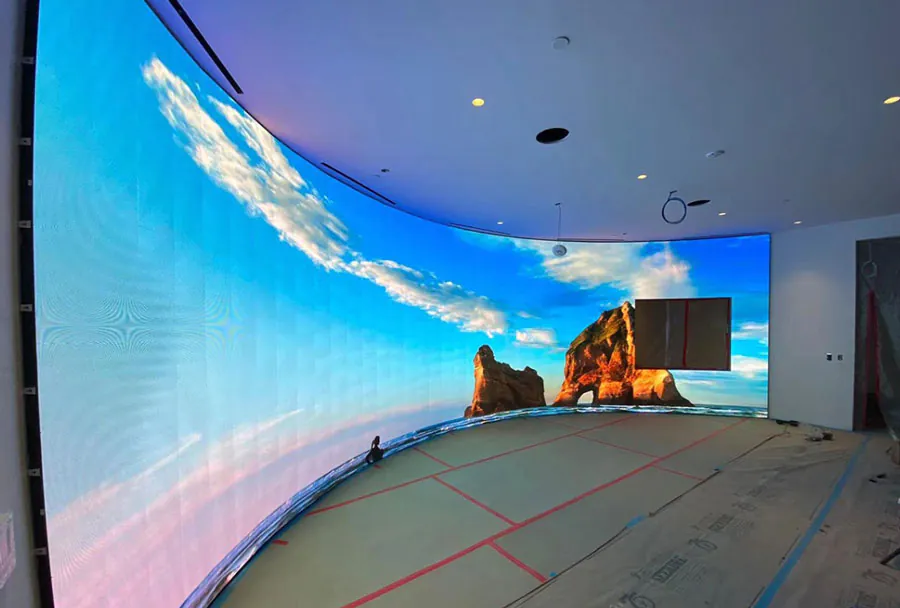
Three custom requests are common and worth naming. Curved walls need cabinets with an angled edge and a defined minimum radius. LED floors need a reinforced face and a load rating in kilograms per square metre. Transparent screens need a pitch and transparency trade-off decided before the content is produced, since a 50 percent transparent wall shows structure behind the image.
Send a dimensioned drawing rather than a mood board. We will return a cabinet count, a weight, a power figure and a drawing, and that package is what a rigger and an electrician actually need.
If this is your first purchase, treat this section as a short ultimate guide to LED screen rental planning: fix the wall size from the venue drawing, confirm the pitch from the back-row sightline, then count cabinets before requesting a price.
Why Local Businesses Choose Factory Supply
A Chicago restaurant group, gym chain or dealership considering LED screen rental usually starts with a single location and a single event. The second order is where the economics change, because the same content can run across four sites with one spare kit.
Factory supply helps in three specific ways. Batch consistency means a replacement cabinet matches the wall two years later, which a marketplace rental cannot promise. Direct technical support means the person answering the question built the product. And a documented bill of materials means an insurance claim after a damaged load is settled against a list rather than an estimate.
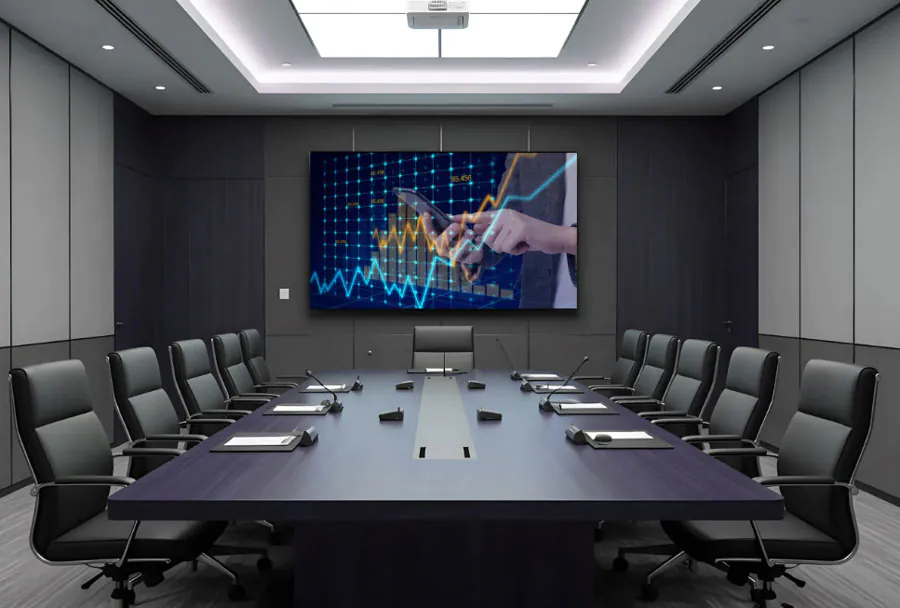
The comparison that matters is professional equipment against consumer panels, not one brand against another. Consumer displays lack the cabinet structure, the spare ratio and the processor inputs that a live event needs. A mid-size conference with a 600-person main room and two breakouts will expose every one of those gaps in the first hour.
Budget a contingency of 10 to 15 percent for cabling, extra run time and permit fees. That line item is what separates a plan from a hope.
Trusted Providers: How to Vet a Supplier
Chicago has five kinds of supplier, and each fits a different job. Knowing which one you are talking to prevents most bad outcomes.
| Supplier type | Strength | Typical lead time | Where it fits |
|---|---|---|---|
| Local LED rental company | Fast response, local crew | 1–4 weeks | Single events, tight timelines |
| National AV production house | Large inventory, touring teams | 2–8 weeks | Multi-venue programmes |
| Manufacturer-direct | Current panels, batch control | 4+ weeks | Fleets, repeat calendars |
| Event production company | Turnkey production | 3–12 weeks | Full-service conferences |
| Marketplace or storefront | Low entry cost | 1–2 weeks | Small, simple displays |
Four questions separate a real supplier from a broker. Ask suppliers to specify the cabinet model and batch rather than just the pixel pitch, confirm how many spare modules they include with the order, and clarify who covers replacement costs if a cabinet fails on show day. And ask for the processor model, because a wall is only as good as the signal feeding it.
A supplier who answers all four in writing is worth a longer conversation. One who answers with adjectives is a scheduling risk.
The benefits of hiring a professional LED screen rental supply chain appear after the first event rather than on the invoice: the same batch replaces a failed cabinet, the spare ratio is already in the case, and the drawing matches what arrived.
Permits, Labor and Union Rules
Chicago events sit inside a permit framework that varies by venue and by whether the site is public property. Grant Park and the lakefront run through the Chicago Park District; a downtown street activation needs a separate approval; a private hall follows its own exhibitor manual.
Start the paperwork 8 to 12 weeks before the event. That window is not bureaucracy for its own sake: rigging drawings, weight certificates and electrical loads are reviewed before approval, and a screen specified late forces a redesign after the permit is filed.
Labour is the second variable. Many downtown venues use union stagehands, and IATSE Local 2 covers much of the city’s stage work. Union crews are efficient when the drawing is clear and expensive when it is not, so the truss plan and cabinet schedule should arrive before the call time.
Insurance belongs in the same conversation. Certificates naming the venue as additional insured are standard, and a supplier who cannot produce one delays the load-in regardless of how good the screen is.
Delivery From Atlanta to Chicago
Atlanta to Chicago is roughly 715 miles, about two days by road. Stock orders leave within a few working days of confirmed payment and paperwork; factory orders need 15 to 20 days of production before transit.
Freight arrives palletised in flight cases. Confirm three things with the venue before dispatch: dock height, lift-gate availability, and the delivery window. A 40-foot trailer without a lift gate cannot unload at a hotel service entrance, and a missed window in the Loop can cost a day.
For winter deliveries, ask for a dock with shelter. A pallet that sits in freezing rain while a crew is found is a pallet of wet cabinets, and the warm-up procedure starts from a worse position.
Track the shipment against the build schedule, not the event date. A screen that arrives the morning of load-in leaves no room for a missing cable, and cable is the item most often missing.
Ordering, Tax and Resale Paperwork
Illinois sales tax combines a 6.25 percent state rate with local additions, and Chicago’s combined rate is among the highest in the country. A qualifying resale purchase is exempt when the buyer files the right certificate.
Illinois uses Form IL-1 through the Illinois Department of Revenue. Complete it before the invoice is issued, not after; a refund claim costs more time than the form.
Purchase orders should state the delivery address, the receiving contact and the dock constraints. A PO that lists only a billing address tends to produce a truck looking for a door that does not exist.
Keep the batch record with the invoice. It is the document that makes a future replacement match, and it is the first thing an insurer asks for after a damage claim.
Camera, Streaming and Broadcast
Any LED screen rental Chicago booking that touches a camera has to clear three technical thresholds: refresh rate, scan behaviour and colour consistency across cabinets.
A refresh rate of 3,840 Hz or higher removes the banding that appears when a phone or broadcast camera points at an LED wall. Genlock keeps multiple walls and the camera on one clock. Ten to sixteen bit processing keeps gradients smooth, which matters most on dark backgrounds where banding shows first.
HDR is often sold as a checkbox. It requires a native pixel grid, adequate bit depth and content graded to a defined standard; the ITU-R BT.2100 recommendation defines the signal, and the display has to meet it rather than approximate it.
Test the actual encoder before the event. A wall that looks correct to the eye can still beat against a 50 Hz or 60 Hz capture frame rate, and that problem is invisible until the stream goes live.
FAQ
Do you rent LED screens in Chicago?
We manufacture and supply the cabinets; we do not operate a rental fleet in Chicago. Rental companies, AV integrators and corporate teams buy or fleet-order from us, and many of them rent the equipment onward. Our role is the hardware, the batch record and the processor.
How fast can a commercial LED screen rental order reach Chicago?
Stock lines leave Atlanta within a few working days and arrive in about two days by road. Factory orders need 15 to 20 days of production before transit.
Can an LED wall run outdoors in a Chicago winter?
Yes, with the right preparation. Specify a cold-start rated power supply, keep cases closed until cabinets reach room temperature, and power up in stages. Below about -10°C, do not fold flexible ribbon cables.
Which pitch works for a 1,000-seat general session?
P2.6 to P3.9 for a wall around 9 to 12 metres wide with a back-row sightline of 25 to 35 metres. Move coarser if the content is mostly video and the budget is fixed; the audience will not resolve the difference from that distance.
Do you supply spares from the same production batch?
Yes. Every order ships with a spare module ratio and a batch record, so a replacement eighteen months later still matches the wall in colour and brightness.
Conclusion
Chicago rewards buyers who specify for the calendar rather than the single event. A wall that handles January cold and July lake wind is a wall that can be reused all year, and that reuse is where the cost advantage of factory supply actually appears.
Send us the venue, the sightline to the back row and the season. We will return a cabinet count, a pitch recommendation and a build that matches the weather it will meet.
Buyers comparing LED screen rental Chicago options should ask for the cabinet count, the spare ratio and the processor model in writing.
A LED screen rental Chicago order is easier to defend when the batch record and the delivery window are attached to the quotation.