How to Compare LED Display Supplier Quotes on an Equal Basis

Comparing LED Display Supplier Quotes on an Equal Basis starts with one rule: every supplier must quote the same technical scope, commercial terms, and performance requirements. A low headline price can hide major differences in brightness, cabinet construction, control systems, installation, shipping, and warranty coverage.
Table of Contents
- 1. Create One Identical Technical Scope
- Define environmental protection precisely
- Use the same measurement conditions
- 2. Normalize the Price Into Comparable Line Items
- Calculate the effective display price
- 3. Compare Performance Using Testable Metrics
- Separate electrical ratings from operating estimates
- Match the display to its viewing distance
- 4. Compare Reliability, Service, and Warranty Risk
- Request evidence, not broad claims
- Define acceptance before purchase
- 5. Verify the Final Total Cost and Supplier Claims
- Check the supplier’s documentation
- Use a weighted evaluation
- How should I compare quotes when suppliers recommend different pixel pitches?
- What if one supplier refuses to provide component brands?
- Should I compare a direct factory quote with a local integrator quote?
- How do I compare a new display with refurbished equipment?
- What should I do if the supplier changes the specification after award?
- Conclusion
The surprising fact is that two quotes for the same screen area may describe completely different products. Pixel pitch, viewing distance, ingress protection, service access, spare parts, and power assumptions can all change the real cost.
This guide shows how to create a fair request-for-quotation template, normalize technical specifications, calculate total ownership cost, and verify supplier claims. It also explains which standards and documents matter before you compare the final numbers.
1. Create One Identical Technical Scope
The first step in How to Compare LED Display Supplier Quotes on an Equal Basis is to send every supplier the same technical brief. Without a shared scope, each vendor may quote a different product while using similar language.
State the required display dimensions in both metric units and total pixel dimensions. Specify whether the screen is indoor, outdoor, semi-outdoor, fixed, rental, curved, transparent, or mobile.
Your scope should include:
– Physical width, height, and total display area
– Pixel pitch and minimum viewing distance
– Required brightness in candelas per square metre
– Front-service, rear-service, or both
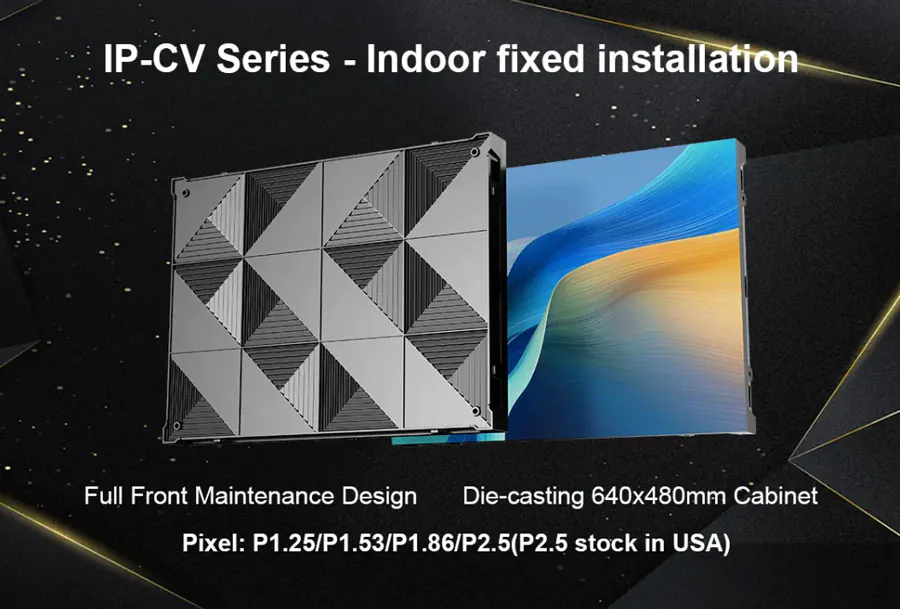
– Cabinet dimensions and cabinet material
– Refresh-rate requirement for cameras or broadcast use
– Operating hours and environmental conditions
– Content sources, controller requirements, and network access
– Structural, electrical, and installation responsibilities
Define environmental protection precisely
Ask suppliers to state the claimed IP rating and the testing basis. The IEC 60529 standard defines the IP Code system for enclosure protection against solids and water.
Do not accept “weatherproof” as a substitute for an IP rating. Ask whether the rating applies to the complete assembled display, the cabinet only, or selected components.
Use the same measurement conditions
Brightness, power, and contrast figures are useful only when the measurement method is clear. Ask each supplier to identify whether figures are maximum, typical, or calibrated operating values.
A common scenario is a buyer comparing a display quoted at maximum brightness with another quoted at typical brightness. How to Compare LED Display Supplier Quotes on an Equal Basis requires you to place both figures in separate columns instead of treating them as equivalent.
How to apply this: Create a one-page specification sheet and require every supplier to return it with the same fields completed, including units, test conditions, and exclusions.
2. Normalize the Price Into Comparable Line Items
A fair comparison separates the display hardware from services, logistics, taxes, and optional features. How to Compare LED Display Supplier Quotes on an Equal Basis becomes difficult when one supplier gives a turnkey price and another lists only LED modules and cabinets.
Request a line-by-line breakdown for:
– LED modules, receiving cards, power supplies, and cabinets
– Sending cards, video processors, control software, and sensors
– Steelwork, brackets, access platforms, and lifting equipment
– Electrical distribution, cabling, grounding, and surge protection
– Factory testing, packaging, freight, insurance, and customs support
– Installation, commissioning, training, and documentation
– Recommended spare parts and long-term service
Use one currency and specify whether prices include VAT, sales tax, import duty, or local handling charges. Incoterms also matter because they define which party handles transport, insurance, customs, and delivery risk. The International Chamber of Commerce publishes the official Incoterms® 2020 rules.

Calculate the effective display price
Do not compare only the total invoice value. Calculate the hardware price per square metre, then calculate the delivered and installed price per square metre.
A simple worksheet can include:
– Display hardware cost ÷ display area
– Delivered project cost ÷ display area
– Optional equipment cost
– Installation cost
– Estimated annual operating cost
Google Sheets can help you lock the same formulas across supplier tabs and highlight missing cost categories.
| Cost item | What it reveals | Action to take |
|---|---|---|
| Hardware | Product-only price | Confirm included components |
| Processor | Control-system scope | Match inputs and outputs |
| Structure | Installation readiness | Request drawings and load data |
| Freight | Delivery exposure | Compare the same Incoterm |
| Commissioning | Handover support | Define acceptance tasks |
| Spares | Maintenance readiness | Request a recommended kit |
Consider two suppliers quoting the same area, but one includes structural steel and commissioning while the other excludes both. The second quote is not cheaper until those missing items are priced.
How to apply this: Build a comparison spreadsheet with identical rows, then mark every item as included, excluded, optional, or unclear before reviewing the totals.
3. Compare Performance Using Testable Metrics
The technical section of How to Compare LED Display Supplier Quotes on an Equal Basis should focus on measurable performance rather than marketing labels. Terms such as “high definition,” “broadcast quality,” and “premium brightness” are incomplete unless supported by test conditions.
Request the following information:
– Pixel pitch and module resolution
– Maximum and typical brightness
– Grayscale processing and color-depth method
– Refresh rate and scan mode
– Contrast measurement method
– Viewing angle definition
– Color calibration process
– Operating temperature and humidity range
– Maximum and average power consumption
– Noise level if fans or cooling systems are used
Separate electrical ratings from operating estimates
Power figures often create confusion because suppliers may quote maximum input power, average operating power, or a design allowance. Ask for all three where available, and confirm the assumed content pattern and brightness level.
The U.S. Department of Energy explains that LED lighting uses substantially less energy than incandescent lighting and lasts much longer, but that general lighting comparison does not prove that one LED display is more efficient than another. Display efficiency must be compared using the suppliers’ stated test conditions.
Match the display to its viewing distance
A smaller pixel pitch is not automatically the best purchase. It can increase hardware cost without creating a visible benefit when the audience is far from the screen.
If a supplier recommends a pitch, request the viewing-distance rationale, pixel dimensions, and content-use assumptions. For camera-facing applications, also request evidence from the actual receiving-card and processing configuration.
How to Compare LED Display Supplier Quotes on an Equal Basis means comparing the same performance target, not simply choosing the smallest pixel pitch or highest headline refresh rate.
How to apply this: Add columns for maximum, typical, and test-condition values, and reject any performance figure that lacks a unit, method, or operating assumption.
4. Compare Reliability, Service, and Warranty Risk
Reliability should be compared as a service model, not as a single warranty number. How to Compare LED Display Supplier Quotes on an Equal Basis requires you to examine what happens when a module, power supply, receiving card, or cabinet fails.
Ask each supplier to define:
– Warranty duration and start date
– Covered parts, labor, freight, and travel
– Response time and repair target
– Remote-support availability
– Local technician coverage
– Spare-parts availability after the warranty
– Repair or replacement process
– Software and firmware support
– Exclusions for weather, misuse, power quality, and unauthorized work
Request evidence, not broad claims
A supplier may state that its factory follows ISO 9001 or has extensive experience. Those statements can be useful, but they do not replace product-specific evidence.
Request sample inspection records, burn-in procedures, calibration reports, component datasheets, and a written acceptance protocol. Ask whether the supplied LED packages, power supplies, cabinets, and control systems will match the approved bill of materials.
Define acceptance before purchase
Your contract should specify how the finished display will be inspected. Possible checks include dead pixels, color uniformity, cabinet alignment, brightness, content playback, network control, weather sealing, and electrical safety.
In one case, a buyer may receive a screen that meets the quoted pixel pitch but fails the intended camera workflow because the processor and receiving-card settings were never defined. How to Compare LED Display Supplier Quotes on an Equal Basis includes the complete operating chain, not just the LED modules.
How to apply this: Attach a written factory-acceptance and site-acceptance checklist to the request for quotation before suppliers submit final pricing.
5. Verify the Final Total Cost and Supplier Claims
The final stage of How to Compare LED Display Supplier Quotes on an Equal Basis is a commercial and technical audit. Your goal is to identify omissions, assumptions, and risks before selecting the lowest compliant offer.
Review these areas:
– Delivery date and manufacturing lead time
– Payment milestones and retention
– Factory inspection rights
– Packaging and damage responsibility
– Site readiness requirements
– Permits, engineering, and structural approvals
– Electrical connection limits
– Software licensing and recurring fees
– Spare-parts recommendations
– Training and operating manuals
Check the supplier’s documentation
Ask for a product datasheet, cabinet drawing, electrical load schedule, wiring diagram, control-system list, installation method, warranty certificate, and maintenance plan.
Where safety or regulatory compliance matters, request certificates that apply to the actual model and configuration. A generic company certificate is not necessarily evidence that the quoted display meets your project’s requirements.
Use a weighted evaluation
Price should be one factor, not the entire decision. Create a scoring model based on technical compliance, delivered cost, service capacity, schedule, documentation, and commercial risk.
A practical weighting structure can assign more importance to mandatory compliance than to optional features. Do not use unsupported precision for the weights; choose values that reflect your project’s risk and document the reason for each choice.
Avoid selecting a supplier because its quote has the lowest total before normalizing scope. How to Compare LED Display Supplier Quotes on an Equal Basis protects you from paying later for omitted processors, structural work, installation, freight, or replacement parts.
How to apply this: Run a final clarification round, issue the same questions to every bidder, and score only written answers supported by the submitted documents.
Frequently Asked Questions About How to Compare LED Display Supplier Quotes on an Equal Basis
How should I compare quotes when suppliers recommend different pixel pitches?
Compare the pitches against the audience’s actual viewing distance, content type, and camera requirements rather than treating them as interchangeable products. Ask each supplier to quote an alternative using the same pitch so you can isolate price differences. If the application may change later, request both options with pixel dimensions and processing requirements.
How to Compare LED Display Supplier Quotes on an Equal Basis means comparing equivalent use cases, not just cabinet area.
What if one supplier refuses to provide component brands?
Treat missing component information as a commercial and maintenance risk, especially when the quote covers a large or mission-critical display. You can allow approved equivalents, but define the minimum electrical, thermal, and performance requirements in writing. A supplier may protect a proprietary bill of materials, yet it should still identify key replaceable parts and support terms.
How to Compare LED Display Supplier Quotes on an Equal Basis requires enough information to assess future serviceability.
Should I compare a direct factory quote with a local integrator quote?
Yes, but separate the roles and deliverables first. A local integrator may include engineering, permitting, installation, commissioning, and local support that a factory quote omits. Ask the factory whether those services are excluded, then request the integrator to itemize them separately.
For an overseas purchase, How to Compare LED Display Supplier Quotes on an Equal Basis also requires checking who handles customs, site risk, and warranty transport.
How do I compare a new display with refurbished equipment?
Request the manufacturing date, operating history, refurbishment scope, replacement parts, test records, and remaining support period. Refurbished cabinets can be suitable for temporary or budget-sensitive installations, but they may have inconsistent module batches or discontinued electronics. Require a written acceptance test and a clear remedy for defects.
How to Compare LED Display Supplier Quotes on an Equal Basis works only when the condition and remaining life of each option are documented.
What should I do if the supplier changes the specification after award?
Do not approve a substitution informally. Require a written change request that identifies the original part, proposed replacement, technical differences, price effect, schedule effect, and warranty impact. The substitution should meet or exceed the agreed requirements and receive approval before shipment.
How to Compare LED Display Supplier Quotes on an Equal Basis remains useful after selection because it creates the baseline for controlling changes.
Conclusion
A fair LED display comparison is built on equivalent scope, not on the lowest headline price. The strongest process makes every supplier quote the same product, services, delivery terms, acceptance tests, and support obligations.
– Standardize dimensions, pixel pitch, brightness, environmental ratings, and control requirements.
– Separate hardware, structure, logistics, installation, commissioning, and spares.
– Compare maximum and typical performance using stated test conditions.
– Review warranty response, documentation, replacement parts, and change-control terms.
– Score compliant offers only after every exclusion and assumption is resolved.
Use a shared specification and pricing workbook before requesting final bids. Then apply How to Compare LED Display Supplier Quotes on an Equal Basis as a documented procurement process, not a last-minute price check.