LED Screens for Orlando Events: Buyer’s Guide

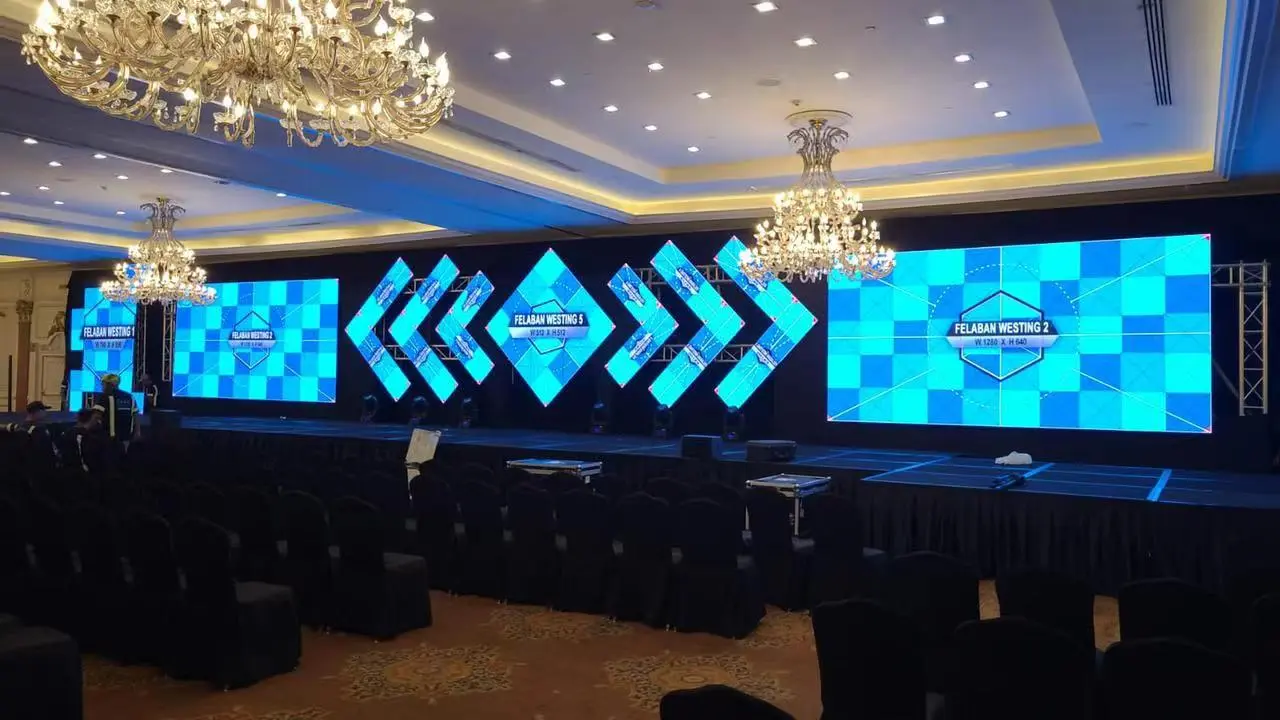
LED screens Orlando event teams choose decide whether the audience sees a sharp, reliable presentation or a distracting wall of technical problems.
Table of Contents
- 1. Match the Display to the Orlando Venue
- Indoor, outdoor, and hybrid requirements
- Questions to ask before requesting a quote
- 2. Compare Pixel Pitch, Brightness, and Viewing Distance
- Calculate the size and the viewing distance first
- Technical specifications that matter
- 3. Verify Safety, Power, and Installation Planning
- Read the IP rating correctly
- Documents worth requesting
- 4. Test Content, Cameras, and Sponsor Loops Before Show Day
- Build a practical test plan
- 5. Measure Service Quality and Protect the Event Budget
- Write the acceptance test into the contract
- What the Venue Will Ask You For
- Six Mistakes That Show Up on Show Day
- 6. What Happens After You Decide to Buy
- How early should I book an LED display for a major Orlando event?
- Can an LED wall replace a projector in a bright Orlando venue?
- Does LED wall content need a special file format?
- What happens if rain or lightning affects an outdoor event?
- Is a custom-shaped LED display worth the extra complexity?
- Is a curved LED wall always better for a trade show booth?
- Who should approve a flown LED display at a hotel?
- How should I handle accessibility near a floor-mounted display?
- Conclusion
The challenge is choosing a supplier that understands more than screen specifications. You also need dependable logistics, safe installation, suitable brightness, clear content workflows, and fast support when an event schedule changes.
This guide explains five practical ways to evaluate manufacturers and event-display partners. You will learn how to compare technical specifications, plan for Orlando venues, review safety requirements, measure performance, and protect your budget with better contract terms.
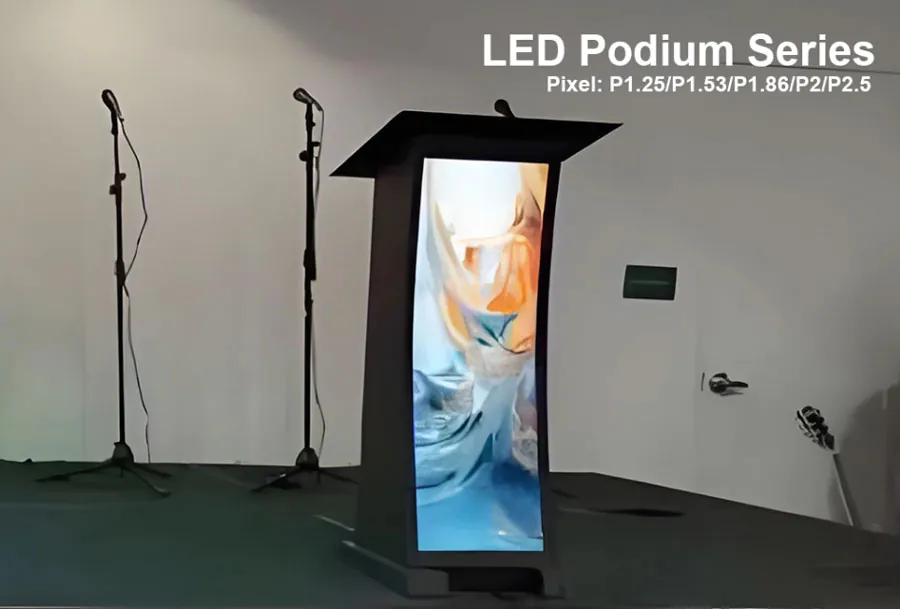
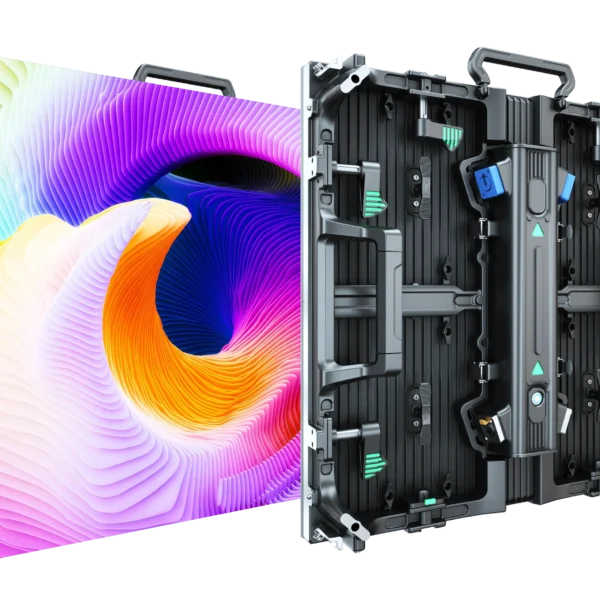
LED podium is TW VISION standard stock product in USA. Ready for pickup within 2 days after payment.
1. Match the Display to the Orlando Venue
The best LED screen for an Orlando event begins with a venue-specific site assessment, not a generic product catalog. A screen designed for a hotel ballroom may be unsuitable for an outdoor festival, convention hall, or large arena.
The Orange County Convention Center’s extensive exhibition footprint shows why scale matters. A display viewed from the back of a large hall needs different pixel density, brightness, and structure than a presentation screen placed near a stage.
Indoor, outdoor, and hybrid requirements
Indoor displays usually need controlled brightness and fine pixel pitch for text, speaker close-ups, and sponsor graphics. Outdoor displays require weather protection, higher brightness, stronger framing, and content that remains readable under changing daylight.
Hybrid events create additional complexity. The same production may use an indoor main wall, outdoor wayfinding screens, confidence monitors, and a press-area display.
Indoor planning priorities
– Measure the closest and farthest audience viewing positions.
– Identify whether the screen will show text, live video, animation, or branding.
– Check ceiling height, loading access, rigging points, and fire exits.
– Confirm whether the venue permits suspended equipment.
Outdoor planning priorities
– Review sunlight direction during event hours.
– Establish protection from rain and standing water.
– Confirm wind-load engineering with the installer and venue.
– Plan backup power or safe shutdown procedures.
Questions to ask before requesting a quote
Ask the supplier to document:
Load-In and Compliance
– Venue name and room or outdoor location
– Typical audience distance
– Screen dimensions and aspect ratio
– Indoor or outdoor operating conditions
– Rigging, ground-support, or mounting method
– Power access and cable paths
– Load-in, testing, and strike schedule
A common scenario is a convention exhibitor requesting one large display without confirming whether the venue permits ceiling suspension. The supplier may then need to redesign the system around ground support, which can affect floor space and cost.
How to apply this: Send the manufacturer a floor plan, audience-distance estimate, schedule, and venue rules before asking for a final proposal.
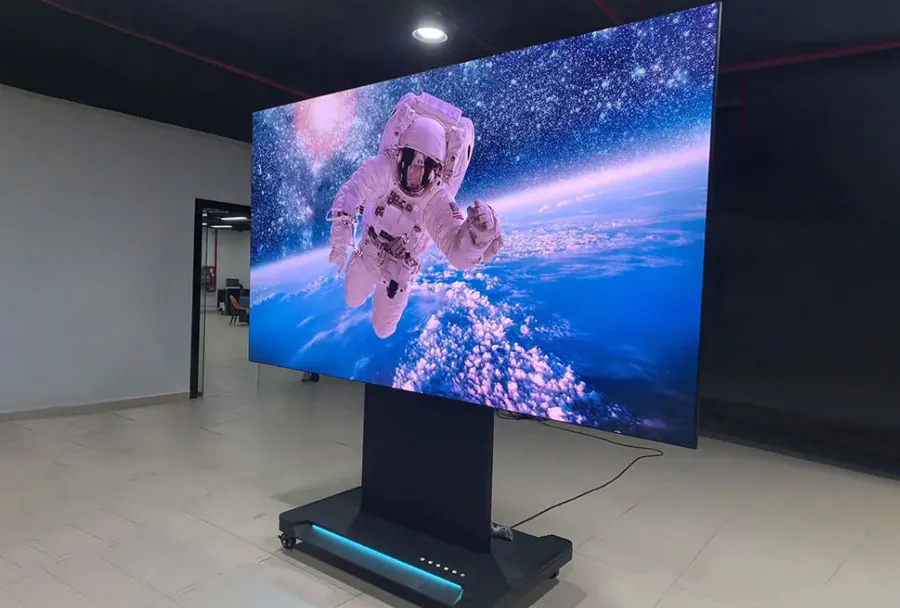
An LED screens Orlando brief should state indoor or outdoor use, the nearest viewer and the content format before a price is discussed.
Most LED screens Orlando projects fail at the handover from drawing to build, not at the panel.
2. Compare Pixel Pitch, Brightness, and Viewing Distance
A reliable supplier should explain technical specifications in terms of audience experience rather than simply listing product numbers. Pixel pitch, brightness, refresh rate, and color performance each affect what viewers see.
Pixel pitch is the distance between LED pixels, usually measured in millimeters. A smaller pitch generally supports closer viewing, while a larger pitch can be practical for distant audiences. The correct choice depends on screen size, content type, camera distance, and budget.
Calculate the size and the viewing distance first
Start the calculation at the audience, not the product list. Measure from the planned screen face to the front row, the presenter position, any VIP seating, and the back of the room. The tightest of those four numbers sets the finest pitch you actually need.
Confirm the wall also fits the space. A 16:9 display that is 10 feet wide is roughly 5.6 feet high, so check that height against stage height, sightlines from the second row, and the booth’s back wall before the footprint is fixed.
Technical specifications that matter
Practical Considerations
– Pixel pitch: Helps determine image detail at different viewing distances.
– Brightness: Affects readability under venue lighting or daylight.
– Refresh rate: Matters when cameras record the display or when content contains motion.
– Color calibration: Keeps sponsor logos, skin tones, and brand colors consistent.
– Cabinet alignment: Reduces visible seams and uneven surfaces.
– Processing and scaling: Helps match cameras, playback systems, and presentation sources.
The ITU-R BT.709 recommendation defines the HDTV color parameters commonly associated with 1920-by-1080 video. That does not mean every LED wall must use that resolution, but it shows why the display processor and content canvas must be planned together.
A manufacturer should provide native resolution, recommended viewing distance, brightness range, refresh rate, and calibration details in writing. Avoid proposals that use vague terms such as “high definition” without measurable specifications.
How to apply this: Ask each bidder to show the proposed pixel pitch and brightness beside your estimated viewing distance, camera position, and lighting conditions.
3. Verify Safety, Power, and Installation Planning
Installation, power, and audience safety should be treated as core deliverables rather than optional services. A visually impressive wall is not useful if it creates unsafe cable routes or cannot be approved by the venue.
The U.S. Department of Justice ADA Standards specify a 36-inch minimum clear width for many accessible walking surfaces. Your event team should preserve accessible routes when placing ground-supported screens, control stations, barriers, and cable ramps.
Read the IP rating correctly
The IEC 60529 standard defines the IP code: the first digit covers protection against solid objects, the second covers water, and only the pair together describes the cabinet. An IP65 outdoor cabinet is dust-tight and protected against water jets under the test conditions of that standard.
That rating does not, on its own, cover a prolonged downpour, a badly sealed cable entry, or standing water at the base of the structure. Ask for the IEC 60529 rating in writing together with the installation limits that come with it, and confirm that connectors and cable entries are protected to the same level as the cabinet.
Documents worth requesting
Require the supplier to identify:
– Equipment weights and support requirements
– Rigging points and engineering responsibility
– Electrical load and circuit requirements
– Cable-ramp locations
– Emergency access considerations
– Weather procedures for outdoor displays
– On-site technician coverage
– Insurance and venue compliance documents
Practical Considerations
In one case, a floor-mounted display may fit the stage design but block a required pedestrian route once its support structure and cable protection are included. A site walk can catch that issue before installation day.
Power planning also needs detail. Do not approve a display from wattage alone: ask for typical and maximum draw, voltage, phase, number of circuits, connector type, and where the distribution equipment will sit. A wall that fits the stage can still fail venue review if its power cables cross a public aisle or compete with audio and lighting circuits. Ask whether the quote includes distribution, backup equipment, signal conversion, spare modules, and testing time. These items may be excluded from a low initial estimate.
How to apply this: Request a written power diagram, equipment-weight summary, accessible-route plan, and installation schedule before signing the production agreement.
For LED screens Orlando venues, brightness follows the room and never the maximum figure on the spec sheet.
Comparing LED screens Orlando quotes means separating cabinets, processing, structure and labour.
4. Test Content, Cameras, and Sponsor Loops Before Show Day
The right supplier should test the complete signal chain, including presentation computers, cameras, playback systems, processors, and sponsor content. A screen can function correctly while still displaying poor camera images or incorrectly cropped graphics.
Content teams should confirm the display’s native canvas, input formats, aspect ratio, safe areas, and playback schedule. If the wall is unusually wide or tall, standard presentation slides may appear stretched unless the design team creates a custom layout.
Build a practical test plan
Check the following before attendees arrive:
– Speaker lower-thirds and presentation text
– Camera close-ups and wide shots
– Sponsor logos and animated graphics
– Dark scenes and bright scenes
– Video playback with motion
– Backup signal switching
– Audio-video synchronization
– Content scheduled between sessions
A useful technical reference is the SMPTE standards organization, which develops standards for motion-imaging technology. Your production team does not need to memorize every standard, but it should confirm that cameras, processors, and playback devices use compatible formats.
How to apply this: Schedule a content and signal rehearsal using the actual playback devices, camera feeds, processors, and final sponsor files.
5. Measure Service Quality and Protect the Event Budget
A strong proposal should provide measurable service commitments, not only attractive hardware pricing. The proposal should make it clear who handles delivery, setup, testing, operation, emergency response, and removal.
Compare vendors using the same scope. Otherwise, one quote may include technicians and backup modules while another covers equipment only.
| Evaluation point | What it tells you | Action to take |
|---|---|---|
| Equipment scope | What is actually included | Request a cabinet and processor list |
| Technician coverage | Who responds to failures | Confirm hours and response process |
| Backup inventory | How issues are contained | Ask about spare modules and power supplies |
| Content support | Who manages files and cues | Define approval and revision deadlines |
| Cancellation terms | Financial exposure | Review deposits, postponements, and force majeure |
| Post-event reporting | What can be improved | Request a service summary |
How to apply this: Score each vendor against the same scope, then attach the chosen service levels, response times, inclusions, and cancellation terms to the contract.
Write the acceptance test into the contract
Define what counts as a passing installation before the event: dead pixels, colour uniformity, brightness, input switching, camera feeds, audio-video sync, sponsor content, and emergency shutdown. Agree who runs the test, when it happens, and what counts as a failure that must be corrected before doors open.
A written acceptance test also protects the budget. Without it, a wall that is simply switched on at load-in can be argued as delivered, and every correction becomes a change order on show day.
Questions for every supplier
What Sits Outside the Headline Figure
– Who provides structural calculations or rigging documentation?
– What happens if a cabinet, processor, or power supply fails?
– Is spare equipment included?
– Who controls brightness during the event?
– What is the response time for technical support?
– Are setup and strike times compatible with venue access?
The National Fire Protection Association publishes safety codes and standards used across the industry, although the applicable requirements depend on the venue, jurisdiction, and installation type. Any LED installation for an Orlando venue should be reviewed against those requirements.
How to apply this: Request a line-item quote, method statement, equipment list, emergency contact, and proof of insurance before issuing a purchase order.
| Decision area | What it tells you | Action to take |
|---|---|---|
| Pixel pitch | Suitable viewing distance | Map nearest audience point |
| Brightness | Indoor or daylight readability | Request an onsite test |
| IP classification | Water and dust protection | Verify product documentation |
| Processor | Signal and source compatibility | Test every input |
| Structure | Stability and load handling | Obtain venue approval |
| Support | Response during failure | Put coverage in the contract |
Write the LED screens Orlando requirement as three numbers: wall size, closest seat and operating hours.
What the Venue Will Ask You For
Venues review the same five items, and having answers ready shortens approval from weeks to days.
- Weight and load. Cabinet weight per square metre, total flown weight, and the resulting point loads.
- Power. Voltage, phase, amperage and total draw at operating brightness, not at average content.
- Rigging certification. Who is allowed to hang it, and what paperwork the venue requires from them.
- Fire and egress. Whether the wall crosses an exit path, and what documentation the Florida Division of State Fire Marshal or the local authority expects.
- Build schedule. Load-in and load-out windows, plus any noise or after-hours restrictions.
A supplier who cannot produce weight, power and heat figures quickly will slow the venue approval down. Ask for the documentation pack before signing, not after the deposit.
Six Mistakes That Show Up on Show Day
1. Specifying pitch from the back row. Front-row softness is the complaint that cannot be fixed after the build.
2. Treating humidity as heat. Central Florida damages cabinets through moisture and condensation far more than through temperature alone.
3. No spares on site. One failed module without a replacement becomes a visible dark rectangle on a live wall.
4. Ignoring the venue drayage and labour rules. They change both timing and cost, and they are not always stated on the booking form.
5. Planning the outdoor build without a weather decision point. The decision needs an owner and a trigger before the event, not during it.
6. Ordering one production batch too few. Fleets that expand in a second batch usually end up with a visible colour difference where the two runs meet.
What Happens After You Decide to Buy
Once the specification is settled, the process is short and mostly administrative. It runs in four steps.
1. Quote and configuration. Send the cabinet format, pitch, quantity and whether curved locks or flight cases are needed. The quote states the visible area, the cabinet footprint and what is included, so it can be compared with another supplier line by line rather than by total.
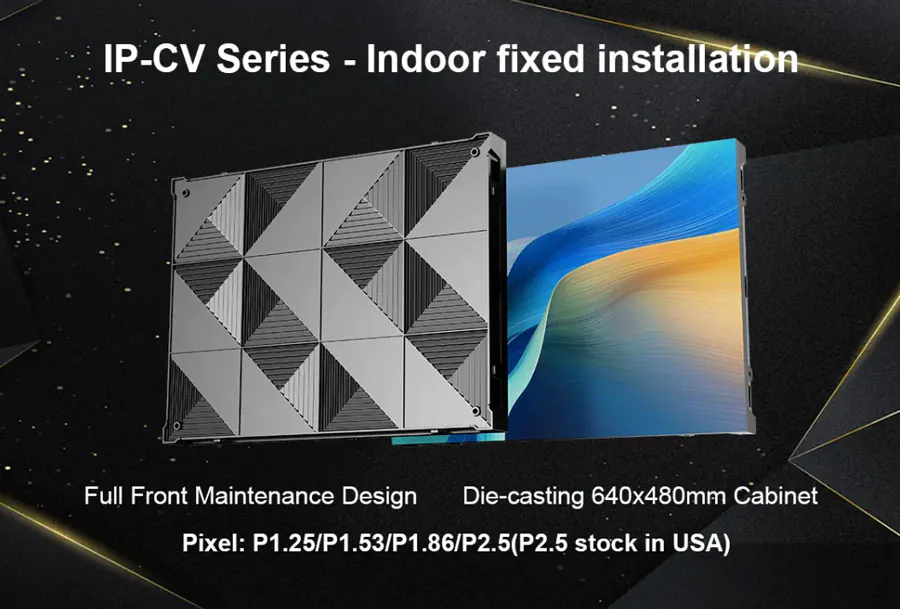
2. Stock check and lead time. Standard rental cabinets are held in our Atlanta warehouse and can move to a delivery booking quickly. Non-standard pitch, custom cabinet sizes and shaped builds are produced to order, and the lead time is confirmed in writing before the order is placed.
3. Transport and delivery. We can quote and book the delivery from Atlanta to an Orlando address or directly to a venue inside an agreed window. Buyers with their own freight account can collect instead. Unloading arrangements, whether dock, liftgate or inside delivery, are agreed at quotation.
4. Spares and documentation. Matched spare modules, power supplies and receiving cards ship with the order, and the documentation pack covers cabinet weight, power draw, heat load and fixing points for the venue submission.
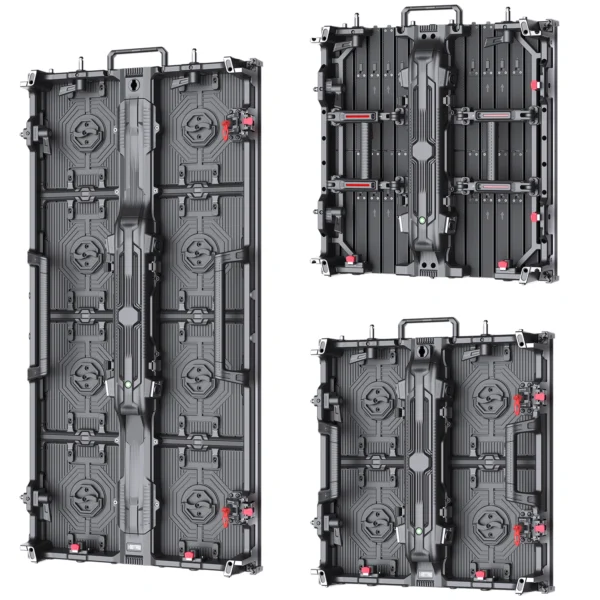
Free-standing installation, rigging and on-site operation stay with your own crew or your installation partner. The Orlando supply page sets out the full scope of what we do and do not provide, the manufacturing page covers how cabinets are built and tested, and the rental LED screen range lists the cabinet formats available from stock.
LED Screens Orlando — FAQ
How early should I book an LED display for a major Orlando event?
Book as early as your venue and production schedule allow, especially during convention-heavy periods. Large events may require engineering reviews, union coordination, freight planning, and custom content testing. Your supplier should confirm equipment availability before accepting a deposit.
A smaller meeting may have more flexibility, but custom shapes, outdoor structures, or multi-screen systems usually need additional planning time.
Can an LED wall replace a projector in a bright Orlando venue?
Often, yes, but the choice depends on room lighting, screen size, viewing distance, and content. A supplier can recommend a display when ambient light makes projection difficult. A projector may still be suitable for a dark ballroom or large cinematic image. Ask for a side-by-side comparison that includes brightness, throw distance, setup space, and total labor.
Does LED wall content need a special file format?
There is no single universal format, because the file depends on the processor, the playback system, and the show design. A ballroom may run standard presentation files while a playback server wants video at an exact resolution and frame rate. Ask the operator for a test file specification and a content handoff deadline, then submit sponsor files against it rather than converting on site.
What happens if rain or lightning affects an outdoor event?
Practical Considerations
Outdoor plans should include a documented weather procedure, not an informal promise to “monitor conditions.” The National Weather Service office in Melbourne, Florida issues the watches and warnings that should trigger that procedure. Your supplier should explain when the screen will be covered, powered down, moved, or removed. The venue or event producer may also control evacuation decisions. Review weather-related cancellation language, equipment responsibility, and restart testing before approving an outdoor installation.
Is a custom-shaped LED display worth the extra complexity?
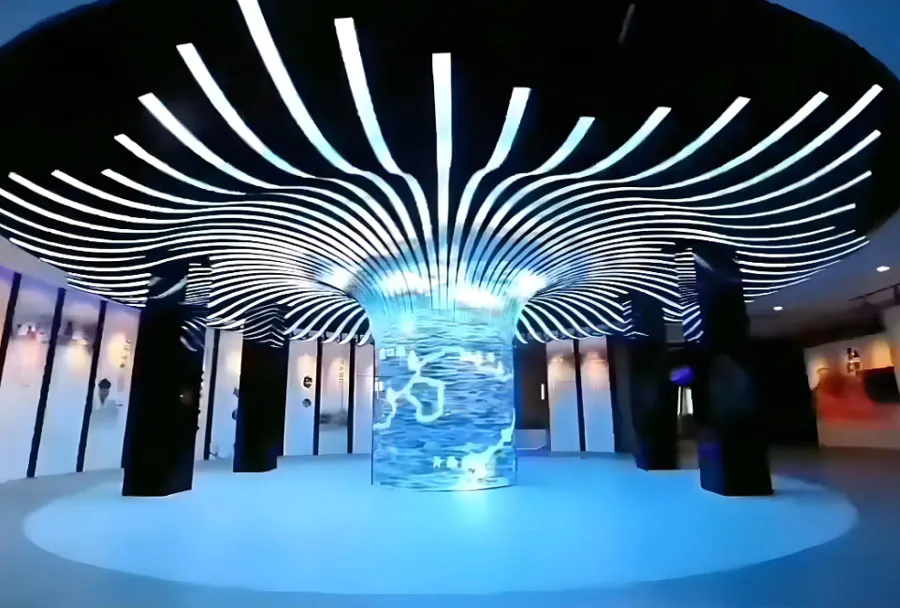
It can be worthwhile for a branded stage, product launch, or architectural installation, but custom shapes may reduce content flexibility and increase spare-part requirements. Your supplier should explain how the shape affects resolution, processing, replacement modules, and creative production. If most content comes from standard presentations, a conventional rectangle may deliver better operational value.
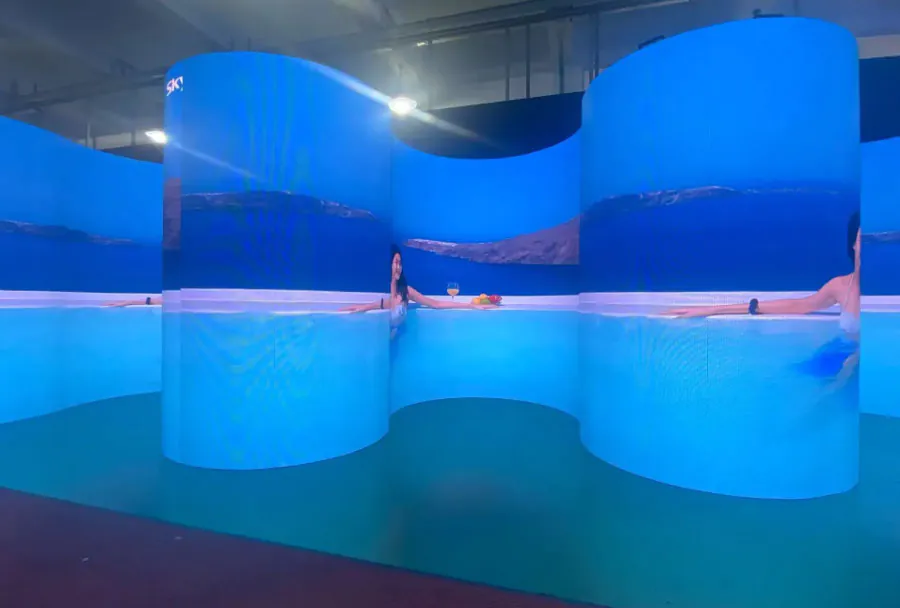
Is a curved LED wall always better for a trade show booth?
No. Curvature can improve sightlines or create a distinctive shape, but it also complicates content design, cabinet alignment, transport, and cost. A flat wall is usually easier to brand and operate in a compact booth. If you want the curve, request a scaled drawing that shows aisle clearance and the path visitors actually walk.
Who should approve a flown LED display at a hotel?
Practical Considerations
The hotel’s venue representative and a qualified rigging professional should both approve the method. Hotels commonly ask for structural documents, certified rigging points, insurance, lift plans, and a fixed installation window. If that approval is not confirmed early, keep a ground-supported design that fits the same stage plan as a backup.
How should I handle accessibility near a floor-mounted display?
Keep the display, support structure, barriers, and cable protection outside required accessible routes whenever possible. Your supplier should coordinate the layout with the venue and event safety team.
An exception may arise when a screen must sit near a narrow stage entrance; in that case, request an alternate route and written approval before installation rather than improvising on show day.
Conclusion
Choosing an LED screen for an Orlando event requires more than comparing rental prices or screen size. The strongest decision comes from matching the display to the venue, testing the full signal chain, documenting safety requirements, and defining service responsibilities.
– Confirm pixel pitch, brightness, resolution, and viewing distance.
– Review power, rigging, accessibility, weather, and cable-management plans.
– Rehearse cameras, presentations, sponsor loops, and backup signals.
– Compare vendor quotes using the same equipment and support scope.
Your next step is to prepare a venue plan and send identical technical questions to several qualified suppliers. Use their written answers, not just their showroom demonstrations, to select the supplier that best fits your audience, schedule, and risk level.
Buyers comparing LED screens Orlando options should ask for the cabinet count, the spare ratio and the processor model in writing.