LED Screen Price in Orlando 2026: Buy vs Rent Cost Guide

LED screen price Orlando buyers ask about is usually the wrong question, because the answer depends on four things most buyers settle late: the visible area, the pixel pitch, the brightness the site demands and the cabinet count.
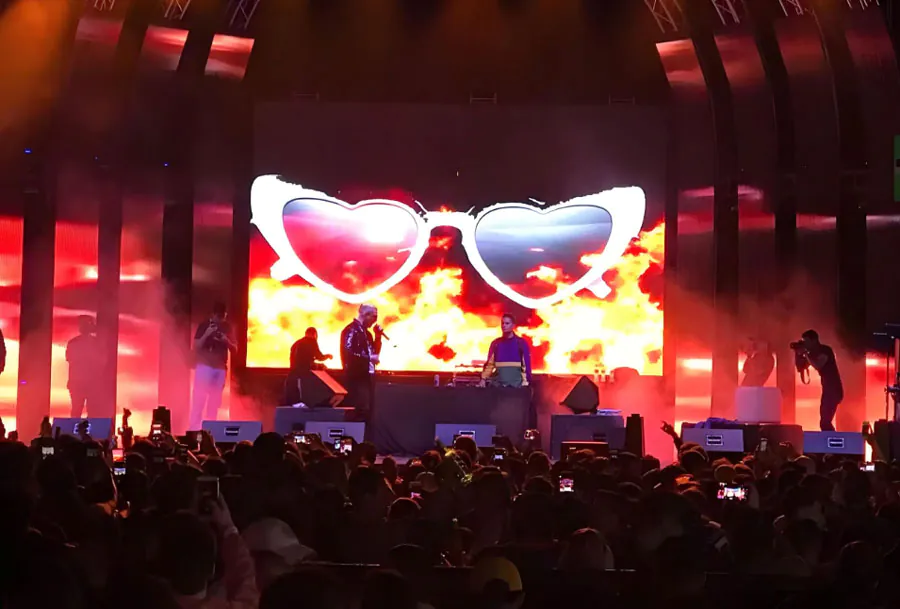
Published local prices show the spread. One Orlando rental provider lists a 16-by-10-foot indoor P2.6 wall at $5,225 for one show day, including setup, strike, processing, and an on-site engineer, with power distribution and tax billed separately. A fine-pitch wall of similar size bought outright from a US integrator can exceed $40,000 before installation, freight, and operator training.
This guide breaks the LED screen price in Orlando into its components, puts buying and renting on the same basis, and lists the local costs that usually arrive after the deposit.
Table of Contents
- 1. What an LED Screen Rental Costs in Orlando
- 2. The Line Items in Every Quote
- 3. What It Costs to Buy an LED Screen
- 4. When Buying Beats Renting
- 5. What Moves the Number Most
- 6. Costs People Forget
- 7. Orlando Fees, Permits, and Contract Terms
- 8. How to Compare Two Quotes
- FAQ
- Conclusion
1. What an LED Screen Rental Costs in Orlando
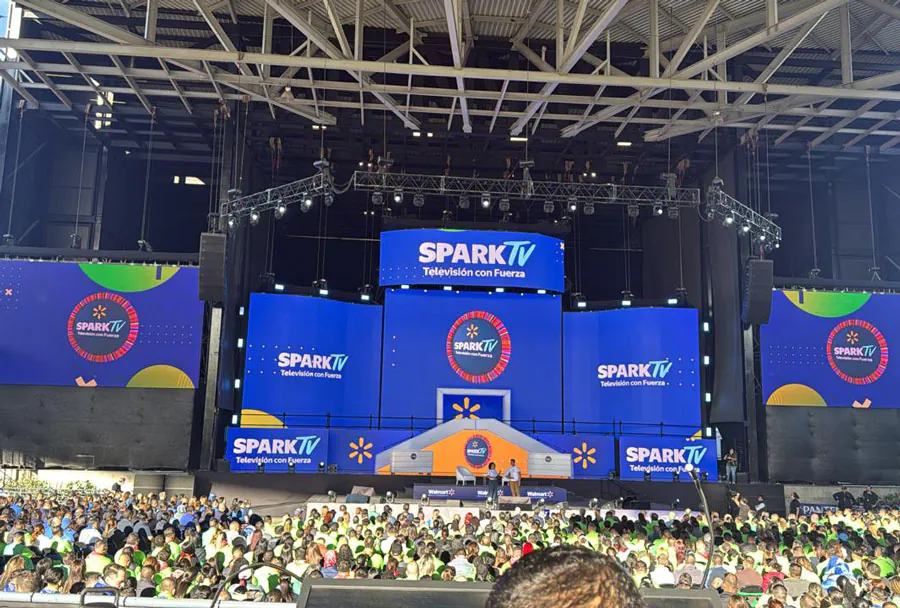
A professional Orlando LED wall rental generally runs several thousand dollars once labor, processing, delivery, and technical support are included. The headline day rate is the least useful number in the quote, because it usually describes panels only.
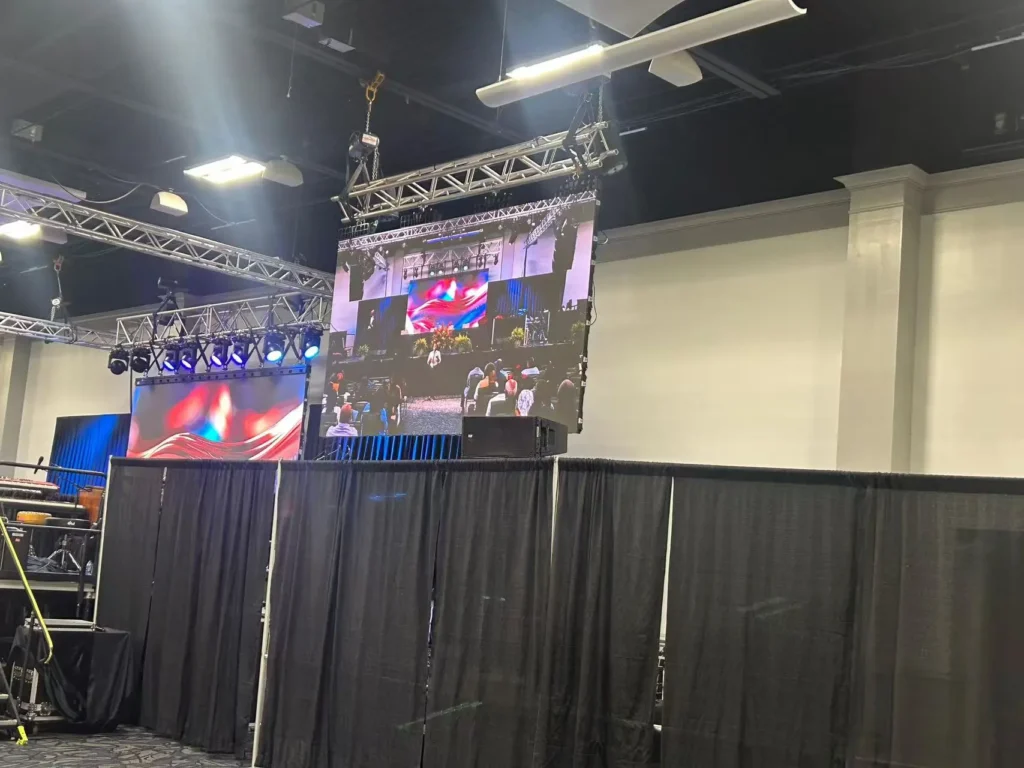
The published QSE package is a useful benchmark precisely because it is itemized: 16 by 10 feet of indoor P2.6, one show day, processing, rigging, setup, strike, an on-site engineer, and delivery within 100 miles of Orlando included; power distribution and tax added. The same company advertises a smaller P2.6 DJ wall at $1,599 per day. The gap between those two figures is size, structure, and service scope, not a different hourly rate. (qse-ent.com)
What a complete quote should include
Ask every supplier to mark each line as included or extra, in writing.
| Included in a turnkey rental | Usually billed separately |
|---|---|
| LED cabinets, spare modules, receiving cards | Sales tax (6.5% in Orange County) |
| Video processor and signal distribution | Power distribution and cable runs to the wall |
| Ground support or flown rigging | Venue drayage, marshalling, and access fees |
| Delivery inside the vendor’s service radius | Overtime, night, or holiday labor |
| Installation, focus, and strike | Permits and certificate of insurance |
| On-site LED technician during show hours | Damage waiver or panel replacement liability |
A common Orlando scenario: a conference receives a $2,500 panel quote, then discovers that labor, rigging, transport, and show-day operation nearly double the total. The fix is to request one all-in event total instead of a panel-day rate.
What Sits Outside the Headline Figure
How to apply it: send every rental company the same dimensions, dates, venue address, operating hours, content sources, and rigging method. Quotes built on different briefs cannot be compared.
A LED screen price Orlando quote that lists one number hides which of those four variables was assumed.
LED screen price Orlando ranges move with area first, because doubling the wall roughly doubles the cabinet cost.
2. The Line Items in Every Quote
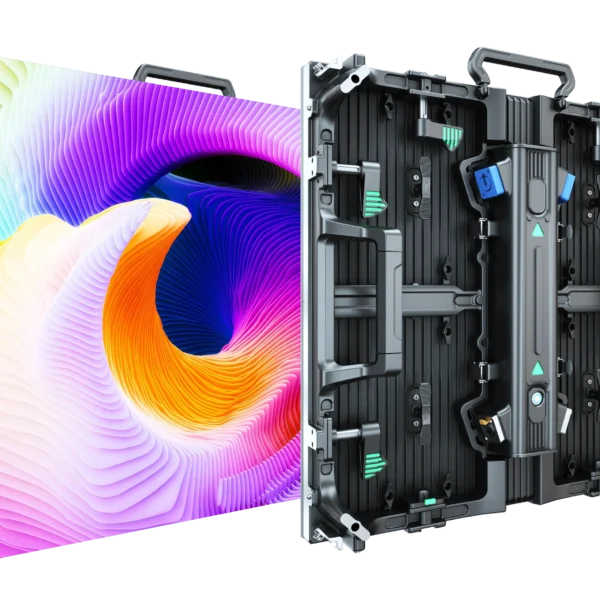
Almost every LED quote is built as area × rate per square metre, then adjusted. A complete quote separates the components below; a quote that bundles them into one number is hard to compare with anything.
| Line item | Typical share of a project | Notes |
|---|---|---|
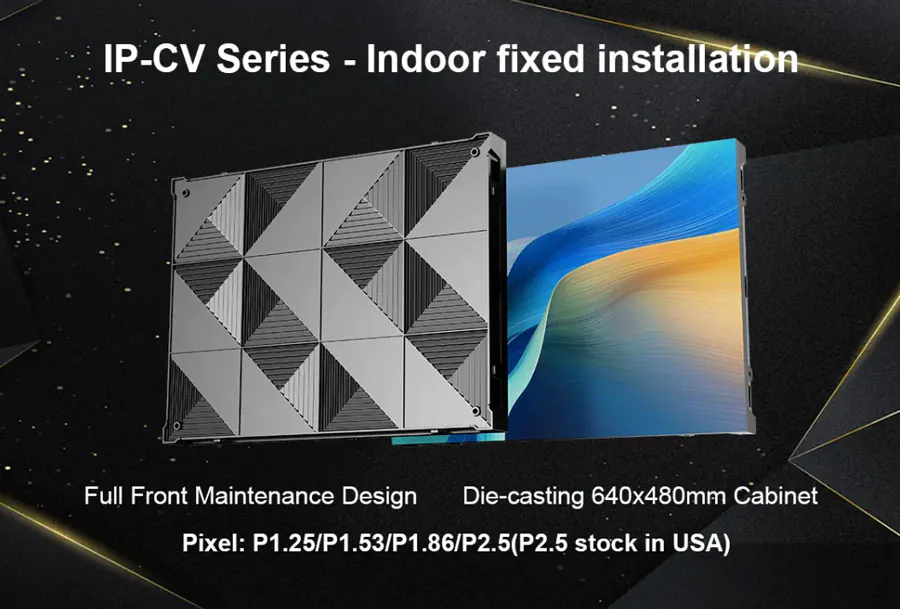
| LED cabinets and modules | 55 – 70% | Depends mainly on pitch and area |
| Power supplies and receiving cards | 5 – 10% | Sometimes bundled invisibly into the cabinet price |
| Processing and playback | 5 – 12% | Processor, switcher, cabling; scale with resolution and surface count |
| Structure, rigging, or mounting | 5 – 20% | Ground support and wind-rated structures cost more than a hung wall |
| Transport and installation labor | 5 – 15% | Rises sharply with venue access restrictions and night work |
| Spares | 2 – 5% | The line most often cut, and the one that protects the event |
Percentages shift with project type: a stage build pushes structure and labor up, a lobby poster pushes everything except the screen down. The practical test is whether the two quotes you are comparing contain the same six lines at all.
3. What It Costs to Buy an LED Screen
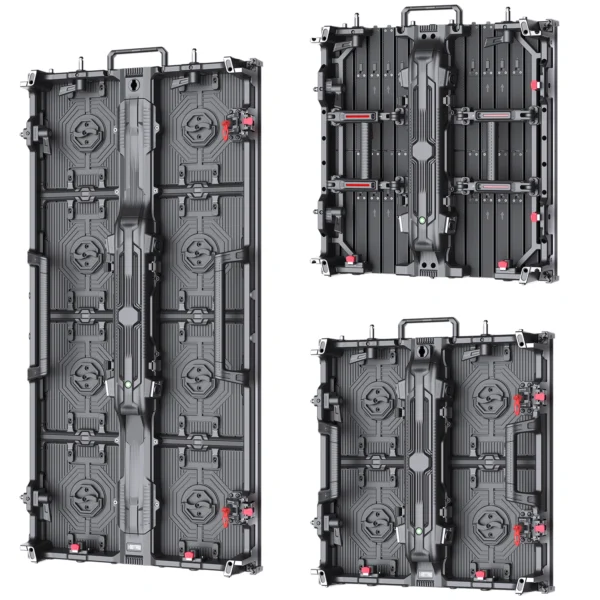
A complete wall can start below $20,000, but fine-pitch systems that suit boardrooms, churches, and permanent venue installs carry materially higher published prices. Current US listings give a realistic range.
| Published system | Price | What the listing covers |
|---|---|---|
| 16.4 × 9.8 ft, P4.81 indoor turnkey | $18,699 | Event-grade turnkey wall; confirm spares and structure in the bill of materials |
| 16.4 × 9.8 ft, P2.97 indoor | $26,799 | Same footprint at a finer pitch, which is the whole price difference |
| 16 × 9 ft, P1.95 turnkey | $40,999 | 30 panels, processor, and fly bars |
| Full HD indoor packaged system | from $41,995 MSRP | Cabinets, controller, cables, spare modules, and wall mounts |
The first three figures come from LED Nation USA and The Penn Group; the packaged system pricing is from Planar’s MGP Complete brochure. Note what the last row includes that the others may not: spares and mounts.
Why purchase prices vary
Six factors explain most of the difference between two purchase proposals:
- Pixel pitch: halving the pitch roughly quadruples the LEDs and driver channels per square metre.
- Indoor or outdoor rating: outdoor cabinets need weather sealing, higher brightness, and stronger power supplies.
- Processing: the controller must handle the wall’s pixel count and the number of input sources.
- Mounting: fly bars are not a complete permanent installation structure.
- Service coverage: warranty length and domestic technical support vary widely.
- Included spares: replacement modules, receiving cards, cables, and power supplies decide how long a failure costs you.
An $18,699 wall still needs installation engineering, electrical work, freight, storage cases, and operator training. Ask for a bill of materials that names every component before comparing totals.
What Sits Outside the Headline Figure
How to apply it: add freight, installation, electrical work, training, spares, storage, and sales tax to the advertised equipment price, then compare that figure with a rental quote that includes the same scope.
For a LED screen price Orlando comparison, ask for cabinets, processor and spares as separate lines.
LED screen price Orlando packages that include structure and labour are not comparable with equipment-only quotes.
4. When Buying Beats Renting
Renting is the right answer for a single event. Buying becomes the right answer when the same capability is needed repeatedly. The calculation is straightforward once both numbers sit on the same basis.
Step 1 — establish the purchase total. Area in square metres × quoted rate, plus structure, processing, transport, spares, installation, and tax.
Step 2 — establish the effective rental cost per use. Daily rate × days per booking, plus delivery, labor, power, and any damage waiver.
Step 3 — divide. Purchase total ÷ effective cost per use = the number of uses before ownership breaks even.
An illustrative example with round figures: an 18 m² P2.6 indoor wall purchased with structure, processing, and spares at $36,000 total; the comparable rental at $1,500 per use including delivery and crew. Break-even is 24 uses. At four bookings a year that is six years, so renting wins; at twelve bookings a year it is two years, so buying wins and keeps saving afterwards.
Practical Considerations
A benchmark-scale comparison tells a different story. Dividing a $40,999 16-by-9-foot P1.95 purchase by a $5,225 one-day P2.6 rental gives roughly eight show days. That arithmetic is misleading on its own: the products have different pixel pitches, and the purchase figure excludes installation, storage, maintenance, crew, financing, and tax. Use it only to see the order of magnitude.
| Cost factor | Rent | Buy | Action to take |
|---|---|---|---|
| Equipment | Per event | Upfront | Compare equal pitch and size |
| Labor | Often included | Recurring | Price every setup, not just the first |
| Storage | Not required | Required | Quote secure, climate-safe space |
| Repairs | Vendor risk | Owner risk | Read the warranty exclusions |
| Upgrades | Easy to change | Full replacement | Plan a useful life of five years or less |
| Cash flow | Lower upfront | Capital intensive | Compare financing cost with rental savings |
Use annualized cost, not sticker price
Model the decision over at least three years, including crew costs even when you own the wall, because safe assembly and operation still require qualified people. An organization using the same configuration weekly in the same room may justify buying; a company holding three events a year in different venues usually gains more from renting, since it can change dimensions and pitch between events.
Two factors the arithmetic misses. Availability is one: a rented screen may not exist on the date you need it during Orlando’s peak convention weeks. Control is the other: ownership means your own batch, spares, and maintenance schedule.
How to apply it: build low, expected, and high usage scenarios and calculate cost per event for each, including a downside case with fewer events than planned.
5. What Moves the Number Most
Pitch is the single largest multiplier. Halving it roughly quadruples the LEDs and driver channels per square metre, which is why a P1.86 wall and a P3.91 wall of identical size are not close in cost. Brightness follows: indoor cabinets at 1,000–1,500 nits are the baseline, while outdoor units at 5,000–8,000 nits with sealed IEC 60529 IP65 cabinets and higher-grade power supplies cost materially more. Cabinet format matters too: 500 × 500mm and 500 × 1000mm are the standard rental formats, while curved locks, custom shapes, and non-standard sizes add tooling and lead time.
| Decision | Effect on cost | How to avoid overpaying |
|---|---|---|
| Finer pitch than the viewing distance needs | Largest single increase | Set pitch from the closest seat, then check whether that row can move back |
| Outdoor specification for a covered site | Substantial | Measure real ambient light and rain exposure before upgrading |
| Custom cabinet shape | Tooling plus lead time | Use standard cabinets where the design allows; shape the content, not the hardware |
| Larger screen than the room can use | Area cost plus structure | Size from trim height and sightlines, not from floor area |
| Cutting spares to hit a number | Saves 2–5%, risks the event | Keep the spares; reduce pitch or area instead |
Published specifications show why viewing distance has to be defined before pricing. A 9.8-by-6.6-foot P4.81 indoor system carries a suggested minimum viewing distance of 20 feet, while a 1.99mm virtual-production wall is listed with a five-foot minimum and a 7,680 Hz refresh rate. (bhphotovideo.com) Those two products are not interchangeable, whatever their sizes suggest.
Practical Considerations
For camera-facing work, refresh rate and processing matter as much as pitch. The control platform should be named in the quote: NovaLCT configures NovaStar-powered screens, and Brompton Tessera configures compatible Tessera processors. A quote that says only “high-resolution LED” has not specified anything.
Fix the room and the content first, and the LED screen price Orlando figure stops moving.
6. Costs People Forget
Transport. Domestic delivery from a warehouse is predictable; a venue delivery inside a narrow window is not. Liftgate, inside delivery, and after-hours access all add cost.
Venue charges. Convention centers apply drayage for materials handled on site and may require their own rigging contractor. The Orange County Convention Center is the obvious Orlando example. These charges sit outside the screen price and surprise first-time exhibitors.
Power distribution. A large wall may need a distro box, extra cable runs, or a licensed electrician, none of which is part of the cabinet price.
Content. A new screen usually needs new content. Reusing a 16:9 deck on a 3:1 wall produces letterboxing or stretched graphics, and fixing it after load-in costs more than designing for the aspect ratio.
Storage and handling. Owners need flight cases, racking, and a loading plan. Without them, panels are damaged in transit and the saving disappears.
Coastal protection. For sites near the water, three-proof treatment on the PCB and power supply is a production step with its own cost, and it cannot be added later.
Weather contingency. An outdoor build needs ballast, covers, and a stand-down plan. That is a budget line, not an insurance afterthought.
7. Orlando Fees, Permits, and Contract Terms
Orlando projects can carry taxes, permits, insurance, venue labor, electrical services, and engineered rigging beyond the LED supplier’s quote.
Florida’s general sales tax rate is 6%. The Florida Department of Revenue lists Orange County’s 2026 discretionary surtax at 0.5%, producing a combined 6.5% rate for many taxable transactions. Confirm the treatment of your specific purchase or rental with the vendor or a tax adviser. (floridarevenue.com)
Public events and temporary structures
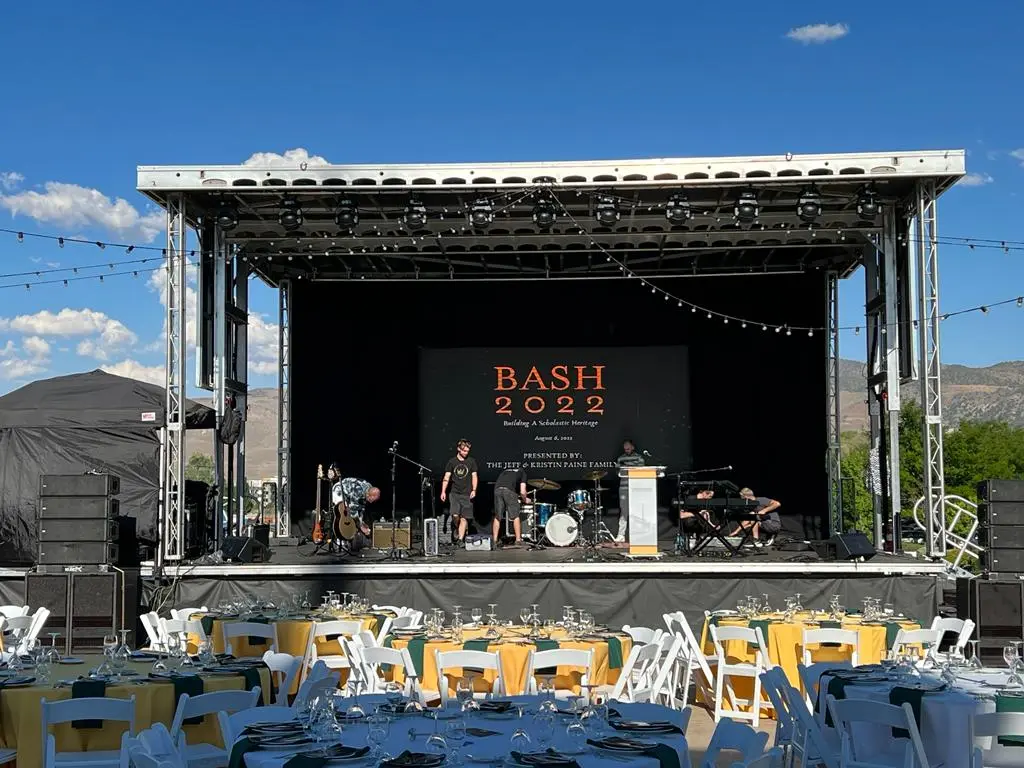
The City of Orlando’s event guidance states that a permit application must be submitted at least 60 days before the event. A special event permit may be required for events with more than 100 attendees on city property, and temporary stages or other structures can require separate permits. The city also requires event insurance for events on city property, with current guidance listing minimum general liability coverage of $1 million. Published example fees include $100 for a public assembly of 100–500 attendees without alcohol and $20 per event day for a loudspeaker permit. (orlando.gov)
Venue rules and weather terms
Load-In and Compliance
A hotel or venue may impose outside-vendor rules, access charges, supervision fees, or exclusive rigging and electrical services. The LED screen price in Orlando can therefore change after venue review even when your supplier’s quote is fixed, so request the venue’s production guidelines before selecting a supplier, especially for a flown wall.
Outdoor events need a written weather and wind-management plan even when the screen is rated for outdoor use. The National Weather Service office in Melbourne publishes the warning thresholds a stand-down plan should be written against. Confirm who has authority to lower or shut down the wall, and whether postponement, relocation, and cancellation costs are covered.
Review cancellation terms, overtime rates, damaged-panel liability, and venue-exclusive labor before signing. Send the venue the proposed dimensions, weight, power requirements, support method, and production schedule before the LED contract is final.
8. How to Compare Two Quotes
Put both quotes on one page and confirm that each line exists in both:
- Visible area in square metres, and cabinet footprint
- Pitch, brightness, and refresh rate, measured rather than nominal
- Panel model, processor model, and control software
- Cabinet format and service access
- Power supplies and receiving cards, included or separate
- Structure, and whether engineering is included
- Transport, delivery mode, and who unloads
- Spares shipped with the order
- Warranty terms, exclusions, and response time
A quote missing four of these nine is not cheaper. It is incomplete, and the missing items will reappear as change orders.
LED Screen Price Orlando — FAQ
Is it cheaper to buy or rent an LED screen in Orlando?
Renting is cheaper for occasional use and includes setup, processing, teardown, and technical support. Buying usually wins once the same screen size and pitch are needed more than roughly a dozen times a year. The break-even is purchase total divided by the effective cost per rental use.
What is the biggest cost driver?
Pixel pitch. Moving one step finer increases the LED and driver count per square metre sharply, and the rate follows. Choosing pitch from the closest viewer rather than the finest available is the most effective saving.
Why do two quotes for the same size differ so much?
Usually because they include different things: processor, structure, spares, transport, engineering, or labor. Compare line by line before comparing totals.
How does hurricane season affect an outdoor LED booking?
Outdoor builds need engineered ballast, weather covers, monitoring, and a stand-down plan, and the booking may carry standby crew. Expect the quote to rise accordingly, and make sure postponement and cancellation costs are defined in writing.
What happens if one LED panel fails during an event?
A modular wall keeps operating, but the failed cabinet or module leaves a visible dark area. Confirm that spare modules, receiving cards, power supplies, and data cables stay on site, and that a technician is present who can replace them without waiting for a warehouse delivery.
Can a hotel require its preferred AV company?
What Sits Outside the Headline Figure
It can impose outside-vendor rules, access charges, supervision fees, or exclusive rigging and electrical services. Ask for the venue’s production guidelines before choosing a supplier, and budget for the possibility that venue rules change the total.
Should a small event use televisions instead of an LED wall?
Commercial displays can cost less for a small audience in a room that suits several screens, but bezels interrupt the image and sightlines suffer across wide seating. Compare a television package that includes stands, distribution, cabling, delivery, and labor, not retail television prices alone.
How early should an Orlando LED screen be reserved?
Reserve once the venue, dimensions, and dates are reasonably firm, particularly around major convention periods. A late order is sometimes possible, but your preferred pitch or size may be unavailable, forcing a redesign or several smaller displays.
Conclusion
The LED screen price in Orlando is a function of pitch, area, brightness, structure, and scope, not a single market rate. The useful discipline is to get all five onto one page, run rent and buy through the same three-step calculation, and compare quotes by line item rather than by total. That is also the fastest way to spot the quote that looks cheapest because it is missing what protects the event.
- Renting reduces upfront risk and commonly includes setup, processing, teardown, and technical support.
- Buying lowers long-term cost when the same configuration is used frequently in the same room.
- Pitch and viewing distance matter more than the largest available screen.
- Taxes, permits, rigging, electrical work, insurance, and venue rules belong in the total budget.
Document your screen size, audience distance, venue, event frequency, content sources, and outdoor requirements. Then request at least three itemized rental quotes and two complete purchase proposals, and use those figures to calculate three-year cost per event.
For the specification side of the decision, see our Orlando LED display buyer’s guide. For the pricing detail behind the equipment line, see LED screen panel price.
Buyers comparing LED screen price Orlando options should ask for the cabinet count, the spare ratio and the processor model in writing.