

outdoor LED screen for concerts and music festival

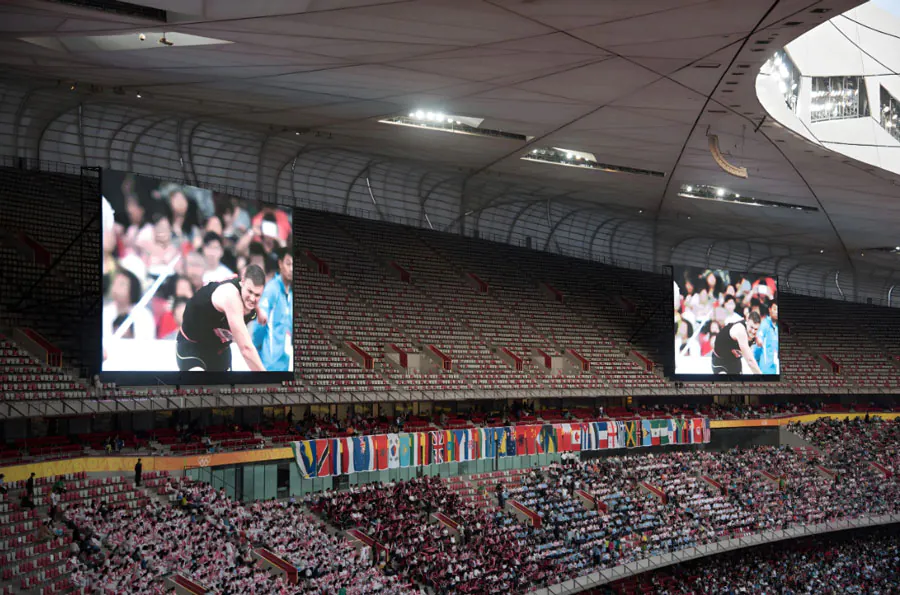
Selecting an outdoor LED screen for concerts and music festival use is one of the highest-stakes equipment decisions a production manager can make. A single large wall can draw enough current to require a dedicated service, yet the entire system may be assembled in the hours before doors open.
Table of Contents
- 1. Match Brightness and Pixel Pitch to Viewing Distance
- Sightline mapping before you quote
- 2. Verify the IP Rating Before You Trust “Weatherproof” Claims
- Front and rear ratings are not the same
- 3. Plan Power and Data Distribution Before Load-In
- Generator sizing and cable protection
- 4. Rig for Wind, Not Just Weight
- Monitoring on show day
- 5. Build a Redundant Control and Content Workflow
- Pre-show failover test
- Can I use an indoor LED screen outdoors if I cover it from direct rain?
- How much generator capacity do I need for a large LED wall?
- What wind speed should shut down an LED screen?
- How do I keep an LED screen from washing out camera shots?
- Do outdoor LED screens need special insurance?
- Conclusion
The real risk is rarely pixel count. Most failures at festival-grade outdoor video walls trace back to water, wind, or power, not the LEDs themselves.
Production teams often sign rental quotes based on cabinet size alone, then discover on show day that the screen is too dim for full sun, the cabinets leak during a light shower, or the generator cannot hold voltage when the wall spikes.
The five checks below cover brightness, weather protection, power distribution, wind safety, and control redundancy so you can evaluate vendors with confidence.
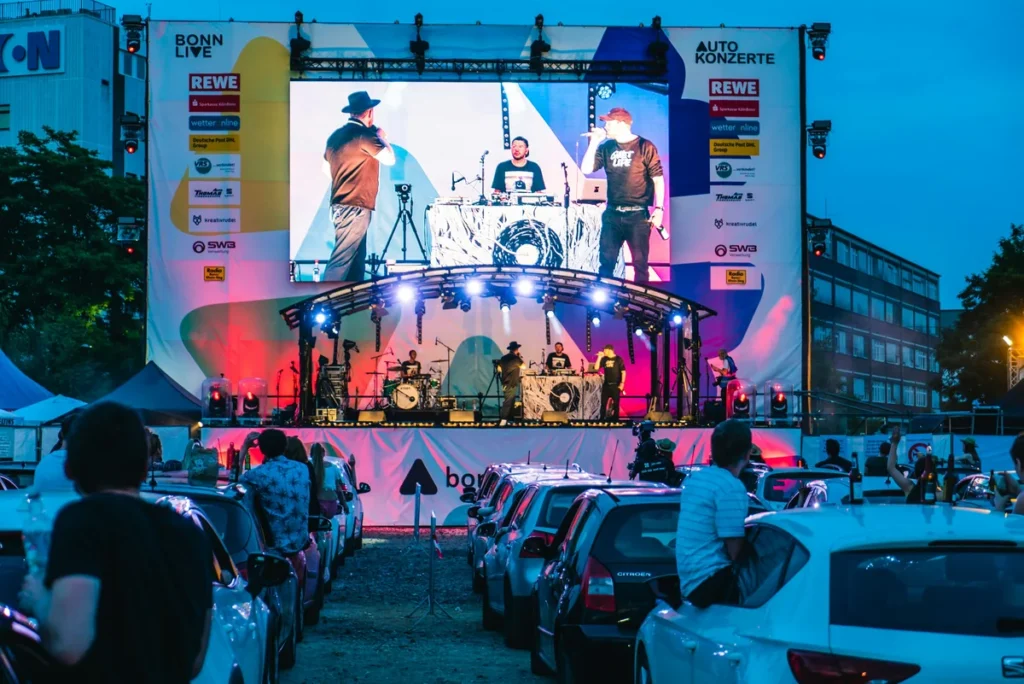
outdoor LED screen for concerts and music festival usage-TW VISION PQ series.
1. Match Brightness and Pixel Pitch to Viewing Distance
For most festival grounds, the right outdoor LED screen for concerts and music festival viewing starts with at least 5,000 nits of brightness and a pixel pitch matched to the nearest audience row.
Manufacturer spec sheets commonly rate daylight-viewable panels between 5,000 and 8,000 nits, while indoor walls often sit below 1,500 nits. Direct sun and reflective stage surfaces can wash out the image further.
A dim outdoor LED screen for concerts and music festival stage becomes a pale grey wall by mid-afternoon. Use a simple field rule: keep at least one metre of viewing distance per millimetre of pixel pitch. At a 30-metre front row, a 3.9mm panel is usually sharp enough; at five metres, you may need a 2.6mm or 2.9mm cabinet.
Sightline mapping before you quote
– Mark the closest audience position and the screen’s intended height.
– Convert that distance to required pixel pitch using the one-metre-per-millimetre rule.
– Add brightness margin for full-sun conditions and reflective stage surfaces.
How to apply this: draw a simple sightline map and request a brightness test file from the rental house before you pay the deposit.
2. Verify the IP Rating Before You Trust “Weatherproof” Claims
The safest way to evaluate any outdoor LED screen for concerts and music festival deployment is the IEC IP rating, not the word “weatherproof” on a rental quote.
The IEC 60529 standard defines IP65 as dust-tight and protected against water jets; IP54 only resists splashes from any direction. This distinction matters when a summer storm moves across the stage.
A rented outdoor LED screen for concerts and music festival install should include gasket inspection before load-in. Look for sealed power connectors, drip loops, and rear-cabinet vent covers.
| IP Rating | Protection Level | Action to Take |
|---|---|---|
| IP54 | Splash-resistant only | Use only under covered or low-rain stages |
| IP65 | Dust-tight, water-jet resistant | Minimum for exposed festival use |
| IP66 | Dust-tight, powerful water-jet resistant | Choose for driving rain or washdown areas |
| IP67 | Dust-tight, temporary submersion | Use for ground-stacked panels near floods |
Front and rear ratings are not the same
– Front faces usually need IP65 or higher for direct rain.
– Rear cabinets may run IP54 if they are sheltered from wind-driven water.
– Ground-stacked screens need more drainage protection than flown walls.
How to apply this: ask the supplier for both front and rear IP ratings, then inspect every cable pass-through before the screen goes up.
3. Plan Power and Data Distribution Before Load-In
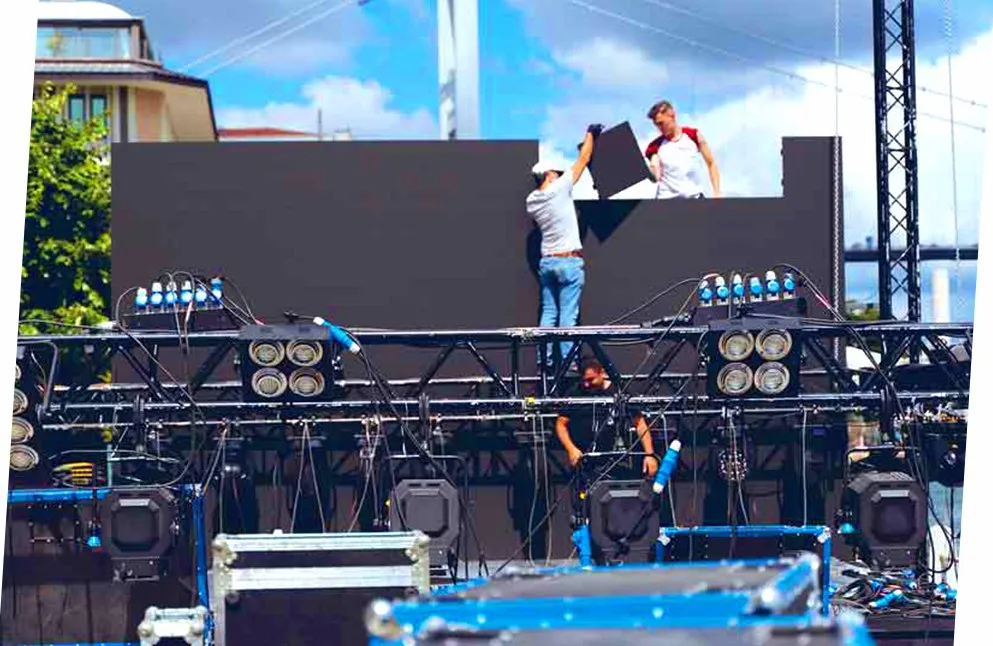
A stable outdoor LED screen for concerts and music festival setup always starts with a dedicated power plan, not a shared extension lead from the stage.
The National Fire Protection Association’s NFPA 70, Article 525, covers temporary outdoor wiring for festivals and similar events. It requires listed, weather-protected cords and accessible disconnects. Large video walls can draw tens of kilowatts at full brightness, so many touring productions order a separate video service rather than sharing one with audio.
Your outdoor LED screen for concerts and music festival power schedule should list every cabinet, processor, and backup server. Add headroom above the wall’s peak draw and label each breaker. For signal, use redundant fiber or shielded cable runs and keep them away from motor feeder cables.
Generator sizing and cable protection
– Request a full load schedule from the screen vendor.
– Confirm voltage drop limits for long cable runs.
– Route power and data cables through protective trunking or elevated trays.
How to apply this: assign one person to verify breaker labels and cable protection before the generator is connected.
4. Rig for Wind, Not Just Weight
The most dangerous assumption in an outdoor LED screen for concerts and music festival install is that a heavy wall cannot move in wind.
According to the Event Safety Alliance, temporary outdoor structures should be treated as engineered systems and monitored continuously for wind. Wind pressure acts on the entire screen face, so even a medium wall can create serious horizontal force at height.
An outdoor LED screen for concerts and music festival rig should have a named person watching wind readings at showtime. Get the supplier’s wind-load document, the maximum gust rating, and the shutdown threshold in writing before load-in.
Monitoring on show day
– Use a calibrated anemometer near the stage roof.
– Record in writing when the wind speed reaches two-thirds of the shutdown limit.
– In gusty conditions, lower the screen before it reaches the rated maximum.
How to apply this: ask your rigging supplier for the wind-load report and write the shut-down trigger into the show day schedule.
TW VISION outdoor led poster is working on water proof testing.
5. Build a Redundant Control and Content Workflow
The best-looking outdoor LED screen for concerts and music festival visuals can go black if a single media server or cable path fails.
Tools such as Resolume for real-time playback and MADRIX for LED matrix effects are common choices. Larger festival setups often add Disguise for timeline control, camera tracking, and pixel-mapped output.
Most touring productions run a main and backup media server with automatic failover, then test that failover during soundcheck. A redundant control path is cheap insurance for any outdoor LED screen for concerts and music festival stage.
Pre-show failover test
– Feed the same content to both servers and confirm sync.
– Pull the primary network cable and verify the backup takes over.
– Keep a spare receiver card and processor module on site.
How to apply this: run a forced failover test at least once before doors open, and log the result in the show report.
Frequently Asked Questions About outdoor LED screen for concerts and music festival
Can I use an indoor LED screen outdoors if I cover it from direct rain?
No. An indoor panel is usually too dim for daylight and its cabinet is not sealed against humidity. A covered outdoor LED screen for concerts and music festival use can still suffer condensation, overheating, and connector corrosion. The only safe exception is a completely dry, climate-controlled temporary stage, which is rare on festival sites.
How much generator capacity do I need for a large LED wall?
Start with the supplier’s peak draw and build in headroom above that figure. For a large outdoor LED screen for concerts and music festival setup, some walls need a dedicated 100-amp or larger service, with audio and lighting on separate supplies. Undersized generators cause voltage sag, flicker, and tripped breakers during bright scenes.
What wind speed should shut down an LED screen?
There is no universal number because every rig has different wind-load limits. Many suppliers set an outdoor LED screen for concerts and music festival shutdown trigger near the manufacturer’s rated gust limit, often in the 25 to 30 mph range for temporary structures. Always get the engineer’s written threshold and monitor at stage height.
How do I keep an LED screen from washing out camera shots?
Work with your video director to reduce screen brightness to camera-friendly levels and match white balance across the wall. For an outdoor LED screen for concerts and music festival stage, shoot a daylight test before doors open. Adjust shutter angle and frame rate to reduce moiré and banding, especially on IMAG broadcast cameras.
Do outdoor LED screens need special insurance?
Yes. A rented outdoor LED screen for concerts and music festival install should be covered for weather damage, power surges, and transport. Some event policies exclude rain or wind damage unless the rig is certified, so ask your broker about temporary structure endorsements and named storm deductibles before show week.
Conclusion
Every successful outdoor LED screen for concerts and music festival deployment comes down to the same five checks.
– Match brightness and pixel pitch to the nearest audience position and full-sun conditions.
– Verify IP65 or better front protection and inspect every seal and cable pass-through.
– Plan dedicated power and data paths with enough headroom for peak load.
– Rig for wind load, not just panel weight, and monitor gusts on show day.
– Run redundant media servers and force a failover test before doors open.
Take this checklist to your next supplier meeting. Ask for written specs, not marketing claims, and walk the site before the generator is connected.
Related Articles
Outdoor LED Screen Rental for Different Events – LED DISPLAY MANUFACTURE TW VISION
