LED Screen Rental Los Angeles | Factory Direct Supply

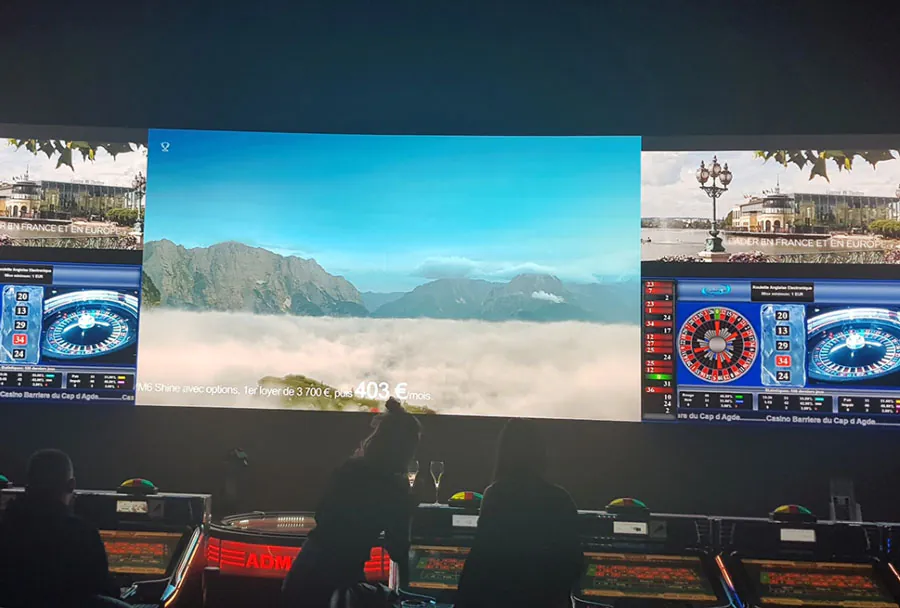
LED screen rental Los Angeles buyers approach from two directions. One is an event team that needs a wall for a weekend and a crew to build it. The other is a rental house or AV company buying cabinets to own, deploy on its own schedule and keep for years. This page is written for the second group — and for the first, it explains what a fair rental quote should contain.
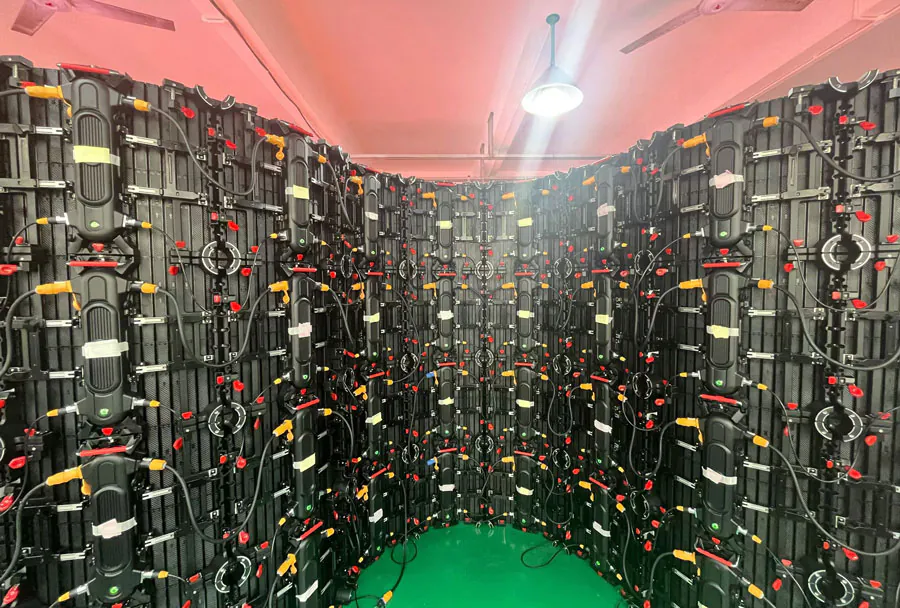
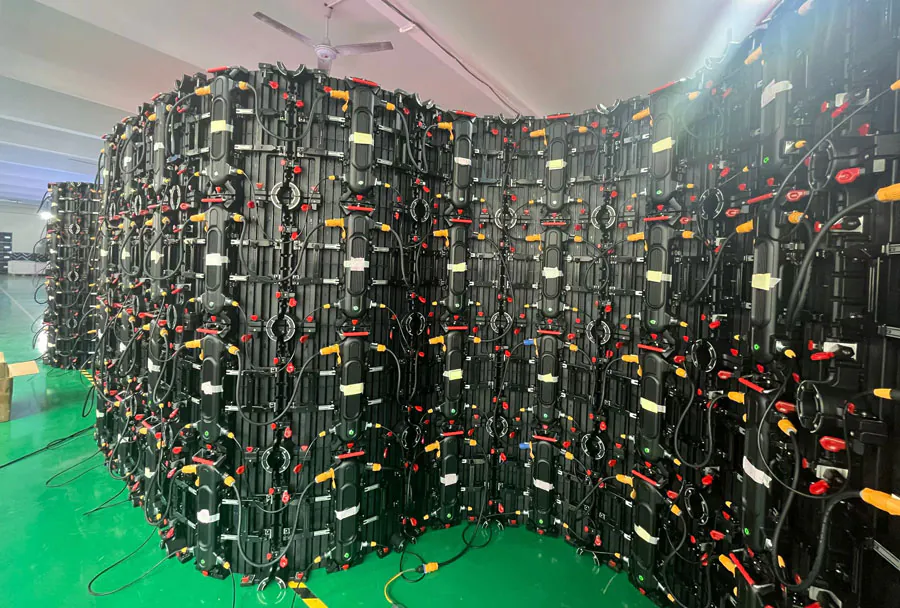
TW VISION is the factory behind the fleet. We manufacture rental-grade LED cabinets, hold standard stock in our Atlanta warehouse and arrange transport into Southern California. We do not rent screens in Los Angeles and we do not run a California depot. What we do is supply the cabinets, spares and configuration files that make a rental fleet work.
What Los Angeles changes. Here the camera is often the first audience: a corporate general session, an awards show and a virtual-production stage all judge the wall on how it behaves on a sensor before anyone judges it from a seat. The same week can put one set of cabinets in a Burbank volume, a Beverly Hills ballroom and a Santa Monica pier activation, so a fleet is bought for range rather than for one room. Batch consistency, refresh and a clean seam matter more than the brochure pitch, and the buyer usually knows the difference.
Below: how the specification follows the venue, what LA buyers order, how factory supply compares with a supported rental, what local rates look like, how to vet a partner, and how heat, wind, smoke, permits and traffic change the build plan.
Table of Contents
- 1. Start With the Event and the Closest Seat
- 2. Match the Wall to the Event Type
- 3. What Los Angeles Buyers Order From the Factory
- 4. Why P1.86 All-in-One Displays Sell in Los Angeles
- 5. Compare Factory Supply With a Supported Rental
- 6. What LED Screen Rental Los Angeles Events Cost
- 7. How to Choose a Rental Company in Los Angeles
- 8. What Setup Support Should Cover
- 9. Heat, Wind, Smoke and Salt Air
- 10. Venue Access, Permits and Union Rules
- 11. Processing, Content and Acceptance Tests
- 12. Put Responsibility in the Contract
- 13. Delivery From Atlanta to Los Angeles
- 14. Ordering, Tax and Resale Paperwork
- FAQ
- Conclusion
1. Start With the Event and the Closest Seat
Screen size and pitch come from three numbers: the closest viewer, the content people must read, and the light on the wall. Los Angeles adds a fourth: the outdoor daylight here is brutal for eight months a year, and an evening event in the Valley still faces a low sun that hits the face of a screen side-on.
Write a one-page brief and require every bidder to answer it: event type and audience size, nearest and farthest viewer, indoor or open air, orientation and sun hours, content mix, ground-supported or flown, load-in window, and where power sits.
Pixel pitch is the centre-to-centre distance between LEDs in millimetres, and density scales with the square of pitch: (1,000 ÷ pitch)². P2.6 carries roughly 147,900 pixels per square metre, P3.9 about 65,700 and P4.8 about 43,400. One step finer is where most of the cost sits, which is why the closest seat — not the room size — decides it.
For LED screen rental Los Angeles venue teams specify most often, the working split is P1.9–P2.6 where the front row sits inside four metres, P2.9–P3.9 for ballrooms and mid-size stages, and P4.8–P6.7 once the nearest viewer passes 25 metres. Ask for calibrated operating brightness, not peak: 800–1,500 nits indoors, 5,000 or more outdoors, and 6,000–8,000 for a west-facing wall through the afternoon.
2. Match the Wall to the Event Type
The same room can need three different walls in one month. What changes is not the brand of cabinet but the pitch, the aspect ratio and how much redundancy the show carries.
Weddings and private events. Viewing distance is short and the room is often decorative, so a P2.6–P3.9 wall at 6×3 m or 8×4 m works, with content built for a 16:9 or custom canvas and colour matched to the event palette. Brightness should be low enough not to blow out a dimly lit ballroom. Keep the wall clear of the photographer’s sightline, avoid building during daytime venue tours, and finish the edges so it reads as part of the room.
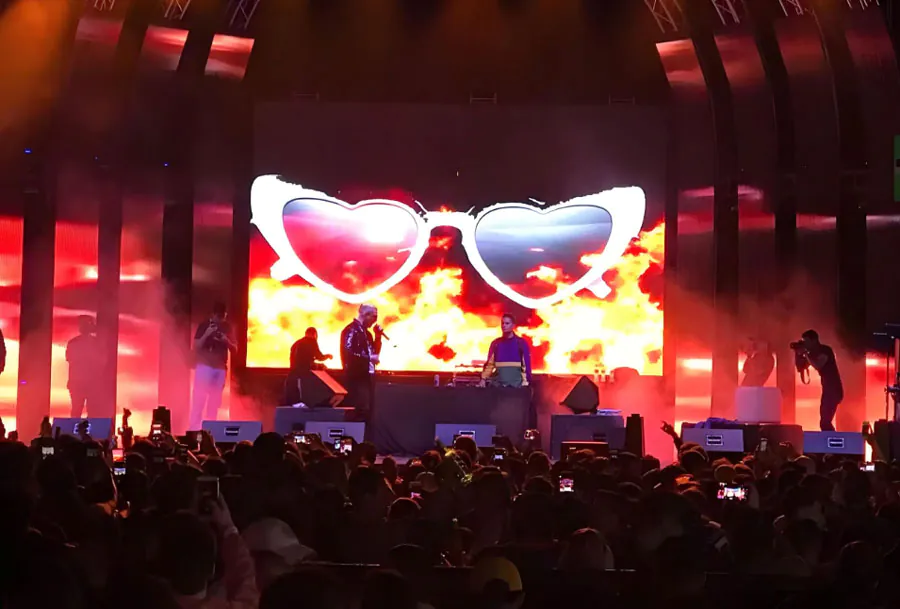
Concerts and festivals. Visibility wins over detail. P3.9–P6.7 at 10–20 m wide, 5,000+ nits, high refresh for IMAG, and a structure engineered for Santa Ana gusts. Side screens matter more than one giant centre wall when the audience wraps around a stage.
Corporate and product launches. Camera-first. P1.9–P2.6 close up, 3,840 Hz or higher, genlock with the switcher, and a spare processor. A launch audience notices banding before it notices pitch.
Trade shows and exhibitions. Standard P2.6–P3.9 in 500×500 mm cabinets, built and struck inside a booth window, with a hanging or ground-supported frame that clears the aisle.
Film and virtual production. Los Angeles has its own buyer category: a volume wrapped in LED panels for in-camera backgrounds, where refresh, colour consistency across seams and processor latency matter more than pitch on the audience side.
Write the event type into the brief and the specification narrows by half before anyone quotes.
3. What Los Angeles Buyers Order From the Factory
Four groups cover most Southern California orders: fine-pitch indoor cabinets, standard rental cabinets, IP-rated outdoor cabinets, and folding posters for retail and lobbies. A fifth sits outside the rental fleet — transparent and flexible curved cabinets for retail windows and studio sets, where 1,500–3,000 nits is enough.
Fine-pitch indoor cabinets
P1.953 and P2.604 suit boardrooms, screening rooms and stages where the front row is inside four metres. Studios, agencies and tech offices from Culver City to El Segundo buy fine pitch because content is shot, streamed or read at close range.
Standard rental cabinets
P2.976 and P3.91 in 500×500 mm and 500×1000 mm formats carry general sessions, exhibition booths at the Los Angeles Convention Center, awards nights and hotel ballrooms, with front or rear service access.
Outdoor cabinets
P3.91 and P4.81 with IP-rated sealing and brightness headroom. Direct coastal sun, dust and Santa Ana wind are the working conditions, so enclosure design and ballast planning matter as much as nits.
Folding posters
The LP-H P1.86 is the fastest-moving model outside the rental fleet — covered next.
| Series | Stock | Pixel pitch | Cabinet | Typical LA use |
|---|---|---|---|---|
| PQ P2.6 | Atlanta stock | P2.6 | 500×500 / 500×1000 mm | Rental walls, stage builds, ballrooms |
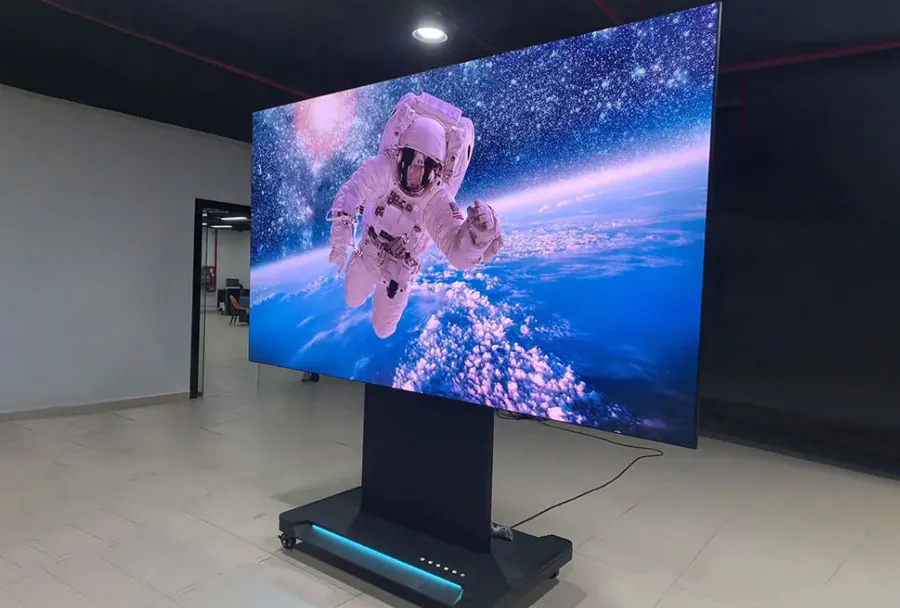
| LP-H | Atlanta stock | P1.86 | 640×1920 mm folding poster | Retail, hotel lobbies, showrooms, studios |
| IP-CT | Atlanta stock | P2.5 | 640×480 mm soft connection | Church walls, menu boards, fixed indoor installs |
| Other pitches (PN / PH / PI) | Factory order | P1.953 – P6.67 | 500×500 / 500×1000 mm | 15–20 days production plus freight |
Orders ship from one production batch with matched spare modules, receiving cards, power supplies, processors, flight cases and configuration files.
4. Why P1.86 All-in-One Displays Sell in Los Angeles
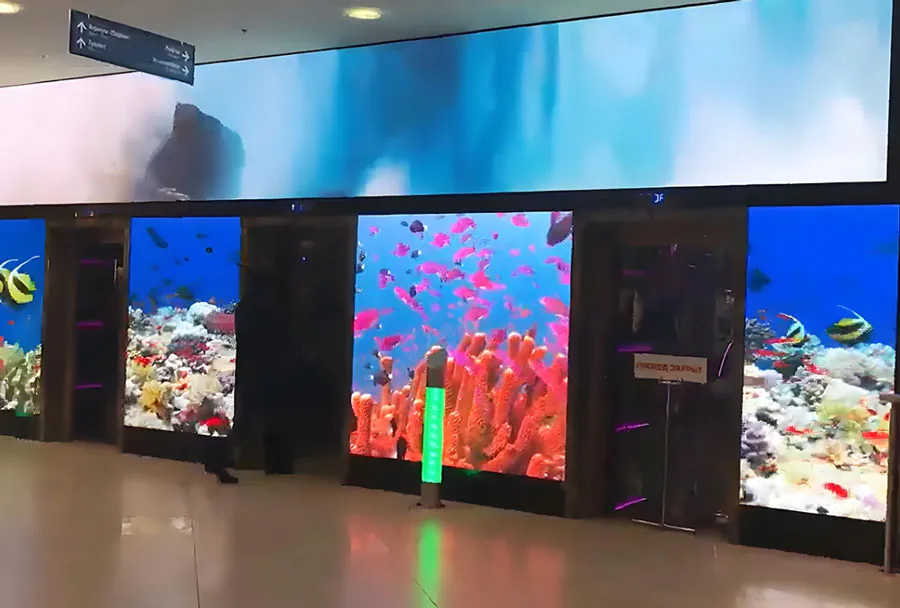
The LP-H series LED poster and banner is our strongest seller here, and the P1.86 version in particular. It fills a gap that rental cabinets cannot serve in volume.
It solves the one-screen, one-room problem. A cabinet wall needs a crew, truss and a build window. A 1.86 mm poster moves with two people, stands on a floor and runs before the doors open. For hotel lobbies, dealership showrooms, studio entrances and pop-up retail on Melrose or Abbot Kinney, that is the difference between having a screen and not having one.
The pitch matches how close people stand. P1.86 is sharp at two to three metres, exactly where a customer reads a window display or a product plinth. Buyers who tried a P3 rental panel for the same job come back for the finer pitch once they compare both at that distance.
It repeats. One lobby screen becomes four locations once content can be scheduled centrally, because installation needs no rigging and no crew.
It folds. The frame collapses for transport and storage, which matters where back-of-house space is rented by the square foot.
Typical Southern California uses: retail windows, hotel and corporate lobbies, clinic check-in walls, dealership showrooms, studio reception and event registration backdrops. For these jobs the poster is cheaper to own and faster to deploy than a small rental wall.
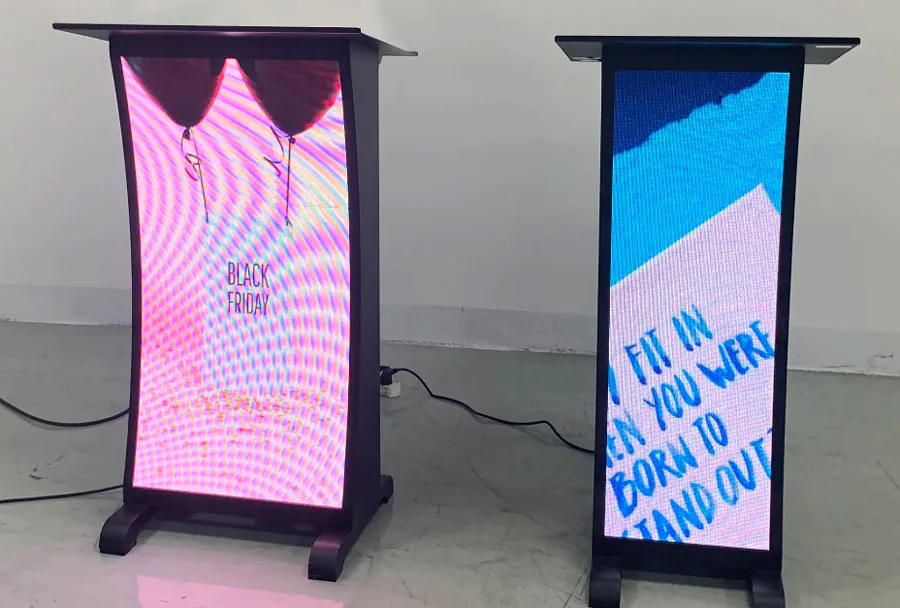
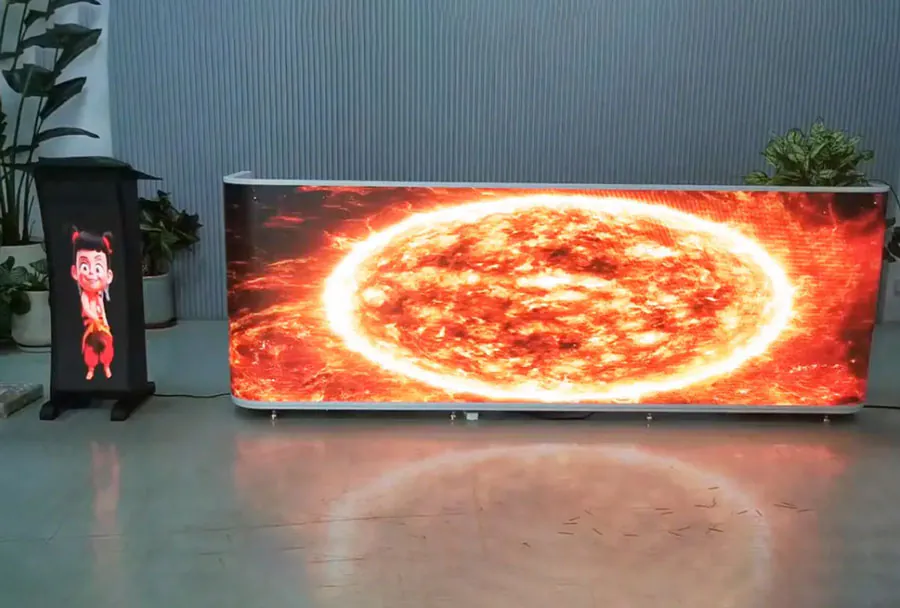
The same reasoning reaches the lectern. Our all-in-one LED podium is 960 × 480 mm at P1.86, replaces a printed banner beside a lectern, and runs from one power and one signal connection. It suits press conferences, corporate stages and hotel meetings where a full wall is more screen than the room needs, and it is stocked in Atlanta alongside the poster range.
5. Compare Factory Supply With a Supported Rental
Factory pricing and event-ready rental pricing describe different scopes. Compare total delivered responsibility, not equipment price.
| Quote element | Factory supply | Supported rental | What to check |
|---|---|---|---|
| Cabinets | Included | Included | Exact model and production batch |
| Structure | Usually separate | Often available | Engineering and wind rating |
| Processor | Optional | Usually included | Inputs, scaling, backup |
| Labor | Buyer arranged | Quoted locally | Crew hours and overtime |
| Spares | Purchased | Provider inventory | Quantity held on site |
| Support | Remote or limited | Event technician | Response terms |
A factory order suits a company with trained technicians, compatible rigging, dry storage and enough bookings to keep the fleet working. A supported rental suits a one-weekend show where the crew is the hard part.
Normalise every proposal. Convert each quote into the same scope: freight, drayage, lift equipment, power distribution, setup, rehearsal, operator hours, teardown and tax. A common Los Angeles pattern is a low equipment quote that excludes the processor and ground support; add both and the gap closes.
Ask for a line-item scope marked included, excluded or supplied by another contractor, and name who owns signal testing and mid-show failures.
Behind the factory claim. An 8,000㎡ facility with 8 independent SMT lines keeps placement, PCB assembly, module production and calibration in-house. A 500㎡ module aging area screens weak modules, and roughly 2,000㎡ of cabinet aging runs each batch for 24 hours at operating conditions. Modules are glued at the edges and cabinets screwed with torque control. For a Los Angeles buyer the output that matters is batch consistency: a wall assembled from two production runs shows a seam on camera, and in this market the camera is usually the first audience.
Buying also buys documentation: server operation, network settings, calibration routines and an escalation path. A fleet without them becomes a support burden fast.
6. What LED Screen Rental Los Angeles Events Cost
Los Angeles rates are set by screen area, pitch, indoor or outdoor rating, duration, crew hours and how much of the production the vendor carries. The ranges below are indicative market levels for a locally supplied rental, useful for benchmarking a bid.
| Use case | Typical size | Pitch | Indicative rate |
|---|---|---|---|
| Trade show booth, indoor | 1.8 × 2.4 m | P1.9 – P2.9 | $700–$1,500 per day; $2,000–$6,000 per week |
| Retail or lobby display | 1.2 × 1.8 m | P2.5 – P3.9 | $400–$900 per day; $1,200–$3,000 per week |
| Corporate conference wall | 4.5 × 2.4 m | P2.5 – P4 | $2,000–$6,000 per day; $6,000–$18,000 per week |
| Outdoor stage screen | 6 × 3.6 m | P6 – P10 | $4,000–$10,000 per day; $8,000–$30,000 per week |
| Rooftop or patio, seasonal | 2.4 × 3.6 m | P4 – P6 | $1,500–$4,000 per month |
Four models are common: per-event, weekly for multi-day activations, monthly for seasonal campaigns, and full-service packages bundling transport, install, technicians and content ingestion. À la carte quotes put the screen first and add every service as a line item, which is where budgets slip.
A cross-check: a 20–30 m² P3.9 indoor wall with crew, calibration and a day of technician cover typically lands between $3,000 and $10,000 here. Materially less means labor, power distribution or spares are missing.
For LED screen rental Los Angeles buyers purchase to own, the arithmetic is a per-square-metre cabinet price, freight and your own crew hours. Count bookings per year: out most weekends, ownership wins; out twice, it rarely does.
7. How to Choose a Rental Company in Los Angeles
If crew, structure and show-day support are part of what you are buying, the company matters as much as the panel. Six checks separate a production company from a broker.
- Specifications in writing. Pitch, calibrated nits, refresh rate, IP rating, exact cabinet and processor model.
- Local inventory. How many identical cabinets are in Los Angeles today, and whether the supplier owns them or brokers them.
- Crew credentials. Rigging certification, stamped engineering for flown builds, familiarity with house rules and union calls.
- Redundancy. Spare modules, receiving cards, power supplies and a backup processor on site.
- Insurance and compliance. General liability, workers’ compensation, equipment cover, certificates issued to the venue.
- Contract clarity. Travel, overtime thresholds, weekend premiums, damage liability, cancellation.
Two red flags are worth naming. A quote that lists equipment but no crew hours is usually incomplete rather than cheap. A vendor who cannot say which venues it has loaded into, or who has never handled a Hollywood Bowl 11 pm curfew or a SoFi truck marshalling plan, is brokering your show to someone else.
Ask for two references from comparable rooms and look at the photographs, not the testimonials. Then check the calendar: May to September is festival and outdoor season, September to November is awards and conference season, and both compress inventory. Most LED screen rental Los Angeles disappointments start there, not with the panel.
Crew size should scale with area: 6–8 technicians for a 30×18 ft outdoor build, 3–4 for a 20×8 ft indoor wall, and 1–2 for a booth. A quote that sends the same two people to every job is guessing.
8. What Setup Support Should Cover
“Setup included” can mean a van and two technicians, or a survey, rigging plan, calibration and an operator for the whole show. Write the scope before comparing prices.
- Site survey. Rigging points and load limits, power capacity and distance, access paths, ceiling height, sightlines, and space to stage spares.
- Delivery check. Padded cases, a confirmed window, and a cabinet count signed off before the truck leaves.
- Rigging. Certified riggers for truss, scaffold or ground-stacked builds, with facility load limits respected.
- Power. Distribution, correct cable runs, and a UPS or generator where house supply is marginal.
- Calibration. Colour, white balance, uniformity correction and brightness matching across the wall.
- Operators. Named hours for playback, input switching and live feeds, plus an escalation contact.
- Spares. Modules, power supplies and a backup processor on site, not at the warehouse.
- Strike and debrief. Safe load-out, damage check and a short post-show review.
Ammeter reality check: plan content around the operating draw but size circuits on the maximum. Expect 200–600 W per square metre depending on pitch and brightness, plan 30–40% headroom, and confirm single-phase or three-phase supply plus soft-start behaviour. Los Angeles venues often have less spare capacity than the room suggests, and a 20 m² P3.9 wall plus processing can trip a circuit that was fine for a projector.
Know the four failures that actually happen: camera flicker, uneven brightness after a power dip, dead pixels, and signal loss. Each has a one-line remedy — refresh and shutter sync, recalibration, a module swap, a redundant signal path.
9. Heat, Wind, Smoke and Salt Air
Southern California is sold as a mild climate. For a rental fleet it is a sequence of hard conditions that arrive without warning.
Heat. The San Fernando Valley and Inland Empire pass 100°F for weeks, and a cabinet rated at 5,000 nits derates as its internal temperature climbs. Leave ventilation clearance behind the wall, avoid enclosing the rear, build in the early morning, and log cabinet temperature through the afternoon. Air-conditioned ballrooms are not exempt: a wall hung in front of an HVAC return can run hotter than the room.
Santa Ana wind. From October to March, dry gusts can reach 40–70 mph. Outdoor builds need an engineered wind rating, ballast calculated for the site, and a written trigger for a strike decision. Screens that survived summer can fail in a January gust front, so track forecasts with the National Weather Service rather than a phone app.
Smoke and ash. Wildfire season leaves fine ash on cabinet faces and in filters. Wipe faces with a dry microfibre cloth, never a wet one, and check fans and filters before powering. Ash inside a module becomes a short.
Marine layer and salt. Coastal sites from Santa Monica to Long Beach run wet mornings and salt fog. Sealed connectors, drip loops and a rinse-free cleaning routine matter more than the IP number alone.
This is why LED screen rental Los Angeles quotes should state operating limits, not just specifications. A wall that is right for a Burbank soundstage is not automatically right for a pier.
10. Venue Access, Permits and Union Rules
Los Angeles venues differ more than their seating charts suggest, and the differences decide crew size, build hours and budget.
Arenas and stadiums. Crypto.com Arena, SoFi Stadium and Dodger Stadium run on house rigging plots, load limits and union crews. A hung wall follows the venue’s engineering approval and the truck marshalling plan, not the vendor’s preference.
Convention and theatre spaces. The Los Angeles Convention Center books docks and freight lifts tightly. The Hollywood Bowl is an outdoor amphitheatre with neighbourhood noise limits and an 11 pm curfew. Long Beach Convention Center and the Peacock Theater each have their own load-in routes.
Outdoor sites. Santa Monica Pier, Griffith Park and Exposition Park are ground-supported builds with wind, ballast and public-safety questions, and no place to hang anything.
Permits. Street and lane closures need LADOT approval, temporary structures and rigging go through LADBS, and filming and some events need a FilmLA permit. LADBS treats stages more than 30 inches above grade and temporary structures over 12 feet as permit work, and wants the inspection request filed and paid at least two business days before the event. The fire department’s public assemblage unit reviews life safety in stadiums, theatres, ballrooms and street events.
Rigging safety. Secondary safety cables on every flown cabinet, IP65 sealed connectors, grounding and surge protection are baseline, not upgrades; rigging is done by a qualified rigger, and ADA access and egress routes stay clear throughout the build.
Traffic. Delivery windows on the I-405, I-10 and US-101 decide when a truck can reach a dock. A 7 am delivery into downtown is a different job from a 2 am load-in, and the crew cost reflects it.
11. Processing, Content and Acceptance Tests
The wall is only as good as the signal chain behind it, and the chain is where cheap quotes cut corners.
Refresh rate. Specify 3,840 Hz or higher for camera work and test with the actual camera shutter. Broadcast and live-stream productions should also confirm genlock so wall and cameras share timing.
Native mapping. Ask for the wall’s native pixel dimensions, not “HD capable”. A 4K source is 4,096 × 2,160 pixels under the DCI specification; if the wall maps to fewer pixels, content is being scaled and small text goes first.
Live feeds. IMAG needs audio-matched delay and safe areas that keep lower thirds clear of sightlines; test both in rehearsal.
Playback. Confirm inputs, codecs and frame rates. Deliver masters at native resolution, progressive scan, with a cue sheet.
Day and night. Ask for the on-site brightness profile, not the peak, and schedule a lower night level.
Media servers. Confirm HDMI and SDI inputs, dual redundant playback, and a failover you have actually tested.
Processor capacity. Size the controller against the wall’s total pixels: a 6 × 3 m wall in 500 mm cabinets is 12 panels across and six high — 72 cabinets — and a 6.5-million-pixel controller is the practical ceiling for that class of job. Ask for the wall’s pixel count and the processor model before approving the design.
Acceptance test. Before doors: white and grey fields for uniformity, primary colours for dead pixels, a moving pattern for tearing, every input, audio sync on live camera, and a ten-minute loop at show brightness. Sign the result.
Content deadlines belong in the specification. Most vendors want master files 48–72 hours before load-in so they can be tested and re-encoded.
12. Put Responsibility in the Contract
A rental agreement should read like a scope of work, not a price list. Six clauses carry most of the risk.
- Equipment schedule. Cabinet model, pitch, quantity, processor, structure and spares, with part numbers and sizes.
- Responsibilities. Who delivers, builds, tests, operates and strikes, and the time allowed for each.
- Payment. Deposit, balance date, and what happens to the deposit on reschedule.
- Weather and cancellation. The trigger for a wind or smoke call, notice periods, and what is refundable.
- Liability. Damage caps, insurance obligations, and the indemnity terms the venue requires.
- Support. Operator hours, response time and the show-day escalation contact.
Two points are worth negotiating: a damage cap so one broken module does not trigger a cabinet replacement invoice, and a trial call on larger builds so the wall is tested in the room before the client sees it.
Define change terms before signing: what a wider screen costs, what happens if the schedule shifts or the event moves indoors, how overtime is billed, and what a delayed venue access charge looks like. With 500 mm cabinets, adding one metre in both directions adds a four-panel block, plus processing and support.
13. Delivery From Atlanta to Los Angeles
You do not have to arrange freight yourself. We quote and book transport from our Atlanta warehouse to your Los Angeles address or venue, so the order arrives on a confirmed appointment rather than an open pickup notice.
Lead time. A small indoor wall can be ready in one to three weeks and a large custom build in six to twelve; installation and commissioning take one to three days, or a single day for a small room.
Transit. Stock orders typically reach Southern California in five to seven business days by LTL once loaded. Expedited and partial-truck options are quoted separately when a show date is tight.
Options. Standard LTL to a commercial address with a dock; liftgate where there is no dock or forklift; inside delivery to a ground-floor room on request; delivery to a venue inside an agreed window. Buyers with their own truck or freight account can collect.
City access. Downtown alleys, Arts District service lanes, tight studio gates and pier deliveries all have their own windows. Give us the address at ordering and the truck size and appointment can be planned around it instead of discovered on the day.
Unloading. A pallet of 500×1000 mm cabinets is not a two-person lift. Without a dock, specify liftgate and confirm who moves pallets from the tailgate to the room.
Event dates. State the required arrival date at quotation. A wall that lands the afternoon before load-in is a wall nobody can test.
14. Ordering, Tax and Resale Paperwork
Quotation. Send cabinet size, pitch, quantity, indoor or outdoor use, and whether curved locks, flight cases or transport are needed. The quote is per square metre with configuration and delivery scope stated, so it compares line by line.
Resale documentation. Rental companies and AV resellers buying inventory for resale can normally supply a California resale certificate so qualifying purchases are not taxed at retail rates. Send it with the purchase order and the invoice is correct the first time.
Vendor setup. W-9 and onboarding documents are available for buyers who need to be registered in a purchasing system before the first order.
Payment and terms. Standard orders are prepaid or paid on shipment; repeat buyers can discuss terms once an order history exists.
Fire and life-safety rules for temporary structures are enforced by LAFD.
FAQ
Do you rent LED screens in Los Angeles?
No. We manufacture and sell rental-grade cabinets. For a single event, a Los Angeles rental company is the right call; this page covers buying cabinets to build or extend a fleet.
Is LED better than projection for LA events?
Outdoors and in bright rooms, yes. LED holds contrast in daylight where projection washes out, and it needs no throw distance. Projection still wins where budget and resolution-to-size ratio matter more than ambient light.
Can you deliver to a venue rather than a warehouse?
Yes, inside an agreed window, provided the venue confirms access times and your crew meets the truck. We handle transport, not rigging.
How fast can LED screen rental Los Angeles orders arrive?
Stock lines ship from Atlanta and usually reach Southern California in five to seven business days by LTL. Factory-order pitches take longer, so confirm lead time at quotation.
Do you charge California sales tax?
Qualifying purchases for resale are normally handled with a valid resale certificate supplied with the order. Retail purchases are taxed at the applicable rate.
Can we book the wall for a single day?
Yes, but a one-day event still needs delivery, install, test, show and strike days. Ask for the full labour schedule rather than the show date; short venue access can cost more than the rental itself.
Do private-property events avoid permits?
Not automatically. Height, structure, audience arrangement and a temporary stage can still trigger building, fire and accessibility review inside a private venue.
Is there a minimum order?
No fixed minimum. Sample units, single walls and full fleet orders are handled, though the price per square metre improves with quantity.
Conclusion
Los Angeles rewards the buyer who plans around the site: a wall matched to the closest seat, a structure that survives a Santa Ana gust, and a load-in that respects the venue’s window and the city’s traffic.
Start with the rental LED screen range to confirm cabinet format and pitch, check what is in stock at our Atlanta warehouse before planning a fleet expansion, or read the Los Angeles buying guide, the indoor and outdoor guide and the LED wall rental guide for project-specific specifications.