Outdoor LED Screen Rental Chicago — Weather-Rated Walls for Public Events

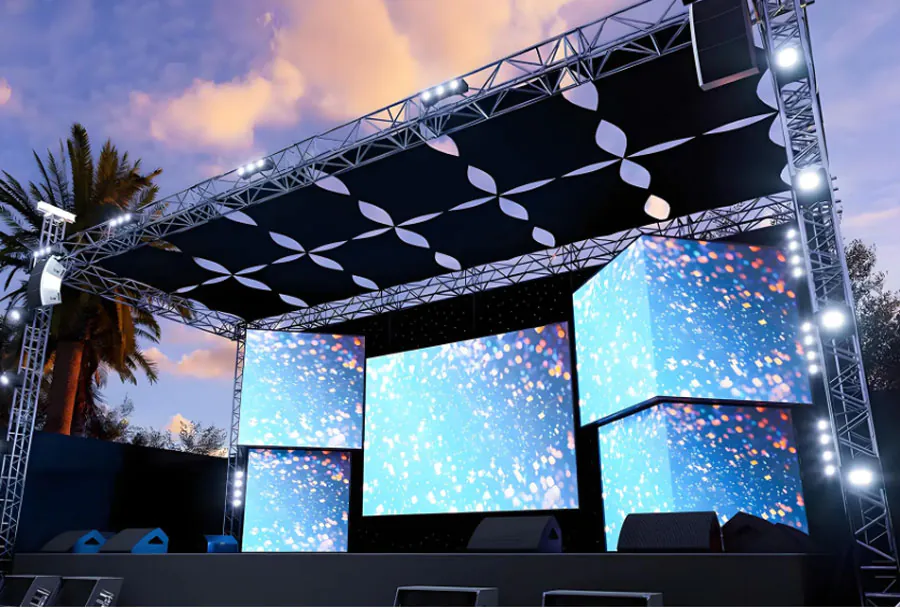
Outdoor LED screen rental in Chicago is a weather problem before it is a picture problem. A lakefront site can move from bright sun to sideways rain in twenty minutes, and a wall that was correctly specified at noon can be the wrong wall by the time the gates open. This page covers the specification, the permits and the build sequence that public events in the city actually require.
Table of Contents
- Why Outdoor Changes Everything
- Brightness: Reading the Sun, Not the Spec Sheet
- Wind Load, Ballast and Lakefront Builds
- Rain, IP Ratings and Processor Protection
- Venues and Public Sites Across the City
- Permits and Park District Rules
- Screen Types for Public Events
- What Ships From Stock
- Outdoor LED Screen Rental Costs in Chicago
- Power, Generators and Sound
- Build, Strike and Crowd Safety
- Cold-Weather and Off-Season Events
- Camera and Live Streaming Outdoors
- FAQ
Why Outdoor Changes Everything
Indoor work lets you control three variables: light, air and access. Outdoors you control none of them. An outdoor LED screen rental quote that ignores this reads as a price, and the price is usually the least important line.
Start with the envelope. Daylight at 12:00 on a lakefront is roughly 100,000 lux, and an 800-nit indoor wall disappears in it. Wind at 30 mph turns a 40-square-metre wall into a sail. Rain reaches the processor and the cable entries long before it reaches the LEDs, which means the IP rating of the cabinet is not the same question as the water protection of the system.
Then add the site. A park build has turf, no permanent power and a noise curfew. A pier build has wind, salt spray and a fixed strike time. A street build has pedestrians, traffic control and a permit boundary that the screen cannot cross.
The specification follows from those three lines. Everything else on this page is detail around them.
Brightness: Reading the Sun, Not the Spec Sheet
Brightness is measured in nits. The useful question is not how bright the panel can go, but how much light is falling on it during the worst hour of the event.
| Condition | Target brightness | Notes |
|---|---|---|
| Evening or overcast | 2,000–3,500 nits | Lower draw, longer LED life |
| Indirect daylight, covered stage | 4,000–5,000 nits | Common festival setup |
| Direct sun, open park | 5,000–7,000 nits | Standard for public daytime events |
| Direct sun, reflective ground or water | 7,000–8,000+ nits | Lakefront and concrete plazas |
Automatic brightness control matters as much as peak output. A wall that stays at 7,000 nits after sunset blinds the front rows and drains the generator; one that steps down to 2,500 keeps both the audience and the power budget comfortable.
Overspecifying brightness is not free. Higher output raises heat, power draw and cost per square metre, and it shortens the working life of the LEDs. Specify for the worst hour, not the worst imaginable hour.
Wind Load, Ballast and Lakefront Builds
Wind is the structural question in Chicago, and the answer is never the cabinet alone. A cabinet rated for outdoor use still fails if the frame holding it is not engineered for the load.
Two build methods cover most public events. Ground support uses base plates and ballast, with the ballast calculated against wind speed and wall height. Rigging uses truss and certified hardware, with the load transferred to a structure that has an engineer’s stamp.
Lakefront sites are their own category. Wind arrives uninterrupted across water, so a wall facing east at Navy Pier carries more load than the same wall inland. Ask for the design wind speed, not an adjective, and insist that the ballast figure appears in writing.
Stage roofs complicate the calculation, because a roof catches wind and transfers it into the same truss as the screen. When both are present, the structural plan should cover the combination rather than each element separately.
The practical rule: if the ballast is estimated on site by eye, the build is not engineered.
Rain, IP Ratings and Processor Protection
IP65 is the working standard for outdoor cabinets. The first digit covers dust, the second covers water jets, and together they handle rain, spray and hose-down cleaning. They do not cover submersion, and they do not cover the equipment feeding the screen.
Three items need separate protection. The processor and media server belong in a sealed rack or a weatherproof enclosure with ventilation. Cable entries need drip loops so water runs off rather than into the connector. Connectors themselves should be locked and, on exposed sites, wrapped.
Ground conditions matter too. A cabinet sitting in standing water after a storm is a warranty claim, so the base should lift the wall clear of puddles and drainage should be checked before the build.
Have a wet-weather sequence ready: which cabinets stay powered, which get covered, and who makes the call. An outdoor LED screen rental plan that treats rain as an emergency has already lost the argument with the weather.
Venues and Public Sites Across the City
Chicago’s public event sites differ enough that a single specification rarely fits all of them.
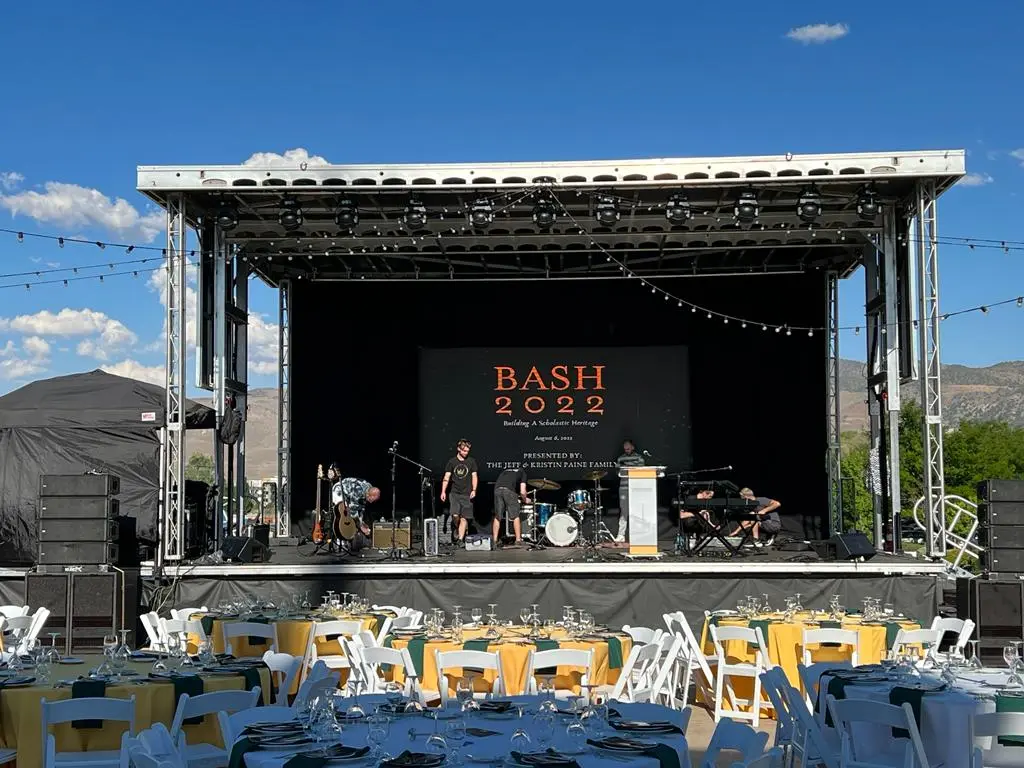
Grant Park hosts large music events on open turf with temporary infrastructure. Power comes from generators, access runs along service roads, and the park district controls the schedule. Walls here need high brightness, wind-rated ground support and a strike plan that clears the field quickly.
Millennium Park’s Jay Pritzker Pavilion pairs a fixed acoustic shell with open lawn. Screens are usually supplementary rather than primary, positioned for sightlines from the grass rather than the seats, and content needs to work at long distance.
Navy Pier combines Festival Hall, which behaves like an indoor venue, with outdoor terraces that behave like a coast. The transition between the two is where specification errors show up, because a wall built for the hall cannot simply be rolled outside.
Street activations in the Loop and on Michigan Avenue operate under different constraints again: pedestrian flow, loading windows, noise limits and a permit boundary that is measured in metres.
For each site, read the current venue or park district guide before the order. Choose Chicago maintains event guidance that points to the responsible agency.
Permits and Park District Rules
Public property in Chicago means a permit, and the permit process reviews structure before it reviews content. Start 8 to 12 weeks before the event.
Events in parks run through the Chicago Park District. Applications typically require a site plan, a structure description, an electrical plan and insurance naming the district. Screens mounted on towers or truss add a wind-load calculation to that list.
Street events involve a separate approval covering traffic control and the footprint of any structure on the public way. A wall that extends past the permitted boundary is a compliance problem regardless of how it is anchored.
Fire safety enters through the venue rather than the park. Anything hung above an occupied area needs documentation, and the fire marshal’s review follows the truss drawing, not the sales brochure.
Keep every approval in writing and carry copies to site. An inspector who cannot find the document on the day treats the structure as unapproved.
Screen Types for Public Events
Five configurations cover most Chicago public events, and each has a different cost and build profile.
| Type | Best for | Pitch | Daily rate reference |
|---|---|---|---|
| Mobile trailer screen | Community festivals, up to ~1,000 people | P6.25–P8 | $900–2,500 |
| Modular rigged wall | Concerts, 1,000–10,000 people | P3.9–P6.67 | $2,500–10,000 |
| High-brightness stadium wall | Large crowds, broadcast | P2.5–P3.9 | $8,000–25,000 |
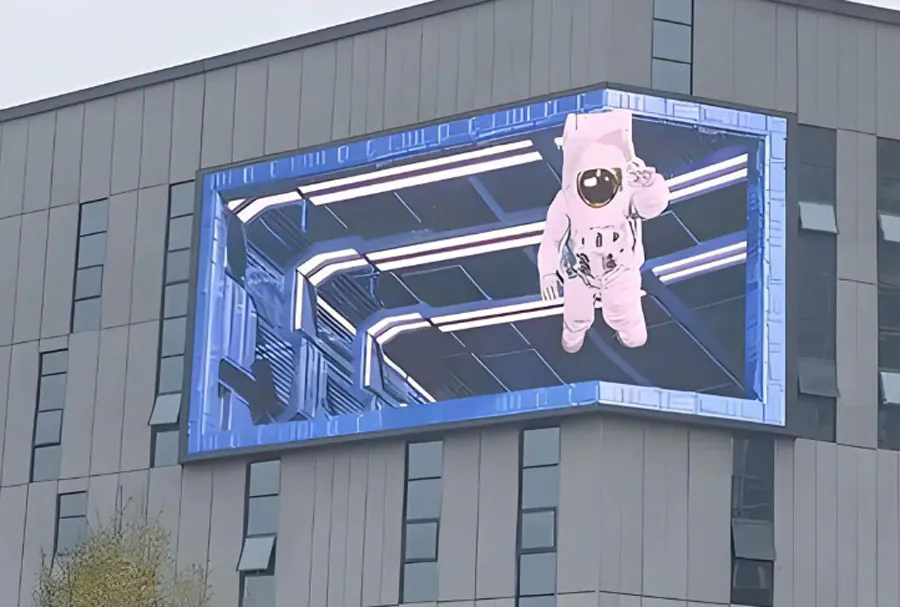
| Angular or multi-face build | Brand activations, stage design | P2.6–P6 | quoted per layout |
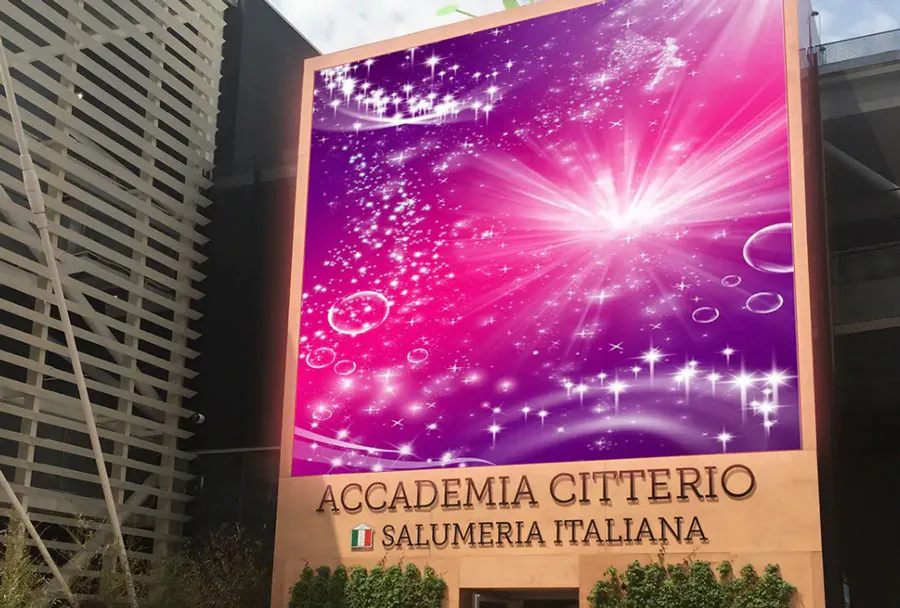
| Street-front display | Retail, wayfinding, sponsorship | P3.9–P6.67 | quoted per install |
Those daily rates belong to rental companies with trucks and crews. Our role sits upstream: we supply the cabinets those fleets buy, and we build them for the load-in they will actually face.
What Ships From Stock
We hold rental-relevant product in our Atlanta warehouse and name the lines rather than implying a full catalogue. The PQ series covers indoor rental at P2.6 in 500 by 500 mm and 500 by 1,000 mm cabinets. The IP-CT P2.5 cabinet, 640 by 480 mm, suits fixed indoor installs.
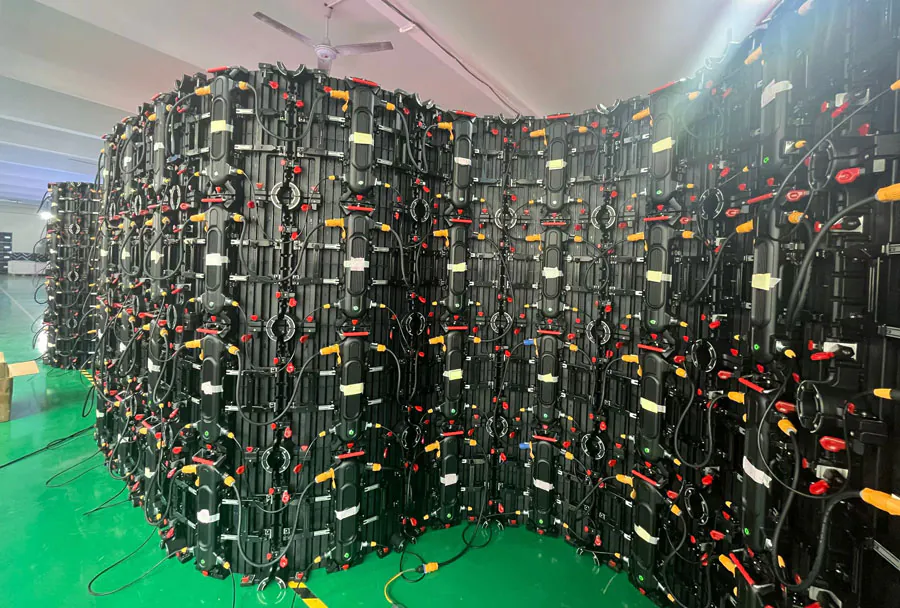
Outdoor cabinets and higher-brightness configurations are factory orders with a 15 to 20 day production lead time. That matters for a public event with a fixed date: an outdoor wall ordered three weeks out is a schedule risk, and we say so before the PO is signed.
Processors in stock include the NovaStar VX400, VX600 and VX1000 Pro. We do not claim a Chicago warehouse; everything ships from Atlanta.
Outdoor LED Screen Rental Costs in Chicago
Public event budgets move with four variables: wall area, pitch, brightness class and the structure holding it up. Structure is the line most first-time buyers underestimate.
A 30 by 15 foot outdoor wall at 5,000 to 7,000 nits sits in a different band from the same area indoors, because the LED package, the sealing and the power supply all change. Add ground support, ballast, wind calculation and a generator, and the equipment can be less than half the delivered cost.
Build and strike labour scales with site access. A park with turf protection and a long carry is slower than a loading dock, and a lakefront site with a hard strike time may need a larger crew for fewer hours.
Ask for three figures separately: equipment, structure and labour. A single number hides the variable that will change when the site does.
Power, Generators and Sound
Outdoor screens run on generators, and generator sizing follows the cabinet count. A rental cabinet averages roughly 95 W and peaks near 190 W; multiply by cabinet count, add twenty percent headroom, then size the generator for the whole site rather than the screen alone.
Audio usually shares the supply, and stage lighting draws more than the screen. A plan that sizes the generator from the screen specification alone will trip during the headline set.
Cable runs need protection across public ground. Matting, ramps and cable ramps are not optional where pedestrians walk, and a loose run becomes a trip hazard the moment the gates open.
Keep a spare circuit and a spare cable reel on site. The failure that stops a show is rarely the LED; it is the connector someone stepped on.
Build, Strike and Crowd Safety
Public events add a crowd dimension that private events do not. The screen has to stay up while people stand under it, which raises the bar for ballast, anchoring and inspection.
Build sequence works from the ground up: base and ballast, frame, cabinets, cabling, processor, test pattern, content. Test with a white field and a test pattern before the content load, because a dead cabinet is easier to find against white.
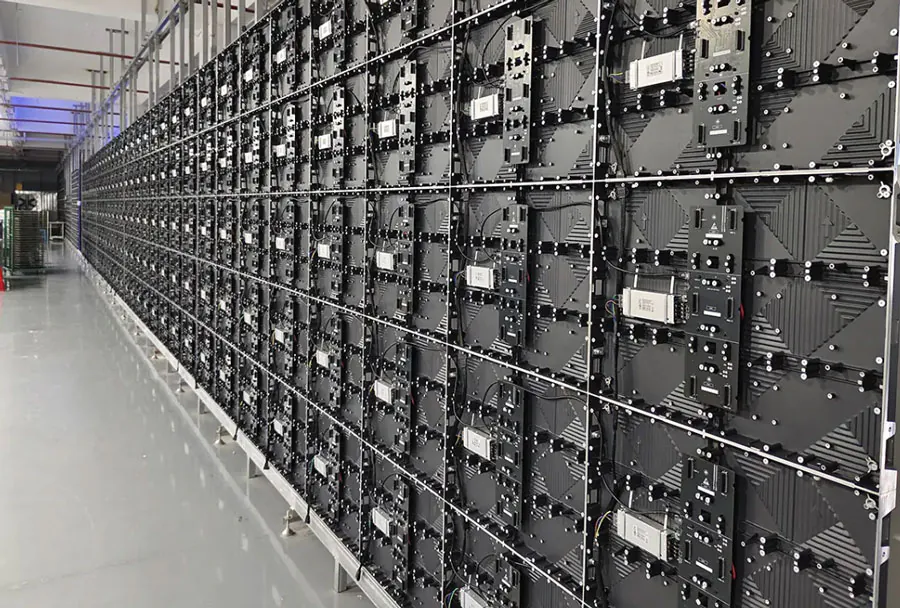
Strike follows the reverse order and starts earlier than most crews plan. A public site usually has a hard deadline, and a wall that is half dismantled at the deadline is a permit violation.
Assign one person to weather decisions for the day. That person watches the forecast, calls the cover sequence and decides on a shutdown. A committee deciding in the rain costs more than any cabinet.
Cold-Weather and Off-Season Events
Chicago’s outdoor season does not end in October. Holiday markets, winter festivals and New Year events run in temperatures that change how cabinets behave.
LED modules tolerate cold, but condensation is the risk. Keep cases closed until cabinets reach ambient temperature, then power in stages: processor, low-brightness white field, then content. Below about -10°C, avoid folding flexible ribbon cables and keep spares indoors.
Battery-backed processors and heated enclosures are worth the line item for events that run past midnight. A screen that fails at 11 p.m. in January does not get repaired before morning.
Camera and Live Streaming Outdoors
Daylight and LED walls interact badly on camera. A wall competing with the sun produces a background that clips to white, and a phone camera exaggerates the problem.
Three settings help. Raise refresh rate to 3,840 Hz or higher to remove banding. Lock the camera shutter to the wall’s refresh rather than the local mains frequency. And expose for the screen, then light the stage to match, because exposing for a face against a 7,000-nit wall leaves the wall blown out.
For a live stream, test the full chain on site in daylight and again after sunset. The two lighting conditions rarely share one camera setting.
FAQ
Can an LED wall run in Chicago rain?
Yes, with IP65 cabinets and protected electronics. The cabinet is rated for water jets; the processor, cable entries and connectors need separate protection. Standing water at the base is a failure waiting to happen.
How much wind can an outdoor LED wall take?
That depends on the structure, not the panel. Ground support with engineered ballast or truss with certified hardware carries a defined wind speed, and that figure belongs in writing before the build.
Do you supply outdoor cabinets from stock?
Outdoor and high-brightness configurations are factory orders with a 15 to 20 day production lead time. Indoor rental lines in the PQ and IP-CT series ship from our Atlanta warehouse.
What pitch works for a park festival?
P3.9 to P6.67 for audiences standing 10 to 25 metres away. Go finer only if the screen is filmed or the audience sits close; a coarser pitch reads the same from the back of a field and costs less.