Top Rated Outdoor LED Screen Rental Companies in Florida

Outdoor LED screen rental Florida buyers face a critical decision, and choosing the right company for event planners, marketers, sports venues, and municipalities starts with the same four questions.
This guide covers what defines “top-rated,” the five types of providers serving the state, a comparison table with typical day rates, the questions that separate a real production company from a broker, and the contract terms worth negotiating before a deposit. If you are buying cabinets rather than renting, see our rental LED screens supplied to Florida page instead.
Table of Contents
- What “Top Rated” Means for Outdoor LED Rentals
- Five Categories of Provider Serving Florida
- How to Evaluate and Vet a Rental Company
- Florida-Specific Operational Considerations
- Pricing Structure and What Affects Cost
- Checklist: Questions to Ask Potential Vendors
- Three Florida Scenarios
- Contract Terms Worth Negotiating
- Conclusion
What “Top Rated” Means for Outdoor LED Rentals
Performance and reliability
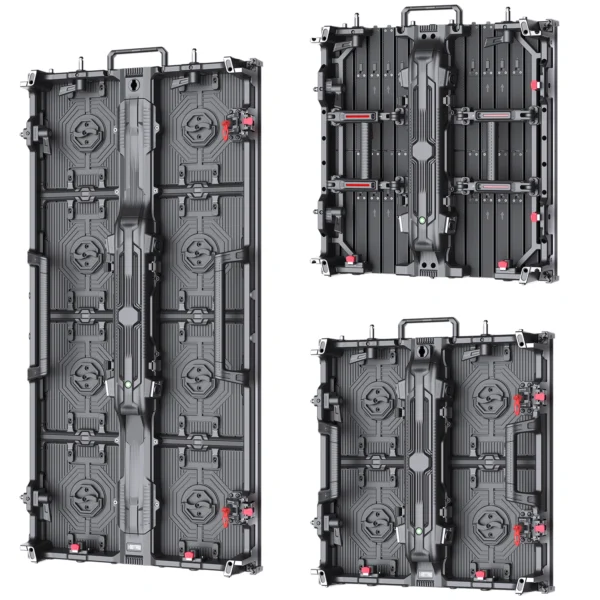
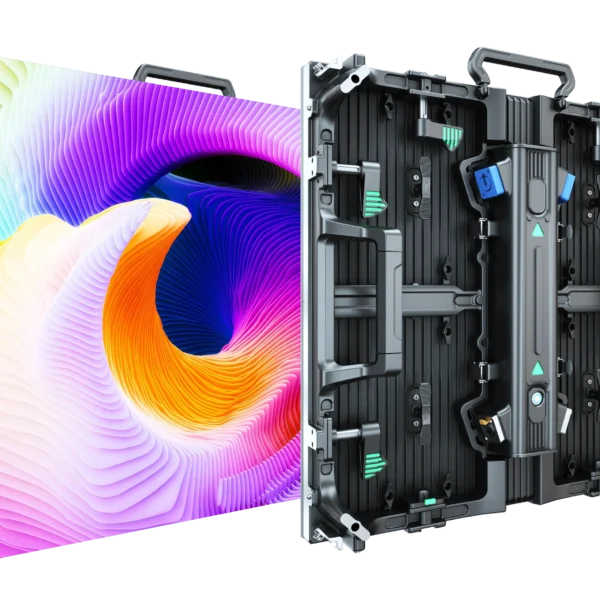
Top-rated companies deliver shows that work. That means high-brightness panels — typically 5,000–8,000 nits for daytime events — weatherproofing at IP65 or higher, stable mounting and rigging, and backup power and processing so a failed module does not become a dark rectangle in the middle of a broadcast.
Technical expertise and support
A leading provider supplies experienced crews, on-site setup and strike, redundancy plans and content management. The best teams integrate multiple inputs (broadcast, live camera, playback, graphics), handle live switching, and troubleshoot fast enough that the audience never notices.
Range of inventory and flexibility
Top companies carry a range of pixel pitches — P2.6–P6.0 is common outdoors — several cabinet sizes for custom builds, mobile LED trailers for rapid deployment, and enough inventory to serve a small community event and a multi-sided stadium install in the same month.
Permitting, logistics and local knowledge
A major differentiator in Florida is regulatory and environmental familiarity: hurricane-season planning, municipal permitting norms, beach and park restrictions, and venue labor rules. Top vendors assist with permits, traffic coordination and weather planning rather than leaving those to the client.
Outdoor LED screen rental Florida quotes should name the cabinet model and batch, not only the pitch.
Most outdoor LED screen rental Florida failures trace to structure and power, not to the panel.
Five Categories of Provider Serving Florida
Not every event needs the same type of provider. Florida’s market includes five broad categories, and each has strengths and trade-offs.
- National full-service production companies with Florida offices or frequent deployments
- Regional specialists focused on Florida markets and events
- Manufacturer-rental partners that rent their own panels and build custom solutions
- Mobile LED trailer specialists for fast setup at roadside or parking-lot events
- Budget and community rental houses serving schools, block parties and small municipalities
| Provider type | Strengths | Typical screen sizes | Best for | Estimated day rate |
|---|---|---|---|---|
| National full-service production | Extensive inventory, broadcast-grade technology, nationwide logistics | 12 × 8 ft up to 40 ft+ mega-walls | Large concerts, corporate events, stadium deployments | $2,500 – $20,000+ |
| Regional / Florida specialist | Local permitting knowledge, quick response, competitive pricing | 10 × 6 ft to 30 × 16 ft | Festivals, municipal events, mid-size sporting events | $1,200 – $8,000 |
| Manufacturer-rental partner | Direct access to current panels, custom builds, warranty support | Custom and modular builds | High-resolution installs, long-term rentals, creative builds | $1,500 – $12,000 |
| Mobile LED trailer specialist | Rapid deployment, integrated trailer systems, onboard power | 8 × 6 ft up to 20 × 11 ft | Drive-in movies, outdoor advertising, quick community events | $800 – $4,000 |
| Budget / community rental | Lower rates, simplified packages, local relationships | 6 × 4 ft to 16 × 9 ft | School events, block parties, small municipal needs | $400 – $2,000 |
Rates are representative and vary with pixel pitch, accessories, travel, setup complexity and seasonality. Florida’s winter peak and hurricane season affect both availability and price.
How to Evaluate and Vet a Rental Company
1. Verify technical specifications
Ask for pixel pitch, brightness in nits, refresh rate (at least 3,840Hz for broadcast-friendly work), IP rating and contrast. Confirm the controller and media-server platform, and whether the proposed system handles your content resolution. For coastal events, ask about anti-corrosion treatment, sealed connectors and desiccant systems.
2. Review crew experience and certifications
Request references and crew credentials. Rigging safety is critical outdoors: riggers should hold relevant certifications, and large installs should follow stamped engineering drawings. Ask whether the crew coordinates with staging, lighting and audio vendors.
3. Understand redundancy and backup plans
Top companies run redundant media servers, duplicate video paths, spare modules and power backup. Clarify what happens if a module fails mid-show, how fast a technician can replace it, and whether spares stay on site rather than in a warehouse.
4. Check inventory volume and scalability
For multi-day or multi-site events you need enough panels and spares. Ask for photos of comparable recent builds and for inventory numbers in the exact pitch you are renting, not a similar one.
5. Confirm insurance and contract terms
Confirm general liability and equipment insurance, and request certificates naming the venue as additional insured for public events. Review indemnity, cancellation, force majeure and weather-damage clauses, and establish who is responsible for permitting and site damage.
An outdoor LED screen rental Florida contract needs a weather clause naming who can stop the show.
Compare outdoor LED screen rental Florida suppliers on spare ratio and response time rather than venue lists.
What a Professional Setup Should Include
When one supplier quotes “setup included” and another uses the same phrase, the difference is usually in this list. Ask for each item in writing, because the crew scope — not the panel price — decides whether the wall is standing when the doors open.
- Site survey. Sightlines, audience flow, mounting options, obstructions and sun orientation through the event window.
- Engineering. Load calculations, anchor plan, maximum operating wind speed, and stamped drawings where the venue requires them.
- Power. Load calculated from maximum draw, distro position, phase requirement, generator sizing, and N+1 redundancy for live shows.
- Rigging. Ground-stack ballast and bracing, or flown truss with certified riggers and a hoist plan.
- Permits and insurance. Temporary structure, amplified sound, road or park closures, certificate of insurance, and inspection schedule.
- Crew and strike. On-site technician, spares on site, run-of-show contact, teardown window, and a post-event damage report.
A quote that names the screen but not the crew scope is an equipment price, not an event price. For the specification side of the same decision, see our Florida outdoor LED buyer’s guide.
Florida-Specific Operational Considerations
Heat, humidity and salt air. Florida’s climate punishes hardware: humidity, salt air, intense sun and tropical systems. Panels and connectors should be rated for coastal corrosion, with UV-stable finishes and sealed cable entries. For beach and waterfront events, ask whether hardware is rinsed with fresh water afterwards and whether panels are stored dry.
Storm season and shutdown authority. The Atlantic hurricane season runs from June 1 to November 30, and summer squalls arrive with little notice. The contract should name the wind speed that triggers a shutdown, who has authority to act, and how postponement, relocation and cancellation are priced. A clause that only addresses rain is not a storm plan.
Permits, traffic and venue rules. Every county and municipality sets its own requirements for temporary structures, amplified sound, generator placement and traffic control, and the differences between Miami-Dade, Broward, Palm Beach, Hillsborough and Orange County are material. Top providers either coordinate permits or supply permit-ready drawings and documentation.
Local labor and load-in windows. Major-market venues may require union crews or specific local contractors, which changes cost and scheduling. Florida venues also tend to enforce tight load-in windows through marshalling yards, and may charge drayage for materials handled on site.
Ask for the wind-load figure in writing, and the outdoor LED screen rental Florida shortlist narrows quickly.
Pricing Structure and What Affects Cost
Pricing is rarely a simple per-day screen fee. Typical line items are the screen (based on pitch and area), delivery, rigging and installation labor, power or generator rental, media server and processing, operator day rates, content mapping and testing, and travel for remote sites. Peak-season surcharges and last-minute bookings can raise the total substantially.
As a working range: a small mobile trailer screen for a weekend typically lands at $2,000–$8,000 all-in; a mid-size modular wall of 200–400 square feet, one day, at $6,000–$20,000; and a stadium-scale wall of 1,000+ square feet with full production at $25,000–$100,000+. Treat these as budget bands, not quotes, and ask for an itemized total for your exact brief.
Confirm whether setup and strike time fall inside the rental window. Overtime and late-removal penalties are the two lines most often discovered after the event. For a deeper breakdown, see our Florida outdoor LED cost guide.
Checklist: Questions to Ask Potential Vendors
- What pixel pitch, brightness and refresh rate are you proposing, at what calibrated level?
- What is the panel’s IP rating, and what coastal treatment is included?
- What is the rated wind limit for the proposed structure, and who calculates the anchors?
- Can you provide engineering drawings, a site-specific risk assessment and permit support?
- What redundancy exists for power, media servers and spare modules?
- Are spare panels, receiving cards and power supplies kept on site during the show?
- What are the crew’s certifications, and do you coordinate with staging, lighting and audio?
- What is your weather cancellation and emergency de-rig policy?
- Can you provide references and photos from comparable Florida events?
- What are the payment terms, cancellation penalties and force majeure clauses?
Three Florida Scenarios
Outdoor concert in Miami, night show
A national full-service or regional specialist with deep inventory is the safer choice. Even at night you need 3,000+ nits for stage visibility, top-tier processing and broadcast-grade refresh if the show will be streamed. Confirm audio and video sync so delay and pixel latency do not drift.
Beach film screening in the Panhandle
A mobile trailer or regional rental usually fits: rapid setup, lower cost and fewer crew. Choose P4–P6 for movie viewing distances, and prioritize waterproofing plus sand- and salt-resistant hardware. Confirm the post-event rinse and dry-storage routine.
Municipal watch party for a sports event
A community rental or regional specialist works if the screen is specified for daylight. Daytime visibility needs 6,000+ nits, and the plan should cover crowd control, generator placement and coordination with local authorities.
Contract Terms Worth Negotiating
- Detailed scope of work with responsibilities and deliverables named
- A Florida-specific weather and force majeure amendment
- Equipment, labor, transport and services separated in the quote
- Milestones: deposit, final payment, test day and strike
- A defined protocol for last-minute content changes
- Damage valuation per module, and who pays for water ingress
To verify a “top-rated” claim, read trade coverage and event recaps, ask production forums for referrals, request Florida references with event links, and inspect a recent local event in person where possible. Awards and star ratings are marketing; a crew that has run the same venue in the same month is evidence.
FAQ
How do I compare outdoor LED rental companies in Florida?
Compare cabinet model and batch, spare ratio, structural engineering, crew credentials and insurance, not just the daily rate.
What brightness works for a Florida outdoor event?
5,000 to 8,000 nits for direct sun. Covered stages can drop to 3,000 to 4,000 nits.
Do rental companies supply their own structure?
Most do for ground support and truss. Ask whether the wind-load calculation and ballast figure are included or quoted separately.
Conclusion
Selecting a top-rated outdoor LED screen rental company in Florida means prioritizing technical specifications, local operational knowledge, contractual protection and responsiveness. Whether you work with a national full-service provider, a Florida specialist, a manufacturer-rental partner, a trailer company or a budget house, the ability to manage weather, permits and content delivery will define the outcome.
Use the table and checklist above to compare options, and do not compromise on redundancy, certified rigging or clear responsibility for shutdown decisions. If you are building your own inventory instead of renting, the factory-direct supply from Atlantacovers stock, specification and delivery from Atlanta.
Florida business and event licensing runs through the Department of Business and Professional Regulation. See www.myfloridalicense.com for the current rules.
The state emergency management division publishes the storm guidance event teams follow. See www.floridadisaster.org for the current rules.