Outdoor LED Advertising Screen: How It Works, Specs and What to Check

Outdoor LED advertising screen visibility fails in daylight for reasons a datasheet never shows: a black level lifted by reflected sun, a viewing cone that narrows off-axis, or creative that looks fine as full white and dies as a dark brand background. Brightness alone cannot predict any of it.
This guide turns visibility into a field test you can repeat and defend: define the hardest daylight window, measure ambient light and screen luminance, test contrast from real audience positions, run the actual campaign files, and record everything against written pass criteria. Cabinets behind our outdoor LED display screen range follow the same test logic; structure and installation remain with your contractor.
Table of Contents
- 1. Why Advertised Nits Cannot Predict Daylight Visibility
- 2. Test Equipment and Setup
- 3. Measurement Procedure and Pass Criteria
- 4. Interpreting Results by Pixel Pitch
- 5. Glare, Reflections and Real Viewing Angles
- 6. Content Design and Real Campaign Files
- 7. Uniformity, Records and Acceptance Criteria
- 8. Corrective Steps When a Test Fails
- 9. Outdoor Deployment Notes
- 10. Frequently Asked Questions
- 11. Conclusion
Why Advertised Nits Cannot Predict Daylight Visibility
Daylight visibility depends on the viewing environment as much as on the screen. A NIST measurement method uses 6,000 lux as an example of outdoor diffuse illumination, yet cloud cover, reflections, orientation and time of day move that figure sharply.
That variability explains why a display looks crisp on installation day and washes out at noon. A measurement taken indoors cannot show how reflected sunlight lifts the black level, flattens color contrast, or narrows the usable viewing angle.
A valid field test therefore records four things together: ambient light, screen luminance, the test content, and the exact audience position. Any one of them missing turns a measurement into an opinion.
How to apply this: write the test conditions into the commissioning plan before the screen arrives, so the first sunny day becomes evidence rather than guesswork.
Test Equipment and Setup
Use two instruments, because they answer different questions. An outdoor LED advertising screen test needs a calibrated lux meter to record light falling on a surface, plus a luminance meter to record light leaving the screen toward a viewer. One without the other leaves half the story untold.
For ambient readings, mount the lux meter at the screen face and at the primary viewer position. A meter with min/max memory helps track passing clouds, and one foot-candle equals 10.764 lux if your site documents use older units.
For screen readings, choose a spot luminance meter with a narrow measurement angle, or an imaging colorimeter when you need a spatial map. Spot meters such as the Konica Minolta LS-150 use a one-degree angle and a range reaching roughly 1,000,000 cd/m², which covers daylight advertising levels.
Set up a fixed tripod position, note instrument model, serial number and calibration date, and lock the screen’s operating mode. Every later comparison depends on those constants staying fixed.
Bring a notebook or a tablet with a prepared form. Notes taken on site should include the time, the cloud state and any change in brightness setting, because a reading that loses its context cannot be compared with a later visit.
How to apply this: build a kit list and a one-page setup sheet before the first site visit.
Measurement Procedure and Pass Criteria
An outdoor LED advertising screen should be tested in the hardest daylight window rather than a convenient appointment. Visit the site first and note the screen’s compass orientation, direct-sun periods, nearby glass, metal, water and pale buildings, typical viewer approaches, and shadows cast by surrounding structures.
Do not assume noon is worst. A west-facing outdoor LED advertising screen often loses contrast in late afternoon, and a screen opposite a glass tower can catch reflected sun at a different hour entirely.
| Condition | What to record | Action to take |
|---|---|---|
| Direct sun | Peak lux | Test maximum output |
| Bright overcast | Diffuse lux | Check washed-out blacks |
| Partial shade | Lux range | Test auto-dimming |
| Reflected glare | Source direction | Change viewing angle |
| Cloud transition | Min/max lux | Check response time |
Warm the screen before measuring. NIST guidance notes that display warm-up can take 15 minutes to an hour or more and treats luminance changes well below 1 percent as stable. A screen reading 6,000 cd/m² at startup may settle lower once thermal management engages.
Then measure contrast: full white, then full black, without moving the instrument, and divide white by black. In daylight, ambient light lifts the black level and compresses that ratio, which is why dark-room figures cannot predict street performance.
Repeat the sequence at every vantage point that matters, and include the fastest realistic approach. A driver who sees the screen for three seconds needs a different proof from a pedestrian who stands in front of it for a minute.
Interpreting Results by Pixel Pitch
Pitch sets the distance at which an advertisement stays readable. For an outdoor LED advertising screen, a fine pitch packs more pixels into each square meter, so text holds together from close range, while a wide pitch suits a billboard read from hundreds of feet away.
Daylight raises the bar because contrast, not resolution, limits legibility first. A dense screen with a washed black level can read worse than a coarser screen with stronger contrast at the same distance.
Judge results against the real audience, not the closest possible viewer. Measure from the far edge of the reading zone and from the approach angle drivers or pedestrians actually use, then confirm the chosen pitch supports the smallest text in the campaign.
How to apply this: state the minimum legible character height and the farthest reading distance, then check both against measured contrast. For roadside billboards we supply the PO-T series outdoor billboard and confirm pitch against your measured viewing distance.
Glare, Reflections and Real Viewing Angles
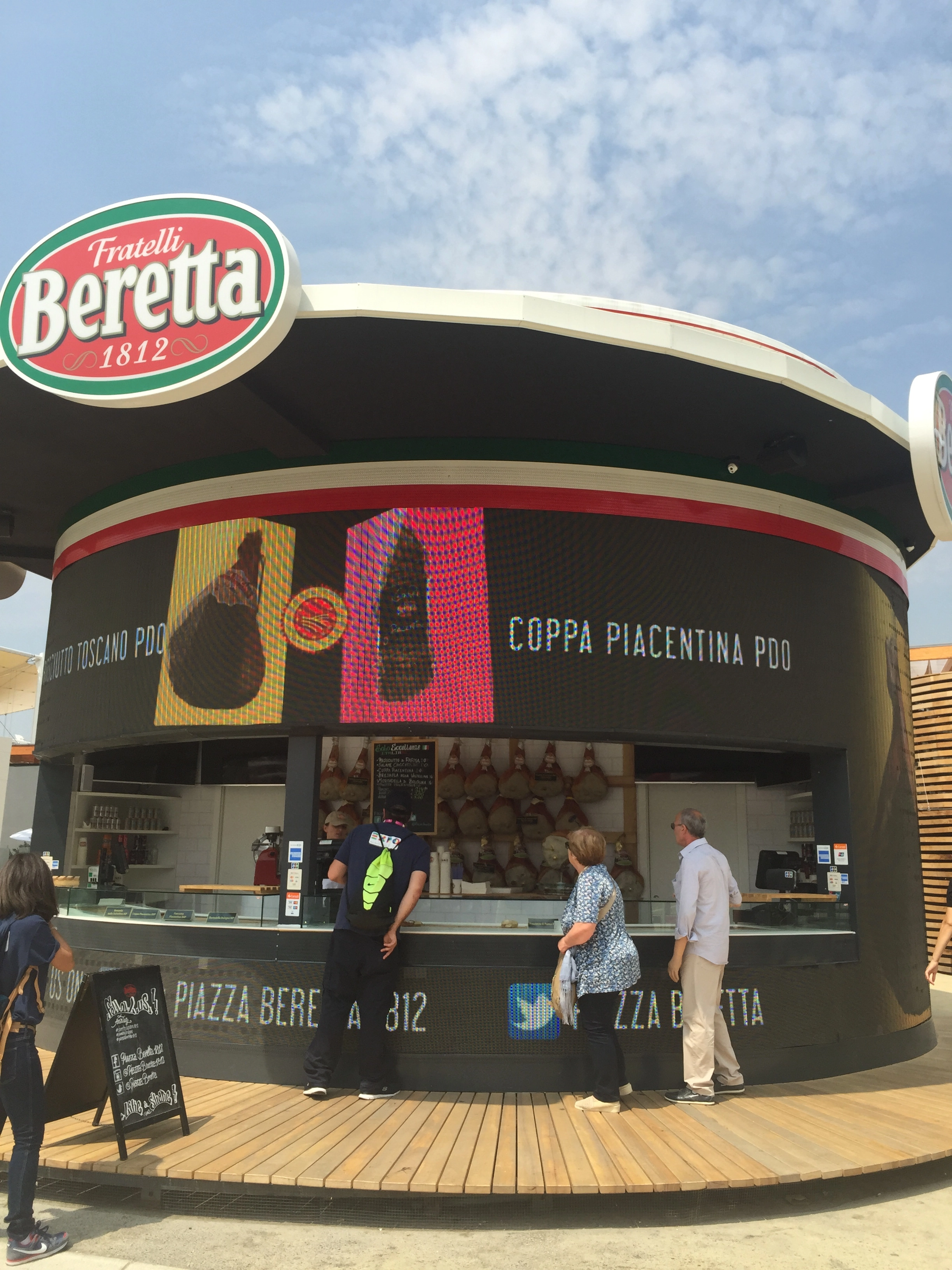
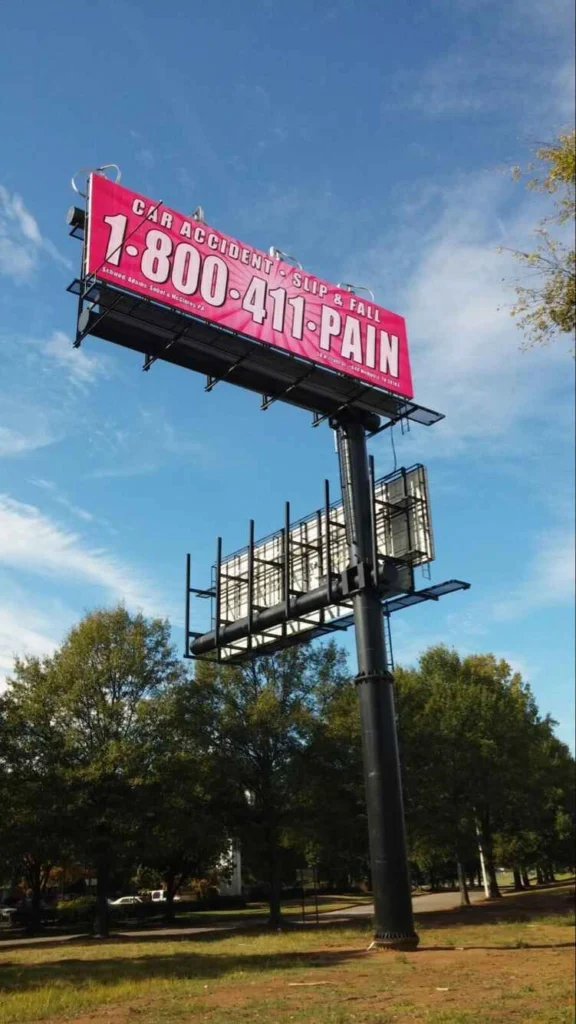
Reflected sunlight can outshine the image itself. Glass facades, water, polished metal and pale walls all bounce light onto a screen, and the effect changes with the sun’s path, so a single afternoon visit may miss the worst case.
Surface treatment helps, but it does not erase geometry. A matte or anti-reflective face reduces specular hot spots, yet the viewing cone still narrows as the eye moves off-axis.
Repeat white-and-black measurements from the center, left approach, right approach, and any raised or lowered audience position. NIST display evaluation guidance describes tracking luminance and color changes as the observation angle varies, which is exactly the test a street-side screen needs.
A roadside display can look strong head-on and fade as vehicles enter the main viewing zone at an angle. Sunlight striking the module surface or mask makes that decline steeper.
Check the cover material as well. Glossy masks and glass fronts return a sharper reflection than a matte surface, and a small hot spot near the center of the image can hide more of the message than a general haze.
How to apply this: mark each key viewpoint on a site plan and repeat the same content from every one.
Content Design and Real Campaign Files
Full white is a reference, not an advertisement. For an outdoor LED advertising screen, saturated colors, thin type, subtle gradients and dark brand backgrounds often deliver far lower usable contrast, especially once ambient light lifts the black level.
Build a test playlist that combines measurement patterns with the real campaign files. Include full white, full black, red, green and blue fields, mid-gray, fine white text on black, dark text on a bright background, and low-contrast photography.
Then run each creative at its scheduled dwell time from the farthest required position. Ask which assets remain readable, and note whether the processor crushes shadow detail or clips highlights.
A screen can pass a white test and still fail its actual job, because the brand background that looked elegant in the design studio disappears against a bright sky.
Dwell time changes the answer as well. A ten-second slot gives the eye less time to resolve thin type than a static poster, so judge each asset at the speed a passing viewer will actually see it.

How to apply this: approve creative on the installed screen, in daylight, not on a desktop monitor.
Uniformity, Records and Acceptance Criteria
Visibility for an outdoor LED advertising screen is a whole-screen property. Measure the center plus a grid covering corners and intermediate areas, because luminance and color differences grow across large displays and a single bright module can pull attention from the message.
For detailed mapping, an imaging colorimeter captures spatial luminance, contrast, uniformity and chromaticity as calibrated data, which suits engineering surveys better than an ordinary camera.
Your field record should list the screen model, pitch and dimensions, operating mode and brightness setting, test-pattern filenames, ambient lux at each reading, white, black and color luminance, observation distance and angle, weather, date and time, instrument details, and calibration date.
Treat photographs as context only. Phone and standard cameras adjust exposure, tone mapping, white balance and contrast between shots, so they can make a weak screen look readable or a good one look blown out.
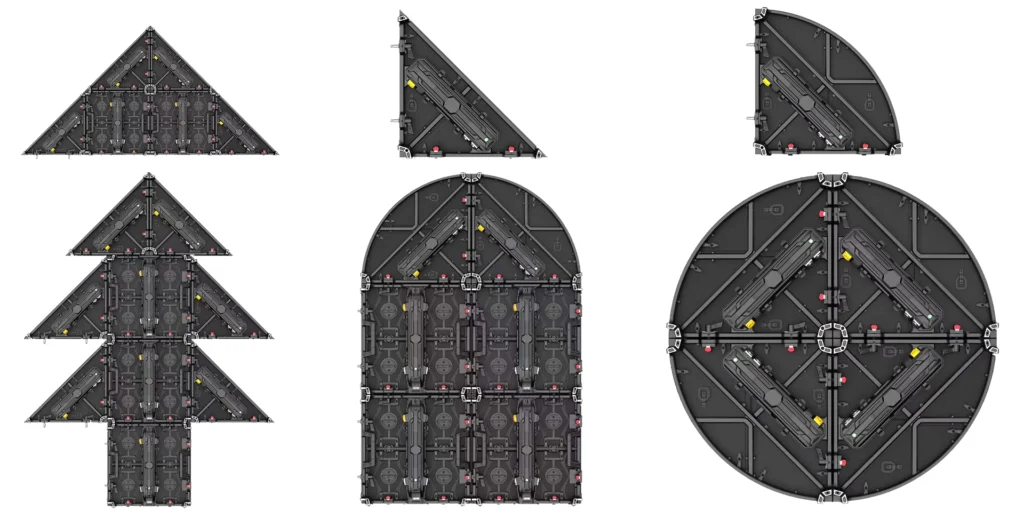
Color consistency deserves its own note. Modules from different production batches can sit side by side on a curved or shaped wall, and a slight white-point difference that looks acceptable indoors becomes a visible stripe under a clear sky.
How to apply this: attach the completed record to the commissioning certificate and keep the original files.
Corrective Steps When a Test Fails
Diagnose before adjusting. If contrast fails only at one hour, check sun angle and reflection geometry first; if it fails all day, check brightness settings, module uniformity and content contrast.
If the screen dims during the test, review thermal behavior and automatic brightness control, then confirm the sensor reading matches a handheld lux meter. A sensor mounted in shade or facing a wall can hold the screen at the wrong level all afternoon.
If only certain creative fails, fix content before hardware: raise text weight, simplify backgrounds and increase contrast. Then repeat the same measurements from the same positions, because a changed viewpoint invalidates the comparison.
How to apply this: record the cause, the change and the re-test result in one line, then attach it to the acceptance file.
Outdoor Deployment Notes
Daytime performance and nighttime compliance are separate tests for an outdoor LED advertising screen. A local permit may limit light above ambient after dark, while daylight readability needs its own threshold; meeting one proves nothing about the other.
Adverse weather belongs in the plan too. Rain adds reflections, and fog or haze cuts distance contrast even when screen luminance stays unchanged, so establish a clear-day baseline first and repeat critical checks in locally common weather.
For rental and event screens, test the assembled wall rather than individual cabinets: seams, mixed module batches, processor settings and uniformity after installation all change what the audience sees.
Once the wall is live, match the brightness schedule to the light. A daytime setting left unchanged after sunset creates glare complaints and wastes power, while an aggressive night schedule that never lifts for an overcast morning leaves the message unreadable.
How to apply this: define required viewpoints, content, weather windows, methods and retest steps in the contract before delivery.
Frequently Asked Questions
Can I verify LED screen visibility with a smartphone camera?
A phone documents the site but cannot provide the primary measurement. Automatic exposure, HDR processing and tone mapping make a weak screen look readable or a good one look overexposed. Use calibrated instruments for pass-or-fail readings and keep phone images as supporting records.
How should I test a screen during rain, fog or haze?
Treat bad weather as a separate condition, not a replacement for clear-day testing. Rain adds reflections, while fog and haze reduce distance contrast. Establish the clear-day baseline first, then repeat the critical long-distance checks in the weather your site actually gets.
What belongs in a rental LED screen acceptance test?
Test the assembled wall, not the cabinet datasheet. Check seams, mixed module batches, power limits, processor settings and uniformity after installation, then state the test time, content files, viewer positions, minimum run period and remedy process in the rental agreement.
Can a drone inspect an elevated LED billboard?
A drone helps find damaged modules, shadows and surface contamination, but it cannot replace calibrated readings from the audience position. Its exposure and geometry differ from those of drivers and pedestrians, so use footage for maintenance and measure visibility from approved ground locations.
Why does a screen pass the white test but fail with advertisements?
Full white drives all three channels hard, while real creative uses dark backgrounds, narrow lettering and low-luminance colors. Content processing can also crush shadows or clip highlights. Always include real campaign files, especially small disclaimers and subtle color differences.
Conclusion
Visibility is a measured property of the site, the screen and the content together. Record the environment, measure luminance after warm-up, test contrast from every audience approach, and judge the real campaign files rather than a white field.
Before you approve a screen, identify its hardest daylight window, prepare a controlled playlist, and schedule readings from the positions your audience actually uses. Written acceptance criteria turn those readings into a decision that survives a dispute.
Related Articles
High-brightness outdoor LED display energy-saving solutions
Curved LED DJ booth design: cabinet angles, seam alignment and viewing