Stage LED Screen Rental in Atlanta:TW VISION

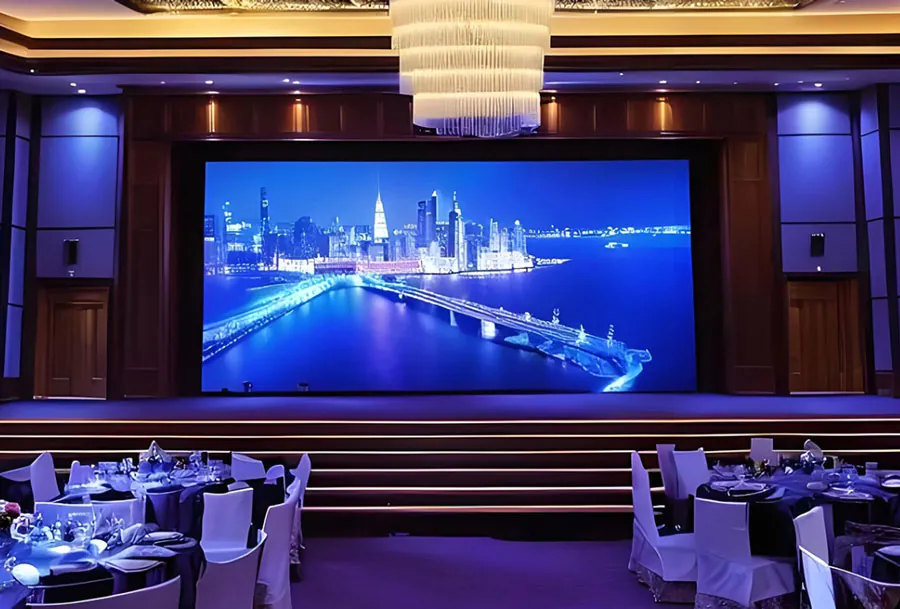
Stage LED screen rental Atlanta planning starts with the screen’s job on stage, not with the biggest wall in the catalogue. If you want your next event to feel polished, memorable, and visually immersive, choosing the right display solution is one of the smartest moves you can make. From concerts and conferences to weddings, trade shows, and sporting events, large-format LED visuals can transform a stage into the centerpiece of the experience. This guide covers what to expect, how to plan, and what matters most when comparing options.
Table of Contents
- 1. Why Stage LED Displays Elevate Events
- 2. What the Screen Adds to Each Event Type
- 3. Shapes a Stage Wall Can Take
- 4. Choosing a Rental Provider
- 5. Questions, Backup Plans and Venue Fit
- 6. Planning the Setup
- 7. Content, Control and Cameras
- 8. Timelines, Power and Logistics
- 9. Event Types That Benefit Most
- 10. Common Uses by Event Category
- 11. Built for Touring and Multi-City Runs
- 12. Stock in Our Atlanta Warehouse
- FAQ
- Conclusion
1. Why Stage LED Displays Elevate Events
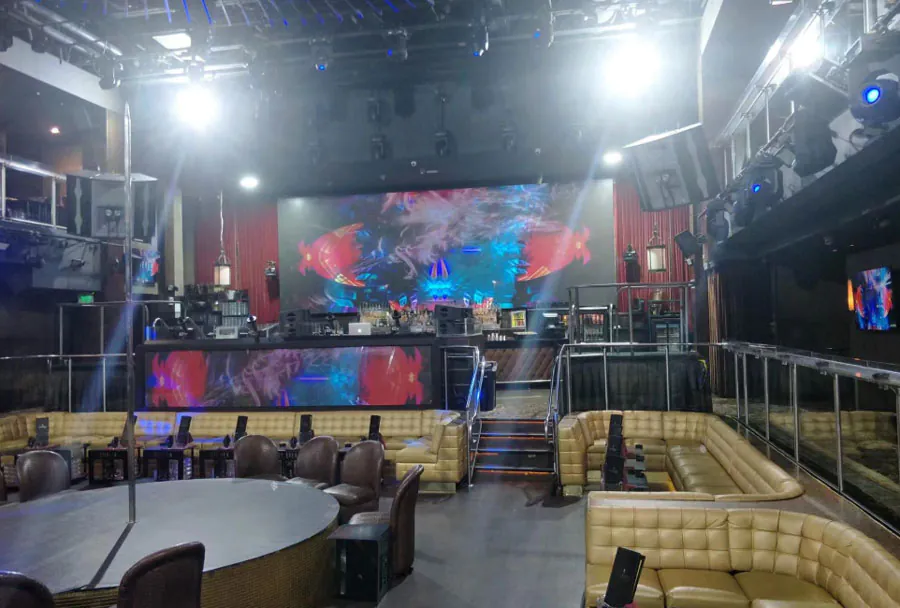
Modern event production is all about attention, clarity, and impact. A high-quality LED display gives you all three. Unlike projection, LED screens stay bright in indoor and outdoor environments, maintain strong visibility from different angles, and can be configured in many sizes and aspect ratios. That flexibility matters in a city like Atlanta, where venues range from intimate ballrooms to large convention halls and open-air spaces.
A well-planned display setup does more than show slides or sponsor logos. It can support live camera feeds, speaker presentations, motion graphics, countdown timers, sponsor rotations, and social media content. In other words, the screen turns static stage design into a dynamic communication tool that supports both aesthetics and function.
Another reason LED screens are so effective is audience behavior. Today’s attendees expect visual storytelling. They are used to high-resolution screens on phones, tablets, and TVs, so a stage without strong visuals can feel flat by comparison. A well-sized LED wall helps maintain attention, reinforces your messaging, and improves the overall energy in the room. If your goal is to make an event feel premium, the screen is no longer a background feature; it is part of the experience.
A stage LED screen rental Atlanta order should start with the camera crop, because the screen has to look correct in the ten-foot shot.
Stage LED screen rental Atlanta builds that skip a spare cabinet count lose time at changeover.
2. What the Screen Adds to Each Event Type
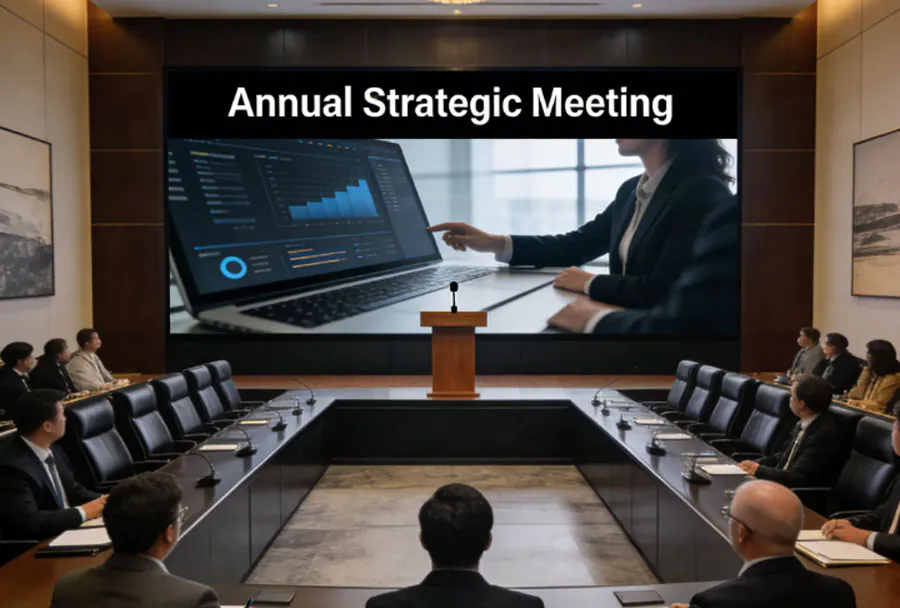
For event planners, the biggest advantage is adaptability. One display can serve a corporate keynote on Monday, a gala on Wednesday, and a live performance on Friday. That makes rental a practical option for organizations that want professional results without investing in equipment they will only use occasionally. You also gain access to current display technology, technical support, and configuration options that match the needs of the venue and the audience size.
What the screen contributes changes with the event:
– Corporate events benefit from branding consistency and speaker visibility.
– Concerts gain a high-energy backdrop for live performance content.
– Weddings and galas can feature elegant slideshows and custom motion design.
– Trade shows can use screens to attract foot traffic and explain products.
– Sports watch parties and fan events can display live action and sponsor content.
The key is matching the screen to the story you want to tell. That is why careful planning matters just as much as the display itself.
3. Shapes a Stage Wall Can Take
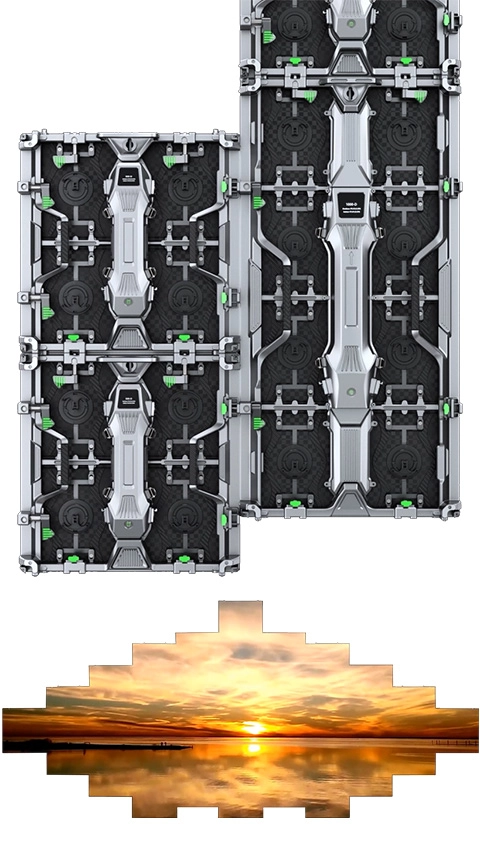
Once pitch and size are settled, the geometry decides whether the screen reads as a backdrop or as part of the set.
– A transparent backdrop for fashion shows and layered sets, so the scenery behind stays visible.
– A floor screen that dancers perform on, or that lights a product from below at a launch.
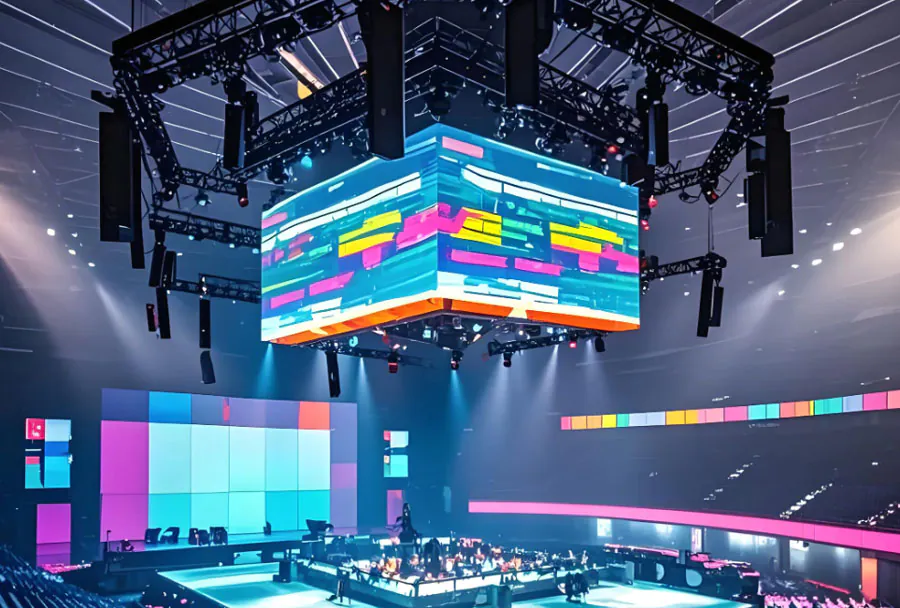
– An overhead canopy or a 360-degree wrap that puts the audience inside the image.
– An arch, wing or geometric frame built from the same cabinets, so the screen and the stage structure are one object.
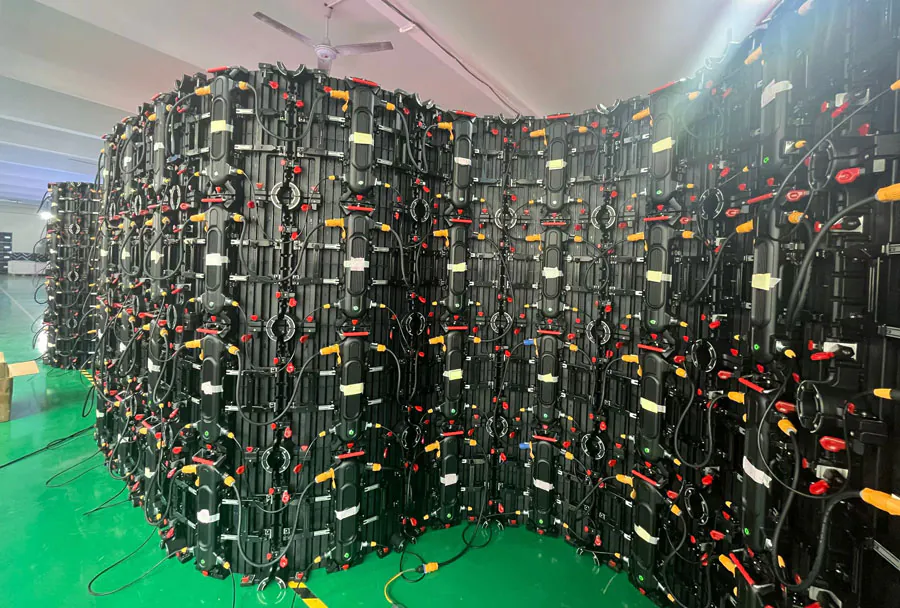
– Curved and flexible sections that follow a set piece instead of sitting flat against it.
Each of these changes rigging, power and content mapping, so they belong in the first conversation rather than the week before load-in. A wall built as one object needs structure designed for it, not a standard ground-stack frame with cabinets bolted around the outside.
4. Choosing a Rental Provider
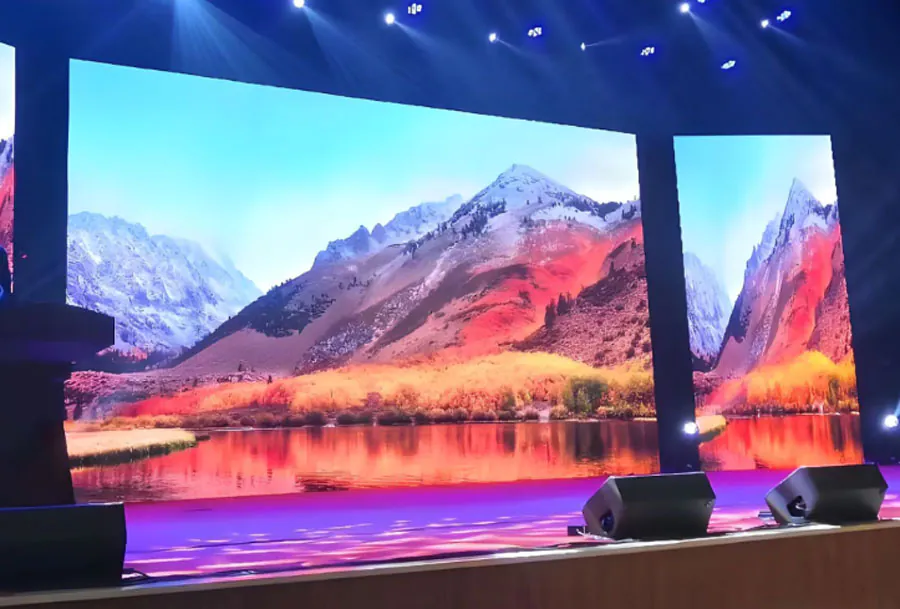
Not all rental providers offer the same level of quality, support, or flexibility. The best choice is not simply the cheapest quote. It is the company that can balance technical reliability, venue fit, responsive communication, and show-day service. When evaluating a provider, start with the basics: screen resolution, pixel pitch, brightness, panel condition, and the experience of the technical crew.
A smaller pixel pitch generally means a sharper image at closer viewing distances. For keynote stages, conferences, and live camera displays, that detail can make a noticeable difference. Brightness is equally important, especially for daytime events or spaces with strong ambient lighting. If you are comparing proposals, ask for the exact specs rather than relying on generic promises.
A stage LED screen rental Atlanta proposal should also include strong pre-production support. The best providers help you understand sightlines, screen placement, power needs, rigging options, and content format requirements before the event day arrives. That planning phase reduces surprises and keeps your production running smoothly.
5. Questions, Backup Plans and Venue Fit
Ask about backup procedures before the show, not during it. What happens if a cable fails, a panel goes down, or a media file does not load properly? A working answer names the spares kit that travels with the wall: spare panels, a spare receiving card, a power supply and the data cables for that cabinet type, plus redundancy in the power and data paths so one failed link does not darken a column. On-site technicians and a written escalation contact are part of the same answer.
Venue familiarity decides how much of that plan survives load-in. Atlanta spaces each impose their own constraints: ceiling height, dock access, rigging limits, electrical capacity. A provider who has built in the Fox Theatre, State Farm Arena, Mercedes-Benz Stadium, the Georgia World Congress Center, The Eastern, Lakewood Amphitheatre and the Piedmont Park festival grounds knows which constraint actually bites, and can size the wall from the room rather than from a template.
Questions worth asking in writing:
– What pixel pitch do you recommend for my audience distance?
– Is the screen intended for indoor, outdoor, or hybrid use?
– Will you provide rigging, truss, or ground support if needed?
– How much setup and teardown time should I expect?
– Do you handle content playback, switchers, and live inputs?
– What on-site technical support is included?
Detailed, practical answers suggest a team that understands production from the audience’s side. Photos and video of previous builds give you a more honest sense of scale and brightness than a proposal document.
6. Planning the Setup
A successful screen rental starts long before load-in day. The most important planning step is defining the screen’s role in the event. Will it support a speaker, create a scenic backdrop, show live cameras, or display sponsor content? The answer influences size, aspect ratio, resolution, and content design.
Once the goal is clear, think through viewing distance. A large crowd in a ballroom may need a different setup than a seated conference audience or a standing concert floor. If the screen is too small, guests at the back will struggle to see. If it is too large or poorly positioned, it may dominate the stage or obstruct sightlines. Balance is the goal.
The display design should also align with the event flow, which is where most stage LED screen rental Atlanta budgets are won or lost. A conference may need a main screen flanked by two side panels, while a concert may benefit from a wide central wall and dynamic live-feed visuals. A product launch might prioritize clean branding and high-resolution video loops. In each case, the screen should support the agenda rather than compete with it.
7. Content, Control and Cameras
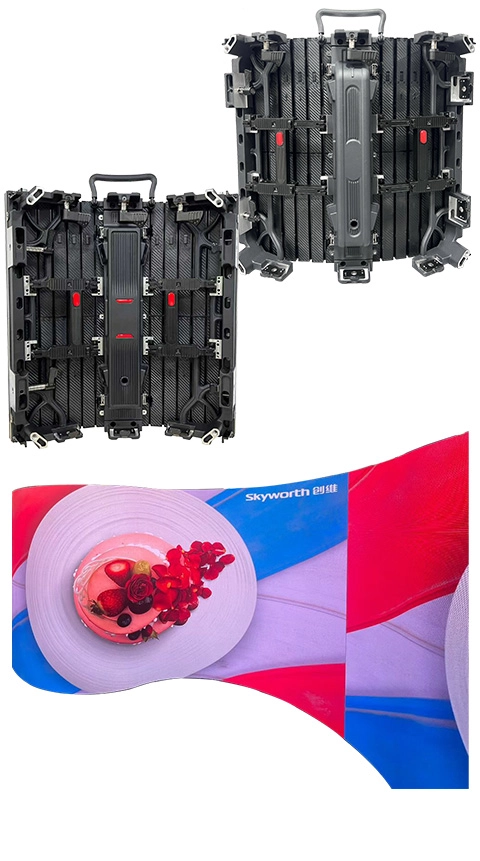
Content preparation is a critical step that teams routinely underestimate. Fonts must be large enough to read from the back of the room, graphics optimized for the exact screen dimensions, videos encoded at the right resolution and format, and slides stripped of excess text. If the content is not built for LED delivery, even the best hardware underperforms.
Ask which media server or playback platform the wall will run on — Disguise, Hippotizer and Resolume are the names that come up most — and whether the mapping can be handed to your operator as a file. Compatibility decided late becomes a rehearsal problem.
If the show uses IMAG, three numbers matter more than size: refresh rate at 3,840 Hz or higher so cameras do not band, processing latency low enough to keep lip sync, and genlock so wall and cameras share timing. Ask for the calibrated brightness and grayscale performance too, because a wall that looks fine to the eye can still crush shadow detail on a broadcast feed.
Deliver masters at native resolution, progressive scan, with a cue sheet and safe areas for lower thirds. Most productions want files 48–72 hours before load-in so they can be tested and re-encoded.
8. Timelines, Power and Logistics
Production timelines decide whether problems are found in pre-production or in front of an audience. Your creative team and the provider should coordinate early enough to test every asset, fix formatting issues, colour problems, and aspect ratio mismatches, and rehearse the switching between sources.
Power and logistics should never be an afterthought. Large displays need electrical planning, cable management, and safe installation. Depending on the venue you may also coordinate with building management, in-house AV, or union labor rules. A provider experienced in Atlanta venues can resolve those details before they become expensive delays.
A simple planning checklist:
– Confirm the event goal and screen purpose.
– Measure the stage and identify sightline issues.
– Estimate audience size and typical viewing distance.
– Match content size and resolution to the display.
– Review power, rigging, and venue restrictions early.
– Schedule a technical rehearsal whenever possible.
Handled in advance, the screen becomes an asset instead of a stress point. You spend less time troubleshooting and more time on the guest experience.
9. Event Types That Benefit Most
Different events use LED screens in different ways, but the value is consistent: better visibility, stronger branding, and a more professional atmosphere. Corporate events are among the most common users of stage LED screen rental Atlanta suppliers, because they depend on clear communication. Keynotes, executive announcements, sales meetings, and awards ceremonies all benefit from visuals that reinforce the message.
Concerts and live performances are another natural fit. Music events use LED walls for artist branding, lyric visuals, live camera shots, animated backdrops, and transitions between acts. In these settings, the screen drives emotion and energy, making the performance feel larger than life.
Weddings and private celebrations are increasingly visual. Couples use screens for montage videos, live ceremony feeds, monograms, and reception entertainment. For galas, the same display supports donor recognition, auction items, and branding that matches the tone of the evening.
Trade shows and expos use screens for traffic. A bright, well-designed display attracts visitors from across a convention floor; once they stop, it explains a product, runs a demo, or invites them to speak with a sales representative. In a crowded hall, placement decides whether the wall works.
Sports and fan events create shared viewing. Whether it is a watch party, a pep rally, or a community celebration, one large screen keeps the audience following the action together — an effect smaller monitors cannot reproduce.
10. Common Uses by Event Category
– Corporate: presentations, branding, live streaming, executive messages.
– Entertainment: concerts, festivals, talent shows, nightlife events.
– Theatre: scenic backdrops that change from forest to cityscape between scenes.
– Broadcast and esports: sponsor rotations, live stats and bracket graphics that read on camera.
– Social: weddings, galas, birthdays, and anniversary celebrations.
– Marketing: product launches with a floor screen under the reveal, roadshows, and expo booths.
– Community: school events, fundraisers, and civic gatherings.
When planned correctly, the screen does more than display information. It shapes the rhythm of the event itself, guiding attention from one moment to the next.
11. Built for Touring and Multi-City Runs
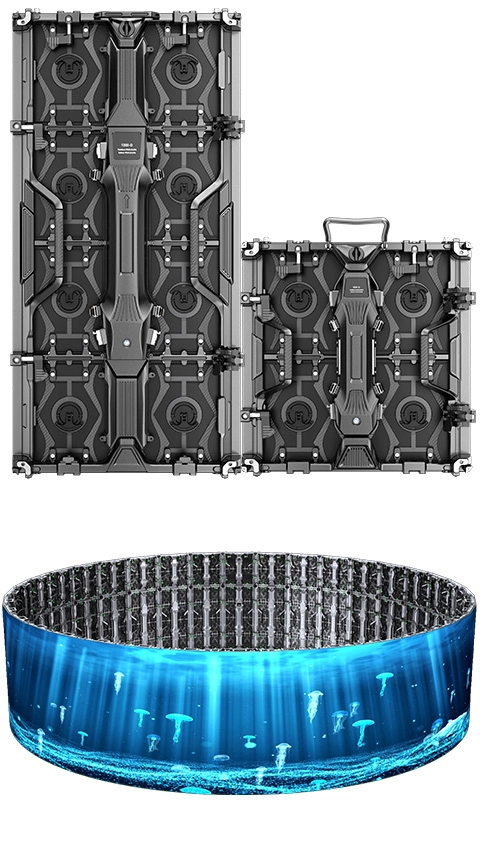
A wall that travels is judged differently from one that hangs in the same room for a season. It is loaded, trucked, unloaded and rebuilt on a deadline, often in a different climate each week, and it has to look identical on night one and night thirty.
Cabinet construction. Aluminium alloy cabinets keep weight down for handling and freight while staying rigid. Reinforced corners, secure locks and IP-rated sealing are what survive a touring calendar, not a datasheet adjective.
Module protection. Hard-coated or resin-shielded modules resist the knocks that come from cases, truss and stage assembly. This is the difference between a rental module and an installed one.
Thermal management. Quiet, efficient cooling protects pixel life and prevents colour shift during a long show under hot stage lighting.
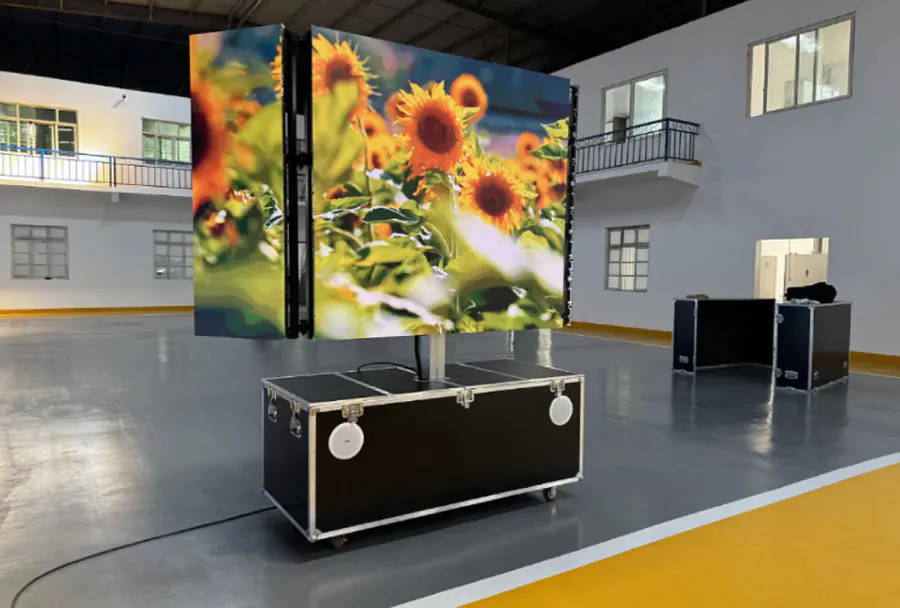
The spares kit travels. Spare panels, a receiving card, a power supply and the right data cables ship with the tour, so a technician fixes a fault on site rather than waiting for a courier.
Atlanta as a routing node. The airport, the interstate pattern and the venue density make the city a practical place to start, service or re-stock a run.
Continuity of specification. The real risk on a long run is mixing production batches. Confirm that a replacement order matches the original batch, scan mode and calibration files, or the new cabinets will read slightly different under camera.
12. Stock in Our Atlanta Warehouse
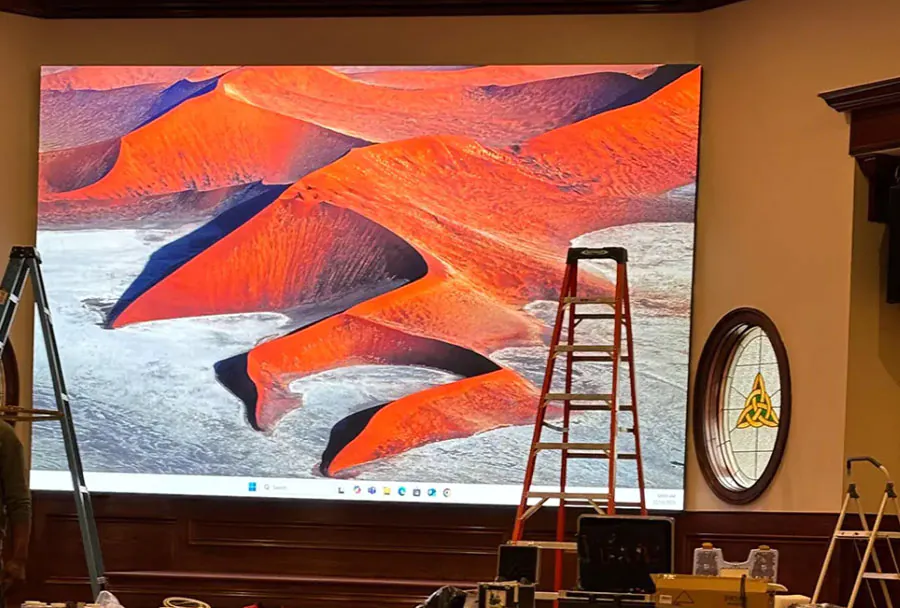
What is on the floor. The Atlanta warehouse holds the PQ P2.6 in 500×500 and 500×1000 mm, the LP-H P1.86 folding poster, the P1.86 all-in-one podium at 960 × 480 mm, the IP-CT P2.5 in 640×480 mm, and NovaStar VX400, VX600 and VX1000 Pro processors. Stage builds that need P1.953, P2.604, P2.976 or P3.91 indoor, or P2.9 and P3.9 outdoor, are factory order at 15–20 days plus freight. Flight cases, spare modules, receiving cards and power supplies can be added to the same order.
For stage LED screen rental Atlanta buyers working to a date, three things follow. A confirmed stock order can be collected the same day. A replacement module is a drive across town rather than a shipping wait. And a test build can be arranged here before a fleet or tour order is placed.
Orders ship from a single production batch, so pitch, scan mode and calibration stay consistent when a run is topped up. For dates outside Georgia, the same stock moves into Savannah, Birmingham, Chattanooga, Charlotte and Nashville on standard freight.
Stage LED Screen Rental Atlanta — FAQ
How far in advance should I book a screen rental?
Book as early as possible, especially during peak event seasons. For large productions or custom configurations, several weeks of lead time make planning easier. Stage rentals often require coordination with venue staff, content teams, and technical crews, so earlier booking reduces risk and gives you more options.
What is the difference between LED and projection?
LED displays are typically brighter, more flexible, and better for environments with variable lighting. Projection can still work well in some rooms, but it is more sensitive to ambient light and surface conditions. If visibility and impact are priorities, LED is the stronger choice.
Can the screen show live video and preloaded content?
Yes. Most modern systems support live camera feeds, presentations, motion graphics, and playback from media servers or laptops. A good rental team will test all input sources before the event begins.
What content format should I use?
The best format depends on the screen’s resolution and aspect ratio, but high-resolution files with clean, readable design perform best. Avoid small text and complex layouts, and ask your provider about export settings for slides, videos, and branding assets.
Do I need a technical rehearsal?
If possible, yes. A rehearsal lets speakers, operators, and production staff confirm timing, transitions, and playback, and gives you a chance to fix file issues before guests arrive.
Can we collect cabinets from the Atlanta warehouse?
On confirmed stock lines, yes — subject to the order being released and a collection slot booked. Custom pitches and factory-order series need production time instead.
Georgia resale certificates are issued by the Department of Revenue. See dor.georgia.gov for the current rules.
City permitting and event rules are published by the City of Atlanta. See www.atlantaga.gov for the current rules.
Conclusion
A strong visual presentation changes how an audience experiences an event. With the right planning, the right provider, and the right content, a simple stage becomes a polished focal point, without the expense of permanent ownership.
If you are organizing a conference, concert, gala, launch, or community event, define the screen’s purpose first, then match the display, content, and technical support to that goal. That sequence is what separates a smooth stage LED screen rental Atlanta project from one rebuilt on the morning of the show.
Buying cabinets instead of renting them is a different decision, covered in the LED screen rental Atlanta guide, which also explains will-call, delivery and resale paperwork. For outdoor builds, read the weatherproof outdoor LED screen guide.