

LED Mesh: Specs, Use Cases and Buying Guide

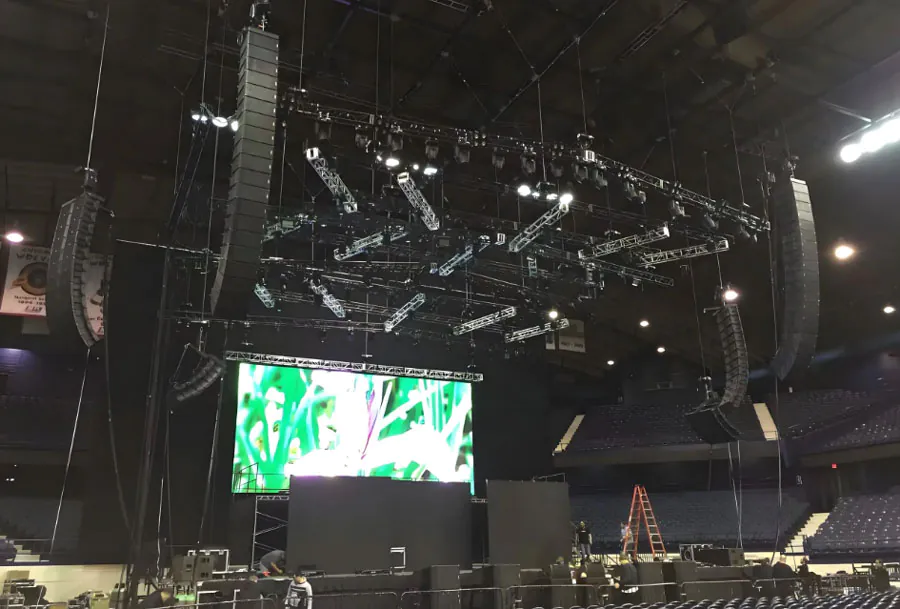
An LED mesh screen is a display built as an open grid rather than a solid panel: LED nodes sit on cables, bars or light frames, and the gaps between them let light, air and sightlines pass through. That single structural choice changes where the screen can go, what it weighs, and how it behaves in wind.
This guide covers the structure, the specifications that actually decide performance, and the deployment questions that follow: pitch and transparency, brightness in sun, sealing, heat, wind load, control and the mistakes that show up after installation. Each section ends with one action you can take before ordering. We manufacture mesh and cabinet products for our outdoor LED display screen range; structure and installation stay with your engineer and contractor.
Table of Contents
- 1. What an LED Mesh Screen Is and How It Works
- 2. Transparent Structure and Mounting Conditions
- 3. Pixel Pitch, Transparency and Viewing Distance
- 4. Brightness Requirements by Sunlight Condition
- 5. IP65 vs IP68 and Waterproof Construction
- 6. Thermal Management and Derating
- 7. Wind Load and Structural Fixing
- 8. Control, Content and Commissioning
- 9. Common Deployment Mistakes
- 10. How TW VISION Builds Mesh Systems
- 11. Frequently Asked Questions
- 12. Conclusion
What an LED Mesh Screen Is and How It Works
The product is a matrix of LED pixels mounted on a load-bearing frame, cable grid or strip system. A media server or controller addresses those pixels and feeds video, animation or graphics, exactly as it would to a conventional wall.
Because the emitting surface is open, three properties change together. Weight drops per square meter, daylight passes through, and wind finds a path instead of a flat face. Those three effects explain most of the applications where mesh wins.
Specifications that decide real performance are short: node spacing, brightness, transparency ratio, refresh rate, weight per square meter, IP rating, cabinet or panel dimensions, curve capability and control platform.
One consequence surprises first-time buyers. Resolution is a function of spacing, not of ambition. A wide-pitch grid viewed from 50 meters reads cleanly, while the same grid one meter from a shop window shows individual nodes.
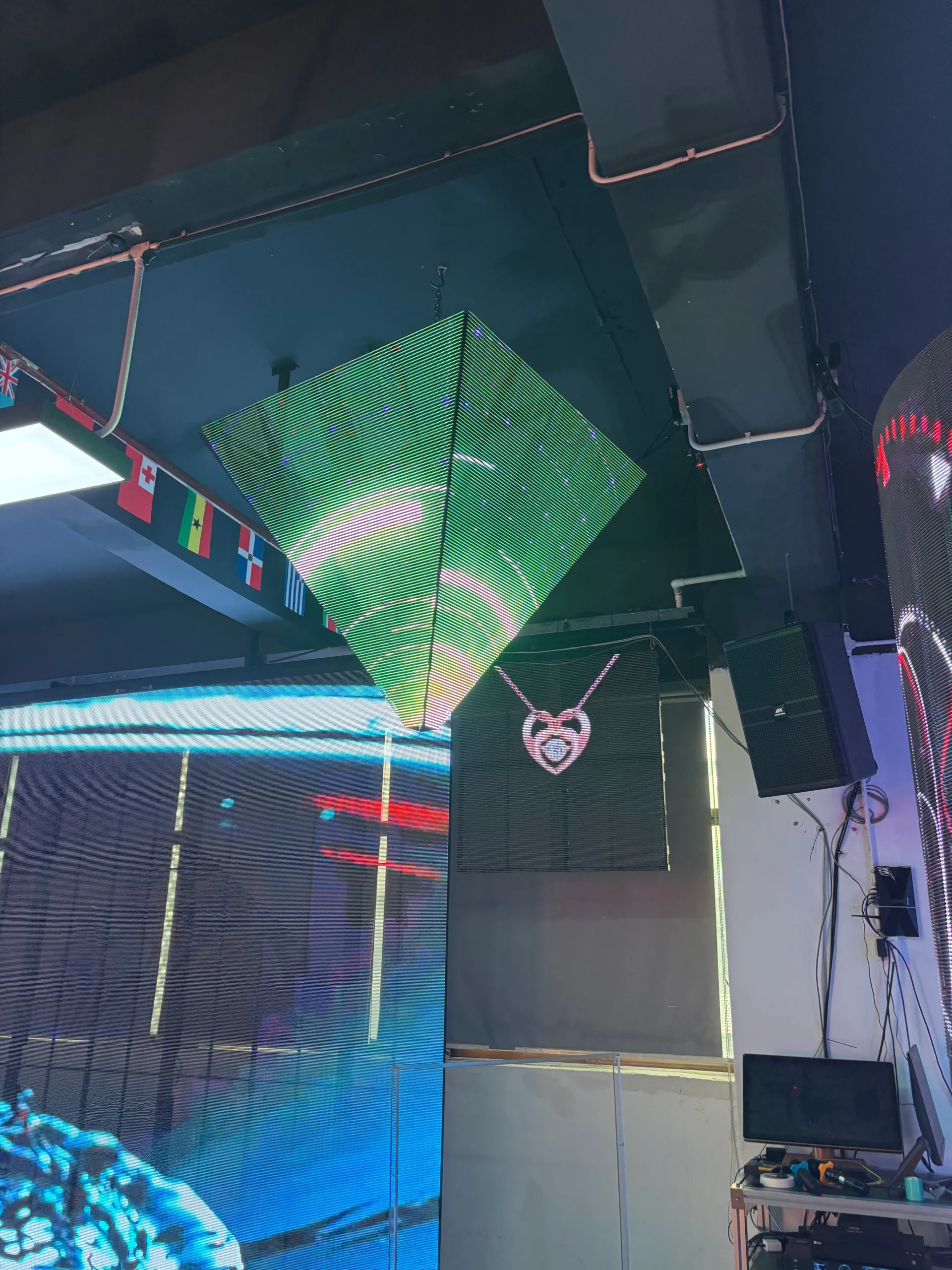
How to apply this: write down the closest and farthest viewer, the transparency target and the mounting surface, then let those three numbers filter the product list.
Transparent Structure and Mounting Conditions
Transparency is the reason most projects choose mesh, and it is also the first specification that gets oversold. The open area lets daylight and views through, yet each node still carries a housing, a cable and a mounting point, so the view is never completely clear.
Ask for the transparency figure with its measurement method, then check it against the visual goal. A glass storefront that must stay see-through needs a higher open ratio than a media facade that simply should not read as a black wall.
Mounting conditions decide feasibility. Cables can hang from a ceiling grid, frames can stand off a facade, and panels can wrap a column, but each option changes the load path and the service approach.
Weight per square meter is the number your engineer needs, together with anchor points, allowable deflection and the distance from the host structure. A mesh screen is lighter than a solid wall, not weightless, and a suspended atrium installation still needs a rated ceiling grid.
How to apply this: request the transparency figure, weight per square meter and mounting detail drawing before the structural review begins.
Pixel Pitch, Transparency and Viewing Distance
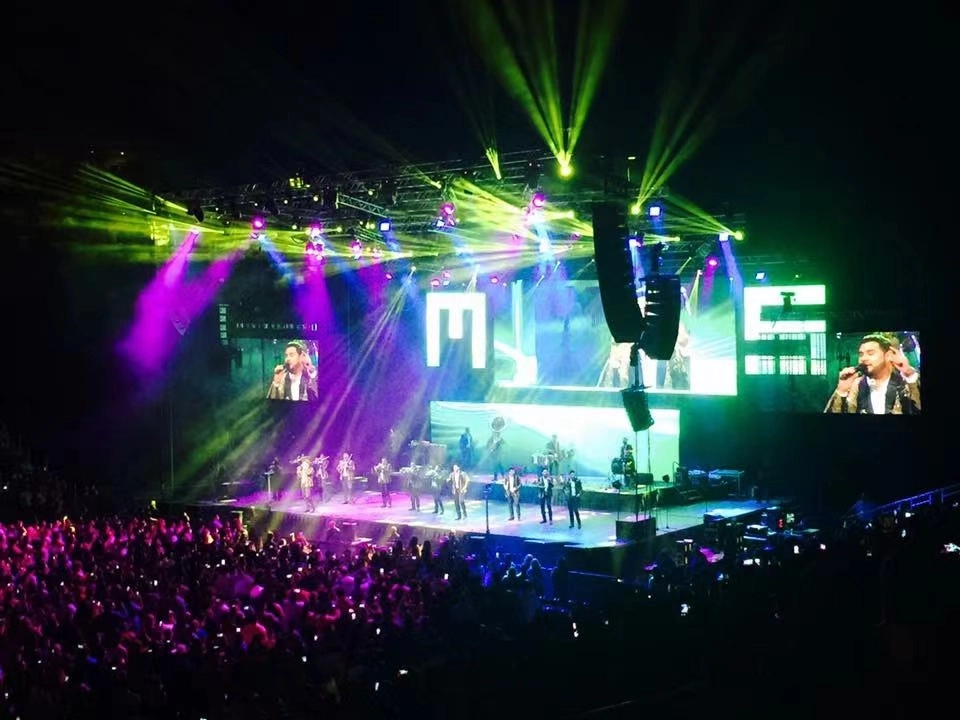
On an LED mesh screen, pitch and transparency pull against each other. Smaller spacing raises resolution and lowers the open area; a wider grid raises transparency and softens detail. Buyers who want both usually need a larger screen rather than a denser one.
| Setting | Typical pitch | Transparency | Action to take |
|---|---|---|---|
| Indoor retail window | Fine | High | Test from the pavement |
| Atrium or stage | Medium | Medium to high | Check rigging height |
| Facade media layer | Medium to wide | High | Confirm viewing distance |
| Large outdoor surface | Wide | Very high | Verify wind and load data |
Viewing distance sets the ceiling on useful resolution. As a starting rule, comfortable viewing distance in meters is roughly the pitch in millimeters, so a 20 mm grid suits viewers around 20 meters away.
Text is stricter than images. Logos and video survive a coarse grid because the eye fills gaps, while small type and fine logos disappear, which is why the content brief has to arrive before the pitch is fixed.
How to apply this: measure the nearest realistic viewer, divide the distance in meters by your candidate pitch, and check that the resulting number supports the smallest text in the campaign.
Brightness Requirements by Sunlight Condition
An open grid loses contrast faster than a solid panel because daylight reaches the surface from behind as well as in front. That is why outdoor mesh usually needs more output than an equivalent wall, not less. A controlled NIST outdoor display measurement method shows how much ambient illumination changes the result, which is why a figure quoted without a test condition cannot be compared.
Direct-sun facades commonly need 5,000 nits or more, while shaded atriums and window displays can work at far lower levels. Orientation decides the duty cycle: a south-facing surface holds high output for hours, and a north-facing one rarely does.
Peak and sustained figures differ. A cabinet that reads 6,000 nits cold may settle lower after thermal limiting engages, so request the sustained value at your design ambient temperature together with the test condition.
Automatic dimming protects neighbors and power budget. A schedule that drops to 20–30 percent after dark prevents glare complaints and keeps a permanent facade from becoming a light-trespass dispute.
How to apply this: request a photometric report at your site’s sun exposure, then confirm the dimming schedule in writing.
IP65 vs IP68 and Waterproof Construction
IEC 60529 rates the first digit for solids and the second for liquids: IP65 is dust-tight plus low-pressure water jets, IP66 adds powerful jets, IP67 covers temporary immersion, and IP68 covers continuous immersion under stated conditions.
An LED mesh product brings a specific sealing problem. A solid cabinet has one face to seal; a grid has hundreds of nodes, splices and cable entries, and water reaches the rear of the surface as easily as the front. Sealing quality therefore lives in the connectors, not only in the outer shell.
Ask for the tested configuration, the IP rating of the node and of the power and data connectors, and the drainage path for a horizontal or curved installation. A vertical facade sheds water by gravity, while a horizontal ceiling grid collects it.
Coastal sites add salt. Confirm coated hardware, stainless fasteners and a salt-spray result, because corrosion usually starts at a fastener or a connector housing rather than on the visible face.
How to apply this: request the IP report for the exact assembly and orientation, then compare it with your mounting angle.
Thermal Management and Derating
Heat decides lifetime and color stability, and an open grid changes the airflow story. Passive cooling works better than on a sealed cabinet because air moves through the surface, but drivers and power supplies still sit in enclosures that can trap heat.
Most outdoor products list an operating range near -20 °C to 50 °C. The useful document is the derating curve showing how much brightness the system holds as ambient temperature climbs, plus the location of temperature sensors and any active cooling.
A recessed facade, a canopy above the screen or a dense cable bundle can all cancel the airflow advantage. Dust accumulates on nodes and blocks the gaps over a season, which is why cleaning frequency belongs in the thermal plan.
How to apply this: request the derating table and confirm the claimed brightness at your design ambient temperature, not at 25 °C.
Wind Load and Structural Fixing
Wind load belongs to the structural engineer, and mesh only changes one variable: the open area reduces the effective pressure compared with a solid face. It does not remove the requirement for a calculation.
Local code, height, terrain and exposure category set the design pressure. Every LED mesh project still needs the supplier to provide weight, anchor layout, allowable loads and the mounting detail, all matching the delivered bill of materials.
Then plan the service route. A suspended grid needs access for node and cable replacement without dismantling a section, and a facade needs anchor inspection from a platform or rope access.
Outdoor erection and work at height follow the same safety rules as any structure. OSHA 29 CFR 1926.501 sets fall-protection requirements for unprotected edges at 6 feet (1.8 m) or more, and local rules may be stricter.
How to apply this: hand the weight schedule and mounting detail to your engineer before the support frame is fabricated.
Control, Content and Commissioning
An LED mesh surface is a media channel, so the control chain deserves the same scrutiny as the hardware. Confirm the processor, sending and receiving hardware, playback device, scheduling software and remote monitoring, then test them as one system.
Content designed for a solid 16:9 panel usually fails on a grid. Thin strokes break up, gradients band, and small type vanishes, while bold shapes, high contrast and slow motion read well through the gaps.
Commissioning should include a full-white run, node-level fault scan, brightness and color uniformity check, playback log verification and a soak test long enough to expose thermal faults. Record the mapping, firmware versions and calibration files.
How to apply this: run the real content at the real viewing distance before sign-off, then archive the configuration.
Common Deployment Mistakes
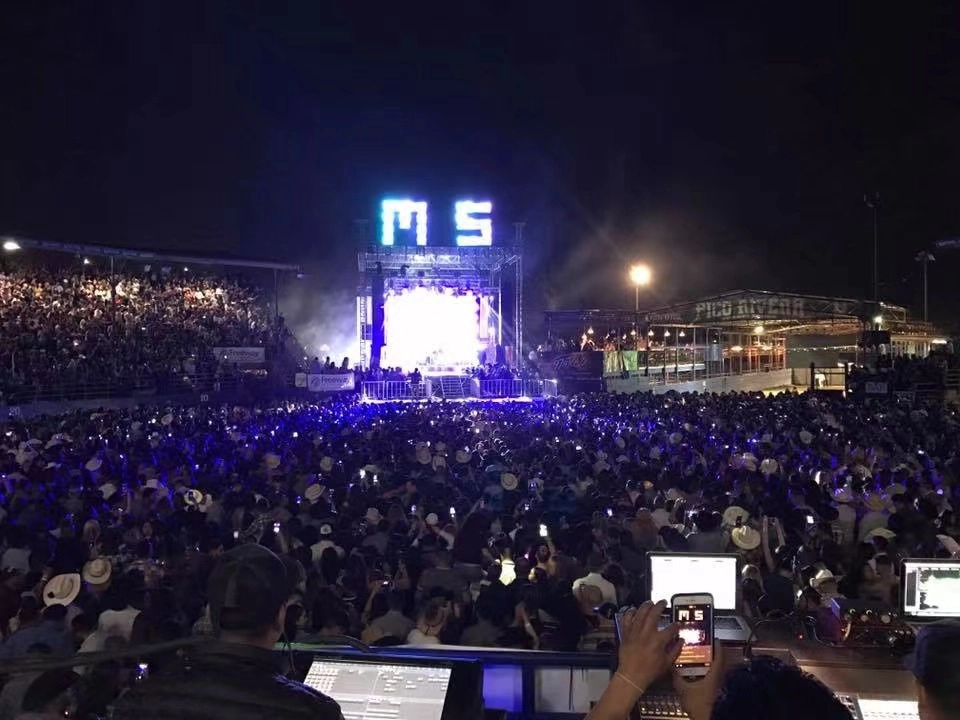
Most LED mesh failures trace back to five recurring errors, all of them visible before the order is placed.
Specifying pitch from a photo. Renders hide node spacing, so a facade that looks seamless in a visual can read as dots at the actual distance.
Ignoring rear-side water. Buyers check the front rating and forget that wind-driven rain reaches the back of a suspended grid.
Treating weight as zero. Mesh is lighter, not free, and a rated ceiling grid or facade anchor is still mandatory.
Reusing solid-panel content. Fine type and thin logos disappear; content has to be rebuilt for the grid.
Skipping the service plan. A beautiful installation with no access route becomes expensive the first time a node fails.
How to apply this: review these five points against the quotation and the content plan before release to production.
How TW VISION Builds Mesh Systems
TW VISION manufactures mesh and cabinet products to confirmed technical requirements. Production runs across an 8,000 m² facility with eight independent SMT lines, and every module completes 24 hours in an aging workshop before assembly.
Assembled units then run as a full wall in an approximately 2,000 m² aging area, and each batch completes a 24-hour aging test before shipment, with test video recorded for the client. Aging exposes node faults and brightness drift before a panel reaches a facade or a stage.
Irregular shapes and unusual proportions usually need a custom layout rather than a catalog size, which is why mesh projects benefit from an early custom size LED signage review against the measured opening.
Structural design, permits, power and installation remain with the owner, engineer and contractor. Our delivery file carries the drawings, weights and mounting data those parties need.
How to apply this: send the opening dimensions, viewing distances, transparency target and mounting type in one package.
Frequently Asked Questions
Is it suitable for outdoor use?
Yes, when it is specified for the exposure: outdoor brightness, sealed nodes and connectors, coated hardware and a rating for wind-driven rain. Confirm the IP report for the assembly and the mounting orientation, because rear-side water reaches a suspended grid.
How is mesh different from a transparent LED film or a solid panel?
A solid panel is opaque. Mesh is an open grid of nodes, so light and air pass between them, and its transparency comes from physical spacing rather than a perforated film. That is why mesh handles large facades and stage rigging with lower weight.
Can mesh display high-resolution video?
It can, but perceived resolution depends on spacing and distance. A fine grid serves close indoor viewers, while a wide grid suits long-distance facade and billboard viewing, where the eye fills the gaps.
What drives the cost of a mesh display?
Price follows area, pitch, transparency, brightness, sealing and control. A wide-pitch facade layer costs far less per square meter than a fine-pitch indoor mesh, so compare quotes at identical spacing and rating rather than by headline price.
How long does a mesh installation last?
With correct mounting, sealing and cleaning, installations run for many years. Life depends on operating temperature, coastal exposure, cleaning frequency and how quickly failed nodes are replaced, so a service plan matters as much as the hardware.
Can mesh be installed on a curved or irregular surface?
Often yes, using flexible strips, curved frames or cable layouts. Each variation adds connector and sealing complexity, so prototype one section and confirm the water path before building the full surface.
Conclusion
An LED mesh screen earns its place by trading pixel density for transparency, lower weight and wind pass-through. Decide the transparency target and the viewing distance first, then set pitch, brightness, sealing and the control chain against those numbers.
Request the IP report for the exact assembly, the derating table, the weight schedule and a commissioning record. When those four documents match your site, mesh becomes a predictable building material rather than a visual experiment.
Related Articles
PO-H series outdoor sign cabinet
Outdoor waterproof LED display: how to choose an all-weather LED screen
