

is lcd or led better: Is an LED video wall better than an LCD video wall

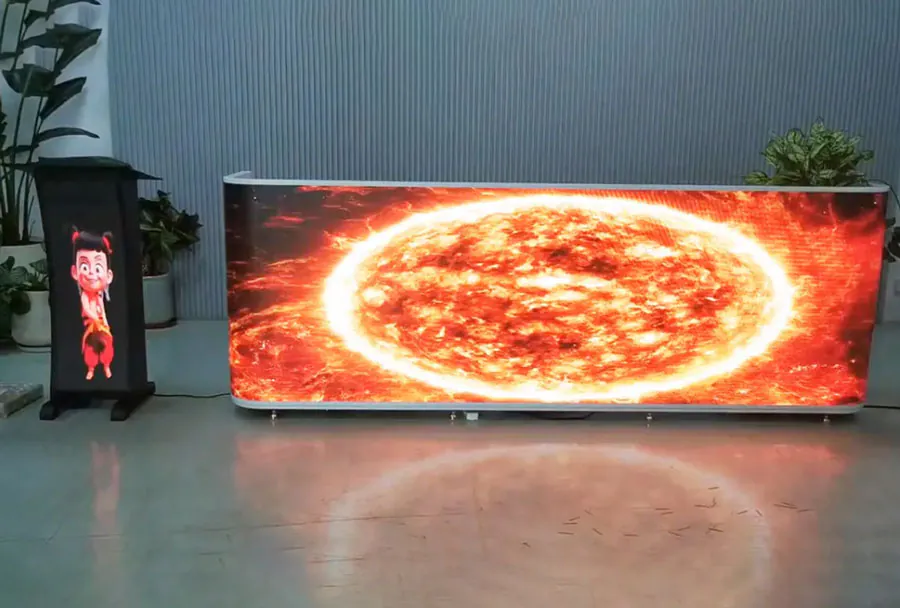
The short answer to is lcd or led better,Is an LED video wall better than an LCD video wall is that a direct-view LED video wall usually wins on brightness, seamlessness, and long-term durability, while an LCD video wall often wins on lower upfront cost and simple familiarity.
Table of Contents
- What the Terms Actually Mean: LCD vs LED Video Walls
- Brightness, Contrast, and Seams: Where LED Wins in Most Rooms
- Bezel Gaps, Viewing Distance, and Pixel Pitch: The Real Decision Drivers
- Pixel Pitch vs Bezel Gap
- Viewing Distance Formula
- Total Cost of Ownership: Why LED Is Not Always More Expensive
- Upfront vs Lifetime Cost
- Maintenance and Module Replacement
- When LCD Video Walls Are Still the Smarter Buy
- Do LED video walls use more electricity than LCD video walls?
- Can I install an LED video wall in a small conference room?
- Does an LED video wall require more calibration than LCD?
- Are LCD video walls easier to install than LED?
- What happens when an LED video wall pixel fails after warranty?
- Conclusion
What surprises many buyers is that most retail “LED TVs” are still LCD panels with LED backlights. A true LED video wall uses thousands of individual light-emitting diodes as pixels. That single difference drives nearly every practical decision you will make.
The problem is that sales sheets blur the two terms, so buyers compare the wrong specifications and pay for the wrong display. This guide covers the five real-world factors that decide whether an LED video wall or an LCD video wall is better for your room: terminology, brightness and seams, viewing distance, total cost, and room fit.

What the Terms Actually Mean: LCD vs LED Video Walls
When you ask Is an LED video wall better than an LCD video wall, most of the confusion starts with product naming. A commercial LCD video wall is a grid of LCD panels lit by LED backlights. Each panel has a physical bezel, so the wall needs special video processing to hide the gaps.
A direct-view LED video wall is a completely different technology. Thousands of self-emitting diodes form the image, so the wall is built from small modules that tile together without visible black borders. According to Samsung Business, direct-view LED technology is designed for large-format, seamless installations rather than the bezel-bound design of LCD video walls.
This distinction matters because a buyer who compares an “LED TV” to an “LCD video wall” can reach a false conclusion. If a spec sheet lists a bezel gap, you are looking at LCD, not direct-view LED.
The question is an LED video wall better than an LCD video wall only makes sense after you confirm which architecture each quote actually includes.
How to apply this: before comparing quotes, ask the vendor whether “LED” means LED-backlit LCD or direct-view LED. If the answer is not clear on the written quote, request the module type.
Brightness, Contrast, and Seams: Where LED Wins in Most Rooms
In high ambient light, direct-view LED panels commonly exceed 1,000 nits, while many commercial LCD video wall panels are specified in the 500–700 nit range on manufacturer sheets. That is why is lcd or led better,Is an LED video wall better than an LCD video wall often tilts toward LED in lobbies with floor-to-ceiling glass or direct sunlight.
Contrast also favors direct-view LED in dark content. LED modules can switch individual diodes off completely, so black areas stay black. LCD panels, even with local dimming, still allow some light to pass through the liquid-crystal layer. Over a multi-panel LCD wall, the seams between panels create another visual problem.
Consider a retail flagship where a wide seam crosses a model’s face in a beauty brand video. On an LCD wall, that line is a permanent interruption. On a direct-view LED wall, the same content appears continuous.
One practical tool is Signagelive, a digital signage platform that can push content to both LCD and LED video walls. It helps you test layouts before committing to hardware, so your software investment is not locked to one display type.
How to apply this: visit the physical room at the brightest time of day, then compare nits, contrast ratio, and bezel width side by side using the vendor’s own demo content.
| Factor | LCD video wall | Direct-view LED video wall | What to check |
|---|---|---|---|
| Brightness | Often 500–700 nits | Often 1,000+ nits | Peak ambient light in the room |
| Seam or bezel | 0.44–3.5 mm bezels common | No visible seams | Nearest viewer distance |
| Contrast | Panel-level local dimming | Per-pixel light control | Dark video or cinematic content |
| Pixel pitch | Fixed by panel resolution | P0.9–P2.5 common indoors | Minimum comfortable viewing distance |
| Lifespan rating | Many panels rated 50,000 hours | Many LED modules rated 100,000 hours | Warranty terms and replacement policy |
| Maintenance | Whole panel replacement | Module-level replacement | Service cost and downtime |

Bezel Gaps, Viewing Distance, and Pixel Pitch: The Real Decision Drivers
Pixel Pitch vs Bezel Gap
Pixel pitch is the distance between LED pixel centers. Fine-pitch LED modules in the P0.9–P2.5 range are common for indoor walls, while an LCD video wall’s equivalent constraint is the bezel line between panels. This is important because is lcd or led better,Is an LED video wall better than an LCD video wall changes with how close your viewers stand.
A common scenario: if the nearest viewer is 3 meters away, an ultra-narrow-bezel LCD wall may still show visible panel seams. A fine-pitch LED wall at the same distance can look like one continuous canvas.
How to apply this: use the rough 10x planning rule. Multiply the LED pixel pitch in millimeters by 10 to estimate a comfortable viewing distance in meters.
Viewing Distance Formula
For direct-view LED, the minimum comfortable viewing distance is often estimated as 1 meter per 1 mm of pixel pitch. For an LCD wall, bezel visibility can still be a problem even at farther distances when bright content crosses panel boundaries. Manufacturer planning guides recommend choosing pixel pitch after measuring the nearest viewer position, not after choosing a panel size.
This is why spec sheets alone do not answer is an LED video wall better than an LCD video wall. You have to measure the room before choosing either technology.
How to apply this: mark the closest chair, queue line, or sales counter where a person will stand, then give that measurement to the integrator before you accept any quote.
Total Cost of Ownership: Why LED Is Not Always More Expensive
Upfront vs Lifetime Cost
LED video walls can still cost more upfront than LCD, but the gap is not uniform. Budget ultra-narrow LCD panels can be cheaper per square meter initially, yet large LCD walls often require expensive video wall processors and carefully aligned mounts.
When you ask is an LED video wall better than an LCD video wall based only on purchase price, you ignore energy use, maintenance, and replacement costs.
Industry pricing guides show direct-view LED costs vary widely by pixel pitch. An outdoor-bright, fine-pitch LED wall is a premium product, while a coarser indoor LED wall may compete with high-end LCD walls on total project cost.
For content management, Signagelive supports both LCD and LED video walls, so you can pilot a small installation without reworking your software stack. For LED processing and calibration, a dedicated processor such as those from NovaStar is often listed as a separate line item in LED wall quotes.
How to apply this: request a five-year total cost quote that includes electricity, replacement modules or panels, calibration visits, and content software, not just the display hardware price.
Maintenance and Module Replacement
Direct-view LED walls are usually maintained at the module level. A failing section can be replaced without swapping the entire display, though it may need recalibration. LCD video walls typically require whole panel replacement, which can be simpler but more expensive over time.
The answer to is an LED video wall better than an LCD video wall often shifts when you account for downtime. In a 24/7 control room, faster module-level repair may justify a higher initial LED price.
How to apply this: ask the integrator for a written service-level agreement that states response time and spare-part availability for the exact panel or module model quoted.

When LCD Video Walls Are Still the Smarter Buy
LCD video walls still make sense in specific rooms. In a back-office mission control or a classroom where text-heavy spreadsheets dominate, LCD panels can deliver higher pixel density per dollar at close viewing distances.
When seams are acceptable and budget is tight, the answer to is an LED video wall better than an LCD video wall may be LCD.
LCD walls are also easier to source through established commercial display channels. Replacement panels are widely stocked, and many AV teams already know how to align and service them. For static signage with no video, the seamless advantage of LED may not matter enough to justify the cost.
Consider a university lecture hall that shows timetables and presentations. The content changes slowly, and most viewers sit far from the screen. A well-installed LCD video wall can work well at a lower price than a fine-pitch LED wall.
How to apply this: list your top three content types. If spreadsheets and text labels matter more than full-screen video or branding, compare LCD and LED side by side with those exact files loaded.
Frequently Asked Questions About is lcd or led better,Is an LED video wall better than an LCD video wall
Do LED video walls use more electricity than LCD video walls?
Direct-view LED can draw more power at full brightness because every diode can light up simultaneously. However, actual consumption varies by pitch, brightness setting, and content. For a dark video, LED may use less power than an LCD wall whose backlight stays on constantly.
When you ask is an LED video wall better than an LCD video wall, check the wattage per square meter at your planned brightness level, not just the panel count.
Can I install an LED video wall in a small conference room?
Yes, but small rooms create two pressures: heat and minimum viewing distance. A fine-pitch LED wall like P1.2 or smaller can look sharp from 2–3 meters, but it may require front-service access and extra cooling. In a tight room, an LCD wall may be simpler to service.
Still, is an LED video wall better than an LCD video wall depends on whether the room’s airflow and service clearance support an LED module design.

Does an LED video wall require more calibration than LCD?
Initially, yes. LED modules often need factory calibration, on-site calibration, and occasional color correction to keep large walls uniform. LCD panels are more consistent out of the box. Over time, though, LED walls can hold calibration well.
If you ask is an LED video wall better than an LCD video wall for a team without an AV technician, LCD may be lower maintenance at first.
Are LCD video walls easier to install than LED?
Usually yes. LCD video wall panels are self-contained displays that mount in a familiar grid pattern. LED walls need module alignment, power distribution, and processing. However, LED modules are lighter per tile and can fit irregular shapes more easily.
The question is an LED video wall better than an LCD video wall for installation often comes down to your integrator’s experience with LED, not the hardware alone.
What happens when an LED video wall pixel fails after warranty?
A failed LED module can often be replaced individually, but the new module may need color matching to surrounding tiles. LCD panels usually cannot have individual pixels repaired; a dead pixel means replacing the whole panel.
So if you ask is an LED video wall better than an LCD video wall for long-term ownership, LED may offer cheaper partial repair, but only if spare modules remain available.
Conclusion
The choice between an LED video wall and an LCD video wall is not about which technology is universally superior. It is about which one matches your room, content, and service reality.
– Direct-view LED wins on brightness, seamlessness, and long-term durability in large, bright, or brand-focused spaces.
– LCD video walls win on upfront budget and text-heavy content where panel seams are acceptable.
– Viewing distance and pixel pitch matter more than marketing labels.
– Always confirm whether “LED” means direct-view LED or an LED-backlit LCD panel.
The next time someone asks is an LED video wall better than an LCD video wall, ask one practical question first: how far away will the nearest viewer stand, and what will they see most often? Measure that before you request quotes.
