Indoor LED video wall Manufacturer for Commercial Spaces

Choosing the right indoor LED video wall manufacturer for commercial spaces can be challenging. Business owners need reliable display hardware, competitive pricing, and dependable after-sales support without exceeding their budgets. At the same time, retail stores, corporate lobbies, conference rooms, and hospitality venues require high-quality indoor LED displays to create immersive visual experiences and communicate effectively. According to Futuresource Consulting, the global LED display market generated $9 billion in sales in 2023, representing growth of more than 6% year over year. The report also highlighted the growing adoption of narrow-pixel-pitch LED technology, which supports high-resolution viewing in indoor environments. These trends make it increasingly important to choose an indoor LED display manufacturer that offers consistent quality, flexible configurations, and reliable technical support.
Table of Contents
- Understanding Indoor LED Video Wall Technology for Commercial Use
- Key Factors When Selecting an Indoor LED Video Wall Manufacturer
- Manufacturing Origin and Quality Control
- Supply Chain Stability
- Technical Specifications That Impact Commercial Performance
- Color Calibration and Uniformity
- Total Cost of Ownership Beyond the Initial Quote
- Energy Efficiency and Thermal Management
- Maintenance and Spare Parts
- Installation, Content, and Integration Considerations
- Structural and Environmental Assessment
- Content Management and Control Systems
- Evaluating Manufacturer Support and Long-Term Partnership
- Warranty Structure and Service Level Agreements
- Firmware Updates and Obsolescence Planning
- How do I verify if an indoor LED video wall manufacturer actually produces their own panels?
- What is the minimum order quantity for a commercial indoor LED video wall?
- Can I install an indoor LED video wall in a space with lots of natural light?
- How long does production and shipping typically take?
- What happens if my LED wall develops dead pixels after installation?
- Key Takeaways and Next Steps
The gap between glossy spec sheets and real-world performance is where money gets wasted. This article cuts through the noise.
You will learn what separates serious manufacturers from resellers, which technical specifications actually matter for indoor environments, how to evaluate pixel pitch without overpaying, what support infrastructure you need before signing a contract, and the installation considerations that prevent expensive surprises.
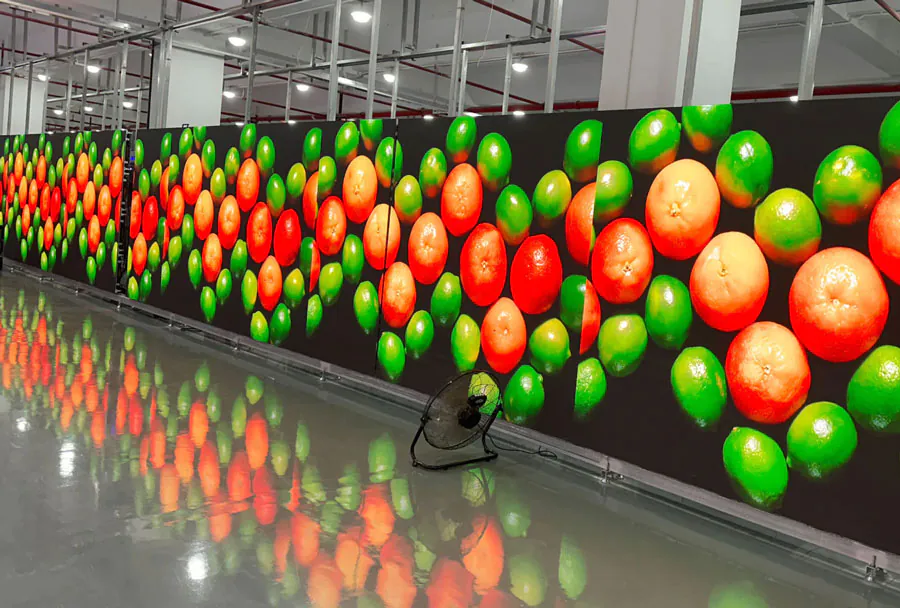
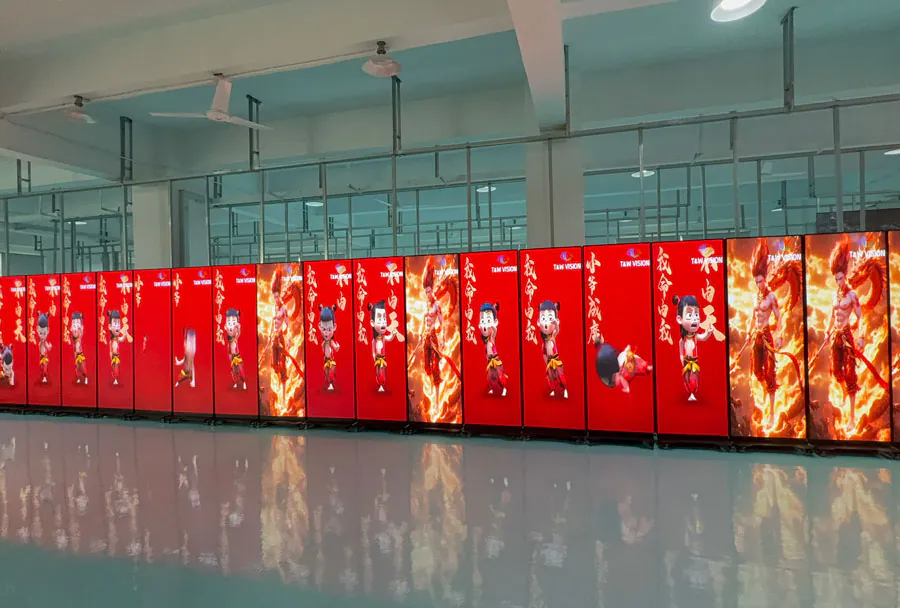
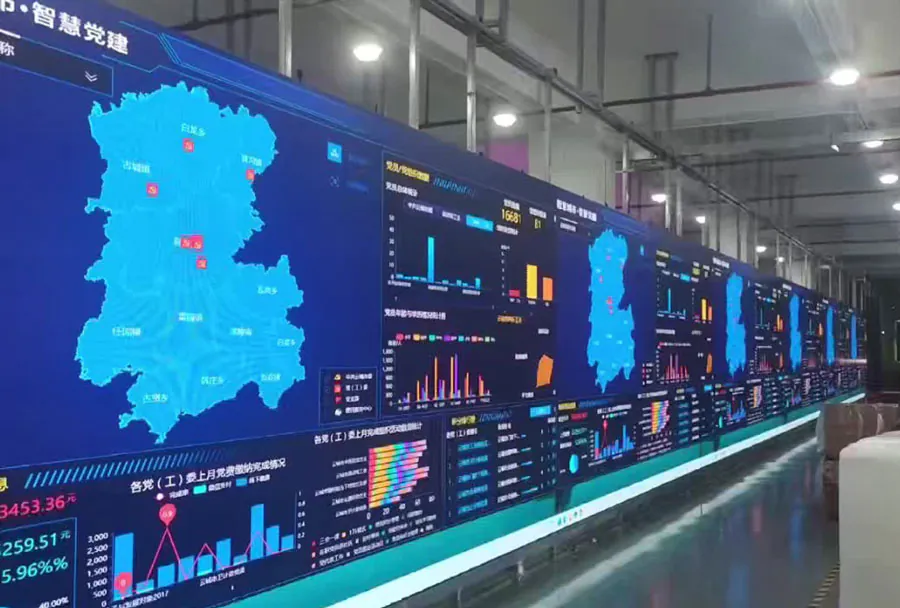
Followed is a live video about the TW VISION’s factory.
Understanding Indoor LED Video Wall Technology for Commercial Use
An indoor LED video wall is a seamless display system built from multiple LED cabinets that lock together to form one large, continuous screen. Unlike consumer televisions or basic projectors, these systems use surface-mounted diode (SMD) technology to deliver brightness levels typically between 600 and 1,500 nits — bright enough for well-lit retail environments without washing out.
Choosing a reliable Indoor LED video wall Manufacturer for Commercial Spaces ensures these technical advantages translate into real-world performance.
The core advantage for commercial spaces is modularity. You can configure an indoor LED video wall to fit curved walls, wrap around columns, or span entire lobby ceilings. A common configuration in corporate headquarters uses a 16:9 aspect ratio wall measuring roughly 10 feet wide by 5.6 feet tall, though custom dimensions are standard practice.
Every Indoor LED video wall Manufacturer for Commercial Spaces should offer flexible configuration options to match unique architectural requirements.
Pixel pitch — the distance between individual LED clusters measured in millimeters — determines both resolution and optimal viewing distance. For indoor commercial applications, pitches between P1.2 and P2.5 dominate the market. A P1.5 display viewed from 8 feet away looks indistinguishable from a 4K television.
As the viewing distance increases, you can safely move to wider pitches without sacrificing perceived sharpness.
Refresh rate matters more than many buyers realize. For spaces where cameras might capture the display — conference centers, broadcast studios within corporate facilities, or event venues — you need a minimum refresh rate of 3,840Hz to eliminate flicker on video recordings.
Standard indoor LED video wall manufacturers typically offer 1,920Hz as a baseline, which works fine for the naked eye but creates visible scan lines on camera.
How to apply this: Before contacting any Indoor LED video wall Manufacturer for Commercial Spaces, measure your minimum and maximum viewing distances in feet, then divide by 10 to estimate your ideal pixel pitch range in millimeters.
Key Factors When Selecting an Indoor LED Video Wall Manufacturer
Not every company selling LED panels actually manufactures them. The supply chain typically splits into three tiers: original equipment manufacturers who own fabrication facilities, original design manufacturers who design but outsource production, and resellers who white-label panels from various sources. Each tier affects pricing, quality control, and long-term support differently.
Partnering with a genuine Indoor LED video wall Manufacturer for Commercial Spaces provides direct accountability that resellers simply cannot match.
Manufacturing Origin and Quality Control
The majority of indoor LED video wall manufacturing happens in Shenzhen, China, with a growing presence in other Asian manufacturing hubs. What separates a reliable Indoor LED video wall Manufacturer for Commercial Spaces from a commodity supplier is their quality control protocol.
Look for manufacturers who perform 72-hour burn-in testing on every cabinet before shipping — this catches early component failures that would otherwise surface during your installation.
A lesser-known quality indicator is the LED binning process. High-quality manufacturers sort LEDs into brightness and color uniformity bins with tolerances under 1%. Without tight binning, adjacent panels can show visible color shifts, especially when displaying white or gray backgrounds common in corporate presentations.
A reputable Indoor LED video wall Manufacturer for Commercial Spaces will openly share their binning specifications and calibration procedures.
Supply Chain Stability
The pandemic-era component shortages taught the industry a hard lesson about single-source dependency. An Indoor LED video wall Manufacturer for Commercial Spaces should maintain at least 60 days of component inventory and have documented relationships with multiple driver IC suppliers. Ask for their semiconductor sourcing strategy directly — vague answers signal risk.
How to apply this: Request the manufacturer’s batch testing documentation and ask specifically about their LED binning tolerance before requesting a quote. If they cannot produce this data, move on.
Technical Specifications That Impact Commercial Performance
Spec sheets are filled with numbers that sound impressive but mean little in practice. Here is what actually matters when selecting an Indoor LED video wall Manufacturer for Commercial Spaces.
| Specification | What It Actually Means | Action to Take |
|---|---|---|
| Pixel Pitch (mm) | Distance between LED centers; determines minimum viewing distance | Match to your closest viewer distance (pitch × 10 = feet) |
| Brightness (nits) | Light output; 600-800 sufficient for indoor spaces | Avoid paying for 1,500+ nits unless near windows |
| Refresh Rate (Hz) | How often the image redraws; critical for camera use | Demand 3,840Hz minimum if cameras will film the wall |
| IP Rating | Dust and moisture protection; IP30 standard for clean indoors | Only upgrade to IP54 if near HVAC vents or in atriums |
Color Calibration and Uniformity
An Indoor LED video wall Manufacturer for Commercial Spaces should provide factory calibration reports showing Delta E values under 2.0 across all cabinets. Delta E measures color accuracy — values above 3.0 become noticeable to casual viewers. Brands that skip this step produce walls where individual panels display slightly different color temperatures.
Working with an experienced Indoor LED video wall Manufacturer for Commercial Spaces guarantees professional-grade calibration from day one.
The calibration conversation should also cover how the system handles recalibration over time. LEDs naturally shift in brightness and color as they age. Some manufacturers include software that adjusts output based on usage hours, maintaining uniformity across the wall’s lifespan.
How to apply this: Ask the manufacturer for a sample panel or visit a local installation. Stand at your intended viewing distance and check for visible seams, color shifts on white backgrounds, and motion artifacts during fast-moving content.
Total Cost of Ownership Beyond the Initial Quote
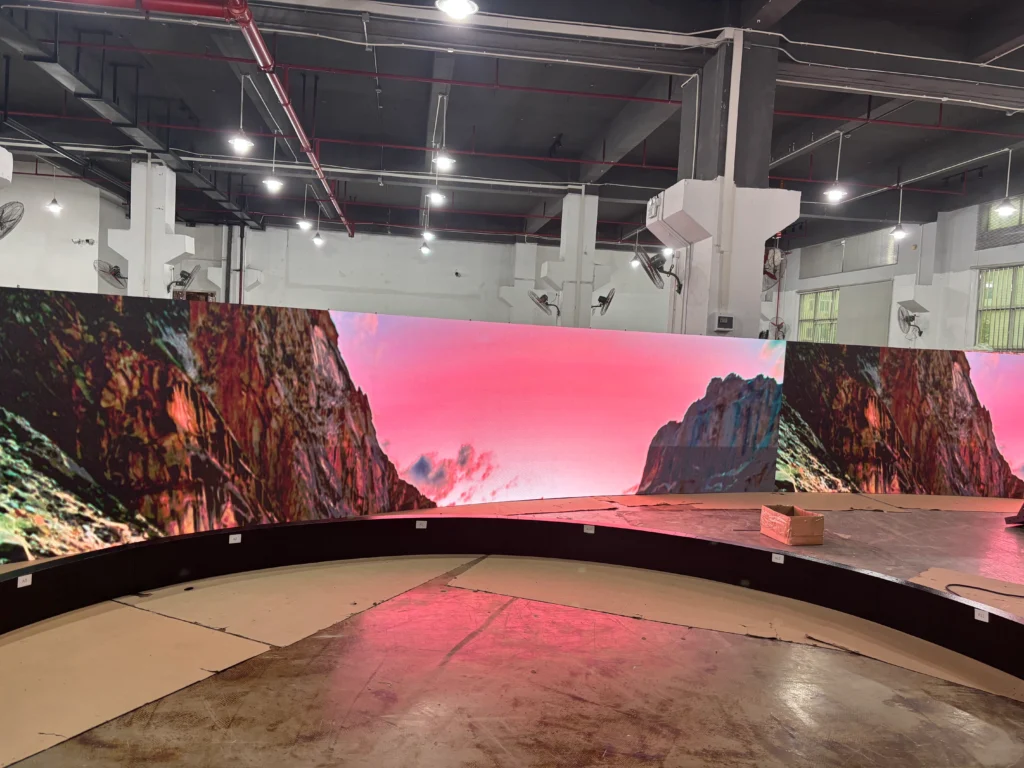
The purchase price of an indoor LED video wall represents roughly 60% of the total five-year cost. The remaining 40% comes from installation, content management, energy consumption, and maintenance — factors that a quality Indoor LED video wall Manufacturer for Commercial Spaces designs around from the start.
Energy Efficiency and Thermal Management
LED walls consume significant power. A typical P1.9 indoor wall measuring 10 feet wide draws approximately 3-4 kilowatts at full brightness. Over a year of 12-hour daily operation in a retail environment, that translates to roughly $1,500-2,000 in electricity costs at average commercial rates. Manufacturers using common-cathode driver technology reduce consumption by 20-30% compared to traditional common-anode designs.
Selecting an Indoor LED video wall Manufacturer for Commercial Spaces that prioritizes energy efficiency directly impacts your operating budget.
Heat output is the hidden cost driver. Excess heat shortens LED lifespan and, in enclosed spaces like mall kiosks, can trigger HVAC load increases. Quality manufacturers specify thermal dissipation figures and design cabinets with passive cooling channels that eliminate the need for noisy fans — a critical consideration for corporate boardrooms and high-end retail.
Maintenance and Spare Parts
LED modules fail. Industry data from installations tracked over three years shows an average annual failure rate of 0.5-1% for quality panels. An Indoor LED video wall Manufacturer for Commercial Spaces should include a spare parts kit with every order — typically 2-5% extra modules — and offer a warranty covering parts and labor for at least three years.
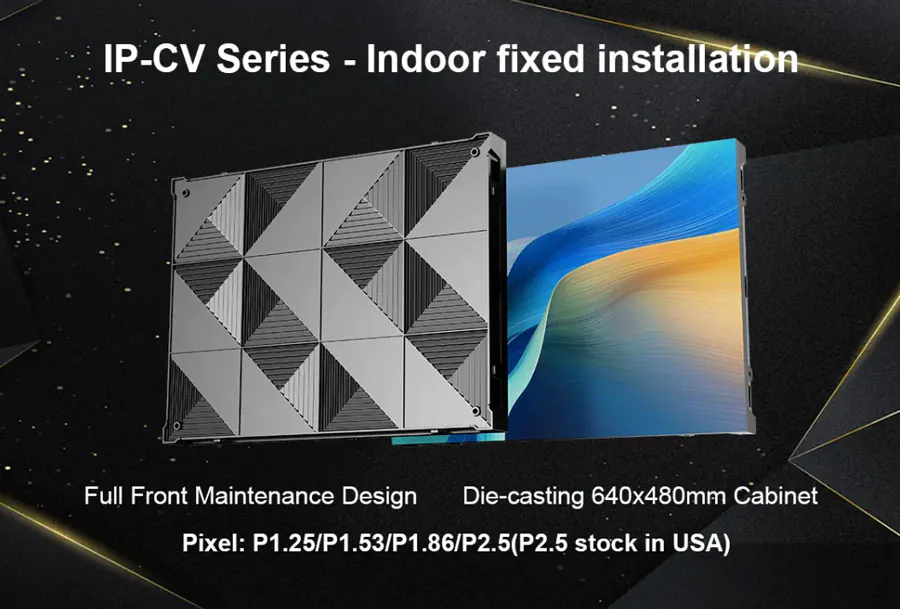
Front-service designs dramatically reduce maintenance costs. When a module fails on a wall mounted 15 feet up in a hotel lobby, being able to replace it from the front without dismantling the entire structure saves thousands in labor per incident. The right Indoor LED video wall Manufacturer for Commercial Spaces will provide comprehensive maintenance documentation and replacement procedures.
How to apply this: Calculate your five-year total cost by adding estimated electricity costs (watts × hours × days × rate), projected replacement modules, and one major service call. Compare this against the manufacturer’s warranty coverage period.
Installation, Content, and Integration Considerations
Even the best Indoor LED video wall Manufacturer for Commercial Spaces cannot rescue a poorly planned installation. The physical environment, content strategy, and control system integration determine whether the investment delivers returns or becomes an expensive decoration.
Structural and Environmental Assessment
Indoor LED walls weigh between 25-45 pounds per square meter depending on cabinet construction. Your wall or mounting structure must support this load with appropriate safety margins. Beyond weight, consider the wall’s flatness — deviations over 2mm across the mounting surface create visible gaps between cabinets.
Consulting with your Indoor LED video wall Manufacturer for Commercial Spaces during the structural planning phase prevents costly installation errors.
Environmental factors in commercial spaces vary widely. A restaurant dining room exposes the wall to humidity and airborne particles. A hotel lobby near entrance doors subjects it to temperature swings.
Discuss these conditions with your Indoor LED video wall Manufacturer for Commercial Spaces before finalizing specifications — they may recommend conformal coating on circuit boards or slightly higher IP ratings for exposed installations.
Content Management and Control Systems
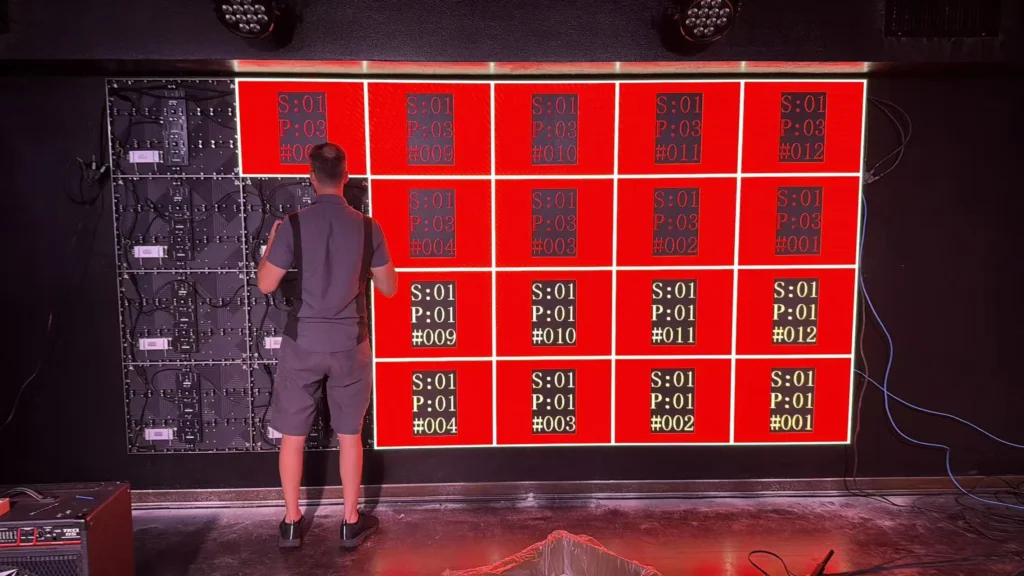
The most common post-installation complaint is not about hardware failure but about content management complexity. The video processor that drives the wall must integrate with your existing AV infrastructure. Novastar and Brompton are the two dominant processing platforms — both offer robust scaling and color management, but they require different skill sets to operate.
Plan your content pipeline before the wall arrives. Who will create content? How often will it update? What resolution and aspect ratio does the final configuration require? Walls with non-standard aspect ratios need custom content templates, which adds ongoing production costs.
A knowledgeable Indoor LED video wall Manufacturer for Commercial Spaces can recommend compatible content management solutions for your specific setup.
How to apply this: Hire a structural engineer to assess your mounting surface and specify load requirements before ordering. Simultaneously, have your content team produce a sample video at the wall’s native resolution to test the workflow.
Evaluating Manufacturer Support and Long-Term Partnership
The relationship with an Indoor LED video wall Manufacturer for Commercial Spaces extends years beyond the initial sale. Support infrastructure separates enterprise-grade suppliers from transactional vendors.
Warranty Structure and Service Level Agreements
Standard warranties cover 2-3 years, but the terms vary dramatically. Look for warranties that specify response time — 24-hour remote diagnosis and 48-hour on-site service for critical failures in major metropolitan areas is the benchmark for commercial-grade support. Some manufacturers offer extended warranties up to 5 years with annual preventative maintenance visits included.
A committed Indoor LED video wall Manufacturer for Commercial Spaces will stand behind their products with clear, enforceable warranty terms.
John Wang, Senior Product Manager at Unilumin, stated in a 2024 industry whitepaper: “The difference between a 2-year and 5-year warranty isn’t just coverage duration — it reflects the manufacturer’s confidence in their component selection and assembly quality.
We’ve tracked field data showing that panels built with gold-plated connectors and brand-name driver ICs show failure rates under 0.3% annually after year three.”
Firmware Updates and Obsolescence Planning
LED technology evolves quickly. A wall installed today should remain serviceable for 7-10 years. This requires the manufacturer to maintain backward-compatible spare parts and provide firmware updates that improve performance or add features.
Ask about their end-of-life policy — reputable indoor LED video wall manufacturers for commercial spaces guarantee parts availability for at least 5 years after a product line is discontinued. Verifying this commitment with your Indoor LED video wall Manufacturer for Commercial Spaces protects your investment against premature obsolescence.
How to apply this: Include a service level agreement in your purchase contract that specifies response times, spare parts availability guarantees, and firmware update commitments. Have your legal team review the warranty exclusions carefully.
Why TW VISION can be trusted at an Indoor LED video wall manufacturer?
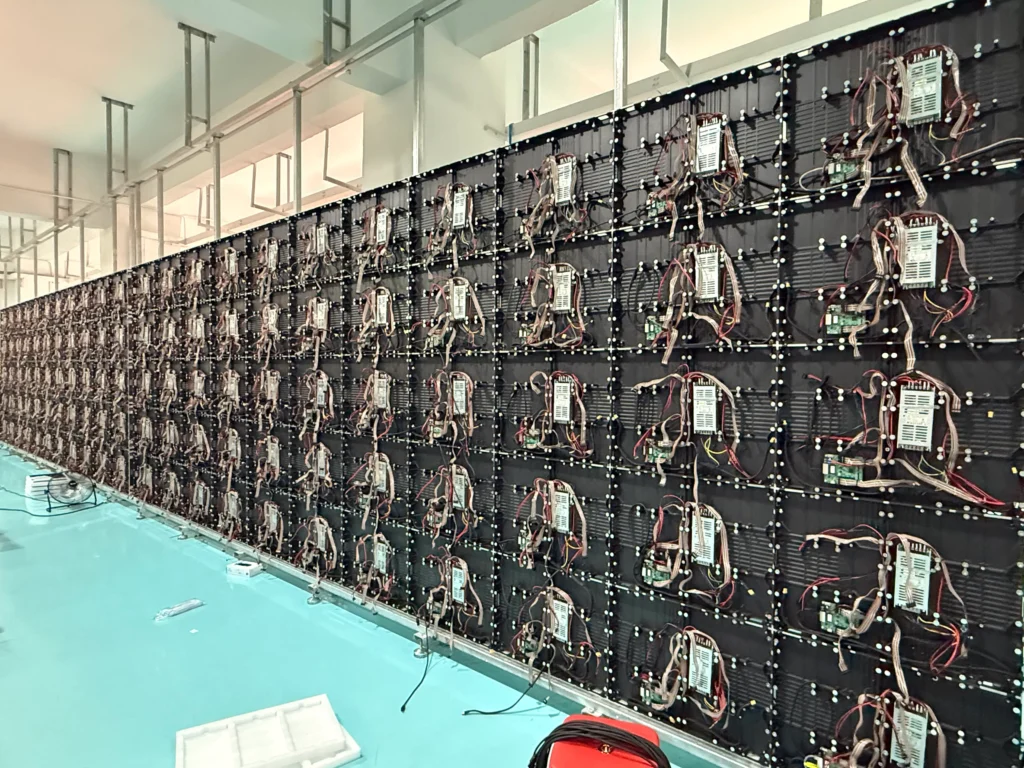
TW VISION is an established LED display manufacturer based in China, with eight in-house SMT production lines that support comprehensive control over the manufacturing process, from component assembly to quality testing. This integrated production capability helps maintain consistent product quality and gives customers greater confidence in their indoor LED display investments.
To further support U.S. customers, TW VISION maintains its own warehouse in the United States, with substantial stock of P1.8 and P2.5 indoor LED displays. This local inventory helps shorten fulfillment lead times, allowing customers to arrange pickup once payment is confirmed and stock availability is verified.
Keeping inventory in larger quantities also makes it easier to fulfill additional orders from the same production batch, helping maintain visual consistency across displays purchased at different stages of a project. By combining in-house manufacturing control with U.S.-based inventory, TW VISION helps customers reduce the risks of delivery delays, transit-related damage, and inconsistencies when expanding an existing installation.
Frequently Asked Questions About Indoor LED video wall Manufacturer for Commercial Spaces
How do I verify if an indoor LED video wall manufacturer actually produces their own panels?
Request a factory audit or video tour showing their SMT assembly lines, aging rooms, and quality control stations. A legitimate Indoor LED video wall Manufacturer for Commercial Spaces will have in-house surface-mount technology lines and a dedicated burn-in testing area. If they hesitate or only show finished goods warehouses, they are likely a reseller.
Third-party factory audit services like SGS or Bureau Veritas can perform independent verification if travel is impractical.
What is the minimum order quantity for a commercial indoor LED video wall?
Most manufacturers have no strict minimum for standard pixel pitch products, though pricing improves significantly above 10 square meters. An Indoor LED video wall Manufacturer for Commercial Spaces typically offers better per-unit pricing at the 20-square-meter threshold. However, very fine pixel pitches below P1.2 may require minimum orders due to production complexity and lower yields.
Can I install an indoor LED video wall in a space with lots of natural light?
Yes, but brightness requirements change. For spaces with direct sunlight hitting the wall, you need at least 2,000 nits — well above standard indoor specifications. An Indoor LED video wall Manufacturer for Commercial Spaces should offer high-brightness options or recommend window treatments to control ambient light. Consider that higher brightness accelerates LED aging and increases power consumption proportionally.
How long does production and shipping typically take?
Standard indoor LED video wall orders from an Indoor LED video wall Manufacturer for Commercial Spaces require 4-8 weeks for production plus 2-4 weeks for ocean freight from Asia. Air freight cuts transit to under a week but increases cost by 30-50%.
Custom cabinet sizes, unusual pixel pitches, or large orders over 50 square meters may extend production timelines by 2-3 additional weeks.
What happens if my LED wall develops dead pixels after installation?
Individual dead pixels are normal and typically invisible beyond a few feet. Manufacturers consider a module defective when dead pixels exceed a threshold — usually 5-10 dead pixels per module or clustered failures.
An Indoor LED video wall Manufacturer for Commercial Spaces should provide a pixel failure policy in writing and include spare modules with the initial shipment for immediate replacement without waiting for warranty claims processing.
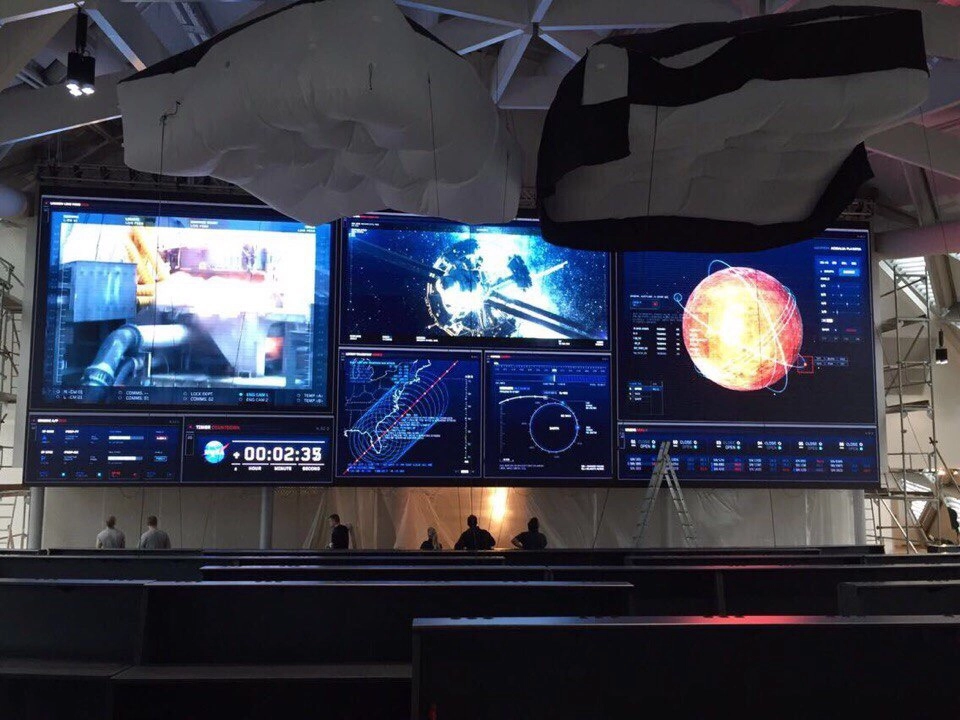
Key Takeaways and Next Steps
Selecting the right Indoor LED video wall Manufacturer for Commercial Spaces comes down to methodical evaluation rather than spec-sheet comparisons:
– Verify manufacturing capability through factory audits and quality documentation, not marketing claims
– Calculate total five-year costs including energy, maintenance, and content production — not just the purchase price
– Match technical specifications to your actual viewing distances and environmental conditions to avoid overpaying
– Secure a detailed service level agreement with specific response times and parts availability guarantees before signing
Your next step is to shortlist three indoor LED video wall manufacturers for commercial spaces, request their batch testing documentation and a sample panel, and visit at least one local installation. The wall will represent a visible, long-term investment in your commercial space — the due diligence you perform now determines whether it becomes an asset or a liability.