

LED Screen Rental Miami — Factory Supply for Venues, Hotels and Exporters

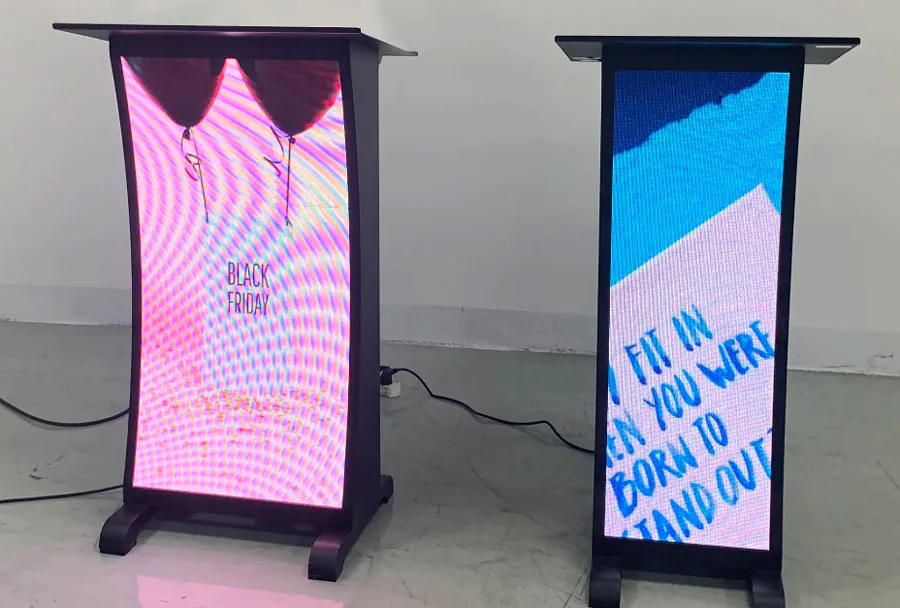
LED screen rental Miami buyers usually discover the same thing on the first site visit: the specification was written for an inland city. Salt air, afternoon storms, a season that peaks when the rest of the country is shovelling snow, and venues running their own permitting calendar all punish a wall that was never designed for this coast.
The climate data is not subtle. Miami’s daily rainfall records include totals approaching 15 inches in a single day, which is why outdoor planning has to address water, wind, drainage and electrical protection rather than treating the wall as indoor equipment placed outside. (weather.gov)
There are also two buying models. A local rental house brings crew, structure and show-day support for a single event. A factory-direct purchase puts cabinets in your own inventory, built by your crew or a contracted one. This guide is written for the second group — rental companies, AV firms, venues, hotels and churches buying cabinets to own — while explaining where the first model still wins.
TW VISION manufactures rental-grade LED displays and holds stock in Atlanta: PQ, LP-H and CT series, shipping into Miami in one to two days once a stock order is loaded.
Table of Contents
- 1. Define the Screen Around the Audience and Venue
- 2. Brightness, Heat and the Content Brief
- 3. What Factory Supply Includes in Miami
- 4. What a Factory-Direct Proposal Should Identify
- 5. Compare Factory Supply With a Supported Rental
- 6. How to Choose a Rental Company in Miami
- 7. Miami Weather, Storms and Lightning
- 8. Salt Air, Ratings and Cable Protection
- 9. Permits, Timelines and Site Survey
- 10. Latin American Export and Transshipment
- 11. Verify Processing, Resolution and Content
- 12. Language, Playback and the Test Protocol
- 13. What LED Screen Rental Miami Costs
- 14. Put Responsibility and Costs in Writing
- 15. Delivery From Atlanta to Miami
- 16. FAQ: Supply, Stock and Cost
- 17. FAQ: Site, Weather and Show Conditions
- 18. Conclusion
1. Define the Screen Around the Audience and Venue
Miami events split sharply by viewing distance. A hotel ballroom on Collins Avenue puts the front row eight feet from the wall; a Bayfront Park activation puts the nearest viewer sixty feet back and the farthest three hundred. Same city, opposite specifications, and any LED screen rental Miami quote has to start there.
Set pitch from the closest seat
Pixel pitch is the centre-to-centre distance between LEDs, in millimetres. Density scales with the square: (1,000 ÷ pitch)². P2.6 gives roughly 147,900 pixels per square metre, P3.9 about 65,700, P4.8 about 43,400. That squared relationship is why one step finer is rarely a small price difference.
Pitch also has to follow content, not only distance. ROE Visual’s content guidance notes that displays below 3 mm can produce good results for detailed material, while highly detailed content may perform poorly on screens at 5 mm or above. (roevisual.com)
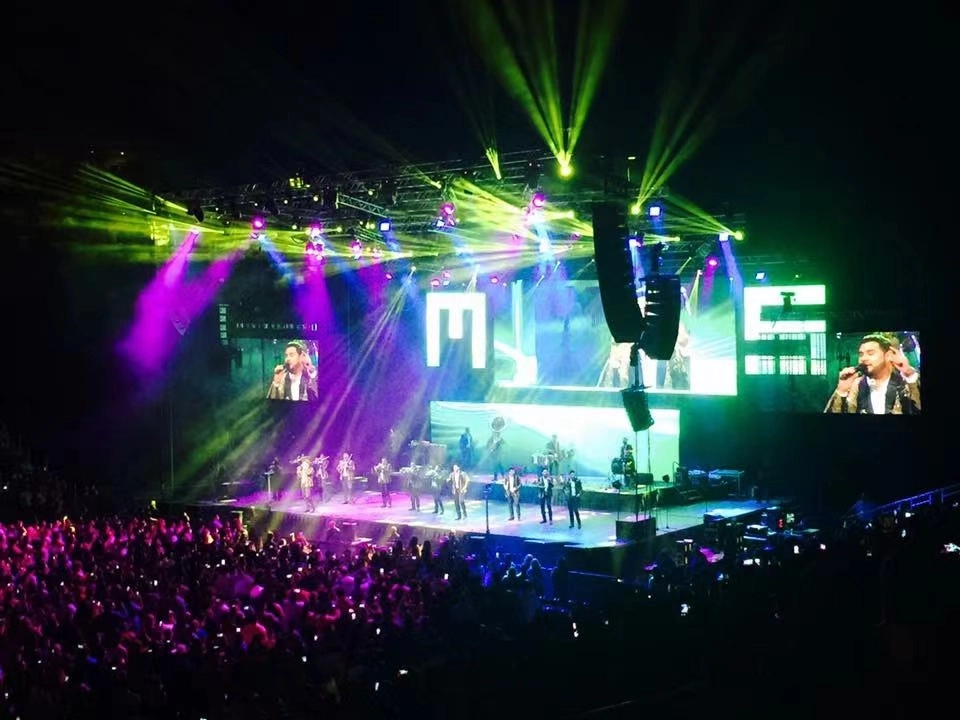
Working ranges: P1.9–P2.6 for lobbies, VIP areas and camera close-ups; P2.6–P2.9 for ballrooms and general sessions; P2.9–P3.9 for mid-size outdoor stages; P4.8–P6.7 once the nearest viewer passes 80 feet.
How to apply it: measure the nearest seat, photograph the site at the event hour, and send every bidder the same diagram and content list.
2. Brightness, Heat and the Content Brief
Ask for calibrated operating brightness, not the panel maximum. Indoor cabinets run 800–1,500 nits; an uncovered Miami wall needs 5,000 nits or more, and 6,000–8,000 nits where it faces the sun.
High brightness also means more heat, and Miami’s ambient temperature leaves less headroom for cooling. That is why power-supply derating and cabinet thermal design belong in the specification conversation, not the maintenance one.
Build a brief covering:
- Indoor, covered outdoor or open air
- Nearest and farthest viewer
- Distance from Biscayne Bay or the ocean
- Screen orientation through the event window
- Content languages and source formats
- Ground-supported, flown or trailer-mounted installation
A brief is what makes two quotes comparable. Without it, each supplier prices a different event and the cheapest number usually reflects the smallest assumed scope.
3. What Factory Supply Includes in Miami
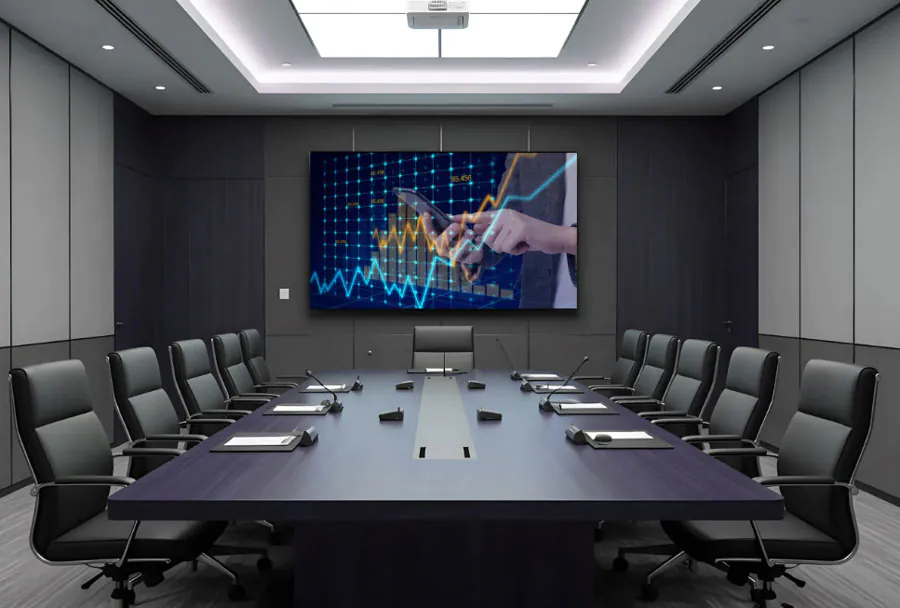
Buying LED screen rental Miami stock factory-direct means cabinets, spares, processing and configuration files come from the manufacturer, and the buyer owns crews, structure and storage. The practical advantage here is lead time: stock already cleared import and sits palletised in Atlanta.
| Series | Stock | Pitch | Cabinet | Miami fit |
|---|---|---|---|---|
| PQ series | Atlanta | Indoor P1.9 / P2.6 / P2.9 / P3.9; outdoor P2.6 / P2.9 / P3.9 | 500×500 / 500×1000 mm | Ballrooms, convention booths, outdoor activations |
| LP-H series | Atlanta | P1.86 | 640×1920 mm folding poster | Lobbies, retail on Lincoln Road, sales centres |
| CT series | Atlanta | P2.5 | 640×480 mm soft connection | Fixed indoor walls, menu boards, church and lobby installs |
| PN / PH / PI | Factory order | P2.976 – P6.67 | 500×500 / 500×1000 mm | Large builds needing a pitch or IP rating outside stock |
An order ships with cabinets from one production batch, matched spare modules, receiving cards and power supplies, processor and control components, flight cases, and the configuration files a technician needs to rebuild the wall from scratch.
The PQ series builds straight walls, 90-degree corners, curves from −10° to +15°, flexible sections to ±22.5° and 45-degree bevels, with rear cabinet service and front-service modules. For a fleet serving both a Brickell conference room and a Wynwood activation, that range replaces three specialised purchases.
4. What a Factory-Direct Proposal Should Identify
Ask for this schedule in writing. A quote that omits half of it is an equipment price, not a package:
- Panel manufacturer and product series
- Pixel pitch and cabinet dimensions
- Total display resolution
- Video processor and signal connections
- Ground-support or flown-rigging system
- Power distribution equipment
- Spare panels, receiving cards and power supplies
- Installation, operation and removal labour
The factory behind the claim. 8,000㎡ of production space, 8 independent SMT lines, in-house module calibration. A 500㎡ module aging area removes weak modules before assembly, and roughly 2,000㎡ of cabinet aging runs every batch for 24 hours at operating conditions.
Because rental cabinets are handled far more often than installed ones, module edges get automated glue dispensing and assembly uses torque-controlled screw fastening.
Where a pitch is not stocked, PQ production is listed at 15 days before freight. Stock moves — confirm the exact pitch and cabinet format at quotation.
5. Compare Factory Supply With a Supported Rental
LED screen rental Miami projects can be bought or hired, and both models are honest; they simply cover different scopes. Compare delivered responsibility, not equipment price.
| Quote element | Factory supply | Supported rental | What to check |
|---|---|---|---|
| LED cabinets | Included | Included | Exact model and batch |
| Structure | Usually separate | Often available | Engineering and wind rating |
| Processor | Optional | Usually included | Inputs, scaling, backup path |
| Labor | Buyer arranged | Quoted locally | Crew hours, union rules, overtime |
| Spares | Purchased | Provider inventory | Quantity on site |
| Support | Remote or limited | Event technician | Response terms |
Buy when you have technicians, rigging access, dry storage and enough bookings to keep the fleet earning — a hotel group, a church, a venue, or a rental company adding a second pitch. Rent when the wall is needed for one weekend and the crew is the hard part.
Normalise the proposals. Ask each bidder to separate panels and processing; rigging or ground support; structural engineering; freight and local transport; installation and removal; power distribution and cable protection; playback equipment; technician hours; permits and inspection; overtime; damage waiver; taxes and card fees.
6. How to Choose a Rental Company in Miami
Choosing who supplies LED screen rental Miami crews is a different decision from choosing a panel. If you are buying crew and show-day support rather than cabinets, the company matters more than the hardware.
- Written specifications. Pitch, calibrated nits, refresh rate, IP rating, cabinet and processor model.
- Crew credentials. Rigging certifications, stamped engineering for flown builds, coordination with staging and audio.
- Redundancy. Backup media server, duplicate signal path, spare modules and power supplies on site.
- Inventory depth. Enough panels in the exact pitch, plus the ability to replace a batch during high season.
- Insurance and terms. Liability and equipment cover, additional-insured status, and a weather clause naming the decision-maker.
Miami adds two local filters. Bilingual operation is not a nicety: content, operator cues and client communication frequently run in Spanish and English, and a crew that cannot switch cleanly costs rehearsal time. Second, labour rules differ by venue — Miami Beach properties, the convention centre and port facilities each set their own access and sometimes union requirements.
Reserve earlier than you would inland. High season, Art Basel week, the cruise calendar and holiday events tighten inventory and freight at the same time.
7. Miami Weather, Storms and Lightning
Four local conditions change the specification for LED screen rental Miami projects, and the schedule with it.
Storms and hurricane season. The National Weather Service issues the forecasts production teams follow, and the Atlantic season runs from June 1 to November 30. Miami also gets fast afternoon convection outside the season.
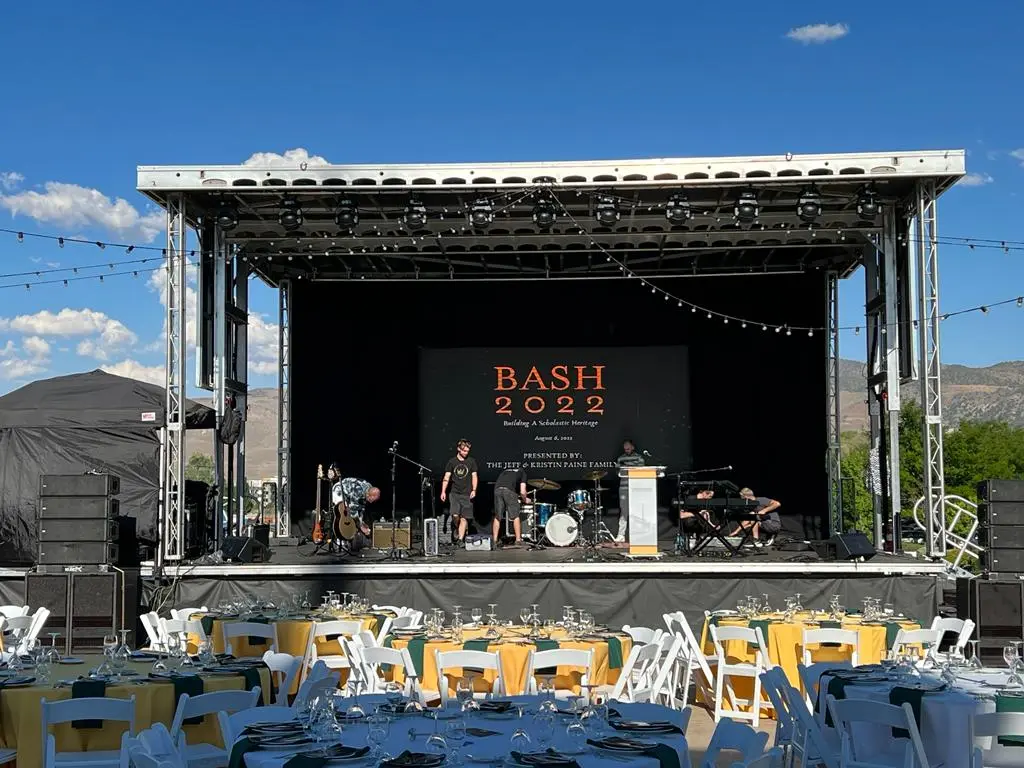
An IP rating is not permission to operate through a storm: structure, ballast, connectors, processors and generators each have limits. For elevated builds, wind loading should follow a recognised temporary-structure standard such as ANSI E1.21.
Lightning. OSHA advises remaining in suitable shelter for at least 30 minutes after the last sound of thunder, and notes that tents, pavilions and covered porches do not provide adequate protection. (osha.gov)
Write the shutdown plan. Name who monitors alerts, who can stop the show, the wind limit set by the engineer, the lowering sequence, and how power is isolated. A clause that only addresses rain is not a storm plan.
8. Salt Air, Ratings and Cable Protection
Salt air. Corrosion reaches fixings, connectors, case hardware and power supplies long before it reaches the LEDs. For beachfront, bayfront, marina and cruise-terminal work, specify three-proof treatment on the PCB and power supply, sealed connectors and corrosion-resistant fixings.
It is a production step, not an accessory: it cannot be added after the cabinets ship. Rinse hardware with fresh water after a coastal event, dry it before casing, and store panels in a dry space.
Ratings and documentation. UL notes that electric signs may be certified for dry, damp or wet locations, so a supplier should not describe hardware as “weatherproof” without documentation. (ul.com) Confirm the IP rating under IEC 60529; the second digit is the water one.
Cables and power. OSHA requires electrical equipment and wiring at exhibitions to be protected from physical damage; connectors should not sit in public paths unless guarded, and ground cables should be covered to remove trip hazards. (osha.gov)
9. Permits, Timelines and Site Survey
Miami-Dade classifies temporary events with structures and facilities as short-term events when they last 45 days or less, and platforms, stages, lifts or towers supporting a display may require plans, permits and qualified contractors. (miamidade.gov)
For county-operated parks, published submission periods run from 14 days before a one-day Class D event to 120 days before a Class A event, with review periods from 10 to 120 business days once materials are complete. (miamidade.gov) Late changes to screen size can therefore put the date at risk, not just the budget.
| Check | Why it matters in Miami |
|---|---|
| Distance from open water | Sets corrosion treatment and cleaning routine |
| Venue labour rules | Changes crew cost and load-in sequence |
| Marshalling and drayage | Adds time and fees at large venues and the port |
| Wind-exposed orientation | Sets ballast, anchoring and shutdown threshold |
| Permit class and lead time | 14 to 120 days depending on event class |
Site survey. Use satellite imagery only for preliminary planning, then verify on site: truck entrance and unloading area; screen position and orientation; ground conditions and drainage; audience barriers and emergency routes; power source and cable distance; overhead obstructions; technician access; and installation hours.
10. Latin American Export and Transshipment
Miami is the transshipment point for much of Latin America and the Caribbean, and a share of the cabinets we ship south never appear on a US event site. That changes the paperwork rather than the panel.
Three documents travel with an export order: a commercial invoice stating the declared value, a packing list matching carton counts to cabinet serials, and a certificate of origin where the destination requires one. Confirm the destination country’s import duty and certification rules with the buyer or their broker before the order is placed, because those requirements sit outside our control.
Voltage and frequency. US stock is built for 120/240V at 60 Hz. Parts of the region run 50 Hz, and a wall fed the wrong frequency will not perform to specification. State the destination supply at order stage; the power supply configuration is a production decision.
Packaging and shipping. FCL suits a fleet order, LCL suits a single wall, and both need pallets marked for ISPM 15 where the destination enforces it. Flight cases protect cabinets in transit but are not shipping containers; add a crate or a pallet wrap for sea freight.
Content and language. Portuguese and Spanish content is often produced after the hardware arrives. Confirm the processor’s playlists and file formats before the ship date so the receiving team is not translating a finished file at the last minute.
11. Verify Processing, Resolution and Content
LED screen rental Miami hardware is only as good as the processing behind it. A wall has to carry every planned source at the right aspect ratio, frame rate and resolution.
Calculate the native canvas
Multiply one cabinet’s pixel width by the number of cabinets across. A cabinet 128 pixels wide, ten across, gives 1,280 pixels of native width. Physical size never reveals resolution: a “20-foot wall” can be 1,280 or 2,560 pixels depending on pitch and cabinet count.
A common failure is a wide backdrop at a custom aspect ratio fed 16:9 content, which then letterboxes, crops or distorts. Ask for the pixel map before graphics are approved, and confirm which processor receives the signal and how a backup input is switched.
12. Language, Playback and the Test Protocol
Miami audiences frequently need Spanish and English in the same programme. That affects text length, safe areas for dual-language lower thirds, and the operator’s ability to trigger language-specific playlists without breaking the show. Build both versions at the native canvas rather than translating a finished file.
LED reveals everything. ROE Visual’s content guidance uses that warning for a reason: poor contrast, tiny lettering, excessive detail and compressed video become more visible on a large display. (roevisual.com)
For live playback or source switching, Resolume Arena is a common production tool, but the operator still has to test the actual processor, cables and configuration.
Before doors open, test every input and playback computer; primary and backup files in both languages; brightness at show conditions; camera and refresh behaviour; audio sync; spare panel replacement; signal recovery after disconnection; and emergency shutdown with controlled restart.
13. What LED Screen Rental Miami Costs
Two budgets matter here: what a Miami rental house charges per day, and what the cabinets cost to own. The first is useful context even when the second is the transaction.
Local daily bands run about $2,000–$8,000 for a trailer screen weekend, $6,000–$20,000 for a mid-size wall for one day, and from roughly $25,000 for stadium-scale production. Purchase prices for 16-foot-class walls start near $18,699 and rise as pitch tightens.
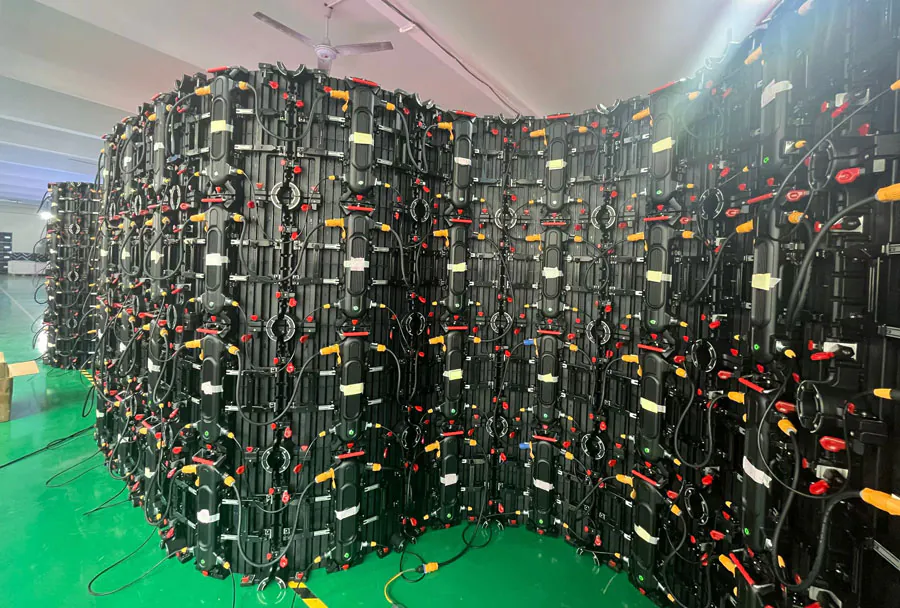
Four variables move both numbers: wall area, pitch, brightness class and cabinet count. Structure, ballast, labour and permits sit outside the equipment line, and in Miami they carry more weight than in most cities because storm-rated builds need engineering.
Compare a fleet purchase with daily rates over a season. A rental company running thirty event days a year usually reaches breakeven inside two seasons; an organisation running four events a year rarely does. See our Florida outdoor LED cost guide for the statewide band.
14. Put Responsibility and Costs in Writing
The contract for LED screen rental Miami supply should define the screen, the services, the operating conditions, the failure response, cancellation terms and who pays for each.
Specify what arrives. Cabinet model, wall dimensions, native resolution, processor, mounting system, power distribution, cables, spares, crew, operator coverage and schedule. Replace “complete LED package” with itemised lines, and state whether engineering documents, insurance certificates, permit support and substitutions are included.
Define failure and weather procedures. Name a communication chain for missing freight, damaged cabinets, processor failure, delayed access, unsafe weather and venue power problems. A module failure is local; a processor failure is systemic and needs a backup path or a second playback source.
A clause promising a replacement module without naming the technician who installs it leaves usable stock in a case while the screen stays dark.
Review the money terms. Deposit and payment schedule, cancellation, freight and redelivery, labour minimums and overtime triggers, damage responsibility, weather costs and taxes. Florida’s state rate is 6% plus any county surtax; confirm the treatment of your order with a tax adviser.
15. Delivery From Atlanta to Miami
We quote and book transport from Atlanta to your Miami address, so stock arrives on a confirmed appointment instead of an open pickup notice.
Transit and options. One to two days once a stock order is loaded; confirm at quotation. Standard LTL to a commercial dock, liftgate where there is no dock, inside delivery to a ground-floor room on request, or direct venue delivery in an agreed window.
Venue and port deliveries. Large venues route trucks through marshalling yards and may charge drayage. Hotel and resort properties often require advance vehicle booking, screening and escorted back-of-house access.
Unloading. A 500×1000 mm cabinet on a pallet is not a two-person lift. Without a dock, specify liftgate and agree who moves pallets to the room.
Beach sites. Sand, tide lines and access restrictions change the logistics: truck movement may be limited to specific hours, and ballast has to be planned with the property authority.
Seasonality. High season runs roughly December to April, overlapping Art Basel week and the cruise calendar. Order and book transport together, not in sequence.
16. FAQ: Supply, Stock and Cost
How fast can stock reach Miami?
One to two days in transit once loaded in Atlanta. Pitches that are not stocked require production, and PQ production alone is listed at 15 days before freight.
What should I buy for a Miami Beach event?
IP65 or higher, 6,000–8,000 nits, three-proof coating on the PCB and power supply, sealed connectors and corrosion-resistant fixings. Specify it at order stage; it cannot be retrofitted after shipping.
Can I buy cabinets and hire a local crew?
Yes — it is the standard factory-direct arrangement for an LED screen rental Miami purchase. The order covers hardware, spares and equipment support; a Miami production partner surveys the site, supplies structure, rigging, power and operators. Put that scope in writing.
How much does a Miami LED wall cost?
Rental bands run about $2,000–$8,000 for a trailer screen weekend, $6,000–$20,000 for a mid-size wall for one day, and from roughly $25,000 for stadium-scale production. Purchase prices for 16-foot-class walls start near $18,699 and rise with pitch.
17. FAQ: Site, Weather and Show Conditions
Why is Miami harder on LED cabinets than inland cities?
Miami projects face salt air, sustained humidity, high UV and frequent storms — including daily rainfall records near 15 inches. Salt attacks connectors, humidity works on seams and power supplies, and UV degrades finishes. Coastal treatment and dry storage decide whether a cabinet lasts five years or three.
Can an LED screen be installed on sand?
Yes, with ground protection, engineered ballast, a structural review, corrosion-resistant components and approval from the property authority. Sand shifts, drains differently and may restrict truck movement and anchoring.
Can I use a generator to power an LED screen?
Yes, when correctly sized, grounded and operated by qualified personnel. Size it from maximum load, not average consumption, because brightness and content change the draw. Verify grounding, cable protection, fuel management and noise restrictions.
Is LED better than projection in daylight?
Usually yes: daylight washes out projection, and LED at 5,000–8,000 nits holds contrast. Projection can still be cheaper in a darkened ballroom.
What if the screen fails during a show?
A qualified technician isolates the fault and replaces the module, cabinet, cable, power supply or receiving card. A processor failure is more serious than a module, so critical shows need backup processing or a second playback source.
18. Conclusion
Specifying an LED screen rental Miami order means planning for salt, sun, storms and a bilingual audience — then deciding whether you want cabinets or a crew. The hardware question is pitch, brightness, IP rating and processing; the business question is who owns load-in, spares and the shutdown call.
- Verify the supply chain: panel models, inventory ownership, warranty support and replacement capacity.
- Design for the audience: pitch, native resolution and aspect ratio matched to distance and content.
- Plan for Miami conditions: rain, wind, lightning, drainage, cable protection and shutdown authority.
- Compare complete scopes: rigging, engineering, labour, power, processing, freight, permits and support.
Send us cabinet size, pitch, quantity, indoor or outdoor use and the Miami delivery address. We will tell you what is on the Atlanta floor, what has to be produced, and which parts belong with your local crew.
