2026 Outdoor Rental LED Screen Prices and Rental Packages

Outdoor LED screen rentals remain a core component of live events, festivals, corporate activations, sports broadcasts, and experiential marketing. As we move into 2026, the market is shaped by incremental hardware improvements (higher brightness and finer pixel pitches at lower cost), rising logistics and labor costs in many regions, and new service models from rental companies (subscription-style rentals, turnkey content management, and hybrid packages). This article provides a practical, vendor-neutral guide to 2026 outdoor rental led screen prices and common rental packages, plus a clear analysis table and negotiation tips for event planners and production managers.
Key Market Drivers That Influence Pricing
– Pixel pitch and resolution: Finer pitch (e.g., P2.6 to P4) for close viewing increases per-square-meter pricing relative to coarse pitch (P6–P10). Outdoor screens intended for close audience proximity have become more accessible, but they still command a premium.
– Brightness and HDR capability: Outdoor daytime events require 5,000–8,000 nits or more. High-brightness modules and HDR functionality increase equipment costs and power consumption.
– Screen size and modularity: Larger displays deliver economy of scale per square meter, but structural rigging and scaffolding add fixed costs. Curved or creative configurations also increase complexity and price.
– Logistics and labor: Transport distances, road conditions, on-site assembly time, and local union/labor rates significantly affect the final rental quote.
– Weatherproofing and safety: IP-rated panels, waterproofing, wind load engineering, and additional safety hardware raise costs for outdoor use in exposed environments.
– Technology and services: Additional services—content playback servers, media servers, redundancy systems, LED mapping, and live feed integration—add to package pricing.
– Duration and seasonality: Longer rentals get discount tiers; peak season (summer festival months) drives higher rates.
Typical Price Ranges in 2026: By Pixel Pitch and Size
Below are ballpark daily rental price ranges for outdoor LED screens in 2026. Actual quotes will vary by region, supplier, and event specifics.
– Entry-level coarse pitch (P6–P10): $80–$200 per m2 per day. Best for large-scale distant-view signage and stage backdrops.
– Mid-range (P4–P6): $160–$350 per m2 per day. Suitable for general concerts and outdoor broadcast screens where viewing distance is moderate.
– Fine pitch (P2.6–P4): $300–$650 per m2 per day. Used when audience is closer and higher image detail is required.
– Premium fine pitch (P1.5–P2.5) and outdoor HDR solutions: $600–$1,200+ per m2 per day. Mostly for high-impact corporate events, broadcast-grade outdoor screens, and VIP activations.
Note: Many vendors quote a daily minimum or a per-panel minimum (e.g., 20 m2 minimum), and offer steep discounts for multi-day or weekly bookings. Installation, power, rigging, labor, and content playback are often additional line items.
Example Rental Packages for 2026 — What’s Included
Rental packages are commonly structured to bundle equipment and services. Below are five typical package archetypes with representative inclusions and price guidance (USD). Prices are illustrative averages — request multiple quotes.
– Basic Package (Cost-conscious outdoor signage)
– Includes: Coarse pitch panels, basic frame, standard brightness, basic media player.
– Typical use: Simple sponsor signage, directional displays.
– Price: $80–$200 / m2 / day (+ delivery & installation).
– Standard Event Package (Most common)
– Includes: P4–P6 panels, staging/rigging, basic weatherproofing, technician for setup and takedown, one media server.
– Typical use: Outdoor concerts, town events.
– Price: $160–$350 / m2 / day, with multi-day discounts.
– Premium Live Package (Broadcast and high-detail viewing)
– Includes: P2.5–P4 panels, dual redundant media servers, high refresh rates for broadcast cameras, advanced brightness, on-site tech team, power and generator management.
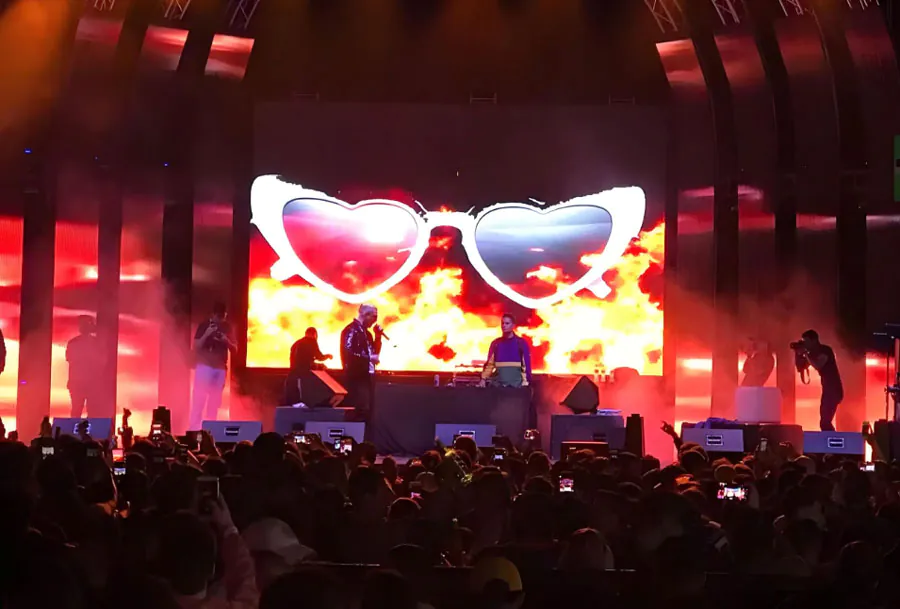
– Typical use: Broadcasted sports, premium concerts.
– Price: $450–$900 / m2 / day.
– Festival/Concert Production Package
– Includes: Large-format modules, full rigging and engineering, multiple LED walls (front, side, stage), live video mixing and content team, crew for 24/7 support.
– Typical use: Multi-day festivals, arena tours.
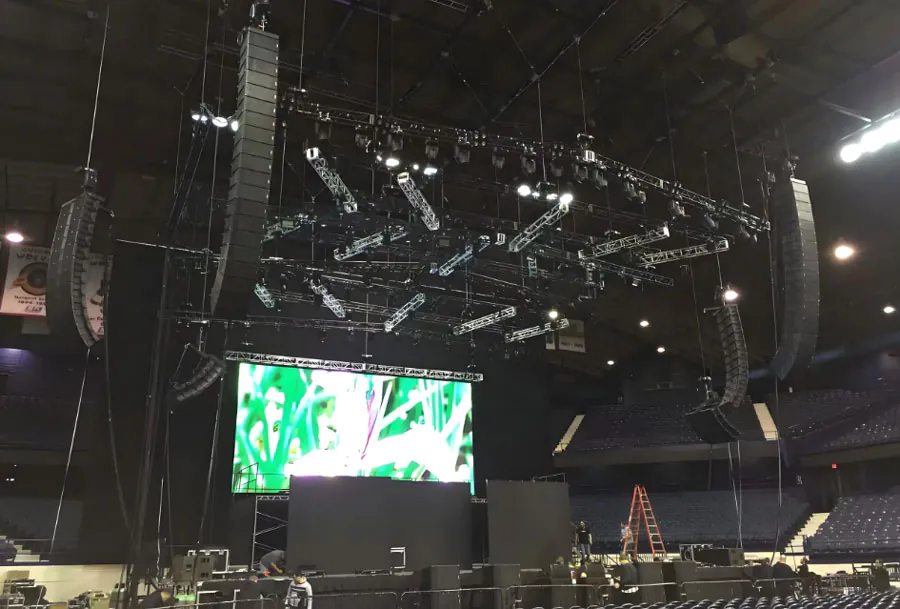
– Price: Custom quotes; often $100k+ total for large builds (per-event pricing vs per-day m2).
– Corporate Brand Activation Package
– Includes: Fine-pitch outdoor-rated panels, custom creative services, interactive sensors or cameras integration, cloud-enabled content management, dedicated project manager.
– Typical use: Product launches, experiential activations.
– Price: $600–$1,200+ / m2 / day depending on services.
Analysis Table: Comparative Snapshot of 2026 Rental Options
| Package Type | Typical Screen Size | Pixel Pitch | Daily Rental Range (USD / m2) | Recommended Use |
|---|---|---|---|---|
| Basic | 10–40 m2 | P6–P10 | $80–$200 | Sponsor signage, wayfinding |
| Standard Event | 20–120 m2 | P4–P6 | $160–$350 | Outdoor concerts, community events |
| Premium Live | 30–200 m2 | P2.5–P4 | $450–$900 | Broadcasted events, televised sports |
| Festival/Concert | 100–1000+ m2 | P4–P8 (mix) | Custom / $100k+ per event | Large festivals, tours |
| Corporate Activation | 10–80 m2 | P1.5–P3 | $600–$1,200+ | Product launches, VIP activations |
Cost Breakdown — What You’re Really Paying For
A typical line-item breakdown for a single-day outdoor LED screen rental (representative):
– Equipment rental (panels, frames, cabinets): 45–60% of the total event screen cost.
– Transport and shipping: 10–20% depending on distance and weight.
– Labor (setup, operation, takedown): 10–25% and can spike for complex builds or union venues.
– Power and generator rental: 5–15% depending on local rates and fuel costs.
– Rigging/structural engineering and permits: 5–15%.
– Content services, media servers, and live feed integration: 5–20% if included.
– Insurance and contingency: 2–5%.
Understanding this split helps when negotiating: vendors often have fixed margins on labor and logistics and more flexibility on equipment markups for multi-day hires.
Practical Considerations When Comparing Quotes
1. Always ask for itemized quotes
A single lump-sum number hides the true costs. You want to see equipment, transport, installation labor hours, power/generator, insurance, permits, and content services listed separately. Itemization enables swapping line items between vendors to get apples-to-apples comparisons.
2. Understand the minimums and hidden fees
Common hidden costs include weekend surcharges, late-night labor premiums, temporary power setup, cranes for rigging, weather contingency days, and waste removal. Confirm whether the quote assumes ideal site conditions.
3. Check technical specs thoroughly
Confirm brightness (nits), refresh rate (Hz), contrast, IP rating, viewing angle, max continuous play time, and redundancy options. For broadcast applications, ask about camera-friendly settings (no PWM flicker, high refresh rate).
4. Inspect media playback and redundancy
For critical events, paired media servers with hot-swap capability and video router redundancy are essential. Ask whether the media server supports the codecs and resolutions you need, and clarify how live feeds are handled.
5. Confirm rigging and structural engineering
Large outdoor walls require certified rigging plans, wind-load calculations, and sometimes engineering sign-off. Make sure the supplier includes these deliverables in the proposal.
Trends Impacting 2026 Pricing and Service Models
– Greater supply of finer-pitch outdoor LEDs: Prices for P3–P4 outdoor-capable cabinets have declined, increasing demand and lowering per-m2 quotes for mid-range events.
– Sustainability and power efficiency: Energy-efficient modules and smarter power management reduce generator needs but may increase equipment costs up-front.
– Modular, hybrid solutions: Rental fleets increasingly mix microLED, fine-pitch indoor/outdoor hybrid panels, and higher-refresh concert modules to meet diverse client needs. Hybrid solutions can raise setup complexity (and cost) but provide visual quality benefits.
– Value-added services: Vendors now bundle content creation, show-calling, cloud-based content updates, and remote monitoring. These services improve experience but add to price.
– Flexible finance: Subscription or “rental-to-own” options and multi-event packages are becoming more common for production companies and venues.
Negotiation Strategies to Lower Your Effective Cost
– Book earlier and off-peak: Secure lower rates and better tech availability by confirming dates well in advance and avoiding peak festival weekends.
– Consolidate services: One supplier providing screen, audio, staging, and lighting can often give a bundled discount.
– Commit to multiple events: Recurring bookings across a season often receive meaningful discounts.
– Ask for weekday rates for load-in and load-out days: Some vendors offer lower rates for non-event days that still cover tech and transport costs.
– Trade exposure for discount: Sponsors or cross-promotional exposure can enable discounts for smaller events.
Operational and Safety Checklist for Outdoor LED Rentals
– Site survey: Confirm ground conditions, access routes, and crane/truck positioning.
– Power plan: Calculate total wattage, backup needs, generator sizing, and distribution.
– Wind and weather plan: Determine allowable wind speeds, tie-downs, ballast, and contingency storm days.
– Permits and insurance: Secure event permits, rights-of-way, and insurance certificates naming stakeholders as additional insured.
– Ground-fault and electrical safety: Ensure local electrical code compliance and licensed electricians for mains connections.
– Audience sightlines and safety: Confirm sightline drawings, emergency egress, and crowd management around structures.
When to Choose Rental vs. Buying — A Quick Guide
– Choose rental when:
– You need temporary one-off installations.
– You require very large screens for occasional festivals.
– Technology changes quickly for your needs (rent to access latest gear).
– You lack storage or maintenance infrastructure.
– Consider buying when:
– You run frequent weekly or monthly events with similar specs.
– You have a secure storage, servicing, and trained in-house crew.
– Long-term ROI calculations (plus tax depreciation and service costs) make sense.
Final Recommendations for Event Organizers and Production Managers
– Start with a clear brief: audience distance, required resolution, ambient light (day/night), show length, and available footprint. A precise brief ensures accurate quotes.
– Get at least three detailed, itemized proposals and request references or recent project photos/videos.
– Include contingency days in your schedule and budget for weather and technical troubleshooting.
– Negotiate a service-level agreement covering uptime, replacement panels, and technical response times.
– Factor total event cost (including permits, insurance, and power) into your budget planning rather than focusing only on the per-m2 rate.
In 2026 the outdoor LED rental market is more capable and more competitive than ever. Expect better image quality at steadily improving price points, but don’t underestimate logistics, safety, and content delivery costs. By understanding the key cost drivers, evaluating detailed proposals, and negotiating strategically, event professionals can select the right package that balances impact, reliability, and budget.