Outdoor LED Displays for Weddings & Celebrations

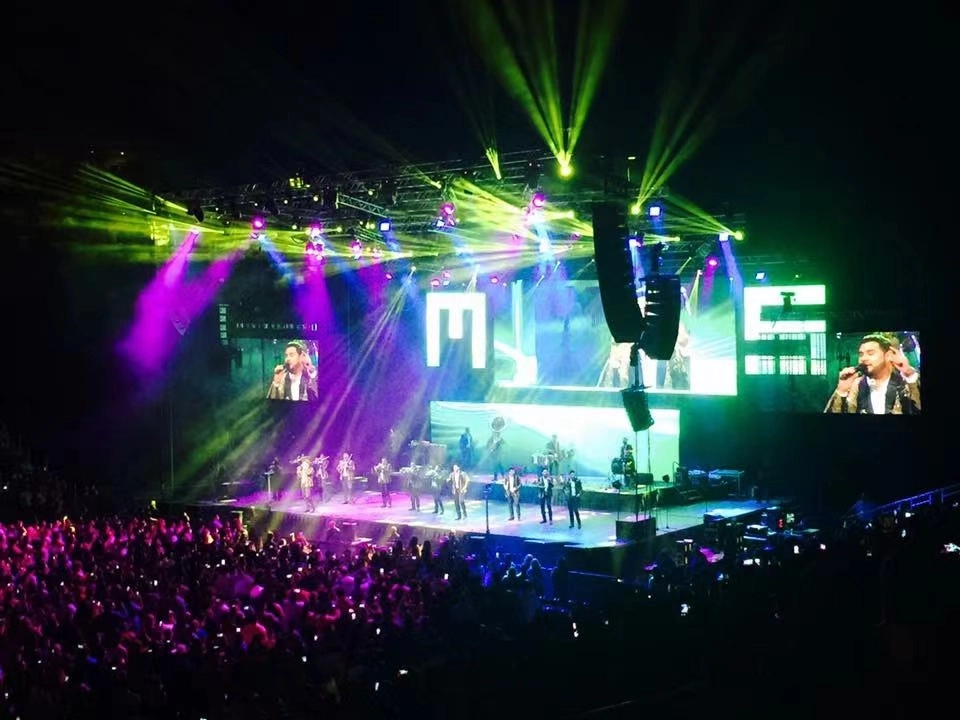
Outdoor LED Displays for weddings and celebrations can turn speeches, live video, photo montages, and custom graphics into a shared experience guests can see across a large venue.
Table of Contents
- Why Outdoor LED Displays Enhance Weddings and Celebrations
- 1. They Keep Visuals Clear in Daylight
- Brightness Matters Outdoors
- Pixel Pitch Affects Detail
- 2. They Help Every Guest Follow the Main Moments
- Live Camera Feeds Expand the View
- Refresh Rate Supports Camera-Friendly Results
- 3. They Turn Personal Content Into Part of the Event
- Use Content That Supports Each Moment
- Choose the Right Content Tools
- 4. They Improve Accessibility and Event Communication
- Captions Support Effective Communication
- Visual Directions Reduce Confusion
- 5. They Strengthen Planning When Safety Comes First
- Check Weather and Structural Protection
- Compare the Critical Specifications
- How to Plan LED Screen Placement for Outdoor Weddings and Celebrations
- 1. Map Guests, Screens, and Unobstructed Routes
- Mark the Important Viewing Zones
- Protect Guest Circulation
- 2. Position the Screen Against Sunlight, Not Into It
- Check the Sun’s Direction
- Match Brightness to Exposure
- 3. Set the Correct Height, Size, and Viewing Angle
- Calculate the Display Shape
- Raise the Image Above Obstructions
- 4. Plan the Safety, Power, and Weather Footprint
- Allow Space for Engineering and Power
- Establish Weather Triggers
- 5. Test the Placement With Real Content and Conditions
- Complete a Venue Walkthrough
- Rehearse Failure Responses
- What-Should-Buyers-Check Before Choosing an Outdoor LED Display
- 1. Match Brightness, Pixel Pitch, and Size to the Site
- Measure the Real Viewing Environment
- Calculate Native Resolution
- 2. Verify Weather Protection and Thermal Design
- Read IP Ratings Correctly
- Check the Entire Environmental System
- 3. Test Image Quality, Processing, and Content Compatibility
- Look Beyond Resolution
- Test the Complete Signal Chain
- 4. Confirm Structural, Electrical, and Legal Compliance
- Obtain Site-Specific Engineering
- Review Electrical Safety
- 5. Compare Warranty, Serviceability, and Lifetime Cost
- Calculate Operating Costs Consistently
- Read Warranty Exclusions
- How early should buyers apply for sign or planning permission?
- When is renting an outdoor LED display better than buying one?
- How should buyers protect a network-connected display from cyber risks?
- What content restrictions can affect an outdoor LED screen?
- What should happen to the display at the end of its service life?
- Conclusion
A useful reality check is that TW VISION lists one outdoor panel system at 5,000 nits, far brighter than a typical indoor screen, because direct sunlight can quickly wash out an image. (TW VISION – LED screen rental service provider, creative customization, outdoor & outside led display screen)
The challenge is choosing a display that fits the venue rather than simply booking the largest wall available. Pixel pitch, brightness, weather protection, power, structural support, viewing distance, and content format all affect the result.
This guide explains how to select the screen specification, determine placement, manage outdoor risks, prepare media, and compare supplier proposals. You will also learn which questions to ask before signing a rental agreement, so technical surprises do not interrupt the ceremony or celebration.
Why Outdoor LED Displays Enhance Weddings and Celebrations
1. They Keep Visuals Clear in Daylight
Why Outdoor LED Displays Enhance Weddings and Celebrations is largely a visibility question: purpose-built outdoor panels can produce enough light to keep images and text readable when ambient light is strong.
Brightness Matters Outdoors
Brightness is commonly measured in nits. Absen’s AW outdoor line is specified at 5,000 to 5,500 nits, while its MC event panels offer configurations rated at 3,000 or 4,000 nits. Actual requirements depend on screen direction, shade, time of day, and viewing distance. (absen.com)
A projector must send light onto another surface, where sunlight can reduce contrast. An LED wall produces the image directly, making it more suitable for afternoon ceremonies, open-air receptions, and brightly illuminated stages.
Pixel Pitch Affects Detail
Pixel pitch is the distance between neighboring LED pixels. A smaller pitch generally delivers finer detail for guests seated near the screen, while a larger pitch can be sufficient when viewers are farther away.
Consider a reception where the nearest tables are only a short distance from the display. Fine-pitch panels will usually show faces, names, and decorative typography more cleanly than panels designed for distant festival audiences.
This is one reason Why Outdoor LED Displays Enhance Weddings and Celebrations should be evaluated according to the venue layout, not screen dimensions alone.
How to apply this: Ask your supplier for the proposed brightness, pixel pitch, nearest viewing distance, and daytime demonstration before approving the rental.
2. They Help Every Guest Follow the Main Moments
Outdoor LED walls give distant or obstructed guests a clear view of ceremonies, speeches, performances, and important announcements.
Live Camera Feeds Expand the View
A camera feed can show the exchange of vows, the couple’s entrance, award presentations, birthday speeches, or stage performances in real time. This is especially useful when landscaping, columns, tents, or seating arrangements limit direct sightlines.
Outdoor screens can also offer wide viewing coverage. TW VISION Outdoor specifications list a 160-degree horizontal viewing angle and a 140-degree vertical viewing angle, although the usable result will still depend on installation and content.
A common scenario is a garden wedding with seating that extends behind the central aisle. A properly positioned screen allows guests at the rear to see expressions and details that would otherwise be missed.
Refresh Rate Supports Camera-Friendly Results
Some professional event panels offer high refresh rates. Absen’s MC series lists a 7,680 Hz refresh rate, while ROE Visual’s Opal specifications list 3,840 Hz. High-refresh equipment can reduce visible scan lines and flicker when guests or videographers record the display, although camera shutter settings remain important. (absen.com)
Why Outdoor LED Displays Enhance Weddings and Celebrations is therefore not only about making the picture larger. It is about creating a more consistent shared experience across the venue.
How to apply this: Schedule an on-camera screen test using the actual event cameras and phones, then adjust refresh, shutter, brightness, and color settings before guests arrive.
3. They Turn Personal Content Into Part of the Event
Why Outdoor LED Displays Enhance Weddings and Celebrations also relates to storytelling because one display can present photos, videos, graphics, schedules, and live content throughout the day.
Use Content That Supports Each Moment
The screen can change roles as the celebration progresses:
– Welcome guests with names, dates, and directions
– Show a photo timeline before the ceremony
– Display live video during speeches
– Present captions, menus, or activity instructions
– Run a closing montage or thank-you message
– Share sponsor recognition at community or corporate celebrations
In one case, a couple might begin with a restrained welcome design, switch to live ceremony coverage, and use motion graphics during the evening reception. The display supports the program without requiring separate printed signs or projection surfaces.
Choose the Right Content Tools
Canva provides a drag-and-drop editor for producing slideshows, captions, graphics, and short videos. Its official wedding templates can provide a starting point, but designs should be resized to the LED wall’s exact pixel canvas before export. (canva.com)
ProPresenter manages slides, media, messages, timers, and multiple screen outputs during live events. Resolume Arena is designed for live visual playback, multi-screen output, LED processing workflows, and projection mapping. (resolume.com)
Professional panels may also support specifications such as 15-bit grayscale and 3,840 Hz refresh, helping technicians reproduce gradients and motion more smoothly when the complete signal chain is configured correctly. (roevisual.com)
How to apply this: Obtain the processor’s exact canvas resolution, build every visual at that size, and provide both primary and backup files to the operator.
4. They Improve Accessibility and Event Communication
An LED display can make a celebration easier to navigate by presenting spoken information, schedules, directions, and urgent updates in a visual format.
Captions Support Effective Communication
The U.S. Department of Justice explains that effective communication may involve open captioning, closed captioning, or real-time captioning. Its ADA guidance also recognizes videotext displays, written materials, and assistive listening systems as possible auxiliary aids and services. (ada.gov)
The appropriate support depends on the event and its legal context. Private family gatherings and public accommodations may have different obligations, so organizers should seek qualified guidance when compliance requirements apply.
Why Outdoor LED Displays Enhance Weddings and Celebrations includes their ability to show accurate captions during speeches, announcements, performances, and formal presentations. However, automatic captions should be reviewed because names, multilingual phrases, and poor microphone audio can cause errors.
Visual Directions Reduce Confusion
A screen can display:
– Ceremony and reception start times
– Seating or table instructions
– Transportation departure times
– Meal service notices
– Quiet-room or accessibility information
– Weather-related program changes
Consider a venue with separate ceremony, dining, and parking areas. Rotating directional slides can help guests move between locations without repeatedly asking staff.
The Department of Justice notes that communication support should reflect the nature, length, complexity, and context of the information being delivered. (ada.gov)
How to apply this: Ask guests about accessibility needs in advance, prepare high-contrast slides, and assign one person to verify captions and schedule changes during the event.
5. They Strengthen Planning When Safety Comes First
Why Outdoor LED Displays Enhance Weddings and Celebrations depends on professional installation, weather monitoring, electrical planning, and a clear shutdown procedure.
Check Weather and Structural Protection
The IEC 60529 standard classifies the protection provided by electrical enclosures through IP codes. An IP65 rating can be useful for outdoor equipment, but it does not mean that an entire installation—including connections, cables, processors, structures, and power distribution—is automatically weatherproof. (webstore.iec.ch)
ROE Visual also advises that outdoor video walls may require additional bracing or structural support for wind resistance. Final engineering decisions should come from qualified production and rigging professionals. (roevisual.com)
The National Weather Service states, “When Thunder Roars, Go Indoors!” It recommends moving to safe shelter when thunder is heard and waiting at least 30 minutes after the last thunder before returning outside. (weather.gov)
Compare the Critical Specifications
| Item | What to check | Action to take |
|---|---|---|
| Brightness | Daylight visibility | Test at event time |
| Pixel pitch | Viewing distance | Match nearest seats |
| IP rating | Enclosure protection | Verify every component |
| Refresh rate | Camera compatibility | Record a test clip |
| Power draw | Maximum and average load | Use dedicated distribution |
| Backup media | Playback failure | Keep two tested copies |
Power requirements must come from the proposed panel model and configuration. One TW VISION product, for instance, lists different maximum and average power figures by panel variant, demonstrating why organizers should not estimate electrical load from screen size alone.
How to apply this: Require a written plan covering rigging, ballast, wind limits, weather monitoring, power distribution, cable protection, emergency shutdown, and backup playback.
How to Plan LED Screen Placement for Outdoor Weddings and Celebrations
1. Map Guests, Screens, and Unobstructed Routes
Start by placing the audience, not the screen, because every useful viewing angle depends on where guests will sit or stand.
Mark the Important Viewing Zones
Divide the venue into primary and secondary viewing areas. Primary areas include dining tables, ceremony seating, and the main dance-floor perimeter, while secondary areas may include bars, lounges, and overflow seating.
When deciding How to Plan LED Screen Placement for Outdoor Weddings and Celebrations, draw sightlines from the outermost seats toward each proposed screen. Include columns, trees, speakers, centerpieces, camera platforms, and guests standing near the aisle.
Protect Guest Circulation
Screen bases, ballast, cables, and barriers must remain outside accessible and emergency routes. The U.S. Department of Justice’s 2010 ADA Standards specify a minimum clear width of 36 inches for most accessible walking surfaces, although local requirements and event conditions may demand more space. (ada.gov)
Consider a reception where the screen looks clear from the center tables but its support structure narrows the route between dining and restrooms. Moving the complete system—not just the display—several feet can protect both access and sightlines.
How to Plan LED Screen Placement for Outdoor Weddings and Celebrations becomes easier when your diagram shows the full equipment footprint rather than a screen-shaped rectangle.
How to apply this: Print the floor plan and draw a line from every seating zone to the proposed screen while marking a continuous, unobstructed route around its complete support system.
2. Position the Screen Against Sunlight, Not Into It
The best screen position keeps direct sunlight away from the display face during the hours when guests must read it.
Check the Sun’s Direction
Use PhotoPills to view the sun’s path, azimuth, elevation, and shadow direction for the venue, date, and event time. Its Planner can model sun position for a specific location before the production team visits the site. (photopills.com)
When researching How to Plan LED Screen Placement for Outdoor Weddings and Celebrations, check several times rather than only sunset. The critical period might be a 4 p.m. ceremony, a 6 p.m. slideshow, or speeches during changing twilight.
Match Brightness to Exposure
Outdoor rental displays commonly offer several thousand nits of brightness. One ROE Visual outdoor product lists 4,500 to 5,000 nits depending on configuration, while specifications also vary by pixel pitch, panel design, and operating mode. (roevisual.com)
| Placement condition | Main risk | Action to take |
|---|---|---|
| Screen faces west | Sunset glare | Rotate or add shade |
| Sun behind screen | Guest glare | Shift viewing angle |
| Partial tree shade | Uneven contrast | Test at showtime |
| Full evening use | Excess brightness | Schedule dimming |
| Mixed day and night | Changing visibility | Save two presets |
A common scenario is a screen that looks bright during morning installation but loses contrast when low afternoon sunlight strikes the LEDs directly. How to Plan LED Screen Placement for Outdoor Weddings and Celebrations should therefore include a time-specific sunlight test.
How to apply this: Enter the venue, date, and program times into a sun-planning tool, then orient the screen so direct light reaches its rear or side whenever practical.

3. Set the Correct Height, Size, and Viewing Angle
Screen dimensions and elevation should let guests see complete images without looking sharply upward or around people.
Calculate the Display Shape
Most wedding films and presentation decks use a widescreen format. With a 16:9 display, a screen that is 16 feet wide is 9 feet high; this is a direct aspect-ratio calculation, not a universal size recommendation.
For How to Plan LED Screen Placement for Outdoor Weddings and Celebrations, measure the distance from the screen to the nearest and farthest viewing positions. Confirm the pixel pitch and minimum comfortable viewing distance with the rental provider rather than relying on a generic online formula.
Raise the Image Above Obstructions
The lower edge should clear heads, centerpieces, and production equipment without forcing front-row guests to crane their necks. Test the design from seated eye level, not only while standing beside the control position.
Published specifications also show why viewing angles matter. The ROE Visual Vanish ST lists configurations with horizontal viewing angles up to 160 degrees, but product specifications should be treated as limits rather than proof that content will look equally bright and accurate from every seat. (roevisual.com)
In one case, a wide reception layout may perform better with two moderately sized screens than one large center screen. How to Plan LED Screen Placement for Outdoor Weddings and Celebrations must account for side tables, décor height, and where guests will stand during speeches.
How to apply this: Place a temporary marker at the proposed bottom edge and inspect it from the nearest, farthest, and most off-center guest positions before approving the rigging plan.
4. Plan the Safety, Power, and Weather Footprint
A screen location is acceptable only when its structure, electricity, weather limits, and evacuation impact have been reviewed by qualified professionals.
Allow Space for Engineering and Power
The rental company should provide the screen’s complete power demand, structural method, ballast requirements, and wind operating limits. Never estimate ballast or modify a support system based only on screen dimensions.
How to Plan LED Screen Placement for Outdoor Weddings and Celebrations also requires a cable route that avoids guest paths and standing water. The National Fire Protection Association explains that outdoor electrical equipment should use GFCI protection and that outdoor receptacles in damp or wet locations require suitable weather-resistant protection. (nfpa.org)
OSHA rules also require GFCI protection for specified temporary receptacle outlets used by personnel in construction-like activities. Event requirements depend on the installation, applicable code, and local authority, so a licensed electrician or qualified power provider should design the system. (osha.gov)
Establish Weather Triggers
The National Weather Service states, “When Thunder Roars, Go Indoors.” Its guidance says there is no safe outdoor location during a thunderstorm and recommends waiting 30 minutes after the last thunder before resuming outdoor activities. (weather.gov)
How to Plan LED Screen Placement for Outdoor Weddings and Celebrations must include shutdown authority, shelter locations, wind thresholds, and a method for alerting guests.
How to apply this: Request a written power and weather plan naming the responsible technician, shutdown thresholds, shelter location, and person authorized to stop the show.
5. Test the Placement With Real Content and Conditions
The final position should be approved only after testing visibility, content, cameras, sound, and fallback procedures from real guest locations.
Complete a Venue Walkthrough
Use Google Maps before the site visit to review access points and approximate distances. Google’s measurement feature can calculate straight-line or multi-point distances, but verify all critical dimensions on location because satellite imagery may not reflect temporary layouts or recent venue changes. (support.google.com)
How to Plan LED Screen Placement for Outdoor Weddings and Celebrations should include an onsite test at approximately the same time of day as the event. Display actual names, captions, photographs, and video rather than a bright technical test pattern.
Rehearse Failure Responses
Test what happens if the main signal, processor, screen circuit, or playback computer fails. The National Weather Service’s Event Ready Guide organizes outdoor planning around four questions: potential hazards, shelter options, alert methods, and the time needed to move people to safety. (weather.gov)
Consider assigning one playback computer to the program and keeping a second device ready with critical videos. The practical value of How to Plan LED Screen Placement for Outdoor Weddings and Celebrations comes from verifying the whole guest experience, not merely powering on the panels.
How to apply this: Conduct a timed rehearsal with final content, camera settings, lighting cues, audio playback, backup media, and a documented screen shutdown procedure.
What Should Buyers Check Before Choosing an Outdoor LED Display
1. Match Brightness, Pixel Pitch, and Size to the Site
The correct display specification starts with viewing conditions rather than a supplier’s standard product package. When evaluating What Should Buyers Check Before Choosing an Outdoor LED Display, document sunlight direction, minimum viewing distance, traffic speed, mounting height, and operating hours.
Measure the Real Viewing Environment
Outdoor LED luminance is normally expressed in candelas per square metre, commonly called nits. Brightness should be assessed alongside automatic dimming because a setting suitable for direct sun may cause glare after dark.
Use these site-planning tools before requesting quotations:
| Tool | Purpose | Action to take |
|---|---|---|
| Google Maps | Review roads and sightlines | Mark viewing positions |
| SunCalc | Estimate sun direction | Check peak exposure |
| NOAA Climate Data Online | Review historical weather | Record local extremes |
Calculate Native Resolution

Pixel pitch is the centre-to-centre distance between adjacent pixels. A 3.84-metre-wide P6 display has 640 pixel columns because 3,840 millimetres divided by 6 millimetres equals 640.
Consider testing sample content from the actual closest viewing position. Fine text may need a smaller pitch, while a distant motorway display may gain little from extra resolution.
For buyers researching What Should Buyers Check Before Choosing an Outdoor LED Display, the best specification is the one validated at the site, not the one with the largest brightness figure.
How to apply this: Record three viewing positions, sun direction, screen dimensions, and nighttime conditions before asking vendors to recommend a pixel pitch.
2. Verify Weather Protection and Thermal Design
A reliable outdoor display needs documented protection against dust, water, heat, cold, humidity, and corrosion. What Should Buyers Check Before Choosing an Outdoor LED Display should therefore include test reports, enclosure drawings, cooling design, and operating limits.
Read IP Ratings Correctly
The official IEC 60529 standard defines the IP classification system. In an IP65 rating, the first digit indicates dust-tight protection, while the second indicates protection against water jets under specified test conditions.
Do not assume the front and rear of a cabinet have identical ratings. Ask whether the declared rating covers complete assembled cabinets, service doors, cable entries, connectors, and module joints.
Check the Entire Environmental System
Review these items in writing:
– Published operating and storage temperature ranges
– Humidity limits and condensation controls
– Cabinet material and corrosion treatment
– Drainage paths and pressure equalisation
– Fan, filter, or air-conditioning maintenance
– UV resistance for masks, seals, and cables
A common scenario is a coastal installation where salt exposure damages untreated fasteners even though the LED modules continue working. Request material specifications rather than accepting “weatherproof” as sufficient evidence.
When considering What Should Buyers Check Before Choosing an Outdoor LED Display, compare the environmental limits with historical site data and expected cabinet temperatures.
How to apply this: Ask each bidder for the IP test report, thermal design summary, and a list of components exposed to rain or salt air.
3. Test Image Quality, Processing, and Content Compatibility
Image performance should be judged with real content, a camera test, and the complete control system. For anyone asking What Should Buyers Check Before Choosing an Outdoor LED Display, module samples alone cannot reveal processing delays, low-brightness banding, or cabinet-to-cabinet variation.
Look Beyond Resolution
An 8-bit RGB signal can represent 256 levels per channel and 16,777,216 colour combinations because `256 × 256 × 256 = 16,777,216`. However, input bit depth does not prove that a display will reproduce smooth gradients after brightness reduction and calibration.
Ask for full-screen tests using:
– Dark grey gradients
– Skin tones and brand colours
– Small text on contrasting backgrounds
– Slow camera pans
– Solid red, green, blue, white, and black images
Test the Complete Signal Chain
Confirm supported input resolutions, scaling behaviour, redundancy, video latency, content scheduling, remote monitoring, and recovery after power or network loss. If the screen will appear on television or social media, record it with the production camera at several shutter settings.
In one case, a display may look stable to the eye but show rolling bands on camera because the refresh behaviour conflicts with the camera settings. The demonstration should use the proposed receiving cards, processor, firmware, and modules.
What Should Buyers Check Before Choosing an Outdoor LED Display must include signed acceptance criteria for uniformity, dead pixels, colour consistency, and camera performance.
How to apply this: Give every shortlisted vendor the same five-minute test file and score the complete display under daytime, dimmed, and on-camera conditions.
4. Confirm Structural, Electrical, and Legal Compliance
The display must comply with the rules governing its structure, wiring, electromagnetic emissions, location, and intended use. What Should Buyers Check Before Choosing an Outdoor LED Display is therefore partly an engineering and permitting question, not just a product-selection decision.
Obtain Site-Specific Engineering
Wind loads depend on location, structure height, terrain, exposure, screen shape, and local building rules. The ASCE 7 standard provides loading criteria widely used in structural design, but the applicable edition and approval process depend on the authority having jurisdiction.
Require stamped calculations where local law calls for them. The analysis should cover the display, mounting frame, foundations, fasteners, access platforms, and any cladding that changes wind pressure.
Review Electrical Safety
The U.S. Occupational Safety and Health Administration states: “Only equipment approved for the purpose shall be used.” Buyers should verify applicable product listings, disconnects, grounding, surge protection, cable ratings, branch circuits, and service access.
The FCC separates digital devices into Class A and Class B categories under Part 15, with different intended environments. Ask which emissions classification applies and request the supporting test documentation.
A practical What Should Buyers Check Before Choosing an Outdoor LED Display review also identifies who obtains planning permission, road approval, electrical inspection, and final sign-off.
How to apply this: Send the proposed design to a licensed local structural engineer and electrician before approving the purchase order.
5. Compare Warranty, Serviceability, and Lifetime Cost
The lowest purchase price is not necessarily the lowest-cost operating choice. A complete What Should Buyers Check Before Choosing an Outdoor LED Display assessment should compare energy use, spare parts, labour, access equipment, software support, and replacement risk.
Calculate Operating Costs Consistently
Use the manufacturer’s typical and maximum power figures, but ask how each figure was measured. If a display averages 4 kW for 12 hours daily, annual consumption is `4 × 12 × 365`, or 17,520 kWh; multiply that result by your local electricity tariff.
This calculation is only an estimate because content brightness, ambient-light control, climate, and cooling equipment affect consumption. Require power measurements during the acceptance test if energy cost is material to the project.
Read Warranty Exclusions
Compare the following terms line by line:
– Parts, labour, shipping, and travel coverage
– Brightness degradation and colour-uniformity terms
– Dead-pixel and module-failure thresholds
– Response and restoration targets
– Spare-module availability
– Firmware and control-system support
– Damage exclusions for weather, corrosion, or power events
Consider a roof-mounted screen that requires a crane for module replacement. A free component may have little value if access and labour remain the buyer’s responsibility.
When deciding What Should Buyers Check Before Choosing an Outdoor LED Display, require a service plan that explains fault detection, safe access, spare inventory, and escalation contacts.
How to apply this: Build a five-year cost sheet using quoted energy assumptions, scheduled maintenance, access costs, warranty exclusions, and spare-part pricing.
Frequently Asked Questions About What Should Buyers Check Before Choosing an Outdoor LED Display
How early should buyers apply for sign or planning permission?
Start before signing a non-refundable equipment contract because zoning rules may restrict dimensions, placement, animation, brightness, or operating hours. A historic district or roadside location may require reviews from several authorities. When researching What Should Buyers Check Before Choosing an Outdoor LED Display, obtain written confirmation of the approval path and make the purchase conditional on receiving the required permits.
When is renting an outdoor LED display better than buying one?
Rental is often more suitable for short events, changing venues, or projects without permanent planning approval. A touring event may also need lightweight cabinets designed for repeated assembly rather than sealed fixed-installation units.
What Should Buyers Check Before Choosing an Outdoor LED Display in this situation includes setup labour, transport cases, rigging certification, damage liability, and technical support during operating hours.
How should buyers protect a network-connected display from cyber risks?
Place the controller on a segmented network, remove default credentials, limit remote access, and define responsibility for firmware updates. A display connected directly to a public network can become vulnerable even when its visual hardware performs correctly.
What Should Buyers Check Before Choosing an Outdoor LED Display should include user roles, audit logs, encrypted remote access, backup configurations, and a documented procedure for revoking supplier access.
What content restrictions can affect an outdoor LED screen?
Local rules may limit flashing images, rapid movement, brightness changes, political advertising, alcohol promotions, or content visible from roads. An installation near homes may also face operating-hour restrictions that do not apply to a stadium screen.
As part of What Should Buyers Check Before Choosing an Outdoor LED Display, have legal and advertising teams review both municipal sign rules and contractual content restrictions before launch.
What should happen to the display at the end of its service life?
The contract should assign responsibility for dismantling, transport, data removal, recycling, and disposal of electronic components. Some regions apply electronic-waste or producer-responsibility rules, while batteries and control equipment may need separate handling.
What Should Buyers Check Before Choosing an Outdoor LED Display should include whether modules can be refurbished, whether materials are documented, and whether the supplier offers a take-back program.
Conclusion
A sound purchase decision links every technical claim to the actual site, operating plan, and acceptance test. What Should Buyers Check Before Choosing an Outdoor LED Display ultimately comes down to evidence rather than brochure language.
– Site fit: Validate pitch, resolution, brightness, sightlines, and nighttime dimming.
– Durability: Confirm IP documentation, thermal limits, materials, and corrosion protection.
– Compliance: Obtain structural calculations, electrical approvals, permits, and emissions records.
– Lifetime value: Compare energy, maintenance access, warranty exclusions, spares, and support.
Create one written specification and send it unchanged to every shortlisted supplier. Then require supporting test reports, a complete-system demonstration, itemised ownership costs, and measurable acceptance criteria before placing an order.