Custom Giant LED Screens: How to Prevent Design Changes and Costly Rework

Custom Giant LED Screens: How to Prevent Design Changes and Costly Rework begins with one overlooked fact: the display is not a single product but a coordinated system of structure, power, data, content, control, and installation requirements. A design decision in one area can force changes across several others.
Table of Contents
- 1. Freeze the Performance Brief Before Design Starts
- Define acceptance criteria
- 2. Verify the Site Before You Approve the Screen
- Treat access as a design input
- 3. Coordinate Structure, Power, Data, and Service Access
- Design the data path early
- 4. Approve Content Against the Real Display Specification
- Separate creative approval from technical approval
- 5. Control Revisions With Formal Sign-Off
- Establish decision gates
- How do weather conditions affect an outdoor LED screen design?
- Can an LED screen be installed on an existing wall?
- What happens if the final content does not match the screen ratio?
- Should a rental LED screen follow the same approval process?
- When should a client request spare LED modules?
- Conclusion
The main risk in Custom Giant LED Screens: How to Prevent Design Changes and Costly Rework is not usually the LED modules themselves. It is late information about viewing distance, screen dimensions, mounting conditions, electrical capacity, content formats, service access, or local safety requirements.
This guide explains five practical controls that reduce redesign risk:
– Freeze the performance brief before requesting quotations.
– Validate the physical site before engineering begins.
– Coordinate power, data, structure, and service access.
– Approve content using the actual display specification.
– Control revisions through documented sign-off.
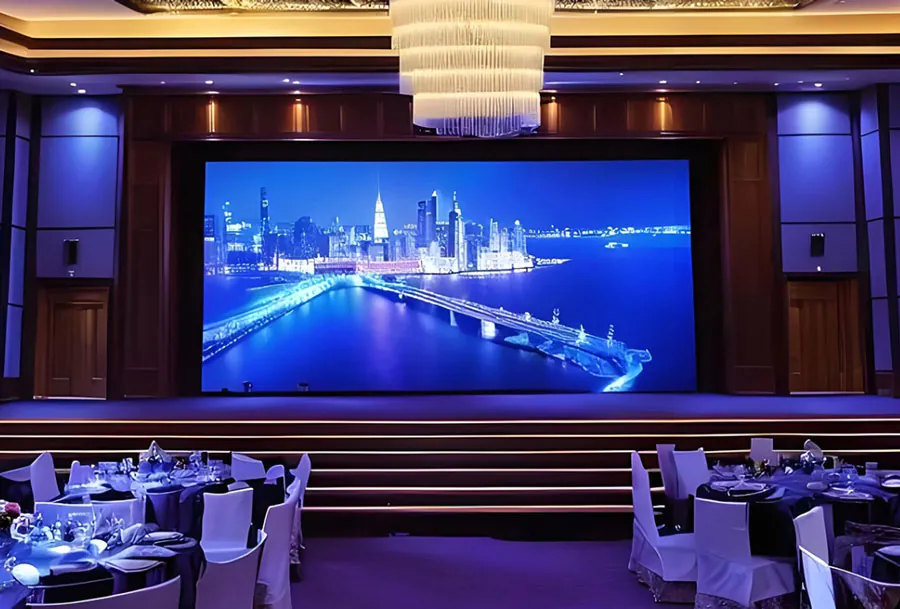
Indoor/outdoor led display for rental-TW VISION
The recommendations apply to indoor walls, outdoor billboards, stadium displays, retail installations, event screens, and architectural media façades. These project types all benefit from the same approach to Custom Giant LED Screens: How to Prevent Design Changes and Costly Rework.
1. Freeze the Performance Brief Before Design Starts
The most effective way to prevent redesign is to define the display’s required performance before anyone finalizes dimensions or hardware. Custom Giant LED Screens: How to Prevent Design Changes and Costly Rework depends on a brief that states what the screen must do, where it will be viewed, and how it will be operated.
Start with measurable requirements rather than product language. Record the following:
– Viewing distance from the nearest and farthest audience areas
– Indoor or outdoor environment
– Required operating hours
– Brightness conditions and whether automatic dimming is needed
– Target aspect ratio and content orientation
– Required refresh behavior for cameras
– Front-service or rear-service access
– Maximum available depth, weight, and power
– Required control sources and signal formats
– Local permitting, fire, structural, and electrical requirements
For Custom Giant LED Screens: How to Prevent Design Changes and Costly Rework, pixel pitch should be selected from viewing conditions, not from a sales preference. A smaller pitch can improve close-range image detail, but it may also increase module count, processing demands, cost, and replacement complexity.
Define acceptance criteria
Write acceptance criteria into the brief before quotations arrive. Include brightness range, color performance, dead-pixel policy, image uniformity, ingress protection where relevant, warranty terms, spare parts, and commissioning tests. This step gives Custom Giant LED Screens: How to Prevent Design Changes and Costly Rework a measurable approval basis.
Use standards as reference points, but do not treat a standard as a complete project specification. IEC 60529 defines the IP Code system for classifying protection against solid particles and water; the required rating still depends on the actual enclosure, installation, drainage, and exposure.
A common scenario is a client selecting a screen by width and height only, then discovering that the chosen cabinet depth blocks a maintenance route. In Custom Giant LED Screens: How to Prevent Design Changes and Costly Rework, the problem is a missing constraint, not necessarily a defective product.
How to apply this: Create a one-page performance brief, assign an owner to every requirement, and require written approval before suppliers begin detailed engineering. This is a foundational control for Custom Giant LED Screens: How to Prevent Design Changes and Costly Rework.
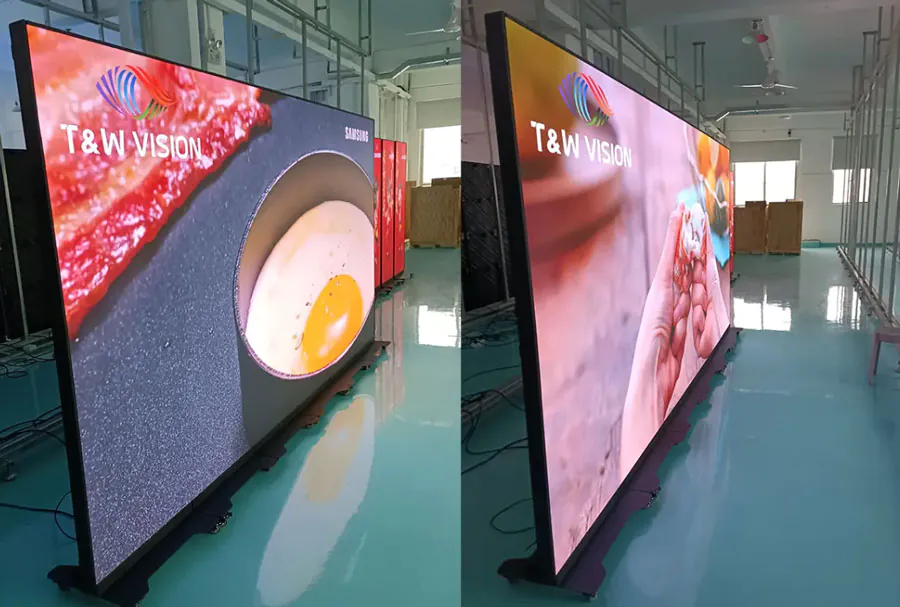
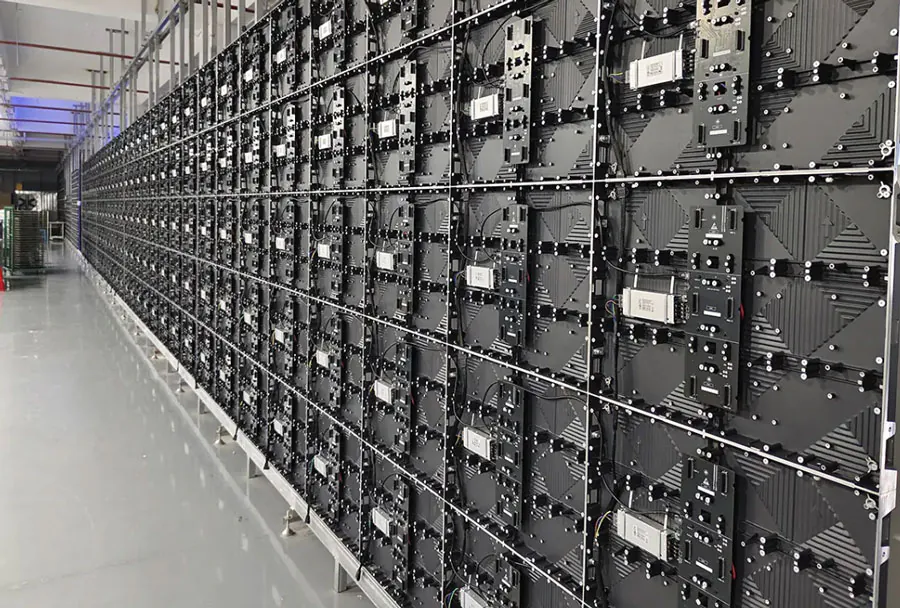
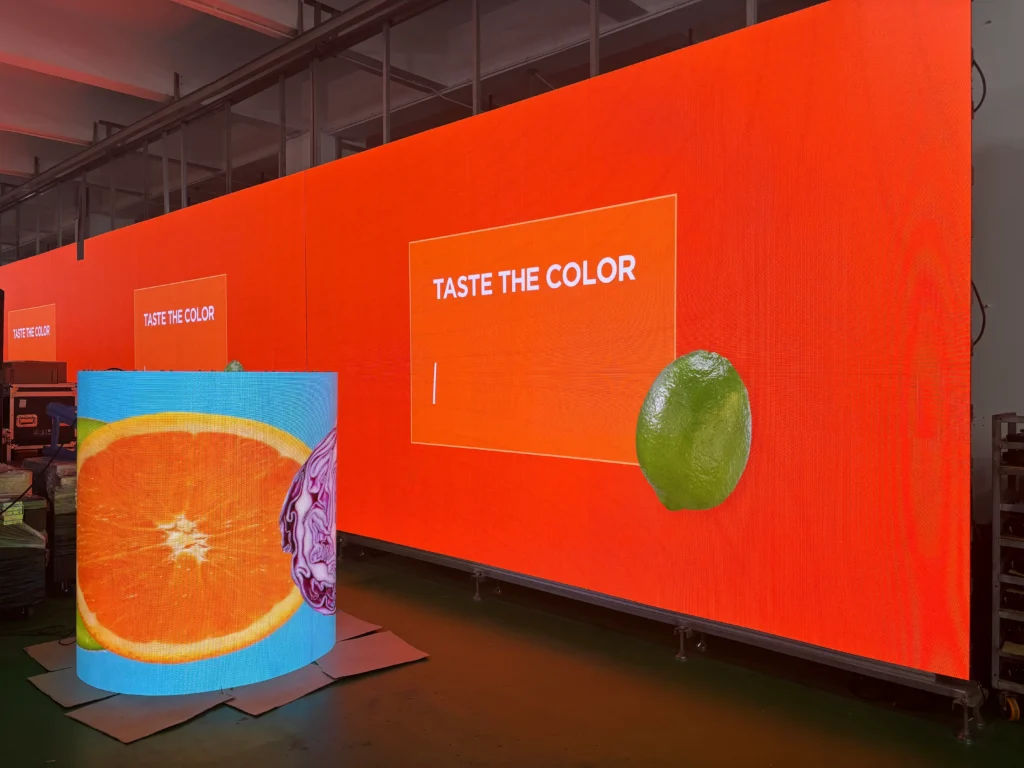
P2.6 indoor LED display for rentla usage, 500x1000mm cabinet.-made by TW VISION PQ series.
2. Verify the Site Before You Approve the Screen
A site survey should confirm physical, environmental, and operational conditions before Custom Giant LED Screens: How to Prevent Design Changes and Costly Rework reaches the quotation stage. A drawing or photograph is not enough when the installation depends on hidden structure, access routes, or existing electrical equipment.
Record the following during the survey:
– Exact mounting coordinates and available wall or frame capacity
– Structural members, fixings, and allowable attachment points
– Cable pathways and penetrations
– Electrical panel location and spare capacity
– Earthing and bonding arrangements
– Ventilation, heat, moisture, dust, and direct sunlight
– Crane, lift, scaffold, or manual handling requirements
– Maintenance clearance and replacement routes
– Network, fiber, and control-room locations
– Public protection, barriers, and emergency access
For Custom Giant LED Screens: How to Prevent Design Changes and Costly Rework, photographs should include a scale reference and a clear location label. Laser measurements, structural drawings, and marked-up plans are more useful than a collection of unlabeled images.
Treat access as a design input
Service access often causes late changes. A screen that fits the elevation may still fail if technicians cannot remove a module, open a rear door, or safely reach a power supply. Custom Giant LED Screens: How to Prevent Design Changes and Costly Rework must account for service activities as well as the initial installation.
OSHA’s electrical safety guidance states that “only qualified persons may work on electric circuit parts or equipment that have not been deenergized.” That requirement affects isolation points, access planning, lockout procedures, and the location of service equipment. Review the applicable local rules with the responsible electrical professional.
Consider a retail installation above a public walkway. The screen may fit the architectural opening, but a maintenance plan requiring ladders in the customer path can trigger a redesign of the frame or access equipment. This is a typical consideration in Custom Giant LED Screens: How to Prevent Design Changes and Costly Rework.
How to apply this: Produce a signed site-survey pack containing dimensioned drawings, photographs, access notes, electrical information, and a list of unresolved site assumptions. A complete survey supports Custom Giant LED Screens: How to Prevent Design Changes and Costly Rework before supplier commitments are made.
3. Coordinate Structure, Power, Data, and Service Access
The design is ready for procurement only when the physical frame, electrical system, data network, and maintenance strategy agree. This coordination is central to Custom Giant LED Screens: How to Prevent Design Changes and Costly Rework because each package can impose limits on the others.
Create a responsibility matrix showing who owns each interface:
| Interface | What to confirm | Action to take |
|---|---|---|
| Structure | Loads and fixings | Obtain engineer approval |
| Power | Circuits and isolation | Confirm with electrician |
| Data | Signal path and bandwidth | Test the route |
| Content | Resolution and frame rate | Approve test files |
| Access | Module and PSU replacement | Validate service method |
| Environment | Heat, water, dust | Confirm enclosure strategy |
Power planning should cover normal operation, startup behavior, distribution, isolation, and future replacement. In Custom Giant LED Screens: How to Prevent Design Changes and Costly Rework, do not rely on a generic “maximum power” line in a quotation without asking how it was calculated and which operating assumptions apply.
Design the data path early
Signal problems are often discovered after the screen is installed. Confirm source resolution, processor inputs, output mapping, cable lengths, redundancy requirements, network ownership, and control permissions. These checks are essential to Custom Giant LED Screens: How to Prevent Design Changes and Costly Rework.
For camera-facing applications, test the screen with the actual camera package. Refresh behavior, scan method, shutter settings, and processor configuration can affect visible artifacts even when the screen appears normal to the eye.
Bluebeam can support structured PDF review through markups, measurements, and review status tools. Bluebeam is useful when the project team needs a traceable record of drawing comments and responses.
A common failure occurs when the screen supplier designs the display but the electrical contractor receives no final load schedule. The result may be a late change to circuits, containment, or isolation equipment, which is exactly the type of issue addressed by Custom Giant LED Screens: How to Prevent Design Changes and Costly Rework.
How to apply this: Hold one interface review with the display supplier, structural engineer, electrical contractor, network owner, and content lead before releasing purchase orders. This review is a practical checkpoint for Custom Giant LED Screens: How to Prevent Design Changes and Costly Rework.
4. Approve Content Against the Real Display Specification
Content approval should use the final processor mapping, resolution, aspect ratio, brightness limits, and viewing environment. Otherwise, Custom Giant LED Screens: How to Prevent Design Changes and Costly Rework can continue even after the hardware has been ordered.
Ask the supplier for a display specification that includes:
– Native pixel dimensions
– Cabinet and module arrangement
– Processor canvas size
– Input and output formats
– Maximum and typical brightness
– Refresh and scan details
– Color-management assumptions
– Required file formats
– Content safe areas
– Scaling behavior
– Emergency and fallback content behavior
The content team should review a realistic test sequence, not only a static logo. Include fine text, skin tones, gradients, dark scenes, rapid motion, branded colors, subtitles, and content with important edges. This supports Custom Giant LED Screens: How to Prevent Design Changes and Costly Rework by exposing problems before launch.
Separate creative approval from technical approval
A creative stakeholder may approve the message while a technical reviewer checks whether the content remains legible at the intended distance. Both approvals matter, and Custom Giant LED Screens: How to Prevent Design Changes and Costly Rework requires that they be recorded separately.
Adobe’s After Effects is widely used for motion graphics, while DaVinci Resolve supports editing, color, effects, and delivery workflows. Neither tool guarantees correct output by itself; the project must still validate the exported file against the processor and screen configuration.
In one case, a presentation used a standard widescreen canvas even though the installed display had a very wide custom ratio. The supplier could stretch the file, but that distorted text and forced a content redesign. Custom Giant LED Screens: How to Prevent Design Changes and Costly Rework helps prevent this outcome by defining the content canvas early.
How to apply this: Export a short test package in the final delivery format, play it through the intended processor, and obtain written approval from both the creative and technical reviewers. This test is a core control in Custom Giant LED Screens: How to Prevent Design Changes and Costly Rework.
5. Control Revisions With Formal Sign-Off
A revision process prevents small requests from becoming untracked engineering changes. For Custom Giant LED Screens: How to Prevent Design Changes and Costly Rework, every change should identify its effect on cost, schedule, safety, performance, and already-approved documents.
Use a simple change register with these fields:
– Change number and date
– Requesting person
– Description of the change
– Reason for the change
– Documents affected
– Technical impact
– Cost impact
– Schedule impact
– Required approvals
– Status and implementation date
Establish decision gates
Useful gates include:
- Performance brief approved
- Site information accepted
- Concept and outline layout approved
- Coordinated engineering approved
- Procurement released
- Factory or workshop test accepted
- Installation and commissioning accepted
For Custom Giant LED Screens: How to Prevent Design Changes and Costly Rework, the word “approved” should have a defined meaning. It should identify the document revision, reviewer, date, and remaining assumptions. Verbal agreement during a meeting is not a reliable substitute for controlled approval.
Autodesk Construction Cloud supports project information, issue management, and document coordination through Autodesk Construction Cloud. A platform is helpful, but even a controlled spreadsheet and shared revision folder can work when ownership is clear. Both approaches can support Custom Giant LED Screens: How to Prevent Design Changes and Costly Rework.
Consider a late request to increase screen height after the supporting frame has been fabricated. The change may alter wind loading, power distribution, content mapping, transport, and permits, so the register should trigger a full impact review. This illustrates why Custom Giant LED Screens: How to Prevent Design Changes and Costly Rework requires formal change control.
How to apply this: Freeze each gate in writing and reject implementation of any change that lacks an identified owner, impact review, and approval decision. This keeps Custom Giant LED Screens: How to Prevent Design Changes and Costly Rework focused on accountable decisions.
Frequently Asked Questions About Custom Giant LED Screens: How to Prevent Design Changes and Costly Rework
How do weather conditions affect an outdoor LED screen design?
Weather affects enclosure selection, drainage, corrosion protection, thermal management, wind loading, and maintenance timing. Custom Giant LED Screens: How to Prevent Design Changes and Costly Rework should account for the actual site climate rather than relying only on an indoor demonstration. A coastal site may require different materials and inspection practices from a dry inland location.
Confirm environmental requirements with the engineer and supplier before final equipment selection.

Can an LED screen be installed on an existing wall?
Sometimes, but the wall must be assessed for load transfer, fixings, vibration, water penetration, and access. Custom Giant LED Screens: How to Prevent Design Changes and Costly Rework does not mean assuming an existing wall is structurally suitable. A masonry façade, lightweight cladding system, and concrete frame require different attachment strategies.
Obtain a site-specific structural review before accepting the mounting concept or promising a final screen size.
What happens if the final content does not match the screen ratio?
The processor may scale, crop, pillarbox, or stretch the content, depending on its configuration. Custom Giant LED Screens: How to Prevent Design Changes and Costly Rework includes planning for these behaviors before launch. A venue may need several content templates if different sources use different ratios.
Test each template with representative text and motion, then document the approved scaling rule for operators.
Should a rental LED screen follow the same approval process?
Rental systems still need a controlled brief, but the emphasis shifts toward venue access, rigging, transport, setup time, power distribution, signal handoff, and show-day support. Custom Giant LED Screens: How to Prevent Design Changes and Costly Rework remains relevant when a temporary design is changed during rehearsals.
Confirm the replacement plan, spare inventory, backup signal path, and operator responsibilities in the event documentation.
When should a client request spare LED modules?
Request spares before procurement closes, after reviewing the supplier’s replacement process and warranty terms. Custom Giant LED Screens: How to Prevent Design Changes and Costly Rework includes lifecycle planning, not only initial installation. Spares may need matching calibration data, storage protection, and a documented location.
For a remote or high-visibility site, ask how quickly failed modules, power supplies, receiving cards, and cables can be diagnosed and replaced.
Conclusion
The most reliable way to control a custom LED project is to manage decisions before they become hardware changes. A clear brief, verified site, coordinated interfaces, realistic content tests, and formal approvals reduce ambiguity across the project team.
– Define viewing, environmental, electrical, structural, and content requirements early.
– Confirm access and maintenance routes as carefully as screen dimensions.
– Test the complete signal chain with representative content.
– Record every revision and its effect on cost, schedule, and safety.
Custom Giant LED Screens: How to Prevent Design Changes and Costly Rework is ultimately a coordination challenge. Start by building the performance brief and site-survey pack, then schedule a cross-discipline review before requesting final quotations.