Energy-Efficient Flexible LED Display for Smart Advertising

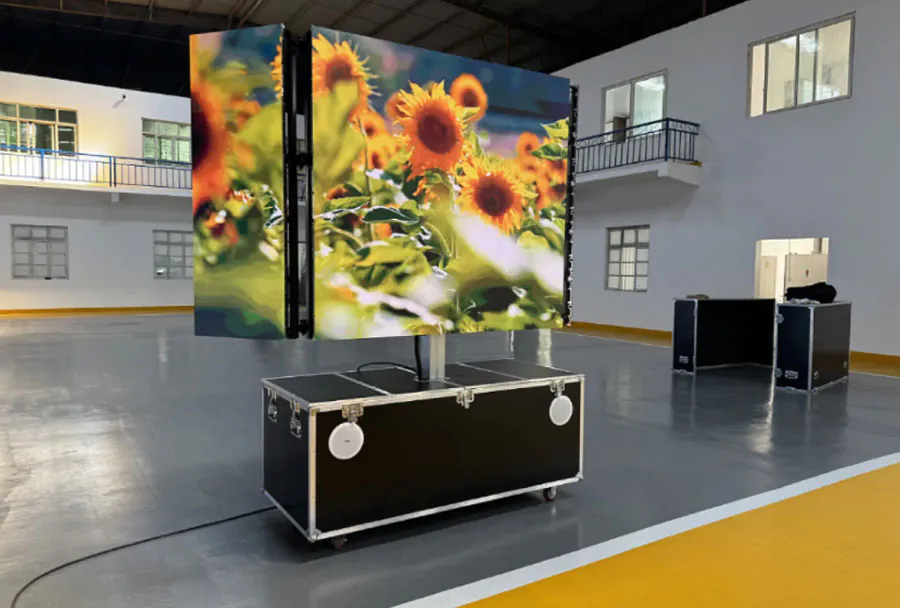
In today’s cities, advertising is no longer limited to flat billboards or fixed lightboxes. Audiences move quickly, information updates faster, and brands are expected to communicate with impact while staying environmentally responsible. That is why the concept of an Energy-Efficient flexible led display for Smart Advertising is becoming a practical choice, not a futuristic idea. With flexible LED technology, advertisers can create curved, wraparound, and space-adaptive displays. With energy-efficient design, they can keep operating costs under control while meeting modern sustainability expectations.
As a professional service provider, TW VISION focuses on delivering flexible LED display solutions that are designed for smart advertising needs—high visibility, creative freedom, reliable operation, and power-conscious performance.
Why Smart Advertising Needs Flexible LED Displays
Smart advertising is not only about digital content; it is about delivering the right message in the right place with the right visual format. Traditional LED screens are excellent for many applications, but they can be limited when the installation surface is curved, irregular, or architecturally complex. Flexible LED displays solve that limitation by allowing screens to conform to the environment rather than forcing the environment to conform to the screen.
This matters because attention is increasingly linked to novelty and immersion. A curved corner display at a shopping mall entrance can outperform a standard flat screen simply because it naturally matches sightlines and creates a “surround” effect. A column wrap display in a metro station can turn dead space into a high-value media surface. A wave-shaped display inside a flagship store can extend brand identity into architecture. These are all examples of how flexible LED supports smart advertising: it makes the medium itself part of the message.
Energy Efficiency Is No Longer Optional
As screens scale up and run longer hours, energy consumption becomes a core business metric. For advertisers and property operators, electricity bills are recurring costs. For brands, energy efficiency also impacts reputation—especially in premium retail, transportation hubs, and smart city projects where sustainability targets are increasingly formalized.
An Energy-Efficient Flexible LED Display addresses both concerns. It reduces operational spending while enabling responsible deployment at scale. The key is not simply “lower brightness” or “turning it off earlier,” but engineering efficiency into the full system: LED choice, driving method, power management, control strategy, and installation design.
What Makes a Flexible LED Display Energy-Efficient
Energy efficiency in LED displays is achieved through a combination of hardware and software measures. In smart advertising environments—where content changes frequently and ambient lighting varies—the most effective solutions balance visibility and power use dynamically.
1) High-Efficiency LED and Optimized Driving
The efficiency of the light source is foundational. High-performance LEDs can deliver strong brightness at lower power, especially when paired with optimized driver ICs and scanning strategies. In advertising, the goal is to maintain punchy visuals and accurate color without forcing the system to run at maximum power continuously.
A well-designed driving architecture reduces waste heat and improves stability. This matters in flexible displays because flexible modules are often used in creative structures where airflow and heat dissipation may differ from conventional cabinet screens.
2) Smart Brightness and Content-Aware Power Control
Not every scene needs full output. Many advertisements include darker backgrounds, gradients, or night-time aesthetics. Smart control systems can reduce power draw based on content characteristics and ambient light, while preserving perceived contrast and readability.
For example, a flexible LED installed in an airport corridor does not need the same brightness at 10 p.m. as it does at 10 a.m. If the system can adjust output automatically, it saves energy without compromising brand impact.
3) Lightweight Structure and Efficient Installation
Energy efficiency is also indirectly influenced by mechanical and installation decisions. Flexible LED modules are typically lighter and can be installed with less structural reinforcement than heavy traditional cabinets in certain scenarios. Reduced structural complexity can lower total project footprint, simplify maintenance access, and improve long-term operational efficiency.
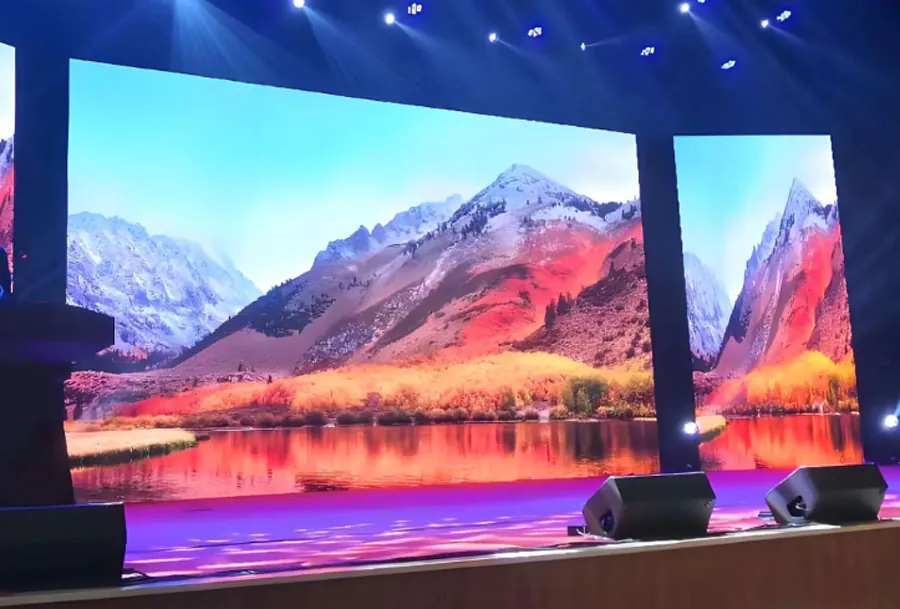
In addition, well-planned power distribution and signal routing reduce losses and make the system more stable, minimizing downtime and unnecessary energy waste from repeated restarts or overheating.
4) Thermal Management for Long-Term Efficiency
Heat is the enemy of efficiency and lifespan. When LED modules run hot, they often require higher drive current to maintain brightness, which further increases heat. Effective thermal design keeps performance stable and helps maintain lower power consumption over time.
Flexible LED projects must consider the installation surface material, ventilation path, and module spacing. A professional service provider like TW VISION evaluates these factors early so that creative shapes do not compromise reliability.
Flexible LED Forms That Upgrade Smart Advertising
One reason flexible LED is so powerful for advertising is that it unlocks new forms. Instead of competing for attention in a crowded field of flat screens, a brand can create a uniquely shaped canvas that becomes a landmark.
Curved Wall Displays
Curved walls are common in malls, exhibition halls, and premium retail spaces. A flexible LED display can match the curvature precisely, making the content feel integrated with the building. This increases dwell time and improves message recall.
Corner Wrap Displays
Corners are high-traffic visual points. Wrapping a screen around a corner creates a continuous storytelling surface, visible from multiple angles. For smart advertising, this is ideal for sequential messaging—teasers on one side and a key offer on the other—while keeping the narrative connected.
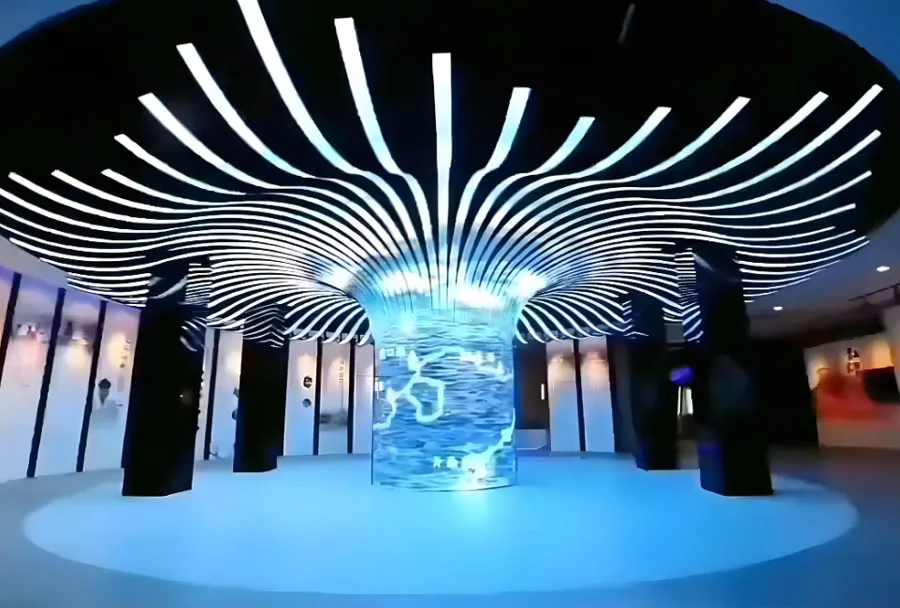
Cylindrical Columns and Pillars
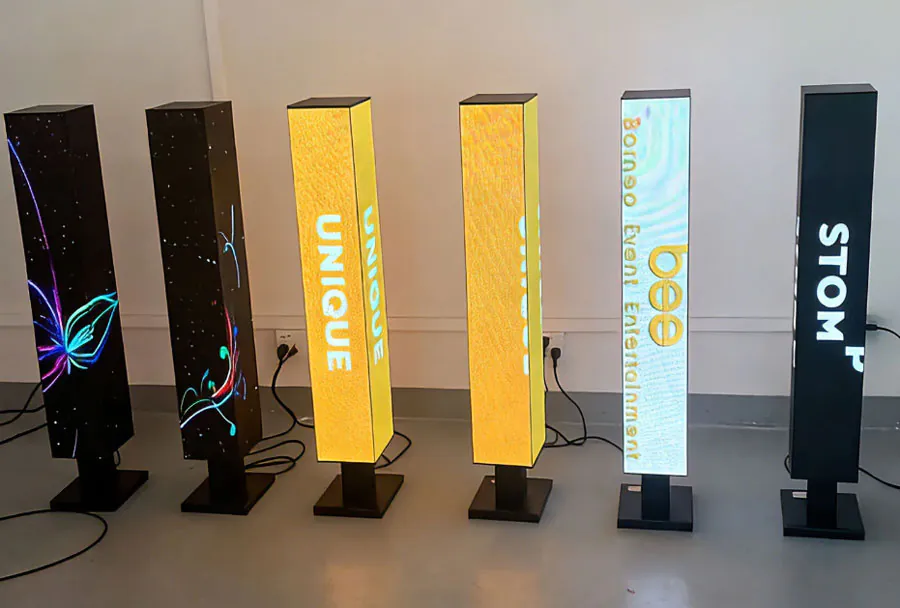
Columns are often unavoidable “blank areas” in public architecture. With flexible LED, they become premium inventory. For brands, column displays are perfect for product loops, event countdowns, wayfinding ads, or localized promotions tied to nearby stores.
Wave, Ribbon, and Artistic Installations
In flagship stores and brand experience centers, advertising becomes immersive. Wave-shaped displays and ribbon-style installations can deliver motion-based storytelling that feels more like art than a commercial. This is where flexible LED becomes a strategic asset: it elevates the advertising format itself.
How Energy Efficiency Supports Better ROI in Advertising
Energy-efficient display design is often framed as an environmental decision, but it is equally a financial decision. Smart advertising projects typically involve continuous operation, frequent content updates, and long-term placement in premium areas. Over time, energy use affects return on investment in several ways:
1. Lower operating costs: Reduced electricity consumption directly lowers monthly expenses.
2. Stable performance: Efficient systems generate less heat and often maintain brightness and color consistency longer.
3. Longer lifecycle: Better thermal conditions can reduce component stress, supporting longer service life.
4. More scalable deployments: When power constraints are lower, more screens can be deployed in the same facility without major electrical upgrades.
For facility owners and media operators, these factors can mean higher net revenue per advertising surface. For brands, it means more confidence that the display will look premium every day it runs.
TW VISION as a Service Provider: From Concept to Operation
A flexible LED advertising project is not only about purchasing modules; it is a system project that spans design, installation, content workflow, and ongoing support. TW VISION provides professional services that align the technology with business goals.
Consultation and Scenario Planning
Every location has different ambient light, viewer distance, architectural constraints, and traffic patterns. TW VISION helps clients define the right display approach—where to place it, what shape is most effective, what resolution fits the viewing distance, and how to balance brightness with energy goals.
Custom Structural and Display Integration
Flexible LED is most valuable when it is integrated cleanly. TW VISION supports projects that require curved surfaces, wrapped corners, or special creative shapes, helping ensure the final result is visually seamless and mechanically stable.
Energy-Conscious System Configuration
Beyond the screen itself, the system includes control, power distribution, and content scheduling. TW VISION can help configure brightness strategies, operating schedules, and maintenance planning so the display stays impactful without unnecessary energy use.
After-Sales Support and Maintenance Readiness
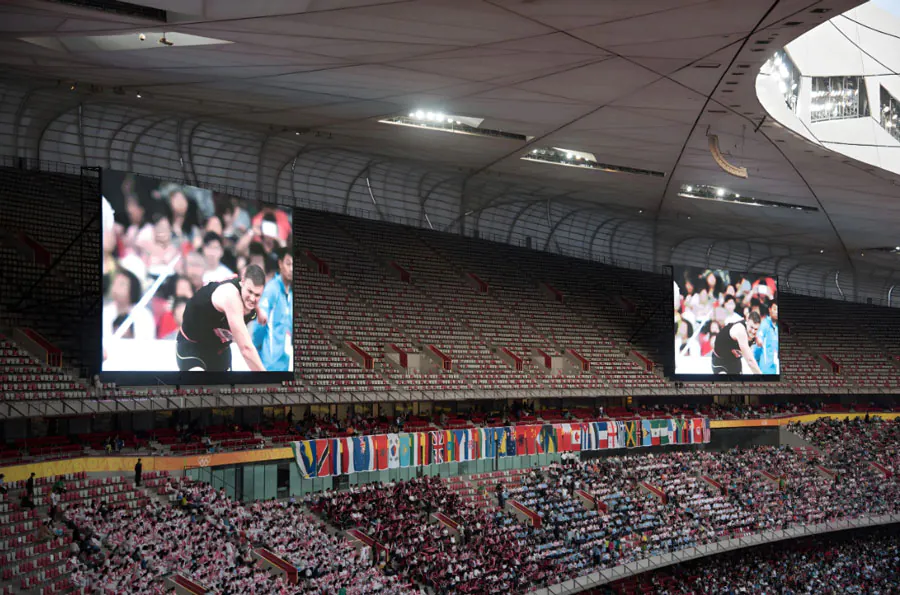
Advertising cannot afford long downtime. Professional support includes clear maintenance paths, spare parts planning, and operational guidance. Reliability and efficiency are closely linked: a stable system avoids repeated troubleshooting cycles that waste labor, time, and power.
Best Practices for Deploying Flexible LED in Smart Advertising
To maximize both creative impact and energy savings, smart advertising projects should follow several practical principles:
– Design for viewing distance: Avoid over-specifying pixel pitch where it will not be perceived. Right-sizing resolution reduces cost and can support efficiency goals.
– Use adaptive brightness: Combine ambient-light sensing with content-aware settings to keep power proportional to real visual needs.
– Plan thermal pathways early: Curved installations must consider ventilation and surface materials so efficiency remains stable over time.
– Prioritize content readability: High-impact advertising is not always the brightest; it is the clearest. Good contrast and typography reduce the need for excessive brightness.
– Schedule intelligently: If foot traffic varies by hour, operating modes should follow the rhythm of the location.
These decisions turn “energy-efficient flexible LED” from a product feature into an operating strategy.
The Future: Sustainable, Adaptive, and More Immersive
Smart advertising is heading toward more adaptive experiences—content triggered by time, events, location patterns, and audience context. Flexible LED displays will play a central role because they can merge with architecture and create new formats beyond rectangles. At the same time, energy efficiency will remain a non-negotiable standard, driven by cost control, policy requirements, and brand responsibility.
An Energy-Efficient Flexible LED Display for Smart Advertising therefore represents a convergence of two goals: stronger attention and smarter operation. With the right service partner, brands and operators can deploy displays that stand out visually, fit seamlessly into modern spaces, and run efficiently day after day.
Flexible LED technology is redefining what advertising screens can look like, while energy-efficient engineering is redefining how responsibly they can operate. Together, they enable smart advertising that is creative, measurable, scalable, and sustainable.
As a service provider, TW VISION supports this evolution by delivering flexible LED display solutions designed for real-world advertising environments—where visual impact must be immediate, and operational efficiency must be continuous. If the goal is to build the next generation of smart advertising surfaces, investing in energy-efficient flexible LED is not just a technical upgrade; it is a strategic advantage.