Durable Flexible LED Display for Long-Term Outdoor Use

Outdoor media is evolving quickly, and expectations are rising just as fast. Brands want bolder visuals, cities want smarter infrastructure, and venues want immersive experiences that work every day—through sun, rain, wind, and temperature swings. In this context, the Durable flexible led display for Long-Term Outdoor Use is becoming a preferred solution for architects, integrators, and advertisers who need creative freedom without sacrificing stability. As a service provider, TW VISION focuses on delivering flexible LED display solutions that can withstand harsh environments while maintaining reliable performance over long operating cycles.
Why “Durable + Flexible” Matters Outdoors
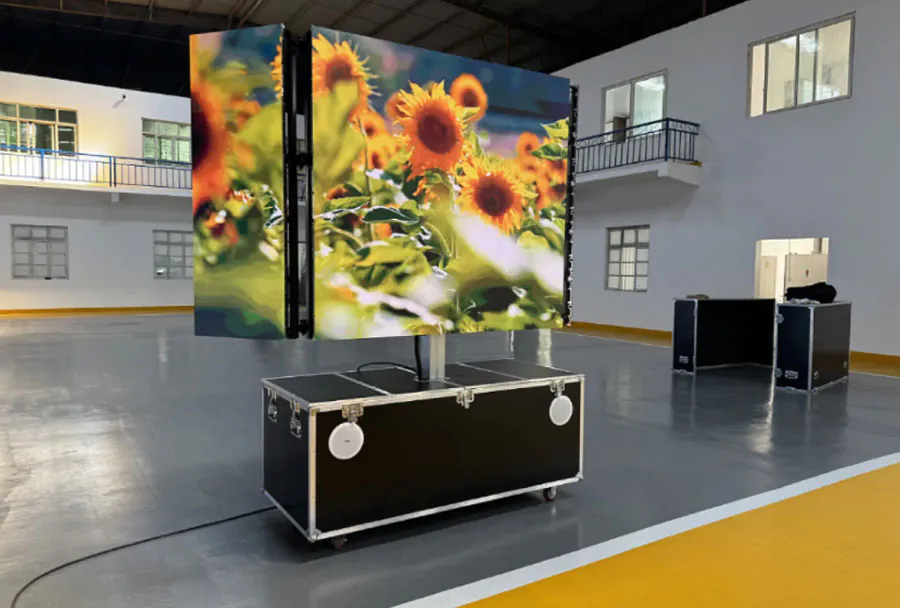
Traditional outdoor LED displays are usually rigid cabinets or fixed modules. They perform well on flat facades, but once a project involves curves, columns, waves, arches, or irregular structures, rigid screens force compromises: either simplify the design or accept visible seams and suboptimal viewing results. A flexible LED display changes the rules by allowing the screen to conform to architectural shapes—while durability ensures that this creative potential remains stable for years.
For long-term outdoor use, durability is not a marketing word; it’s a measurable requirement. The display must resist UV exposure, handle daily thermal expansion and contraction, survive wind loads and vibration, and continue delivering consistent brightness and color. When flexible displays are engineered properly, they can combine both design adaptability and robust reliability, enabling outdoor installations that look premium and remain serviceable over time.
Core Challenges of Long-Term Outdoor Operation
Outdoor environments apply continuous stress to LED systems. The durability of a flexible LED display depends on how it addresses several real-world challenges:
1. Weather exposure: Rain, humidity, dust, and pollution can infiltrate modules and connectors, leading to corrosion or short circuits.
2. UV and heat: Sunlight accelerates material aging and can cause discoloration or brittleness if protective layers are weak.
3. Temperature cycles: Day-night temperature swings create repeated expansion and contraction, stressing solder joints, PCBs, and mechanical mounting.
4. Wind and vibration: Outdoor screens, especially on tall structures, face dynamic loads that can loosen fixation points over time.
5. Maintenance constraints: Outdoor installations are often high, complex, and costly to access—so reliability and maintainability must be designed in from the beginning.
A Durable Flexible LED Display for Long-Term Outdoor Use is, therefore, the result of careful engineering: materials, sealing, structure, heat management, and power/control stability must work together as a single system.
What Makes a Flexible LED Display Truly Durable
To judge whether a flexible LED display is suitable for outdoor long-term deployment, it helps to focus on the fundamentals rather than only specifications. Below are key durability pillars commonly considered in professional projects supported by TW VISION.
1) Outdoor-grade protection and sealing
Outdoor flexible modules require robust protection against moisture and dust. This is not only about the surface; it includes the integrity of edges, connection areas, and cable exits. A well-designed sealing approach helps prevent water intrusion during storms and reduces long-term corrosion risks in coastal or industrial environments.
2) Strong yet adaptable mechanical structure
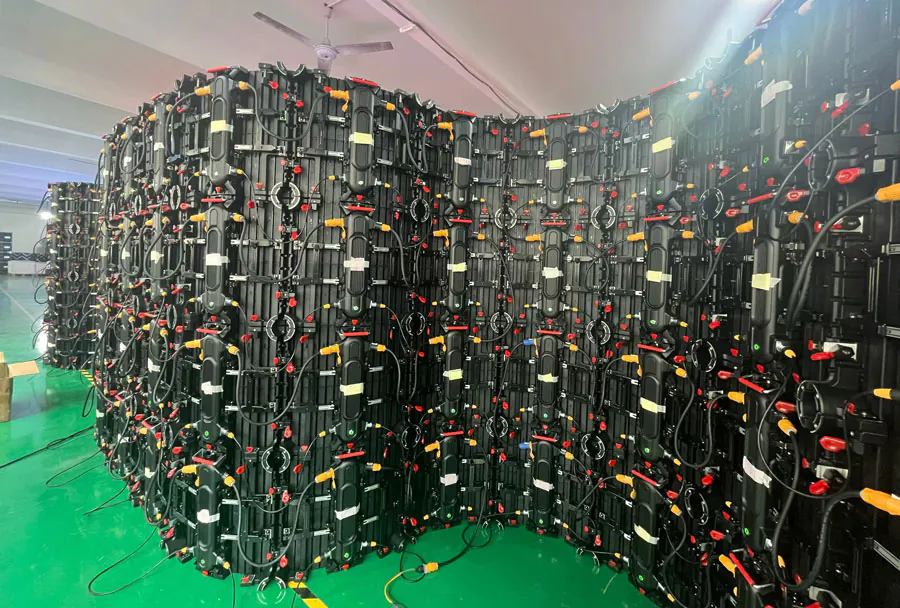
Flexibility should not mean fragility. Long-term outdoor installations demand repeated resistance to mechanical stress. Durable flexible modules often combine bendable structure with reinforcement in stress zones, ensuring the display can form curves while keeping the pixel alignment stable. Consistent pixel geometry matters because outdoor viewing distances can be long, and any deformation becomes noticeable as image distortion.
3) Stable brightness and color over time
Outdoor displays must remain visible under strong sunlight, but operating at high brightness continuously can accelerate LED aging if thermal design is weak. A durable solution balances brightness capability with heat dissipation strategies and reasonable operational settings. Long-term consistency—rather than maximum brightness alone—often defines a high-quality outdoor screen.
4) Reliable power and signal design
Outdoor sites frequently have complex electrical conditions, long cable runs, and exposure to surges. Durable performance requires stable power distribution, dependable connectors, and signal integrity. Reliability also depends on system-level design—how power supplies, controllers, and module wiring are planned to minimize failure points.
5) Serviceability for real-world maintenance
A long-term outdoor display must be maintainable. This includes planning module replacement, access strategy, and diagnostic capability. Even the most durable screen needs occasional service, so practical maintenance design can significantly reduce downtime and lifetime cost.
Outdoor Applications Where Flexible LED Excels
A durable flexible LED display is especially valuable where rigid screens struggle. Common long-term outdoor use cases include:
Curved building facades
Modern architecture increasingly features curved exteriors. Flexible LED can follow these surfaces, transforming a facade into a media canvas without “flattening” the design intent.
Columns, towers, and cylindrical structures
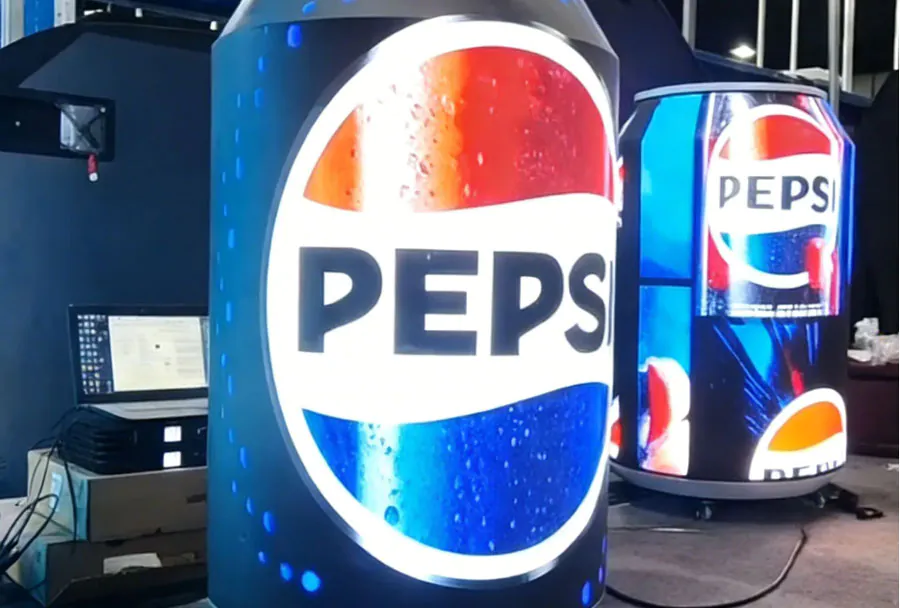
Round or multi-sided columns are difficult for rigid cabinets. Flexible screens can wrap around structures to create 360-degree visual impact for landmarks, malls, stadium perimeters, and transportation hubs.
Creative signage for retail and commercial complexes
Outdoor branding often benefits from unique shapes that stand out. Flexible LED enables wave-like signs, corner wraps, and artistic installations that attract attention while maintaining an elegant integration.
Theme parks, cultural venues, and public art
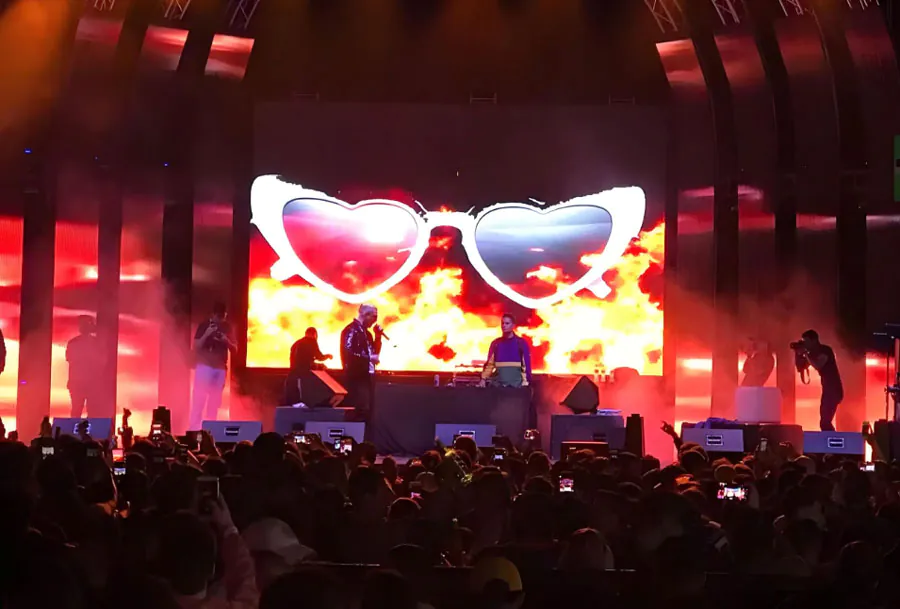
Long-term outdoor exhibits require both reliability and creativity. Flexible displays support immersive storytelling elements that blend with sculptures, landscape features, or architectural curves.
Transportation and urban infrastructure
When integrated into stations, elevated walkways, or city structures, flexible LED can provide information and advertising in a form factor that fits the built environment, rather than forcing the environment to fit the screen.
Key Project Considerations Before Deployment
Selecting the right flexible LED is only part of success. Long-term outdoor performance depends on how the project is designed and executed. TW VISION typically emphasizes holistic planning across the following areas:
Site evaluation
Assess sun exposure, prevailing wind direction, rainfall patterns, salt fog risk (coastal), pollution levels, and mounting height. These factors influence protection requirements, cooling strategy, and maintenance planning.
Structural safety
Outdoor screens must meet engineering requirements for wind load and structural fixation. Flexible modules may be lighter than rigid cabinets, but the supporting framework still must be designed for long-term stability, especially for large surfaces or high-altitude installations.
Thermal strategy
Heat is one of the biggest enemies of electronics. A durable outdoor flexible LED system should ensure stable operation in summer peak temperatures. This may include thoughtful airflow planning, material choices, and safe power density design.
Control system and content management
Long-term use is not only hardware; it includes daily operations. Reliable scheduling, remote monitoring, brightness adjustment based on ambient light, and alert systems for faults all contribute to stable performance.
Maintenance access and spare parts planning
For outdoor installations, downtime is expensive. Planning access paths, replacement procedures, and spare module stock can significantly reduce operational risk. A durable system is one that can be serviced efficiently.
How TW VISION Supports Long-Term Outdoor Flexible LED Projects
As the service provider, TW VISION focuses on enabling durable performance through a project-based approach rather than one-size-fits-all supply. For long-term outdoor use, this typically includes:
– Solution matching: recommending suitable flexible LED configurations for the project’s curvature requirements, viewing distance, and environmental conditions.
– Engineering coordination: supporting structure planning and installation design to help ensure the screen remains stable and visually consistent over time.
– Quality-oriented delivery: emphasizing material durability, stable electrical design, and reliable module assembly for outdoor operation.
– Operational support: considering long-term maintenance, remote monitoring needs, and practical service workflows to reduce lifetime cost.
This end-to-end mindset is important because outdoor projects are not forgiving—if any part of the system is under-designed, long-term reliability can be compromised.
Balancing Visual Impact with Longevity
Many outdoor projects begin with a creative concept: a curved media wall, a wrapping corner display, or a landmark installation meant to become a city icon. But longevity determines whether that concept remains impressive or gradually degrades. A durable flexible LED display must preserve:
– Uniformity: consistent brightness and color across modules, even after years of use.
– Structural integrity: stable mounting and curvature without sagging, warping, or shifting seams.
– Environmental resistance: protection against moisture, dust, UV exposure, and temperature changes.
– Maintainability: the ability to replace components quickly and safely when needed.
When these factors are addressed, flexible LED becomes a dependable outdoor medium—not just a creative experiment.
Investing in a Durable Flexible LED Display for Long-Term Outdoor Use
Choosing a Durable Flexible LED Display for Long-Term Outdoor Use is a strategic decision for any organization planning outdoor media that must perform year after year. Flexibility unlocks architectural integration and standout designs, while durability ensures that the display remains bright, stable, and serviceable in demanding conditions. With the right engineering approach—covering protection, structure, thermal performance, power and signal stability, and maintenance planning—outdoor flexible LED can deliver both artistic freedom and operational confidence.
As a service provider, TW VISION supports long-term outdoor projects by aligning product capability with site realities and by emphasizing the full lifecycle of installation, operation, and maintenance. For developers, brands, and city planners who want high-impact outdoor visuals without sacrificing reliability, durable flexible LED displays represent an increasingly future-proof direction.