Brand Color Consistency on LED Displays:What Buyers Should Check


Brand Color Consistency on LED Displays: One of the most overlooked specifications in digital signage procurement, it quietly erodes brand trust every day. A single wall of modules can drift several hundred Kelvin between batches, so a logo that looks perfect on a proof sheet turns muddy on screen.
Table of Contents
- 1. Check the Calibration Report, Not the Datasheet
- What a Real Report Includes
- 2. Verify the Processing Pipeline Handles Color Depth
- Questions to Ask Integrators
- 3. Test Color Uniformity Across the Whole Wall
- A Practical Uniformity Test
- 4. Match Content Pipeline to Display Capability
- Fixing the Handoff
- 5. Lock Color Tolerance Into the Contract
- Clauses Worth Including
- How do I check color consistency on an LED wall without expensive gear?
- What causes two identical LED cabinets to show different colors?
- Does ambient lighting change how I should evaluate brand color consistency on LED displays?
- How often should I recalibrate an LED display for brand accuracy?
- What is the most common mistake buyers make with LED color?
- Conclusion
The problem is that most buyers compare panel spec sheets, not color pipelines. This guide walks through five checks that separate a display that protects your brand from one that slowly erodes it, covering calibration data, processing hardware, and the contractual language that keeps vendors honest.
Each check below ties directly into Brand Color Consistency on LED Displays: What Buyers Should Check, giving you a repeatable framework rather than a one-off inspection.
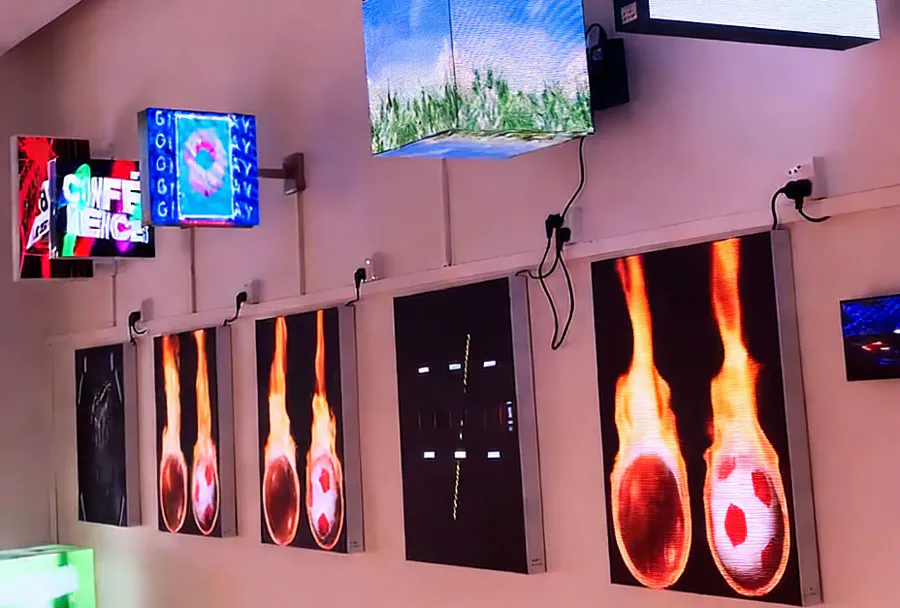
Indoor led poster installation process guidance made by TW VISION
1. Check the Calibration Report, Not the Datasheet
A datasheet tells you what the panel can do in a lab. A calibration report tells you what it does after assembly. According to NIST, color measurement uncertainty depends heavily on the instrument and conditions used, which means two vendors quoting the “same” Delta-E may be measuring very different things.
Brand Color Consistency on LED Displays: What Buyers Should Check starts with documentation, because paperwork reveals whether a vendor even understands the problem.
When you request documentation for brand color consistency on LED displays, ask for a per-cabinet report showing measured chromaticity coordinates and brightness, not a generic factory certificate. Without that report, Brand Color Consistency on LED Displays: What Buyers Should Check becomes guesswork, and guesswork is expensive once the wall is mounted.
What a Real Report Includes
– Measurement device make and model
– Ambient conditions during testing
– Per-module or per-cabinet values, not averages
– Timestamp and firmware version at time of test
Averages hide outliers. One mis-binned module in a ten-cabinet wall is visible to every visitor, even if the average looks excellent. This is why Brand Color Consistency on LED Displays: What Buyers Should Check demands raw data rather than summary sheets.
How to apply this: Ask your vendor for the raw measurement file, then spot-check three random cabinets against the reported values using a colorimeter you rent for a day. Brand Color Consistency on LED Displays: What Buyers Should Check rewards buyers who verify rather than trust.
2. Verify the Processing Pipeline Handles Color Depth
Color consistency breaks down long before the LEDs. It breaks in the scaler, the sender card, and the receiving card if any link in that chain truncates bit depth or applies its own color matrix. Brand Color Consistency on LED Displays: What Buyers Should Check extends into the signal path, because perfect panels fed imperfect data still look wrong.
Many buyers report that the cheapest way to lose brand color consistency on LED displays is to pair a high-end panel with a budget processor that downconverts 10-bit color to 8-bit. The banding appears first in gradients, which is exactly where brand logos and lifestyle imagery live.
Every shortcut in the pipeline undermines Brand Color Consistency on LED Displays: What Buyers Should Check, no matter how good the cabinet specs look.
Look for a documented end-to-end bit depth and confirm the processing path keeps it intact.
Questions to Ask Integrators
- What bit depth does the source signal carry?
- Where, if anywhere, is it reduced?
- Can the receiving card store per-cabinet correction coefficients?
- How are those coefficients updated after a module swap?
How to apply this: Request a live demo using your own brand gradient file, not the vendor’s demo reel, and watch for banding in the mid-tones. Brand Color Consistency on LED Displays: What Buyers Should Check is proven in gradients, not in static logos.
3. Test Color Uniformity Across the Whole Wall
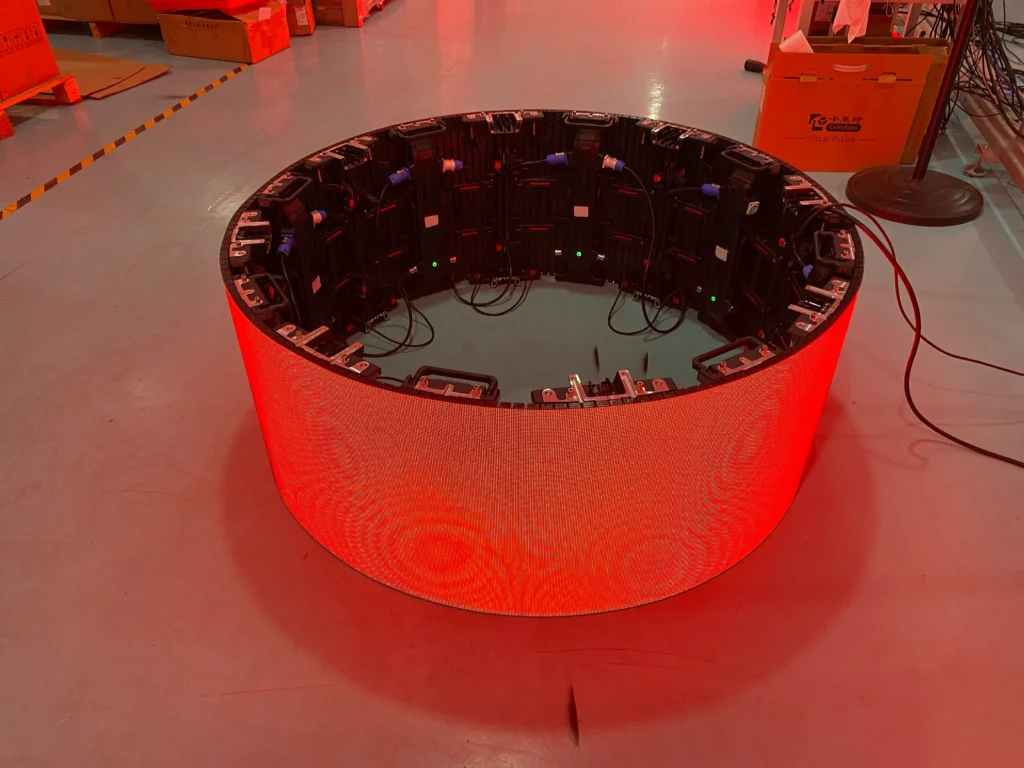
Uniformity is where brand color consistency on LED displays either holds or fails in the field. Panel-level specs rarely predict wall-level performance because brightness and color shift with viewing angle, temperature, and age. Brand Color Consistency on LED Displays: What Buyers Should Check therefore moves from the datasheet to the actual installation site.
Industry surveys consistently show a wide range of reported uniformity between budget and premium product tiers, but the honest takeaway is that you must measure your specific wall. No tier label substitutes for measurement when Brand Color Consistency on LED Displays: What Buyers Should Check is on the line.
A Practical Uniformity Test
| Check | What it tells you | Action to take |
|---|---|---|
| Nine-point brightness | Screen-level evenness | Reject walls above agreed variance |
| Corner color shift | Off-axis drift | Confirm viewing angles cover your space |
| Full-white uniformity | Module mismatch | Map problem cabinets before sign-off |
| Gray-scale ramp | Low-level banding | Test 10%, 50%, 90% gray |
| Warm-up drift | Temperature effect | Re-measure after 30 minutes |
| Module swap test | Serviceability | Replace one and re-measure |
How to apply this: Run a nine-point test on day one, week one, and month one, and log the numbers so you have evidence if a warranty claim becomes necessary. Documented measurements are the backbone of Brand Color Consistency on LED Displays: What Buyers Should Check over the life of the wall.
4. Match Content Pipeline to Display Capability
Even a perfectly calibrated wall loses brand color consistency on LED displays when the content pipeline delivers the wrong color space. Brand Color Consistency on LED Displays: What Buyers Should Check is not only a hardware question; it is a workflow question that starts in the design suite.
If your creative team exports in sRGB and your display expects Rec. 709 or DCI-P3, the wall will show something no one approved. This is a process failure, not a hardware failure, and it is the most common cause of “the red looks wrong” complaints.
Aligning creative output with display capability is half of Brand Color Consistency on LED Displays: What Buyers Should Check, and skipping it wastes every calibration effort.
Fixing the Handoff
– Agree on one target color space in writing
– Embed the profile in every delivered asset
– Lock the display to that same space
– Re-verify after any firmware update
Tools like X-Rite color management hardware and software are widely used to profile displays and confirm that delivered assets match the intended target. Reviewing your rendered output in Google Analytics will not help here, but tracking on-site photo and video complaints through your CMS feedback channels can flag drift early.
Either way, Brand Color Consistency on LED Displays: What Buyers Should Check depends on disciplined asset handling.
How to apply this: Put the agreed color space in the creative brief template so no one has to remember it. Brand Color Consistency on LED Displays: What Buyers Should Check survives only when the process outlives the people who set it up.
5. Lock Color Tolerance Into the Contract
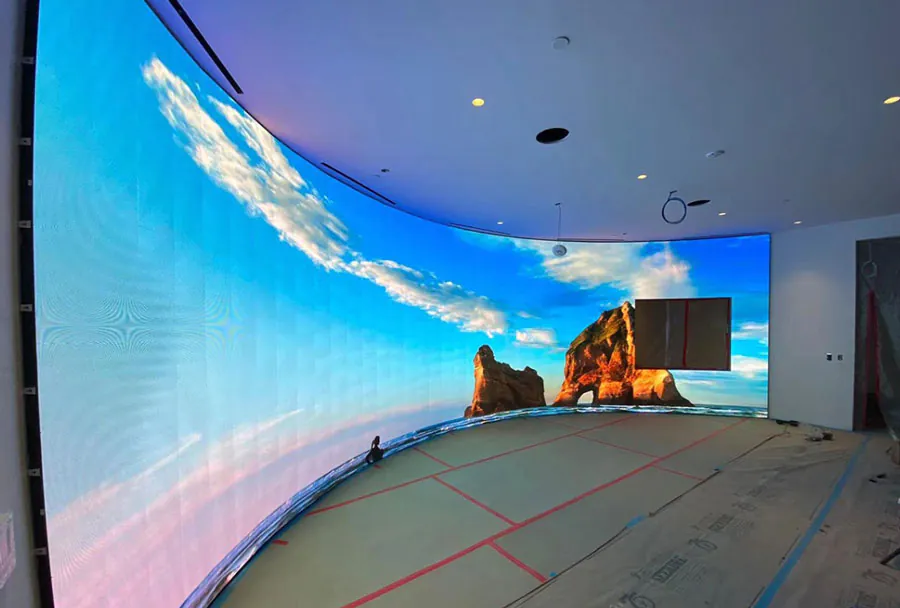
Brand color consistency on LED displays is a contractual issue as much as a technical one. If the specification does not state a measurable tolerance and a remedy, you have no leverage after installation. Brand Color Consistency on LED Displays: What Buyers Should Check belongs in the signed agreement, not in a verbal promise.
The ISO standards body publishes color measurement and display-related standards that give you neutral language to reference, which vendors recognize and respect more than vague adjectives. Referencing neutral standards strengthens Brand Color Consistency on LED Displays: What Buyers Should Check because it removes ambiguity from every future conversation.
Clauses Worth Including
– Maximum Delta-E per cabinet and across the wall
– Brightness variance percentage
– Measurement method and instrument class
– Remedy for out-of-tolerance delivery
– Color drift allowance over the warranty term
A common scenario: a buyer accepts “high color accuracy” in the proposal, then discovers after three months that adjacent cabinets have visibly diverged. With a numeric tolerance and a measurement method in the contract, that conversation is short. That single clause is where Brand Color Consistency on LED Displays: What Buyers Should Check gains real teeth.
How to apply this: Bring the tolerance clause to your legal review before signing, not after the first complaint arrives. Brand Color Consistency on LED Displays: What Buyers Should Check is cheapest to enforce before money changes hands.
Frequently Asked Questions About Brand Color Consistency on LED Displays: What Buyers Should Check
How do I check color consistency on an LED wall without expensive gear?
You can start with a consumer-grade colorimeter and a free calibration test pattern. It will not match a lab spectrophotometer, but it detects gross mismatch and drift over time. What matters most is repeatability: measure the same points the same way each month, and log the results.
This gives you a defensible record of brand color consistency on LED displays across the warranty period without a large capital outlay. Brand Color Consistency on LED Displays: What Buyers Should Check does not require a lab, only consistency.
What causes two identical LED cabinets to show different colors?
Binning differences, aging, and thermal drift are the usual suspects. LEDs are sorted into bins at manufacture, and a small bin mismatch that is invisible at delivery can widen after thousands of hours. Temperature also shifts output, so a cabinet near an HVAC vent may drift differently from one across the room.
Recalibration with per-cabinet coefficients is the standard fix, and it should be part of your maintenance plan for brand color consistency on LED displays. Ignoring any of these causes erodes Brand Color Consistency on LED Displays: What Buyers Should Check faster than any other factor.
Does ambient lighting change how I should evaluate brand color consistency on LED displays?
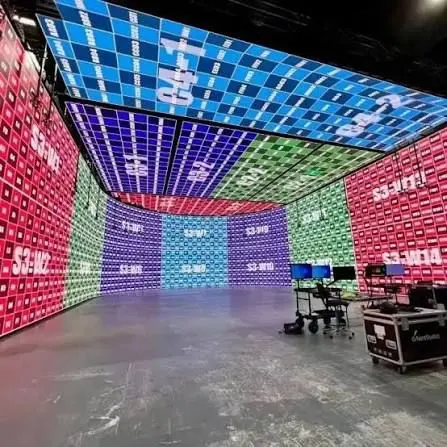
Yes, significantly. A wall tuned in a dark showroom will look different in a brightly lit lobby, because the eye adapts to surrounding light. Evaluate the display in conditions that match its final location, at the same time of day you expect peak viewing. If the space has large windows, test at noon and at dusk.
This contextual check catches problems that lab measurements miss entirely. Brand Color Consistency on LED Displays: What Buyers Should Check must account for the room, not just the panel.
How often should I recalibrate an LED display for brand accuracy?
Most operators recalibrate annually, but high-brightness walls running long hours may need it every six months. Watch for visible drift rather than following a rigid schedule. If your monitoring shows Delta-E creeping past your contractual threshold, recalibrate early.
Keeping a simple log of measurement dates and values makes it easy to justify the service cost and defend brand color consistency on LED displays to finance teams. A calendar alone will not protect Brand Color Consistency on LED Displays: What Buyers Should Check; measurement will.
What is the most common mistake buyers make with LED color?
Accepting a demo in the vendor’s environment using the vendor’s content. Your brand colors, your lighting, and your viewing distances are what matter. Insist on seeing your own assets on the actual wall, or a representative one, before purchase. Skipping that step is the single most reliable way to end up disappointed.
Insist on a live test of brand color consistency on LED displays using your real content. Brand Color Consistency on LED Displays: What Buyers Should Check fails most often at this exact moment.
Conclusion
Getting color right is a procurement discipline, not a lucky purchase. The five checks above give you a repeatable process. Brand Color Consistency on LED Displays: What Buyers Should Check is a habit, not a checkbox.
– Demand per-cabinet calibration data, not averages
– Verify the processing chain preserves bit depth
– Test uniformity across the whole wall, repeatedly
– Align your content pipeline with the display’s color space
– Put numeric tolerances and remedies in the contract
Together these steps protect brand color consistency on LED displays through delivery, installation, and years of operation. Brand Color Consistency on LED Displays: What Buyers Should Check ultimately decides whether your signage builds trust or quietly erodes it.
Your next step is simple: request the calibration report and a live demo using your own brand assets before you sign anything. Brand Color Consistency on LED Displays: What Buyers Should Check starts with that single request.
Related Articles
- Custom LED Display Solutions
- LED Display Manufacturing Process
- LED display color inconsistency problem guide: Expert Guide – LED DISPLAY MANUFACTURE TW VISION