Energy-Efficient Outdoor LED Displays: Power Use and Operating Costs

Energy-Efficient Outdoor LED Displays: Power Use and Operating Costs depend on far more than the screen’s size. Brightness, pixel pitch, content, weather, operating hours, and local electricity rates all affect the final bill. The U.S.Department of Energy states that LED lighting uses “at least 75% less energy” than incandescent lighting, but a video display still needs careful measurement because its electronics, cooling, and power supplies add to consumption.
Many buyers compare only the advertised maximum wattage. That can produce an unrealistic budget because Energy-Efficient Outdoor LED Displays: Power Use and Operating Costs may draw much less during ordinary content playback, yet approach their rated load during bright white content or hot weather.
Table of Contents
- 1. Read the Display’s Power Specifications Correctly
- 2. Calculate Electricity Use From Real Operating Conditions
- 3. Control Brightness, Content, and Scheduling
- 4. Measure the Installed System Instead of Guessing
- 5. Reduce Long-Term Costs Through Maintenance
- Comparison of Operating-Cost Inputs
- How does cold weather affect outdoor LED display electricity use?
- Can solar power run an outdoor LED display?
- Does a smaller pixel pitch always reduce electricity use?
- Why can two displays with the same area have different power bills?
- What should I do if measured power is higher than the specification?
- Conclusion
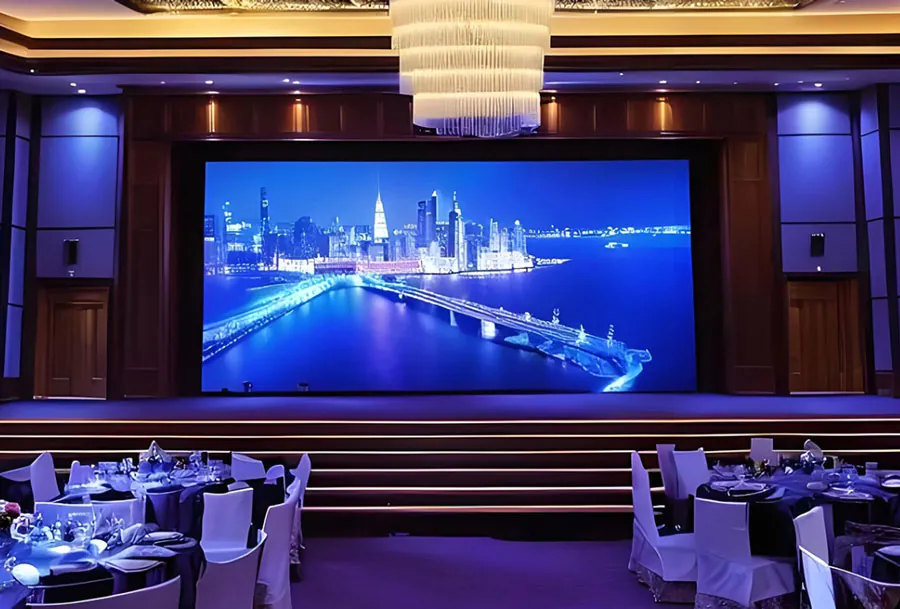
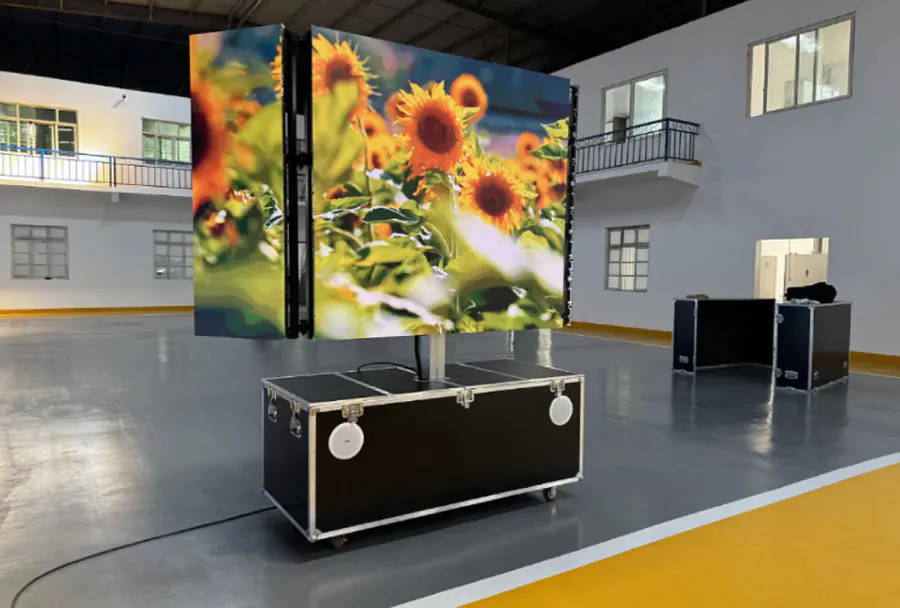
TW VISION’s outdoor P3 led display for church usage.
This guide explains how to estimate electricity use, measure real-world demand, reduce unnecessary load, compare specifications, and identify maintenance decisions that affect long-term operating costs. Understanding Energy-Efficient Outdoor LED Displays: Power Use and Operating Costs helps buyers connect technical specifications with the actual utility bill.
1. Read the Display’s Power Specifications Correctly
Energy-Efficient Outdoor LED Displays: Power Use and Operating Costs begin with three different electrical figures: maximum power, typical power, and standby power.
Maximum power describes the highest expected draw under demanding conditions, often involving high brightness and bright content. Typical power is more useful for budgeting, but you should ask the manufacturer how it was measured. Standby power matters when the screen is scheduled to remain connected outside operating hours.
These distinctions are central to evaluating Energy-Efficient Outdoor LED Displays: Power Use and Operating Costs accurately.
The most useful data points on a specification sheet include:
– Maximum watts per square meter
– Typical watts per square meter
– Total cabinet or display-area wattage
– Input voltage and current
– Brightness range
– Operating temperature range
– Power-factor information
– Recommended circuit capacity
The DOE explains that LED technology can reduce lighting energy use by at least 75% compared with incandescent lighting, but that comparison does not replace a display-specific load calculation. Outdoor video walls contain receiving cards, control systems, cooling components, and multiple power supplies. Those components should be included when estimating Energy-Efficient Outdoor LED Displays: Power Use and Operating Costs.
Consider a display measuring 6 meters by 3 meters. Its area is 18 square meters, so you can multiply the manufacturer’s stated watts per square meter by 18 to estimate the connected load before applying operating hours.
How to apply this: Request maximum, typical, and standby wattage in writing, then calculate each scenario separately instead of budgeting from maximum power alone.
2. Calculate Electricity Use From Real Operating Conditions
Energy-Efficient Outdoor LED Displays: Power Use and Operating Costs are best estimated with kilowatt-hours, not watts alone. The basic calculation is: `kilowatts x operating hours = kilowatt-hours`.
A reliable budget uses this sequence:
- Convert the display’s measured or specified wattage to kilowatts.
- Multiply by the number of operating hours.
- Add control equipment, network hardware, ventilation, and other connected loads.
- Multiply total kilowatt-hours by the utility’s applicable energy rate.
- Add demand charges if the tariff includes them.
A display running at 12 kilowatts for 10 hours uses 120 kilowatt-hours before auxiliary equipment and billing adjustments. That is an operating estimate, not a claim about a particular display’s consumption. The same calculation gives buyers a practical starting point for Energy-Efficient Outdoor LED Displays: Power Use and Operating Costs.
Your electricity bill may contain more than one relevant charge. The U.S. Energy Information Administration publishes electricity data and explains energy-market terminology, but your utility tariff determines the actual rate, time-of-use rules, taxes, and demand structure.
A common scenario is a sign that operates fewer hours in winter but remains configured for the same brightness and schedule. Its annual cost may still be higher than expected if the controller, ventilation, or power supplies remain active continuously.
How to apply this: Build a monthly worksheet with separate fields for display load, auxiliary load, operating hours, energy rate, and demand charges. This worksheet makes Energy-Efficient Outdoor LED Displays: Power Use and Operating Costs easier to update as site conditions change.
3. Control Brightness, Content, and Scheduling
Energy-Efficient Outdoor LED Displays: Power Use and Operating Costs fall when brightness matches ambient conditions instead of staying at a fixed daytime setting.
Brightness is one of the most important controllable variables. Daylight may require higher output, while nighttime operation usually allows a lower setting that reduces glare and unnecessary power use. Automatic brightness control can use a light sensor to adjust output as conditions change. These brightness decisions directly influence Energy-Efficient Outdoor LED Displays: Power Use and Operating Costs.
Content also affects demand. Large areas of white or highly illuminated content generally require more LED output than darker content. A display that shows static text, logos, or dark backgrounds may therefore consume less than one showing full-screen white video, although the exact difference depends on the display’s driving system and calibration.
Useful operating controls include:
– Ambient-light sensors
– Scheduled brightness profiles
– Off-hours shutdown
– Content rules that limit full-white backgrounds
– Remote alerts for abnormal temperature or power conditions
– Separate schedules for weekdays, weekends, and events
The International Dark-Sky Association provides guidance on responsible outdoor lighting and light pollution. Its principles are relevant when setting nighttime brightness, even though a digital display requires additional technical configuration.
How to apply this: Create day, evening, and overnight brightness profiles, then verify them after installation with a light meter and a review of the actual content playlist. Regular profile reviews keep Energy-Efficient Outdoor LED Displays: Power Use and Operating Costs aligned with changing seasons and events.
4. Measure the Installed System Instead of Guessing
Energy-Efficient Outdoor LED Displays: Power Use and Operating Costs become much easier to manage when you compare specification data with measured electrical readings.
A commissioning test should record the display’s load under several conditions:
– Screen off but connected
– Normal scheduled content
– Bright video or white test pattern
– Maximum permitted brightness
– Cooling or ventilation operating
– Controller and network equipment operating
– Startup and shutdown
A power meter can reveal whether the display is drawing unexpected current when idle or whether auxiliary systems consume a meaningful share of total electricity. The Fluke power quality analyzer range is designed to measure electrical characteristics such as voltage, current, power, and power quality. Those readings provide direct evidence for Energy-Efficient Outdoor LED Displays: Power Use and Operating Costs.
Measurement should be performed at the correct point in the electrical system. A qualified electrician can identify whether you need a branch-circuit reading, a panel measurement, or separate readings for the display and supporting equipment.
In one case, a sign may appear efficient based on its LED modules while its cabinet fans and continuously powered controller create a large idle load. A full-system reading exposes that difference.
How to apply this: Record kW at normal, high-brightness, and idle states, then use those readings in your operating-cost model instead of relying only on the brochure. Measured results make Energy-Efficient Outdoor LED Displays: Power Use and Operating Costs more defensible during budgeting.
5. Reduce Long-Term Costs Through Maintenance
Energy-Efficient Outdoor LED Displays: Power Use and Operating Costs are also shaped by thermal management, power-supply condition, calibration, and service access.
Dust, blocked vents, failing fans, and poor airflow can increase heat inside the cabinet. Higher temperatures may cause protective dimming, unstable operation, or shorter component life. A maintenance program should include visual inspections, temperature checks, fan checks, cabinet sealing, and inspection of power connections. Good thermal maintenance supports predictable Energy-Efficient Outdoor LED Displays: Power Use and Operating Costs.
LED efficiency can also decline when modules become mismatched or calibration changes over time. Uneven brightness may tempt operators to raise the global brightness setting, increasing consumption without fixing the underlying problem.
Track operational evidence such as:
– Monthly kWh
– Average brightness setting
– Number of active hours
– Cabinet temperature alarms
– Fan and power-supply failures
– Pixel or module replacement rates
– Time spent on service visits
The U.S. Department of Energy’s LED lighting resources explain why LED systems generally offer longer service life and lower energy use than older lighting technologies, while also noting the importance of selecting and operating products correctly.
How to apply this: Compare monthly energy readings with brightness, runtime, and fault logs so you can identify rising consumption before it becomes a major service problem. This connects maintenance records with Energy-Efficient Outdoor LED Displays: Power Use and Operating Costs over the life of the installation.
Comparison of Operating-Cost Inputs
Energy-Efficient Outdoor LED Displays: Power Use and Operating Costs can be evaluated consistently by recording the following inputs during procurement and commissioning.
| Input | What it tells you | Action to take |
|---|---|---|
| Maximum watts | Worst-case electrical load | Size circuits safely |
| Typical watts | Likely operating demand | Use for budget estimates |
| Standby watts | Idle consumption | Schedule shutdowns |
| Brightness profile | Control effectiveness | Review monthly |
| Measured kW | Installed-system demand | Validate specifications |
| Utility tariff | Actual billing method | Check energy and demand charges |
A complete comparison of Energy-Efficient Outdoor LED Displays: Power Use and Operating Costs should use the same brightness, content, runtime, and utility assumptions for every product.
Frequently Asked Questions About Energy-Efficient Outdoor LED Displays: Power Use and Operating Costs
How does cold weather affect outdoor LED display electricity use?
Cold weather can change fan behavior, startup conditions, and power-supply performance, although the effect varies by design. Energy-Efficient Outdoor LED Displays: Power Use and Operating Costs may rise temporarily if heaters, enclosure controls, or repeated startup cycles are present. A northern installation should review the manufacturer’s low-temperature operating range and record winter measurements separately from summer readings.
Can solar power run an outdoor LED display?
Solar power can support an outdoor display, but feasibility depends on display load, operating hours, battery storage, local solar conditions, and backup requirements. Energy-Efficient Outdoor LED Displays: Power Use and Operating Costs should be modeled by hour when evaluating solar. A sign that must remain bright after sunset may need substantial battery capacity, making a grid-connected hybrid system more practical.
Hourly modeling also clarifies whether Energy-Efficient Outdoor LED Displays: Power Use and Operating Costs fit the available solar and storage capacity.

Does a smaller pixel pitch always reduce electricity use?
No. Pixel pitch affects the number and arrangement of LEDs, but power consumption also depends on brightness, module design, driving electronics, and content. Energy-Efficient Outdoor LED Displays: Power Use and Operating Costs should therefore be compared using watts per square meter and measured operating load. A higher-resolution screen can have a different power profile than a larger-pitch product.
Why can two displays with the same area have different power bills?
Manufacturers may use different LED packages, scan methods, power supplies, brightness limits, thermal systems, and test conditions. Energy-Efficient Outdoor LED Displays: Power Use and Operating Costs are not directly comparable unless the specifications use the same measurement basis. Ask both vendors for typical and maximum watts per square meter under stated brightness and content conditions.
What should I do if measured power is higher than the specification?
First check whether the measurement includes controllers, network devices, cooling, heaters, or other equipment. Energy-Efficient Outdoor LED Displays: Power Use and Operating Costs may appear high because the meter covers the complete installation rather than the LED cabinets alone. Compare readings at idle and normal playback, then ask the integrator to explain any unexplained difference before changing brightness or wiring.
This investigation can separate display demand from auxiliary Energy-Efficient Outdoor LED Displays: Power Use and Operating Costs.
Conclusion
Energy-Efficient Outdoor LED Displays: Power Use and Operating Costs depend on the whole installation, not just the LED modules. A dependable evaluation combines manufacturer specifications, measured electrical demand, content planning, brightness control, utility billing details, and preventive maintenance.
– Separate maximum, typical, and standby power.
– Convert measured demand into monthly and annual kilowatt-hours.
– Use automatic brightness and off-hours scheduling.
– Measure auxiliary equipment and investigate abnormal loads.
– Track energy, temperature, faults, and runtime together.
Start by requesting complete power data from the supplier, then perform a commissioning test after installation. Use the measured results to set operating schedules and create a budget based on your actual site conditions.