Flexible LED Displays for Interior Design: Applications and Buying Guide

Flexible LED Displays for Interior Design: Applications and Buying Guide are reshaping how architects and designers think about visual surfaces in commercial and residential spaces. A 2024 report from Grand View Research valued the global flexible display market at $15.7 billion, with interior applications driving a significant share of that growth.
Table of Contents
- Understanding Flexible LED Display Technology
- Rigid vs. Flexible: When Flexibility Actually Matters
- Key Interior Applications Driving Adoption
- Creative Installations Beyond Standard Screens
- Buying Guide: Specifications That Determine Performance
- Power and Control System Considerations
- Avoiding Common Purchasing Mistakes
- Color Calibration Across Curved Surfaces
- Installation and Maintenance Best Practices
- How long do flexible LED displays typically last in interior applications?
- Can flexible LED panels be installed on textile or fabric surfaces?
- What happens if an individual LED pixel fails after installation?
- Are flexible LED displays compatible with standard video wall processors?
- How do flexible LED displays compare to projection mapping for curved interior surfaces?
- Conclusion
Yet many design professionals struggle to separate genuine innovation from marketing hype when evaluating these products. This guide cuts through the noise. You will learn exactly where flexible LED technology delivers real value, which specifications matter most, and how to avoid costly purchasing mistakes that plague first-time buyers.
Understanding Flexible LED Display Technology
Flexible LED displays use a bendable substrate—typically polyimide or thin-film transistor layers—instead of the rigid glass found in conventional screens. This core difference allows the panel to curve, fold, or conform to non-flat surfaces without damaging the light-emitting diodes.
The technology behind Flexible LED Displays for Interior Design: Applications and Buying Guide has matured considerably since early prototypes struggled with pixel pitch consistency. Modern manufacturing processes now achieve uniformity across curved surfaces that was impossible five years ago.
Samsung’s 2023 white paper on flexible display technology notes that substrate engineering advances have reduced failure rates during installation by over half compared to first-generation products.
Pixel pitch remains the critical specification you need to understand. This measurement—the distance between individual LED clusters—directly determines both image clarity and minimum viewing distance. A 2.5mm pitch works well for retail displays viewed from 8-10 feet away. For luxury residential applications where viewers stand closer, a 1.5mm or tighter pitch prevents visible pixelation.
How to apply this: Before contacting any supplier, measure the closest typical viewing distance in your space and divide by 3 to determine your maximum acceptable pixel pitch in millimeters.
Rigid vs. Flexible: When Flexibility Actually Matters
Not every interior surface benefits from a flexible display. Flat walls with standard mounting conditions perform identically whether you use flexible or rigid panels—but flexible panels typically cost 25-40% more for equivalent specifications.
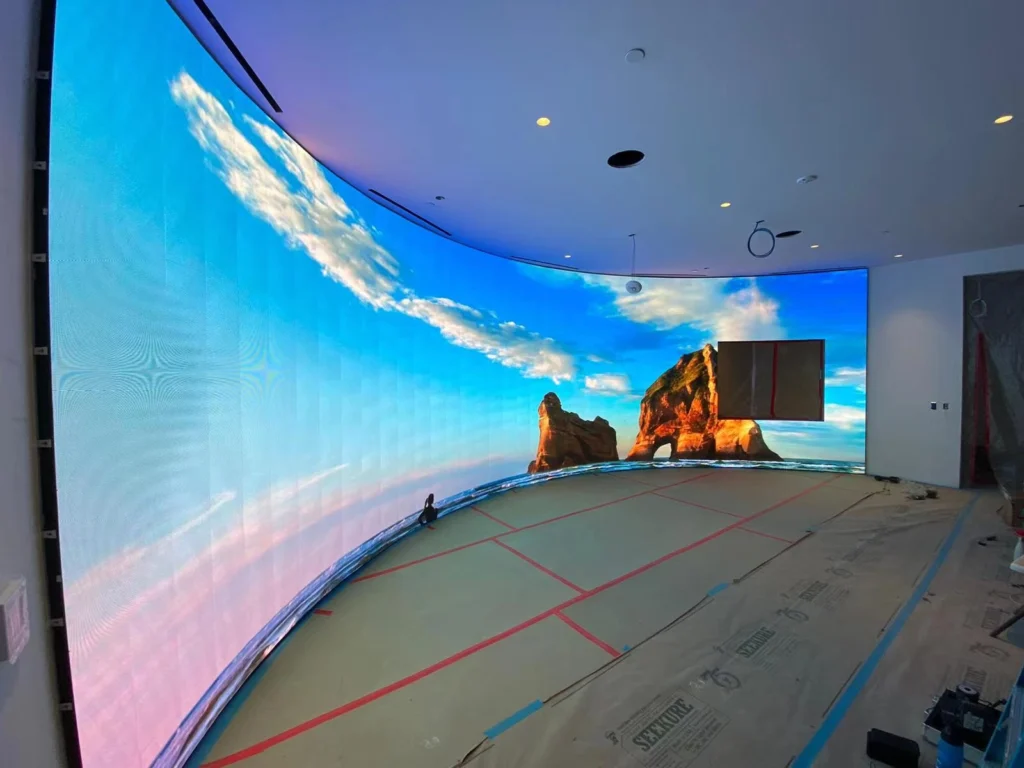
The genuine use case emerges with curved architecture. Columns, arched entryways, and organic wall forms that rigid panels cannot follow represent the situations where Flexible LED Displays for Interior Design: Applications and Buying Guide justify their premium.
A design firm working on the Shanghai IFC mall renovation used flexible panels to wrap 14 structural columns with seamless video content, creating an immersive retail environment that rigid tiles could not have achieved.
Magnetic mounting systems have simplified installation substantially. Many current flexible panels attach to curved metal substructures via integrated magnetic backing, eliminating the complex bracket systems that plagued earlier projects.
How to apply this: Map every surface in your project. Flag only those with curves exceeding a 5-degree bend radius—those are the surfaces where flexible technology pays off.
Key Interior Applications Driving Adoption
Flexible LED Displays for Interior Design: Applications and Buying Guide have found their strongest foothold in three application categories where the technology solves problems that conventional displays cannot address.
Retail environments lead adoption. Flagship stores use flexible LED-covered columns and curved feature walls to create brand immersion that static signage cannot match. The ability to update content dynamically across irregular surfaces gives retailers a storytelling tool that adapts to seasonal campaigns without physical renovation.
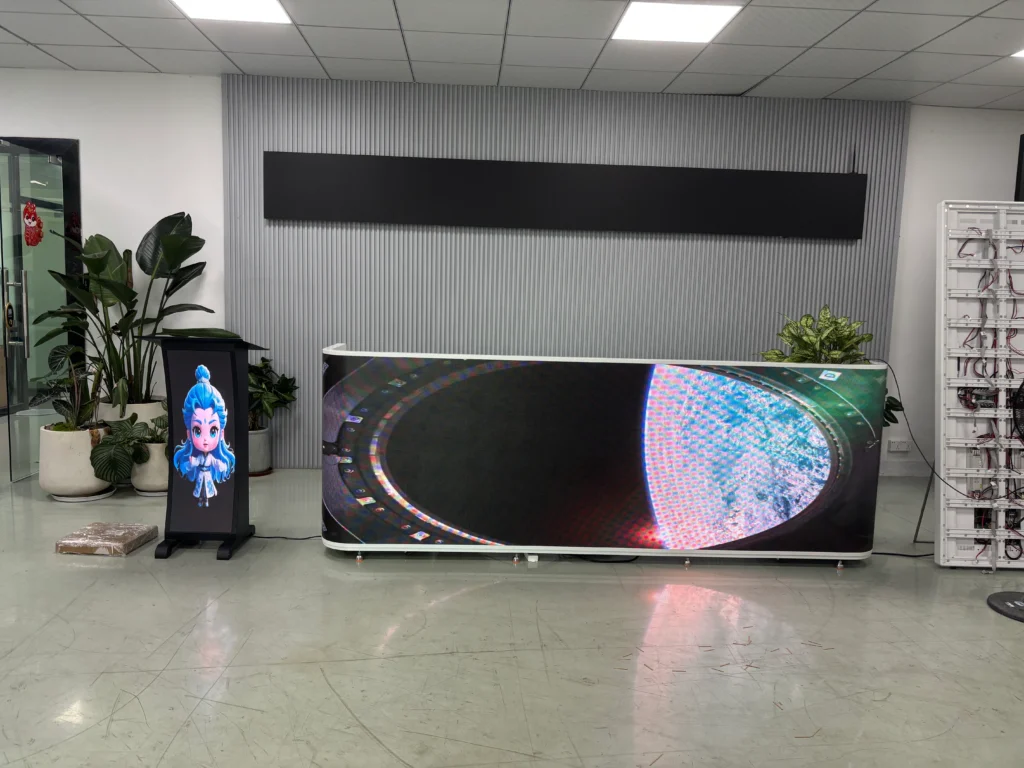
Corporate headquarters and hotel lobbies represent the second major category. Here, flexible displays integrate into architectural features rather than sitting on top of them. A curved reception desk with an embedded flexible LED fascia, for example, communicates brand messaging without looking like a screen bolted onto furniture.
Understanding Flexible LED Displays for Interior Design: Applications and Buying Guide helps specifiers identify these integration opportunities early in the design process.
Residential high-end interiors form the third growth area. Media rooms with curved walls, backlit onyx bar fronts, and even flexible ceiling installations are appearing in luxury properties. The residential market demands tighter pixel pitches—typically under 2mm—because viewing distances are shorter.
How to apply this: Identify which of these three categories your project falls into, then benchmark your specification requirements against completed installations in that same category rather than cross-referencing across different use cases.
Creative Installations Beyond Standard Screens
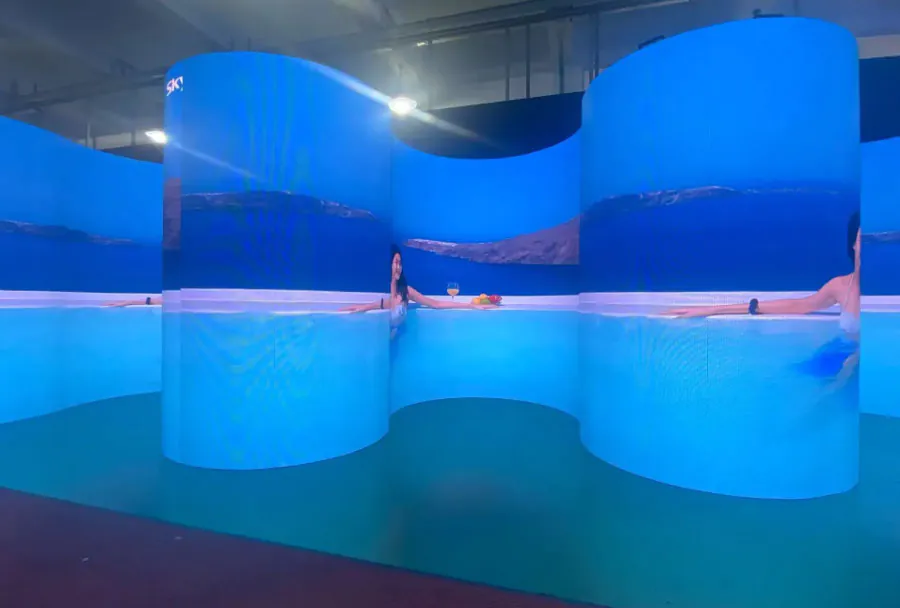
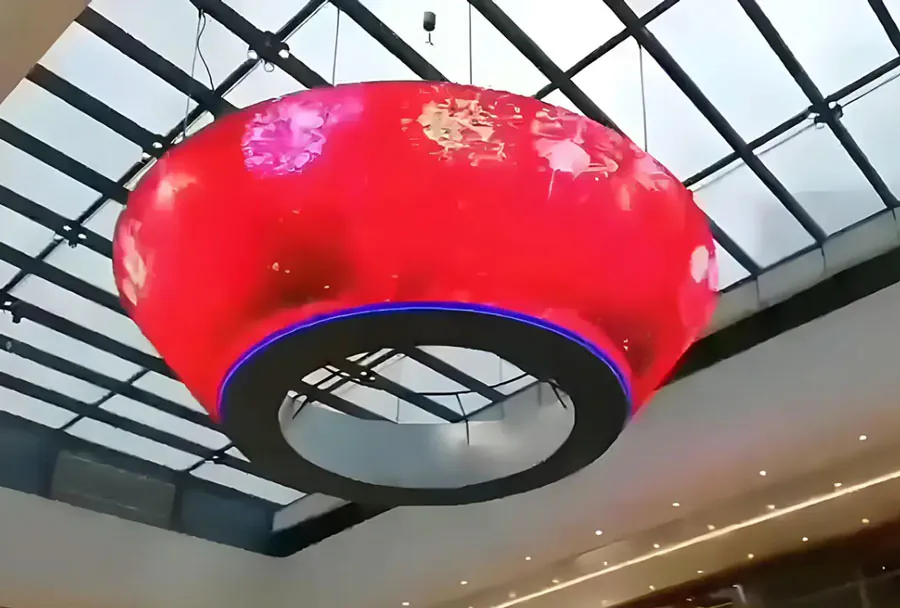
The most compelling Flexible LED Displays for Interior Design: Applications and Buying Guide projects often abandon the rectangular screen format entirely. Designers are cutting flexible panels into custom shapes—circular ceiling medallions, undulating ribbon forms across walls, and integrated stair-riser displays.
Planar offers a product line specifically for custom-shaped interior installations, with factory-cut options that eliminate the risk of field-cutting damaging LED circuits. Their design team provides cut-shape verification before production, which matters because once cut, flexible panel edges cannot be re-sealed in the field.
Transparent flexible LED film represents an emerging subcategory worth watching. Applied directly to glass partitions or windows, these films maintain visibility while adding dynamic content layers. LG’s transparent OLED technology, demonstrated at ISE 2024, points toward thinner, more transparent flexible options arriving in the next product generation.
How to apply this: Request a factory-cut sample swatch before committing to custom shapes. Field-modified panels void most manufacturer warranties.
Buying Guide: Specifications That Determine Performance
Purchasing Flexible LED Displays for Interior Design: Applications and Buying Guide requires evaluating specifications that differ meaningfully from those used for conventional LED walls. Making decisions based on outdoor display criteria leads to expensive mistakes indoors.
Brightness requirements for interior applications are substantially lower than outdoor-rated products. Indoor flexible displays typically need 800-1,200 nits—anything above 1,500 nits creates eye fatigue in enclosed spaces. Many suppliers default to quoting outdoor brightness figures because higher numbers look impressive on specification sheets. You want the opposite for interior work.
Refresh rate directly impacts how the display appears in smartphone photos and videos—a consideration that matters enormously for retail and hospitality settings where guests photograph the space. A refresh rate of 3,840Hz or higher eliminates the flickering bands that appear when cameras capture lower-refresh displays. This specification costs more but prevents your carefully designed installation from looking broken on Instagram.
The comprehensive Flexible LED Displays for Interior Design: Applications and Buying Guide approach means evaluating every specification in context.
The table below compares key specifications and what to verify before purchasing:
| Specification | What to Verify | Red Flag |
|---|---|---|
| Pixel Pitch | Measure viewing distance ÷ 3 | Supplier quotes only outdoor pitch |
| Brightness | Request indoor-calibrated spec | Numbers above 1,500 nits for indoor |
| Refresh Rate | Minimum 3,840Hz for camera-friendly | Below 1,920Hz for public spaces |
| Bend Radius | Ask for minimum radius in mm | “Fully flexible” without a number |
| IP Rating | IP20 sufficient for dry interiors | Paying for IP65 indoors is waste |
| Warranty | 3+ years with dead pixel policy | No stated dead pixel threshold |
How to apply this: Create a one-page specification sheet using the table above and send it to at least three suppliers. Compare responses side-by-side rather than evaluating each supplier’s proposal in isolation.
Power and Control System Considerations
The display panel itself represents only part of the total installation cost. Power distribution and content management systems often surprise first-time buyers with their complexity and expense.
Flexible LED Displays for Interior Design: Applications and Buying Guide typically require a separate power supply unit for every 8-12 square feet of display area, depending on pixel density. These power supplies need ventilated, accessible locations—a requirement that can conflict with the clean aesthetic goals of high-end interior projects.
Novastar and Brompton Technology manufacture the processing systems most commonly specified for premium interior installations. Brompton’s Tessera system, in particular, handles the color calibration challenges that arise when flexible panels bend around curved substrates.
Plan your equipment rack location before finalizing the display design. Running low-voltage power from a centralized rack to distributed panels typically costs less and looks cleaner than hiding individual power supplies behind each panel section.
How to apply this: Budget 30-40% of your total display panel cost for processing, power, and installation infrastructure—not just the panels themselves.
Avoiding Common Purchasing Mistakes
The most expensive mistakes in buying Flexible LED Displays for Interior Design: Applications and Buying Guide stem from treating the purchase like a commodity transaction rather than a design-integration decision.
Pixel pitch inflation ranks as the most common supplier tactic. A manufacturer might claim a 2mm pitch, but measure it diagonally rather than horizontally—producing a number that sounds tighter than the actual visual experience. Always confirm that quoted pixel pitch uses the standard horizontal measurement methodology.
The International Electrotechnical Commission (IEC) standard 62977-3-1 specifies measurement protocols for electronic displays, and reputable manufacturers reference this standard in their technical documentation.
Ignoring off-axis viewing quality creates another frequent disappointment. Flexible displays wrapped around columns will be viewed from multiple angles. Cheaper panels lose color accuracy and brightness when viewed beyond 140 degrees. Premium panels maintain consistency to nearly 180 degrees. Visit a showroom and walk around the display before specifying—specification sheets cannot communicate off-axis performance.
This is precisely why a thorough Flexible LED Displays for Interior Design: Applications and Buying Guide evaluation must include hands-on demonstration.
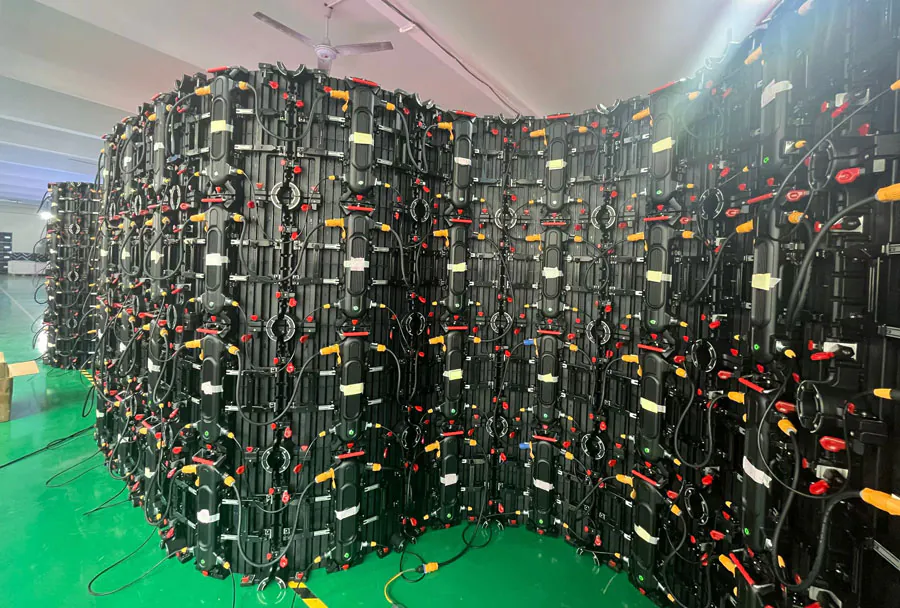
Serviceability after installation matters enormously for permanent interior installations. Flexible panels glued directly to substrates become disposable when individual LEDs fail. Modular magnetic systems allow single-panel replacement without disturbing surrounding tiles.
As John Barker, Technical Director at the Digital Signage Federation, noted in their 2024 installation guidelines: “Front-serviceable modular designs reduce the total cost of ownership by an estimated 40-60% over a five-year lifecycle compared to permanently bonded installations.”
How to apply this: Add a serviceability clause to your purchase agreement specifying maximum downtime for individual panel replacement and who bears the labor cost during the warranty period.
Color Calibration Across Curved Surfaces
Flexible LED Displays for Interior Design: Applications and Buying Guide face a calibration challenge that flat displays avoid entirely. When a panel bends, the viewing angle relative to each LED shifts, potentially creating visible color inconsistency across the curved surface.
Factory calibration addresses this partially. Higher-end manufacturers calibrate each panel on a curved jig that simulates the specified bend radius. This process, sometimes called 3D calibration, adjusts individual LED output so the curved installation appears uniform from the primary viewing position.
Field calibration after installation provides the final quality assurance. A technician with a spectroradiometer measures actual output across the installed surface and creates a correction profile loaded into the video processor. This step adds cost but transforms a good installation into an excellent one.
How to apply this: Ask suppliers whether their panels are calibrated flat or on a curved jig. For installations with tight bend radii, curved-jig calibration is worth the premium.
Installation and Maintenance Best Practices
Proper installation techniques extend the lifespan of Flexible LED Displays for Interior Design: Applications and Buying Guide and prevent the delamination issues that can appear months after project completion.
Substrate preparation determines long-term adhesion quality. The mounting surface must be smooth, clean, and free of temperature fluctuations that cause expansion and contraction cycles. Metal substructures require thermal isolation from exterior walls. Wood substrates must be sealed to prevent moisture migration that degrades magnetic backing over time.
Temperature management inside enclosed spaces matters more than most designers anticipate. Flexible LED panels generate approximately 30-40 watts of heat per square foot during normal operation. In enclosed ceiling coves or behind glass, this heat accumulates and can push operating temperatures beyond the panel’s rated range. Active ventilation—even small, quiet fans—prevents the thermal degradation that shortens LED lifespan.
Any credible Flexible LED Displays for Interior Design: Applications and Buying Guide resource emphasizes thermal planning as essential.
Cleaning protocols need to be established before the installation is complete. Flexible surfaces scratch more easily than rigid LED tiles. Microfiber cloths and manufacturer-approved cleaning solutions prevent the micro-abrasions that accumulate into visible haze over time. Document the approved cleaning method in the facility’s maintenance manual.
How to apply this: During the design phase, specify access panels at both ends of any enclosed flexible display installation to enable inspection and ventilation maintenance without dismantling finished surfaces.
Frequently Asked Questions About Flexible LED Displays for Interior Design: Applications and Buying Guide
How long do flexible LED displays typically last in interior applications?
Most quality Flexible LED Displays for Interior Design: Applications and Buying Guide carry a 100,000-hour rating to half-brightness, which translates to roughly 11 years of continuous 24/7 operation. In typical commercial interiors running 12 hours daily, expect 15-20 years before brightness degrades noticeably. This lifespan assumes proper thermal management—installations in hot, unventilated enclosures may degrade twice as fast.
Can flexible LED panels be installed on textile or fabric surfaces?
Direct installation on fabric surfaces is not recommended for Flexible LED Displays for Interior Design: Applications and Buying Guide because fabric lacks the dimensional stability needed for long-term adhesion. However, a rigid backing panel can be installed behind the fabric, with the flexible display mounted to that substructure through precisely cut fabric openings.
This approach preserves the textile aesthetic while providing stable support.
What happens if an individual LED pixel fails after installation?
The remedy depends on your installation method. Modular magnetic-mount systems allow a single failed panel to be swapped in minutes without specialized tools. Permanently bonded installations require a technician to cut out and replace the affected section, which often leaves visible repair seams.
This is why modular designs dominate Flexible LED Displays for Interior Design: Applications and Buying Guide specifications in commercial projects.
Are flexible LED displays compatible with standard video wall processors?
Most Flexible LED Displays for Interior Design: Applications and Buying Guide use the same signal protocols as rigid LED walls, making them compatible with standard processors from manufacturers like Novastar and Brompton. The key exception involves custom-shaped installations, which may require processors capable of pixel-mapping non-rectangular arrays. Verify this capability with your processor supplier before finalizing an irregularly shaped design.
How do flexible LED displays compare to projection mapping for curved interior surfaces?
Flexible LED Displays for Interior Design: Applications and Buying Guide deliver superior brightness and contrast in ambient light conditions where projection mapping struggles. However, projection mapping costs less for very large, complex surfaces and can cover areas that would be prohibitively expensive to tile with LED panels.
Many high-end projects now combine both: LED for primary focal surfaces and projection for secondary atmospheric effects.
Conclusion
Flexible LED Displays for Interior Design: Applications and Buying Guide have moved from experimental technology to practical design tool, but successful implementation still requires informed decision-making.
– Match the technology to genuinely curved surfaces—paying the flexibility premium for flat walls wastes budget with no visual benefit
– Verify specifications using standardized measurement methods, particularly pixel pitch and off-axis performance
– Budget for the complete system including processing, power, and installation infrastructure, not just panel cost
– Prioritize modular, front-serviceable designs that allow individual panel replacement without disrupting surrounding areas
The next step is to request samples from at least three manufacturers and evaluate them in your actual lighting conditions. Specification sheets cannot communicate how a display looks under your project’s specific ambient light, viewing distances, and surface geometries. A side-by-side comparison under real conditions reveals quality differences that technical documents obscure.
By following this Flexible LED Displays for Interior Design: Applications and Buying Guide, design professionals can confidently specify solutions that deliver both aesthetic impact and long-term reliability.