Foldable LED Poster: Features, Applications and Buying Guide

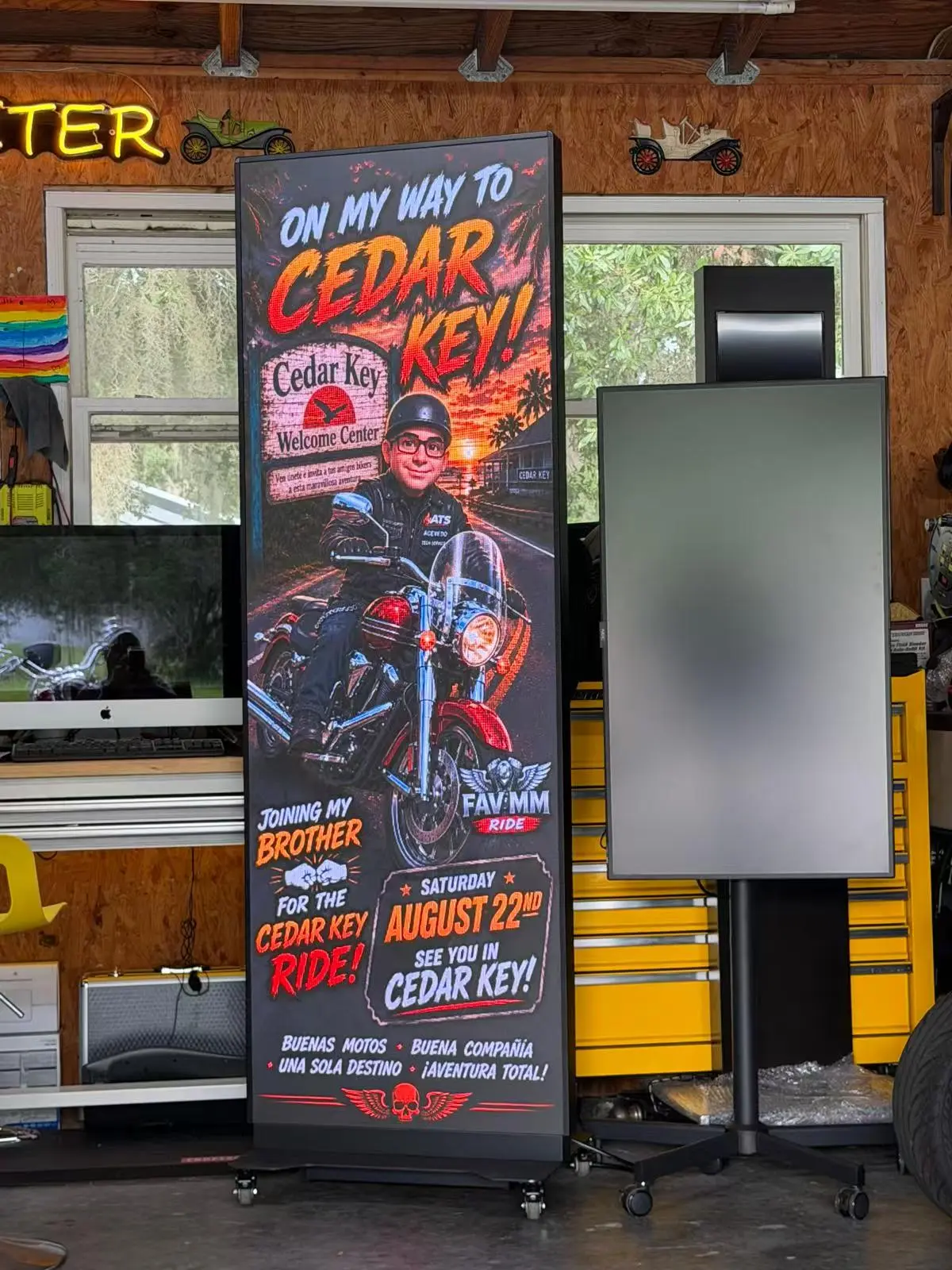
Choosing a foldable LED poster is far easier once you know which specifications actually change what your audience sees. A modern folding cabinet can bend to a tight 90-degree corner while holding a 1.2 mm pixel pitch — a combination that simply did not exist a decade ago.
Table of Contents
- What a Foldable LED Poster Actually Is and Which Features Matter
- The features that change the picture
- Why the folding mechanism matters
- Top Applications Where Folding Displays Deliver the Most Value
- Where folding is the wrong answer
- Key Specifications Compared: A Buyer’s Checklist
- Reading refresh rate correctly
- A Practical Buying Guide: Matching the Display to Your Space
- Indoor versus outdoor
- Rental versus permanent installation
- Processing and control
- Total cost of ownership
- Common Mistakes and Maintenance That Protects Your Investment
- How many fold cycles can the hinges survive before they wear out?
- Can a folding display be used outdoors in direct sunlight?
- Do folding displays work with standard video processors?
- What warranty terms should I check before signing?
- Is a folding display better than a flat LED wall for a fixed installation?
- Conclusion
The problem is that most buyers of a Foldable LED Screen get buried in spec sheets full of numbers that sound impressive but rarely affect the final picture.
This guide walks through the hardware features that matter, the applications where folding cabinets genuinely beat flat walls, and the practical questions to ask before you sign a purchase order. You will also find a compact comparison table, real processing tools you can research today, and the mistakes that cost venues the most money.
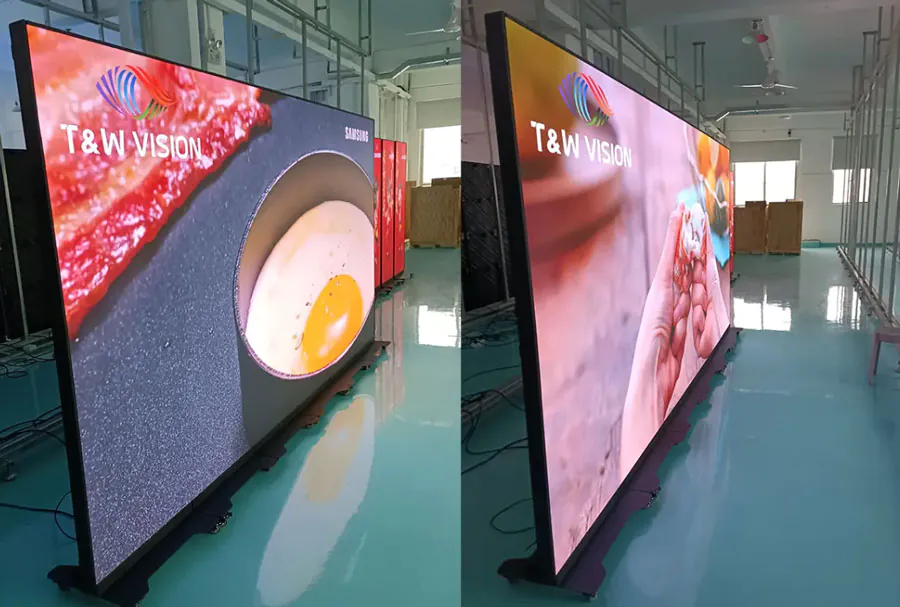
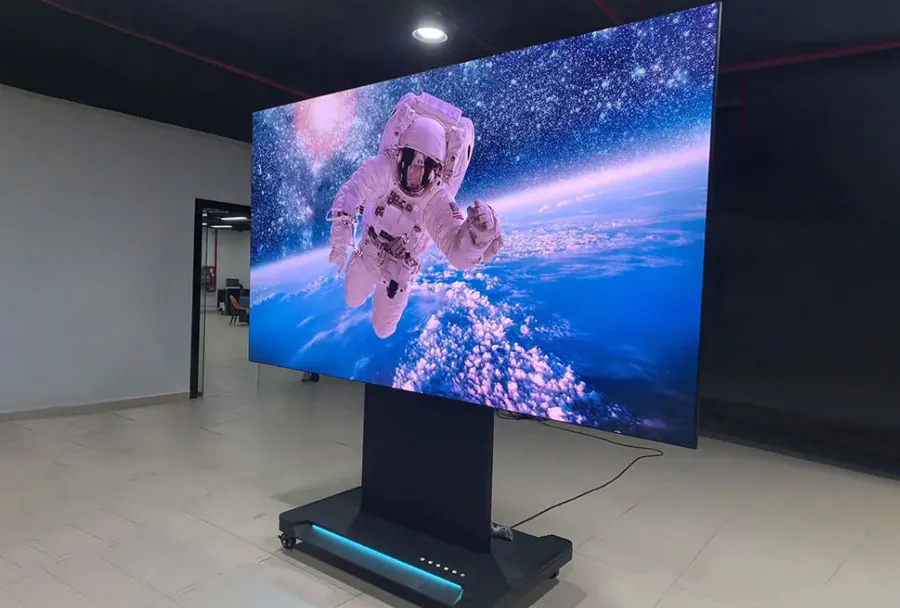
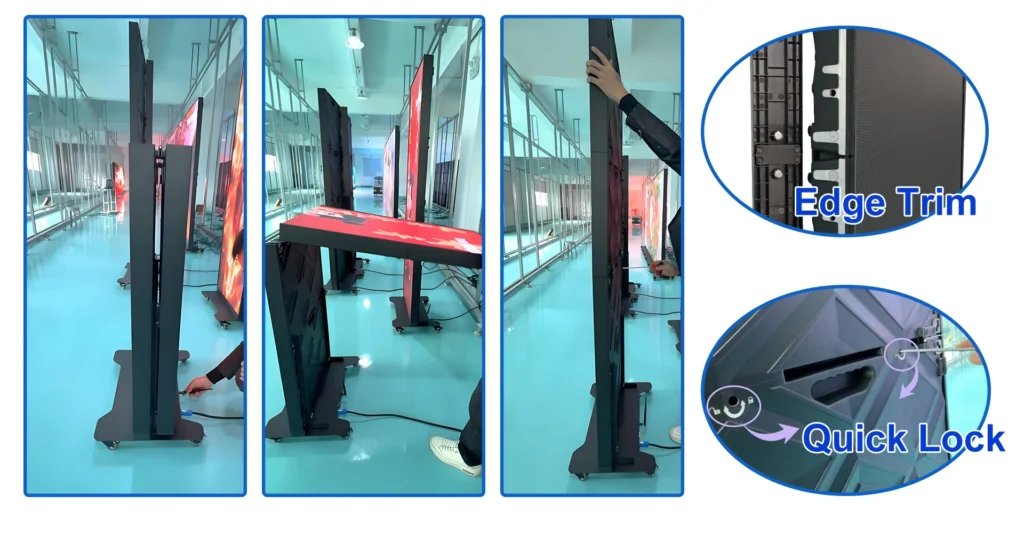
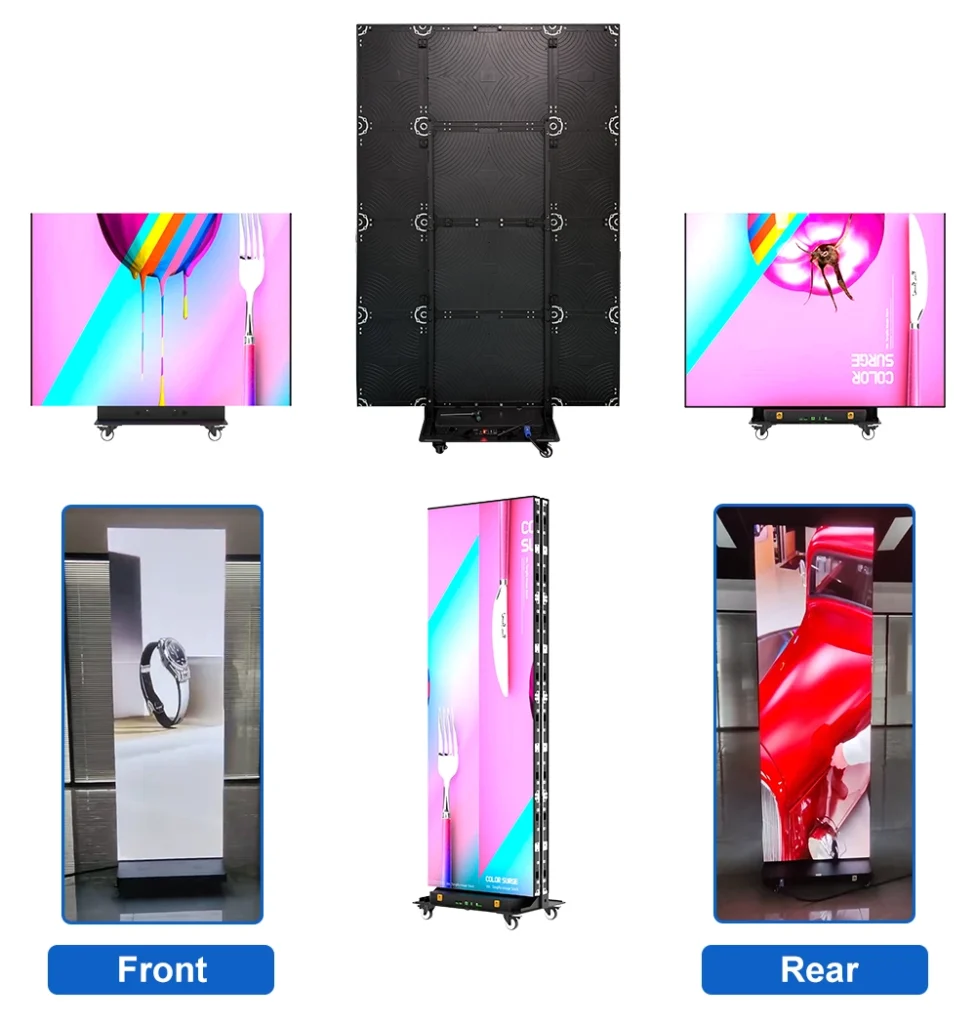
Setup and operation guidance for the LP-H series portable foldable LED video wall, made by TW VISION.
TW VISION holds foldable LED screen stock in the USA with two-day delivery.Contact our sales team if you need current availability.
What a Foldable LED Poster Actually Is and Which Features Matter
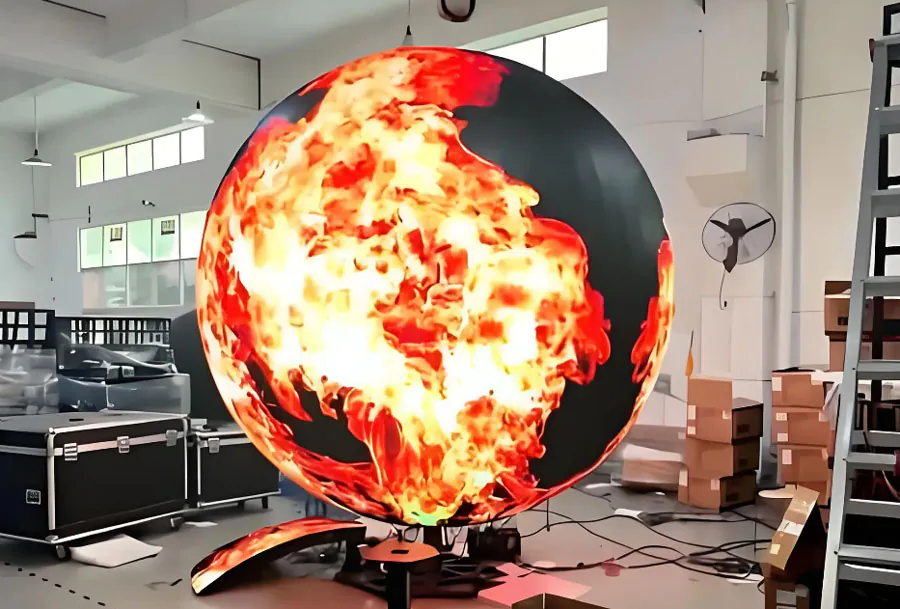
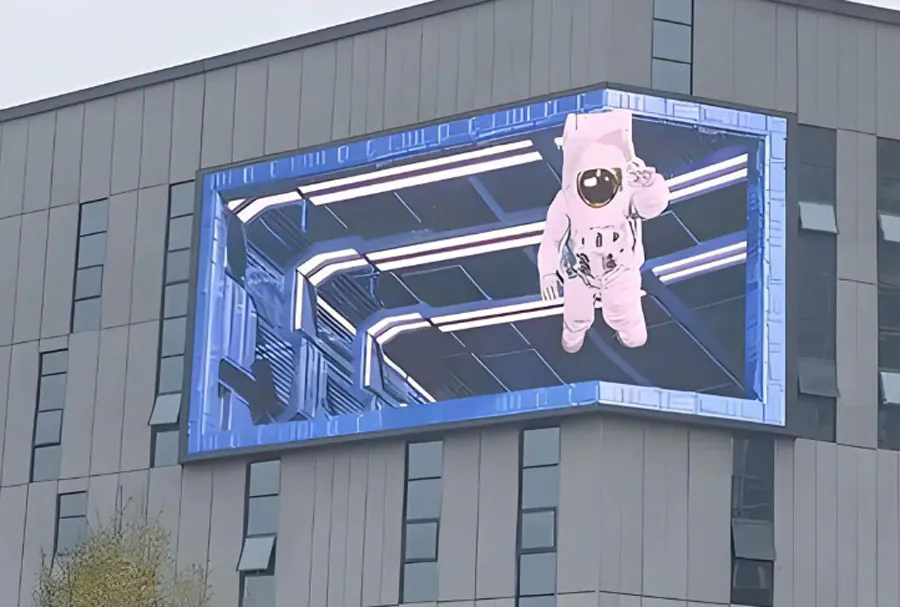
A Foldable LED poster is a modular video wall built from cabinets that hinge, bend, or fold, letting the same panels form flat walls, smooth arcs, and sharp right-angle corners without custom fabrication.
The fold happens at the cabinet joint. Most designs use one of three mechanisms:
– Adjustable-angle brackets — cabinets lock at repeatable angles, often 0°, 5°, 10°, and 90°, so setups are consistent night after night.
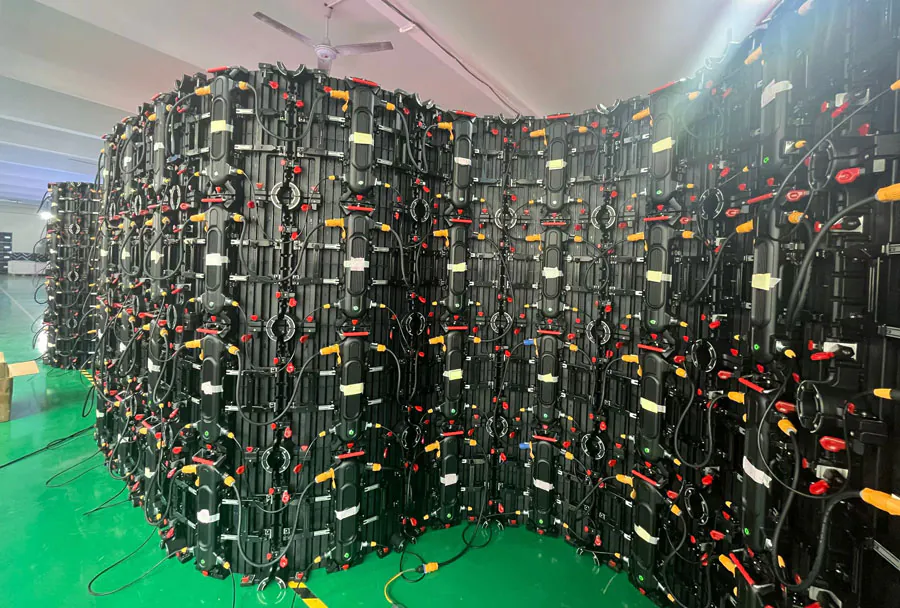
– Hinged cabinet pairs — two panels joined by a hinge that folds flat for transport and opens into a curve or corner.
– Flexible module substrates — soft modules on a bendable base that wrap around columns, cylinders, and architectural curves.
The features that change the picture
Pixel pitch is the single most important number in any Foldable LED poster. A 1.2 mm pitch looks crisp from a few metres away, while a 10 mm pitch is built for stadium seating distances where nobody sits close.
Refresh rate decides whether phones and broadcast cameras capture clean images or rolling black bars. Brightness decides whether the wall survives a sunlit atrium or a trade-show hall.
Cabinet weight and depth quietly decide your labour bill on a folding wall. A cabinet that weighs 8 kg rather than 12 kg can mean one fewer crew member on every load-in.
Why the folding mechanism matters
Cheap hinges develop play after a few hundred cycles, and play shows up as visible seams. Ask any folding display vendor how many fold cycles their cabinet is rated for, and request it in writing.
Manufacturers commonly quote indoor brightness of 800 to 1,500 nits and outdoor cabinets reaching 5,000 nits or more, though actual figures vary widely by product line.
How to apply this: before comparing quotes, measure your closest viewer distance in metres and use it as a rough pixel-pitch target — a 3 m front row points you toward a 3 mm pitch or finer.
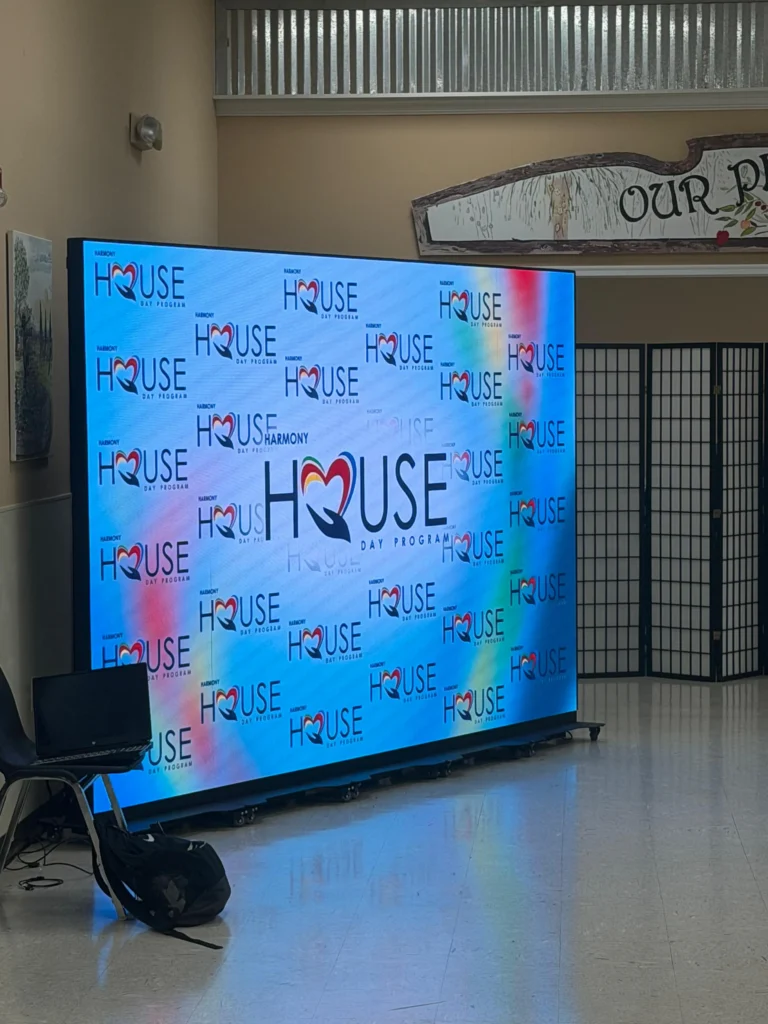
Top Applications Where Folding Displays Deliver the Most Value
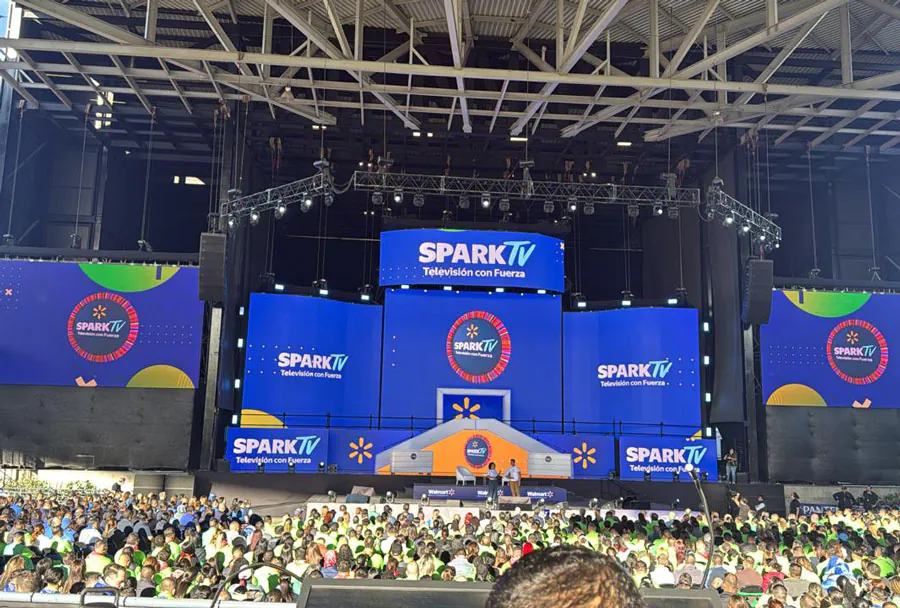
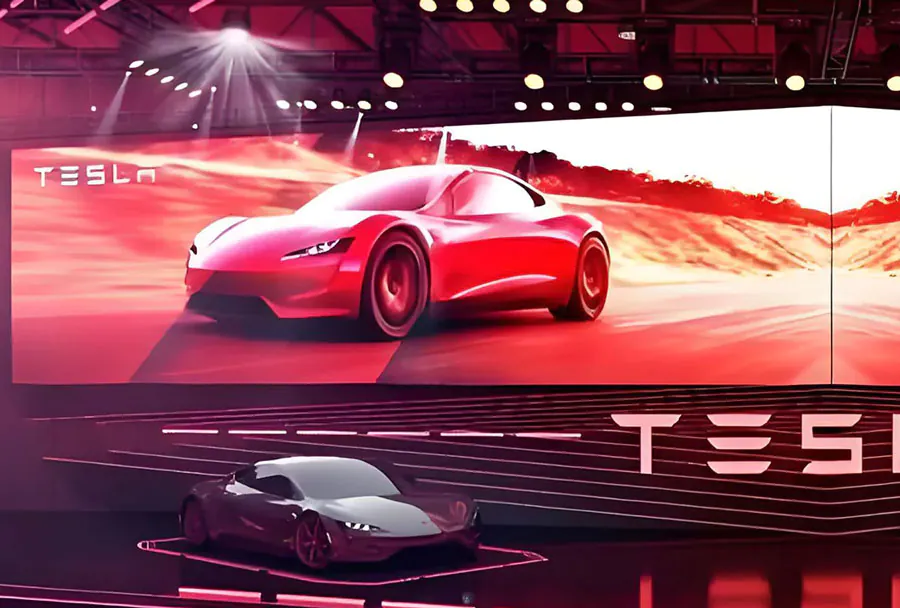
Folding LED cabinets earn their premium in venues where the same hardware has to become a different shape on a different day, which is why rental, retail, and broadcast buyers adopt them fastest.
The strongest use cases cluster in six areas:
– Touring and rental events — one inventory covers backdrops, side screens, and corner booths.
– Retail flagship stores — curved window displays that pack down for seasonal resets.(soft-connection LED cabinets)
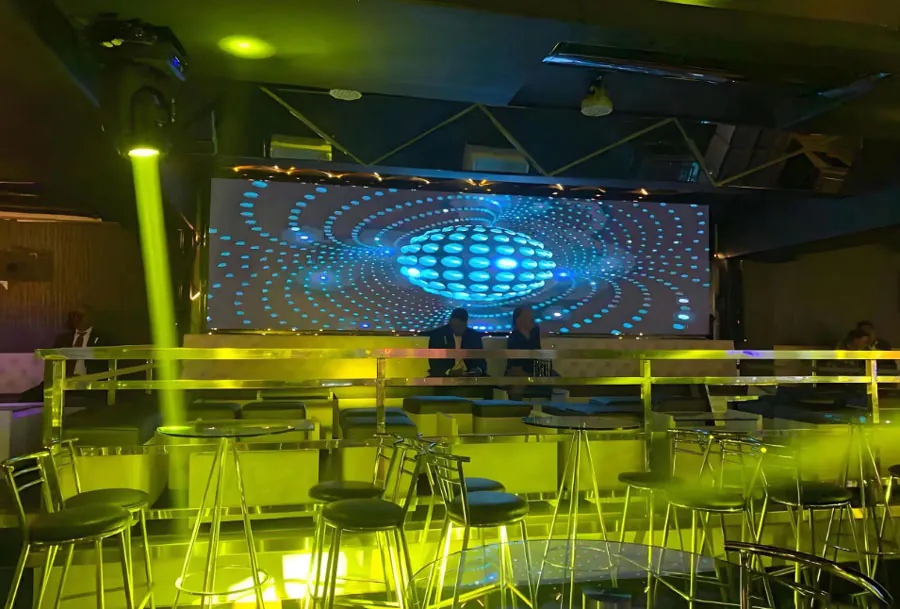
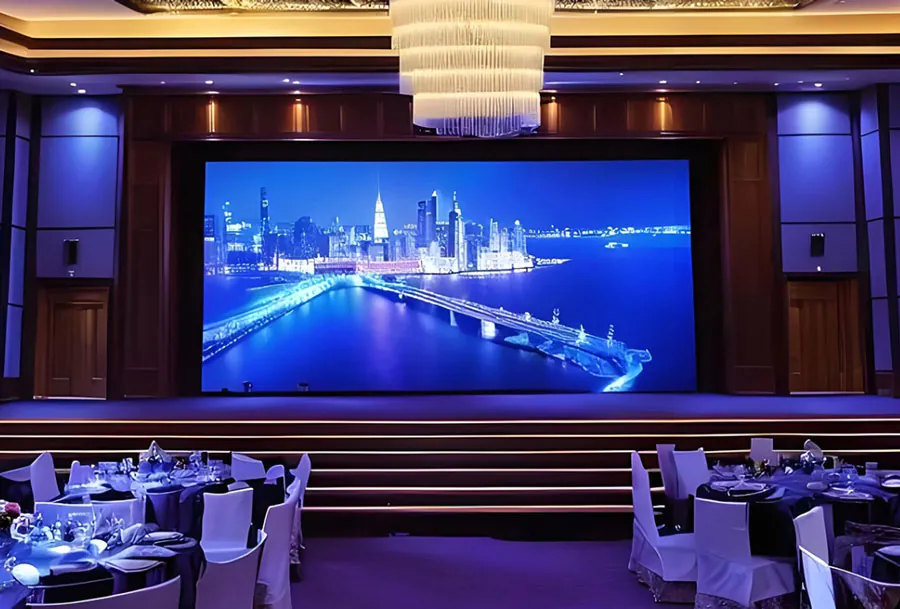
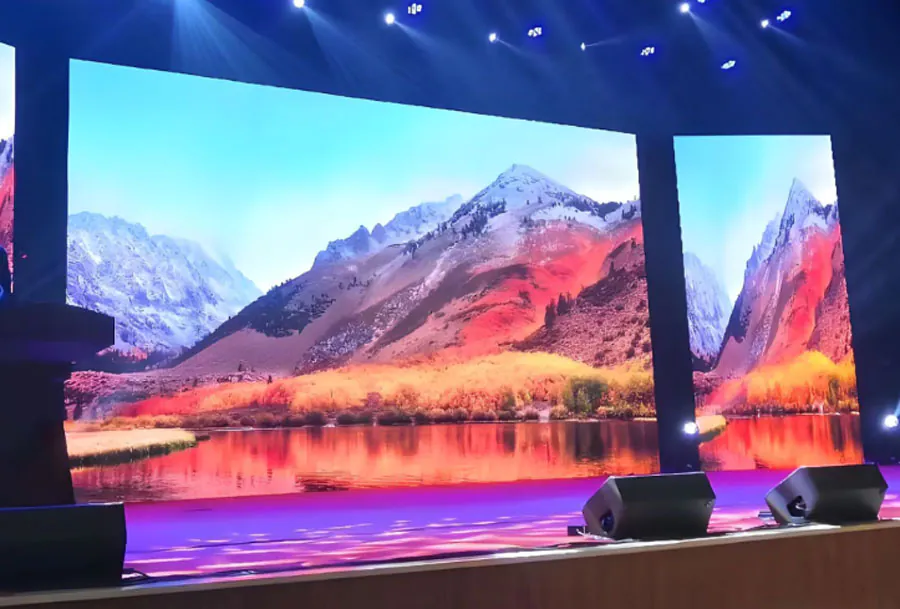
– Corporate lobbies and showrooms — concave walls that follow a building’s architecture.
– Broadcast and virtual production stages — curved volumes with consistent camera-friendly refresh.
– Museums and experiential venues — wrapped columns and immersive rooms.
– Control rooms — angled operator walls that curve around seating positions.
Consider a touring production that needs a 12 m-wide backdrop in one city and a three-sided corner booth in the next. With a Foldable LED Screen: Features, Applications and Buying Guide, the same flight cases cover both builds, which reduces truck space and rental duplication.
AVIXA, the audiovisual industry’s trade association, tracks live events and experiential retail as major spending categories in its published Industry Outlook research, and both segments are heavy LED display users.
Where folding is the wrong answer
If your wall will never move and never curve, a flat cabinet is usually cheaper per square metre and simpler to service. Folding pays off through reuse, not through novelty.
A properly planned Foldable LED poster comparison should ask one blunt question: how many different shapes will this wall become in the next 24 months?
How to apply this: list every configuration you expect to build over two years, then count how many require a curve or a corner — that number justifies or kills the folding premium.
Key Specifications Compared: A Buyer’s Checklist
Most specification arguments disappear once you translate each number into a decision, so use the table below as a screening tool for any folding cabinet you shortlist.(tri-foldable LED poster)
| Spec | Typical range | What it tells you | Action to take |
|---|---|---|---|
| Pixel pitch | 1.2–10 mm | Sharpness at a given distance | Match pitch to your closest seat |
| Brightness | 800–1,500 nits indoor; 5,000+ nits outdoor | Daylight visibility | Measure ambient light on site |
| Refresh rate | 1,920–3,840 Hz | Camera flicker and scan lines | Test with your own camera |
| Curvature radius | 500–1,500 mm | How tightly panels bend | Mock up the curve at full size |
| Cabinet weight | Often 8–12 kg per 500×500 mm | Rigging and crew size | Check truss and floor limits |
The International Electrotechnical Commission explains in IEC 60529 that the first digit of an IP rating covers protection against solid objects and the second covers protection against water — so an IP54 cabinet is dust-protected but only splash-resistant, not submersible.
That distinction matters on a folding poster because hinges and cable pass-throughs are usually the first places water gets in. A high IP rating on the front face says nothing about the joint.
Reading refresh rate correctly
Refresh rate interacts with camera shutter angle. As Brompton Technology explains in its published guidance on LED processing, low refresh rates combined with short shutter angles produce visible scan lines on camera even when the wall looks perfect to the naked eye.
Any serious Foldable LED Screen evaluation for broadcast or virtual production should include a live camera test, not a spec-sheet comparison.
How to apply this: build a one-page checklist from the table above and refuse to shortlist any product that cannot answer all seven rows with a documented figure.
A Practical Buying Guide: Matching the Display to Your Space
The right folding display is the one that fits your venue, your crew, and your power supply, your crew, and your power supply — not the one with the finest pitch on the brochure.
Indoor versus outdoor
Indoor cabinets prioritise weight, pitch, and colour accuracy. Outdoor cabinets prioritise brightness, IP sealing, and heat management, and they are usually heavier and more expensive.
Never assume an indoor wall will survive a covered outdoor terrace. Humidity and temperature swings attack the hinges first.
Rental versus permanent installation
Rental buyers should optimise for setup speed, road-case protection, and modular spare parts. Permanent installations should optimise for service access, long-term spare availability, and remote monitoring.
Processing and control
Your processor determines how easily a folding display maps unusual shapes.(NovaStar VX2000 Pro)handles the non-rectangular mapping most corner builds need. NovaStar publishes configuration software and control hardware widely used across LED cabinets, and it is worth confirming your shortlisted product is supported before purchase.
Ask whether the processor can handle non-rectangular mapping natively, because corner builds often need custom canvas layouts.
Total cost of ownership
Budget for spare modules, spare power supplies, a calibration service visit, and shipping. A budget that covers only the panels will underestimate the real number by a wide margin. the real number by a wide margin.
Power is the most commonly missed line item in any folding display budget. Even mid-size walls draw heavily at full white, so confirm your available circuits before delivery day.
How to apply this: request a written quote that lists panels, processor, spare parts, rigging, freight, commissioning, and a two-year service estimate as separate lines.
Common Mistakes and Maintenance That Protects Your Investment
Most folding display failures trace back to handling and storage rather than electronics, so a simple maintenance routine protects more value than any warranty upgrade.
Watch for these recurring mistakes:
– Buying on pixel pitch alone and ignoring weight, power, and service access.
– Skipping a camera test when the wall will appear on broadcast or film.
– Ordering zero spare modules, then waiting weeks for a replacement mid-tour.
– Storing panels in damp warehouses without desiccant in the road case.
– Assuming a glossy demo video reflects how the wall performs in your venue.
On the maintenance side, clean modules with a dry microfibre cloth rather than solvents, check hinge torque and locking pins quarterly, and rotate spare panels into service so they stay matched to the rest of the wall. Keep one front-maintenance vacuum suction cup on site; hinge play is far easier to correct before a module is dropped. Compliance deserves a mention too for any Foldable LED Screen: Features、Applications and Buying Guide. These habits matter even more on a folding wall. Compliance also deserves a mention.
Compliance deserves a mention too for any Foldable LED Screen: Features、Applications and Buying Guide. The IEC’s IEC 62368-1 safety standard covers audio/video and IT equipment, and reputable suppliers should be able to show you the relevant safety and electromagnetic compatibility documentation for your region.
A well-run Foldable LED Screen programme treats spares, cleaning, and documentation as part of the purchase, not an afterthought.
How to apply this: schedule a quarterly 30-minute inspection covering hinge play, cable connectors, fan filters, and spare-part stock levels.
Frequently Asked Questions About Foldable LED Posters
How many fold cycles can the hinges survive before they wear out?
Service life varies enormously by mechanism and material, and many manufacturers do not publish a cycle rating at all. Ask for the rated cycle count in writing, then compare it against your realistic annual setups. A touring cabinet that folds twice a day accumulates far more wear than a retail display folded four times a year.
Treat the hinge as a consumable part on any Foldable LED Screen purchase and confirm replacement hinges are stocked.
Can a folding display be used outdoors in direct sunlight?
Yes, but only with an outdoor-rated cabinet, and direct sun is harsher than most buyers expect. Brightness above roughly 5,000 nits helps, yet heat buildup and ultraviolet exposure still age seals and plastics faster than shaded installations. Mount the wall so it faces away from the afternoon sun where possible, and plan for active cooling.
Any Foldable LED Screen decision for outdoor use should include an on-site sun survey at the exact time of day your audience will be present.
Do folding displays work with standard video processors?
Generally yes, because most folding cabinets use conventional receiving cards and standard input formats. The complication is shape, not signal. Non-rectangular builds need a processor that supports custom canvas mapping, otherwise your content gets cropped at every corner.
Test your intended source devices, media players, and switchers against the processor before committing, and confirm the vendor supports firmware updates for the Foldable LED poster configuration you plan to run.
What warranty terms should I check before signing?
Look for four things: the warranty length on modules versus power supplies, whether hinges and mechanical parts are covered, whether on-site labour is included, and how quickly spare parts ship. Many warranties cover only the LED modules and exclude the folding mechanism entirely, which is the part most likely to need service. Ask for the exclusions page in writing.
A Foldable LED Screen contract without a stated spares lead time is a risk you carry alone.
Is a folding display better than a flat LED wall for a fixed installation?
Usually not, unless the installation needs curves, corners, or future reconfiguration. Flat cabinets cost less per square metre, are simpler to service, and offer better seam consistency in a permanent wall. Folding pays back when the same inventory has to become multiple shapes over time. For a lobby wall that will never change, spend the difference on finer pitch.
Choose folding in your Foldable LED Screen plan only when flexibility is a real requirement.
Conclusion
Folding LED displays reward buyers who plan around use, not around brochure numbers.
– Pixel pitch, refresh rate, and brightness decide the picture; weight, power, and hinges decide your operating cost.
– Folding pays off when a wall becomes many shapes — flat installs are usually cheaper.
– Camera testing, spare modules, and quarterly hinge checks prevent the most expensive failures.
– Every quote should separate panels, processing, rigging, freight, and service costs.
Your next step is simple: write down your closest viewer distance, your expected configurations, and your available power, then request written answers to all three from at least three suppliers. Send those three answers to our LED poster team and we will confirm which series and pitch fit before you commit.