Indoor and Outdoor LED Screen: What Buyers Must Verify

Indoor and outdoor LED screens look similar in a showroom, yet they diverge on brightness, sealing, cooling, and warranty. Choosing the wrong category produces a washed-out window display or a cabinet that fails after the first storm. This guide compares both categories on the five checks that decide performance: brightness, IP rating, pixel pitch, power and structure, and certification. It also explains what to verify before you order.
Table of Contents
- Indoor and Outdoor LED Screen: The Core Differences
- Verify Brightness in Nits for the Real Viewing Condition
- Check IP Ratings and Environmental Protection
- Match Pixel Pitch, Viewing Distance and Refresh Rate
- Plan Power, Cooling and Structural Load
- Confirm Certifications, Warranty and Spares
- Delivery, Stock and Support from Atlanta
- Frequently Asked Questions
- Conclusion
Indoor and Outdoor LED Screen: The Core Differences
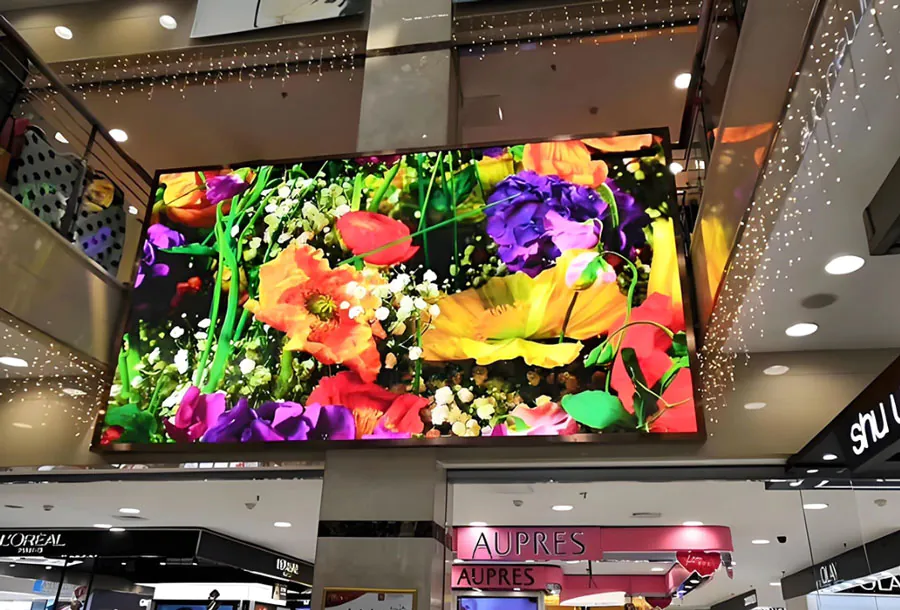
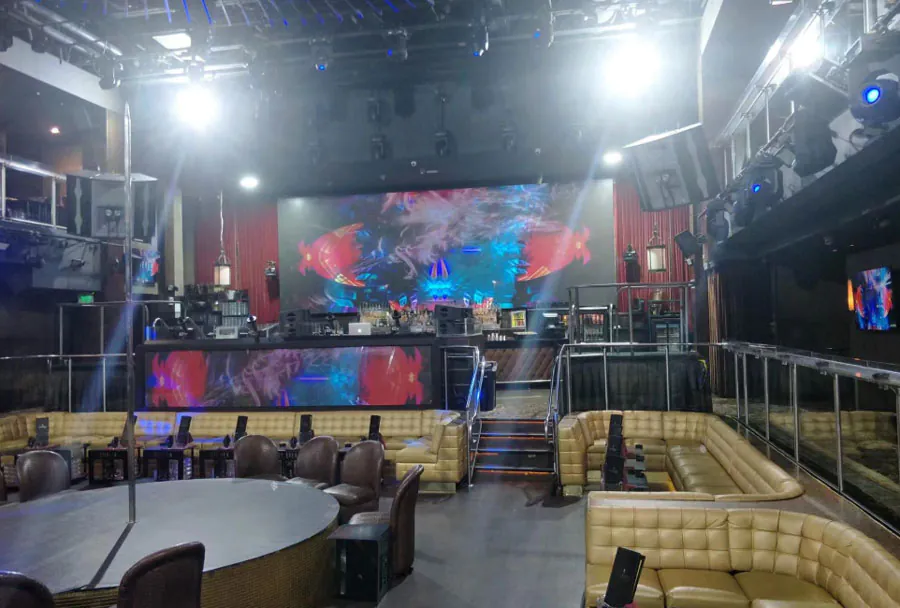
Thediffer first on light output. Indoor displays commonly run from 800 to 1,500 nits, which suits controlled lighting and viewers who stand within a few meters. Outdoor cabinets usually need 5,000 nits or more to stay readable in direct sun, and stadium faces often exceed 6,000 nits.
Sealing and cooling separate the categories next. Indoor panels often carry IP20 or IP30 ratings and rely on passive airflow, while outdoor cabinets reach IP65 or IP66 with sealed enclosures and active heat management. Outdoor models also add corrosion-resistant coatings, heavier frames, and wind-load data that indoor models never need.
The warranty follows the same split. An indoor-rated panel mounted under an awning can lose coverage once moisture exposure appears, because the approved environment no longer matches the site. Therefore, read the warranty’s environment clause before comparing prices, not after a failure.
A semi-outdoor space sits between the two categories. A covered patio, a shaded walkway, or a glass-enclosed lobby may avoid direct rain yet still face humidity swings, reflected glare, and temperature extremes. In that case, do not assume an indoor panel will cope; ask for the approved environment, the IP rating on both faces, and a brightness figure measured at the glass. If the space can ever get wet, move up to an outdoor cabinet.
Local rules also matter: many cities limit brightness, animation, and operating hours, so confirm the sign code and permit path before you order.
| Check | Indoor | Outdoor |
|---|---|---|
| Brightness | 800–1,500 nits | 5,000+ nits |
| IP rating | IP20–IP30 | IP65–IP66 |
| Cooling | Passive airflow | Fans or sealed heat management |
| Structure | Lighter cabinets | Wind and snow load data |
| Warranty | Indoor environment | Outdoor environment |
Verify Brightness in Nits for the Real Viewing Condition
Brightness is the first number to verify, because a screen that looks bright in a showroom can wash out beside a window. Ask for the measured nits at your target ambient light level in writing, and separate the peak figure from the sustained figure. Peak brightness lasts briefly; sustained brightness reflects daily performance.
Indoor spaces usually work with 800 to 1,500 nits, while a semi-outdoor area under a canopy needs a mid-range figure and a check that shade lasts all day. Direct-sun outdoor faces generally start at 5,000 nits, and venues that face late-afternoon sun should test a sample at the real angle rather than trust a catalog headline.
A third-party photometric report or an on-site demo settles the question faster than a datasheet. In practice, a hotel lobby that adds glass doors can turn a perfectly good indoor panel into a gray rectangle by noon, and the fix is a higher-output panel or a different position, not a repair.
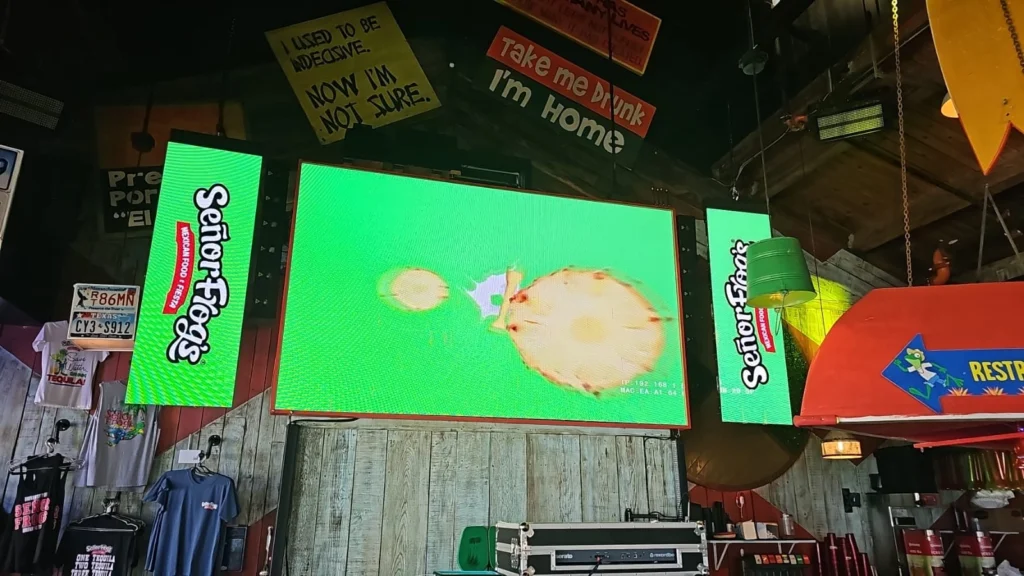
Auto-brightness sensors help both categories. Indoors, they keep the screen from glaring at night; outdoors, they cut power as daylight fades and protect LED life. Confirm the sensor range and the minimum brightness, because a screen that cannot dim below a few hundred nits will feel harsh in a dark room or on a residential street.
Check IP Ratings and Environmental Protection
IP ratings use two digits: the first covers solids such as dust, and the second covers liquids such as water jets. Indoor panels often sit at IP20 or IP30, which means minimal sealing, while exposed outdoor cabinets commonly reach IP65 or IP66. IEC 60529 defines what each digit means, so ask for the rating in writing rather than accepting “weatherproof” as a specification.
However, IP alone does not prove resistance to salt air, UV, wind-driven rain, heat, or condensation. Coastal sites need corrosion-resistant coatings, stainless or treated fasteners, drainage paths, and a maintenance interval that matches the exposure. Therefore, compare the materials and the enclosure design, not just the two digits.
IP65 handles dust and water jets; IP66 adds resistance to stronger jets, which suits coastal or storm-prone sites. Match the rating to the worst realistic weather event at the site, not the average week.
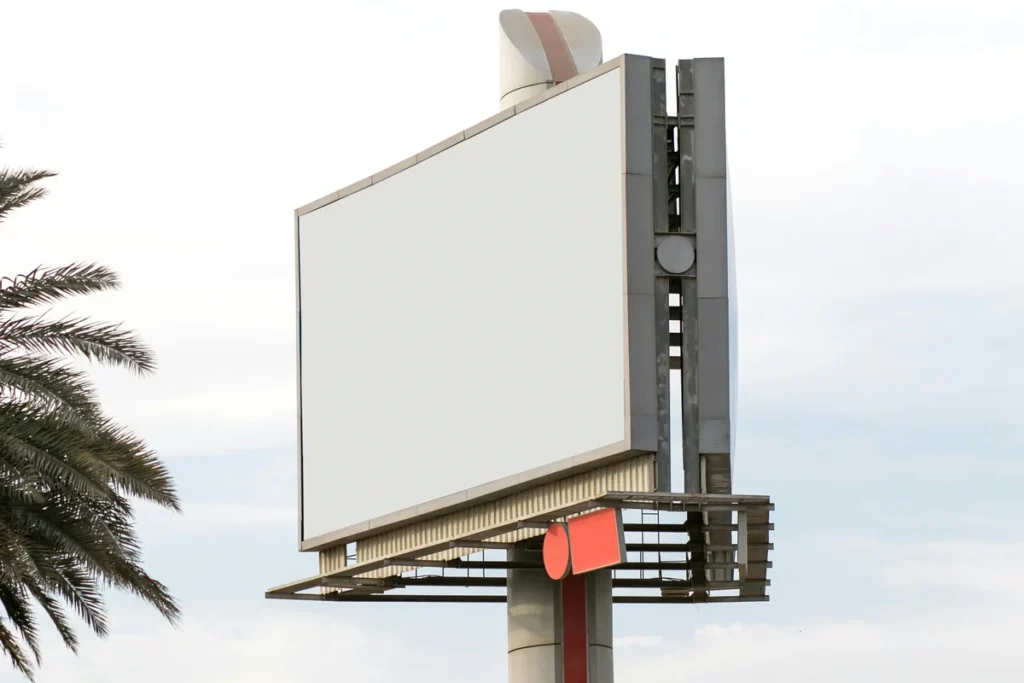
Request the rating for the module face and the rear cabinet separately, because rear access doors often carry a lower rating than the front. For an indoor and outdoor LED screen comparison, this is the check that separates a genuine outdoor cabinet from an indoor panel with a vented cover.
Coastal and desert sites need more than a high IP number. Salt air attacks fasteners and cabinet coatings, UV degrades seals, and heat cycling loosens gaskets. Ask for the coating specification, the fastener material, the drainage path, and the recommended inspection interval; then compare those details across suppliers rather than comparing only the IP digits.
Match Pixel Pitch, Viewing Distance and Refresh Rate
Pixel pitch is the center-to-center distance between LEDs in millimeters. A smaller pitch keeps text sharp at close range, while a larger pitch costs less and looks fine from a distance. Therefore, measure the nearest viewer first, then choose pitch; the farthest seat rarely drives the decision.
| Nearest viewer | Typical pitch |
|---|---|
| 6–10 ft | 2–3 mm |
| 20–40 ft | 4–5 mm |
| 50–100 ft | 8–10 mm |
| 100+ ft | 12 mm or larger |
Refresh rate matters when cameras point at the screen. A high refresh rate avoids rolling bands on broadcast and phone video, while a low rate produces flicker that no amount of brightness fixes. Check viewing angle and color calibration at the same time, because edge brightness and brand colors decide whether the screen looks consistent from the worst seat.
An indoor and outdoor LED screen may share a pitch label yet behave differently: outdoor models trade fine detail for brightness, and indoor models trade brightness for close-range sharpness. Match the specification to the viewing condition rather than the catalog tier.
A useful rule of thumb is roughly one millimeter of pitch per meter of minimum viewing distance, adjusted for content and budget. A stadium that buys fine pitch for the cheap seats often spends more without improving the view, while a coarser pitch with higher brightness usually serves the crowd better. Therefore, calculate the closest and farthest viewer, select pitch for the nearest one, and confirm the choice on a sample rather than a catalog photo.
Plan Power, Cooling and Structural Load
Power draw follows brightness, and outdoor cabinets tax both. Confirm the circuit capacity at full brightness rather than idle, and give the electrician the display’s maximum draw, voltage, and phase. In the United States, 29 CFR 1910.303 sets the general electrical requirements that a licensed electrician must follow.
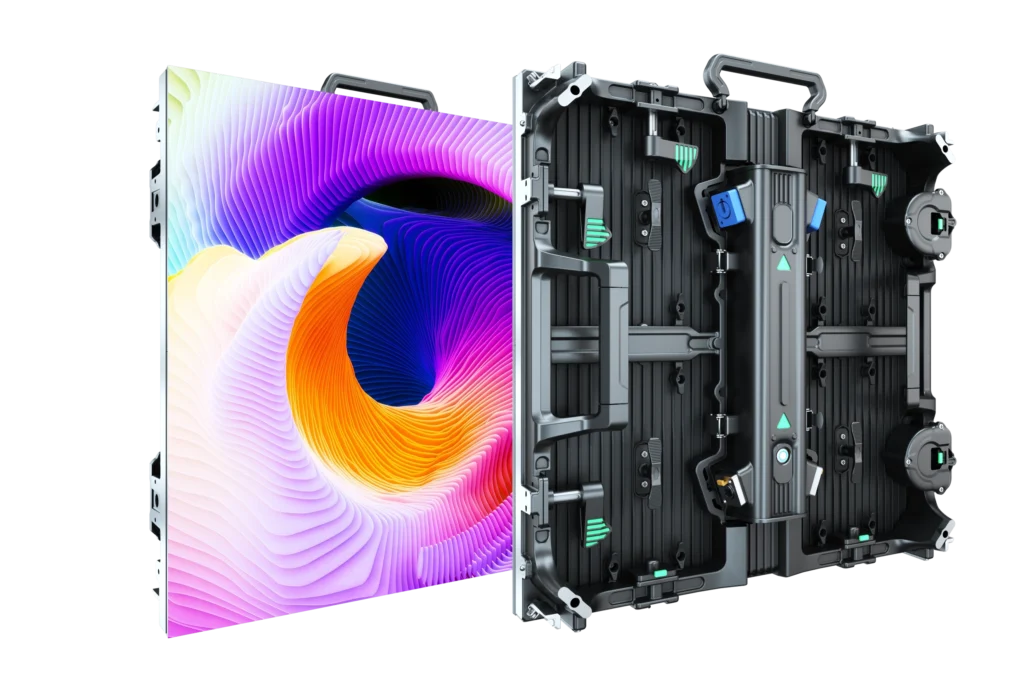
Cooling is the second half of that load. Indoor units often rely on passive airflow, while outdoor cabinets in hot climates need fans, heat exchangers, or sealed air conditioning. Ask for the rated operating temperature and the thermal margin at your site’s highest recorded summer temperature.
Heat is the silent cost driver. A brighter cabinet draws more current and produces more heat, and a sealed outdoor enclosure can trap both. Ask for the power draw at typical content, not only the maximum, and confirm the cooling method can hold the internal temperature inside the rated range on the hottest day at the site.
Treat a large outdoor screen as a structural and electrical project, not a screen purchase. If the building service cannot carry the full-brightness load, the upgrade can cost more than the difference between panel grades, so price the electrical work before you compare cabinet quotes.
Structure stays with the owner. Wind and snow load, foundation, pole, roof attachment, and sign permit belong to the venue and its contractors, while TW VISION supplies the display, cabinets, and internal electronics. Therefore, separate hardware from site work in the quote, and confirm local wind and snow requirements before production.
Confirm Certifications, Warranty and Spares
Certifications and warranty language decide who pays when a screen fails outdoors. Ask for a recognized safety mark from an accredited testing laboratory, then read the warranty’s approved-environment clause. An indoor-rated panel used outside may lose coverage even when the failure looks unrelated to water.
Spare parts deserve the same attention. LED modules, power supplies, and receiving cards fail at different rates, so confirm the spare count, the depot location, and the response time. Also request a bill of materials that names the LED package, driver IC, receiving card, and power supply, and bar substitutions without written approval.
Read the exclusions as carefully as the coverage. Water ingress, lightning, power surges, improper cleaning, and unauthorized repairs commonly sit outside a standard warranty, so confirm who handles each case. For an indoor and outdoor LED screen purchase, also ask for the spare-module price and the response time in writing, because a cheap cabinet with slow spares can cost more over five years.
Ask the supplier to confirm in writing that your site qualifies, and keep that confirmation with the quote.
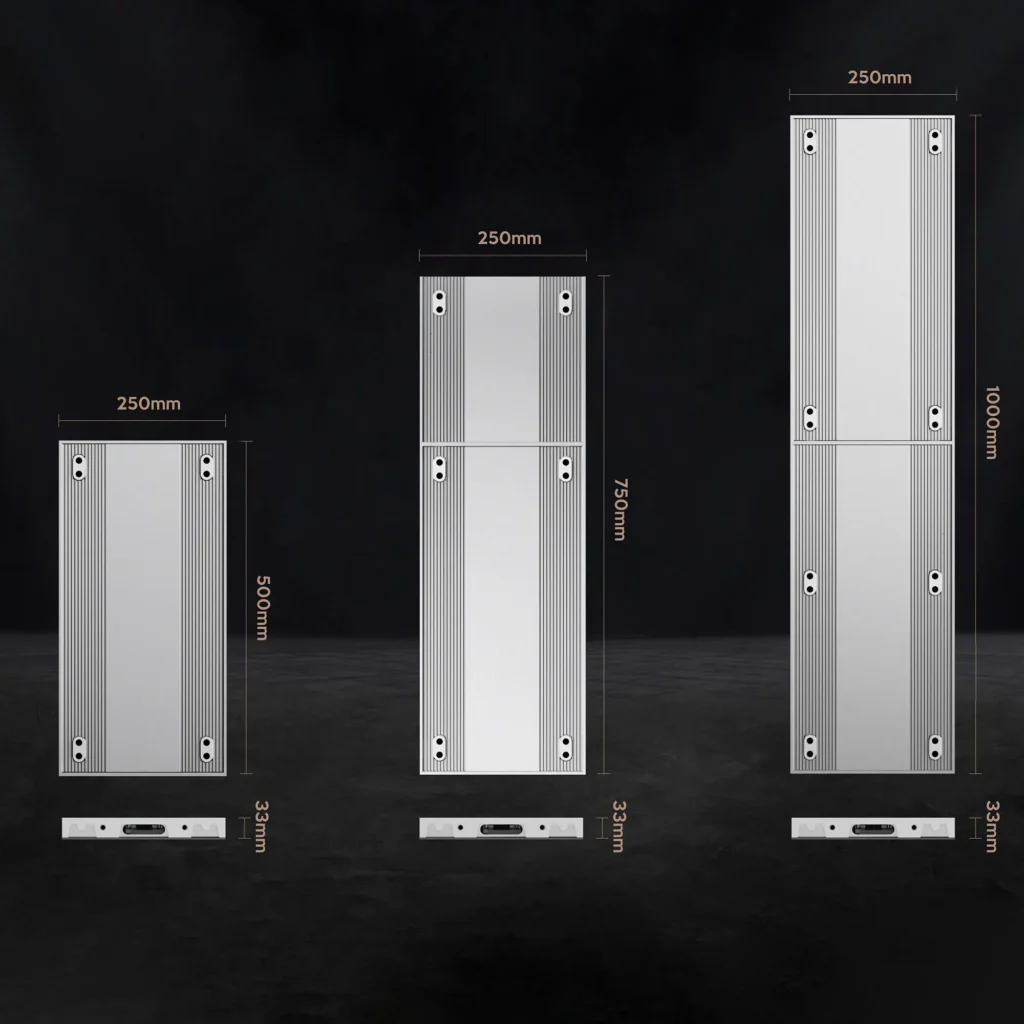
Product choice follows the environment. An IP-CV indoor panel suits controlled-light spaces, while an outdoor PO-T cabinet adds sealing, corrosion protection, and front and rear service access for exposed sites.
Delivery, Stock and Support from Atlanta
TW VISION holds stock in Atlanta, GA for US customers. Portable and poster displays, indoor modules and cabinets, and spare parts such as power supplies and receiving cards can ship from that warehouse, and buyers can arrange local pickup in Atlanta or nationwide freight. However, we build outdoor cabinets to order, so they follow the production schedule rather than the stock list.
Stock changes the timeline. A portable or poster unit can leave the Atlanta warehouse after payment and an appointment, while an outdoor cabinet enters production and ships when the batch is complete. Whether you buy an indoor and outdoor LED screen for a single site or a rollout, ask which items are in stock, which are built to order, and what the pickup or freight plan looks like.
Because delivery timing depends on cabinet configuration and quantity, we quote it per project instead of publishing a fixed number of days. TW VISION sells hardware outright, so every quote covers a screen you own, plus optional spares and support.
Frequently Asked Questions
Can I use an indoor display outdoors if it stays under a roof?
Only if the manufacturer explicitly rates it for that environment. Covered outdoor spaces still face humidity swings, temperature extremes, and indirect rain, which degrade indoor seals over time. If the screen can ever get wet or sit in direct sun, choose an outdoor-rated cabinet.
What pixel pitch should I choose for a street-facing window?
It depends on how close pedestrians get. If people stand within a few meters, a finer pitch keeps text legible; if they view from across a road, a coarser pitch saves money and looks fine. Measure the nearest viewer, then match pitch to that distance.
How do I verify a supplier’s brightness claim is real?
Ask for a third-party photometric test or an on-site demo at your ambient light level. Compare the sustained rating against the peak figure, because sustained brightness reflects daily performance. A supplier that cannot provide measured data is asking you to accept a marketing number.
Does a higher IP rating always mean a better display?
No. A higher IP rating costs more and only helps when the site actually faces water or dust. An indoor lobby gains nothing from an IP66 cabinet and pays a premium for it. Match the rating to the real exposure instead of overbuying.
What should the warranty promise for outdoor use?
It should name outdoor operation as an approved environment, list covered components, and state the claim process. Vague “weather resistant” language is not enough, because it leaves moisture damage open to dispute. Get the coverage period and exclusions in writing.
Conclusion
Choosing an indoor and outdoor LED screen comes down to five checks: brightness at the real ambient light, IP rating and materials for the exposure, pitch and refresh for the nearest viewer, power and structural load for the site, and certification plus warranty for the environment.
If a supplier cannot answer these checks clearly, treat that silence as a warning and keep looking. Compare at least two suppliers on the same sheet, and ask for measured data, approved-environment wording, and spare-parts terms before you order.