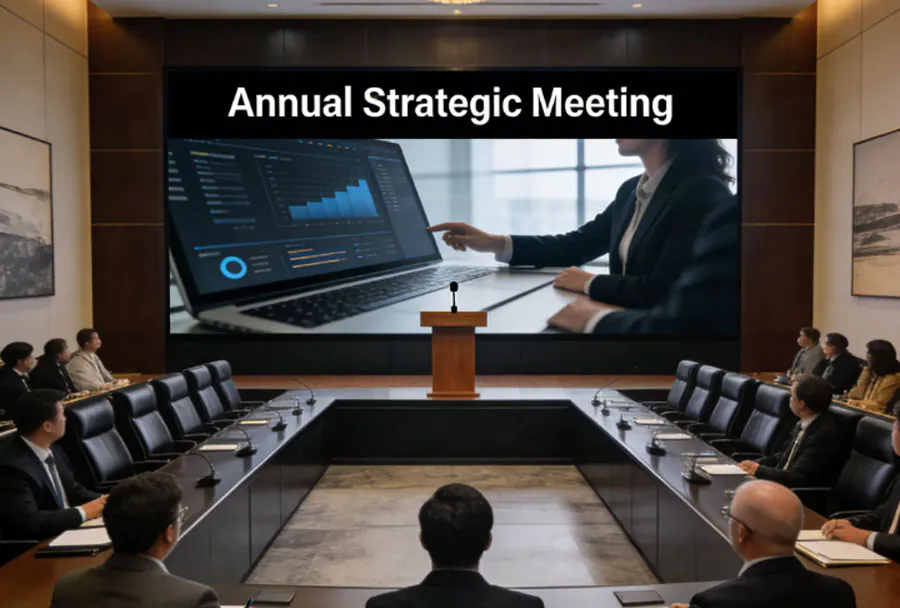
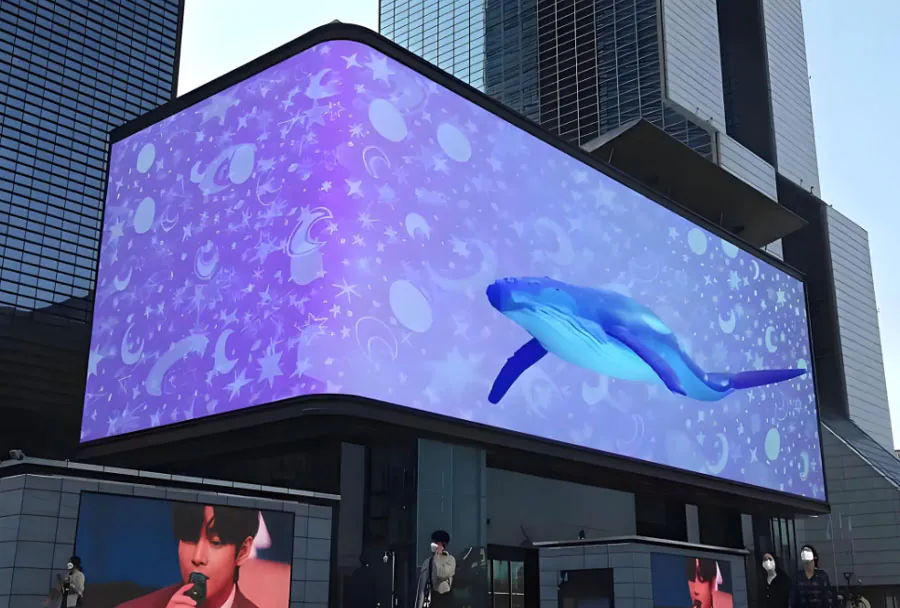
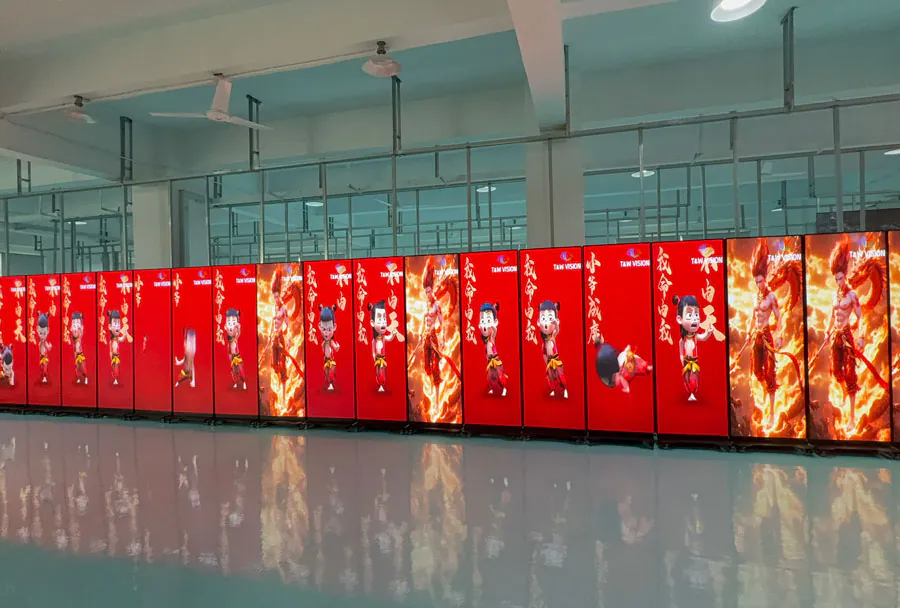
Indoor LED Displays in Atlanta: U.S. Stock from TW VISION


Indoor LED Displays in Atlanta: U.S. Stock from TW VISION can shorten a project timeline, but only if you verify the quoted inventory, site conditions, and technical specifications before purchase.
Table of Contents
- 1. Match Pixel Pitch to the Actual Viewing Experience
- Start With the Content
- Use Viewing Distance as a Design Input
- 2. Verify What “U.S. Stock” Actually Includes
- Audit the Complete Bill of Materials
- Confirm Transfer of Risk
- 3. Plan for Structure, Power, Access, and Code
- Protect Circulation and Exit Routes
- Coordinate With Qualified Professionals
- 4. Specify Processing, Content, and Control Together
- Confirm Resolution and Bandwidth
- Build Content at the Native Canvas
- 5. Define Acceptance Testing and Long-Term Support
- Test the Entire Display
- Document the Support Path
- How can I prevent LED flicker during video recording?
- Can an indoor LED display follow a curved wall?
- What happens if the venue’s internet connection fails?
- Do replacement modules always match the original display?
- How should an indoor LED wall be cleaned?
- Conclusion
One often-overlooked fact is that the 2010 ADA Standards for Accessible Design limit certain wall-mounted objects to a 4-inch projection when their leading edges are between 27 and 80 inches above the floor.
That requirement can affect an LED wall’s frame depth, service access, and placement in a public circulation path. Buyers must also compare pixel pitch, cabinet dimensions, electrical demand, video processing, installation access, warranties, and replacement-part availability.
This guide explains five practical ways to evaluate an Atlanta indoor LED project without relying on vague terms such as “in stock” or “high resolution.” You will learn how to define the viewing requirement, validate domestic inventory, plan a compliant installation, specify the signal system, and document acceptance testing.
1. Match Pixel Pitch to the Actual Viewing Experience
The right pixel pitch depends on viewing distance, content detail, wall dimensions, and budget—not on choosing the smallest available number. Pixel pitch is the center-to-center distance between adjacent LED pixels, normally expressed in millimeters.
Indoor LED Displays in Atlanta: U.S. Stock from TW VISION should therefore be evaluated against a measured audience layout. A showroom where visitors stand close to the screen needs a different configuration from a lobby where most people view it from across the room.
Start With the Content
Define whether the display will show presentations, broadcast video, dashboards, advertising, or detailed text. Fine spreadsheets and small typography require more pixel density than large logos or ambient motion graphics.
Consider a native canvas measuring 1,920 by 1,080 pixels. Multiplying those dimensions produces 2,073,600 addressable pixels, so the selected cabinet layout and processor must support that canvas without unnecessary scaling or cropping.
Use Viewing Distance as a Design Input
AVIXA’s DISCAS standard provides a structured method for determining display size based on content, viewer needs, and viewing distance. It is more reliable than selecting a wall based only on the empty space available.
Before ordering Indoor LED Displays in Atlanta: U.S. Stock from TW VISION, request a cabinet-layout drawing showing total resolution, physical dimensions, aspect ratio, and expected closest viewing position.
How to apply this: Measure the closest and farthest viewer positions today, then send those measurements with a representative content file when requesting a display recommendation.
2. Verify What “U.S. Stock” Actually Includes
U.S. stock should mean that identifiable products are physically available domestically and allocated to your order. A warehouse statement alone does not confirm that every cabinet, module, power supply, receiving card, processor, cable, and mounting component is ready to ship.
Ask TW VISION to identify the warehouse location, cabinet model, pixel pitch, quantity, production batch, and estimated release date in writing. Indoor LED Displays in Atlanta: U.S. Stock from TW VISION should also include a clear distinction between reserved inventory and products that remain available to other customers.
Audit the Complete Bill of Materials
An eight-cabinet wall requires at least eight compatible cabinets. If the design also specifies one operational spare, the project requires nine—not eight—with compatible modules and electronics.
Use the following compact checklist:
| Item | What to verify | Action to take |
|---|---|---|
| LED cabinets | Model and batch | Match the quote |
| Spare modules | Color compatibility | Reserve with order |
| Processor | Output capacity | Confirm wall map |
| Mounting | Wall or ground support | Review drawings |
| Cables | Length and type | Check site routes |
| Freight | Origin and delivery terms | Obtain schedule |
Confirm Transfer of Risk
The quote should state who handles freight damage, unloading, inside delivery, storage, and missing cartons. It should also explain whether replacement units ship from U.S. inventory or must come from another country.
A defensible purchase order for Indoor LED Displays in Atlanta: U.S. Stock from TW VISION lists exact part numbers and quantities rather than using one general line item labeled “LED wall.”
How to apply this: Request a dated inventory confirmation and reconcile every listed SKU against the final bill of materials before paying a deposit.
3. Plan for Structure, Power, Access, and Code
A successful indoor LED installation requires coordinated structural, electrical, life-safety, and accessibility planning. The display itself is only one part of the installed system.
Indoor LED Displays in Atlanta: U.S. Stock from TW VISION may be front-serviceable or rear-serviceable, and that choice changes the required wall depth and maintenance access. Confirm the service method before framing, electrical rough-in, or decorative finishes begin.
Protect Circulation and Exit Routes
The Occupational Safety and Health Administration states, “An exit route must be at least 28 inches (71.1 cm) wide at all points.” The requirement appears in OSHA Standard 1910.36.
That federal workplace rule is not a substitute for Atlanta permitting, fire-code review, or accessibility analysis. It does show why crates, temporary lifts, exposed wiring, and display structures cannot obstruct required travel paths during installation.
Coordinate With Qualified Professionals
Have a licensed electrician calculate branch circuits from the manufacturer’s maximum power data rather than typical consumption alone. A structural professional should review wall loading, mounting points, attachment hardware, and any floor-supported structure.
A common scenario is a display attached to a finished wall that conceals metal studs, utilities, or insufficient blocking. A site survey completed before ordering Indoor LED Displays in Atlanta: U.S. Stock from TW VISION can reveal those constraints while design changes remain manageable.
How to apply this: Mark the proposed display footprint on the wall and have your electrician, installer, and structural reviewer inspect it before approving fabrication.
4. Specify Processing, Content, and Control Together
The video processor, source devices, network, and content workflow must be designed as one system. A high-resolution LED wall cannot correct an undersized canvas, an incompatible signal format, or unreliable source equipment.
For Indoor LED Displays in Atlanta: U.S. Stock from TW VISION, request a signal-flow diagram that identifies each source, connection, processor input, processor output, receiving-card path, and backup option. The diagram should also show who can turn the system on, select content, and restore operation after a fault.
Confirm Resolution and Bandwidth
The official HDMI 2.1 specification overview states that the specification supports bandwidth up to 48 Gbps. That maximum does not mean every cable, laptop, switcher, or processor labeled “HDMI” supports the same capability.
Match the source output to the processor’s accepted resolution, frame rate, color depth, and connector standard. Avoid long consumer-grade cable runs where a professional extension system is more appropriate.
Build Content at the Native Canvas
Create graphics at the LED wall’s actual pixel dimensions. Scaling a standard presentation across an unusually wide wall can stretch logos, enlarge artifacts, or place important text across cabinet seams.
Bluebeam Revu can be used to mark up architectural plans and coordinate equipment locations. Google Maps can help the logistics team review truck approaches and nearby access, although an on-site inspection remains necessary.
Ask for a supervised processor-configuration backup when commissioning Indoor LED Displays in Atlanta: U.S. Stock from TW VISION.
How to apply this: Send one real presentation, one video, and one emergency message to the integrator for native-resolution testing before installation day.
5. Define Acceptance Testing and Long-Term Support
Acceptance testing should prove that the delivered system matches the approved design before final payment. Visual inspection alone cannot confirm mapping accuracy, spare-part compatibility, thermal behavior, or control-system recovery.
Indoor LED Displays in Atlanta: U.S. Stock from TW VISION should be tested using a written checklist shared by the buyer, supplier, and installer. Record product serial numbers, configuration files, firmware versions, wall dimensions, native resolution, and the location of spare components.
Test the Entire Display
Run full-screen red, green, blue, white, gray, and black patterns across 100% of the active display area. This project-defined test coverage helps reveal dead pixels, inconsistent modules, mapping errors, light leakage, and visible color differences.
In one case, a wall may look acceptable during a bright promotional video but reveal mismatched replacement modules on a uniform gray field. The acceptance process should therefore include both real content and diagnostic patterns.
Document the Support Path
The handover package should identify the warranty administrator, support hours, response procedure, excluded damage, labor coverage, and replacement-part process. Clarify whether defective parts are advanced-replaced or shipped only after the failed component is returned.
For Indoor LED Displays in Atlanta: U.S. Stock from TW VISION, retain the final receiving-card files and processor configuration in two controlled locations. Staff should also know how to isolate a failed cabinet without rewriting the complete wall map.
How to apply this: Attach a signed test checklist, photo record, configuration backup, and unresolved punch list to the final acceptance document.
Frequently Asked Questions About Indoor LED Displays in Atlanta: U.S. Stock from TW VISION
How can I prevent LED flicker during video recording?
Specify camera use before selecting the receiving system and refresh settings. Indoor LED Displays in Atlanta: U.S. Stock from TW VISION should be tested with the actual cameras, shutter settings, frame rates, and lighting used at the venue. A wall that looks stable to the eye may show dark bands on camera.
If the site hosts broadcast events, include an on-camera test in the preproduction demonstration and final commissioning plan.
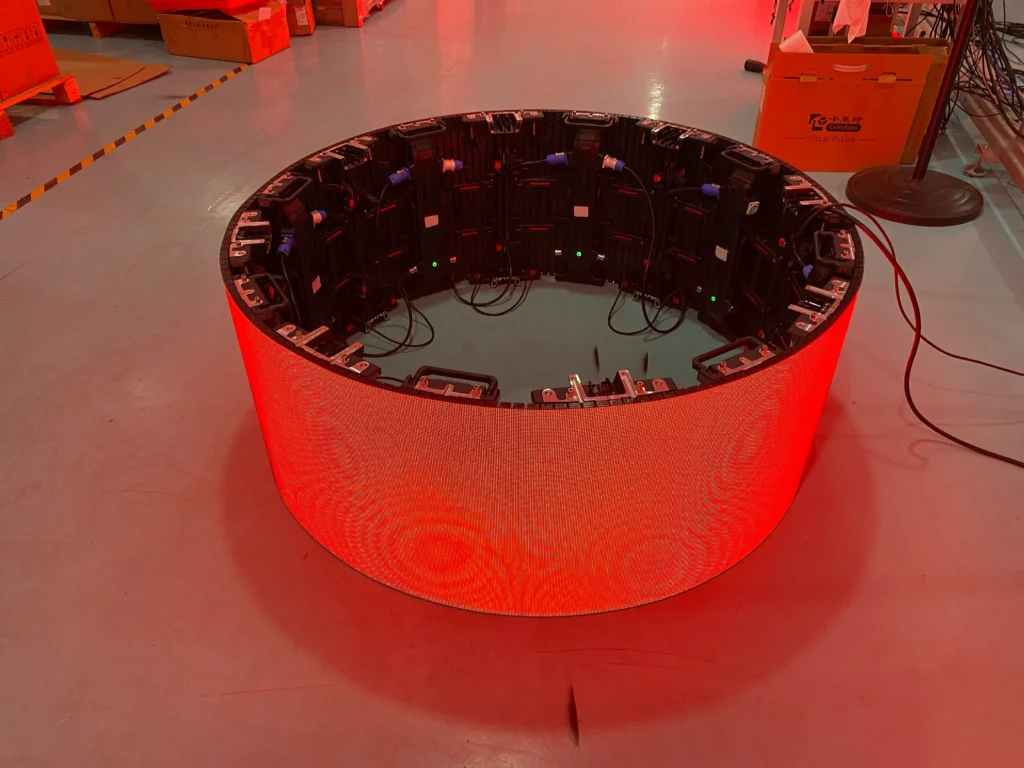
Can an indoor LED display follow a curved wall?
Yes, but the curve must match the cabinet design, frame tolerances, and approved mounting system. Indoor LED Displays in Atlanta: U.S. Stock from TW VISION may use flat, faceted, or purpose-built curved cabinets depending on the product line. A tight architectural radius can create visible seams or inaccessible service points.
Obtain a plan-view drawing that identifies each cabinet angle before approving the structure or surrounding millwork.
What happens if the venue’s internet connection fails?
Most professionally designed systems can continue showing locally stored content without internet access, but that capability must be configured in advance. Indoor LED Displays in Atlanta: U.S. Stock from TW VISION should have a documented fallback source, such as a local media player or dedicated presentation computer.
Cloud-managed scheduling may stop receiving updates during an outage, so test whether the current playlist continues and define how staff can switch inputs manually.
Do replacement modules always match the original display?
No. Modules with the same model name can show visible differences because of component revisions, calibration data, or production batches. When purchasing Indoor LED Displays in Atlanta: U.S. Stock from TW VISION, request spare modules from the same production batch and store them in a protected, labeled location.
If matching stock is unavailable later, recalibration may reduce differences, but it cannot guarantee an invisible match under every brightness level.

How should an indoor LED wall be cleaned?
Turn off the system and follow the manufacturer’s approved procedure for the specific LED surface and module coating. Indoor LED Displays in Atlanta: U.S. Stock from TW VISION should not be sprayed directly with household cleaner or wiped with abrasive material. In restaurants, fitness facilities, or public touch zones, contamination can require more frequent attention.
Assign trained personnel and record any approved cleaning fluid, cloth, pressure limit, and drying method.
Conclusion
A dependable LED wall purchase begins with documented requirements, not a screen-size estimate or an informal stock claim. Your final decision should address the complete system from warehouse allocation through long-term maintenance.
– Measure viewing conditions and select pixel pitch from real content needs.
– Verify domestic inventory by model, quantity, batch, location, and availability date.
– Coordinate structure, power, accessibility, signal flow, and installation access.
– Require full-wall testing, configuration backups, spares, and written support terms.
Indoor LED Displays in Atlanta: U.S. Stock from TW VISION can be a practical option when the quotation proves what is available and how the system will perform at your site. Gather your floor plan, audience distances, content samples, delivery constraints, and preferred installation date, then request a written technical proposal and itemized inventory confirmation before placing the order.