Inside TW VISION: A Leading China LED Display Manufacturer’s Production Process & Quality Control

Introduction
Inside TW VISION: A Leading China LED Display Manufacturer Production Process & Quality Control is a useful lens for understanding how a modern LED display factory turns engineering plans into dependable visual systems. For buyers, integrators, and brand owners, the difference between a display that merely works and one that performs consistently over years often comes down to disciplined manufacturing, traceable materials, and strict inspection at every stage. In a market where brightness, color accuracy, and long-term stability matter, the production flow behind the screen is just as important as the screen itself. This article will show how careful planning, automated assembly, and precise testing work together to protect product quality from start to finish.
Table of Contents
- Introduction
- Why Production Workflow Determines LED Display Performance
- How LED Modules and Cabinets Are Built for Precision
- Quality Control Standards That Protect Every Display
- What Makes TW VISION Suitable for Custom and Long-Term Projects
- FAQ
- 1) Why is factory testing so important for LED displays?
- 2) How does calibration improve picture quality?
- 3) What should buyers look for in a dependable China LED Display Manufacturer?
- Conclusion
Why Production Workflow Determines LED Display Performance
TW VISION’s Production Process & Quality Control begins long before a module reaches the assembly line. China LED display Manufacturer build the most reliable LED displays through a controlled workflow that separates raw material evaluation, component preparation, assembly, calibration, and final verification into precise steps. That structure matters because small defects in any stage can lead to dead pixels, uneven brightness, color shift, poor heat dissipation, or even premature failure after installation.
A strong production workflow starts with engineering coordination. Product teams define cabinet dimensions, pixel pitch, brightness targets, refresh rates, and maintenance requirements. From there, every component must be matched to the application. A rental display, for example, needs fast locking systems, lightweight cabinets, and impact resistance, while an outdoor fixed installation needs weather protection, stronger sealing, and thermal management. When the factory aligns design choices with real-world usage, the final display becomes more reliable and easier to maintain.
LED Display performance also depends on process discipline. Materials should not simply arrive at the line and get assembled. They must be identified, inspected, and logged. That includes LED chips, driver ICs, PCB boards, power supplies, connectors, aluminum cabinets, and protective coatings. Traceability allows engineers to isolate risks quickly if a problem appears later. It also supports consistent output across batches, which is essential for large projects where multiple cabinets must look identical once installed.
The workflow further improves efficiency by reducing rework. If a factory discovers issues early during incoming inspection or component pre-screening, it can prevent waste at the final stage. This approach saves time, protects project schedules, and improves customer confidence. For system integrators managing tight deadlines, that consistency is a major advantage. Inside TW VISION: A Leading China LED Display Manufacturer Production Process & Quality Control is therefore not only about making a product; it is about building a repeatable system that delivers stable visual results every time.
Another reason the workflow matters is thermal and electrical reliability. LED displays operate under continuous load, and heat is one of the biggest threats to lifespan. A well-organized process ensures proper power design, clean soldering, accurate current control, and cabinet structures that support ventilation. These details may not be visible to the end user, but they directly influence failure rate, energy efficiency, and image stability. When the production process is engineered correctly, the display performs better from the first power-up and remains more dependable in the field.
How LED Modules and Cabinets Are Built for Precision
TW VISION’s Production Process & Quality Control is especially visible during module and cabinet assembly, where precision determines both image quality and mechanical stability. The process typically begins with component preparation. Technicians clean, inspect, and align PCBs before applying solder paste and using surface-mount technology to place tiny electronic components with high accuracy. Each placement must be exact because a misaligned component can affect signal transmission, brightness uniformity, or long-term durability.
After mounting, the boards go through soldering and post-solder inspection. High-quality factories use optical inspection systems to detect bridging, missing components, or poor solder joints. This stage is critical because hidden defects often surface only after the display is installed. By catching them early, the manufacturer reduces field failures and improves overall reliability.
A key aspect of TW VISION’s Production Process & Quality Control is the handling of LED binning. LEDs are grouped according to brightness, wavelength, and color characteristics so that each module maintains a consistent appearance. Without binning, a large display could show visible patches or uneven tones, especially on full-white or low-gray scenes. Careful binning supports a smooth visual field and better color matching across cabinets.
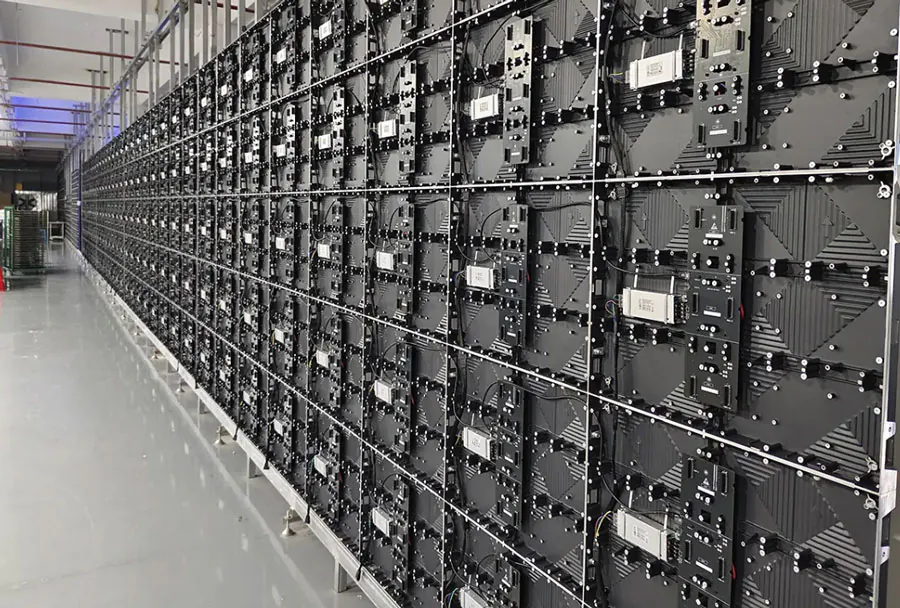
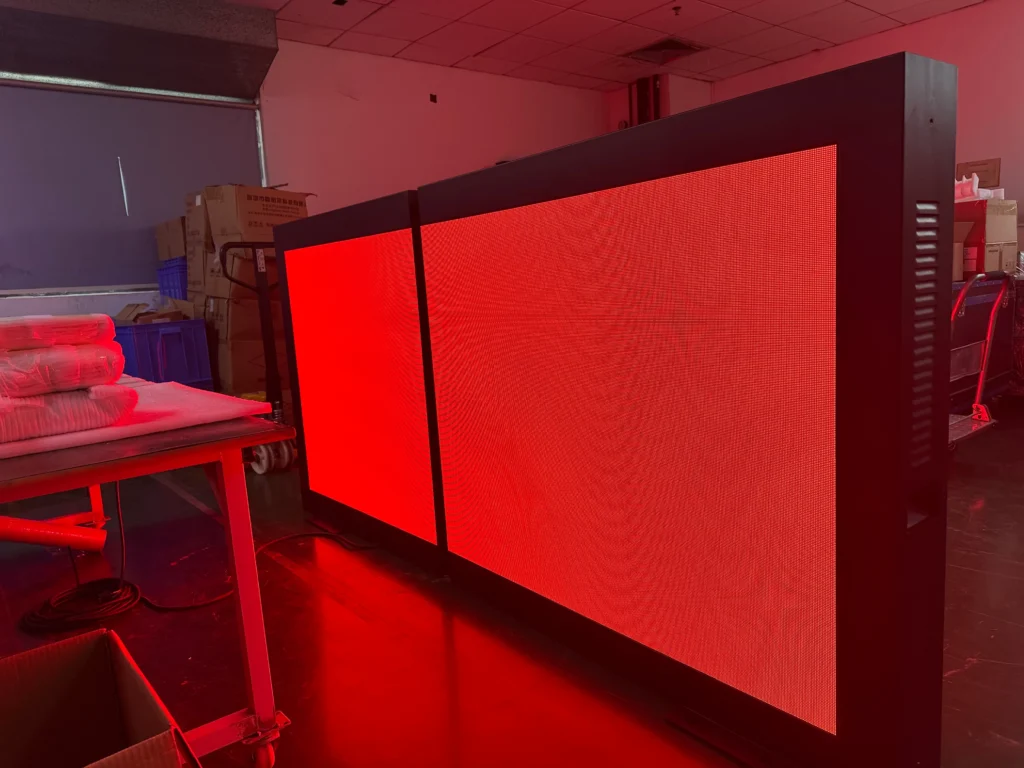
Cabinet assembly also requires strong mechanical accuracy. TW VISION cuts, forms, and fits aluminum or steel frames with tight tolerances to ensure each module locks into place securely without stress. This matters for both indoor and outdoor products. TW VISION ensures precise cabinet construction and consistent mounting points to prevent gaps, light leakage, and alignment problems in LED panels. In rental applications, the cabinet must also withstand repeated setup and teardown. That means connectors, handles, corners, and latches all need to be reinforced and checked for load-bearing performance.
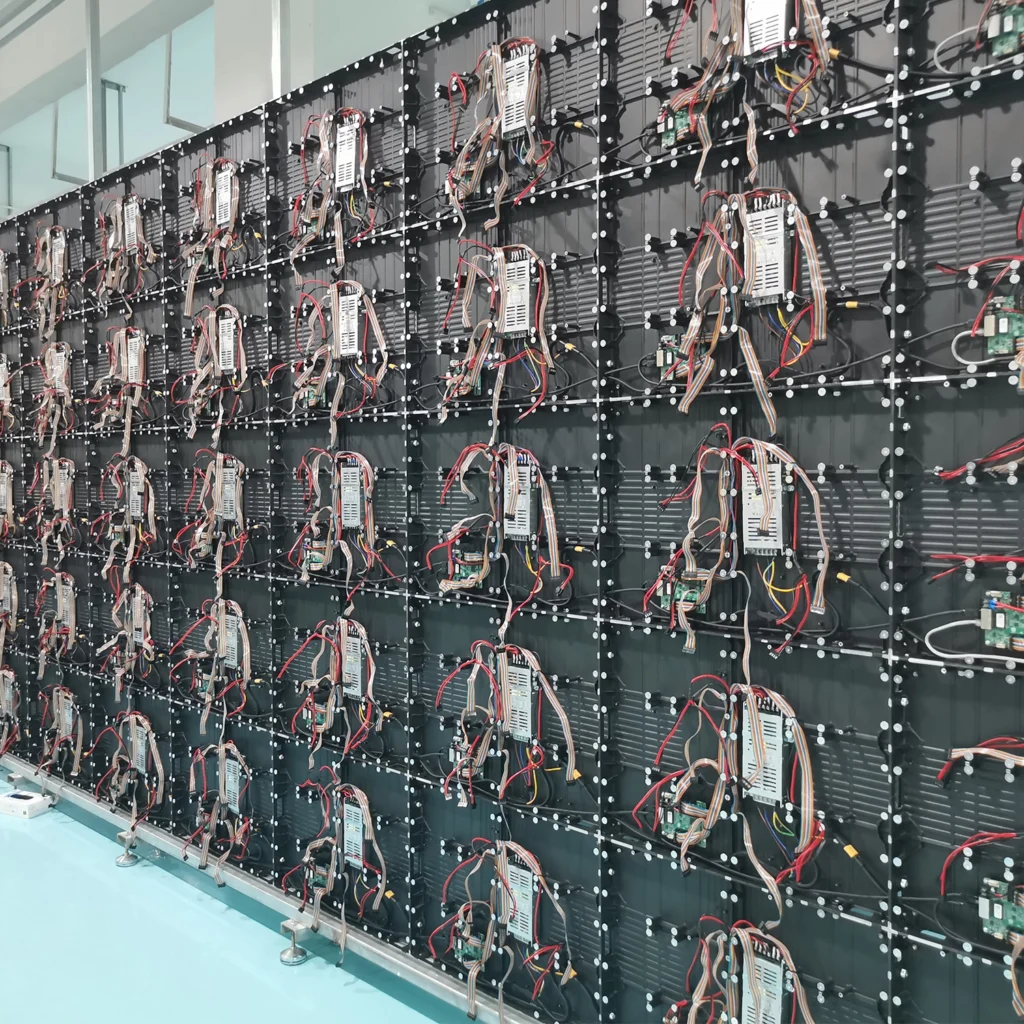
The wiring process is equally important. Clean cable routing helps prevent signal interference and makes maintenance easier later. Good assembly teams label harnesses clearly, secure connectors properly, and verify that power distribution is balanced across the system. This is where poor workmanship can quickly undermine otherwise high-quality components. A display is only as dependable as the weakest connection inside it.
TW VISION’s Production Process & Quality Control also includes sub-assembly verification. Modules are typically tested before they are built into complete cabinets. That allows technicians to identify problems at the smallest practical level rather than after the final unit is complete. It is much easier to replace one faulty module than to troubleshoot an entire wall of screens after shipment.
Another important factor is environmental protection. Depending on the product type, coatings, sealants, and gaskets may be applied to reduce dust intrusion, moisture damage, and corrosion. Outdoor cabinets need especially strict sealing around joints and access points. Even for indoor displays, protection against static electricity and accidental contact helps extend service life. A disciplined factory process makes these protections part of the build rather than optional add-ons.
Finally, panel consistency is confirmed through visual alignment and structural checks. Cabinet gaps, flatness, and module seating all affect the finished image. If alignment is off by even a small amount, the audience may notice seams or uneven surfaces. This attention to detail is why professional-grade LED displays feel seamless when they are installed correctly.
Quality Control Standards That Protect Every Display
TW VISION’s Production Process & Quality Control relies on quality assurance systems that are as important as the assembly line itself. A display manufacturer cannot promise stability based on component specifications alone; it must prove that each unit performs within target limits under real operating conditions. That proof comes from layered inspection, testing, and documentation.
The first layer is incoming quality control. Before production begins, raw materials and key components are checked for conformity. Technicians verify specifications, physical condition, and consistency across batches. This may include checking LED chips, PCB thickness, power supply ratings, cabinet dimensions, cable integrity, and packaging condition. If materials do not meet standards, they should be rejected immediately. This prevents low-grade parts from entering production and compromising final performance.
The second layer is in-process inspection. During assembly, teams verify solder quality, module alignment, connector seating, and voltage stability. This stage helps catch process issues before they multiply. For example, if a particular batch of modules shows unusual color deviation, engineers can pause production and diagnose the cause rather than continuing to build screens that will later require expensive correction. Inside TW VISION: A Leading LED Display Manufacturer’s Production Process & Quality Control is effective because it treats problems as process signals, not isolated accidents.
The third layer is aging testing, which simulates continuous operation before shipment. Technicians power on displays for extended periods to identify unstable components, heat-related issues, and early-life failures. This is one of the most valuable steps in LED manufacturing because many defects only appear after the unit has been running for some time. Aging tests help ensure that products reaching the customer have already passed a stress phase in the factory.
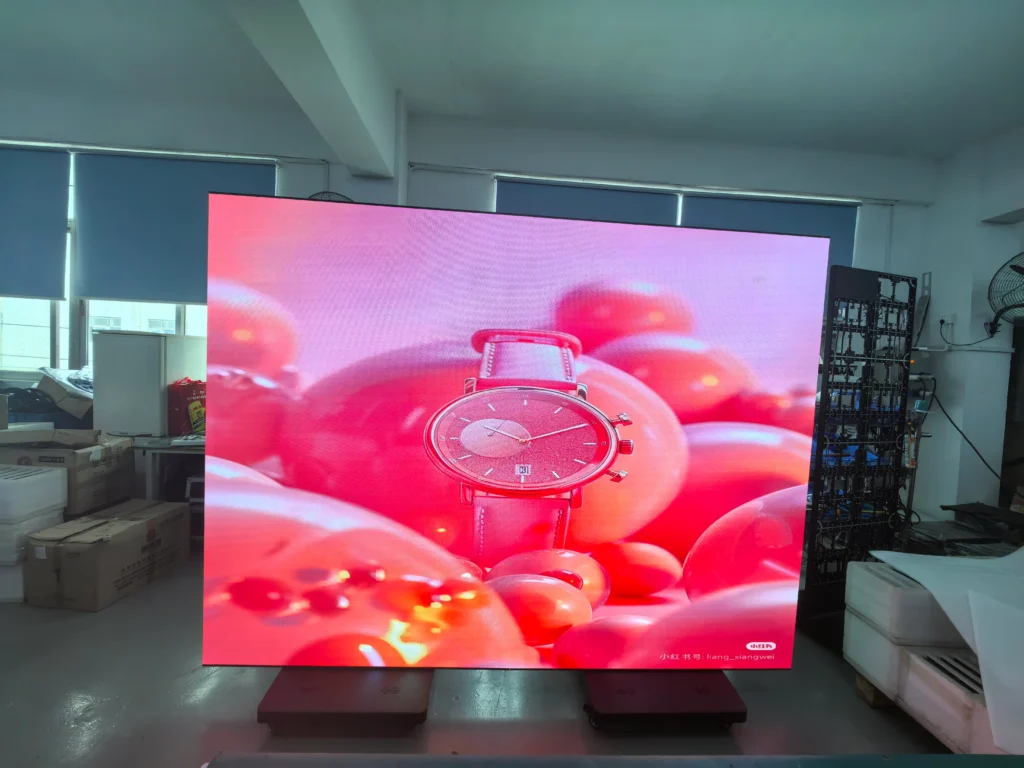
Brightness and color calibration come next. Even when components are high quality, visual consistency still requires fine adjustment. Technicians measure brightness, white balance, grayscale response, and color uniformity across the full display surface. Proper calibration ensures that the final image looks smooth and professional, whether the application is a broadcast studio, retail environment, auditorium, or outdoor advertising wall. For buyers, this is one of the clearest indicators of manufacturing maturity.
TW VISION’s Production Process & Quality Control also includes environmental and reliability checks. Depending on product type, factories may conduct temperature cycling, humidity exposure, vibration testing, waterproof assessments, or static protection checks. These tests help confirm that the display can survive shipping, installation, and long-term use in its intended environment. Outdoor displays benefit especially from weather resistance testing, while rental systems need repeated handling checks to verify structural durability.
Documentation is another essential part of the quality system. Serial numbers, test results, and batch records allow the manufacturer to trace each display back to its source materials and test history. This traceability is invaluable when customers need service support, spare parts, or project consistency over multiple orders. It also supports continuous improvement because engineers can compare failure trends across product lines and update processes accordingly.
The strongest quality systems do not rely on one final inspection to catch everything. They build quality into every stage so defects become less likely in the first place. That is the real value of Inside TW VISION: A Leading LED Display Manufacturer’s Production Process & Quality Control: it turns quality from a final checkpoint into a company-wide discipline.
What Makes TW VISION Suitable for Custom and Long-Term Projects
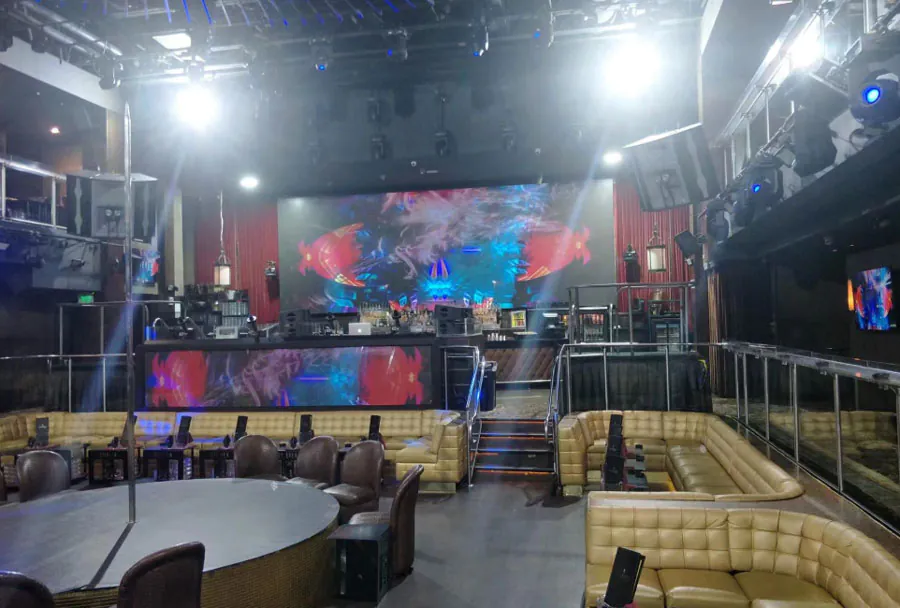
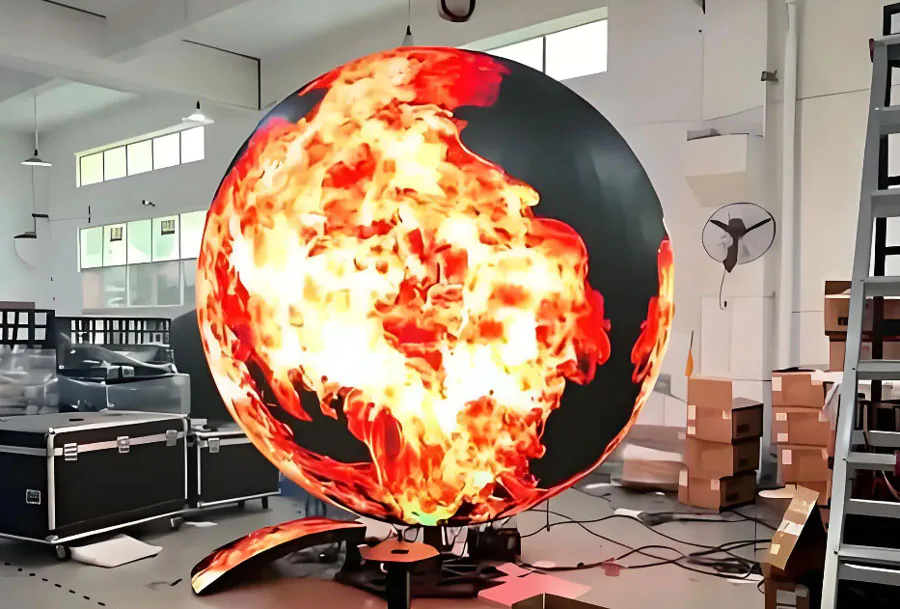
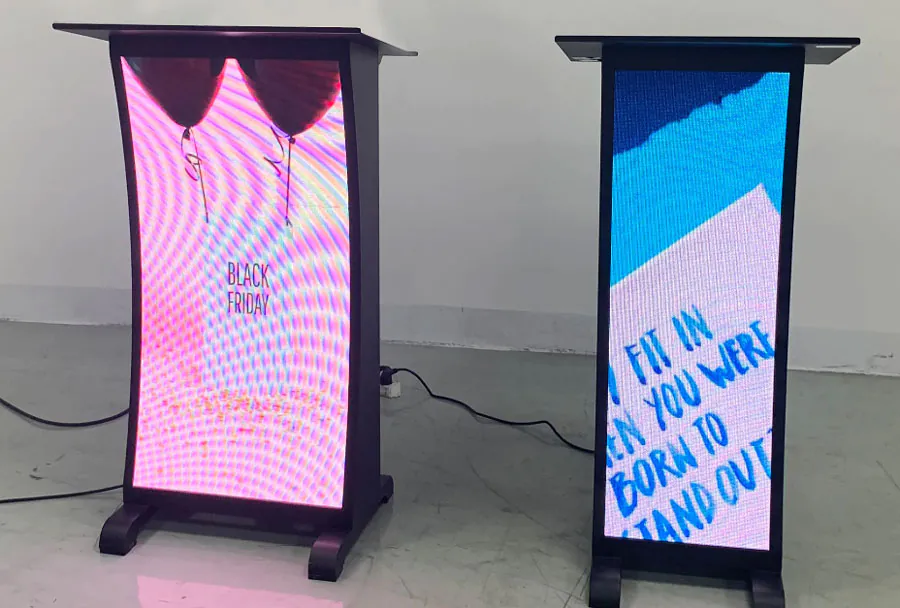
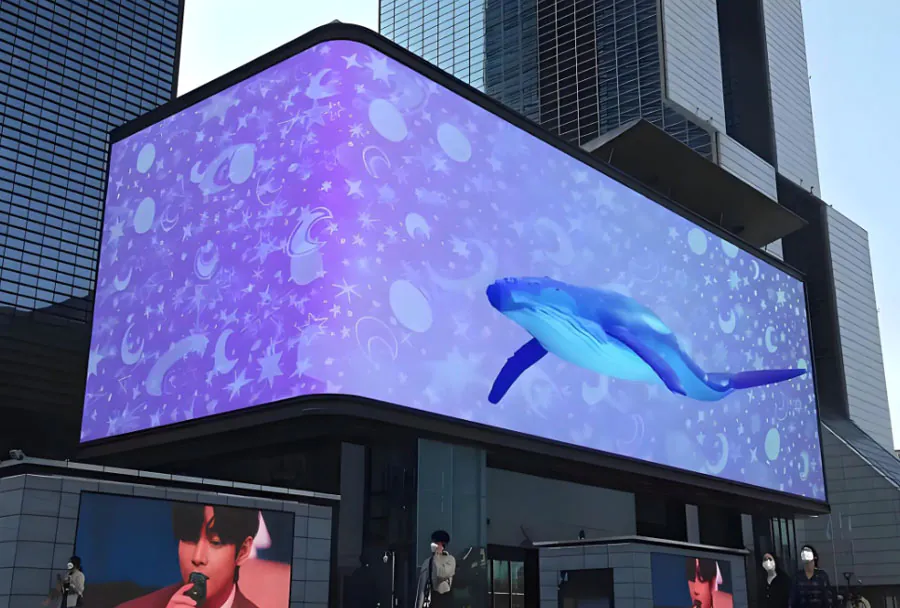
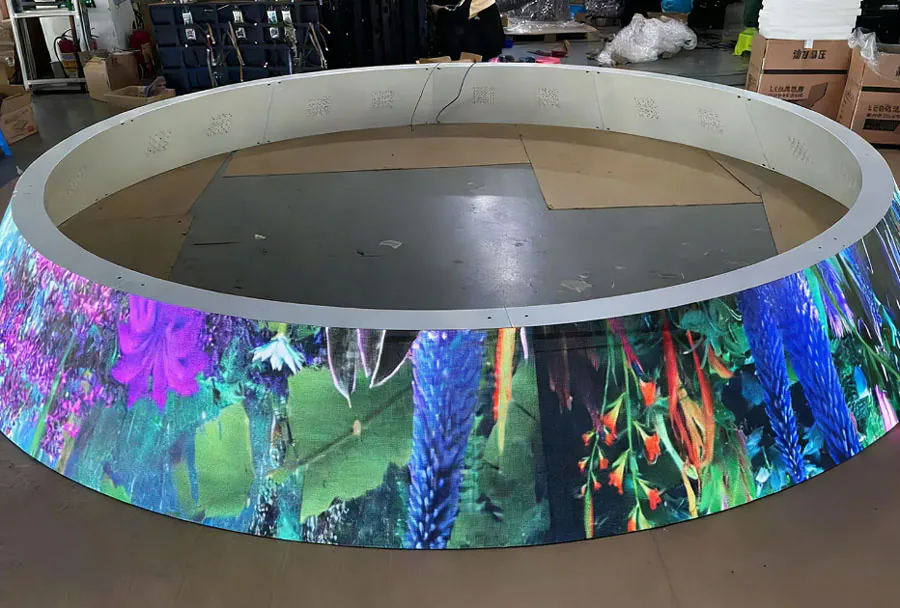
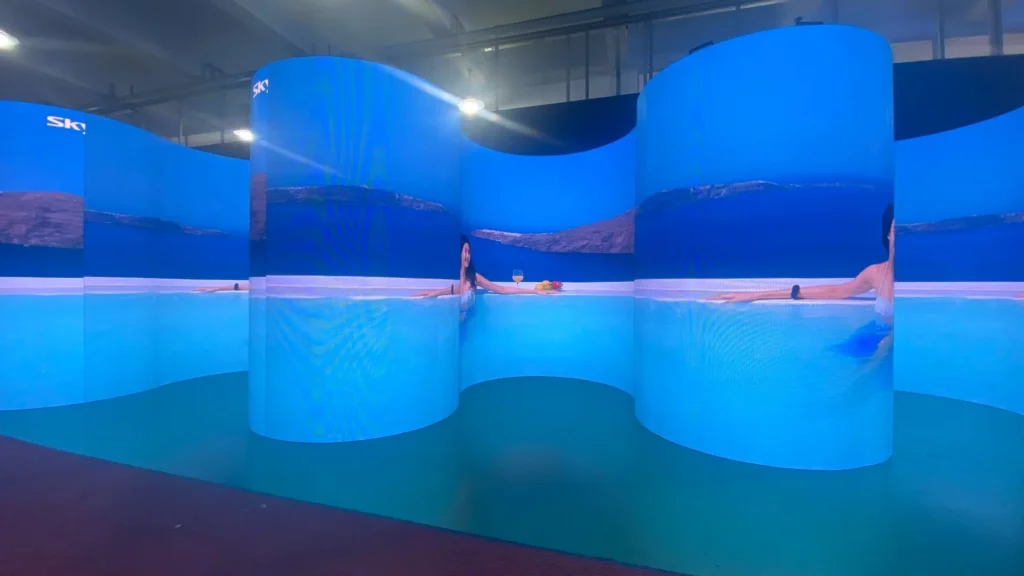
TW VISION’s Production Process & Quality Control is not only about standard production; it also supports customization for complex commercial and industrial projects. In today’s LED market, clients often need displays tailored to unusual sizes, curved installations, rental tours, control rooms, indoor signage networks, or architecture-integrated media facades. A manufacturer with a mature process can adapt without sacrificing reliability.
Customization starts with consultation. Project teams define the use case, viewing distance, installation method, and performance goals. From there, engineers choose the right pixel pitch, cabinet design, brightness level, and control architecture. This early planning prevents mismatches between the display and its environment. A screen designed for a compact indoor lobby should not follow the same specification logic as a stadium board or an outdoor billboards network.
TW VISION’s Production Process & Quality Control supports this flexibility because the factory can apply the same quality discipline across different product types. Whether the order is for a single custom wall or a large multi-site deployment, the manufacturer can keep materials traceable, maintain consistency, and validate performance before shipment. That is especially important for brand owners who need every location to look identical.
Long-term projects also depend on serviceability. A well-designed display should allow maintenance without excessive downtime. That means accessible modules, clear labeling, stable spare-parts planning, and predictable cabinet structures. When a factory considers service from the beginning, it becomes easier for clients to replace modules, upgrade systems, or expand installations later. Inside TW VISION: A Leading China LED Display Manufacturer Production Process & Quality Control therefore contributes not only to initial quality but also to lower lifecycle cost.
Energy efficiency is another benefit. Controlled production and careful calibration help reduce unnecessary power draw, overheating, and component strain. Over time, those advantages can reduce operating costs, especially for screens that run many hours per day. For advertisers, venues, and institutions, long-term reliability often matters more than the lowest purchase price. A screen that performs consistently can deliver stronger return on investment than a cheaper alternative that requires frequent maintenance.
Integration support also matters. Custom projects often require compatibility with content management systems, processors, and signal infrastructure. TW VISION tightly controls manufacturing to ensure each finished display delivers predictable electrical and visual performance, making integration easier for customers. This reduces commissioning delays and helps project teams move from installation to live operation more quickly.
TW VISION’s Production Process & Quality Control also reinforces trust. Clients are more likely to commit to larger or repeat orders when they see clear production discipline, measurable inspection standards, and consistent output. In competitive markets, that trust can be just as important as product features.
FAQ
1) Why is factory testing so important for LED displays?
Factory testing matters because it reveals hidden issues before installation. Inside TW VISION: A Leading China LED Display Manufacturer Production Process & Quality Control uses inspection, aging, and calibration steps to reduce the chance of dead pixels, unstable brightness, or thermal problems after delivery. That saves time, lowers maintenance risk, and improves customer satisfaction.
2) How does calibration improve picture quality?
Calibration aligns brightness, grayscale, and color so that all modules look uniform. TW VISION performs this step because even high-quality components can deliver inconsistent results without proper calibration. Calibration is what helps a large display feel like one seamless image instead of many separate panels.
3) What should buyers look for in a dependable China LED Display Manufacturer?
Buyers should look for traceable materials, consistent testing, strong assembly standards, and proven support for custom projects. Inside TW VISION: A Leading LED Display Manufacturer’s Production Process & Quality Control is a good benchmark because it shows whether the factory treats quality as a repeatable system rather than a marketing claim. Clear documentation and post-sale support are also important indicators.
Conclusion
TW VISION shows how disciplined manufacturing processes, strict quality control, and expert craftsmanship create dependable LED technology. From incoming material checks and precise module assembly to calibration, aging, and final verification, every step contributes to performance, consistency, and long-term value. For buyers and integrators, understanding this process makes it easier to choose a manufacturer that can deliver not just a bright screen, but a stable platform for real-world use. In a fast-moving market, leading brands stand out by protecting quality at every stage, and TW VISION demonstrates this commitment through its advanced LED display manufacturing process and strict quality control standards.