Interactive Digital Signage Monitor for Customer Engagement

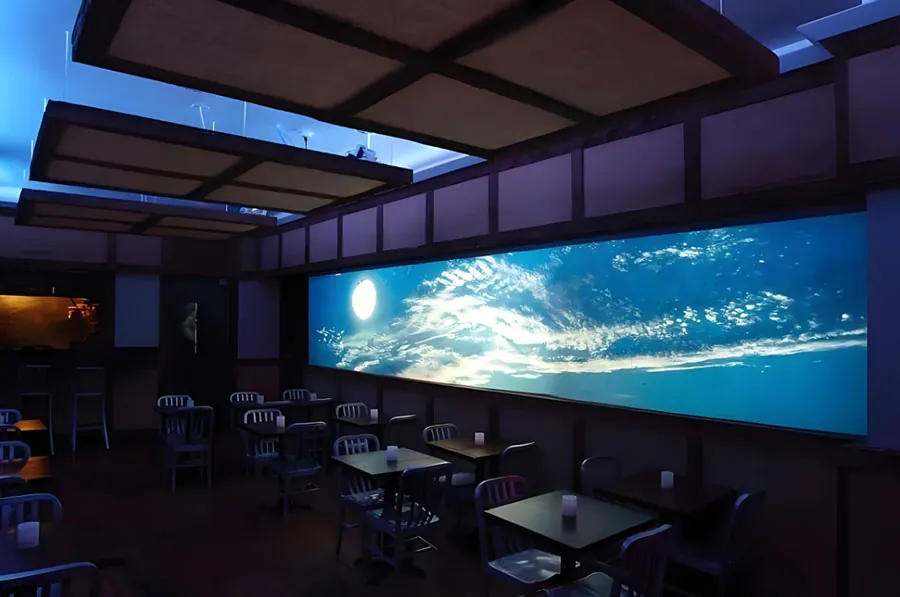
In a world where customers are constantly scrolling, swiping, and comparing options in seconds, traditional static signage is no longer enough. Brands need a faster way to capture attention, explain value, and guide decisions—right at the moment when people are ready to buy or engage. That is exactly where an Interactive Digital Signage Monitor for Customer Engagement becomes essential.
Unlike conventional displays that simply “broadcast” messages, interactive digital signage invites customers to participate. It can answer questions, recommend products, gather preferences, and even connect online and offline experiences through touch, QR, NFC, cameras, or sensors. For retailers, shopping malls, restaurants, showrooms, hospitals, corporate lobbies, and public spaces, interactivity changes the screen from a passive billboard into an active service point.
As an LED display manufacturer, TW VISION supplies display solutions for commercial applications, supports organizations in designing, deploying, and operating interactive signage systems that improve engagement, increase conversion, and make customer journeys smoother from entry to checkout.
What Makes an Interactive Digital Signage Monitor Truly “Engaging”?
Customer engagement is not only about “getting noticed.” Real engagement is when a customer chooses to spend time with your brand—exploring, learning, comparing, and taking action. An interactive digital signage monitor enables this by delivering three things at once: attention, relevance, and control.
1) Attention: Stopping power in high-traffic environments
Digital screens naturally outperform printed signage in dynamic spaces, but interactivity raises the impact further. A screen that invites “Tap to explore” or “Find your product” triggers curiosity. Motion graphics, context-aware content, and clear calls-to-action can stop customers who would otherwise walk past.
2) Relevance: Content that adapts to customer needs
Engagement grows when content matches intent. With interactive signage, customers can self-select what they care about—promotions, product details, store maps, menus, services, availability, or brand stories. This makes the experience feel personal, even in a public setting.
3) Control: Empowering customers to navigate information
Modern customers prefer self-service because it is fast and pressure-free. Interactive monitors allow people to browse at their own pace. This reduces friction, improves satisfaction, and often lowers staff workload—without removing the option of human help when needed.
Key Use Cases: Where Interactive Signage Drives Measurable Customer Engagement
Interactive digital signage is versatile, but the most successful deployments connect directly to business goals. Below are practical scenarios where TW VISION’s solutions can deliver strong results.
Retail stores: Product discovery and assisted selling
In retail, interactivity helps customers find what they want quickly—and helps brands showcase depth of inventory. A customer can search by category, size, color, budget, or use case. The screen can then recommend bestsellers, display product comparisons, and suggest bundles.
Common engagement features include:
– “Endless aisle” catalogs to browse beyond shelf space
– Product comparison tools with specs and benefits
– Interactive promotions triggered by time, season, or inventory
– QR codes that save items to mobile for later purchase
When implemented well, the interactive monitor becomes a silent sales associate: always available, consistent, and ready to guide.
Malls and large venues: Wayfinding and tenant promotions
Wayfinding is one of the strongest engagement drivers because it solves an immediate customer problem: “Where do I go?” Interactive signage can provide searchable directories, multi-language navigation, accessible routes, and dynamic updates for events.
At the same time, it can promote tenant offers, loyalty programs, and seasonal campaigns—turning a directory into a revenue-generating channel.
Restaurants and cafés: Ordering support and upsell
Interactive menu boards and kiosk-style monitors improve customer engagement by reducing decision stress. Customers can explore ingredients, allergen details, combo suggestions, and limited-time offers. Visual storytelling—like short product videos—can raise appetite appeal.
For quick-service settings, interactive signage can reduce queue friction and increase average order value through smart add-ons presented at the right moment.
Showrooms and brand experience centers: Storytelling and lead capture
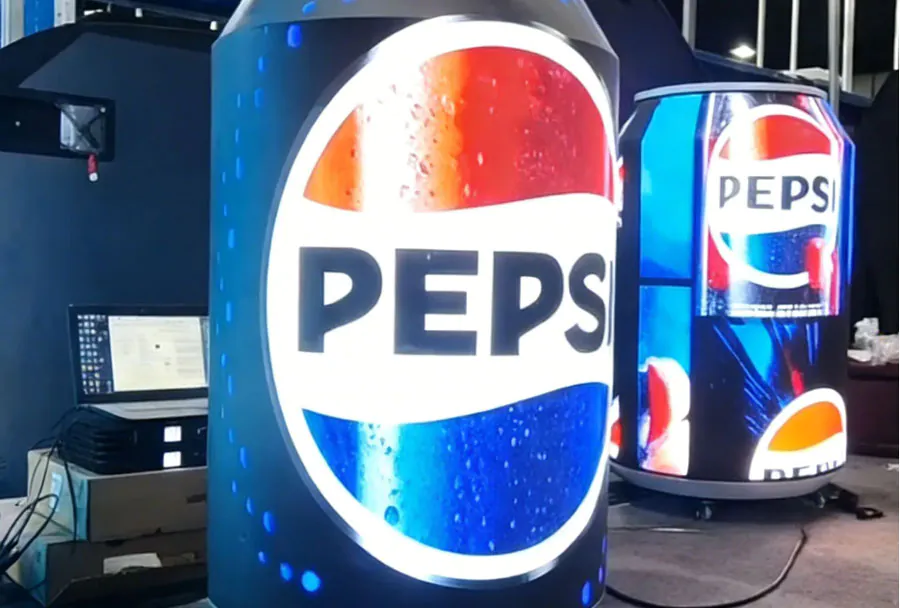
For high-consideration products—automotive, home appliances, electronics, furniture, luxury—interactive monitors let visitors explore features deeply without waiting for staff. Touch-based configurators (colors, options, bundles) make the experience memorable and help customers visualize ownership.
To connect engagement with business outcomes, the screen can offer:
– “Send configuration to my phone/email”
– Appointment booking
– Quote request forms
– Membership or loyalty registration
Healthcare and public services: Guidance, education, and reduced anxiety
In clinics and hospitals, engagement is about clarity and calm. Interactive signage can provide check-in guidance, department navigation, health education content, and queue status updates. When customers feel informed, they feel respected—and satisfaction rises.
What Buyers Should Test Before Choosing an Interactive LED Display
1. Test Brightness, Contrast, and Viewing Angles
The first test is whether the display remains readable from the actual seats and under the room’s real lighting conditions. A screen that looks strong in a dark showroom may lose clarity near windows, skylights, or overhead lighting.
When considering What Buyers Should Test Before Choosing an Interactive LED Display, start by measuring or comparing the image from several viewing positions. Ask the supplier to display small text, thin lines, dark photographs, and bright white backgrounds rather than only colorful promotional videos.
Test the image in the real environment
Display brightness is normally expressed in nits, or candelas per square meter. VESA’s DisplayHDR standard includes certified tiers such as DisplayHDR 400, 500, 600, 1000, and higher levels, but a higher peak figure alone does not guarantee comfortable viewing.
Check these conditions:
– Direct sunlight or strong window reflections
– Bright white content and dark content
– Text viewed from the side
– Skin tones and neutral gray areas
– Color consistency across the display surface
– Brightness settings available to staff
A common scenario is a reception display installed opposite a glass entrance. In that setting, reflected light can be more disruptive than insufficient panel brightness, so an anti-glare surface and correct placement may matter more than a larger brightness number.
This is an important part of What Buyers Should Test Before Choosing an Interactive LED Display when the screen will serve visitors throughout the day.
Check viewing distance and pixel structure
LED displays are built from pixels with a defined pixel pitch. Smaller pitch generally supports closer viewing, while larger pitch can be acceptable for distant audiences. Ask the supplier to show the display at the closest distance where users will interact with it.
The viewing-distance check in What Buyers Should Test Before Choosing an Interactive LED Display should include both standing and seated users.
Use Lagom LCD test pages to inspect gradients, black levels, sharpness, and viewing behavior during a demonstration. The site provides browser-based patterns that make defects easier to see than normal video.
How to apply this: Visit the intended installation site with the supplier, reproduce the room lighting, and record the closest and farthest viewing positions where text remains clear.
2. Test Touch Accuracy, Latency, and Multi-User Input
Touch performance should be tested with real tasks, because a display can register a tap but still feel slow, inaccurate, or difficult to use. What Buyers Should Test Before Choosing an Interactive LED Display should include touch accuracy at the edges, response time during dragging, and simultaneous input.
There is no single universal latency number that defines a good interactive display for every use case. A wayfinding screen, classroom whiteboard, and collaborative design wall place different demands on touch performance.
Use repeatable touch tasks
Ask several users to complete the same actions:
– Tap small buttons near every corner
– Drag objects across the full screen
– Write continuous lines with a stylus
– Scroll through a long page
– Zoom in and out with two fingers
– Select objects while another user interacts
Measure the time between physical contact and visible response with a high-frame-rate phone recording. The important result is not only the measured delay but whether the delay is consistent during extended use.
Consistency is a central factor in What Buyers Should Test Before Choosing an Interactive LED Display because intermittent lag can be more disruptive than a slightly slower but predictable response.
If the display uses projected capacitive touch, infrared touch, or another technology, ask how gloves, dust, moisture, sunlight, and protective glass affect recognition. These conditions can change performance substantially.
Test the software layer
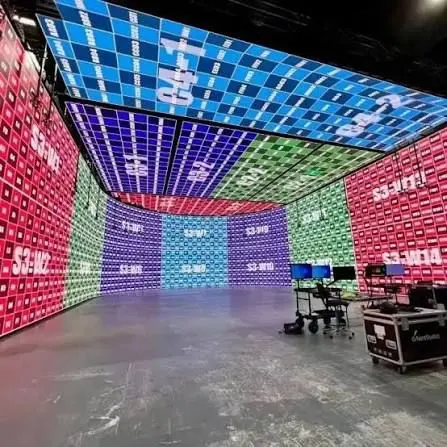
Touch hardware may work correctly while the operating system or application handles gestures poorly. Confirm that the display supports the operating systems your staff will use and identify whether touch is transmitted through USB, a network connection, or a proprietary controller.
This software-layer review belongs in What Buyers Should Test Before Choosing an Interactive LED Display whenever the screen will run more than a basic presentation.
Test:
– Touch mapping after changing resolution
– Wake-from-sleep behavior
– Touch orientation after rotating content
– Stylus and palm rejection
– Multi-touch limits
– Touch behavior through the intended application
In one case, a display may support many simultaneous contacts at the hardware level while a browser-based application recognizes only a smaller number. The buyer should test the complete application stack, not just the panel’s diagnostic screen.
How to apply this: Prepare a five-minute touch script, have at least three intended users complete it, and reject any model that produces missed taps, visible tracking gaps, or inconsistent edge response.
3. Test Resolution, Refresh Rate, and Signal Compatibility
A display should be tested with the exact sources, cables, resolutions, and refresh rates used after installation. What Buyers Should Test Before Choosing an Interactive LED Display is not only the panel’s native specification but also the complete signal path from source device to visible image.
HDMI Licensing identifies HDMI 2.0 as supporting up to 18 Gbps bandwidth, while the official HDMI 2.1 specification overview describes bandwidth up to 48 Gbps. Those figures affect which combinations of resolution, color format, and refresh rate can travel through the system.
Test every planned source
Connect the equipment you actually expect to use:
– Staff laptops
– Desktop workstations
– Wireless presentation systems
– Media players
– Video conferencing hardware
– Digital signage controllers
– Cameras and document systems
Do not rely on a supplier’s demonstration computer. A source may negotiate a lower resolution or refresh rate automatically, masking a compatibility problem. Testing the intended equipment is therefore a core step in What Buyers Should Test Before Choosing an Interactive LED Display.
Record the negotiated settings from the source device. Check for black screens, intermittent signal loss, incorrect scaling, cropped content, and delayed wake-up after the display powers on.
Check motion and text clarity
Use moving text, scrolling documents, and detailed diagrams to assess motion handling. A high refresh rate may improve the appearance of moving content, but the source, cable, processor, and panel must all support the same operating mode. This complete-chain approach reflects What Buyers Should Test Before Choosing an Interactive LED Display more accurately than comparing refresh-rate figures alone.
Test:
– Native resolution
– The highest planned refresh rate
– 4K video if required
– Long cable runs
– Adapters and docks
– Source switching
– Sleep and wake cycles
– HDCP-protected content where relevant
A practical example is a meeting room where presenters connect through USB-C docks. The display may work directly from one laptop but fail when the same signal passes through a dock, adapter, and long cable.
For signal troubleshooting, use the VESA DisplayPort website to verify DisplayPort capabilities and connector guidance. Confirm whether the proposed display supports the required DisplayPort version, USB-C video mode, or HDMI feature set.
How to apply this: Build a source-and-cable matrix before purchase, then test every combination for resolution, refresh rate, audio, touch return, and recovery after unplugging.
4. Test Mounting, Heat, Power, and Service Access
Installation conditions can determine whether an interactive display remains reliable. What Buyers Should Test Before Choosing an Interactive LED Display should therefore cover mounting strength, ventilation, power delivery, cable routing, and access to replaceable parts.
The International Electrotechnical Commission’s IP Code guidance explains how IP ratings classify protection against solids and liquids. An IP rating is not a general guarantee that a display is suitable for outdoor use, pressure washing, condensation, or direct rain.
Inspect the physical installation
Request the complete mechanical and electrical installation data:
– Display weight
– Mounting pattern
– Wall or structure load requirements
– Minimum ventilation clearance
– Operating temperature range
– Humidity range
– Power consumption
– Circuit requirements
– Cable entry locations
– Service access method
A display mounted in a shallow wall recess may have adequate front clearance but insufficient rear ventilation. Ask the supplier to demonstrate how filters, modules, power supplies, and control boards are accessed. This physical inspection is an essential part of What Buyers Should Test Before Choosing an Interactive LED Display, especially in confined spaces.

Test sustained operation
Run the display continuously with bright content and the intended workload. Monitor whether fans become intrusive, brightness changes, the enclosure becomes excessively hot, or the system reboots. Sustained operation shows conditions that a short demonstration in What Buyers Should Test Before Choosing an Interactive LED Display may miss.
Check power behavior during:
– Startup
– Shutdown
– Scheduled operation
– Brief source disconnection
– Network interruption
– Power restoration after an outage
If the installation is public-facing, inspect exposed edges, cable security, protective glass, and the risk of users leaning against or striking the surface. For outdoor or semi-outdoor locations, request written environmental ratings and installation limits rather than relying on sales language.
Confirm the support model
Ask who replaces failed modules, how quickly parts are available, and whether remote diagnostics are included. A warranty period is useful, but response time and local service capacity often determine the real operational risk.
How to apply this: Conduct a documented site survey, run the display for a full operating shift, and require written confirmation of mounting, ventilation, power, environmental, and service requirements.
5. Test Control Systems, Security, and Total Cost
The final test is whether your team can operate and maintain the display without creating avoidable security or staffing problems. What Buyers Should Test Before Choosing an Interactive LED Display includes content management, user permissions, network behavior, updates, and the cost of ownership.
A display may include an Android-based system, Windows computer, dedicated media player, or external controller. Each option creates different requirements for patching, account management, remote access, and application support.
Test day-to-day administration
Ask an administrator to perform these tasks without supplier assistance:
– Upload new content
– Change the schedule
– Restrict user permissions
– Reboot the system
– Switch input sources
– View device status
– Export logs
– Restore a known configuration
– Update approved software
Check whether the system supports separate administrator and operator accounts. Avoid deployments that require shared passwords or unrestricted remote access. This administration review is part of What Buyers Should Test Before Choosing an Interactive LED Display because routine tasks can determine the true staffing cost.
Review security and network behavior
Ask what network ports, cloud services, and outbound connections the system requires. Confirm whether the device can operate on a segmented network and whether updates are signed, scheduled, and documented. Security behavior should be included in What Buyers Should Test Before Choosing an Interactive LED Display when the display connects to organizational systems.
For web-based content, test browser compatibility, certificate handling, offline behavior, and recovery after a network outage. For managed signage, identify whether the content platform offers device health reports and audit logs.
Calculate the complete cost
The purchase price is only one part of the decision. Include:
| Cost area | What it tells you | Action to take |
|---|---|---|
| Display and controller | Initial hardware cost | Compare complete systems |
| Mounting and installation | Site preparation burden | Request a fixed quote |
| Software or CMS | Recurring management cost | Confirm license terms |
| Power and cooling | Operating expense | Estimate annual usage |
| Service and parts | Downtime exposure | Get response commitments |
| Content production | Internal workload | Test publishing workflow |
Consider a university with several displays managed by a small IT team. A lower-cost panel may become more expensive if every content change requires a site visit or specialist support.
How to apply this: Have the people who will manage the display complete a live administration test, then compare three-year hardware, software, energy, content, and service costs.
Why TW VISION: From Hardware to Experience, Not Just a Screen
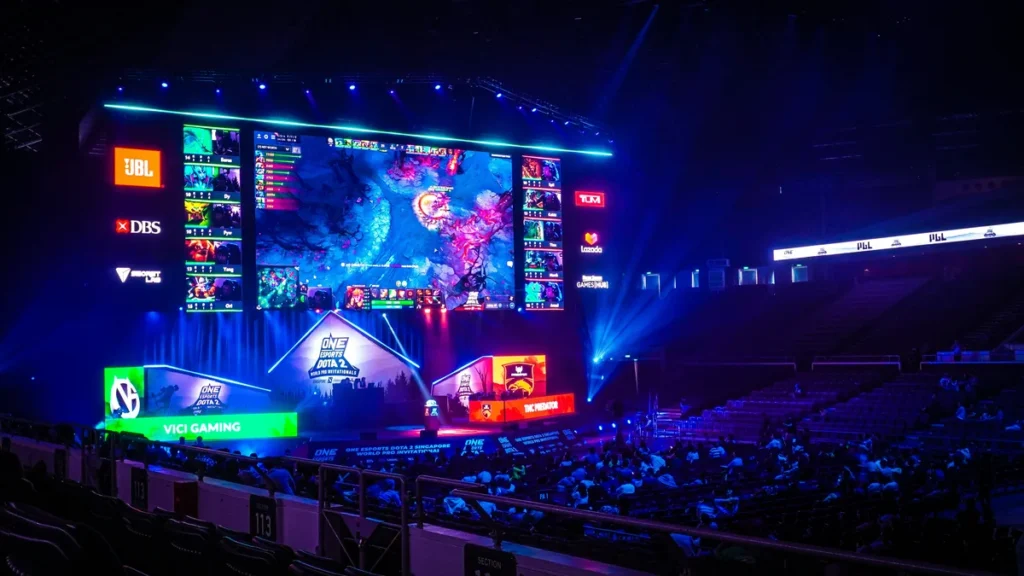
Many organizations purchase displays and then struggle to make them effective. The difference between “a monitor on the wall” and a “customer engagement tool” is the system design: content, interaction logic, placement, analytics, and operational workflow.
TW VISION approaches interactive digital signage with an end-to-end mindset to help clients achieve real engagement outcomes.
Hardware selection built for real-world environments
An interactive signage monitor must match its environment. Brightness, durability, viewing angle, and touch responsiveness all matter. TW VISION helps clients choose configurations suitable for:
– Indoor retail and showroom lighting
– High-brightness needs near windows
– 24/7 operation for transportation or public spaces
– Protective glass and enclosure requirements
– Landscape or portrait orientation installations
Choosing the wrong hardware can kill engagement: glare reduces readability, slow touch reduces trust, and poor placement reduces usage.
Content and UI design focused on “fast understanding”
Interactive content is not a website copy pasted onto a screen. People stand, not sit; they scan, not read; they want results in seconds. TW VISION emphasizes:
– Large, readable typography and simple layouts
– Clear navigation with minimal steps
– High-contrast design for accessibility
– Strong calls-to-action: “Find,” “Compare,” “Get directions,” “Scan to save”
– Multi-language support where needed
This design approach increases completion rates—meaning more customers actually finish tasks like finding a product, claiming an offer, or registering.
CMS and remote management for multi-location control
To keep engagement high, content must stay fresh. Interactive content scheduling and remote updates depend on the selected media player, CMS, and system configuration. Marketing teams can push promotions instantly, while local teams can adapt content for regional needs.
Operationally, this reduces downtime and ensures brand consistency across locations.
Analytics that connect engagement to business decisions
Interactive signage is measurable. Instead of guessing whether a poster worked, you can track what customers actually do: taps, dwell time, most-viewed categories, search terms, and conversion actions like QR scans.
With these insights, TW VISION helps brands answer practical questions:
– Which products get the most interest but low sales (pricing or availability issue)?
– Which promotions drive the most scans or sign-ups?
– What time periods produce the highest interaction rates?
– Which store locations need different content strategies?
When engagement data is connected to marketing and operations, signage becomes a continuously improving system—not a one-time installation.
Designing for Engagement: Best Practices for Interactive Digital Signage
Even great technology can underperform if the experience is poorly planned. Below are core principles that make interactive digital signage monitors consistently engaging.
Place screens where decisions happen
The best locations are not always the most visible; they are where customers hesitate or need guidance—near entrances, category transitions, fitting rooms, service counters, elevator lobbies, or queue lines. Engagement rises when interactivity solves an immediate need.
Keep the first interaction effortless
People will not “learn” your system. The first screen must make the value obvious. Use simple prompts such as:
– “Search products”
– “Find your store”
– “Build your bundle”
– “Explore today’s offers”
If customers need instructions, engagement drops.
Make outcomes portable via mobile
One powerful engagement tactic is to let customers take the experience with them. QR codes or short links can save:
– A product list
– A personalized configuration
– A coupon or membership benefit
– A map route
This bridges offline engagement into online follow-up, increasing conversion potential.
Balance interactivity with brand storytelling
Interactivity should not become a “technical demo.” It must serve brand identity. Use a consistent visual language, tone, and imagery. Add short, purposeful video segments and clear benefit statements. The goal is to make customers feel they are interacting with your brand—not with a generic kiosk.
Future-Proof Engagement: Where Interactive Signage Is Heading
Interactive digital signage continues to evolve beyond touch screens. Customers now expect experiences that are faster, cleaner, and more personalized. Many brands are exploring:
– Touchless interaction (gesture, motion sensors, mobile control)
– AI-driven recommendations and search assistance
– Integration with inventory, POS, and CRM for real-time accuracy
– Personalized content based on time, location, or audience patterns
– Accessibility enhancements for broader inclusivity
TW VISION stays focused on scalable architectures—systems that can be upgraded with new interaction methods and integrated with existing platforms as customer expectations grow.
Frequently Asked Questions About Interactive Digital Signage Monitor for Customer Engagement
How many people should test an interactive LED display before purchase?
At least three representative users should complete the same tasks, including one person with limited technical experience. What Buyers Should Test Before Choosing an Interactive LED Display changes by audience: children, visitors wearing gloves, older users, and trained staff may interact differently.
Include the most demanding user group in the trial, and record missed touches, confusing controls, and accessibility barriers rather than relying on a single expert demonstration. This user mix strengthens What Buyers Should Test Before Choosing an Interactive LED Display by exposing differences that technical specifications cannot show.
Can an interactive LED display replace a large-format projector?
Sometimes, but the choice depends on ambient light, room depth, maintenance, and required image size. What Buyers Should Test Before Choosing an Interactive LED Display should include a side-by-side comparison when a projector is under consideration.
A projector may offer a larger image at a lower initial cost, while a direct-view display can provide stronger contrast in bright rooms and avoid lamp or laser alignment concerns. The comparison should apply the same content and viewing conditions used in What Buyers Should Test Before Choosing an Interactive LED Display.
What should buyers test when the display will be used outdoors?
Test the complete enclosure, thermal behavior, brightness control, moisture protection, and service procedure under the expected weather conditions. What Buyers Should Test Before Choosing an Interactive LED Display also includes condensation and direct-sun performance, which a short indoor demonstration cannot reproduce. Request the manufacturer’s installation limits and confirm whether touch works through the specified protective glass or weather cover.
These environmental checks expand What Buyers Should Test Before Choosing an Interactive LED Display beyond indoor image quality.
Is wireless screen sharing reliable enough for business use?
Wireless sharing can be suitable, but it should not be the only input method for critical meetings or public services. What Buyers Should Test Before Choosing an Interactive LED Display includes recovery after Wi-Fi loss, guest-device onboarding, authentication, and content privacy.
Keep a wired input or dedicated media player available, and test the system on the network configuration used by the organization. Include those fallback procedures in What Buyers Should Test Before Choosing an Interactive LED Display before approving wireless-only workflows.
What should happen if touch works on the desktop but not in an application?
First determine whether the problem is caused by operating-system mapping, browser permissions, application support, or the display driver. What Buyers Should Test Before Choosing an Interactive LED Display should include the exact production application and user account. Ask the supplier to document supported operating systems, touch protocols, browser versions, and troubleshooting ownership before approving the purchase.
The documented support path should remain part of What Buyers Should Test Before Choosing an Interactive LED Display after installation.
Turning Foot Traffic into Meaningful Engagement with TW VISION
An Interactive Digital Signage Monitor for Customer Engagement is not just a modern display—it is a practical tool for helping customers make decisions with confidence. It can guide, recommend, educate, and convert, all while delivering measurable insights that improve marketing performance.
TW VISION helps buyers evaluate LED display configurations for their intended interactive applications, brands can move beyond basic digital signage and build interactive experiences designed for real-world customer behavior: fast, intuitive, visually compelling, and operationally manageable. When screens stop being passive and start responding to customers, engagement becomes a journey—one that begins with a tap and ends with stronger loyalty, better experiences, and higher business value.