Las Vegas LED Display Solutions for Rental Companies and Event Professionals

LED displays for rental companies have to perform in a market that hosted nearly 6 million convention attendees in 2025, across more than 14.5 million square feet of meeting and exhibit space. The opportunity runs from hotel ballrooms to convention halls and outdoor brand activations, and the equipment has to serve all of it.
The challenge is that an LED wall is not a collection of panels. Pixel pitch, processing capacity, power distribution, rigging, content resolution, spare inventory and venue rules have to work as one system. A display that looks sharp in the warehouse can still fail on site through inadequate brightness, incorrect mapping, overloaded circuits, visible colour differences or missing backup equipment.
The five principles below explain how to select equipment, design safer systems, prevent signal failures and build a rental workflow suited to this market.
Table of Contents
- 1. Match the System to the Venue and Audience
- 2. Engineer Pitch, Brightness and Processing
- 3. Build Safe Power and Rigging Plans
- 4. Protect Signal Flow With Testing and Redundancy
- 5. Run a Workflow Built for Local Logistics
- FAQ
- Conclusion
1. Match the System to the Venue and Audience
The right LED solution starts with viewing distance, venue conditions, audience size and content — not with the panels already in the warehouse.
Las Vegas events operate across very different spaces. The Las Vegas Convention Center alone covers 4.6 million square feet, including roughly 2.9 million square feet of exhibit space and 225 meeting rooms. A display designed for a conference room may be unsuitable for an exhibit hall with long sightlines and intense ambient light.
Evaluate these factors before quoting:
- Indoor, outdoor or partially covered installation
- Minimum and average viewing distance
- Camera use, including livestreaming and image magnification
- Ambient light from windows, fixtures or nearby exhibits
- Required screen dimensions and aspect ratio
- Ground-supported versus flown installation
- Setup, rehearsal and strike windows
LED displays for rental companies should therefore follow the audience experience rather than panel availability.
Separate visual from structural requirements. A ballroom keynote may prioritise fine pitch and low fan noise. A trade-show booth may need front-serviceable cabinets, because technicians cannot reach the rear of the wall. Consider a booth set against a venue wall: rear-service panels could force a deeper structure or a partial teardown for a basic repair. Document both visual requirements and physical access before equipment is reserved.
Practical step: add viewing distance, ambient light, camera use, service access and rigging method as mandatory fields in the client intake form.
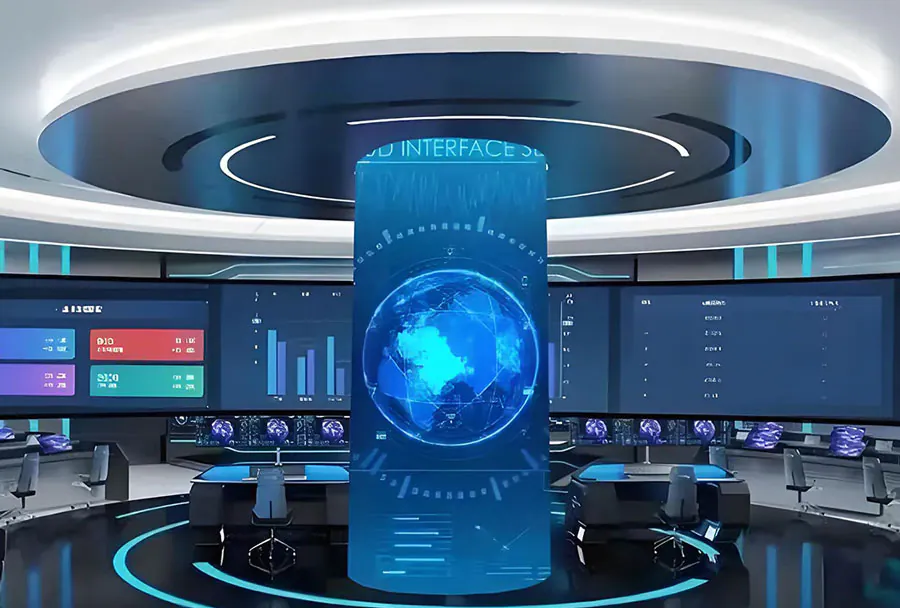
LED displays for rental companies fail at the connector before they fail at the LED, which is why sealed hardware matters on a fleet.
LED displays for rental companies bought in one batch keep their colour match across years of swaps.
2. Engineer Pitch, Brightness and Processing
Pixel pitch, brightness, refresh rate, power demand and processing compatibility decide whether the display will work for its audience and content.
Pixel pitch is the distance between LED pixels, but it should never be the only selection criterion. Verify:
- Maximum calibrated brightness
- Refresh rate and grayscale performance
- Cabinet weight and dimensions
- Maximum and average power consumption
- Indoor or outdoor protection rating
- Supported hanging and stacking limits
- Compatible processors and receiving cards
One product example: a 2.84 mm panel at 800 nits calibrated, 7,680 Hz refresh, 20.61 lb per cabinet, with 190 W maximum and 95 W average consumption. Those figures are product-specific, not universal targets, so compare specifications against the actual use case.
Plan the processing workflow. LED displays for rental companies also depend on correct mapping and calibration. NovaStar tooling configures NovaStar-based systems, manages screen layouts and applies calibration settings.
A common failure is receiving content that does not match the LED canvas. Stretching a standard presentation feed across an ultrawide wall distorts text, logos and speaker graphics. Confirm the pixel canvas before the creative team exports final media.
Practical step: build a comparison sheet for every panel family showing pitch, brightness, weight, power, IP rating, processing platform and service method.
3. Build Safe Power and Rigging Plans
A professional plan calculates electrical demand and structural loads before equipment reaches the venue.
Calculate from maximum loads. Do not size distribution from average consumption. Startup conditions, bright content, environmental conditions and manufacturer limits can produce higher demand.
Using the same 2.84 mm panel as an illustration, an 80-panel wall carries a published maximum load of 15,200 W before processors, playback, networking or accessories. The panels alone weigh approximately 1,649 lb, excluding rigging hardware, cabling, frames and safety equipment.
Document these calculations:
- Maximum connected load
- Circuit and phase distribution
- Cable type and length
- Grounding
- Processor and media-server power
- Uninterruptible supply requirements
- Total suspended or ground-supported weight
Treat temporary wiring as a controlled system. OSHA states that temporary wiring must be removed immediately on completion of the project, and its electrical rules address temporary installations, approved distribution points, cable assemblies and protection from unqualified access.
In one case, power and data cables laid across an unprotected service aisle exposed the system to carts, forklifts and foot traffic. Approved routing and cable protection reduce that risk. Follow the manufacturer’s approved hanging or stacking hardware as well.
Practical step: require a signed power schedule, rigging plot, weight calculation and cable-routing plan before releasing equipment.
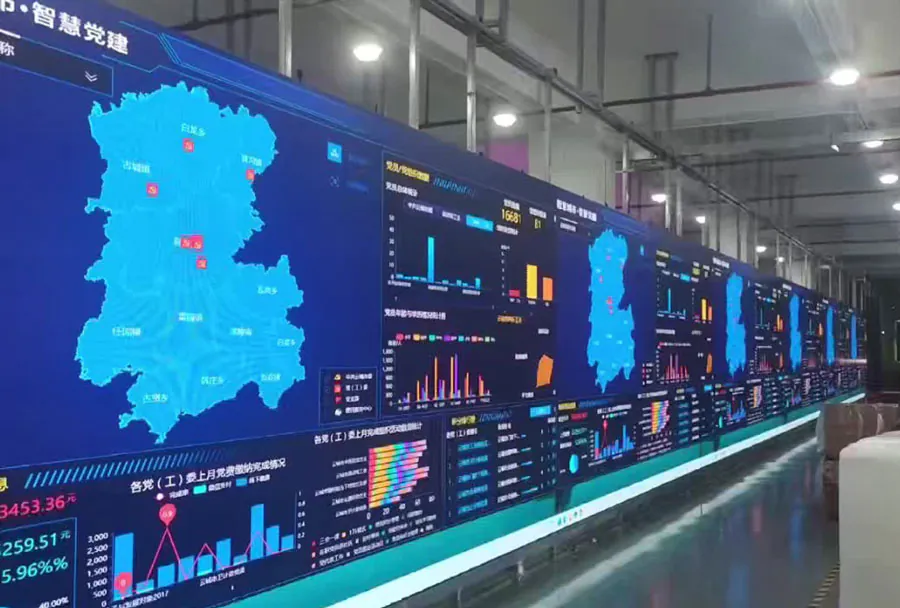
LED displays for rental companies should ship with a documented spare ratio, not an implied one.
4. Protect Signal Flow With Testing and Redundancy
Reliable systems use planned signal paths, tested backups and saved configuration files rather than depending on a single uninterrupted connection.
Design for recoverable failures. Identify every single point of failure: playback computer or media server, switcher, processor, fibre or copper path, power supply, receiving card, module, network switch and content source.
Brompton Tessera provides panel mapping, fixture association, presets, capacity indicators, offline project preparation and remote processor control. Supported processors can also run closed-loop redundancy, switching fixtures to the backup feed on the next frame after a primary signal error.
Redundancy consumes ports and bandwidth, so design it before load-in rather than enabling it as a last-minute fix.
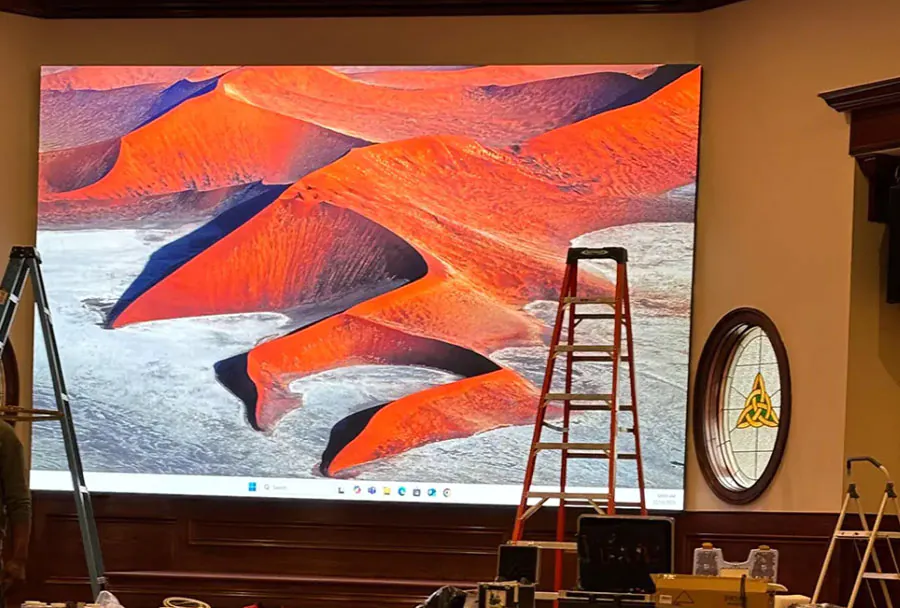
Test the real show content. LED displays for rental companies should be tested at the actual resolution, frame rate, colour pipeline and camera package:
- Load the final processor configuration.
- Display red, green, blue, white, black and grayscale patterns.
- Check cabinet order and signal topology.
- Inspect seams, dead pixels and colour differences.
- Test primary and backup sources.
- Disconnect one path to verify failover.
- Save configuration files in two locations.
Previsualisation tools help when screens use non-standard shapes, multiple surfaces or synchronised media. Add a recorded failover test and a configuration backup to the warehouse checklist.
5. Run a Workflow Built for Local Logistics
A rental operation pairs technical preparation with disciplined inventory, labour, transport and communication.
Package systems by function. Avoid treating every project as an unrelated pile of cases. Build repeatable packages for ballroom presentation walls, general-session stages, exhibition booth walls, outdoor promotional screens, camera-focused corporate production, and curved or creative installations. Each package carries a standard bill of materials: panels, spares, processing, cabling, power distribution, rigging accessories, tools and test equipment.
Las Vegas welcomed 38.5 million visitors in 2025 and maintains roughly 150,300 hotel rooms. At that scale, rental teams compete with other productions for labour, dock access, freight services and replacement equipment during major event periods.
Prepare for heat, glare and rapid change. The city averages about 320 days of sunshine a year, so an outdoor display needs deliberate brightness, shade, cooling, weather protection and wind-response planning — not an indoor system placed outside.
LED displays for rental companies should include spare panels from the same calibrated batch wherever possible, plus matching power supplies, receiving cards, data jumpers and processor outputs.
Consider a client who adds a confidence-monitor feed during rehearsal. A documented spare processor input and a tested cable path absorb that request without rebuilding the signal system.
Practical step: standardise show packages with fixed spare ratios, labelled case maps, saved configuration files and named escalation contacts.
LED Displays for Rental Companies — FAQ
How can LED walls avoid moiré on camera?
Moiré comes from the interaction between sensor, lens, focus, viewing angle and pixel structure. Test at the planned shooting distance with the actual lens package. Changing distance, focal length, depth of field, processor settings or panel choice often reduces the pattern when refresh adjustments do not.
What if replacement panels have different colours?
First confirm the cabinet has the correct receiving-card file and calibration data. Visible differences appear when cabinets come from separate production batches or have different operating hours. If recalibration is unavailable, place mismatched spares away from presenters and key brand graphics.
Can a curved wall use standard rectangular content?
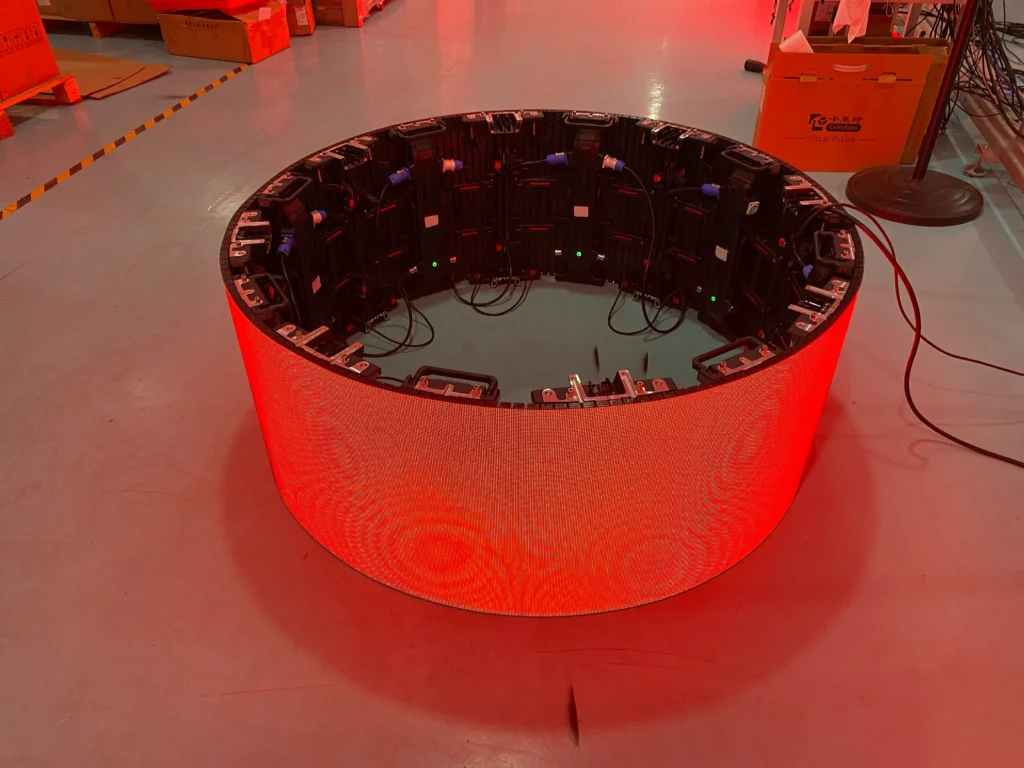
Yes, but the workflow must account for how the image wraps. Concave, convex or faceted walls may need UV mapping, a custom pixel map or previsualisation. A gentle curve tolerates a standard feed; complex geometry needs content built for it.
What happens if the client changes the screen size after content delivery?
Recalculate the final pixel canvas before scaling or cropping. Non-16:9 ratios are common, and extending the screen may need more processor capacity, outputs, cabling, power and content. If redesign is impossible, keep critical logos and text inside a protected area.
Who approves an outdoor LED installation?
It depends on the property, installation type, location and whether the structure is temporary, mobile, ground-supported or flown. Review may involve the venue, the property engineer, the producer, fire-safety personnel or the authority having jurisdiction.
Do you supply fleet quantities rather than single walls?
Yes. Cabinets, cases and spares ship from one production batch, which keeps colour consistent when a module is replaced months later.
Conclusion
Strong LED delivery depends on planning the whole system rather than renting enough panels. Match the display to the venue, engineer power, weight and signal topology, test realistic failures, and standardise the packages and paperwork.
The next step is to audit one existing rental package against these five areas, document what is missing, and turn the result into a reusable preproduction checklist. For the wider market picture, see LED screen rental in Las Vegas.