Outdoor LED Screen for Florida Events: How to Choose the Best Display for Your Event

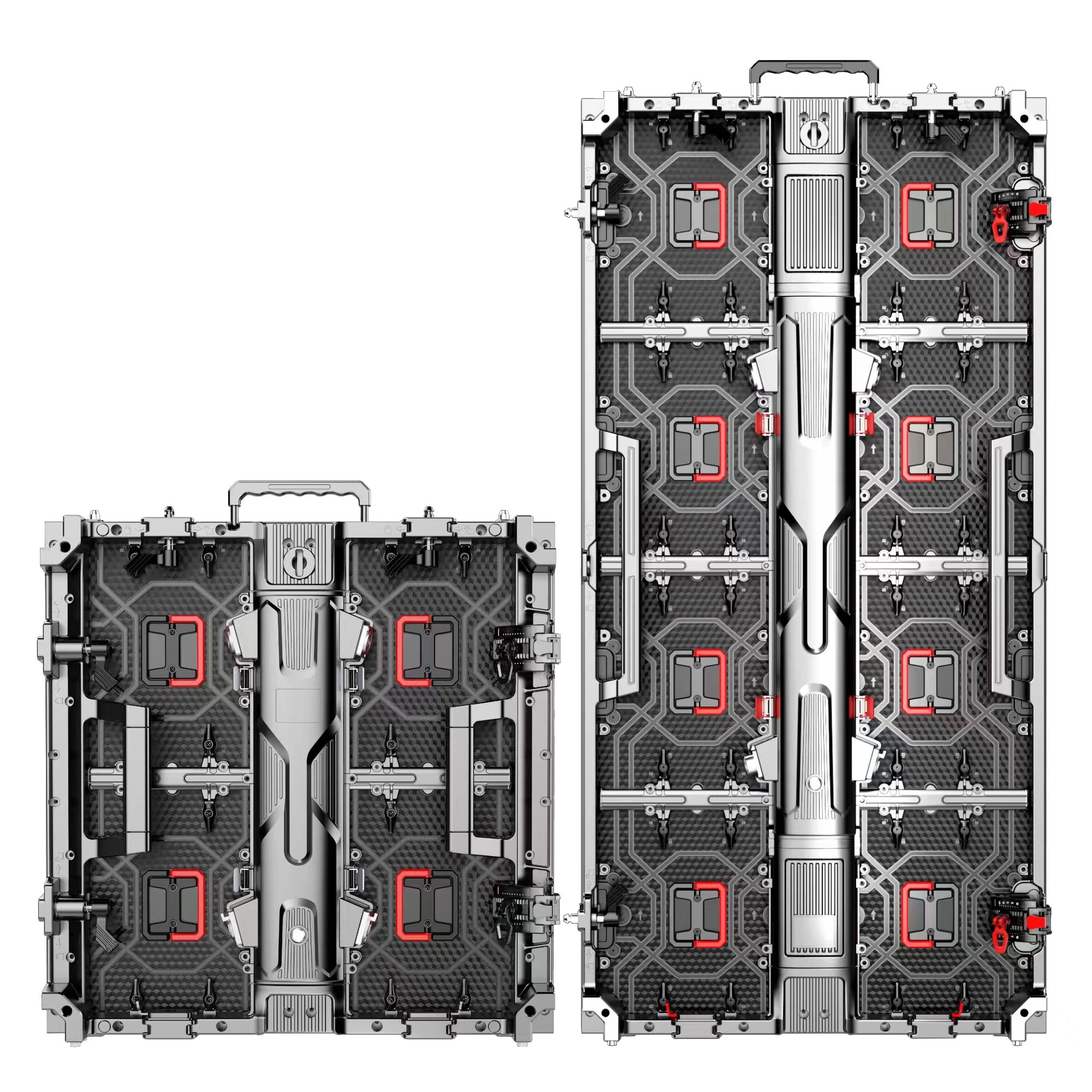
Outdoor LED screen rental Florida starts with the audience rather than the catalogue, so the first decision is where the closest viewer will stand.
This guide works through the decisions in the order they actually constrain each other: viewing distance and pitch, event type, indoor versus outdoor specification, coastal exposure, custom shapes, resolution and camera use, structure, and power. Each section ends with the input you need to give a supplier so the quote comes back comparable.
If you are buying cabinets rather than renting them, the rental LED screens supplied to Florida covers stock and delivery. If you already know the specification and want to know what it costs, start with the Florida outdoor LED cost guide.
Table of Contents
- 1. Start With the Audience, Not the Screen
- 2. Match the Display to the Event Type
- 3. Indoor or Outdoor: What Changes
- 4. Coastal Sites: Salt, Humidity and UV
- 5. Custom Sizes, Shapes and Curves
- 6. Resolution, Content and Camera Use
- 7. Structure and Rigging Options
- 8. Power, Signal and Redundancy
- 9. What to Put in the Request
- 10. Evaluation Checklist
- FAQ
- Conclusion
1. Start With the Audience, Not the Screen
Pixel pitch is the distance between LED centres, measured in millimetres. Smaller pitch means more LEDs per square metre, a sharper image at close range and a higher price. The correct pitch is the largest one that still looks clean from the closest seat, not the finest one the budget allows.
| Nearest viewer | Practical pitch | Typical use |
|---|---|---|
| Under 10 ft | P1.8 – P2.6 | Lobbies, VIP areas, product demos, camera close-ups |
| 10 – 20 ft | P2.6 – P2.9 | Corporate sessions, conference breakout rooms |
| 20 – 40 ft | P2.9 – P3.9 | Ballrooms, church auditoriums, mid-size activations |
| 40 – 80 ft | P3.9 – P4.8 | Outdoor stages, festival second screens |
| 80 – 150 ft | P4.8 – P6.7 | Concert mains, sports side screens |
| 150 ft and beyond | P6.7 – P10 | Stadium and large-field deployment |
Two adjustments override the table. Camera use pushes you one step finer, because a sensor resolves detail an eye at the same distance does not. Bright sunlight also pushes you up: a pitch that reads well indoors can disappear against a sunlit background.
How to apply it: measure the distance from the screen to the closest seat, then ask for quotes at that pitch and one step coarser. Compare both.
An outdoor LED screen rental Florida brief that omits the closest seat produces a wall that is either too coarse or too expensive.
Outdoor LED screen rental Florida specifications should state the operating window, because brightness follows daylight.
2. Match the Display to the Event Type
Different events fail in different ways. The screen choice should follow the failure you cannot afford.
Concerts and festivals
Content is fast, the audience is far back, and the screen is often on camera. Favour P3.9–P6.7 for mains, high brightness for daylight sets, and at least 3,840Hz refresh for broadcast. Redundancy matters more than resolution: a backup signal path and spare modules on site protect the show.
Sports watch parties and municipal events
Daylight visibility is the whole job. Specify 6,000 nits or more, plan for glare and sun angle through the match window, and confirm generator capacity for a field or park site. Crowd control and the screen position relative to egress usually drive the layout more than the panel does.
Corporate conferences and galas
Viewing distances are short and content is text-heavy, so P2.6–P2.9 in 500×500mm cabinets is the working range. Banding on camera and colour consistency across multiple walls matter more than raw brightness; ask for calibration and a test with the actual switcher.
Churches and auditoriums
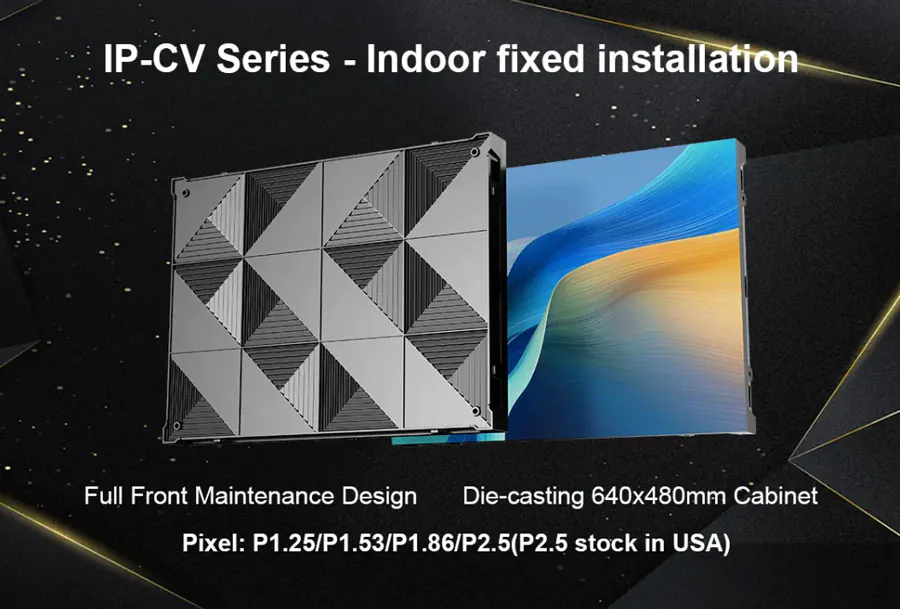
Permanent or semi-permanent installs reward a finer pitch and front-service access, because the wall will be serviced in place for years. A fixed-install cabinet such as the CT series in P2.5 is often a better fit than a flight-cased rental panel.
Drive-ins and community screenings
A mobile trailer screen wins on setup time and cost. P4–P6 covers movie viewing distances, and the priority shifts to weather protection, onboard power options and a quick strike.
How to apply it: write one sentence describing the event, the audience size and the worst failure mode, and send it with the brief.
3. Indoor or Outdoor: What Changes
An outdoor cabinet is not an indoor cabinet with a brighter module. It carries a different enclosure, sealing, connector protection and power design.
Brightness. Indoor screens typically run 800–1,500 nits. Outdoor screens need 5,000–8,000 nits for daylight, and the figure should be stated at calibrated operating level rather than as a maximum.
Sealing. IP ratings are defined under IEC 60529. For outdoor work, IP65 on the front and rear is the baseline; the second digit, which covers water, is the one that matters. Sealed cable entries and protected connectors decide whether a cabinet survives a driven-rain event.
Thermal design. Outdoor cabinets run at higher brightness in direct sun, so heat management and power-supply derating matter. Ask for the operating temperature range, not just the storage range.
Service access. Front-service modules are valuable when the wall is close to a wall or barrier; rear access is easier when the wall is free-standing. Confirm which access the venue allows before ordering.
How to apply it: if any part of the audience or the hardware is uncovered, specify outdoor, even for a daytime-only event.
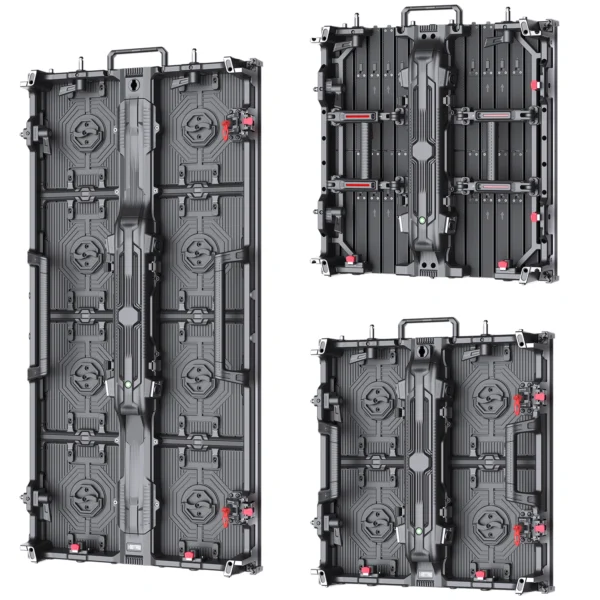
For outdoor LED screen rental Florida stages, the structure carries the risk, not the cabinet.
Outdoor LED screen rental Florida pricing separates equipment from ballast, labour and permits.
4. Coastal Sites: Salt, Humidity and UV
Florida’s coast adds three stresses that a dry-market specification ignores, and all three are cheaper to specify at the start than to repair later.
Salt air. Corrosion attacks fixings, connectors, case hardware and power supplies long before it reaches the LEDs. For beachfront, marina or pier sites, specify three-proof treatment on the PCB and power supply, sealed connectors and corrosion-resistant fixings. This is a production step; it cannot be added after the cabinets ship.
Humidity and storage. Panels stored in a humid warehouse degrade quietly. Dry storage, desiccant and a periodic power-on cycle protect the investment between events. After a coastal event, rinse hardware with fresh water and dry it before casing.
UV and heat. Direct sun heats dark cabinet faces and washes out low-brightness displays. Plan orientation to reduce glare, and expect a higher-nit panel for a west-facing surface in the afternoon.
Storm exposure. Any coastal build needs ballast, covers, a defined maximum operating wind speed and a named person authorized to shut the wall down. The National Hurricane Center publishes the forecasts production teams track from June through November.
How to apply it: state the distance from the water and whether the site is covered; that single answer changes the cabinet specification and the price.
5. Custom Sizes, Shapes and Curves
Standard cabinets cover most events, but creative briefs often need something else. Understand what is a configuration and what is a new product.
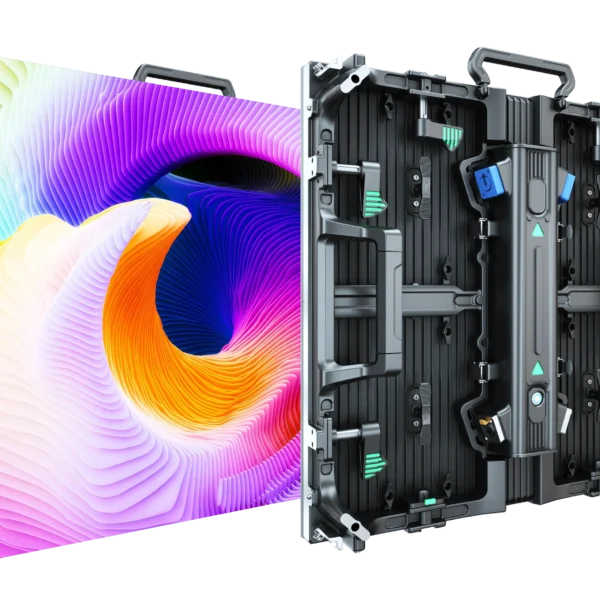
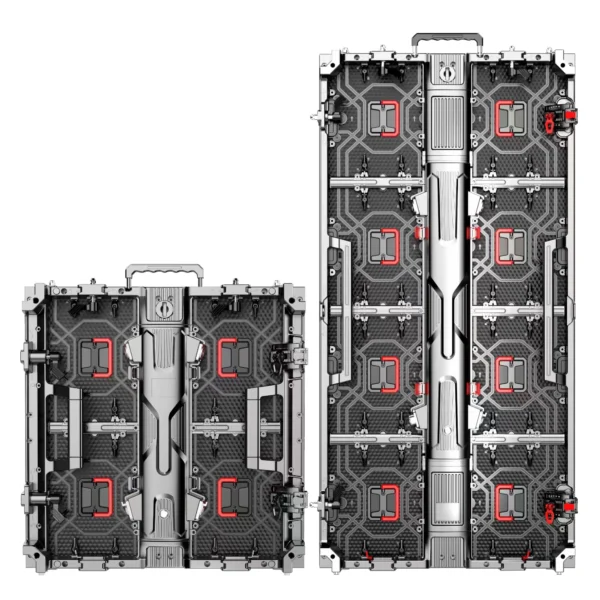
Curves from standard stock. Rental cabinets with adjustable locks can form shallow curves — the PQ series covers roughly −10° to +15°, with flexible sections to ±22.5° and 45-degree beveled cabinets for corners. These are configurations of stock hardware, not custom tooling.
Non-standard shapes. Cubes, pillars, 90-degree corners and stair-step walls are usually built from the same cabinets with different connection hardware. Ask for a layout drawing rather than a description.
True custom cabinets. Irregular dimensions, unusual aspect ratios and very tight radii may require tooling. That adds cost and lead time, and it usually makes sense only for a permanent install or a repeating show design.
Content follows shape. A 3:1 wall fed a 16:9 feed produces letterboxing or stretched graphics. Decide the aspect ratio before the build, then commission content for it.
How to apply it: send a dimensioned sketch with the brief; ask whether the shape is stock-configured or tooled, and get the answer in writing.
Photograph the site at the event hour, and the outdoor LED screen rental Florida choice becomes obvious.
6. Resolution, Content and Camera Use
A large wall does not automatically deliver 4K. Native resolution is the pixel count of the build: width in metres divided by pitch, and height divided by pitch.
A 6-by-3-metre wall at P2.6 resolves to roughly 2,308 × 1,154 pixels. That is a clean image, but it is not 4K, and a 4K source will be scaled. At P1.9 the same wall reaches about 3,158 × 1,579 pixels — closer to UHD, at a materially higher price.
Camera work. Specify at least 3,840Hz refresh and test against the actual shutter. A wall that looks clean to the eye can band on a live feed. Record the processor, brightness, shutter and sync settings so the result is repeatable.
Content design. Use large type and high contrast on coarse pitches; reserve fine detail for close-view walls. Ask for the aspect ratio, safe areas and recommended codecs before producing content, and confirm who handles scaling and colour matching across multiple screens.
How to apply it: state the content source, its resolution and whether the screen will be filmed; that answer sets pitch, processing and price.
7. Structure and Rigging Options
The mounting method is part of the screen specification, not an afterthought.
- Ground stack: ballast and cross bracing, fast to build, suits open fields and flat venues.
- Flown wall: truss or chain hoists, requires certified riggers, structural calculations and venue approval.
- Mobile trailer: integrated stabilization and power, best for roadshows and rapid deployment.
- Wall or ceiling mount: the fixed-install option, with front-service access for maintenance.
Whichever method applies, ask for cabinet weights, hanging and stacking limits, and connection details. For elevated builds, wind loading should follow a recognised temporary-structure standard rather than a typical installation drawing.
How to apply it: get the venue to confirm in writing whether suspension is allowed, and who may rig.
8. Power, Signal and Redundancy
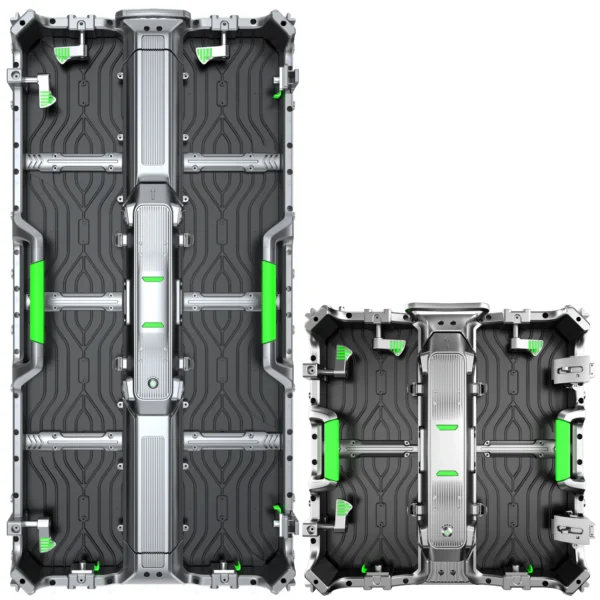
Power planning uses the manufacturer’s maximum rating, not average consumption. The gap can be large enough to undersize a generator: ROE Visual lists its 500×500mm BP2V2 panel at 190 watts maximum and 95 watts average. (roevisual.com)
Practical requirements for a Florida outdoor build:
- Three-phase supply or a generator sized on maximum draw, with fuel for the full run
- Distribution positioned to keep cable runs within limits
- N+1 redundancy for any show that cannot pause
- Fiber or SDI for long runs, with a duplicate input path
- Weather-protected connectors and cable entries
- Spare modules, receiving cards and power supplies on site
Configuration files are part of the package. NovaLCT configures NovaStar-powered systems and saves settings to hardware; keep receiving-card files, calibration data and processor presets backed up in two places.
How to apply it: send the venue’s power details — voltage, phase, amperage and distance to the screen — with the brief.
9. What to Put in the Request
A short, complete brief produces comparable quotes. Include:
- Event type, date and run time
- Venue address and whether the site is indoor, covered outdoor or open air
- Distance from the water, if coastal
- Screen width and height, or the viewing area to be covered
- Nearest and farthest viewer distance
- Content source, resolution and aspect ratio
- Whether the screen will be filmed or streamed
- Mounting method allowed by the venue
- Power access and whether a generator is needed
- Load-in and load-out windows
Send the same brief to every supplier. Quotes built on different briefs cannot be compared, and the cheapest one is usually the one that assumed the least.
10. Evaluation Checklist
- Does the quote state pitch, calibrated brightness and refresh rate?
- Is the IP rating and coastal treatment named, or assumed?
- Is the cabinet model and processor named?
- Does the native resolution match the content?
- Is the structure engineered, and by whom?
- Is power sized on maximum draw, with redundancy?
- Are spares on site, and who replaces a failed module?
- Is the weather shutdown trigger defined, with a named decision-maker?
- Are delivery, drayage and venue labor included or excluded?
- What are the overtime, damage and cancellation terms?
A quote that cannot answer six of these is not cheaper; it is incomplete.
Outdoor LED Screen Rental Florida — FAQ
What pixel pitch do I need for an outdoor event?
Match it to the closest viewer: P2.9–P3.9 for 20–40 feet, P3.9–P4.8 for 40–80 feet, and P4.8–P6.7 for 80–150 feet. Camera use and direct sunlight push the choice one step finer or brighter.
How bright should an outdoor LED screen be in Florida?
At least 5,000 nits, and 6,000–8,000 nits for a screen facing direct sun or an audience seated in daylight. Ask for the figure at calibrated operating level, not the panel maximum.
Can an indoor panel be used outdoors?
Only under cover and for short periods. Indoor cabinets are not sealed for driven rain, and their brightness is too low for daylight. The saving disappears the first time water reaches a connector.
How do I calculate the native resolution of a wall?
Divide the width in millimetres by the pitch, and the height by the pitch. A 6,000mm wall at P2.6 is about 2,308 pixels wide; at P1.9 it is about 3,158.
What is the difference between a curved wall and a flexible wall?
A curved wall uses fixed-angle cabinet locks, typically −10° to +15°. A flexible cabinet supports a continuous range up to about ±22.5°, which allows tighter radii and compound shapes.
How early should I lock the specification?
Once the venue, audience layout and content are known — typically four to eight weeks before the event. Peak convention and holiday weeks tighten availability, so confirm the pitch and cabinet format early.
Conclusion
The right outdoor LED screen for a Florida event is the largest pitch that still looks clean from the closest seat, in a cabinet sealed for the site, on a structure the venue will approve, with power and spares sized for the worst case.
Write the brief, send it unchanged to every supplier, and compare quotes line by line. If you are evaluating companies rather than specifications, our guide to outdoor LED screen rental companies in Florida covers vetting and contracts.
For equipment rates, see LED screen panel price. For purchase options and US stock, see the factory-direct supply page.
Buyers comparing outdoor LED screen rental Florida options should ask for the cabinet count, the spare ratio and the processor model in writing.