LED Screen Rental Companies in Toronto — How to Tell a Fleet Owner From a Broker

LED rental companies Toronto buyers shortlist usually look identical on a website: the same stock photographs, the same full-service claim, the same list of venues.
This guide is about evaluation rather than ranking. It covers what “top rated” should mean, the checks that expose a broker, the questions worth asking before a site visit, what a proper proposal contains, and how to run a shortlist in two weeks without wasting site surveys.
Table of Contents
- 1. What “Top Rated” Should Mean
- 2. Six Checks That Expose a Broker
- 3. Questions Worth Asking Early
- 4. What a Real Proposal Contains
- 5. Why Their Prices Differ So Much
- 6. Insurance, Permits and Union Calls
- 7. Run a Shortlist in Two Weeks
- FAQ
1. What “Top Rated” Should Mean
Reviews and star ratings tell you a vendor finished a job. They do not tell you whether they owned the screen, whether the crew was theirs, or whether the wall in the photograph is the model being quoted. For LED screen rental companies in Toronto, five attributes are worth more than any rating.
Fleet ownership. Cabinets, processors and structure in their own inventory, with a count and a location you can verify.
Crew on payroll. Riggers and technicians who work for the company, not a subcontractor assembled for the date.
Technical depth. Someone who can answer a question about refresh rate, processor capacity or pixel mapping without calling head office.
Local operating history. Load-ins at the venues you are using, with the paperwork and photographs to show it.
Redundancy as standard. Spare modules, receiving cards, power supplies and a backup playback device travelling with the wall.
A company with all five can still be expensive. A company missing two of them is usually cheap for a reason that surfaces on show day, not in the proposal.
LED rental companies Toronto that publish cabinet models and batch records are easier to verify than those that publish adjectives.
Most LED rental companies Toronto claims collapse at the first question about spare modules.
2. Six Checks That Expose a Broker
Six questions separate an owner from a reseller when comparing LED screen rental companies in Toronto, and all six are answerable before any money moves.
- How many identical cabinets are in Toronto today? An owner knows. A broker says “we can source them”.
- Which model and which batch? Ask for the cabinet model, the processor model and the production batch of the modules being supplied.
- Who is on the crew, and are they certified? Request certificates for rigging and for working at height.
- Where do the spares sit on show day? On site, in the truck, or in a warehouse across the city — three different answers.
- Which venues have you loaded into this year? Vague answers mean someone else’s truck.
- What is your certificate of insurance, and can it name us? A real vendor produces it the same day.
Two red flags are worth naming. A quote with equipment but no crew hours is incomplete rather than cheap. And a vendor who cannot describe a load-in at your venue, but can describe their “partner network”, is brokering your show to a third party whose schedule you cannot see.
3. Questions Worth Asking Early
The questions below change the specification rather than the sales pitch, and they are the ones worth putting in writing before a site visit is booked with any of the LED screen rental companies in Toronto you are considering.
- What is the closest viewing distance you would accept for this pitch, and what would you change at half that distance?
- What calibrated brightness will the wall run at, not the panel maximum?
- What refresh rate do you guarantee, and how is it tested against our cameras?
- What is the wall’s native resolution, and what happens to our content at that mapping?
- Which processor, how many inputs, and is there a backup playback device?
- What is the plan if a module fails during the keynote?
- Which parts of this job are yours, and which parts am I contracting separately?
The seventh question is the most useful. A vendor who answers it in detail has scoped the job; one who answers “we handle everything” without a list has not.
Ask too for the build schedule in hours, not in a promise. Two to four hours for a booth screen, four to eight for a ballroom and ten to twenty-four for an outdoor festival wall are realistic in this city. A vendor quoting the same window for every event is guessing.
For LED rental companies Toronto contracts, ask who pays for a replacement when a cabinet fails on show day.
LED rental companies Toronto with cross-border experience handle CBSA paperwork without stalling the truck.
4. What a Real Proposal Contains
A proposal that can be compared row by row contains eight things.
- Equipment schedule with model, pitch, quantity and cabinet size.
- Native resolution and a dimensioned drawing showing the wall against stage, audience and camera positions.
- Structure — flown, ground-supported or trailer — with load figures and who approves them.
- Labour schedule by day, with crew count and hours.
- Power draw, distribution, and who supplies the generator.
- Permits and insurance — who files, who pays, what the venue will ask for.
- Content deadline and the format required.
- Commercial terms — deposit, balance, reschedule, cancellation and damage cap.
Headings alone do not make a proposal comparable; the numbers inside do. Two bids for the same wall should reduce to the same eight rows, which is the point of sending every vendor the same brief.
Section 4 is also where you see whether the vendor has read your event. A drawing that shows the wall floating in a blank rectangle has not met your venue.
5. Why Their Prices Differ So Much
Two bids from LED screen rental companies in Toronto for an identical screen size can differ by 40% without either being dishonest.
The usual causes: one owns the cabinets and the other is reselling a truck from another city, with travel inside the labour line; one includes show-day technician hours and the other bills them hourly; one has quoted house power and the other a generator; one has priced the union call and the other has not; one includes content re-encoding and the other treats it as an add-on.
Technical choices matter less than scope. A P3.9 wall from two vendors is a P3.9 wall. Whether the crew is theirs, whether the spares are on site and whether the processor is included is where the money sits.
Practical response: send every bidder the same one-page brief, require the same eight proposal sections, and normalise the answers into one table before deciding. Price the differences, not the totals.
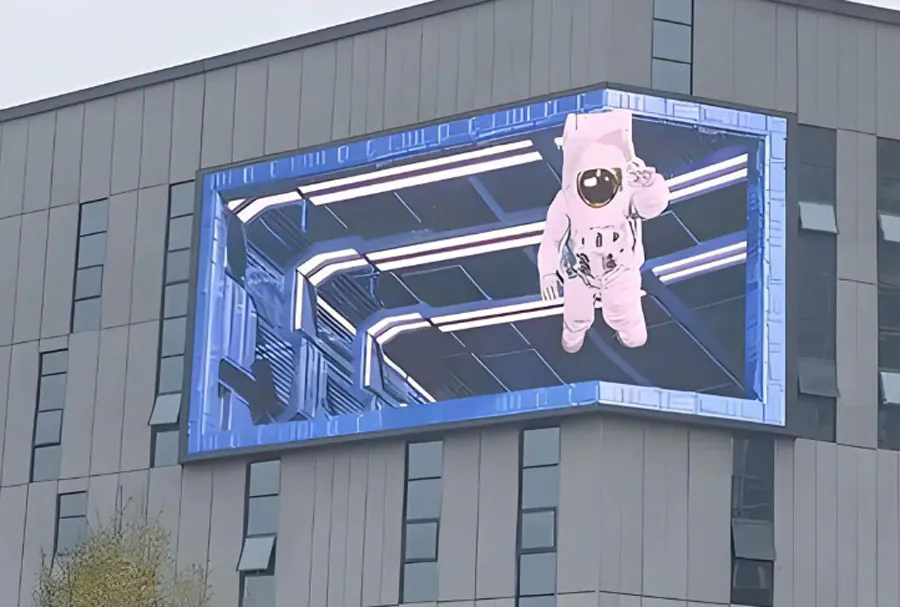
Four written answers separate real LED rental companies Toronto suppliers from brokers.
6. Insurance, Permits and Union Calls
Compliance is where cheap LED screen rental companies in Toronto become expensive problems, because none of it can be fixed on the morning of the event.
Insurance. Venues commonly require a certificate naming them as additional insured, with liability limits around two million dollars or more. The vendor’s policy covers their equipment and their crew; the event’s policy is a separate line. Confirm both before load-in.
Permits. Street, sidewalk, park and plaza placements need City of Toronto approval, and most applications take several weeks. Road occupancy and traffic control sit with Toronto Transportation Services. Temporary structures and elevated builds may need design by an Ontario professional engineer.
Fire and life safety. Toronto Fire Services reviews assemblies for egress and occupancy. Cable ramps, clear exits and an unobstructed emergency lane are conditions of approval, not preferences.
Union calls. Venues with collective agreements require IATSE Local 58 for rigging and sometimes for load-in. Minimum calls, overtime and meal penalties are real costs and belong in the labour schedule.
A vendor who can talk through all four without prompting has done this in Toronto before. One who treats them as your problem has told you something useful, just not what they intended.
7. Run a Shortlist in Two Weeks
A shortlist of LED screen rental companies in Toronto does not need a month. It needs a sequence.
Day 1–2. Write the one-page brief: event type, audience size, closest and farthest viewer, indoor or outdoor, load-in window, power, and the eight proposal sections you expect.
Day 3–5. Send it to four vendors and ask each for the six checks from section 2 in writing, with the fleet count and the insurance certificate.
Day 6–8. Eliminate anyone who cannot answer the fleet and crew questions. Two or three will remain.
Day 9–10. Take one site visit with the strongest vendor and one reference call with a client from a comparable venue.
Day 11–14. Normalise the proposals into the same eight rows, price the differences, and sign the one whose scope you can read.
The point of the process is not to find the cheapest quote. It is to find the vendor whose answer to “what happens if a module fails at 7 pm” you believe.

LED Rental Companies Toronto — FAQ
How many LED screen rental companies in Toronto should I contact?
Three or four. Fewer gives no comparison; more produces proposals with different scopes that are hard to normalise into one table.
Is a cheaper quote from a broker ever the right choice?
Sometimes, when the wall is simple, the venue is forgiving and you carry your own crew and spares. For a filmed or high-profile event it rarely is.
What proof of fleet ownership can I ask for?
A cabinet count with model and location, photographs of the inventory, and a serial-number list for the units being supplied.
Do I need my own event insurance?
Usually yes, in addition to the vendor’s policy. Venues often require both certificates, with specific limits and additional-insured wording.
How far ahead should a vendor be booked?
Weeks for a small indoor job, several months for outdoor season dates and major venues. Permits and crew availability set the real deadline.
Should the contract cap damage charges?
Yes. A module-level cap is reasonable; a full cabinet replacement invoice for one failed module is not. Agree the inspection process at strike in the same clause.
Conclusion
LED screen rental companies in Toronto worth signing answer the fleet, crew and spare questions without hesitating, and put the same eight lines in every proposal. Rating stars do not survive a load-in; a cabinet count and a named technician do.
For rates and cost structure, see LED screen rental prices in Toronto. For the wider buying decision, see LED screen rental Toronto.
Buyers comparing LED rental companies Toronto options should ask for the cabinet count, the spare ratio and the processor model in writing.