Rental LED Screens for Seattle | Factory Direct Supply

Rental LED screens Seattle producers book for a weekend and the cabinets a rental house buys to keep in its fleet are two different products with two different contracts. One is a service with a crew, a truck and a show date. The other is equipment you own, deploy on your own schedule and keep for years. Both are legitimate; they are specified and priced differently.
TW VISION is the factory behind the fleet, not a Seattle rental company. We manufacture rental-grade LED cabinets, hold standard stock in our Atlanta warehouse and arrange transport into the Puget Sound area. We do not rent screens locally and we do not run a Washington depot. This page is written for buyers who do rent: rental houses, AV production companies, church and corporate AV teams, and venues adding inventory.
What Seattle changes. A flat overcast sky lowers contrast instead of raising it, so a wall that is bright enough on paper can still read grey against the skyline, and calibrated nits matter more than the peak figure. The city also mixes venue types that rarely meet in one market — arena, historic theatre, convention hall and waterfront park — each with its own dock, rigging and permit rules. Add a wet season that runs most of the year, and the furniture that decides whether a fleet survives is sealed connectors, drip paths and acclimation routine rather than brightness alone.
It covers how the specification follows the venue, what Seattle buyers actually order, how factory supply compares with a supported rental, what local rental prices look like, how to vet a partner, what setup support must include, and how rain, glare, permits and load-in rules change the plan.
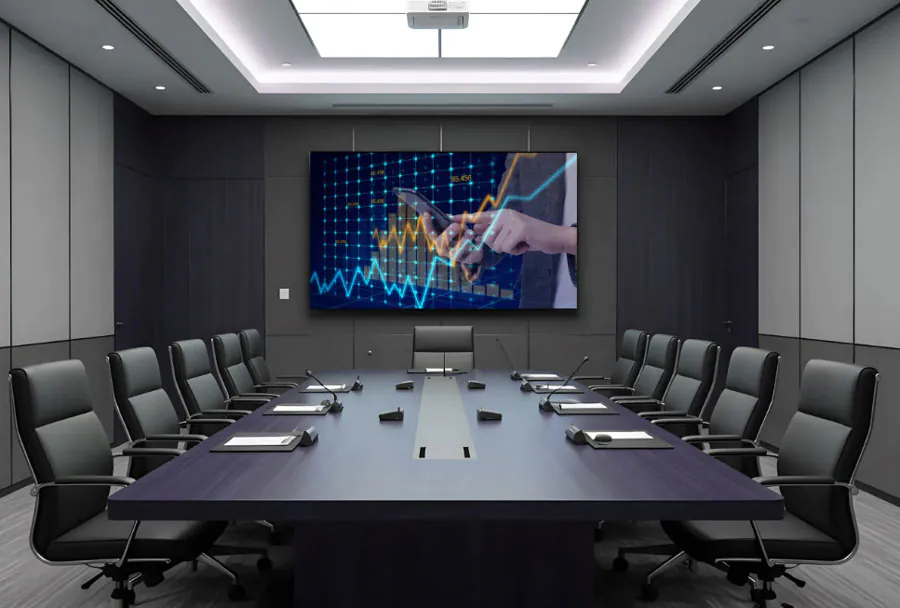
Table of Contents
- 1. Start With the Venue and the Viewing Distance
- 2. What Seattle Buyers Order From the Factory
- 3. Why the LP-H P1.86 Sells in Seattle
- 4. Compare Factory Supply With a Supported Rental
- 5. What Rental LED Screens Seattle Events Cost
- 6. How to Choose a Rental Company in Seattle
- 7. What Setup Support Should Cover
- 8. Rain, Wind and Condensation
- 9. Venue Access, Permits and Union Rules
- 10. Processing, Content and Acceptance Tests
- 11. Put Responsibility in the Contract
- 12. Delivery From Atlanta to Seattle
- 13. Ordering, Tax and Resale Paperwork
- FAQ
- Conclusion
1. Start With the Venue and the Viewing Distance
Screen size and pitch come from three numbers: the closest viewer, the content people must read, and the light on the wall. Seattle adds a fourth condition — the sky. A flat overcast afternoon reduces contrast instead of raising it, so a wall that looks bright on a datasheet can still read grey against a pale skyline.
Write a one-page brief and require every bidder to answer it: event type and audience size, nearest and farthest viewer, indoor or open air, orientation and the hours the face is in daylight, content mix, ground-supported or flown, load-in window, and where power sits. Ask too for screen width and height, native resolution, panel size and count, minimum viewing distance, processor and input resolution, installed weight, and a dimensioned drawing showing the wall against audience, stage and camera positions.
Pixel pitch is the centre-to-centre distance between LEDs in millimetres, and density scales with the square of pitch: (1,000 ÷ pitch)². P2.6 carries roughly 147,900 pixels per square metre, P3.9 about 65,700 and P4.8 about 43,400. One step finer is where most of the cost sits. A 16-foot-wide 16:9 wall is roughly 9 feet high, or 144 square feet of surface — the number to compare quotes on, because panel counts hide it.
For rental LED screens Seattle teams specify most often, the working split is P1.9–P2.6 where the front row is inside four metres, P2.9–P3.9 for ballrooms and mid-size stages, and P4.8–P6.7 once the nearest viewer passes 25 metres. Ask for calibrated operating brightness rather than peak: 800–1,500 nits indoors, 5,000 or more outdoors, and 6,000–8,000 where the face takes direct sun.
2. What Seattle Buyers Order From the Factory
Four groups cover most Puget Sound orders: fine-pitch indoor walls for corporate and healthcare spaces, standard rental cabinets for conference and trade show work, IP-rated outdoor cabinets, and folding posters for retail and lobbies.
Fine-pitch indoor cabinets
P1.953 and P2.604 suit boardrooms, broadcast studios and stages where the front row sits inside four metres. Seattle’s technology, biotech and professional-services offices in South Lake Union, Bellevue and Redmond ask for fine pitch because content is read close up, on camera, or in daylight-flooded rooms.
Standard rental cabinets
P2.976 and P3.91 in 500×500 mm and 500×1000 mm formats carry most of the work: general sessions, exhibition booths at the Seattle Convention Center, awards nights and hotel ballrooms, with front or rear service access and optional curved locks.
Outdoor cabinets
P3.91 and P4.81 with IP-rated sealing and brightness headroom. Waterfront wind, horizontal rain and long June daylight are the operating conditions, so enclosure design and drainage matter as much as nits.
Folding posters
The LP-H P1.86 has become the fastest-moving model outside the rental fleet — covered in the next section.
| Series | Stock | Pixel pitch | Cabinet | Typical Seattle use |
|---|---|---|---|---|
| PQ P2.6 | Atlanta stock | P2.6 | 500×500 / 500×1000 mm | Rental walls, corporate stages, ballrooms |
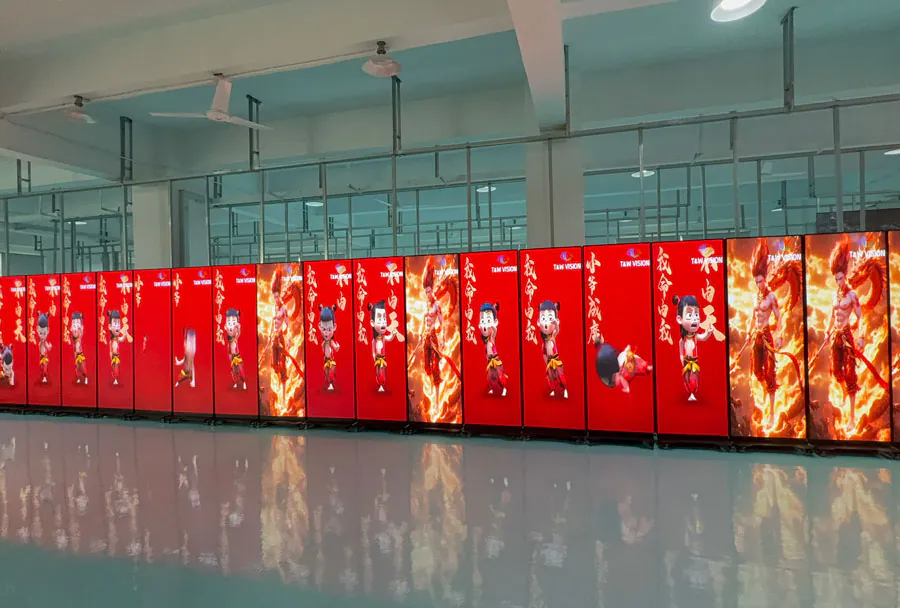
| LP-H | Atlanta stock | P1.86 | 640×1920 mm folding poster | Retail, hotel lobbies, showrooms, church foyers |
| IP-CT | Atlanta stock | P2.5 | 640×480 mm soft connection | Church walls, menu boards, fixed indoor installs |
| Other pitches (PN / PH / PI) | Factory order | P1.953 – P6.67 | 500×500 / 500×1000 mm | 15–20 days production plus freight |
Orders ship from a single production batch with matched spare modules, receiving cards, power supplies, processors, flight cases and configuration files.
A rental LED screens Seattle order placed two weeks out arrives, but without the slack a first build needs.
3. Why the LP-H P1.86 Sells in Seattle
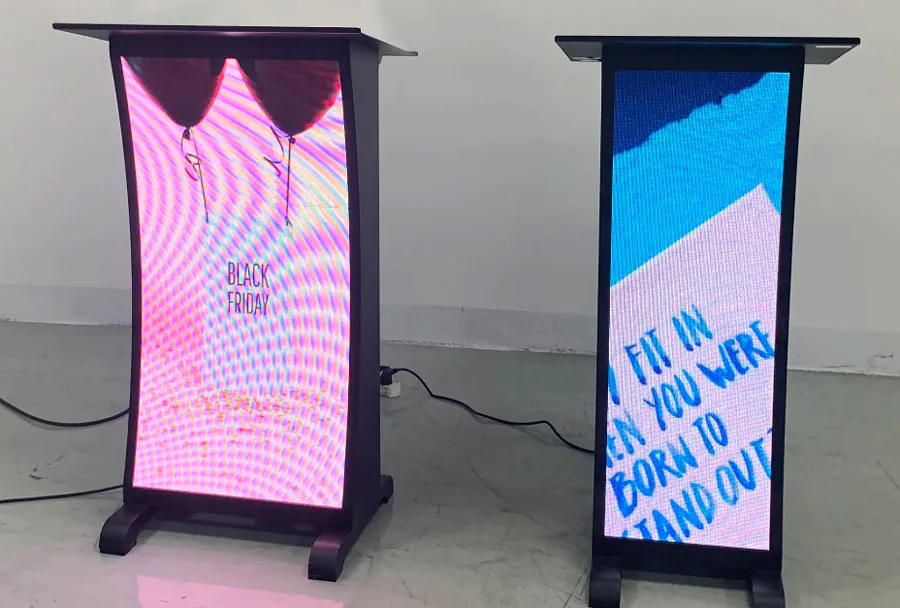
The LP-H series LED poster and banner is our strongest seller in this market, and the P1.86 version in particular. It fills a gap that rental cabinets cannot serve in volume.
It solves the one-screen, one-room problem. A cabinet wall needs a crew, truss and a build window. A 1.86 mm poster moves with two people, stands on a floor and runs before the doors open. For hotel lobbies, church foyers, dealership showrooms along Aurora and pop-up retail in South Lake Union, that is the difference between having a screen and not having one.
The pitch matches how close people stand. P1.86 is sharp at two to three metres, which is exactly where a customer reads a window display or a product plinth. Buyers who tried a P3 rental panel for the same job come back for the finer pitch once they compare the two at that distance.
It repeats. One lobby screen turns into four locations once content can be scheduled centrally, because installation needs no rigging and no crew.
It folds. The frame collapses for transport and storage, which matters in downtown venues where storage space is rented by the square foot.
Typical Puget Sound uses: retail windows, hotel and corporate lobbies, church welcome areas, clinic check-in walls, dealership showrooms and event registration backdrops. For these jobs the poster is cheaper to own and faster to deploy than a small rental wall.
4. Compare Factory Supply With a Supported Rental
Factory pricing and event-ready rental pricing describe different scopes. Compare total delivered responsibility, not equipment price.
| Quote element | Factory supply | Supported rental | What to check |
|---|---|---|---|
| Cabinets | Included | Included | Exact model and production batch |
| Structure | Usually separate | Often available | Engineering and wind rating |
| Processor | Optional | Usually included | Inputs, scaling, backup |
| Labor | Buyer arranged | Quoted locally | Crew hours and overtime |
| Spares | Purchased | Provider inventory | Quantity held on site |
| Support | Remote or limited | Event technician | Response terms |
A factory order suits a company with trained technicians, compatible rigging, dry storage and enough bookings to keep the fleet working. A supported rental suits a one-weekend show where the crew is the hard part.
Normalise every proposal. Convert each quote into the same scope: freight, drayage, lift equipment, power distribution, structural documentation, setup, rehearsal, operator hours, standby technicians, teardown and tax. A common Seattle pattern is a low equipment quote that excludes the processor and ground support; add both and the gap closes.
Ask for a line-item scope marked included, excluded or supplied by another contractor, and name who owns signal testing and a mid-show component failure. That single line prevents most disputes.
Behind the factory claim. An 8,000㎡ facility with 8 independent SMT lines keeps placement, PCB assembly, module production and calibration in-house. A 500㎡ module aging area screens weak modules, and roughly 2,000㎡ of cabinet aging runs each batch for 24 hours at operating conditions. Modules are glued at the edges and cabinets screwed with torque control. For a Puget Sound fleet the details that decide the second season are the sealed connectors, gaskets and drainage paths on every outdoor cabinet, because a wall here is judged on water ingress long before anyone mentions its nits figure.
5. What Rental LED Screens Seattle Events Cost
Seattle rates are set by screen area, pitch, indoor or outdoor rating, duration, crew hours and how much of the production the vendor carries. The ranges below are indicative market levels for a locally supplied rental, useful for benchmarking a bid.
| Use case | Typical size | Pitch | Indicative rate |
|---|---|---|---|
| Trade show booth, indoor | 1.8 × 2.4 m | P1.9 – P2.9 | $700–$1,500 per day; $2,000–$6,000 per week |
| Retail or lobby display | 1.2 × 1.8 m | P2.5 – P3.9 | $400–$900 per day; $1,200–$3,000 per week |
| Corporate conference wall | 4.5 × 2.4 m | P2.5 – P4 | $2,000–$6,000 per day; $6,000–$18,000 per week |
| Outdoor stage screen | 6 × 3.6 m | P6 – P10 | $4,000–$10,000 per day; $8,000–$30,000 per week |
| Rooftop or patio, seasonal | 2.4 × 3.6 m | P4 – P6 | $1,500–$4,000 per month |
Four models are common: per-event, weekly for multi-day activations, monthly for seasonal campaigns, and full-service packages bundling transport, install, technicians and content ingestion. À la carte quotes put the screen first and add every service as a line item, which is where budgets slip.
A cross-check: a 20–30 m² P3.9 indoor wall with crew, calibration and a day of technician cover typically lands between $3,000 and $10,000 here. Materially less means labor, power distribution or spares are missing.
For rental LED screens Seattle buyers purchase to own, the arithmetic is a per-square-metre cabinet price, freight and your own crew hours. Count bookings per year: out most weekends, ownership wins; out twice, it rarely does. Recurring shows can also be quoted on a seasonal or multi-event rate, so ask for that card before committing to a series.
6. How to Choose a Rental Company in Seattle
If crew, structure and show-day support are part of what you are buying, the company matters as much as the panel. Six checks separate a production company from a broker. Seattle also requires vendors active at an event to hold a city business licence, so ask for it alongside the insurance certificate.
- Specifications in writing. Pitch, calibrated nits, refresh rate, IP rating, exact cabinet and processor model.
- Local inventory. How many identical cabinets are in Puget Sound today, not “we can source them”.
- Crew credentials. Rigging certification, stamped engineering for flown builds, familiarity with house rules at the venue.
- Redundancy. Spare modules, receiving cards, power supplies and a backup processor on site.
- Insurance and compliance. General liability, workers’ compensation, equipment cover, certificates issued to the venue.
- Contract clarity. Travel, overtime thresholds, weekend premiums, damage liability, cancellation.
Ask for two references from comparable Seattle rooms and look at the photographs, not the testimonials. A company that has loaded into McCaw Hall or worked a Climate Pledge Arena build knows the dock booking, the freight elevator limits and which halls require union labor — questions a broker cannot answer.
Check the calendar as well. June to September is festival and outdoor season; September to November is conference season; both compress inventory. A date confirmed late is either unavailable or carrying surge pricing.
Ask each bidder for build times by event type rather than one number: roughly 2–6 hours for a wedding wall, 3–6 hours for a booth, 6–10 hours for a corporate stage and 10–24 hours for an outdoor festival with truss and safety checks. A vendor who cannot break that down has not built many.
7. What Setup Support Should Cover
“Setup included” can mean a van and two technicians, or a survey, rigging plan, calibration and an operator for the whole show. For rental LED screens Seattle events rely on, that gap is a crew standing idle at 6 pm. Write the scope before comparing prices.
- Site survey. Rigging points and load limits, power capacity and distance, access paths, ceiling height, sightlines, and space to stage spare modules.
- Delivery check. Padded cases, confirmed window, and a cabinet count signed off before the truck leaves.
- Rigging. Certified riggers for truss, scaffold or ground-stacked builds, with facility load limits respected.
- Power. Distribution, correct cable runs, and a UPS or generator where house supply is marginal.
- Calibration. Colour, white balance, uniformity correction and brightness matching across the wall.
- Operators. Named hours for playback, input switching and live feeds, real-time monitoring on site, plus one point of contact who can make decisions.
- Spares. Modules, power supplies and a backup processor on site, not at the warehouse.
- Strike and debrief. Safe load-out, damage check, and a short post-show review.
A workable sequence runs needs assessment, proposal with drawings or a mock-up, permits and load-in scheduling, install and calibration, live support, then strike and debrief. Curved or custom shapes should come with a 3D mock-up for sign-off before anything is fabricated. For multi-day events, ask whether a technician stays overnight for maintenance and whether that is included or billed.
Know the four failures that actually happen: camera flicker, uneven brightness after a power drop, dead pixels, and signal loss. Each has a one-line remedy — refresh and shutter sync, recalibration, a module swap, a redundant signal path — and a vendor who cannot name them has not run many shows.
8. Rain, Wind and Condensation
Seattle records 39.34 inches of precipitation across 156.2 days with measurable rain at Sea-Tac, and November averages 6.31 inches against 0.60 in July. Most of it is drizzle rather than downpour, which changes the failure mode: water rarely floods a cabinet, but humidity sits inside road cases for weeks.
Transport condensation. A cabinet loaded in a cold, damp truck and opened in a warm, occupied room can form moisture on cold modules and connectors. Acclimatise crates in the receiving space for roughly 24 hours before powering anything, keep them closed while they warm, and read humidity indicator cards where fitted. Our guide to condensation, storage and acclimation covers the inspection sequence in detail.
Rain on the face. IP65 handles it. Sealed connectors, drip loops and a drainage path behind the wall matter more than the rating itself. Cabinets that stand in pooled water at the base fail regardless of IP.
Wind. Ask for the maximum operating wind speed, ballast or anchoring detail, cable routing, rain covers for processing gear, who monitors conditions, who may call a shutdown, and the criteria for removing equipment. A structural engineer should set that limit for the site, not a rule borrowed from another show.
Light. June evenings stay bright past 9 pm, so outdoor brightness is tested later than most crews expect. December afternoons go dark before 4:30 pm, which is when screen brightness becomes light spill and neighbours complain. Dimming schedules belong in the operating plan.
9. Venue Access, Permits and Union Rules
Seattle venues differ more than their seating charts suggest, and the differences decide crew size and build hours.
Arena and stadium builds. Climate Pledge Arena, Lumen Field and T-Mobile Park run on house rigging plots, load limits and union crews. A hung wall follows the venue’s engineering approval, not the vendor’s preference.
Historic theatres. The Paramount and Moore have narrow loading doors, low grid heights and protected interiors. Rigging needs to be minimally invasive, and build windows are short.
Convention and waterfront sites. The Seattle Convention Center’s Summit building has modern docks and freight lifts but books them tightly. Pier 62, Gas Works Park and Marymoor Park are ground-supported sites with wind and ballast questions, and no place to hang anything.
Hotels and offices. Bellevue, Kirkland and downtown properties often have one service elevator, a low ballroom ceiling and a strict 10 pm load-out.
Permits. Seattle special-event applications are due at least 90 days out; inside 60 days they attract late fees, and inside 45 they may be refused. Structures over 8 feet may need permits and a Washington-licensed engineer’s stamp, generators over 5 kW need an electrical permit, and Seattle Fire requires a continuous 20-foot emergency access lane that screens, ballast, generators and cable ramps cannot block. Cable ramps, grounding and clear egress paths belong in the site plan.
Noise and light. The city’s noise code sets lower limits overnight at residential property lines, which affects outdoor programming and screen brightness after dark.
Getting there. Steep downtown grades, tunnel height limits and ferry schedules for Bainbridge, Bremerton and Vashon events all belong in the transport plan, not the morning-of conversation.
10. Processing, Content and Acceptance Tests
The wall is only as good as the signal chain behind it, and the chain is where cheap quotes cut corners.
Refresh rate. Specify 3,840 Hz or higher for camera work and test with the actual camera shutter. Broadcast and live-stream productions should also confirm genlock so the wall and cameras share timing.
Native mapping. Ask for the wall’s native pixel dimensions, not “HD capable”. A 4K source is 4,096 × 2,160 pixels under the DCI specification; if the wall maps to fewer pixels, content is being scaled and small text goes first.
Two content versions. Daylight and darkness are different canvases in Seattle. Prepare a day grade with higher contrast and a night grade with lower luminance rather than one file pushed to its limits.
Playback. Confirm inputs, codecs, frame rates and whether a backup playback device is supplied. Deliver masters at native resolution, progressive scan, with safe zones for text and a cue sheet for the operator. Where the show uses several surfaces, confirm multi-zone playback; supply high-bit-depth masters so gradients do not band.
Acceptance test. Before doors: full white and grey fields for uniformity, primary colours for dead pixels, a moving test pattern for tearing, every input source, audio sync on live camera, and a ten-minute loop at show brightness. Sign the result.
Accessibility. Reserve space in the canvas for captions, keep text large and high-contrast, and hold each slide long enough to read. If an interpreter appears on screen, confirm framing and position in rehearsal; requirements vary by venue and audience.
Content deadlines are part of the specification. Most vendors want master files 48–72 hours before load-in so they can be tested and re-encoded.
11. Put Responsibility in the Contract
A rental agreement should read like a scope of work, not a price list. Seven clauses carry most of the risk.
- Equipment schedule. Cabinet model, pitch, quantity, processor, structure and spares, with part numbers and sizes.
- Responsibilities. Who delivers, builds, tests, operates and strikes, and the time allowed for each.
- Payment. Deposit, balance date, and what happens to the deposit on reschedule.
- Weather and cancellation. The trigger for a weather call, notice periods, and what is refundable.
- Liability. Damage caps, a certificate of insurance carrying the venue’s additional-insured wording, cover for transported and rented equipment, vehicles and workers, and the indemnity terms the venue requires.
- Labor rules. Union calls, minimum hours, overtime and meal penalties, and which party pays each.
- Support. Operator hours, response time and the show-day escalation contact.
Two points are worth negotiating. Ask for a damage cap so one broken module does not trigger a cabinet replacement invoice, and ask for a trial call on larger builds so the wall is tested in the room before the client sees it.
Keep the venue’s rules attached. Load-in windows, fire marshal checks and rigging approvals belong to the building; a contract that ignores them moves the delay to the morning of the show.
12. Delivery From Atlanta to Seattle
You do not have to arrange freight yourself. We quote and book transport from our Atlanta warehouse to your Seattle address or venue, so the order arrives on a confirmed appointment rather than an open pickup notice.
Transit. Stock orders typically reach the Puget Sound area in four to six business days by LTL once loaded. Expedited and partial-truck options are quoted separately when a show date is tight.
Options. Standard LTL to a commercial address with a dock; liftgate where there is no dock or forklift; inside delivery to a ground-floor room on request; delivery to a venue inside an agreed window. Buyers with their own truck or freight account can collect.
Downtown and waterfront access. Steep grades, narrow service lanes, tunnel height limits and ferry bookings all affect the last mile. Give us the delivery address at ordering and the truck size and window can be planned around it instead of discovered on the day.
Unloading. A pallet of 500×1000 mm cabinets is not a two-person lift. Without a dock, specify liftgate and confirm who moves pallets from the tailgate to the room.
Event dates. State the required arrival date at quotation. A wall that lands the afternoon before load-in is a wall nobody can test, and acclimation adds a day in a damp season.
13. Ordering, Tax and Resale Paperwork
Quotation. Send cabinet size, pitch, quantity, indoor or outdoor use, and whether curved locks, flight cases or transport are needed. The quote is per square metre with configuration and delivery scope stated, so it compares line by line.
Resale documentation. Rental companies and AV resellers buying inventory for resale can normally supply a Washington reseller permit so qualifying purchases are not taxed at retail rates. Send it with the purchase order and the invoice is correct the first time.
Vendor setup. W-9 and onboarding documents are available for buyers who need to be registered in a purchasing system before the first order.
Payment and terms. Standard orders are prepaid or paid on shipment; repeat buyers can discuss terms once an order history exists.
Seattle structural and electrical requirements are published by SDCI. See www.seattle.gov for the current rules.
FAQ
Do you rent LED screens in Seattle?
No. We manufacture and sell rental-grade cabinets. For a single event, a Seattle rental company is the right call; this page covers buying cabinets to build or extend a fleet.
How early should we book?
Earlier than feels necessary. Summer festival season and the autumn conference window both tighten inventory, and complex venues need time for permits and a site survey.
Can a rental LED screen work in a small venue?
Yes. Small rooms need a smaller wall and a finer pitch, not a bigger one. A 2–3 m wide P1.9–P2.6 wall is often the right answer for a breakout room or a compact booth.
Is LED suitable for outdoor events in the rain?
IP-rated cabinets are built for it, provided connectors are sealed, drainage is planned and the ballast plan accounts for wind. Acclimation after transport matters more here than in dry markets.
How fast can rental LED screens Seattle orders arrive?
Stock lines ship from Atlanta and usually reach Puget Sound in four to six business days by LTL. Factory-order pitches take longer, so confirm lead time at quotation.
Can we plug our own laptop into the wall?
Usually, through the processor. Confirm connector type, resolution, frame rate, HDCP handling and adapter compatibility, and test with the exact device before show day — a locked-down corporate laptop behaves differently from a playback machine.
Do you charge Washington sales tax?
Qualifying purchases for resale are normally handled with a valid reseller permit supplied with the order. Retail purchases are taxed at the applicable rate.
Conclusion
Seattle rewards the buyer who plans around the venue rather than the catalogue: a wall matched to the closest seat, a build that respects a tight dock window, and weather and acclimation handled before the truck arrives.
Start with the rental LED screen range to confirm cabinet format and pitch, check what is in stock at our Atlanta warehouse before planning a fleet expansion, or read the Seattle procurement guide, the custom display guide and the event display guide for project-specific specifications.