Outdoor LED Screens For Temporary Installations: How It Works, Specs and What to Check

Temporary outdoor LED screens fail for reasons that never appear on a datasheet: a ballast that settles into wet grass, a connector packed with grit after twenty load-ins, or a processor that locks up two hours into a show. Pixel pitch and brightness matter, but they do not prove the system survives a tour.
This guide sets out a review sequence for short-term work: site survey, image testing, weather and transport inspection, structure, assembly, power and final commissioning. Each section ends with one action you can complete before the event opens. We build the rental cabinets behind our outdoor LED display screen range; rigging, power and site safety stay with the event contractor.
Table of Contents
- 1. Define the Site and Viewing Requirements
- 2. Check Brightness, Contrast and Image Performance
- 3. Temporary Outdoor LED Screens: Weather and Transport Checks
- 4. Site Survey and Structure Check
- 5. Assembly and Alignment Sequence
- 6. Power, Signal and Control Wiring
- 7. Commissioning and Color Calibration
- 8. Outdoor Deployment Notes
- 9. Frequently Asked Questions
- 10. Conclusion
Define the Site and Viewing Requirements
Judging a temporary screen against a written site brief beats comparing brochures, because the same cabinet can suit a shaded plaza and fail on an exposed fairground. Record the conditions before anyone quotes a price.
Capture the closest and farthest viewing distances, whether the audience stands head-on or views from the side, and whether the screen runs in daylight, at night or both. Note the content type, the intended size and aspect ratio, the installation duration, how often the kit travels, and the teardown deadline.
Pitch follows from those answers. A fine pitch improves close-up detail while adding cost, weight, power demand and replacement complexity, which matters more when the screen moves every week.
Then send every supplier the same brief: pitch and cabinet dimensions, brightness test method, refresh rate, cabinet weight and connection type, processing options, operating limits, IP rating and warranty terms for temporary outdoor use.
Ingress protection under IEC 60529 separates solids and liquids into two digits, and it says nothing about wind, impact, condensation or structural stability. Local wind and loading requirements come from the venue, its engineer or the authority having jurisdiction, not from a forecast such as the National Weather Service.
How to apply this: write a one-page site brief with these fields and require every supplier to complete the same version.
Check Brightness, Contrast and Image Performance
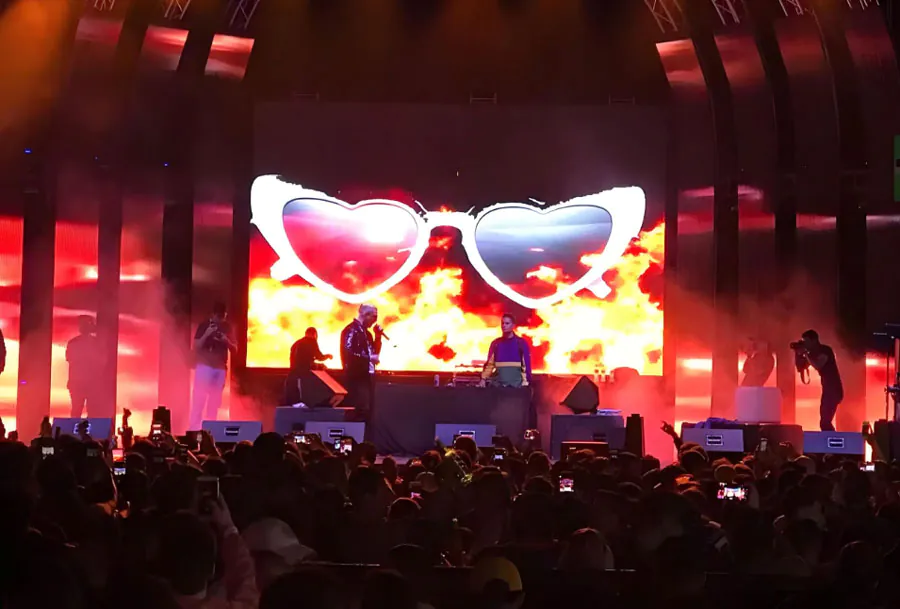
Judge temporary outdoor LED screens at the viewing position, not at the cabinet face. Direct sun, reflective glass, stage lighting and camera exposure all change the result, and a number measured in a dark hall predicts none of it.
Request the brightness unit and test condition, day and night presets, automatic or manual control, color-temperature settings, viewing-angle data, calibration records for replacement modules, and the processor and receiving-card models. A high setting that looks sharp in daylight can wash out at night and glare into performers, drivers or nearby homes.
Test with event content rather than a demo reel. Include white and black fields, gray-scale steps, moving text, fast sports or concert footage, skin tones, fine lines and sponsor marks, played from the actual playback system at the planned resolution and frame rate.
Scaling faults usually appear at that last step. A screen that looks clean from a high-quality file can show soft edges or banding once a laptop, camera switcher or venue processor feeds it.
How to apply this: book a daylight and a night demonstration with your own content, and attach photos, video and notes to the quotation.
Temporary Outdoor LED Screens: Weather and Transport Checks
Weather protection belongs to the whole assembly. Temporary outdoor LED screens are judged on panels, power boxes, data connections, seams, rear covers, drainage and cable routes together, because water finds the weakest interface rather than the best cabinet.
An IP65 cabinet resists dust and low-pressure water jets under defined test conditions, yet it does not certify resistance to every storm, submerged cable, pressure washer or badly seated connector. Ask for front and rear ratings, test documents, approved glands, drainage and condensation provisions, operating limits, and rules about stacking or covering vents.
Transport damage is the failure mode unique to temporary work. Inspect corners, locks, handles, module masks, power connectors, data sockets and flight cases before and after each load, then compare the two sets of photos.
Readiness differs from resistance. Resistance is designed and tested; readiness covers site procedure, monitoring, covers, drainage and the decision to power down. A screen that passed a rain test can still fail on site if nobody owns that decision.
How to apply this: photograph every connector, seal, cabinet edge and cable entry at load-in, then repeat the shots after teardown.
Site Survey and Structure Check
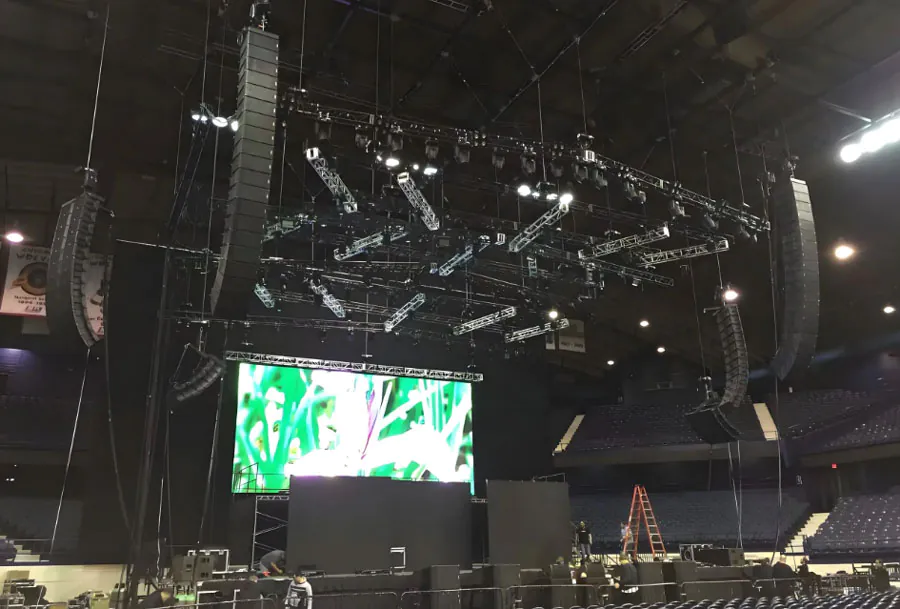
Treat temporary outdoor LED screens as temporary structures with electrical and crowd-safety risk, not as audiovisual accessories. The survey should produce documents, not reassurances.
Request cabinet arrangement and total area, the support frame or ground-stack layout, ballast or anchor details, maximum permitted wind, base dimensions, ground requirements, cable routing and the assembly sequence with inspection points.
A heavier base is not automatically safer. Required support depends on screen size, center of gravity, wind exposure, surface condition, local rules and the manufacturer’s approved configuration, so a generic ballast figure from another site proves little.
Check the ground as carefully as the frame. Grass softens after rain, buried services appear where drawings show none, and drainage can undermine a base overnight. Keep spectators away from rear access, ballast, cable ramps and service zones, and use barriers where people might climb or lean.
Fall protection is a working-at-height matter. OSHA 29 CFR 1926.501 requires protection for employees on a walking-working surface with an unprotected edge 6 feet (1.8 m) or more above a lower level, and event crews may face additional local rules.
How to apply this: obtain the supplier’s approved structural layout and have the venue or engineer confirm it before the first cabinet is lifted.
Assembly and Alignment Sequence
Temporary outdoor LED screens are usually built in a fixed order, and skipping a step shows up later as a seam, a strained connector or a cabinet that will not release. Agree the sequence before load-in.
Start from a marked datum line, level the base or truss, and build outward from the first cabinet rather than filling a wall in random order. Verify that quick locks engage fully and that every corner aligns before adding the next row, because correcting a bowed first row means rebuilding the wall.
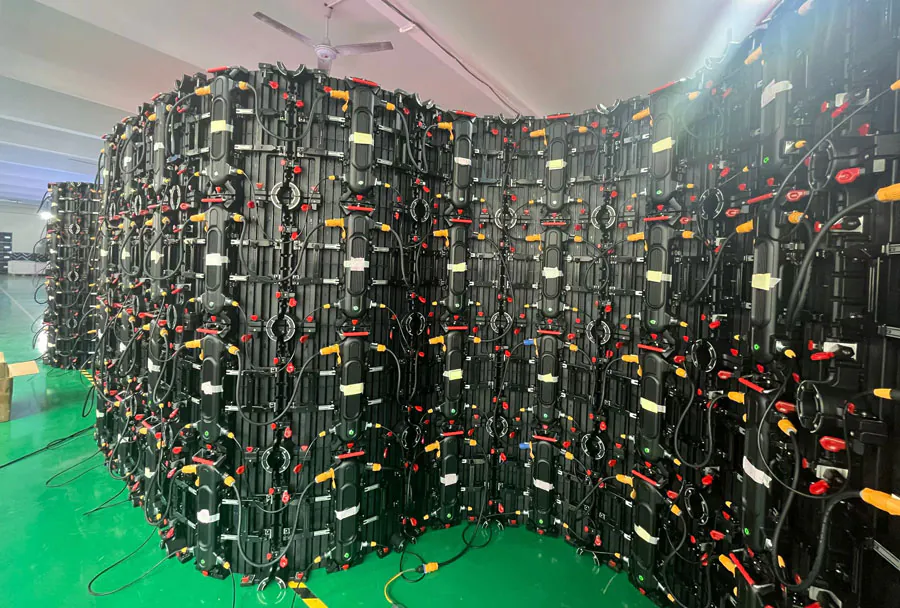
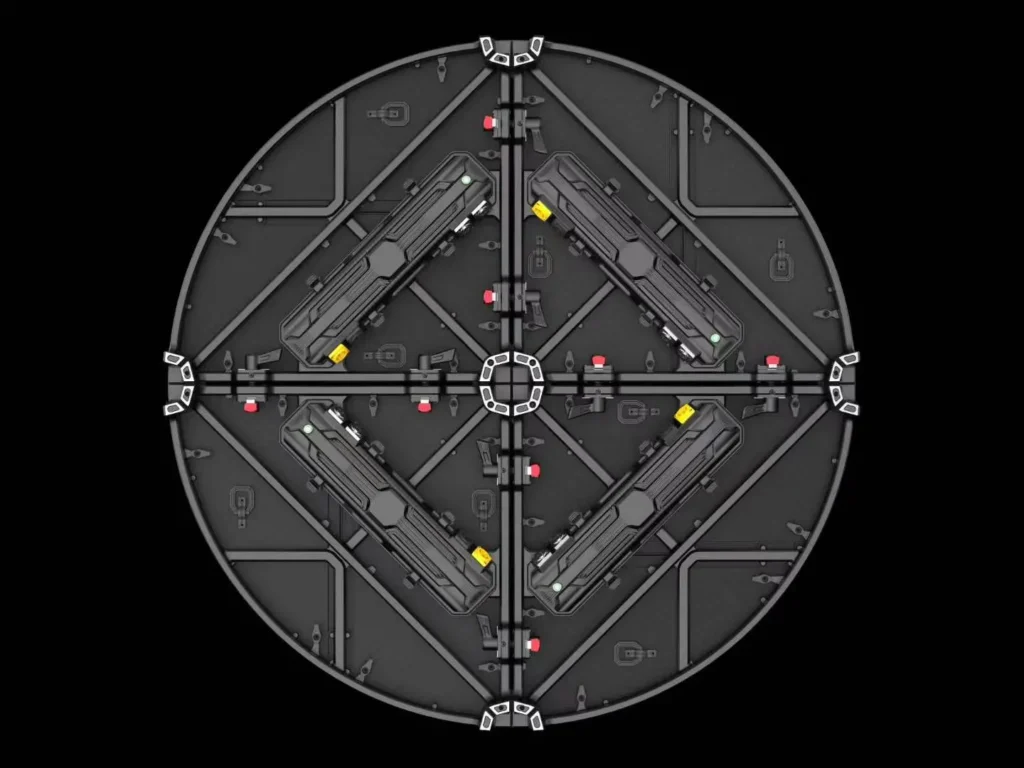
Watch the rear face as closely as the front. Cables should run in the designed channels, service loops should not pinch at seams, and no connector should carry the weight of a cable run. Curved and angled configurations need their own keys and spacing, and mixing them with flat cabinets creates gaps that no calibration can hide.
A screen that aligns cold can still shift once it warms up, so check the wall again after thirty minutes of full-white running.
How to apply this: photograph the first row and the first completed column, then require the same sequence at every load-in.
Power, Signal and Control Wiring
Temporary outdoor LED screens are ready only when power, signal and control have been tested together. Confirm voltage and frequency, maximum and typical current draw, circuit allocation, connector types, generator capacity, grounding, cable lengths and the safe shutdown procedure.
A qualified electrician should review the temporary distribution. Connecting to whatever outlet is nearby, without checking the circuit, earthing, weather protection and venue rules, is how a show loses power mid-set.
Test the full signal path from playback computer through processor, switcher or scaler, fiber or copper link, receiving cards and control software, and run it long enough to expose intermittent faults. Thermal issues, fan noise, dead pixels and processor lockups usually appear after the first hour rather than the first minute.
Save the working configuration: screen map, cabinet layout, processor project, calibration files and a spare copy on a second drive. A rebuild on site is far faster with those files than with memory.
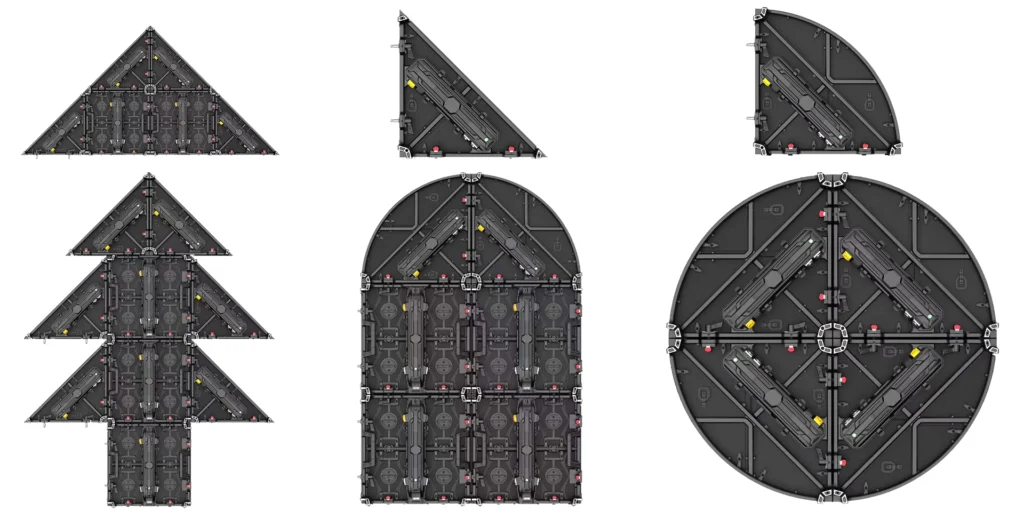
Rental cabinets built for repeat assembly use locking power and data connectors rated for many mating cycles. Confirm that rating with the supplier, because a connector designed for a fixed install will not survive a season of load-ins. Our PI series rental cabinet uses quick-lock frames and cycle-rated connectors for exactly this reason.
How to apply this: run a soak test of at least an hour with the real source, then archive the configuration files.
Commissioning and Color Calibration
Commissioning turns a lit screen into an accepted system. Outdoor LED screens for events should be signed off against written criteria, with the operator, electrician, supplier, venue representative and safety lead present.
| Check | What it tells you | Action to take |
|---|---|---|
| Pixel mapping | Content reaches the right cabinets | Run numbered patterns |
| Brightness presets | Day and night modes both work | Save approved settings |
| Power load | Circuits stay within the plan | Record measured readings |
| Weather response | Shutdown rules are clear | Brief the operator |
| Spare parts | Faults can be fixed quickly | Confirm modules and tools |
| Teardown record | Damage is identified early | Photograph each cabinet |
Color calibration belongs in the same session. Mixed batches, replacement modules and rented-in cabinets often differ in white point, and a slight tint becomes an obvious patch on a wide wall. Run the calibration file, then check uniformity across the wall at your viewing distance rather than from two feet away.
Record serial numbers, firmware versions and the approved settings. If a cabinet is swapped during the event, the record shows what to restore and which module batch to match.
How to apply this: attach the completed table and calibration files to the acceptance document before the audience arrives.
Outdoor Deployment Notes
Weather decisions need a named owner. Stop work when wind, lightning, flooding or unstable ground exceeds the approved plan, and make sure the shutdown procedure is written down and rehearsed rather than improvised during a storm.
Keep a fallback ready. A backup source does not help when the screen, power distribution or processor fails, so plan an independent channel such as a secondary display, projection, printed signage or a clear announcement process, and test it before opening.
Near salt water, temporary exposure still matters. Salt air attacks connectors and fasteners quickly, so confirm materials, plan a rinse where appropriate, and inspect after the event rather than before the next one.
Finish with a teardown checklist. Label cabinets, coil cables to the designed radius and record damage while the site is still lit, because an inspection of closed crates a week later rarely settles who pays.
How to apply this: name the safety lead, the shutdown trigger and the fallback owner in the event plan.
Frequently Asked Questions
How early should I inspect a rental LED screen?
Inspect the proposed system before signing the rental agreement, then repeat the inspection when the equipment arrives. Rental companies can substitute cabinets after booking, so verify the actual equipment, serial numbers, accessories and approved configuration files rather than the original quotation alone.
What should I do if rain begins during the event?
Follow the supplier’s written operating limits and the venue’s emergency plan instead of improvising with plastic sheets, which can block ventilation or trap moisture. If lightning, flooding or water entering electrical equipment is present, notify the responsible lead and use the approved shutdown procedure.
Is an outdoor LED screen suitable near saltwater?
It can suit a short event, but salt air raises corrosion risk and usually needs extra inspection and cleaning. Ask about connector materials, exposed fasteners, rinsing instructions, post-event checks and whether the warranty covers coastal exposure; a high IP rating alone does not guarantee corrosion resistance.
Can a temporary LED screen stand on a grass field?
It can, provided the ground is assessed first. Account for soft soil after rain, buried utilities, drainage, vehicle access, ballast settlement and pedestrian movement, then obtain venue approval and confirm mats, anchoring and cable protection before delivery.
What is the best fallback if the LED wall fails?
Prepare an independent way to communicate essential information: a secondary display, projection, printed signage or an announcement process. Test it before opening and assign one person to activate it without waiting for supplier approval.
Do rental cabinets need different connectors from fixed ones?
Yes. Repeated mating wears locking power and data connectors, so rental designs use parts rated for many cycles and protect them in transit. Check connector condition at every load-in, not only at the first.
Conclusion
Evaluate temporary outdoor LED screens as a complete installation. Define the site and content, test the image in daylight and at night, inspect weather protection and transport wear, then clear structure, assembly, power and calibration against written criteria.
Document everything. Serial numbers, photographs, settings and sign-offs turn a stressful load-in into a repeatable process, and they decide who pays when something fails.
Related Articles
High-brightness outdoor LED display energy-saving solutions
Outdoor LED displays for smart city applications
Outdoor waterproof LED display: how to choose an all-weather LED screen