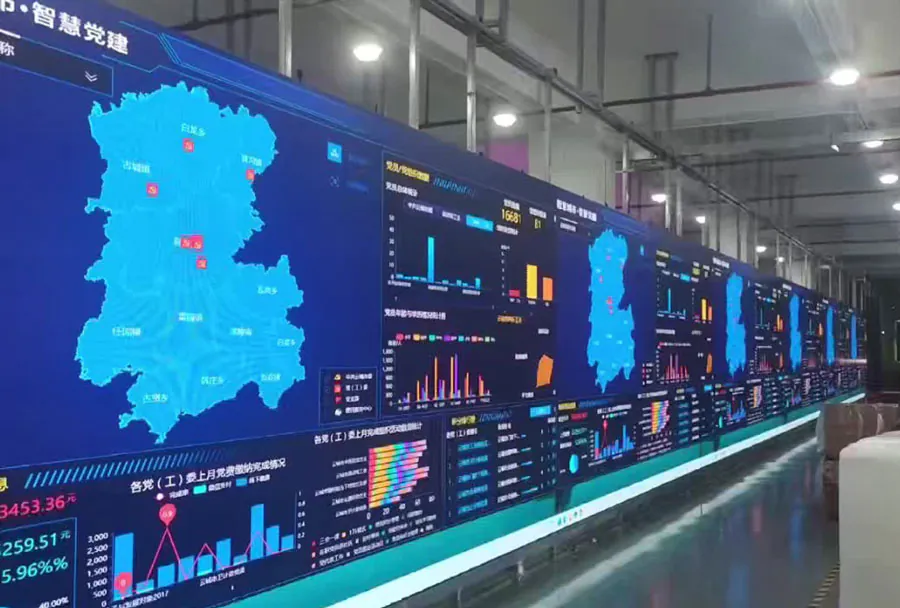
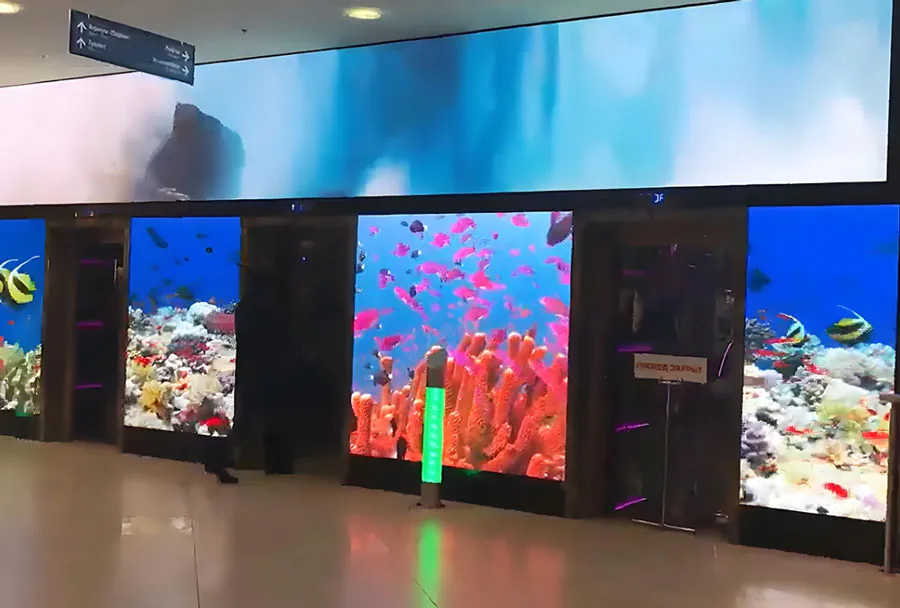
Outside LED Billboard Screen: Structure, Specs and Buying Guide


To specify an outside LED billboard screen, start with the structure and the street, not the catalogue. A roadside cabinet carries wind load, rain, vibration and heat for years, and every one of those forces passes through the steel, the fixings and the seals. This guide covers the site survey, wind and seismic design, corrosion protection, cabinet sealing, grounding, service access, commissioning and handover. It also marks where the display manufacturer’s scope ends and where the local engineer and contractor take over.
The advice applies to fixed roadside and billboard installations. Rental trailers and temporary stages follow different rules, because they move and re-rig instead of standing in one weather path for a decade.
Table of Contents
- 1. Why an Outside LED Billboard Screen Needs Engineering
- 2. Site Survey Inputs for an Outside LED Billboard Screen
- 3. Pitch, Brightness and Image Consistency
- 4. Wind Load, Steel and Fixing Design
- 5. Sealing, Drainage and Thermal Load
- 6. Grounding, Surge and Power Quality
- 7. Service Access and Remote Monitoring
- 8. Commissioning, Handover and Compliance
- 9. Cost, Uptime and ROI
- 10. Outdoor Deployment Notes
- 11. FAQ
- 12. Conclusion
Why an Outside LED Billboard Screen Needs Engineering
An outside LED billboard screen is a sail with electronics inside. Wind pushes on the face, the cabinet transfers that load into brackets, and the brackets pass it into steel and concrete. Rain attacks every joint, traffic adds vibration and the sun bakes the driver bay. A design that ignores any one of those paths fails early, usually at the cheapest component.
The failure pattern is predictable. Water reaches a connector, corrosion starts at a fastener, a loose bracket lets the mask rattle, or a hot cabinet shortens driver life. None of these problems appears on a specification sheet, and none is fixed by a brighter panel.
Water damage is the most common entry point, yet the first symptom often appears as a driver fault. A corroded connector raises resistance, the driver compensates, and the emitter runs hot until it fails. Tracing that chain back to the seal saves a second repair and explains why weatherproofing belongs in the structure discussion.
Scope clarity prevents most disputes. The display manufacturer supplies cabinet weight, dimensions, fixing points and load data. A licensed structural engineer designs the support and foundation for local wind and seismic conditions. A contractor handles lifting, fixing and site electrical work. Keep those three roles separate in the contract.
A digital face also changes the commercial model: timed slots replace a single poster, updates arrive remotely and playback logs support billing.
Site Survey Inputs for an Outside LED Billboard Screen
Survey the site before anyone draws a cabinet. The data below decides the structure, the pitch and the service plan, and a missed item becomes a change order later.
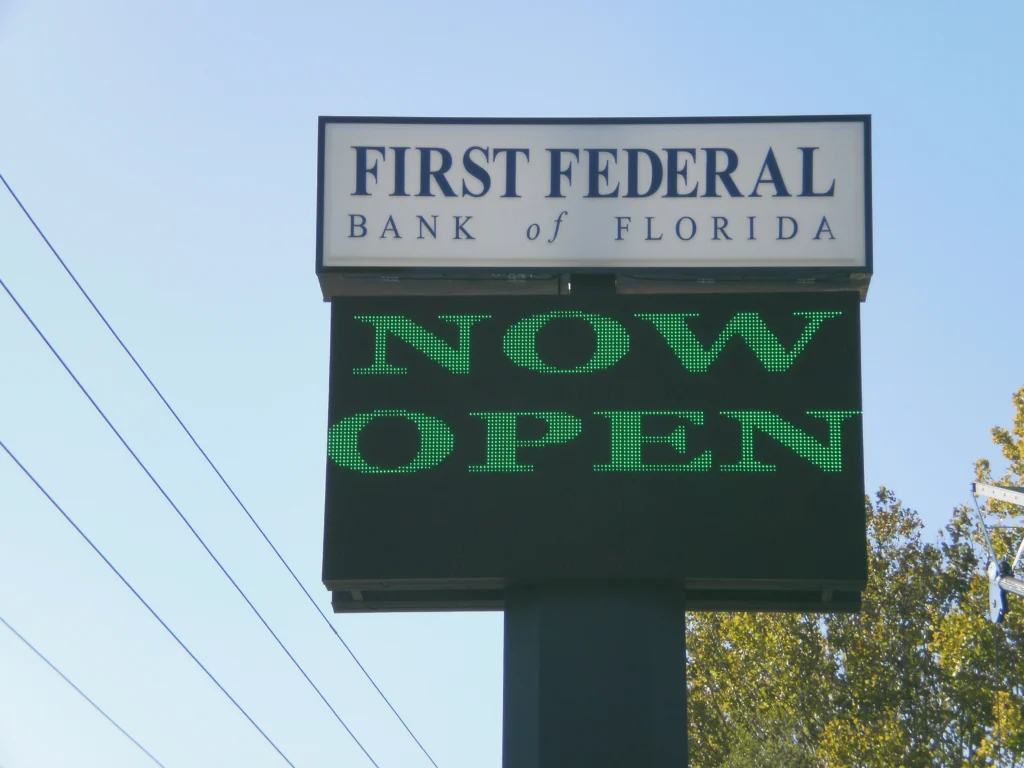
Record traffic speed, lane count and sight distance, because they set the viewing time and the pixel pitch. Map the sun path and nearby reflective glass, since glare decides brightness settings and mounting angle. Note prevailing wind direction, coastal salt exposure and flood risk. Confirm the power capacity, the network route and the space for a lift or ladder.
Ask who owns the structure, who signs the permit and who inspects the electrical work. On a leased site, add the landlord’s load limit and access rules. These answers belong in the tender, not in a phone call after the steel arrives.
Check the ground as carefully as the view. Soil type, water table and buried services decide whether a monopole foundation is practical, while a roof mount needs the building’s structural drawings. Photograph the approach from both directions and measure nearby trees and buildings, because a sightline blocked for part of the year changes the value of the position. Obtain the utility locator report before any excavation.
Compare cabinet formats and pitch options in the outdoor LED display screen guide before the survey, so the site visit answers real questions rather than generic ones.
Pitch, Brightness and Image Consistency
Pixel pitch follows viewing distance rather than budget alone. A highway face tolerates a coarse pitch because the driver reads it from far away, an arterial suits a mid-range pitch, and an intersection where pedestrians pass close rewards a finer pitch. Brightness follows the same logic, with 3,000–6,000 nits or direct-view LED for open sun and lower bands where shade or mounting height reduces glare.
Image consistency matters as much as peak figures. Ask for a calibration report and check a white field across the cabinet, because a patchwork of modules reads as poor quality even when every module meets its own specification. Content gains little from a brighter panel: one core message, large type and high contrast win the few seconds a driver gives.
Wind Load, Steel and Fixing Design
Wind pressure rises with area and speed, so a large billboard face produces a load that dwarfs the cabinet weight. The engineer needs the cabinet’s wind area, center of gravity and fixing pattern, plus the local design wind speed and exposure category. Seismic bracing follows the same drawing set.
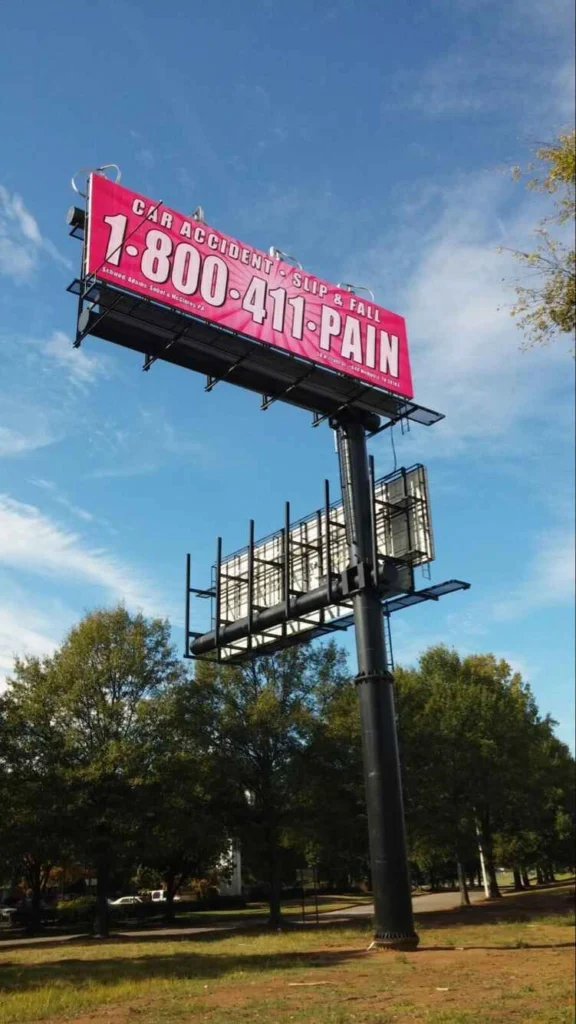
Detail the connection for movement. Slotted holes, flexible washers and controlled torque let a cabinet expand and vibrate without cracking welds or crushing gaskets. A rigid weld at every point looks strong on paper and fails at the first thermal cycle.
The foundation deserves the same attention as the frame. A spread footing, pile or ballasted base follows from the soil report and the overturning moment, and the anchor bolts must match the base plate. Ask the engineer for load combinations that include wind, dead load and thermal movement, then keep those calculations in the handover file.
Cabinets such as the PO-T outdoor billboard series publish wind area, weight and fixing points as standard data, which shortens the engineer’s work.
Schedule an inspection after the first storm season and every year after that. Check bolt torque, weld condition, coating damage and the gap between cabinet and structure. Photograph each visit, because a baseline turns “it looks fine” into a measurable record.
Sealing, Drainage and Thermal Load
An outside LED billboard screen lives or dies at its seals. IP65 is the practical floor for roadside cabinets, and IP66 suits faces that take driving rain. The rating only describes a test, so inspect the gasket path, the cable gland, the breather valve and the bottom drain as a system. Water must have an exit that never crosses the power bay.
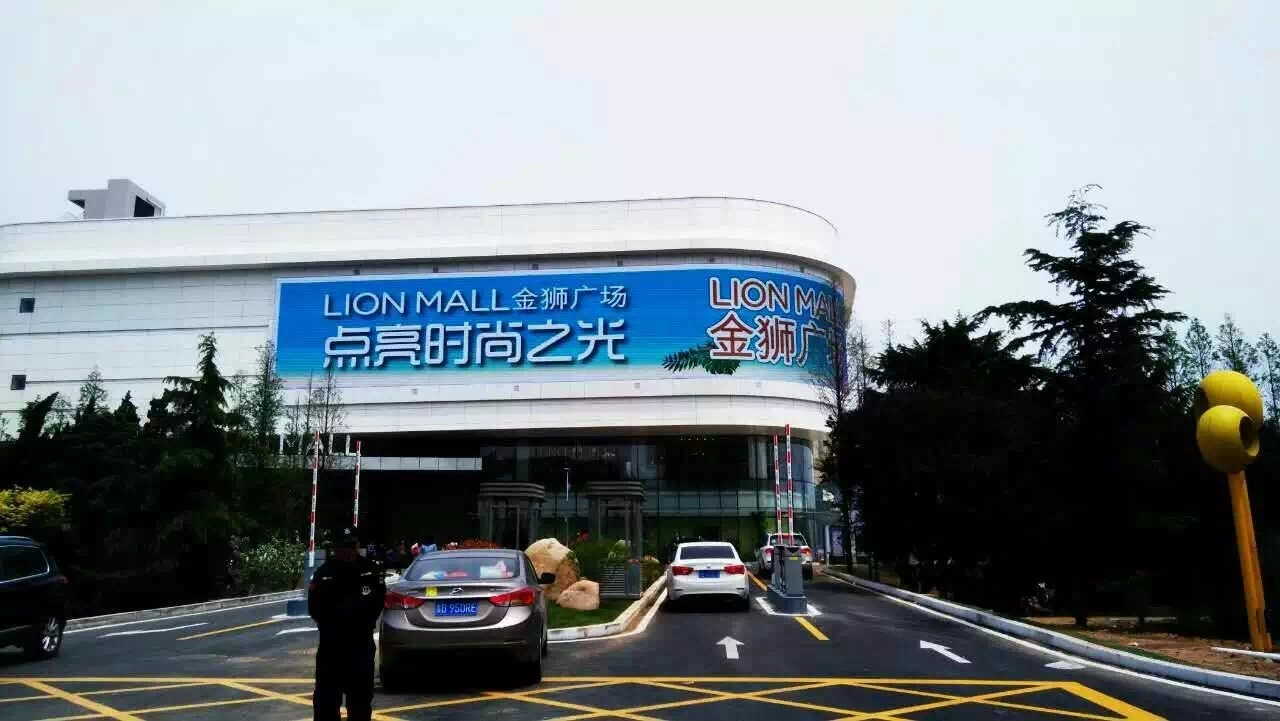
Heat arrives from the sun and from the power supplies. Passive vents and heat sinks suit clean sites, fans need filters and service intervals, and sealed air conditioners protect dusty or coastal locations at a power cost. Derate output on hot afternoons and let monitoring reduce brightness before a thermal shutdown forces the issue.

Corrosion follows water. Coastal and industrial sites need coated aluminum, stainless hardware and a wash interval matched to the exposure. Rust at a bracket is the first visible sign that the coating system, not the panel, needs attention.
Seal maintenance is a schedule, not a repair. Inspect gaskets each year, replace compressed sections before they harden and clear the drain channel after pollen season. A five-minute check prevents the corrosion that starts behind a trapped leaf and reaches the driver bay a season later.
Thermal performance depends on the whole cabinet. Measure internal temperature on the hottest afternoon and compare it with the driver rating. If the margin is thin, reduce brightness, add airflow or shade the face, rather than waiting for a shutdown to prove the point. Record the reading beside the ambient temperature so the comparison stays meaningful across seasons.
Grounding, Surge and Power Quality
Lightning and grid noise cause failures that look like random module faults. A proper earth path, surge protection at the service entrance and surge devices at the cabinet reduce that risk. Keep high-voltage and signal cabling separated, and bond metalwork to the same earth reference.
Commission the electrical side with measurements, not assumptions. Record earth resistance, verify breaker ratings against the actual load, and test that the surge devices are seated and indicating correctly. A cabinet that trips a breaker in a storm usually has a grounding or surge gap, not a bad power supply.
Surge protection comes in stages. A service-entrance device handles the main surge, and a smaller device at the cabinet protects the driver bay. Replace modules only with the same rating, and log each event, because a failed surge device is evidence that the site needs a better earth path rather than another replacement part.
Service Access and Remote Monitoring
Access decides downtime. Front-service cabinets allow a module swap from the face; rear-service cabinets need a walkway or a platform behind the screen. Choose the option the site can actually support, then confirm the lifting plan for the first installation.
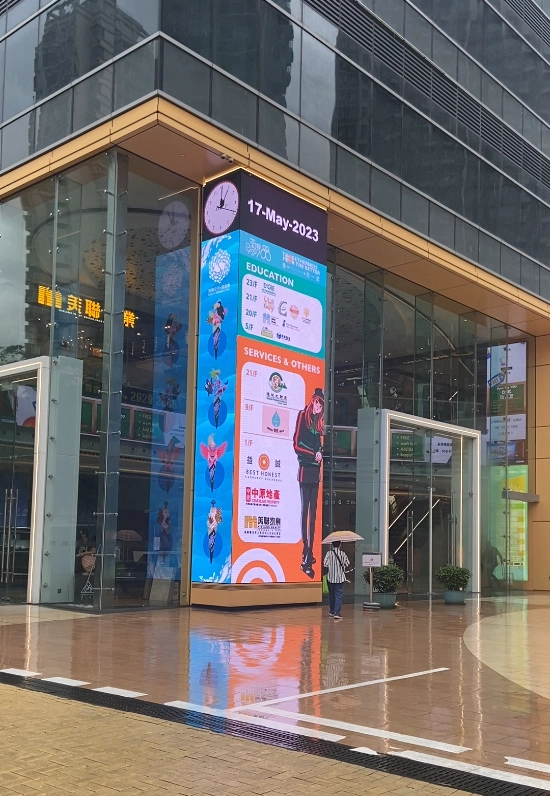
Remote monitoring turns a network into a managed asset. Temperature, power, signal status and cabinet door alarms should reach one dashboard, with alerts routed to the service team. Playback logs support billing, remote publishing avoids a site visit for every content change, and an operator can push an emergency notice when local rules permit it.
Plan the access route before the screen arrives. Confirm ladder height, platform width and the turning space for a lift, then walk the route with the service technician. A cabinet that is easy to reach receives better care than one that needs a special appointment, and the difference appears in uptime rather than in the purchase price.
Commissioning, Handover and Compliance
Commission with a written checklist. Verify fastener torque, seal condition, drain flow, brightness at noon and at night, control failover and a full content cycle. Return after the first heavy rain and open the cabinet, because that visit finds the leaks a factory test cannot. Commissioning also fixes the warranty start date, so record the handover date and the serial number of every cabinet in the file.
Handover should include drawings, load calculations, electrical certificates, as-built wiring, spare parts and the control account. Add the inspection schedule and the service contact. The next technician will work from that file, not from memory.
Training belongs in the handover. Show the operator how to publish content, acknowledge an alarm and isolate the cabinet, then leave a one-page procedure at the site. Most emergency call-outs turn out to be operational confusion rather than hardware failure, and a short briefing removes that category of downtime.
Compliance covers more than the sign permit. Structural approval, electrical inspection, brightness limits and content rules all apply, and the OSHA electrical safety guidance gives the installation team a practical baseline. Where the screen sits close to traffic, confirm that the mounting and maintenance plan keeps workers out of live lanes.
Cost, Uptime and ROI
Budget the structure with the screen. Steel, foundation, lifting, electrical work, permits and service access often rival the panel cost on a roadside site, and a quote that omits them is not a lower price, only a later invoice.
An outside LED billboard screen earns through uptime. Every dark day costs advertising revenue and credibility, so surge protection, spares and a written response time protect the investment as much as brightness does. Auto-dimming and scheduling cut the power bill without touching daytime impact, and a multi-advertiser loop lifts revenue from the same structure. The DOE LED basics page is a useful reference when comparing efficiency claims.
Peak-hour pricing, seasonal campaigns and network packages all raise yield from one structure. Model five years of ownership, including cleaning, power, spares and one structural inspection. That view exposes the cheap cabinet whose service visits erase the saving. Compare two quotes on the same scope, line by line, because a missing riser, access platform or surge device is easy to hide in a summary price. Review the actual spend after the first year, then correct the model with real numbers.
Outdoor Deployment Notes
Install in mild weather where possible and allow sealants to cure before the first storm. Keep the site fenced during lifting and follow the engineer’s sequence for tightening and alignment.
Take reference photographs at handover: cabinet faces, bracket connections, cable entries, drain outlets and the earth bar. Store them with the drawings so the first inspection compares like with like. Agree in writing who holds the cabinet keys and who authorizes a power isolation, because both questions surface at the worst possible moment.
Stock one module, a receiver card, a power supply and a gasket set per cabinet type. Label each cabinet with its address and circuit, and file the photographs from commissioning with the permit set. Review the inspection log each year and update the spares list when a component reaches end of life. Keep a simple weather log as well, because storm dates explain failures that otherwise look random.
FAQ
Who is responsible for the steel structure?
A local structural engineer designs it and a contractor builds it. The display supplier provides cabinet weight, wind area and fixing points, but does not certify site steel or foundations.
What IP rating does a roadside billboard need?
IP65 is the practical minimum for rain and dust. Choose IP66 where wind drives water at the face, and inspect the drain path rather than trusting the number alone.
How often should the structure be inspected?
After the first storm season, then annually. Check torque, welds, coating damage and cabinet alignment, and keep photographs so changes are visible year to year.
Can the screen be serviced from the front?
Yes, if the cabinet is specified for front access. That choice removes the need for a rear walkway, which matters on poles and facades where space behind the screen is limited.
Conclusion
An outside LED billboard screen is a structural product as much as a display. Survey the site, feed real loads to the engineer, detail the fixings for movement, seal and drain the cabinet, ground the power and plan service access before the steel is ordered. Treated that way, the screen stands through weather, inspections and the commercial pressure of a roadside media asset.