Indoor LED Display Installation Planning: What Must Be Confirmed Before Production

Indoor LED Display Installation Planning: What Must Be Confirmed Before Production? This question must be answered before cabinet sizes, mounting holes, power inputs, and control hardware become difficult or expensive to change.
Table of Contents
- 1. Confirm Display Geometry and Visual Performance
- Define the active image area
- Match resolution to viewing tasks
- 2. Verify the Site, Structure, and Service Access
- Survey the complete installation path
- Confirm structure and maintenance clearance
- 3. Calculate Power, Grounding, and Heat Loads
- Design from maximum demand
- Convert electrical load into heat
- 4. Lock the Signal, Processing, and Network Design
- Map the complete signal chain
- Define the operating workflow
- 5. Approve the Production Package and Acceptance Tests
- Build a controlled approval package
- Define FAT and site acceptance
- How should planning change for a curved indoor LED display?
- What must be checked when the building is leased?
- How do on-camera applications affect LED specifications?
- When must fire protection coordination occur?
- How many spare LED components should be ordered?
- Conclusion
One overlooked fact is that pixel pitch directly determines native resolution. A display measuring 4,800 millimeters wide produces 3,200 horizontal pixels at a 1.5-millimeter pitch, but only 1,920 pixels at a 2.5-millimeter pitch. That calculation can affect content format, processor selection, viewing quality, and budget.
The challenge is that architectural drawings rarely contain every detail an LED manufacturer needs. Unconfirmed dimensions, structural loads, power routes, ventilation, signal topology, and maintenance access often become site problems after production.
A reliable plan converts those unknowns into approved drawings, calculations, and acceptance criteria. The five planning areas below cover visual performance, site conditions, electrical and thermal requirements, signal architecture, and the final production release package.
1. Confirm Display Geometry and Visual Performance
Start by confirming the exact active image dimensions, native resolution, viewing conditions, and content requirements. Indoor LED Display Installation Planning: What Must Be Confirmed Before Production? should never begin with pixel pitch alone because pitch is only one part of image performance.
Define the active image area
Separate the visible LED canvas from the frame, trim, mounting structure, and service clearance. Record the maximum width and height available, then confirm whether the finished display must follow a specific aspect ratio.
Use this resolution calculation:
`horizontal pixels = active width in millimeters ÷ pixel pitch in millimeters`
Apply the same formula to the active height. If the result is not a whole number, the cabinet layout, active dimensions, or pitch must change.
Match resolution to viewing tasks
The AVIXA DISCAS standard is formally identified as ANSI/AVIXA V202.01:2016. It provides a structured method for sizing images according to what viewers must see, rather than relying only on diagonal screen size.
Confirm these inputs:
– Nearest, typical, and farthest viewing positions
– Text size and fine-detail requirements
– Expected source resolutions and frame rates
– Whether content must fill the screen without cropping
– Brightness and color-performance targets
– Front-service or rear-service cabinet design
Consider a control room where operators must read small labels. A pitch suitable for large promotional video may not provide enough native pixels for dashboards and detailed data.
Use Indoor LED Display Installation Planning: What Must Be Confirmed Before Production? as a visual sign-off gate involving the owner, content team, consultant, and manufacturer.
How to apply this: Create a one-page display schedule listing active dimensions, pitch, calculated resolution, aspect ratio, viewing distances, source format, and approved content use.
2. Verify the Site, Structure, and Service Access
A physical site survey must verify dimensions, load paths, access routes, wall conditions, and maintenance space before manufacturing begins. Indoor LED Display Installation Planning: What Must Be Confirmed Before Production? requires field measurements because design drawings may not reflect finished construction.
Survey the complete installation path
Measure more than the display opening. Confirm loading-dock access, elevators, doors, corridors, ceiling heights, turning space, temporary storage, and lifting locations.
Record site conditions with photographs and marked drawings. AutoCAD can document elevations and mounting details, while Bluebeam can be used to mark measurements, comments, and approvals directly on construction PDFs.
Confirm structure and maintenance clearance
A qualified structural professional should verify the wall, floor, ceiling, or freestanding support. The review must include the LED cabinets, mounting steel, trim, cables, power equipment, and any imposed installation loads.
Access cannot be treated as leftover space. The display team should confirm how technicians will remove modules, power supplies, receiving cards, fans, cables, and control hardware after surrounding finishes are complete.
The U.S. Occupational Safety and Health Administration states: “Sufficient access and working space shall be provided and maintained about all electric equipment” in 29 CFR 1910.303. Its Table S-1 lists working clearances that range from 3 to 4 feet for covered equipment, depending on voltage and surrounding conditions.
Indoor LED Display Installation Planning: What Must Be Confirmed Before Production? should therefore include both LED service access and legally applicable electrical working space.
How to apply this: Conduct a signed site survey with the installer, structural engineer, electrical contractor, and general contractor before approving cabinet or frame fabrication.
3. Calculate Power, Grounding, and Heat Loads
Electrical capacity must be based on the manufacturer’s maximum-load data, not the display’s expected average consumption. Indoor LED Display Installation Planning: What Must Be Confirmed Before Production? should document circuits, distribution, grounding, disconnects, heat output, and applicable code responsibilities.
Design from maximum demand
Request a project-specific electrical schedule from the LED supplier. It should identify cabinet quantity, maximum input power, operating voltage, current per feed, power-entry locations, and the intended distribution method.
Use the maximum connected load for circuit and distribution coordination unless the responsible electrical engineer approves another code-compliant method. Average consumption remains useful for energy estimates and cooling analysis, but it should not silently replace the maximum rating.
Convert electrical load into heat
Nearly all electrical energy used inside the room eventually becomes heat. NIST Special Publication 811 provides recognized unit-conversion guidance; using its conversion factors, one watt is approximately 3.412 British thermal units per hour.
The planning formula is:
`heat load in Btu/h = electrical load in watts × 3.412`
A mechanical engineer should then account for enclosure design, room volume, air paths, occupancy, lighting, and other equipment. DIALux evo can model room lighting and illuminance, helping the team compare ambient light with the proposed LED brightness rather than specifying brightness in isolation.
Indoor LED Display Installation Planning: What Must Be Confirmed Before Production? must also identify grounding, surge protection, emergency isolation, panel capacity, and which contractor terminates each connection.
How to apply this: Obtain signed electrical and mechanical load schedules showing maximum watts, circuit allocation, disconnect locations, estimated heat output, ventilation paths, and grounding responsibility.
4. Lock the Signal, Processing, and Network Design
The control system must be designed around the final pixel map, source formats, cable routes, operational workflow, and redundancy requirements. Indoor LED Display Installation Planning: What Must Be Confirmed Before Production? must resolve who controls the screen and what happens when a signal component fails.
Map the complete signal chain
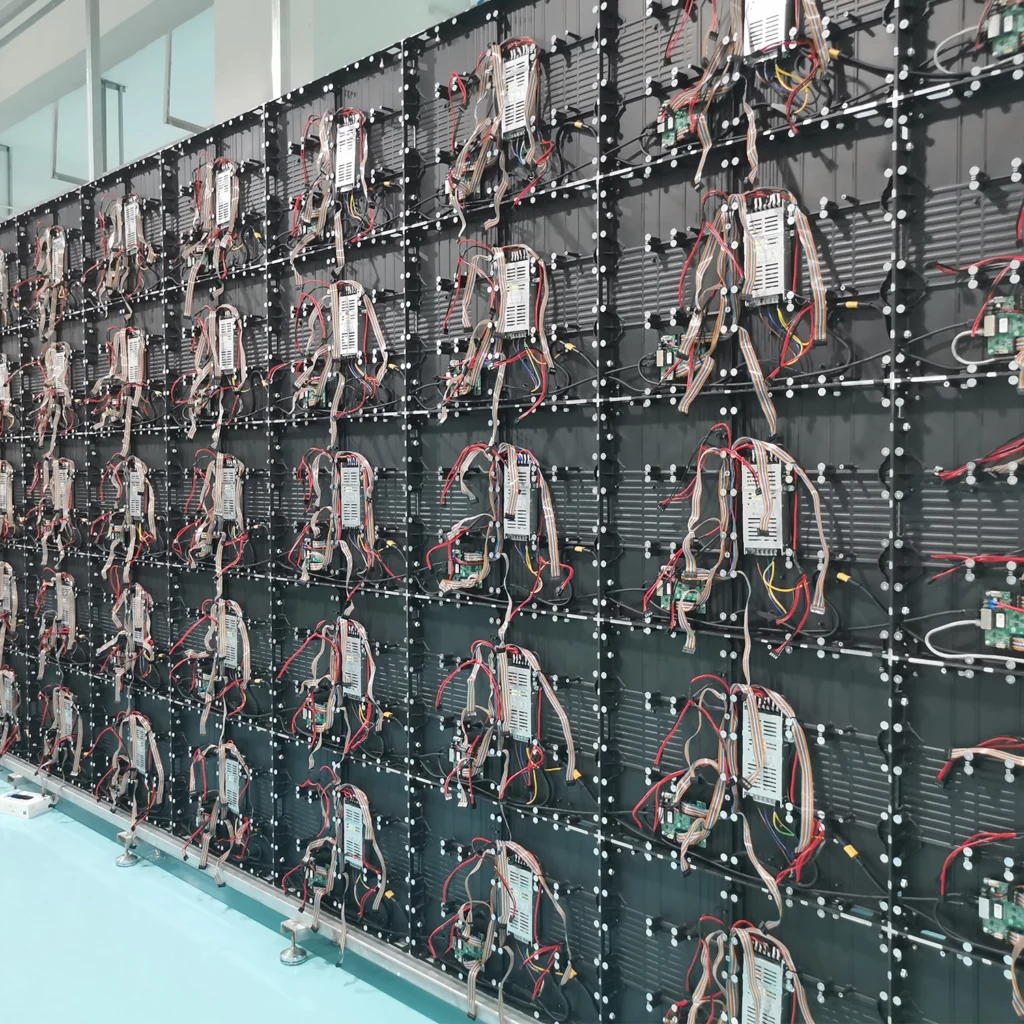
Create a diagram beginning with every source and ending at the LED receiving hardware. Include switchers, scalers, media servers, LED processors, matrix systems, converters, fiber extenders, network switches, monitoring devices, and backup paths.
Confirm the following:
– Source connector and transport format
– Resolution, refresh rate, frame rate, and color format
– High-bandwidth Digital Content Protection requirements
– Scaling and image-cropping rules
– Cable type, route, length, and termination
– Primary and backup processor behavior
– Remote monitoring and network-security ownership
ANSI/TIA-568.2-D specifies a 100-meter balanced twisted-pair channel model, typically divided between a 90-meter permanent link and patching allowances. Longer runs require a different network design, an intermediate active device, or fiber selected for the intended data format.
Define the operating workflow
A technically compatible system can still fail operationally if responsibilities are unclear. Identify who uploads content, selects sources, changes brightness, performs calibration, receives alarms, and restores service.
In one case, a display may need to remain on air during a processor failure. That requirement affects processor redundancy, cabling, spare inputs, power distribution, and commissioning tests before equipment is ordered.
Indoor LED Display Installation Planning: What Must Be Confirmed Before Production? should produce an approved signal-flow drawing and an input-output schedule, not merely a list of hardware.
How to apply this: Run a design review using the native pixel map, source specifications, cable distances, network rules, and a written failure scenario for every critical signal component.
5. Approve the Production Package and Acceptance Tests
Production should begin only after drawings, specifications, responsibilities, and measurable acceptance criteria are formally approved. Indoor LED Display Installation Planning: What Must Be Confirmed Before Production? becomes effective when every decision has an owner, revision number, and sign-off status.
Build a controlled approval package
The production release should include coordinated shop drawings rather than separate documents that conflict with one another. At minimum, confirm the following items:
| Item | What to check | Action to take |
|---|---|---|
| Geometry | Active and overall size | Sign elevation |
| Structure | Loads and attachment | Engineer approval |
| Power | Maximum demand | Approve schedule |
| Thermal | Heat and airflow | Coordinate HVAC |
| Signal | Pixel map and routes | Sign diagram |
| Service | Removal clearances | Test access |
| Finish | Trim and color | Approve sample |
ISO 9001:2015 clause 8.6 addresses the release of products and services only after planned arrangements have been satisfactorily completed, unless otherwise approved by relevant authority. That principle supports a documented production-release gate rather than approval through informal messages.
Define FAT and site acceptance
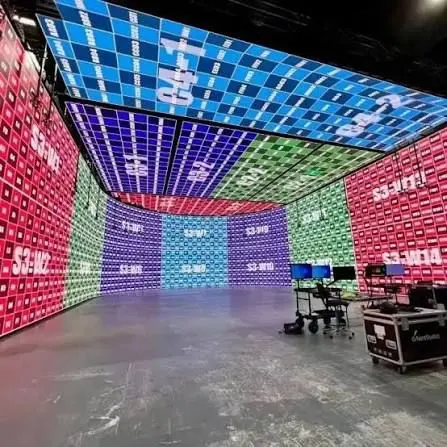
Specify what the factory acceptance test, or FAT, must demonstrate. Tests may include cabinet alignment, dead-pixel inspection, image mapping, brightness uniformity, color calibration, processor failover, communications, spare-part verification, and serial-number records.
Acceptance limits must be written into the contract or approved test plan. Terms such as “uniform,” “seamless,” or “good image quality” are not measurable unless the project defines how they will be evaluated.
Indoor LED Display Installation Planning: What Must Be Confirmed Before Production? should end with one controlled release document showing approved revisions and unresolved exceptions. Changes after release should follow a written process covering cost, schedule, compatibility, and drawing updates.
How to apply this: Hold a production-release meeting and issue a signed checklist with zero unresolved critical items, named approvers, approved drawing revisions, and FAT criteria.
Frequently Asked Questions About Indoor LED Display Installation Planning: What Must Be Confirmed Before Production?
How should planning change for a curved indoor LED display?
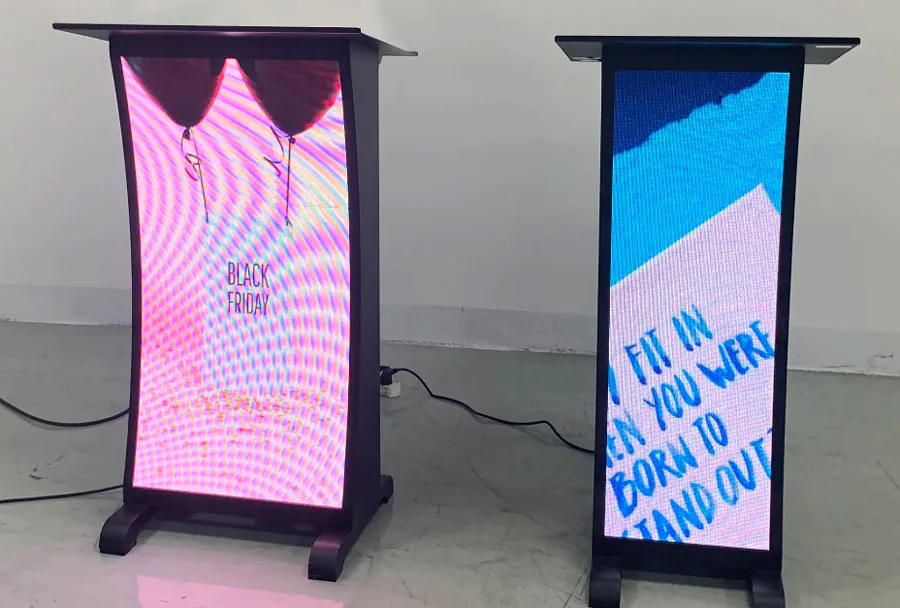
A curved display requires the manufacturer to confirm cabinet angles, minimum achievable radius, faceted transitions, module service direction, and content-mapping geometry. A smooth architectural radius may not match the fixed angles supported by standard cabinets.
Indoor LED Display Installation Planning: What Must Be Confirmed Before Production? should also address visible seams at oblique viewing positions. For compound curves or columns, request a full-scale corner or cabinet mock-up before approving mass production.
What must be checked when the building is leased?
Confirm which alterations require landlord approval, including wall attachments, new circuits, cooling changes, equipment-room use, cable penetrations, and fire-stopping work. Lease reinstatement obligations may also require the tenant to remove the display and repair finishes later.
Indoor LED Display Installation Planning: What Must Be Confirmed Before Production? should identify ownership of the mounting steel and electrical infrastructure. In a multi-tenant property, building management may restrict noisy work, deliveries, or shutdowns to specific periods.
How do on-camera applications affect LED specifications?
Camera use requires testing refresh behavior, scan architecture, shutter interaction, grayscale performance, color processing, and visible moiré. A display that looks stable to the eye can show bands, flicker, or patterns when recorded.
Indoor LED Display Installation Planning: What Must Be Confirmed Before Production? should include the actual camera models and expected shooting settings. In broadcast or virtual-production environments, conduct a camera test with the proposed cabinet and processor configuration rather than relying only on a showroom video.
When must fire protection coordination occur?
Fire protection coordination should occur before the display frame blocks sprinklers, detectors, alarm devices, smoke movement, or required access. The responsible fire-protection professional and authority having jurisdiction determine whether relocation or additional coverage is needed.
Indoor LED Display Installation Planning: What Must Be Confirmed Before Production? must include nearby life-safety systems on the coordinated elevation. A display installed inside an atrium, exit route, or custom enclosure may receive closer review than a conventional conference-room screen.
How many spare LED components should be ordered?
There is no universal spare quantity because failure exposure, service response, product lifecycle, installation location, and future color matching differ by project. Ask the manufacturer for a recommended spare package covering modules, receiving cards, power supplies, cables, and specialized tools.
Indoor LED Display Installation Planning: What Must Be Confirmed Before Production? should also define storage conditions and inventory ownership. For a remote or mission-critical site, availability and replacement lead time may matter more than a generic percentage.
Conclusion
Indoor LED Display Installation Planning: What Must Be Confirmed Before Production? is ultimately a controlled decision process, not just a request for an LED quotation. Production should wait until the physical, technical, and operational requirements agree.
Your final review should verify:
– Visual performance: Active dimensions, pitch, resolution, viewing tasks, and content format
– Site readiness: Structure, installation route, service access, finishes, and safety clearances
– Infrastructure: Maximum power, grounding, heat load, ventilation, signal paths, and network ownership
– Quality control: Approved revisions, measurable FAT criteria, spare parts, and change procedures
Do not rely on assumptions hidden in emails or preliminary drawings. Convert every critical requirement into a signed schedule, calculation, drawing, or test criterion.
Use Indoor LED Display Installation Planning: What Must Be Confirmed Before Production? as your release checklist, gather the responsible contractors and engineers, and close every critical item before authorizing fabrication.