Church LED Wall Price 2026: Cost Guide for Every Budget

A church LED wall price in 2026 usually falls between $1,200 and $3,500 per square meter for the display and control gear, before rigging, electrical work, and installation. The final number depends far more on pixel pitch, screen size, and room brightness than on the brand on the cabinet. Churches that compare quotes on the same specification almost always find a workable option inside their building budget.
This guide explains what the price covers, how size and pitch change it, the three layouts most congregations choose, and the costs that arrive after the deposit. It also covers phased purchasing, ten-year ownership cost, and the questions to ask before signing. All ranges are 2026 planning figures for indoor worship and outdoor signage projects in the United States.
Table of Contents
- 1. What a Church LED Wall Price Covers in 2026
- 2. Church LED Wall Price by Screen Size
- 3. Define the Wall Before Requesting Prices
- 4. What Drives the Quote
- 5. Price the Complete Video Signal Path
- 6. Three Church Layouts and Their Budgets
- 7. LED Wall vs Projector vs TV Wall
- 8. Hidden Costs Churches Miss
- 9. How to Budget in Phases
- 10. Maintenance and Ten-Year Cost
- 11. How to Get the Best Church LED Wall Price
- 12. Choosing a Supplier
- FAQ
- Conclusion
1. What a Church LED Wall Price Covers in 2026
Suppliers quote worship displays in four bands. The pitch sets the band, and brightness and cabinet type adjust it. The table below shows typical 2026 ranges per square meter for modules, receiving cards, power supplies, and a processor sized for the wall.
| Tier | Typical pitch | Price per m² (USD) | Best for | Normally included |
|---|---|---|---|---|
| Value indoor | P3.9 – P4.8 | $800 – $1,200 | Balcony overflow, fellowship halls, distant viewing | Modules, receiving cards, power supplies, basic processor |
| Standard indoor | P2.6 – P3.0 | $1,400 – $2,200 | Main sanctuary, 8–15 m viewing distance | Modules, control gear, factory calibration, spare modules |
| Fine pitch | P1.2 – P1.8 | $3,000 – $5,500 | Broadcast studios, close-camera stages, small chapels | Fine-pitch modules, HDR drivers, matte finish |
| Outdoor | P2.6 – P6.0 | $1,800 – $3,800 | Roadside signs, exterior message boards | IP65–IP67 sealing, 5,000–6,000 nits, reinforced cabinet |
In practice, read these rates as hardware bands, not installed totals. A sanctuary project usually adds 30–60% for steel structure, rigging, electrical circuits, commissioning, and content setup. As a result, the same 20 m² wall can quote at $30,000 or $60,000 depending on how much of that scope the supplier carries.
2. Church LED Wall Price by Screen Size
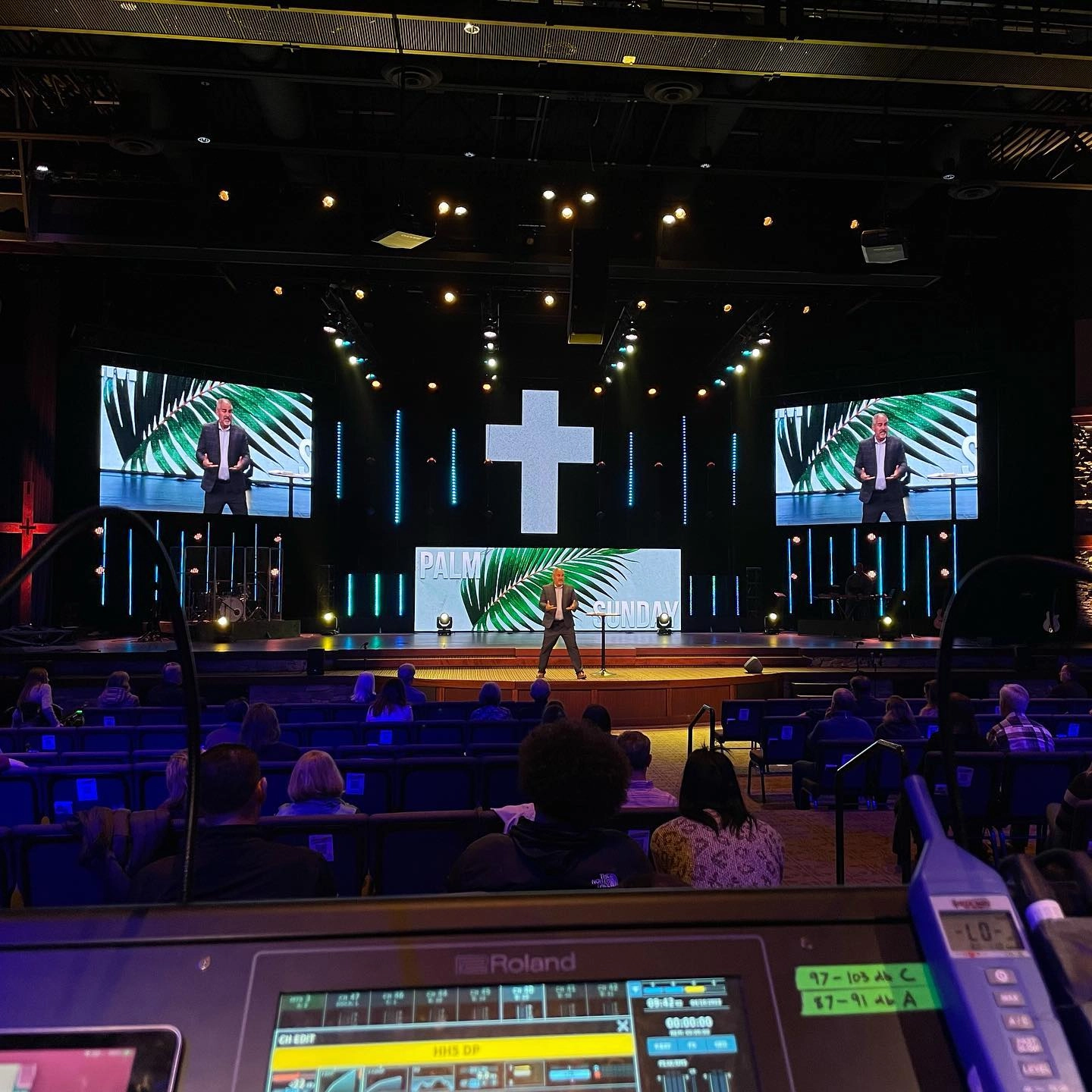
Size scales the panel cost in a straight line, but structure and labor do not scale at the same rate. Consequently, a larger wall often costs less per square meter than a small one at the same pitch. The table below applies the two most common tiers to three sanctuary sizes.
| Screen area | Standard (P2.6–P3.0) | Fine pitch (P1.2–P1.8) | Typical layout |
|---|---|---|---|
| 6 m² | $8,400 – $13,200 | $18,000 – $33,000 | Small chapel, side screen, youth room |
| 12 m² | $16,800 – $26,400 | $36,000 – $66,000 | Mid-size sanctuary center wall |
| 20 m² | $28,000 – $44,000 | $60,000 – $110,000 | Large sanctuary, stage backdrop plus wings |
Match pitch to the back row, not to the front row. A common rule is one millimeter of pitch for every meter of viewing distance, so a 15 m throw rarely needs finer than P3. By contrast, a camera feed changes the math, because broadcast zooms expose pixel structure that the congregation never sees. Churches that stream services should price a finer pitch only for the camera-facing area.
3. Define the Wall Before Requesting Prices
In practice, document the image size, viewing conditions, and content before the first call, because these factors shape the church LED wall price more reliably than a generic rate per square foot. One detail surprises many buyers: the screen should follow viewer needs and content, not the full width of the sanctuary.
Measure the Room and the Seats
Measure the nearest and farthest occupied seats, the available wall area, and any blocked sightlines. The AVIXA DISCAS standard calculates display image size from viewer distance and content type, which gives a defensible basis for the brief. In practice, that method prevents both oversized walls and screens that leave the back row squinting.
Ask Every Vendor for the Same Six Data Points
- Active image width and height
- Native pixel dimensions
- Pixel pitch in millimeters
- Minimum comfortable viewing distance
- Brightness and calibration range
- Cabinet dimensions and total cabinet count
Do not assume a finer pitch is automatically better. If the nearest viewer cannot see the difference, the added density adds cost without adding value. Even so, tighter pitch still matters for cameras, so define the broadcast area separately from the seating area.
4. What Drives the Quote
Six variables explain most of the difference between two church LED quotes:
- Pixel pitch: finer pitches raise LED count and lower factory yield per square meter.
- Screen area: panel cost rises linearly, while structure and labor rise in steps.
- Brightness: a bright sanctuary or a window-lit stage needs higher-nit panels and stronger drivers.
- Cabinet type: rental cabinets cost more than fixed-install cabinets but speed up service access.
- Control and content: a processor, video switching, and graphics hardware often add 10–20%.
- Structure and access: truss, rigging points, and lift access change labor more than hardware.
Because pitch and area dominate, they deserve the first review. A church that cuts pitch from P2.5 to P3.9 on a 20 m² wall can save enough to fund the processor, the rigging, and a spare-module kit. Even so, the saving only works when the back row sits far enough away, so measure the room before changing the spec.
5. Price the Complete Video Signal Path
However, a bid is incomplete when it lists cabinets but leaves the signal path undefined. The church LED wall price should cover every device that moves content from the presentation computer to the LED modules, including the processor, sending hardware, receiving cards, distribution, conversion, and backup connections.
Native Canvas and Processor Capacity
Ask for the wall’s exact native pixel width and height. Multiplying those two figures gives the total pixel count, which sets processor capacity and content preparation. A processor quoted without its supported pixel load cannot be verified, so request the model number and data sheet together.
Questions the Quote Should Answer
- How does the computer connect to the processor?
- Where does image scaling occur?
- Do live camera feeds need low-latency processing?
- What happens if a processor or signal cable fails?
- Does remote diagnostics require network access?
- Which licenses and adapters are supplied?
Therefore, draw a one-page signal-flow diagram and ask each bidder to mark every supplied device, cable, conversion, and connection. That single page exposes scope gaps faster than any price comparison, because a cheap quote often shifts processing and configuration onto the church.
6. Three Church Layouts and Their Budgets
Most congregations choose one of three layouts. Installed budgets below include hardware, frame, basic control, and standard commissioning, but exclude building work and content production.
| Layout | Typical size and pitch | Installed budget | Best fit |
|---|---|---|---|
| Stage backdrop | 20 m², P3.9–P4.8 | $24,000 – $36,000 | Churches that want atmosphere behind the band |
| Sanctuary center wall | 36 m², P2.6–P3.0 | $70,000 – $115,000 | Main worship space with 15 m throw |
| Outdoor message board | 8 m², P4–P6 outdoor | $25,000 – $45,000 | Roadside visibility and community notices |
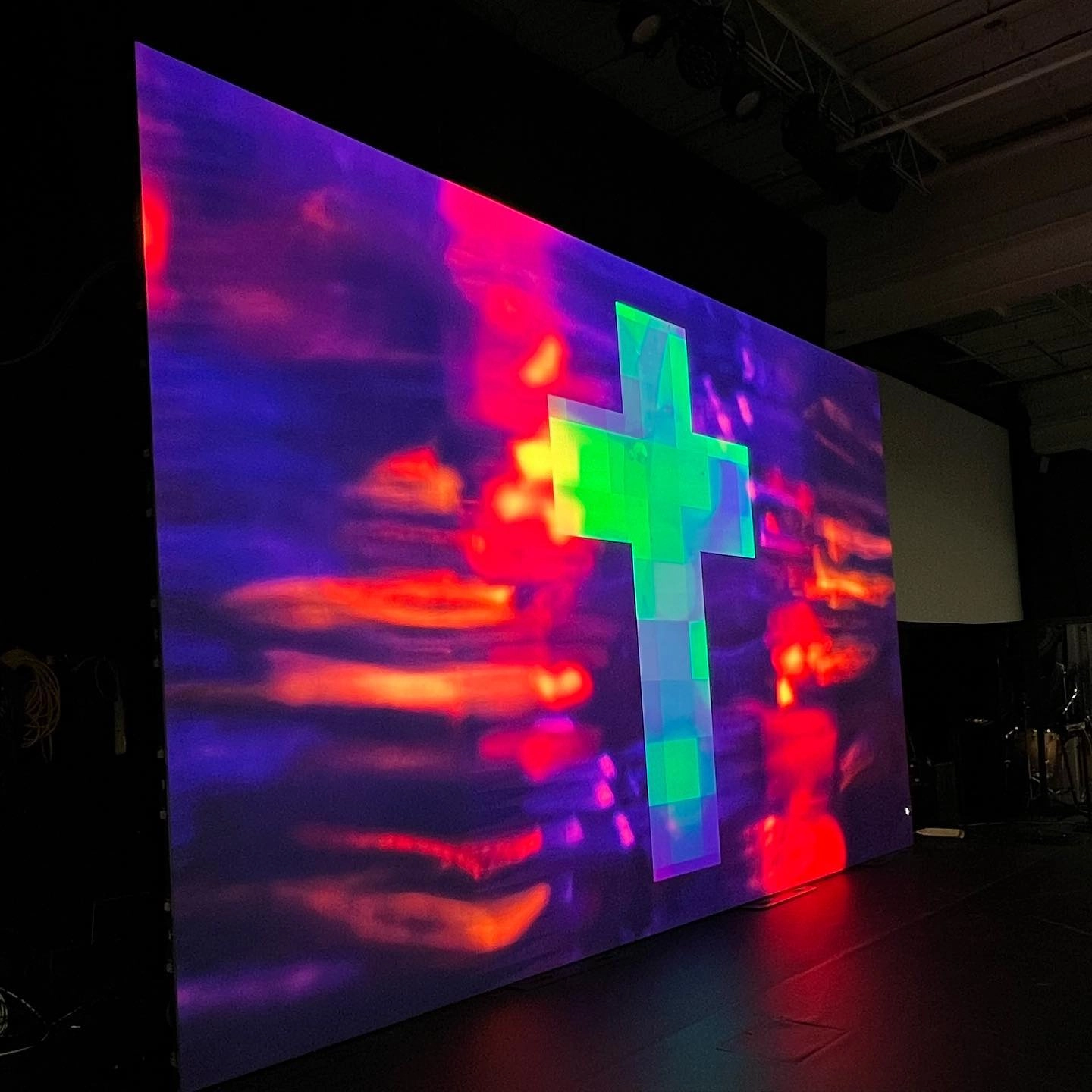
In practice, the stage backdrop is the lowest-risk entry point, because a wider pitch still looks clean from the pews and the wall can grow later. By contrast, the center wall carries the highest cost, yet it also carries the most value for preaching, lyrics, and livestream. The outdoor board sits apart, since it needs weather sealing, permits, and a power feed that indoor projects never touch.
7. LED Wall vs Projector vs TV Wall
Churches often compare three display paths before committing. Each one wins in a different room.
| Option | Brightness | Typical life | Cost per m² | Weak point |
|---|---|---|---|---|
| LED video wall | 1,200 – 6,000 nits | 80,000 – 100,000 hours | $1,400 – $2,200 | Higher upfront cost |
| Projector and screen | Depends on room light | 5,000 – 10,000 lamp hours | $150 – $400 | Washed out in daylight |
| Commercial TV wall | 300 – 700 nits | 50,000 hours | $1,500 – $3,000 | Visible bezels, size limits |
In practice, projection remains the cheapest path for a dark, narrow room with a single screen. However, a bright sanctuary with windows, a wide stage, or a livestream camera exposes its limits quickly. LED wins on brightness and seam-free scale, while a TV wall suits a lobby or classroom where bezels do not matter. Overall, most growing churches end up with LED in the sanctuary and screens elsewhere.
8. Hidden Costs Churches Miss
The panel quote rarely covers the whole project. Six lines appear after the deposit, and each one can move a budget by thousands of dollars.
- Steel structure and rigging: $150 – $350 per m², plus engineering review in older buildings.
- Electrical work: a dedicated circuit and panel upgrade often run $2,000 – $8,000.
- Processor and switching: $500 – $3,000, depending on inputs and camera feeds.
- Content and graphics: $1,000 – $5,000 for templates, lyric packages, and training.
- Permits and inspection: $500 – $3,000, higher for historic or landmark buildings.
- Spare modules and cards: plan 3–5% of hardware value for a service kit.
Power, Structure, and Service Access
An LED wall adds concentrated weight and electrical demand to a wall, platform, or suspended structure. Obtain written confirmation of installed weight, mounting method, power requirement, and heat output before approving the equipment. NFPA 70 sets the U.S. benchmark for safe electrical design, though local amendments vary, so the project needs review by the authority having jurisdiction and licensed trades.
Also confirm whether technicians service modules from the front or need rear access, because rear-service cabinets require dedicated space that affects framing and ventilation. Still, on a small stage backdrop, these extras can equal the panel cost. For that reason, ask for separate quote lines covering structure, circuits, cabling, lifts, finish work, calibration, and spares, then compare suppliers on that sheet rather than the headline rate.
9. How to Budget in Phases
In practice, few churches fund a full sanctuary wall in one cycle. Phasing lets a congregation open a working screen, prove the value, and expand later without replacing the control system. A common sequence starts with a stage backdrop or side screens, then adds the center wall when the capital campaign closes.
Therefore, design for expansion from day one. Choose a processor with spare outputs, standardize cabinet sizes, and leave room on the truss for additional modules. That planning costs little at purchase and saves a full control upgrade later. Meanwhile, align each phase with the annual budget or a designated building fund so the project does not stall halfway.
Payment terms also help. Structure the contract as 30% deposit, 50% before shipping, and 20% after on-site acceptance, which keeps the final holdback tied to performance. If a donation or grant arrives late, a phased schedule protects the church from storage fees and idle equipment.
10. Maintenance and Ten-Year Cost
A church LED wall price is only the first line in a ten-year model. Add power, cleaning, spares, and one service visit per year, then compare that total against the cost of lamp replacements or projector downtime. The LED path usually wins once the room is bright and the screen runs every week.
For planning, assume indoor walls draw roughly 150–300 W per square meter at average content brightness. Estimate daily consumption with documented wattage: total watts × operating hours ÷ 1,000. Then multiply by the utility rate published by the U.S. Energy Information Administration, and use realistic hours that include rehearsals, conferences, and idle days rather than Sunday morning alone.
Hold 3–5% of hardware value for spare modules and receiving cards, and keep a labeled service kit on site so a volunteer can swap a module without waiting for a shipment. Cleaning matters more than repairs, since dust dulls color and traps heat. Schedule a soft-brush cleaning twice a year, check cabinet fans each quarter, and most worship walls reach 80,000 hours with only minor module swaps.
11. How to Get the Best Church LED Wall Price
In practice, price discipline starts with a written requirement sheet. State the room dimensions, the distance from the back row to the stage, indoor or outdoor use, the content sources, and whether the service is livestreamed. When those items are fixed, every supplier prices the same product and the comparison becomes honest.
Next, invite three to five suppliers to bid and ask for itemized pricing: modules, control, structure, freight, installation, commissioning, warranty, and spares. Request a panel-only price and an installed price so you can see where each supplier adds scope. After the first round, ask for a best-and-final offer that adds warranty or spare modules rather than a bare discount.
Use a Bid Matrix
| Item | Data to compare | Action to take |
|---|---|---|
| Image | Size, pitch, native pixels | Match room and camera needs |
| Hardware | Cabinets, processor model | Verify data sheets |
| Mounting | Structure, access method | Confirm responsibility |
| Power | Load, circuits, heat | Get electrician review |
| Service | Labor, freight, response | Read exclusions |
| Spares | Modules, cards, batch | Confirm batch match |
Mark missing information as unresolved rather than assuming it is included. Finally, approve the church LED wall price only after assumptions, exclusions, and acceptance tests appear in writing.
12. Choosing a Supplier
Above all, a supplier’s experience with worship spaces matters more than its price list. Ask for references from churches of similar size, and check whether the supplier understands stage lighting, camera white balance, and lyric software. A vendor that only sells panels often leaves the church to solve control and content alone.
Confirm the factory’s aging process, bin sorting, and test reports, because two vendors can sell the same pitch with very different component quality. Verify the certifications your insurer or inspector requires, and make sure the warranty terms, RMA process, and response time are written into the contract. For a historic building, ask how the frame attaches without damaging existing structure.
Also review supply stability. Driver ICs and specialty materials can tighten without warning, so a supplier that holds stock or publishes firm lead times is worth a small premium. In short, the cheapest quote often carries the highest risk, and a failed wall before Easter or Christmas is a cost no church wants to explain.
FAQ
How much does a church LED wall cost in 2026?
On average, most sanctuary projects land between $1,400 and $2,200 per square meter for standard pitch, and installed budgets usually add 30–60%. A 20 m² stage backdrop often totals $24,000–$36,000, while a 36 m² center wall can reach $115,000.
Do we need P2.5 for a sanctuary?
Only if the back row sits close or the service is broadcast. For a 15 m throw, P3 or P3.9 looks clean to the congregation. Camera zooms are the main reason to pay for finer pitch on part of the wall.
Can we install the wall in phases?
Yes. Start with a stage backdrop or side screens, then add the center wall later. Choose a processor with spare outputs and standard cabinet sizes so the first phase does not need replacing.
How long does a church LED wall last?
Plan for 80,000–100,000 hours at normal worship brightness. With twice-yearly cleaning and a small spare kit, most walls run a decade of weekly services before major service.
Does buying a used LED wall lower the final cost?
In practice, it can lower the purchase price, yet condition, remaining brightness, repair history, and parts availability need independent verification. Ask for operating records, test every module at several brightness levels, and confirm compatible cards and LED batches remain available.
Does tax-exempt status remove every project tax?
No. Treatment depends on jurisdiction, the seller, and whether the charge covers goods, construction, or taxable services. Give the vendor current exemption documents and ask for written confirmation of how tax applies to each line.
Why can an LED wall look poor on a livestream camera?
Refresh behavior, scan settings, shutter speed, processing, and the sensor-to-pixel relationship can all create artifacts. Require a camera test with your own production cameras, frame rate, shutter, and stage lighting before final acceptance.
Can a church expand the video wall later?
Often yes, but matching older modules gets harder as production batches change. Ask whether cabinets can be reconfigured, whether the processor has spare pixel capacity, and how added structural and electrical load would be handled.
Conclusion
In short, a church LED wall price reflects pitch, area, brightness, structure, and scope far more than brand. The hardware bands in this guide give a realistic starting point, and the installed budgets show what a complete project actually costs. Churches that measure the room, fix the specification, and compare itemized quotes consistently avoid the two common failures: paying for resolution nobody sees, and underestimating rigging and electrical work.
- Define image size, pitch, and viewing needs before bidding.
- Include processing, mounting, electrical work, cabling, calibration, and training.
- Budget energy, support, spares, and repair exposure over ten years.
- Compare model numbers, exclusions, and acceptance tests in one bid matrix.
Therefore, start with the viewing distance and the room light, choose the layout that fits the ministry, and phase the purchase if the budget needs room. For layout examples and installed church projects, review the church LED video wall solutions and the indoor LED video wall range.