Affordable Indoor LED Screen Rental Options for Any Budget

LED screen rental prices in 2026 depend less on the screen itself than on four variables: pixel pitch, the number of days, how much crew and rigging the venue demands, and how far the kit has to travel. Two quotes for the same 6 m × 3 m wall can differ by 60% before either vendor has priced a single module.
This guide sets out the 2026 benchmark rates, what a package should include, the budget tiers, the hidden costs, and the point at which buying beats renting. The figures below are reference ranges drawn from TW VISION’s 2026 quotation rounds and published market data, not a fixed price list.
If you are still working out why quotes have moved at all this year, the article on why LED display prices are rising in 2026 covers the component side.
Table of Contents
- LED Screen Rental Prices in 2026
- What a Rental Package Actually Includes
- Specs That Actually Change the Rate
- Budget Tiers: What Each Budget Buys
- Site, Permits and Safety Before You Price
- Hidden Costs That Push LED Screen Rental Prices Up
- Rent vs Buy: Where the Break-Even Sits
- The Break-Even Calculation
- What the Per-Event Maths Leaves Out
- The Middle Path: Core Rig Plus Rentals
- How to Compare Quotes on Equal Terms
- Real-World Configurations and What They Cost
- Rental Decision Checklist
- FAQ
- How much does it cost to rent an LED screen for one day?
- Why do LED screen rental prices vary so much?
- Is it cheaper to rent or buy an LED screen?
- Do rental prices drop for multi-day bookings?
- What is included in a standard rental package?
- Conclusion
LED Screen Rental Prices in 2026
Vendors normally quote rates per square metre per day, often with a minimum order. The table below gives the 2026 reference ranges by pixel pitch and application.
| Application | Pixel pitch | Daily rate | Typical use |
|---|---|---|---|
| Outdoor | P6–P10 | $80–$200 | Festival perimeter, long-throw stage |
| Outdoor | P4–P6 | $160–$350 | Concerts, sports, mid-size activations |
| Outdoor | P2.6–P4 | $300–$650 | Broadcast-grade outdoor, brand launches |
| Outdoor | P1.5–P2.5 (HDR) | $600–$1,200+ | Camera-facing premium builds |
| Indoor | P6–P10 | $40–$90 | Conference, trade show backdrop |
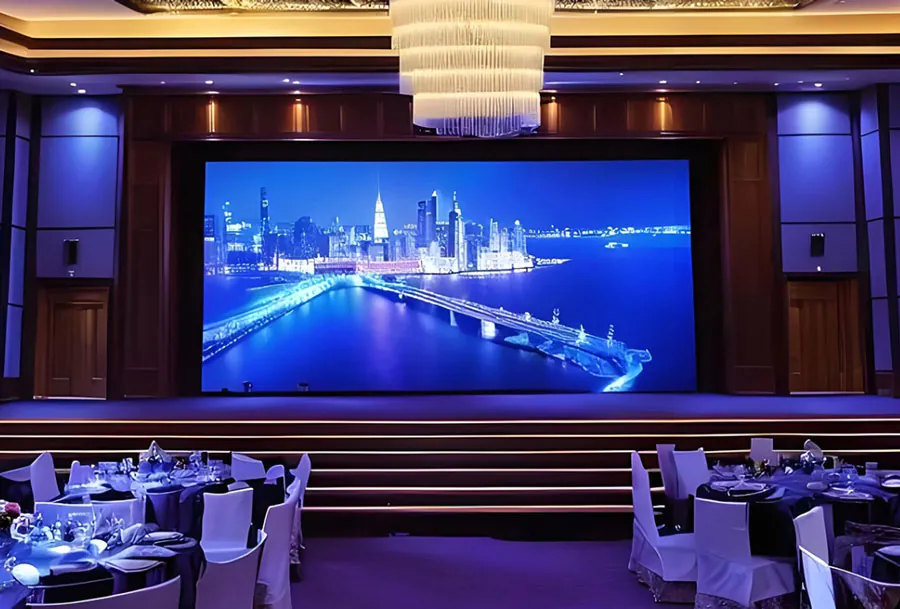
| Indoor | P3–P4.8 | $80–$200 | Corporate stage, product reveal |
Outdoor ranges per 2026 rental market quotations; indoor ranges per TW VISION 2026 Q1 quotation rounds. All figures exclude delivery, rigging and crew unless the package states otherwise. Many vendors apply a 20 m² minimum.
Two multipliers sit on top of the pitch rate. Multi-day bookings commonly drop 20–40% after the first day, and seasonal demand — December, spring festival season, summer festival weekends — can push the same wall up by a similar margin. However, a quote that looks 30% high in March may be a normal rate in November.
What a Rental Package Actually Includes
In practice, package formats differ more than rates do. A “complete” package from one vendor can exclude rigging, power distribution, or the technician who actually runs the show. Before comparing numbers, confirm that every quote covers the same scope.
- Hardware: cabinets, modules, processing and media server.
- Transport: delivery, flight cases and return logistics.
- Labour: setup, operation and takedown crew.
- Rigging and structure: truss, ground support and certified riggers.
- Power: distribution, cabling and generator where the venue cannot supply.
- Content: content formatting, scaling, and sometimes playback services.
- Insurance and contingency: damage cover and weather contingency.
The table below shows how a typical 2026 rental invoice divides. Each figure refers to a share of the total invoice; these ranges do not add up.
| Line item | Share of invoice | What drives it |
|---|---|---|
| Transport and shipping | 10–20% | Distance, weight, flight-case count |
| Labour: setup, operation, takedown | 10–25% | Build complexity, union venues, night shifts |
| Power and generator | 5–15% | Local power rates, fuel, distro requirements |
| Rigging, engineering and permits | 5–15% | Certified riggers, structural sign-off |
| Content, media servers, live feed | 5–20% | Whether playback and mixing are included |
| Insurance and contingency | 2–5% | Cover level, outdoor exposure |
For a small single-day booking, hardware usually takes the largest share. By contrast, a multi-day outdoor build with rigging can push the service lines above the screen hire itself.
Specs That Actually Change the Rate
Pixel pitch is the distance between the centres of two adjacent pixels, measured in millimetres. Smaller values mean higher resolution at close range and a higher rate, but pitch is not the only specification that moves a quote.
- Direct-view vs fine pitch. Direct-view panels use modular tiles and suit large, bold displays at moderate to long viewing distance. Fine pitch (1.2–2.5 mm) delivers higher resolution for close viewing and costs materially more per square metre.
- IP rating. For full outdoor protection, look for IP65 or higher. A lower-rated panel may seem cheaper, but it will not survive weather exposure.
- Operating temperature. Confirm the working range and whether heater or cooling packs are needed in extreme conditions; vendors charge for those as add-ons.
- Refresh rate. For any event that will be filmed, a higher refresh rate prevents flicker on camera. That upgrade usually costs extra.
Screen size should follow sightlines, not ambition. Choose the smallest wall that still supports legibility from the primary audience segment, because a well-placed 6 m × 3 m screen regularly outperforms a poorly positioned 8 m × 4 m. Borders, stage lighting and content design do the rest.
Budget Tiers: What Each Budget Buys
Event budgets in 2026 cluster into five bands. The bands describe a complete delivered package, not hardware alone.
- Under $1,000: small indoor wall, coarse pitch, single day, basic processor. Suitable for community events, short promotions and outdoor movie nights.
- $1,000–$2,000: community festivals, corporate pop-ups and medium gatherings; P4–P6 with standard truss.
- $2,000–$5,000: concerts, outdoor sports screenings and brand activations with larger crowds; P3–P4.8 and a dedicated technician.
- $5,000–$12,000: major festivals and touring dates; high-resolution walls at 2–4 mm, 5,000+ nits, backup systems and an on-site technical team.
- $12,000+: stadium builds, broadcast-quality events and multi-day international tours, with redundancy, engineering sign-off and full crew.
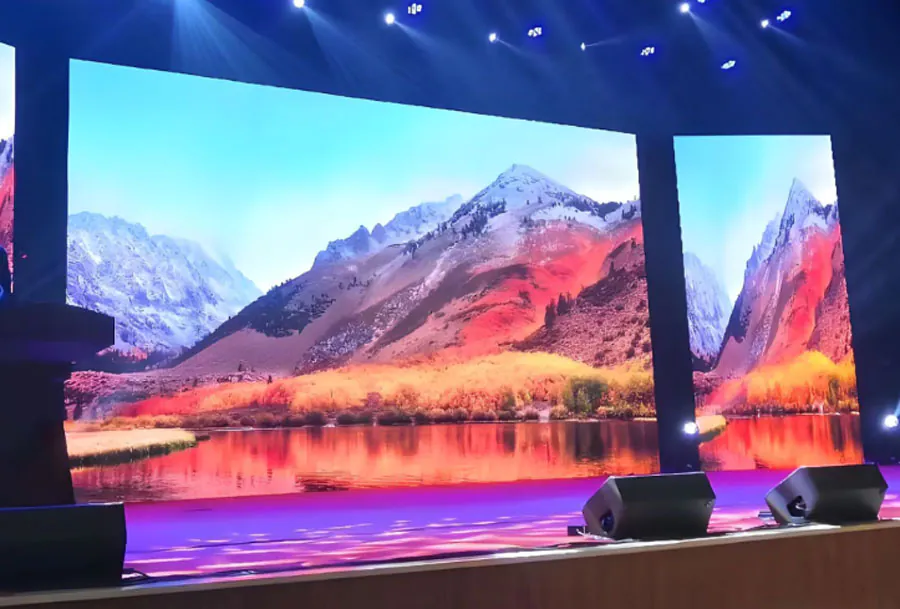
Even so, two rules of thumb keep the tier honest. First, comfortable viewing distance is roughly pixel pitch in millimetres × 1,000 ÷ 3, so a 4 mm screen works from about 12–15 feet outward. Second, outdoor daytime use needs 4,000–8,000 nits, and renting a brighter wall than the schedule requires is one of the most common ways to overpay.
Site, Permits and Safety Before You Price
Site conditions enter the price before a vendor quotes a single module, and they cause most late change orders.
- Site survey. Confirm ground conditions, access routes, and where a crane or truck can stand. Poor access turns a two-hour build into a six-hour one.
- Permits and insurance. Secure event permits, rights-of-way, and insurance certificates that name the venue and stakeholders as additional insured.
- Sightlines and egress. Check sightline drawings, emergency exits and crowd management around the structure, not just the screen face.
- Electrical safety. Local code governs mains connections, and a licensed electrician must make them. Ask who signs off.
Two clauses belong in every outdoor contract: a weather contingency clause and a scope-change clause. Without them, a rain delay or a last-minute extra screen becomes a surprise markup.
Before the public arrives, insist on test patterns and a media check. For broadcast-critical events, require redundant media servers and duplicate power circuits. Routine preventive maintenance keeps image quality stable, so ask vendors about their refurbishment cycle and module replacement policy.
Hidden Costs That Push LED Screen Rental Prices Up
As a result, most budget overruns on LED screen rental prices come from six items that sit outside the headline rate:
- Power and distribution. Large walls draw substantial current. Confirm whether power distro and cabling are included or must be arranged with the venue.
- Rigging and scaffolding. Many venues require certified riggers. Ask whether the quote includes them and who signs off on the structure.
- Calibration and content formatting. Vendors often bill colour matching and aspect-ratio conversion separately, and a mismatched aspect ratio can waste the entire screen area.
- After-hours labour. Load-in after midnight or on a Sunday usually carries a premium rate that appears only on the final invoice.
- Backup hardware. Spare modules, cabinets and processors are standard on premium hires and optional — or absent — on cheap ones.
- Weather contingency. Outdoor builds may need covers, ballast and a standby crew, none of which appear in a per-square-metre rate.
Rent vs Buy: Where the Break-Even Sits
Renting is the right default for one-off events. Buying starts to make sense when a company runs enough events per year that the annualised cost of ownership falls below the LED screen rental prices it currently pays. The model below uses a $96,000 stage system, a six-year life, and annual maintenance, insurance and storage of $9,200.
- Annualised hardware cost: $96,000 ÷ 6 = $16,000 per year
- Annual ownership cost: $16,000 + $9,200 = $25,200 per year
- Per-event ownership cost: ($25,200 ÷ events per year) + $1,500 transport and setup
The Break-Even Calculation
| Events per year | Amortised hardware | Maintenance, insurance, storage | Transport and setup | Cost per event |
|---|---|---|---|---|
| 2 | $8,000 | $4,600 | $1,500 | $14,100 |
| 4 | $4,000 | $2,300 | $1,500 | $7,800 |
| 6 | $2,667 | $1,533 | $1,500 | $5,700 |
| 8 | $2,000 | $1,150 | $1,500 | $4,650 |
| 12 | $1,333 | $767 | $1,500 | $3,600 |
Against a $5,000 rental per event, the break-even sits just above seven events a year. Below that, renting wins; above it, ownership does — provided the company has storage, a crew and a maintenance plan. Still, the decision is sensitive: a 10–20% move in rental price or annual maintenance shifts the crossover by one to two events, so run the numbers with your own figures rather than a generic table.
What the Per-Event Maths Leaves Out
Three financial factors sit outside the per-event maths. Residual value reduces the true cost of ownership and depends on depreciation and technology obsolescence. Purchasing ties up capital, although tax rules allow depreciation, while renting is an operating expense — for organisations optimising cash flow, that single difference can decide the question. Meanwhile, non-financial priorities such as brand consistency, guaranteed availability and control over technology risk often outweigh the arithmetic.
The Middle Path: Core Rig Plus Rentals
Where full ownership is hard to justify, the middle path is usually best: own a core rig for routine events and rent supplements for large or unusual builds. Long-term leases with maintenance bundled, service agreements that lock priority access and fixed pricing, or shared ownership across departments all reduce the capital burden without giving up availability. Above all, a pilot purchase validates the assumptions before a full commitment.
If ownership is the direction, the large LED screen cost breakdown covers what a purchase quotation should itemise.
How to Compare Quotes on Equal Terms
Most “cheaper” quotes are cheaper because something was removed. When LED screen rental prices sit within 10% of each other, scope is the real differentiator. Ask the same six questions of every vendor:
- Does the price include delivery, rigging, power distribution and crew?
- What is the minimum order, and how is a partial day billed?
- What discount applies from day two onward?
- How many spare modules and cabinets come on site?
- Who is on site during the show, and is that included?
- What happens if a cabinet fails mid-event?
Get at least three itemised proposals, and ask for references or recent project photos and video. Only compare vendors who quote line by line, because a single lump sum hides exactly the items that produce overruns.
That said, red flags are consistent across markets: a rate far below the local band, no written scope, no spare parts, no named technician, and a deposit demand well above market practice. In a year when hardware costs are moving monthly, a quote you have not reconfirmed close to the event date is also a risk.
There are legitimate ways to lower the number. For example, booking early and off-peak secures both rate and equipment availability, and flexible dates reduce labour surcharges. Sourcing screens from local inventory cuts freight and customs, while touring productions save downtime by renting from regional fleets. If your organisation can supply a tested media server the rental house approves, that fee often comes off the invoice — confirm compatibility and run a technical rehearsal first.
Real-World Configurations and What They Cost
Three configurations show how the tiers translate into real builds.
- Low-budget trade show booth: 3.9 mm, 3 m × 2 m wall, basic processor, delivery and installation — $1,200–$3,500 per day depending on location.
- Mid-budget product launch: 2.5 mm, 6 m × 3 m wall, dedicated media server, one on-site technician, multi-day rental — $7,000–$18,000 for the run.
- High-impact retail activation: transparent panels, 4 m × 2 m, creative mounting, custom content, multi-week placement — $12,000+ for setup and weekly rental.
Three more from event work show where the savings actually come from:
- Outdoor community event: 10 × 6 ft at P6, staged after sunset so brightness requirements stay moderate.
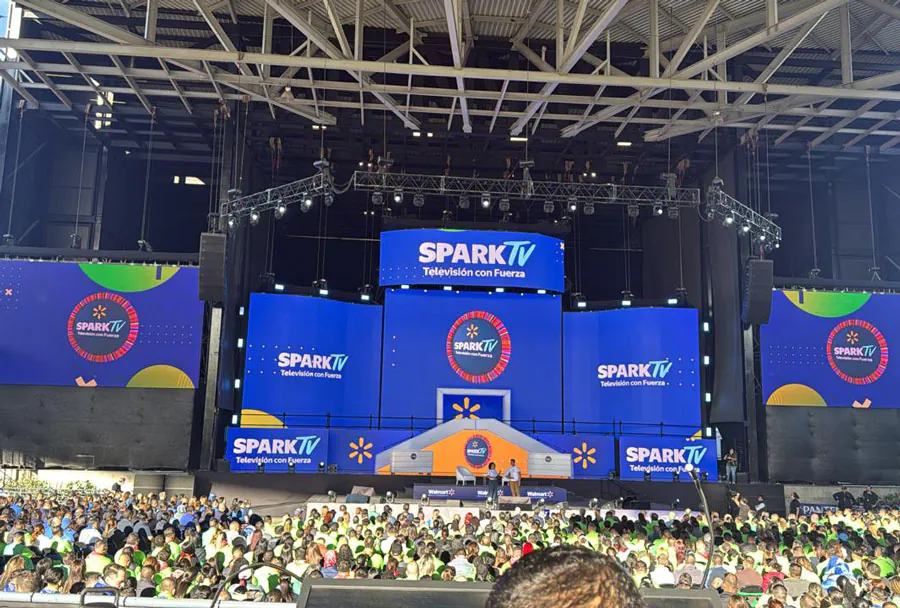
- Mid-size product launch: 16 × 9 ft at P3 with a professional control system and a dedicated technician for the event day.
- Multi-screen outdoor production: several 32 × 18 ft walls at P2.9 with full redundancy and lighting integration.
One case worth noting: a mid-size corporate launch covered 70% of its rental cost through sponsored branding on the wall. Where the audience is large enough, sponsorship changes the economics more than negotiating a 10% discount.
Rental Decision Checklist
- Viewing distance defined, and pixel pitch matched to it
- Brief issued with resolution, ambient light, show length and footprint
- At least three itemised proposals compared on identical scope
- Site survey, permits and insurance confirmed
- Power, rigging and crew explicitly included or explicitly excluded
- Day-two rate and multi-day discount in writing
- Spares, on-site technician and failure response agreed
- Labour windows and change-order terms written into the contract
- Rent-versus-buy crossover calculated with your own event count
After the event, track impressions, lead capture and sponsor feedback. That data gives you the strongest lever in the next negotiation, and most organisers never collect it.
FAQ
How much does it cost to rent an LED screen for one day?
Indoor walls typically run $40–$200 per square metre per day depending on pixel pitch, and outdoor walls $80–$1,200. A complete small event usually lands between $1,000 and $5,000 once delivery, crew and power are included.
Why do LED screen rental prices vary so much?
Pixel pitch sets the hardware base, but days, distance, rigging, crew and power drive the invoice. Two vendors quoting the same wall can differ by 60% because one excludes rigging and the other includes a full crew.
Is it cheaper to rent or buy an LED screen?
Renting wins below roughly seven events a year on a $96,000 system. Above that, ownership usually costs less per event, provided storage, maintenance and a crew are already in place.
Do rental prices drop for multi-day bookings?
Yes. Daily rates commonly fall 20–40% after the first day, and weekly bookings are usually cheaper again. Ask for the day-two rate explicitly rather than assuming it.
What is included in a standard rental package?
A proper package covers hardware, processing, transport, setup and takedown crew, and spares. Vendors frequently itemise rigging, power distribution, content services and insurance separately.
Conclusion
Pitch, duration, logistics and scope set LED screen rental prices in 2026, not the screen alone. The benchmark table gives a starting point, but the quote that matters is the one that lists every line.
Compare on equal scope, ask what happens on day two, and calculate the rent-versus-buy crossover with your own event count before committing. That is what separates a budget that holds from one that grows after the invoice arrives.