How to Measure Energy Consumption and Total Cost of Ownership for Flexible LED Displays: 5 Easy Steps

How to Measure Energy Consumption and Total Cost of Ownership for Flexible LED Displays starts with separating electrical demand from the wider cost of owning the system. A display may have a low average load but still create high costs through installation, control hardware, maintenance, content changes, and early component replacement.
Table of Contents
- 1. Define the Display’s Measurement Conditions
- Maximum, typical, and measured power
- Establish a test protocol
- 2. Measure Real Electrical Demand at the Source
- 3. Convert Power Readings Into Annual Energy Cost
- 4. Build a Complete Total Cost of Ownership Model
- 5. Compare Scenarios and Verify the Investment
- Can standby power materially affect display ownership cost?
- Should rental displays be evaluated differently from permanent installations?
- How should battery-backed or off-grid displays be modeled?
- What happens when the display is connected to a shared electrical circuit?
- How should content-management and cybersecurity costs enter TCO?
- Conclusion
The U.S. Department of Energy states that LED products use “at least 75% less energy, and last 25 times longer, than incandescent lighting.” That comparison is not a direct performance claim for LED displays, but it shows why efficiency and service life belong in the same financial analysis.
Many buyers compare only the purchase price or the maximum wattage printed on a datasheet. That approach can misstate operating costs because brightness, content, ventilation, duty cycle, electricity rates, and repair access all affect the result.
This guide explains how to collect reliable power data, calculate annual energy use, include ownership costs, compare operating scenarios, and build a decision-ready TCO model.
1. Define the Display’s Measurement Conditions
The first step in How to Measure Energy Consumption and Total Cost of Ownership for Flexible LED Displays is to define when, where, and how the display will operate. Without fixed conditions, two power readings may describe different operating states.
For How to Measure Energy Consumption and Total Cost of Ownership for Flexible LED Displays, the operating definition should cover the display, control system, schedule, and environmental conditions rather than the panel alone.
Record these baseline details:
– Display width, height, and total area
– Pixel pitch and total pixel count
– Rated maximum power
– Typical or average power, if supplied
– Brightness setting
– Content type and refresh behavior
– Daily operating hours
– Expected operating days per year
– Indoor or outdoor installation
– Controller, receiving cards, processors, and cooling equipment
– Local electricity tariff and billing structure
A manufacturer’s “maximum power” normally describes a worst-case condition, such as high brightness and mostly white content. It should not be treated as the expected daily load unless your content regularly creates that condition.
Maximum, typical, and measured power
Use three separate values in your model:
– Maximum power: Useful for circuit sizing and safety planning
– Typical power: Useful for preliminary budget estimates
– Measured power: Best for final operating-cost calculations
A flexible panel may draw different power during black, mixed-color, and full-white content. Brightness controls can also change demand even when the physical display size remains constant.
When applying How to Measure Energy Consumption and Total Cost of Ownership for Flexible LED Displays, record which of these three values supports each financial assumption. This prevents a maximum rating from being mistaken for a typical operating result.
Establish a test protocol
Use the same brightness, content, temperature, and operating duration for every test. Allow the system to reach its normal operating state before recording the reading.
A consistent protocol is essential to How to Measure Energy Consumption and Total Cost of Ownership for Flexible LED Displays because uncontrolled test conditions can make efficient and inefficient systems appear comparable when they are not.
How to apply this: Create a one-page test sheet today with the display area, brightness, content pattern, operating schedule, and all connected equipment listed before collecting power data.
2. Measure Real Electrical Demand at the Source
Accurate How to Measure Energy Consumption and Total Cost of Ownership for Flexible LED Displays requires measurements at the electrical supply point, not only a panel datasheet. The supply-point reading captures the display, controller, power supplies, cooling, and conversion losses together.
Measure the complete operating system whenever possible, as auxiliary equipment can significantly affect total energy consumption.
For temporary or lower-power installations, use a calibrated plug-in power meter if its voltage, current, real-power, and energy measurements meet the installation requirements.
For larger systems, consider a power logger such as Fluke’s 1730 Three-Phase Electrical Energy Logger to track electrical variables over time.
Capture at least these values:
– Real power in watts or kilowatts
– Voltage
– Current
– Power factor
– Kilowatt-hours over a defined test period
– Peak demand, where the tariff charges for it
A 24-hour logging period is more useful than a short handheld reading because it captures content changes, scheduled brightness reductions, and idle periods. A longer sample may be necessary for venues with weekly events or changing seasonal schedules.
The measurement instrument must be appropriate for the circuit. Do not open energized equipment or attach current probes unless a qualified electrician has confirmed the method and safety requirements. This safety boundary should be documented in How to Measure Energy Consumption and Total Cost of Ownership for Flexible LED Displays before testing begins.
How to apply this: Log the complete display circuit for at least one representative operating day, then save the raw file with the date, content schedule, brightness setting, and meter model.
3. Convert Power Readings Into Annual Energy Cost
To calculate annual energy use, multiply measured average power by operating hours, then multiply the result by the electricity rate. This is the core calculation in How to Measure Energy Consumption and Total Cost of Ownership for Flexible LED Displays.
Use this formula:
`Annual energy cost = average kW × operating hours per day × operating days per year × electricity price per kWh`
For a more detailed model, divide the schedule into operating states:
`Annual energy cost = sum of (state kW × state hours × operating days × state electricity rate)`
How to Measure Energy Consumption and Total Cost of Ownership for Flexible LED Displays should account for each operating state when brightness and content vary substantially during the day.
Useful operating states may include:
– Full-brightness daytime operation
– Reduced-brightness evening operation
– Content playback with dark backgrounds
– Idle or standby mode
– Maintenance or commissioning mode
Electricity rates may include more than a simple energy charge. Some commercial accounts also pay demand charges, fixed service fees, taxes, or time-of-use prices. Use the rate structure on the actual utility bill rather than a generic online estimate.
For How to Measure Energy Consumption and Total Cost of Ownership for Flexible LED Displays, the utility bill is the best source for the rate assumptions used in the spreadsheet.
Consider a display measured at 2.4 kW during content playback. If it operates for 12 hours per day, the energy calculation is `2.4 × 12 = 28.8 kWh per operating day` before multiplying by operating days and the applicable tariff. The measured value should replace the number if the system’s average load changes throughout the day.
How to apply this: Build a spreadsheet with one row for each operating state and calculate energy cost using the rates shown on your latest utility bill.
4. Build a Complete Total Cost of Ownership Model
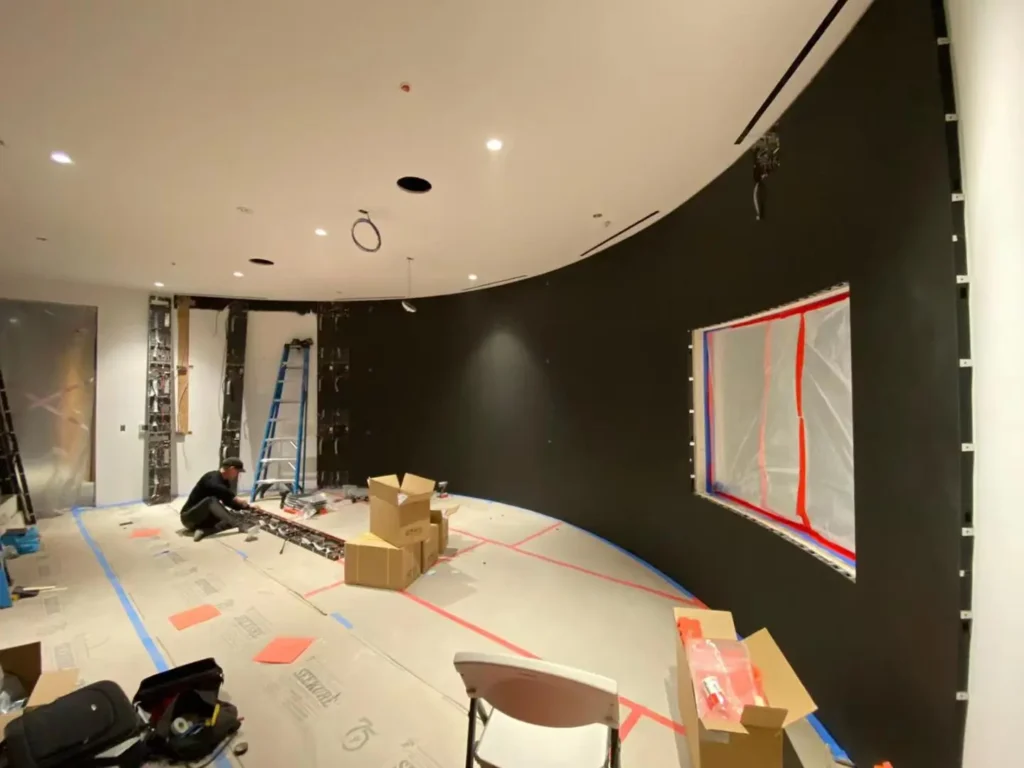
The total cost of ownership for flexible LED displays includes acquisition, installation, operation, maintenance, replacement, and removal costs. Energy is important, but it is only one line in the ownership model. How to Measure Energy Consumption and Total Cost of Ownership for Flexible LED Displays must therefore connect electrical data with the full project lifecycle.
Include these cost categories:
– Display modules and spare parts
– Power supplies and receiving cards
– Controller, processor, and media player
– Mounting structure and protective housing
– Electrical work and network cabling
– Engineering, permits, and commissioning
– Energy and demand charges
– Cleaning and inspection
– Repairs and technician labor
– Content-management software or service fees
– Transport, storage, removal, and disposal
– Planned replacement or refurbishment
When using How to Measure Energy Consumption and Total Cost of Ownership for Flexible LED Displays, separate one-time capital costs from recurring operating costs so suppliers can be compared consistently.
The useful comparison period should match the business decision. A temporary event may need a project-level cost model, while a permanent installation may require a multi-year forecast.
A project-life forecast is a central part of How to Measure Energy Consumption and Total Cost of Ownership for Flexible LED Displays because replacement timing and maintenance frequency can outweigh small differences in daily power use.
Use discounted cash flow when comparing projects with different timing. A basic present-value formula is:
`Present value = future cost ÷ (1 + discount rate)^year`
Do not assume the cheapest display has the lowest TCO. A system that costs more initially may reduce service calls, installation labor, downtime, or energy demand. Conversely, a highly efficient display may not justify its premium if it operates for only a few hours each month.
How to apply this: Create a five-year or project-life worksheet with separate rows for capital cost, electricity, maintenance, replacement, labor, and removal, then document every assumption beside the formula.
5. Compare Scenarios and Verify the Investment
The final step in How to Measure Energy Consumption and Total Cost of Ownership for Flexible LED Displays is to compare realistic operating scenarios rather than relying on one headline figure. At minimum, model expected, high-use, and low-use cases.
A scenario-based approach makes How to Measure Energy Consumption and Total Cost of Ownership for Flexible LED Displays more useful for investment decisions because it shows how changes in schedule, brightness, and maintenance affect the result.
| Metric | What it tells you | Action to take |
|---|---|---|
| Average kW | Normal electrical demand | Use measured logging data |
| Peak kW | Circuit or demand exposure | Check utility tariff and breaker capacity |
| kWh per day | Daily energy use | Compare operating schedules |
| Energy cost | Direct utility expense | Apply the real bill rate |
| Maintenance cost | Service burden | Include labor and access equipment |
| Downtime cost | Business or event risk | Estimate lost value per incident |
| TCO per year | Ownership burden | Compare competing systems |
A useful model should also test brightness policies, dark-background content, scheduled shutdown, spare-part availability, and repair access. These changes can affect cost without changing the display’s physical size.
For How to Measure Energy Consumption and Total Cost of Ownership for Flexible LED Displays, sensitivity testing should focus on the assumptions that have the greatest effect on annual cost and project payback.
For financial validation, compare the forecast with actual utility bills and maintenance records after commissioning. If your estimate differs materially from real results, check brightness control, content mix, power-factor assumptions, operating hours, and auxiliary equipment.
The U.S. Department of Energy’s LED resources are useful for understanding general LED efficiency and service-life principles, but display-specific results still require manufacturer data and field measurements.
How to apply this: Run three scenarios in your model, identify the assumptions that change the result most, and verify those assumptions with a measured test or written supplier specification.

Frequently Asked Questions About How to Measure Energy Consumption and Total Cost of Ownership for Flexible LED Displays
Can standby power materially affect display ownership cost?
Yes, especially when the display remains energized outside scheduled content hours. A system with low playback demand can still accumulate unnecessary consumption through power supplies, controllers, network devices, and cooling equipment. When applying How to Measure Energy Consumption and Total Cost of Ownership for Flexible LED Displays, measure both active and standby states separately.
A venue that powers down after events may show a very different annual result from one that leaves equipment energized continuously.
Should rental displays be evaluated differently from permanent installations?
Yes. Rental systems require transport, handling, setup labor, storage, inspection, and expected utilization across multiple projects. A permanent installation places more weight on structural work, weather protection, access, repairs, and long-term component availability.
For How to Measure Energy Consumption and Total Cost of Ownership for Flexible LED Displays, calculate cost per event for rental use and annualized ownership cost for permanent use. Mixing those models can produce a misleading comparison.
How should battery-backed or off-grid displays be modeled?
Include conversion losses, battery replacement, charging equipment, generator fuel, and available solar production where applicable. Nameplate panel demand alone is insufficient because storage and conversion systems add their own losses. In How to Measure Energy Consumption and Total Cost of Ownership for Flexible LED Displays, use measured input energy from the battery charger or inverter when possible.
An off-grid system may have low utility cost but higher capital and replacement costs.
What happens when the display is connected to a shared electrical circuit?
Shared circuits make attribution difficult because the meter may include lighting, audio, HVAC controls, or other equipment. Isolate the display circuit temporarily, use submetering, or record the difference between controlled on and off states under stable conditions. For How to Measure Energy Consumption and Total Cost of Ownership for Flexible LED Displays, document what the measurement includes.
Otherwise, the calculated energy cost may be assigned incorrectly to the display.
How should content-management and cybersecurity costs enter TCO?
Include license fees, media-player replacement, network support, access control, software updates, and incident-response labor when those costs are required for operation. A display may be electrically efficient yet expensive to maintain if remote access is unreliable or vendor support is limited.
When using How to Measure Energy Consumption and Total Cost of Ownership for Flexible LED Displays, place these costs in a separate digital-operations category so they remain visible during supplier comparisons.
Conclusion
A reliable display cost model connects measured electrical demand with the full ownership cycle. Datasheet ratings are useful for planning, but field measurements provide stronger evidence for budgeting and supplier decisions.
– Define brightness, content, schedule, and equipment boundaries before testing.
– Measure real power and energy at the complete electrical supply point.
– Use actual utility rates, including demand or time-of-use charges where applicable.
– Include installation, maintenance, downtime, software, replacement, and removal costs.
– Compare expected, high-use, and low-use scenarios before approving the project.
How to Measure Energy Consumption and Total Cost of Ownership for Flexible LED Displays becomes manageable when every assumption is documented and tested. Start with one representative operating-day log, build the cost worksheet from that evidence, and review the forecast against utility and service records after commissioning.