Outdoor Digital Display: LCD vs LED Wall Buyer’s Guide

Most “outdoor digital display” quotes compare two different things without saying so. One is an LCD panel or an all-in-one unit, and the other is an LED wall. They look similar in a photograph and behave nothing alike in sunlight, at scale, or over ten years of service.
This comparison covers how each technology produces light and where each one wins. It also lists the specification questions that decide the outcome. Those are brightness in direct sun, ingress protection, heat, wind load, seams and service access. Each section ends with one action you can take before requesting quotes. We manufacture LED cabinets for our outdoor LED display screen range and do not sell LCD panels. Treat this as a buying guide rather than a pitch.
Table of Contents
- 1. What Outdoor Digital Display Covers
- 2. How Each Technology Makes Light
- 3. Brightness, Contrast and Daylight
- 4. Brightness Requirements by Sunlight Condition
- 5. IP65 vs IP68 and Waterproof Construction
- 6. Thermal Management and Derating
- 7. Wind Load and Structural Fixing
- 8. Size, Seams and Serviceability
- 9. Cost, Lifetime and Total Ownership
- 10. When to Choose Which
- 11. Outdoor Deployment Notes
- 12. How TW VISION Fits
- 13. Frequently Asked Questions
- 14. Conclusion
What Outdoor Digital Display Covers
Outdoor digital display is an umbrella term covering three product families. An LCD display is a glass panel with a backlight. It ships as a monitor or a high-brightness outdoor panel. Some versions are all-in-one units with a player, speaker and housing built in. An LED display is a grid of light-emitting diodes on modules and cabinets. It assembles to whatever size the site needs.
All-in-one units simplify procurement: power, player and screen arrive together, and a single supplier owns the warranty. The trade-off is that size and shape come from a catalog. The panel’s brightness ceiling is also fixed at purchase.
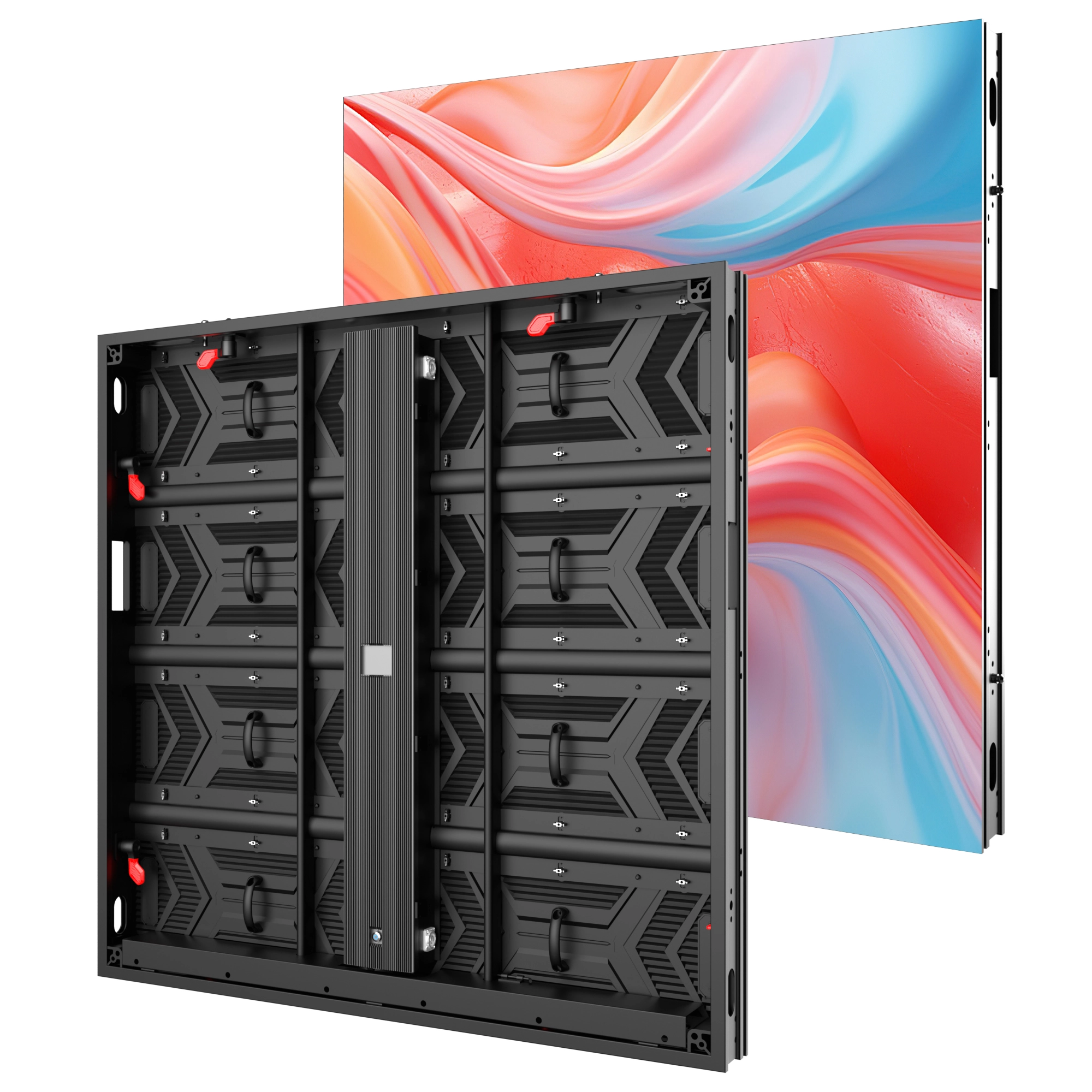
LED walls invert that logic. Size, aspect ratio and curvature follow the building. Brightness can reach levels that no outdoor LCD reaches. The trade-off is engineering: structure, power distribution, control and a service plan.
How to apply this. Write down which family each quote describes before comparing price. A 3,000-nit all-in-one and an 8,000-nit LED wall are not substitutes.
How Each Technology Makes Light
An LCD does not emit light directly. A backlight shines through liquid-crystal layers and color filters. Black is therefore never truly black, because the backlight stays on behind closed pixels. That limits contrast outdoors, where sunlight reflects off the glass face.
An LED display emits from each pixel. Pixels switch off completely, so black is black. Contrast holds in daylight, and there is no glass face to reflect the sky.
That difference drives almost every other comparison. Emissive pixels scale to any size without seams. They tolerate high brightness without a backlight stack and lose no contrast at an angle. LCD panels have a maximum panel size and a visible bezel when tiled.
| Factor | LCD / all-in-one | LED wall |
|---|---|---|
| Light source | Backlight through panel | Emissive pixels |
| Black level | Lifted by backlight | True off state |
| Maximum size | Panel limit, tiled with bezels | Any size, seamless |
| Outdoor brightness | Limited ceiling | 5,000 nits and above |
| Shapes | Rectangular only | Curved, folded, irregular |
How to apply this. Decide whether the site needs a fixed rectangle or a surface that follows the architecture. That answer eliminates one family immediately.
Brightness, Contrast and Daylight
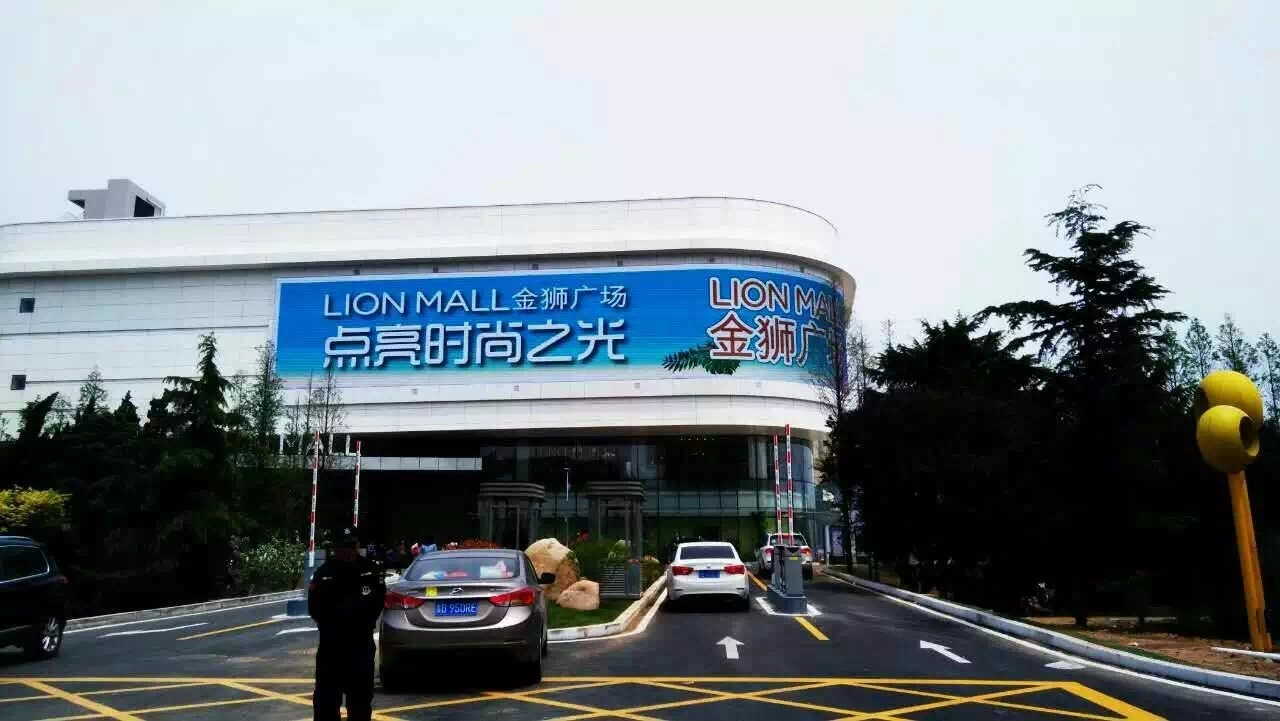
Daylight is where the two families separate most clearly. Direct sun delivers roughly 100,000 lux to a facade. A display has to outshine that environment, not merely brighten a dark room.
Outdoor-rated LCD panels typically reach a few thousand nits at most. Many all-in-one units sit well below that. LED walls routinely specify 5,000–8,000 nits for direct-sun positions, because each pixel emits rather than filters.
Contrast matters as much as nits. An LCD in sunlight reflects the sky off its glass and lifts its black level. A bright panel can still look grey. An LED wall keeps deep blacks because unlit pixels emit nothing. The DOE LED basics page explains why delivered light differs from a chip rating.
Peak and sustained values differ for both. Ask for the brightness the unit holds after warm-up and thermal limiting. Give your design ambient temperature, not the cold-start figure on the brochure.
How to apply this. Request a daytime demonstration of both options at the actual site. Compare them side by side at noon rather than at dusk.
Brightness Requirements by Sunlight Condition
Direct-sun facades need the highest output. Shaded arcades need far less, and night-first sites can run lower still. Orientation sets the duty cycle. A south-facing surface holds high brightness for hours, while a north-facing one rarely does.
Automatic dimming protects neighbors and the power budget. A schedule that drops to 20–30 percent after dark prevents glare complaints. It also keeps a permanent screen from becoming a light-trespass dispute.
An outdoor digital display built on LCD has a fixed brightness at purchase. A unit chosen for shade cannot reach daylight levels later. For LED, brightness is a setting. That is why the same cabinet can serve a plaza and a roadside position.
How to apply this. State the required nits and the test condition in the inquiry. Then both suppliers answer the same question.
IP65 vs IP68 and Waterproof Construction
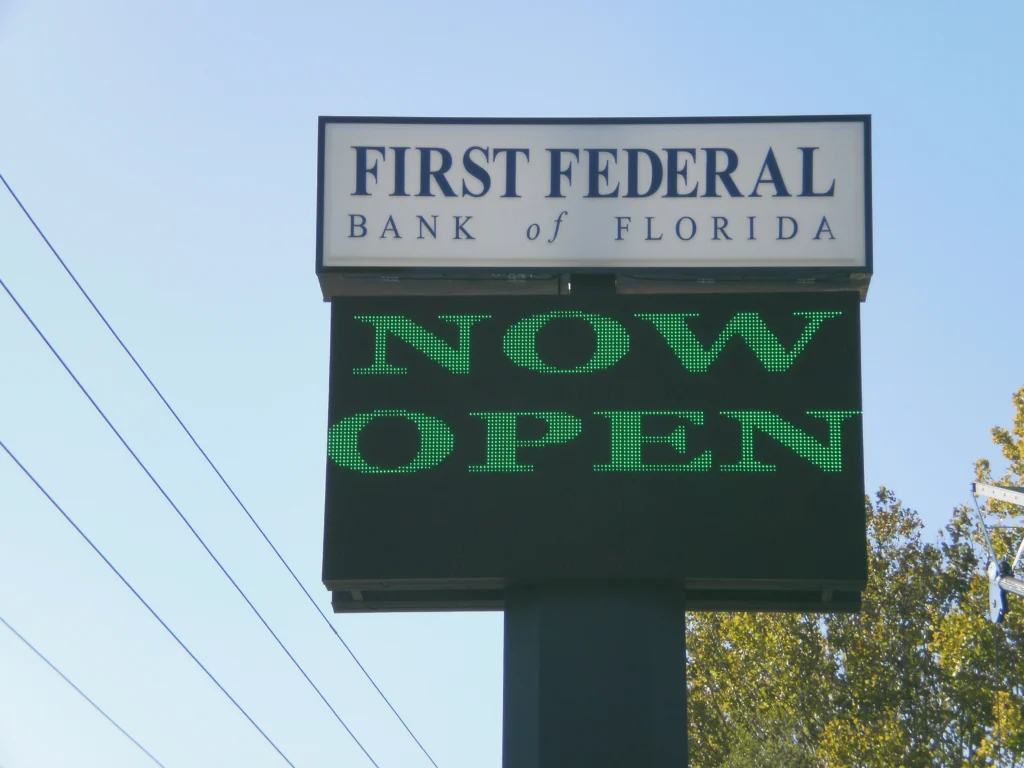
IEC 60529 uses two digits. The first rates protection against solids and the second against liquids. IP65 is dust-tight plus low-pressure water jets, and IP66 adds powerful jets. IP67 covers temporary immersion, and IP68 covers continuous immersion under stated conditions.
All-in-one outdoor units usually publish a single enclosure rating, which makes comparison easy. LED walls need the rating applied to the assembled cabinet, including cable entries, vents and service doors. Front and rear figures can also differ.
A tiled LCD wall adds a further question. Water that reaches a bezel gap can sit against the panel edge. A repaired tile must then be resealed correctly. An LED module is designed to be swapped. The gasket around it is only as good as the technician’s reseat.
How to apply this. Ask for the IP report for the exact configuration, not for a sample unit. Confirm who reseals the cabinet after service.
Thermal Management and Derating
Heat limits both technologies, for different reasons. An LCD loses brightness and can suffer permanent panel damage when its backlight stack overheats. Outdoor units therefore rely on sealed air conditioning or heat exchangers. Those systems draw continuous power.
An LED wall dissipates heat across a much larger area and can use passive rear cooling. However, drivers and power supplies still sit in enclosures. Most outdoor products list an operating range near -20 °C to 50 °C. The useful document is the derating curve.
A recessed or enclosed outdoor digital display cancels much of that advantage for either technology. Confirm sensor locations and active cooling provision. Check how dust will affect airflow over a season.
How to apply this. Request the derating table and the cooling power draw. Add that draw to the energy estimate before comparing running costs.
Wind Load and Structural Fixing
Wind load belongs to the structural engineer for both families. An LED wall is lighter per square meter but presents a large sail area. An all-in-one cabinet is smaller but heavier per unit and needs a rated mount.
What the supplier owes you is data. That means weight, mounting point layout, lifting points and allowable fixing loads. All of it must match the delivered bill of materials.
Service access belongs in the same drawing. Front-service LED modules remove scaffolding from routine repairs, while an LCD panel swap may need the whole unit demounted. Power, grounding and isolation should be confirmed against OSHA electrical safety guidance before either option is energized.
How to apply this. Hand the weight schedule and mounting detail to your engineer. Do it before the frame is fabricated.
Size, Seams and Serviceability
Scale is the clearest practical divider. LCD panels have a manufacturing size limit. A large wall therefore becomes a mosaic of tiles separated by bezels. Thin bezels reduce the effect but never remove it.
LED cabinets tile without a visible seam. That is why large facades, corner wraps and curved surfaces are almost always LED. A seam that is invisible at night can still catch sunlight at an angle, so cabinet alignment matters.
Service differs too. Replacing one LED module is a small, quick job. Replacing one LCD tile means matching panel batches, and color differences between batches show on a flat white field.
How to apply this. Measure the site and decide whether a visible bezel grid is acceptable. If not, the choice is made for you.

Cost, Lifetime and Total Ownership
Purchase price favors LCD at small sizes. A single all-in-one unit is cheaper than an LED wall of the same diagonal. The LED price covers cabinets, control and calibration as well as pixels.
The comparison reverses as area grows. For an outdoor digital display, LED cost scales with area at a falling rate per square meter. Tiled LCD instead adds panels, mounts, cabling and bezel complexity at every join.
Lifetime claims need care. LCD backlight hours and LED lifetime figures describe different failure modes. In both cases, the power supply, control electronics and seals often fail first.
Total ownership adds energy, cooling, spares and service access. Air-conditioned LCD enclosures draw power continuously. That can outweigh a lower purchase price over a decade.
How to apply this. Build a ten-year table with purchase, energy, cooling, spares and service. Compare that table before headline prices.
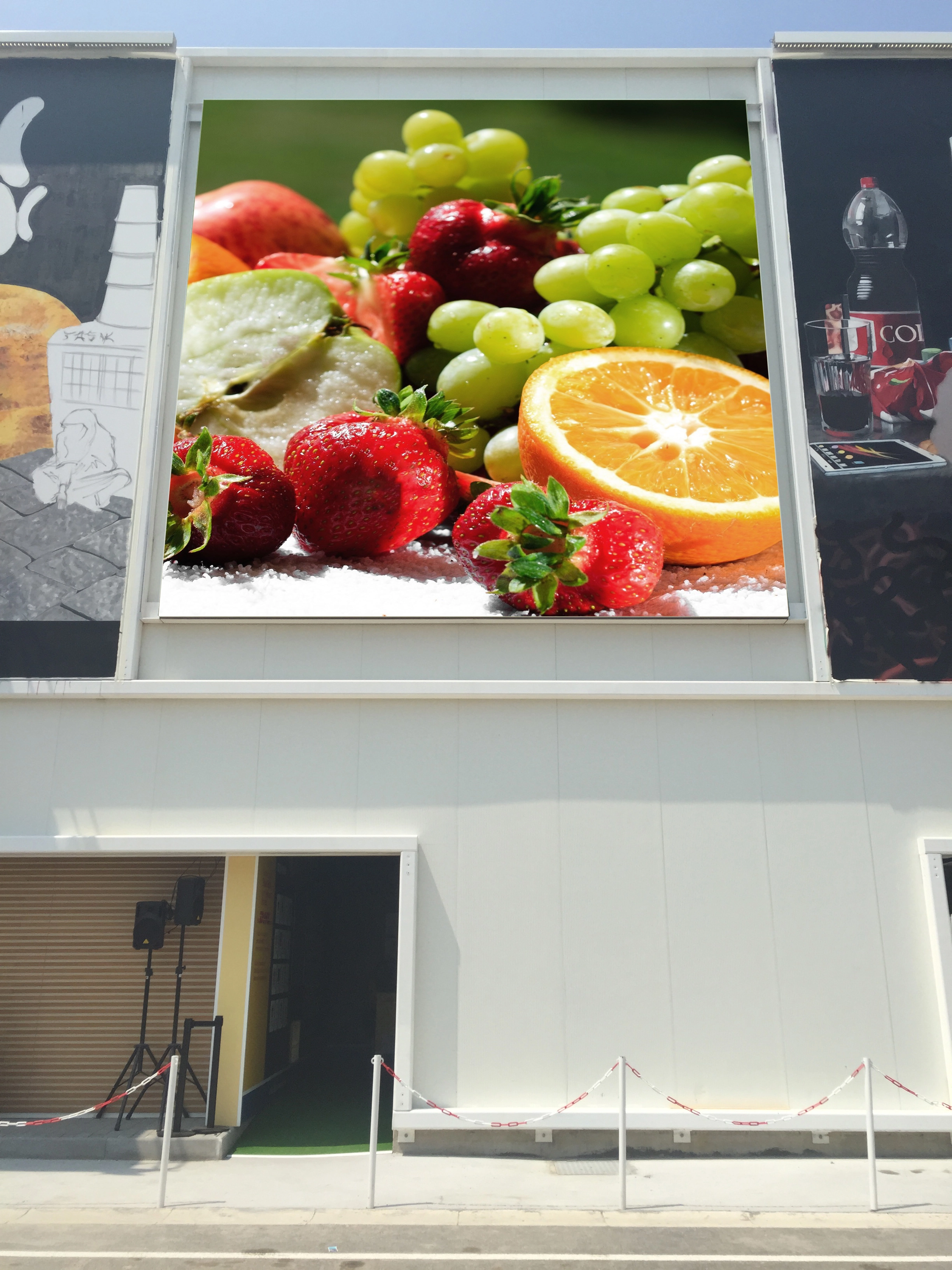
When to Choose Which
The decision usually comes down to five conditions, and most projects match one column clearly.
| Condition | Choose LCD / all-in-one | Choose LED |
|---|---|---|
| Small indoor or shaded screen | Yes | Possible but costly |
| Direct sun, long distance | Marginal | Yes |
| Large or seamless surface | Bezels visible | Yes |
| Curved or irregular shape | No | Yes |
| Fast single-unit install | Yes | Needs engineering |
Interior retail, meeting rooms, menu boards under cover and reception displays often suit all-in-one units. There, a catalog size and a single warranty matter more than peak brightness.
Roadside billboards, building facades, transit plazas and any surface that must follow architecture belong to LED. Daylight performance, scale and geometry decide the outcome.
How to apply this. Score your site against the five conditions. Then ask only the suppliers who match.

If the site leans toward an interactive all-in-one unit, plan the rollout rather than the purchase. Start with two or three units in different light conditions. Measure dwell time and completion rate for a month. Then standardise the hardware and templates before scaling. Touch interaction outdoors needs a realistic brief. Direct sun washes out most touch panels, and street furniture invites vandalism. The interactive layer usually belongs in a sheltered entrance, not an open pavement.
Ask what duty cycle the panel is rated for. Many commercial LCD and all-in-one units are built around 12 to 16 hours a day. A true 24/7 rating implies heavier power and thermal design. The price gap between the two is not cosmetic. Consumer televisions in a shop window often fail at the backlight or power board within two years of continuous use. That is why a commercial rating belongs in the specification, even when the picture looks identical.
Outdoor Deployment Notes
Commissioning an outdoor digital display should confirm the choice rather than the brochure. Check brightness at noon and at night, plus uniformity across the surface. Look for dead pixels or failed tiles. Measure actual power draw against the design figure.
Record the settings, firmware and calibration files with the as-built drawings. Both technologies drift if nobody can restore the approved configuration after service.
Keep the operating plan with the asset. It should record permit conditions, the dimming schedule, service contacts and the escalation path for a dark screen. Downtime costs more than the hardware in either case.
How TW VISION Fits
TW VISION builds LED cabinets only, for outdoor and indoor projects. It does not produce LCD panels or all-in-one units. That focus matters when the decision lands on LED. The project may need a specific shape, pitch and brightness rather than a catalog size.
Production runs across an 8,000 m² facility with eight independent SMT lines. Every module completes 24 hours in an aging workshop before assembly. Assembled cabinets run as a full wall in an approximately 2,000 m² aging area. Each batch completes a 24-hour aging test before shipment.
For fixed outdoor installations we quote the PO-H series outdoor sign cabinet. We confirm pitch against the measured viewing distance. Structural design, permits, power and installation remain with the owner, engineer and contractor.
Frequently Asked Questions
Is the term the same as an LED screen?
No. The phrase covers both LCD or all-in-one units and LED walls. The two differ in brightness ceiling, size limits, seams and cost structure. Always confirm which technology a quote describes.
Which is brighter outdoors, LCD or LED?
LED, by a wide margin. Outdoor LED walls commonly specify 5,000–8,000 nits. Outdoor LCD panels reach a few thousand at most, and LCD contrast drops when sunlight reflects off the glass face.
Can an all-in-one unit be used in direct sunlight?
Only in specific products built for it, and usually at smaller sizes. Check the published nits, the operating temperature range and whether the enclosure includes cooling. Then test the unit at the site at noon.
Why are LED walls seamless when LCD walls are not?
LCD walls are tiled panels, and each panel has a bezel, so the join is always visible. LED cabinets align module edges directly. The image continues across the joint without a frame.
Which lasts longer?
Both are limited by power supplies, control electronics and seals before the light source. Compare warranties, spare availability and service access rather than headline hour ratings.
Can it be rented instead of bought?
Yes, for short campaigns and events. Rental shifts the capital cost to a daily rate and includes transport and technical support. That often suits one-off launches better than a permanent purchase.
Conclusion
An outdoor digital display is a family of products, not one product. LCD and all-in-one units win on simplicity, small sizes and quick installation. LED wins on daylight brightness, seamless scale, curved geometry and long-term serviceability.
Decide the site conditions first, then compare quotes that describe the same technology. A daytime test and a ten-year cost table settle most arguments faster than a specification sheet.
Related Articles
Outdoor commercial LED display: advertising buyer’s guide
High-brightness outdoor LED display energy-saving solutions