Outdoor LED Display Durability: How It Works, Specs and What to Check

Outdoor LED display durability is proven by documents and inspection, not by the word “weatherproof” on a quotation. An IP66 cabinet can survive powerful water jets yet still fail the temporary-immersion test behind IP67, and a certificate page alone rarely shows which cabinet configuration was tested.
This review walks through the five checks a buyer can run before signing: ratings, cabinet construction, thermal and electrical behavior, laboratory evidence, and factory acceptance. Each check ends with a document or a photo you can demand, so price comparison happens on equal terms. The cabinets behind our outdoor LED display screen range follow the same rules; site structure and installation stay with your contractor.
Table of Contents
- 1. What Durability Evidence Must Cover
- 2. Test Equipment and Setup
- 3. Cabinet Materials, Seals and Water Management
- 4. Corrosion Protection by Site Class
- 5. Thermal and Electrical Verification
- 6. Measurement Procedure and Pass Criteria
- 7. Interpreting Results by Pixel Pitch and Cabinet Type
- 8. Auditing Test Reports and Laboratories
- 9. Factory Acceptance Test and Contract Protection
- 10. Corrective Steps When a Test Fails
- 11. Outdoor Deployment Notes
- 12. Frequently Asked Questions
- 13. Conclusion
What Durability Evidence Must Cover
A durability claim becomes useful only when it names a standard, a tested model and a report number. For fixed outdoor work, three rating families cover most of the risk: ingress protection under IEC 60529, impact protection under IEC 62262, and atmospheric corrosion under ISO 12944-2.
| Rating | Protection | What to verify |
|---|---|---|
| IP65 | Dust-tight; water jets | Full cabinet report |
| IP66 | Dust-tight; powerful jets | Seams and connectors |
| IP67 | Temporary immersion | Test depth and duration |
| IK08 | 5-joule impact | Screen-face result |
| IK10 | 20-joule impact | Tested assembly |
Ratings apply to the complete configuration, including vents, cable entries and service doors. A sealed sample proves little if production cabinets add a vent or a different gland. Front-service modules also raise a fair question: does the rating hold after a technician reseats a module on site?
Outdoor LED display durability depends on the weakest seam, so match the report to the bill of materials before discussing price.
Test Equipment and Setup
Set up the review before the factory visit, because half the evidence lives in files rather than in the cabinet. Assemble the bill of materials, cabinet drawings, IP and IK reports, thermal report and warranty draft in one folder, then number each document so comments stay traceable.
- Flashlight and camera for seam, drain and fastener photos
- Infrared thermometer for surface comparisons
- Thermal camera for module-to-module differences
- Torque driver to confirm rear-cover and module fastening
- Power meter and signal source for a sustained load run
- Printed acceptance checklist with named measurement points
In practice, the checklist matters more than the instruments. A buyer who writes down which component gets measured, at which brightness and after how long, gets comparable data from every supplier.
How to apply this: build an evidence register with one row per durability claim, the supporting report, the tested model and any open gap.
Cabinet Materials, Seals and Water Management
Durability starts at the cabinet, and outdoor LED display durability usually fails first at a gasket, a gland or a fastener. “Aluminum cabinet” tells you almost nothing, because alloy grade, pretreatment, coating thickness, fastener material and contact between dissimilar metals all change how a cabinet behaves after five years of rain and sun.
Ask for the coating system and the fastener grade in writing. Then trace the water path: compressed gaskets around modules and doors, covered cable entries, sealed connectors, drip edges above the face, and drainage that carries water away from electronics rather than across them. Pressure-equalization vents should limit liquid and contaminant entry while relieving internal pressure.
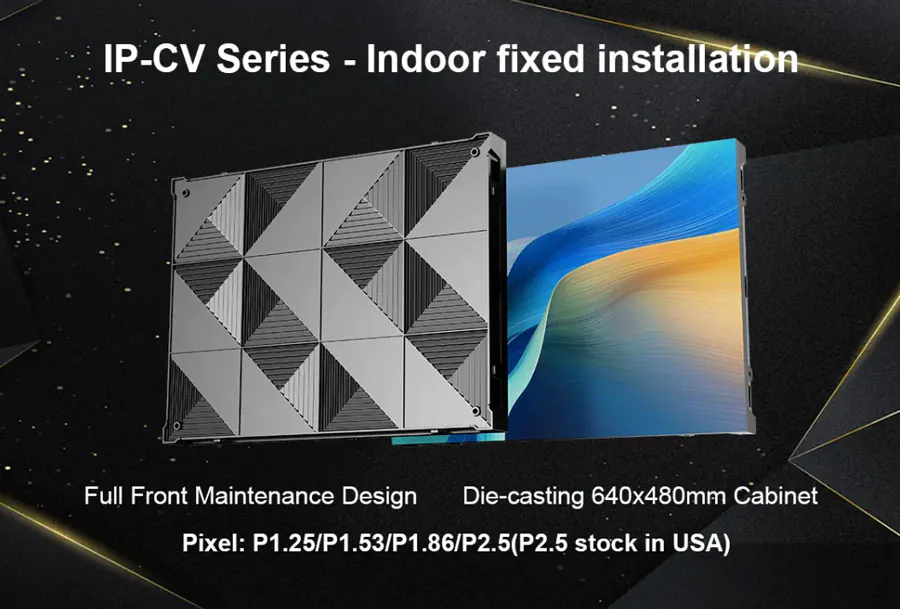
Serviceable materials complete the picture. Gaskets need part numbers and an approved replacement procedure, and every polymer exposed to sun, including cable jackets and plastic louvers, needs documented UV suitability. For fixed outdoor work we supply the PO-H series outdoor sign cabinet with gasket and fastener details in the delivery file.
Certificates cannot show a pinched seal, a rough weld or a cut edge with bare metal. Only a physical cabinet inspection does.
How to apply this: inspect a production cabinet with a flashlight and photograph every seam, drain, connector, gasket and metal interface.
Corrosion Protection by Site Class
ISO 12944-2 sorts atmospheric corrosivity from mild inland conditions to severe C5 and extreme CX. A coastal or industrial site belongs in the aggressive classes, where salt reaches fasteners, joints and vent paths even on dry days.
For that environment, request coating specifications, salt-corrosion evidence, stainless fastener grades, and a written plan that prevents galvanic contact between dissimilar metals. Aluminum against stainless steel without an isolating washer is a slow failure that appears as white corrosion around screws.
Inland sites still deserve a check. Diesel exhaust, fertilizer dust and de-icing salt all raise corrosivity above the brochure assumption, and a cabinet rated for a clean city street can pit within two winters beside a highway.
How to apply this: state your site class in the inquiry and ask the supplier to confirm the coating system against it in writing.
Thermal and Electrical Verification
Heat and electrical stress retire outdoor electronics faster than rain, so both decide outdoor LED display durability as much as the enclosure does. Ask for the operating range, the brightness level used during thermal testing, sensor locations, power configuration and any automatic brightness-reduction threshold, then compare those conditions with your site.
IEC 60068-2-14 defines temperature-change testing, and the tested cycle should resemble your climate rather than a laboratory average. Useful data covers LED boards, power supplies, receiving cards, cable terminals and enclosed hot spots; one ambient reading hides all of them.
Electrical protection belongs in the same conversation. Confirm grounding, bonding, surge protection, overcurrent protection, connector retention and power-supply ventilation, and check whether protective devices sit inside the quoted system or wait for the installer. The OSHA electrical safety guidance covers lockout, grounding and conductor protection as a baseline.
A cabinet can pass a brief demonstration and still overheat after installation if an intake ends up obstructed. A sustained factory run with an infrared thermometer exposes that, although reflective metal can distort infrared readings.
How to apply this: require a powered thermal test at contracted brightness and record temperatures at named components.
Measurement Procedure and Pass Criteria
Write the pass criteria before anyone measures, or the result becomes a negotiation. Define the test pattern, the brightness setting, the warm-up time, the measurement points, the instrument, and the defect classes that trigger rejection.
For pixel faults, ISO 2859-1 offers sampling procedures indexed by acceptance quality limit, but it does not decide what defect level suits a public screen. Your contract has to set that limit, then the sampling plan enforces it.
For thermal results, compare each named component against its rated ceiling rather than against the ambient figure. For ingress, compare the report’s tested orientation and cable configuration with the delivered unit.
Outdoor LED display durability testing also needs a duration. A ten-minute run proves power-up, not stability, so set a minimum soak time and record data at the end of it.
Interpreting Results by Pixel Pitch and Cabinet Type
Pitch changes how you read durability data. A fine-pitch wall packs more LEDs, drivers and solder joints into each square meter, so heat density rises and module gaps shrink. The same temperature rise that looks harmless on a P10 highway sign can shorten driver life on a P2.9 facade panel.
Cabinet type shifts the risk too. Front-service cabinets open on the weather face, so gasket compression and resealing discipline decide long-term ingress performance. Rear-service cabinets keep the face sealed but demand clear standing space and a dry service route.
Two suppliers quoting the same pitch can still differ by several degrees at the driver, so compare absolute readings rather than brochure claims. A small gap at the module frame matters more on a fine-pitch wall, where one reseated module covers a larger share of the viewing area.
Rental and mobile units face transport vibration, repeated connector mating and impact, which fixed installations avoid. Judge those against latch wear, corner protection and cable strain relief rather than rain resistance alone.
How to apply this: compare thermal and defect results at equal pitch and equal brightness; mixed figures hide the real difference between suppliers.
Auditing Test Reports and Laboratories
Reliable evidence identifies what was tested, how, by whom, and whether the sample matches your purchase. Separate component data from system data, because LED package results cannot prove cabinet waterproofing and a cabinet ingress test cannot prove color stability.
ANSI/IES LM-80 measures lumen maintenance for LED packages, arrays and modules, not for a complete outdoor display. The DOE LED basics page explains why system reliability depends on more than lumen depreciation.
Check laboratory competence under ISO/IEC 17025 and confirm that its accredited scope covers the method in the report. The report should name the sample, manufacturer, model, test dates, method, deviations, results and laboratory; redacted sample details or mismatched model codes reduce its value.
Outdoor LED display durability claims collapse when the report describes a different cabinet, so compare photographs, drawings and component lists against the final bill of materials.
Factory Acceptance Test and Contract Protection
Finish with a factory acceptance test and enforceable contract language. The test should power and address every cabinet, run uniform patterns and video, and check dead, stuck or unstable pixels, module alignment, color and brightness consistency, doors, locks, gaskets, connectors, grounding and protective hardware.
Include spare modules, matching components, software, configuration files and drawings in the same review. Then verify certification independently: search the exact manufacturer and model in UL Product iQ or the Intertek directory instead of trusting a logo image.
A listing confirms conformity within its stated scope; it does not guarantee freedom from corrosion or poor maintenance. Check the product category, model designation, conditions of acceptability and manufacturing location.
Warranty terms decide the rest. Cover modules, power supplies, receiving cards, water ingress, corrosion, labor, access equipment, shipping and replacement-part color matching, and add a change-control clause so substitutions need written approval. A factory acceptance test turns outdoor LED display durability into measurable evidence, and the contract decides what happens when a unit misses the mark.
Corrective Steps When a Test Fails
A failed test is useful if it is handled in order. Stop the shipment, isolate the affected batch, and identify whether the cause sits in a seal, a fastener torque, a power supply or a control component.
Then require a written corrective action that names the change, the units affected and the re-test method. The re-test should repeat the original procedure at the same brightness and duration, because a shorter run hides the fault that started the review.
Component substitution follows the same rule. A different power supply, fan, gasket or LED package can alter thermal behavior, appearance and certification status, so repeat only the affected reviews and record the new evidence. Outdoor LED display durability evidence stays valid only while the approved design stays fixed.
How to apply this: release the batch only after the re-test passes and the corrected documents join the evidence register.
Outdoor Deployment Notes
Ingress-rated cabinets are not automatically safe for wind, snow, ice or seismic loads. A qualified structural engineer should evaluate the complete assembly, including cabinets, frames, fasteners and foundations, and a generic supplier load sheet may not fit your terrain or screen height.
Once the screen is live, inspection keeps durability measurable. Check seals annually, plan gasket replacement every 3–5 years, and shorten that interval near the coast where salt and UV work faster.
Refurbished equipment needs its own review. Ask for serial numbers, installation history, repair records and a list of replaced modules, then inspect the assembled screen under power, because mixed production batches often show visible color or brightness steps.
Keep a service log from the first month. Seal condition, module replacements and brightness readings turn a warranty discussion into evidence, and they show whether a gasket is aging before water reaches the PCB. Logs also help the next buyer if the screen changes hands.
Frequently Asked Questions
How should I assess a refurbished outdoor LED display?
Request original serial numbers, operating history, repair records and a list of replaced modules and power supplies. Then run a powered inspection of the assembled screen and confirm whether the original certification and warranty still apply after modification.
What changes when buying a mobile or rental LED screen?
Transport vibration, repeated connector mating and handling impact matter more than rain. Inspect corner protectors, latches, handles, alignment pins, flight cases, hanging hardware and cable strain relief, and examine a unit that has completed real deployments.
Can a front-service design be less durable than rear service?
Either design can last, but front-service modules create removable interfaces on the weather-facing side. Durability then depends on gasket compression, module alignment, fastener consistency and correct resealing after every service visit.
How do wind and snow loads affect the buying decision?
They sit outside the IP rating. Local wind, snow, ice and seismic loads need project-specific calculations from a structural engineer, covering cabinets, mounting frames, fasteners and foundations rather than a standard cabinet sheet.
What should I do if the supplier changes components after approval?
Freeze the approved bill of materials, photograph key labels, and require written approval plus updated evidence for any substitution. A new power supply, gasket or receiving card can change thermal behavior, ingress protection and certification status.
Conclusion
Verification replaces trust with traceable evidence. Match IP and IK reports to the exact configuration, inspect seals, drainage, coatings and fasteners, measure thermal behavior at contracted brightness, audit the laboratory, and close with a factory acceptance test and warranty schedule.
No single certificate covers every site condition. Exposure, installation quality, maintenance access and component control all shape service life, which is why the evidence register matters more than any one document. Send suppliers that checklist before you compare final prices.
Related Articles
LED display for home theater: buying guidance and tips