Seamless Setup and Support for TW VISION Mobile LED Rental Packages

A successful event hinges on more than impressive visuals — it depends on the delivery, integration, and ongoing reliability of the display technology. For event planners, producers, and AV technicians who choose TW VISION Mobile LED Rental Packages, seamless setup and dependable support transform an operationally complex rental into a worry-free experience. This article explores the end-to-end setup process, the support ecosystem, recommended best practices, common challenges and their fixes, plus how to optimize workflows so every rental performs as intended, on time and on budget.
Seamless Setup and Support for TW VISION Mobile LED Rental Packages
Designing the Ideal Setup: Planning Before Arrival
The most predictable setups start long before the truck arrives. Pre-event planning for TW VISION mobile LED packages should include a detailed site survey (physical or virtual), power and load calculations, rigging assessments, a signal-path blueprint, and contingency plans for weather or last-minute layout changes. A recommended pre-event checklist includes:
– Exact physical footprint and mounting points.
– Power availability and distance to power source; dedicated circuits as necessary.
– Signal sources (media servers, switching gear, external feeds) and routing plans.
– Access and logistics: loading dock size, truck access, elevator usage, and staging areas.
– Local regulatory requirements and permits for outdoor assemblies or road closures.
TW VISION’s rental packages are designed for modularity and portability, but every environment is unique. Early communication between the rental provider, the technical director, and the venue prevents hidden constraints from becoming show-stopping problems.
Efficient Onsite Setup: Modular Workflow and Crew Roles
A streamlined onsite workflow reduces time and errors. For TW VISION mobile LED systems, the setup typically follows modular stages:
1. Unloading and staging — place modules and accessories in the assigned staging area.
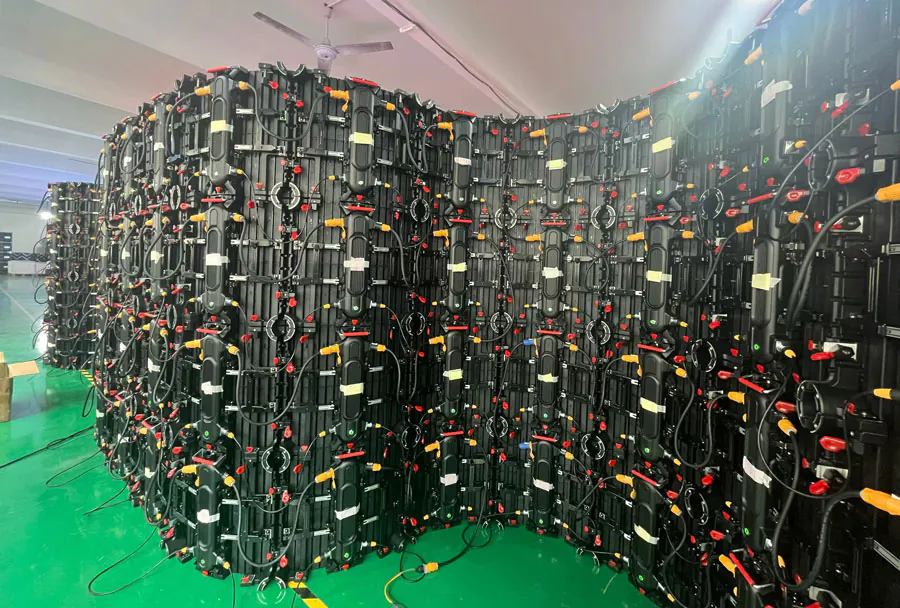
2. Structural assembly — deploy mobile rigging or stack cabinets, ensure mechanical locking and safety interlocks.
3. Power distribution — connect power with in-line breakers, verify grounding and load balancing.
4. Signal and data — route fiber or copper control signals, configure video inputs and scaling.
5. Calibration and alignment — run color calibration, check uniformity, and align seams.
6. Final safety checks and dress rehearsals.
Assign clear roles: project manager, rigging lead, power engineer, signal tech, and onsite QA. Cross-training reduces the risk of a single point of failure and speeds up the process if unexpected issues arise.
Remote and Onsite Support: SLA, Tools, and Response
Support is the backbone of reliability. TW VISION rental customers should expect a layered support model:
– Pre-event technical consultation for system architecture and redundancy.
– Onsite technical crew for setup and show operation (if contracted).
– Remote support via real-time diagnostics tools, remote control of media servers or processors, and a dedicated hotline for urgent issues.
Define Service Level Agreements (SLAs) clearly: response times for remote support, minimum onsite attendance, spare module provisioning, and escalation paths. Remote diagnostics tools should enable technicians to monitor pixel health, temperature sensors, power loads, and network latency without being physically present, enabling faster troubleshooting and often resolving issues before they impact the audience.
Calibration, Color Management, and Content Optimization
Visual quality is not just hardware; it’s calibration and content optimization. TW VISION mobile LEDs require:
– Black-level adjustments and gamma calibration to match content to the display characteristics.
– Uniformity checks to detect and correct brightness or color shifts between cabinets.
– Pixel mapping and media server output configuration to ensure content aligns with the display’s resolution and aspect ratio.
Use standardized test patterns and measurement tools (colorimeters, spectroradiometers) for consistent results. When content is prepared for the specific pitch, resolution, and viewing distance of the mobile LED, visual fidelity is maximized and the risk of scaling artifacts is minimized.
Troubleshooting Common Issues
Even with the best planning, issues can arise. Below are typical problems and practical fixes for TW VISION mobile LED packages:
– Flicker or intermittent modules: Check power stability, replace faulty power supplies, reseat data connections, and verify grounding.
– Color inconsistency across seams: Re-run color uniformity profiles and replace aging or damaged modules if calibration cannot compensate.
– Latency or sync problems: Verify media server frame rate settings, update or reconfigure signal distribution hardware, and confirm network health for IP-based control.
– Moisture or condensation in outdoor events: Use protective covers, allow thermal stabilization before powering, and ensure IP-rated sealing procedures were followed.
Documenting recurring issues and their resolutions creates a living knowledge base that reduces downtime for future events.
Training, Documentation, and Knowledge Transfer
A reliable rental experience requires more than technology — it requires people who know the technology. TW VISION and rental partners should provide:
– Onsite training for venue technicians and operators covering startup, common fixes, and safe handling.
– Comprehensive documentation including wiring diagrams, firmware versions, and spare parts lists.
– Post-event debriefs to capture lessons learned and update procedures.
Short, focused training sessions pre-show empower local teams to handle routine tasks and escalate appropriately, reducing dependency on external technicians for every minor adjustment.
Logistics, Transport, and Inventory Management
Mobile LED rental success depends on logistics. TW VISION packages are built for mobility, but the supply chain must be efficient:
– Use purpose-built road cases and module protection to minimize transit damage.
– Maintain a clear inventory system for spare modules, power supplies, cables, and control interfaces.
– Plan for rapid replacement: pre-stage spare modules and critical peripherals near the event when possible.
Effective inventory management and robust packing reduce the chance that a single transport incident becomes a full-day recovery task.
Cost Control and Value: Balancing Speed and Redundancy
Fast setups and high redundancy both carry costs. TW VISION rental customers should balance their budget against their risk tolerance:
– For high-profile events, invest in extra spares, onsite engineers, and redundant power and signal paths.
– For smaller shows, optimize crew size and rely more on remote support and pre-event testing to reduce onsite labor costs.
Transparent pricing for support tiers — basic remote assistance vs. premium onsite engineering — helps event organizers make choices aligned with their objectives.
Comparative Setup Analysis
Below is an analysis table comparing typical setup stages, average time per stage, recommended crew composition, essential tools, and the most common support actions needed during that stage.
| Setup Stage | Avg. Time | Crew Required | Essential Tools/Kit | Common Support Actions |
|---|---|---|---|---|
| Unloading & Staging | 30–90 mins | 2–4 | Lift equipment, road cases, inventory list | Verify inventory, re-stage missing items, logistic coordination |
| Structural Assembly | 45–150 mins | 3–6 (rigging lead) | Rigging hardware, torque tools, safety gear | Confirm anchor points, adjust rigging tolerances, safety inspections |
| Power Distribution | 30–90 mins | 1–2 (power tech) | PDUs, load calculators, cable testers | Balance loads, fix tripped circuits, replace faulty PSUs |
| Signal & Data Routing | 30–120 mins | 1–3 (signal tech) | Cable patching, scalers, fiber testers | Resolve sync issues, re-route bad links, update firmware |
| Calibration & Testing | 30–90 mins | 1–2 (calibration tech) | Colorimeter, test patterns, media player | Run uniformity adjustments, map pixels, confirm final QA |
Measuring Success: KPIs and Post-Event Review
Define success metrics before the first pixel is lit. Useful KPIs for TW VISION rentals include:
– Setup time vs. planned schedule.
– Number and severity of technical incidents during the event.
– Mean time to repair (MTTR) for any failures.
– Audience satisfaction and content fidelity scores (if measured).
– Post-event cost vs. budget and spare parts consumption.
Conduct a post-event review with the client, venue, and technical team to capture what worked and what can be improved. Continuous improvement in procedures and equipment selection reduces risk and increases client satisfaction over time.
Final Thoughts: Reliability Through Partnership
TW VISION Mobile LED Rental Packages offer a powerful combination of portability, image quality, and flexibility — but their real value comes from the processes and people that support them. Seamless setups are the product of meticulous planning, clearly defined roles, robust SLAs, and a culture of continuous improvement. By investing time in pre-event planning, choosing the right support tier, and committing to clear documentation and training, production teams can ensure that every TW VISION rental delivers the visual impact intended — without the technical drama. For event professionals, the choice of a mobile LED provider should be judged as much on their setup and support capabilities as on their hardware specifications.