How LED Display Modules Are Tested for Quality and Reliability


How LED Display Modules Are Tested for Quality and Reliability matters when you need a screen that looks consistent, performs safely, and lasts in its intended environment. One important distinction is that some widely cited LED standards cover lighting products rather than complete video-display modules, so a supplier’s claim of “tested to IEC standards” needs context.
Table of Contents
- 1. Define the module’s use and acceptance criteria
- 2. Inspect construction and screen appearance
- 3. Measure brightness, color, and uniformity
- 4. Check heat, electrical behavior, and environmental durability
- 5. Verify test records and supplier controls
- Who should witness factory acceptance testing?
- What should you do if modules pass individually but look different after installation?
- When is a third-party laboratory worth using?
- Can a module’s test report guarantee the finished display will perform correctly?
- How should you assess a repaired or refurbished module?
- Conclusion
Buyers often receive reports that list test names but omit the conditions, sample size, acceptance limits, or actual results. To assess How LED Display Modules Are Tested for Quality and Reliability, buyers need those details to judge whether a module was checked for its real operating demands or simply passed a limited inspection.
A useful evaluation links each test to a risk: visible defects, color variation, heat, electrical failure, or environmental exposure. The steps below explain How LED Display Modules Are Tested for Quality and Reliability through supplier evidence, test results, and comparisons based on documented conditions.
1. Define the module’s use and acceptance criteria
A good test plan begins by defining the display’s operating conditions and what counts as a failure. Those conditions shape How LED Display Modules Are Tested for Quality and Reliability. Before reviewing any report, identify the environment, viewing distance, operating schedule, brightness needs, and expected installation conditions.
How LED Display Modules Are Tested for Quality and Reliability depends partly on what the module is designed to do. An indoor rental panel, for instance, may face repeated handling and transport, while a fixed outdoor display may need stronger protection against moisture, dust, and temperature changes. The same test result does not necessarily suit both uses.
Ask the manufacturer to document the test conditions and pass/fail limits. Useful acceptance criteria include:
– Allowed dead, stuck, or miscolored pixels
– Brightness and color variation across modules
– Electrical operating limits and connector condition
– Environmental conditions used during testing
– Sample identification and traceability to the production batch
Standards need careful interpretation. The IEC’s IEC 62717 standard addresses performance requirements for LED modules for general lighting; it should not automatically be treated as a complete test specification for a video-display module. Ask suppliers to identify the exact standard, edition, clauses, and product scope behind each claim.
This context helps explain How LED Display Modules Are Tested for Quality and Reliability under the cited requirements.
How to apply this: Write down the site conditions and acceptance limits you need, then ask the supplier to map each requirement to a test and a documented result.
2. Inspect construction and screen appearance
Visual and mechanical inspections catch defects that instrument readings may miss. Testers check the module’s surface, solder joints, connectors, housing, and assembly, then inspect how pixels and colors appear when powered. These checks are an early part of How LED Display Modules Are Tested for Quality and Reliability.
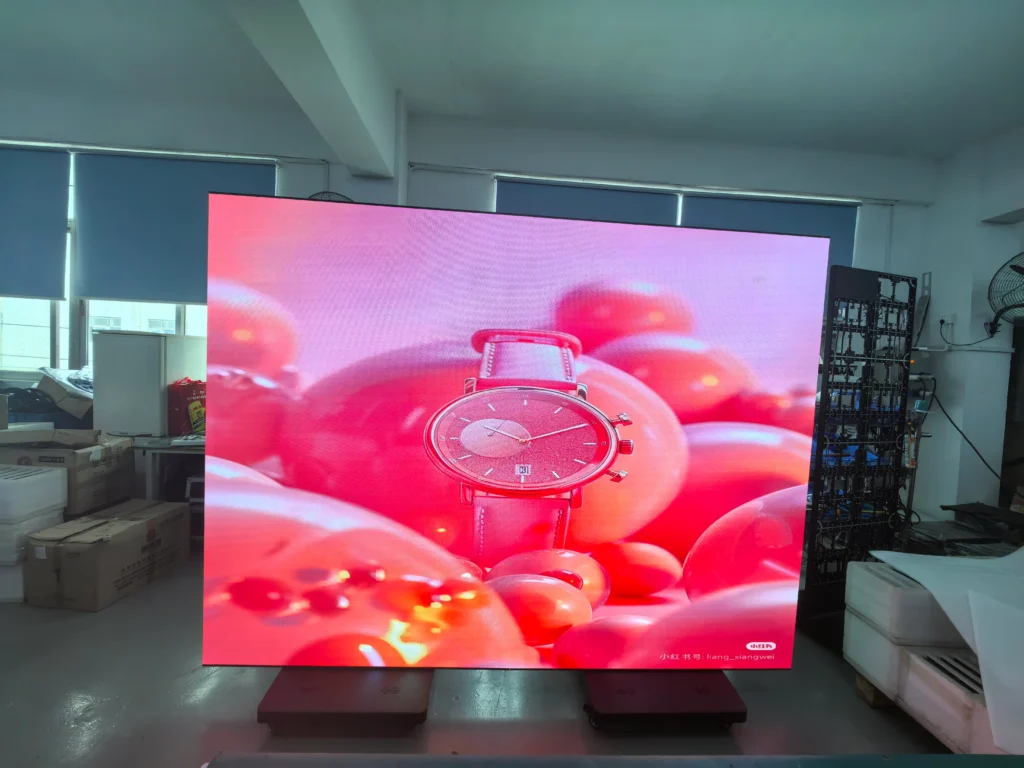
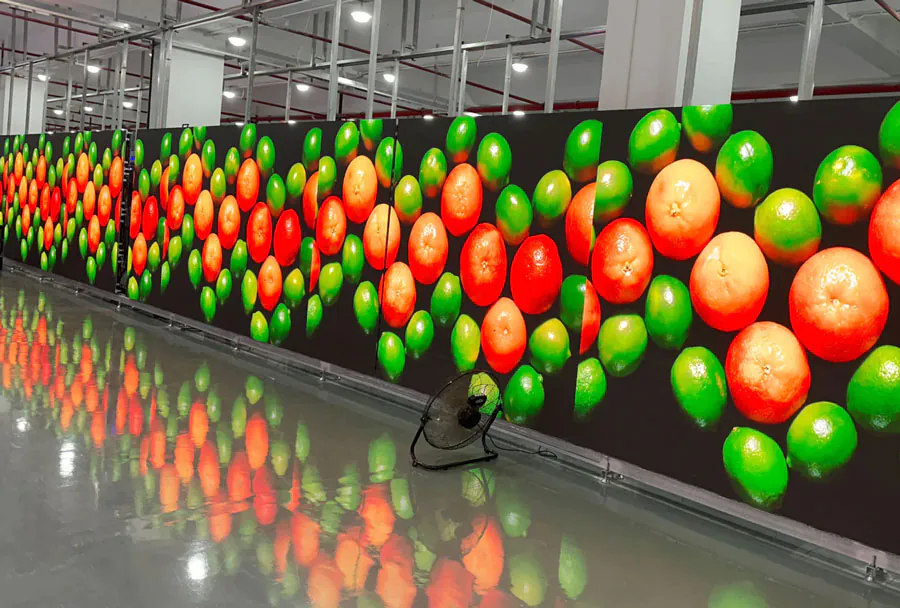
For How LED Display Modules Are Tested for Quality and Reliability, visual inspection should use controlled images and consistent viewing conditions. A test pattern can reveal dark or stuck pixels, uneven color, scan artifacts, and row or column problems. Inspectors should also check whether the module has physical damage, loose parts, or connectors that do not seat correctly.
The report should explain how defects were counted and judged. “Passed visual inspection” is less useful than a record that identifies the pattern displayed, the inspection conditions, the defects found, and the acceptance rule applied. For a large order, ask whether results are tied to individual module serial numbers or only to a sample from the batch.
That distinction makes How LED Display Modules Are Tested for Quality and Reliability easier to evaluate across an order.
| Check | What it can reveal | What to request |
|---|---|---|
| Pixel pattern | Dead or stuck pixels | Defect count and limit |
| Solid colors | Color nonuniformity | Test images and results |
| Connector inspection | Fit or assembly issues | Inspection record |
| Housing inspection | Damage or poor finish | Batch-linked checklist |
How to apply this: Request sample photos or inspection records showing the test patterns, observed defects, and applicable acceptance limits.

3. Measure brightness, color, and uniformity
Photometric and color measurements help determine whether modules look consistent, but the measurement method matters. A report should identify the instrument, measurement setup, operating state, and results—not just state that brightness or color was checked. These details show How LED Display Modules Are Tested for Quality and Reliability when appearance is measured.
How LED Display Modules Are Tested for Quality and Reliability in this stage includes measuring brightness and color at defined points, then comparing modules or areas of a module. The result can reveal variation that may be visible once panels are assembled.
Ask whether measurements were taken after the display stabilized and whether the test used the intended refresh settings and calibration mode.
Check whether the supplier provides raw or summarized measurements, the instrument’s calibration status, and the test conditions. A single average can hide local variation, so ask how measurement points were selected and whether edge areas were included. Also confirm whether the reported value applies to an individual module, a batch sample, or a completed cabinet.
Do not compare figures from different suppliers as if they were automatically equivalent. Different instruments, test patterns, measurement distances, and settings can produce results that are not directly comparable. Use a shared procedure to compare How LED Display Modules Are Tested for Quality and Reliability across suppliers.
How to apply this: Use one shared test pattern and measurement procedure when comparing supplier samples, and ask for the instrument and measurement setup alongside each result.
4. Check heat, electrical behavior, and environmental durability
Reliability testing looks for problems that may appear during extended operation or under challenging site conditions. Depending on the intended use, a test plan can include temperature monitoring, power checks, and exposure to environmental stresses. This stage of How LED Display Modules Are Tested for Quality and Reliability should reflect the installation.
In How LED Display Modules Are Tested for Quality and Reliability, heat checks can identify unusual hot spots that may point to poor electrical contact, component stress, or uneven power distribution. Environmental checks should match the installation: outdoor products may need evidence relevant to dust and moisture exposure, while transportable products may need mechanical checks suited to handling.
Ask the supplier what the test represents and what it does not prove.
Request the test duration, operating state, environmental conditions, sample size, and any failures or repairs. A brief demonstration that a module powers on is not the same as a documented durability test. For ingress-protection claims, ask for the specific rating and the test documentation; do not infer protection from a sealed-looking cabinet.
The documented conditions clarify How LED Display Modules Are Tested for Quality and Reliability under each claimed exposure.
| Test area | Evidence to review | Action to take |
|---|---|---|
| Temperature | Conditions and hot-spot results | Compare with site demands |
| Electrical operation | Power and fault records | Review abnormal events |
| Dust or moisture | Test scope and rating | Match to installation |
| Mechanical handling | Method and observations | Check transport risks |
How to apply this: Match each environmental test to a real site hazard and request the test conditions, duration, and recorded failures.

5. Verify test records and supplier controls
A reliable report connects test results to the specific product and production batch. Check that the report identifies the module model, sample or serial numbers, test date, test method, instrument details, results, and approval decision. Traceable records make How LED Display Modules Are Tested for Quality and Reliability possible to verify.
How LED Display Modules Are Tested for Quality and Reliability is only part of the purchasing decision; you also need to know whether the supplier can repeat the same controls in production. Ask how failed modules are handled, how corrective actions are recorded, and whether changes to components or assembly trigger requalification.
A polished certificate without traceable results may offer little evidence about the batch you will receive.
Tools can support measurement and analysis, but they do not replace a suitable test plan. NI LabVIEW is software used to develop measurement and test applications, while Fluke thermal cameras can help inspect temperature patterns. Confirm that the instrument and setup suit the measurement, and request calibration records where relevant.
Those records add context to How LED Display Modules Are Tested for Quality and Reliability.
How to apply this: Use a supplier checklist that ties every test result to the model, batch, method, instrument, and corrective-action record.
Frequently Asked Questions About How LED Display Modules Are Tested for Quality and Reliability
Who should witness factory acceptance testing?
Your team or an independent inspector can witness factory acceptance testing when order size, project risk, or contract terms justify it. Agree on the sample selection, test patterns, measurement setup, and pass/fail rules before the visit.
How LED Display Modules Are Tested for Quality and Reliability should be recorded in a signed report, especially if modules are being accepted before shipment. If travel is not practical, request live video and traceable records, while recognizing that remote checks may limit what can be verified.
A witness can then confirm How LED Display Modules Are Tested for Quality and Reliability against the agreed plan.
What should you do if modules pass individually but look different after installation?
First check whether the modules were measured under matching conditions and whether they use compatible calibration settings. A cabinet may also reveal alignment, cabling, or configuration issues that were not visible during standalone testing. How LED Display Modules Are Tested for Quality and Reliability should include enough information to separate module variation from installation problems.
Record the affected locations, settings, and images before making adjustments, so the supplier can assess the evidence without losing the original state. Review How LED Display Modules Are Tested for Quality and Reliability alongside the completed display’s settings.
When is a third-party laboratory worth using?
A third-party laboratory can be useful when the purchase is high risk, supplier claims conflict, or a contract requires independent evidence. Before sending samples, confirm that the lab’s scope covers the test you need and that its methods match the product and intended use.
How LED Display Modules Are Tested for Quality and Reliability may involve specialized equipment or site-specific conditions, so independence alone does not guarantee a relevant result. Share your acceptance criteria with the lab before testing begins. Ask the lab to document How LED Display Modules Are Tested for Quality and Reliability in its report.
Can a module’s test report guarantee the finished display will perform correctly?
No. A module report does not, by itself, establish the performance of a completed screen. The final display also depends on cabinets, power supplies, receiving cards, cabling, configuration, installation, and operating conditions. How LED Display Modules Are Tested for Quality and Reliability is one part of system verification, not a substitute for checking the assembled display.
Ask for a separate commissioning plan that covers the full screen and records any issues found after installation.
How should you assess a repaired or refurbished module?
Ask for the repair history, replaced components, post-repair inspection, and warranty terms. A refurbished module may be suitable for a spare pool or a less critical area, but it may not meet the same requirements as new stock.
How LED Display Modules Are Tested for Quality and Reliability should be adapted to the module’s status, with clear checks for pixel condition, color match, connectors, and operation. Keep repaired units identified so they are not mixed into new-stock records without disclosure.

Conclusion
A useful quality report does more than list tests: it connects a module’s intended use to clear acceptance limits, measured results, and traceable production records. That evidence shows How LED Display Modules Are Tested for Quality and Reliability for your installation. Keep the focus on evidence that fits the site rather than broad claims or certificates without context.
– Define operating conditions and pass/fail limits before reviewing samples.
– Check pixels, construction, brightness, color, and environmental evidence.
– Verify that reports identify test methods, instruments, samples, and outcomes.
– Treat module checks as one part of full-display commissioning.
How LED Display Modules Are Tested for Quality and Reliability should be clear in the supplier’s records before you approve an order. Your next step: send your shortlisted suppliers the same written test checklist and compare their evidence against your project requirements.