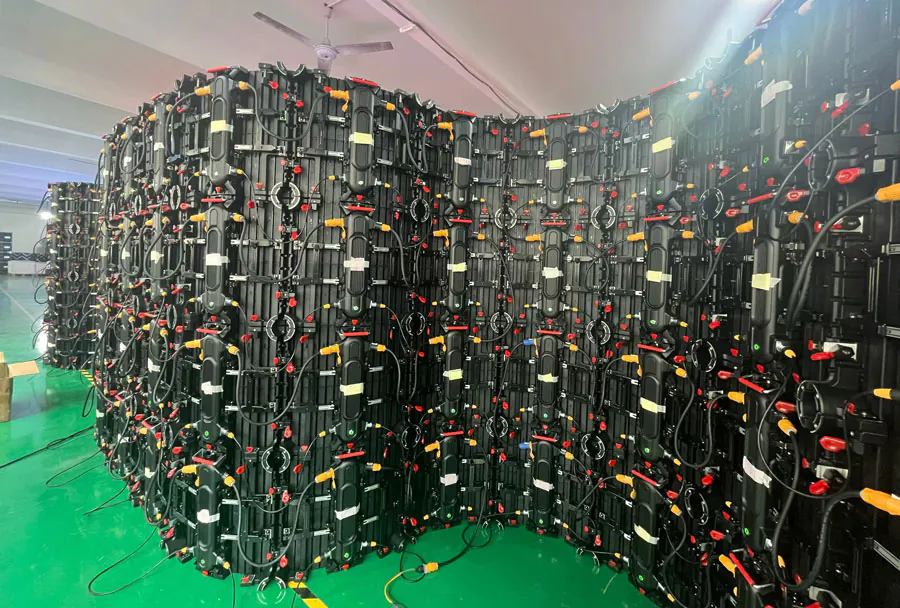
Custom LED Display Solutions for Seattle Projects | TW VISION

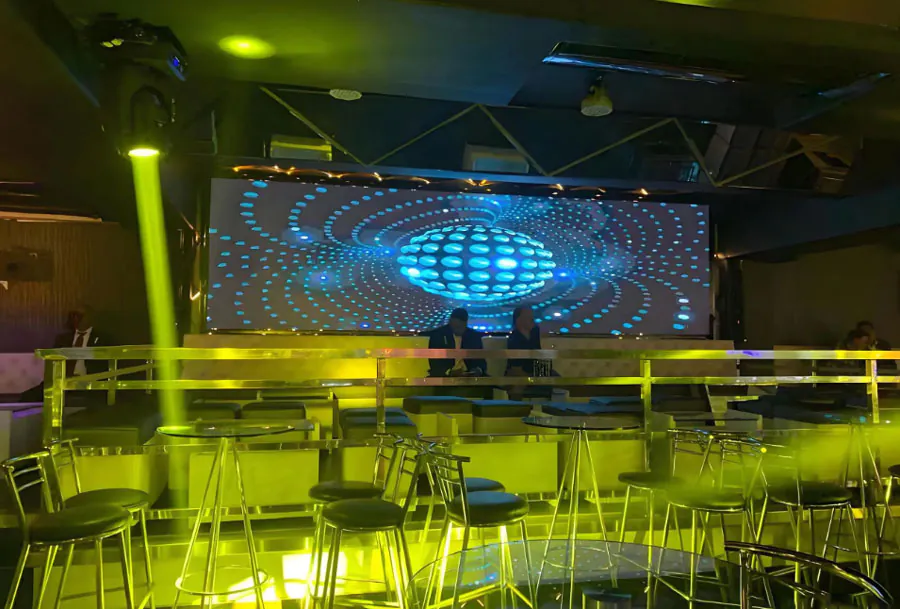
Custom LED Display Solutions for Seattle Projects starts with matching the display to your space, audience, and operating needs.
Table of Contents
- 1. Choose Pixel Pitch Around the Content People Must Read
- Define the closest meaningful viewing position
- Test your actual content
- 2. Design the Display as Part of the Building
- Model the physical installation
- Evaluate the lighting environment
- 3. Specify Outdoor Protection Beyond the IP Rating
- 4. Resolve Seattle Approvals and Electrical Requirements Early
- Separate connected load from operating estimates
- Assign responsibility in writing
- 5. Match the Processing System to Your Content Workflow
- Establish the content responsibilities
- Check operational details
- 6. Define Acceptance Tests and Maintenance Before Installation
- Test the finished installation
- Make maintenance practical
- Can an existing LED wall be expanded later?
- Who owns the content and configuration files after handover?
- What happens to an LED display during a power outage?
- Can a curved LED display be moved to another venue?
- How should removed LED equipment be recycled?
- Turn Your Requirements Into a Reviewable Project Brief
A useful technical fact: an enclosure’s ingress protection rating describes protection against solids and water under defined test conditions; it does not establish that an entire installation can handle every outdoor condition, as the International Electrotechnical Commission explains through its IP classification system.
That distinction matters when you are comparing screens for a storefront, corporate lobby, event venue, or exterior façade. A display can look convincing in a demonstration yet create problems with reflections, maintenance access, electrical capacity, or content readability after installation.
Successful projects connect hardware choices with building conditions and daily operation. The following six decisions cover viewing distance, layout, weather exposure, approvals, content processing, and acceptance testing, giving you a practical framework for requesting comparable proposals and checking whether the finished system meets your brief.
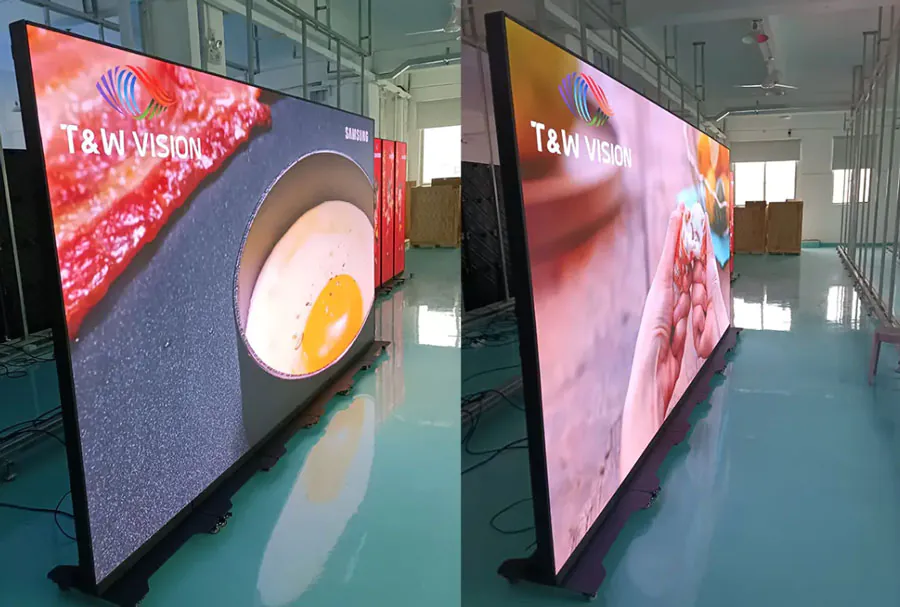
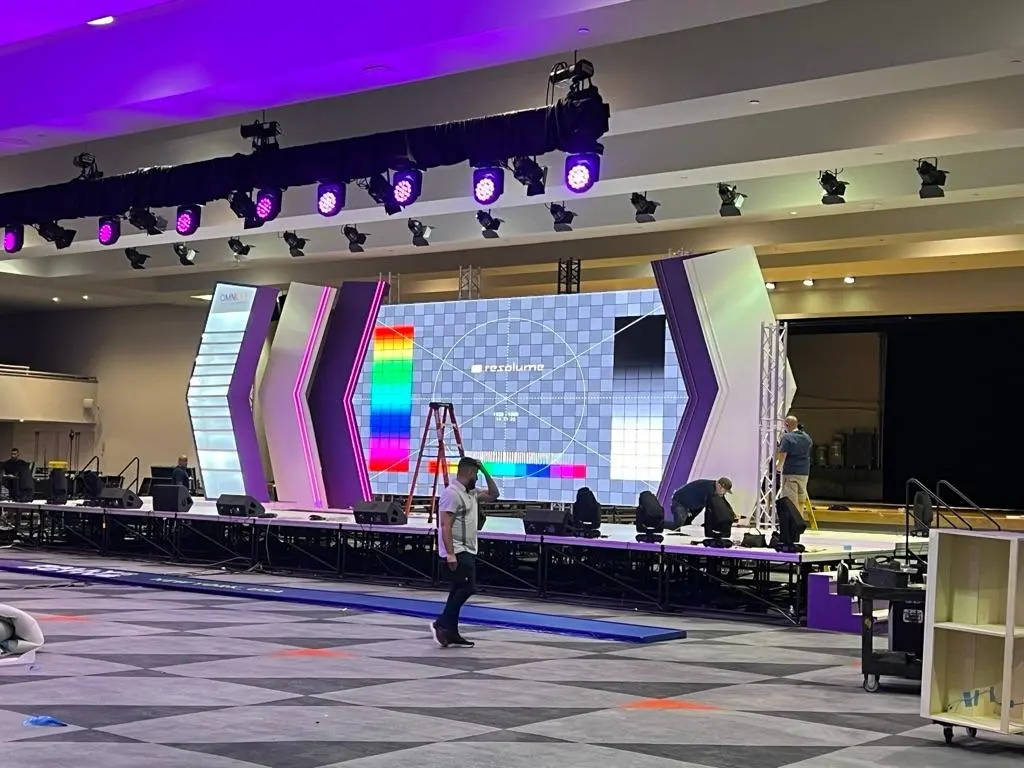
TW Vision made led podium and led front desk screen showed at our receiption desk.
1. Choose Pixel Pitch Around the Content People Must Read
The right pixel pitch depends on viewing distance, screen dimensions, and the smallest content your audience needs to recognize.
Pixel pitch is the distance between adjacent pixel centers. As TW VISION’S LED video wall information explains, it is a physical display specification that affects pixel density and resolution. A smaller pitch places more pixels within the same display area, but your application determines whether that additional detail is useful.
Custom LED Display Solutions for Seattle Projects start with the viewing experience before selecting a product.
Define the closest meaningful viewing position
Measure where people will actually stop, sit, or walk. Include accessible routes and locations where viewers may approach the screen from an angle.
A corporate lobby showing tenant names requires a different readability test from a venue displaying broad visual backgrounds.
Test your actual content
Ask suppliers to show your smallest text, logo details, and typical imagery at the proposed physical size. A promotional demonstration cannot establish whether your own content will remain legible.
Evaluate Custom LED Display Solutions for Seattle Projects | TW VISION proposals using these requirements:
– Closest and farthest viewing positions.
– Smallest required text.
– Active display dimensions.
– Proposed native pixel resolution.
– Readability under expected lighting.
How to apply this: Send each supplier the same content sample and measured viewing distances, then request a demonstration using the proposed pixel pitch.
2. Design the Display as Part of the Building
A custom LED display should fit the building’s circulation, sightlines, structure, and service requirements before its dimensions are finalized.
A relevant safety requirement comes from OSHA’s exit-route standard: workplace exit routes must remain free and unobstructed. That makes cabinet depth, maintenance access, and nearby equipment part of the layout decision.
When planning Custom LED Display Solutions for Seattle Projects | TW VISION, document the surrounding space as carefully as the screen itself.
Model the physical installation
SketchUp is a modeling tool you can use to explore screen placement, support geometry, and access clearances. Its model helps communicate design intent; structural and electrical suitability still require the appropriate professional review.
A common scenario is a reception wall where the visible screen fits comfortably, but the proposed rear-service arrangement conflicts with the space behind it.
Evaluate the lighting environment
DIALux supports lighting design and calculation. It can help the design team assess surrounding illumination, while a physical screen demonstration remains useful for judging perceived contrast and reflections.
Use the layout review for Custom LED Display Solutions for Seattle Projects | TW VISION to identify:
– Structural attachment locations.
– Cable pathways and equipment storage.
– Front or rear maintenance access.
– Reflections from glazing and nearby finishes.
– Clear routes around the installation.
How to apply this: Mark the proposed screen outline and service area on your floor plan, then review both with facilities staff before approving dimensions.
3. Specify Outdoor Protection Beyond the IP Rating
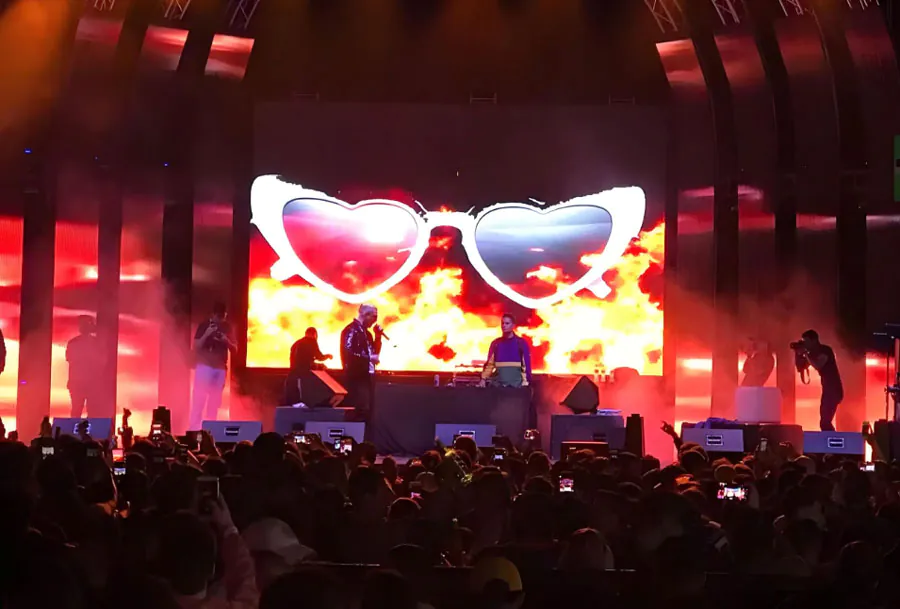
Outdoor suitability depends on the complete installation, including enclosure protection, drainage, temperature limits, wiring, and structural support.
IEC 60529 defines the IP classification system for electrical enclosures. Its familiar two-digit format distinguishes protection against solid objects from protection against water; the IEC is the official source for that standard.
For Custom LED Display Solutions for Seattle Projects | TW VISION, ask what the stated rating covers. A cabinet rating should not be assumed to cover an assembled wall’s connections, penetrations, controller enclosure, or power distribution.
A street-facing display beneath an overhang may still encounter wind-driven rain and moisture at cable entries. Its installation details therefore matter alongside its cabinet specifications.
Use this compact comparison when reviewing environmental requirements:
| Installation | Main concern | What to check |
|---|---|---|
| Interior lobby | Reflections | Test under actual lighting |
| Window-facing wall | Solar exposure | Confirm temperature limits |
| Sheltered exterior | Wind-driven moisture | Review connections |
| Exposed façade | Water and wind | Verify assembly details |
| Temporary outdoor event | Repeated handling | Inspect seals and connectors |
Request documented operating temperature limits, mounting requirements, and approved connection methods. Also establish where water will drain and how technicians will inspect seals and connectors.
Custom LED Display Solutions for Seattle Projects | TW VISION should address system-level weather protection in the proposal, with clear responsibility for installation details.
How to apply this: Ask the supplier to identify every outdoor component and provide its environmental specification, installation instructions, and warranty conditions.
4. Resolve Seattle Approvals and Electrical Requirements Early
Confirm the project’s permit, sign, structural, and electrical requirements before ordering equipment or committing to an installation date.
The Seattle Department of Construction and Inspections administers city construction and land-use requirements, including sign regulation and electrical permitting. The applicable review depends on the installation and location, so a supplier’s general assurance does not establish approval for your site.
For Custom LED Display Solutions for Seattle Projects | TW VISION, prepare a project description that identifies the address, placement, dimensions, mounting method, and intended content.
An interior retail screen visible through a window illustrates why early review matters: its relationship to signage rules should be confirmed for that specific proposal.
Separate connected load from operating estimates
Request both the manufacturer’s maximum electrical demand and its estimate for typical operation. These values serve different purposes; an operating estimate alone does not establish the required electrical capacity.
Have the electrical professional review the documented load, circuit requirements, grounding, disconnect arrangements, and cable routing.
Assign responsibility in writing
Your proposal should identify who handles:
– Permit research and applications.
– Structural review and mounting design.
– Electrical work and inspections.
– Landlord or property-manager approval.
– Coordination with other contractors.
Keep these responsibilities explicit when comparing Custom LED Display Solutions for Seattle Projects | TW VISION bids.
How to apply this: Send a one-page project brief to your design team and the appropriate city contact, then record the approval responsibilities in the purchase scope.
5. Match the Processing System to Your Content Workflow
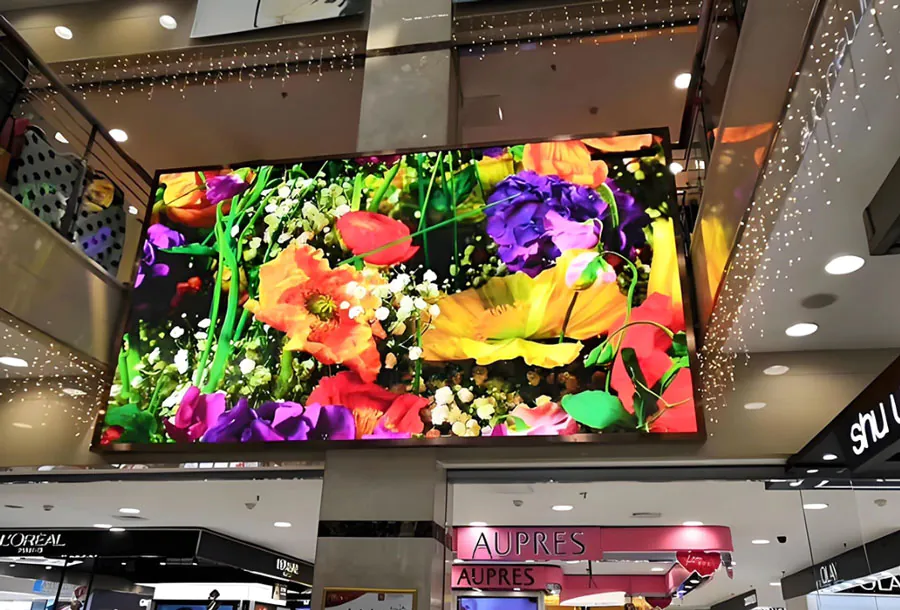
The processing system must support the display’s resolution, intended sources, color requirements, and everyday operating workflow.
Brompton Technology develops Tessera LED processing products used to control supported LED systems. Its product documentation describes processing and configuration capabilities; suitability still depends on the exact processor, receiving hardware, and display combination.
For Custom LED Display Solutions for Seattle Projects | TW VISION, request the proposed system diagram before accepting a processor specification. It should show how content reaches the display and which equipment performs playback, scaling, processing, and control.
Establish the content responsibilities
Clarify whether staff will update content through a media player, signage platform, production computer, or live-video system. Ask who creates layouts, schedules playback, manages user access, and handles source failures.
For a conference venue, presentation slides and live camera feeds may place different demands on the system. Test both workflows with the proposed equipment.
Check operational details
Review these points with your supplier:
– Supported source formats and connections.
– Native canvas dimensions and pixel mapping.
– Behavior when a source disconnects.
– Settings backup and recovery procedures.
– Staff permissions and network requirements.
Do not assume a display controller includes content scheduling or remote fleet management. Those functions must be confirmed separately when assessing Custom LED Display Solutions for Seattle Projects | TW VISION.
How to apply this: Write a content-to-screen workflow and ask the supplier to identify the exact device or service responsible for every stage.
6. Define Acceptance Tests and Maintenance Before Installation
A successful handover requires agreed performance checks, usable documentation, and a workable maintenance plan.
The W3C’s WCAG criterion on flashing content states that web content should not flash more than three times in a one-second period unless it remains below the defined flash thresholds. Although that criterion addresses web accessibility, it provides a useful reference when reviewing flashing digital-signage content.
For Custom LED Display Solutions for Seattle Projects | TW VISION, define acceptance criteria around your application instead of relying on a general statement that the screen works.
Test the finished installation
Use your real content to check readability, color consistency, visible seams, playback behavior, and performance under the lighting conditions you expect.
For a venue that records video, include its camera setup in acceptance testing. A display that looks satisfactory to an audience may still produce visible artifacts in footage.
Make maintenance practical
Request:
– Approved configuration files and backups.
– Cleaning and inspection instructions.
– Spare-parts recommendations and availability.
– Warranty scope and exclusions.
– Support contacts and response arrangements.
– Staff training and shutdown procedures.
Confirm who can replace modules and how technicians reach them. Custom LED Display Solutions for Seattle Projects | TW VISION should include a documented handover that lets your team operate and support the installation.
How to apply this: Add the acceptance checklist and required handover documents to the purchase agreement before installation begins.
Frequently Asked Questions About Custom LED Display Solutions for Seattle Projects | TW VISION
Can an existing LED wall be expanded later?
An existing LED wall may be expandable, but matching hardware, processing capacity, and physical space must be confirmed first. If you add modules after the original product has changed, differences in components or calibration may become visible.
For Custom LED Display Solutions for Seattle Projects | TW VISION, request a written expansion assessment that identifies compatible parts, controller limits, availability assumptions, and any need to recalibrate the complete wall.
Who owns the content and configuration files after handover?
Ownership and access should be defined in the contract, including content assets, project files, device credentials, and configuration backups. A special complication arises when an agency licenses fonts, footage, or templates that cannot automatically transfer to your organization.
When commissioning Custom LED Display Solutions for Seattle Projects | TW VISION, request an asset register that separates your owned files from licensed material and identifies any continuing subscription obligations.
What happens to an LED display during a power outage?
An LED display normally stops showing content when its power supply is interrupted; recovery behavior depends on the connected equipment and settings. In an emergency-use scenario, essential instructions should also remain available through the building’s designated safety systems.
For Custom LED Display Solutions for Seattle Projects | TW VISION, ask the installer to document startup order, automatic playback recovery, and whether backup power is appropriate for specific control equipment.
Can a curved LED display be moved to another venue?
A curved LED display may be reusable elsewhere if its cabinets, supports, transport arrangements, and receiving site are compatible. A permanently fabricated architectural curve can be harder to relocate than a system designed for repeated assembly.
Before selecting Custom LED Display Solutions for Seattle Projects | TW VISION for a leased space, request documentation of permitted cabinet configurations and distinguish reusable equipment from site-specific steelwork, wiring, and finishing materials.
How should removed LED equipment be recycled?
Removed LED equipment should be assessed for reuse, manufacturer take-back, or processing through an appropriate electronics recycler. Eligibility varies by equipment type, and a business should not assume that a local consumer collection program accepts commercial display assemblies.
For Custom LED Display Solutions for Seattle Projects | TW VISION, ask for a disposal plan that identifies the receiving organization, accepted components, transport responsibilities, and treatment of media players containing stored information.
Turn Your Requirements Into a Reviewable Project Brief
A reviewable project brief is the most useful next step toward a display that fits your building and daily work. Custom LED Display Solutions for Seattle Projects | TW VISION becomes easier to evaluate when each proposal answers the same questions and provides supporting documentation.
Keep these priorities in your brief:
– Viewing performance: Define audience positions, content requirements, screen dimensions, and the demonstration you need.
– Site suitability: Document lighting, environmental exposure, mounting conditions, service access, and approval responsibilities.
– Daily operation: Identify content sources, staff workflows, recovery procedures, and required training.
– Long-term support: Agree on acceptance tests, maintenance instructions, spare parts, warranty coverage, and support contacts.
Contact TW VISION with your floor plan, site photographs, content sample, and target installation schedule. Request an itemized proposal that connects every recommended component to a stated project requirement.
Related Blogs:
- Custom LED Display Solutions
- Indoor LED Screen Atlanta: 5 : Complete Buying Guide – LED DISPLAY MANUFACTURE TW VISION
- Flexible LED Display Screens for Retail and Commercial Spaces – LED DISPLAY MANUFACTURE TW VISION